Month: March 2005

  • My Days As A Snake Hunter

    bagmask003.jpg

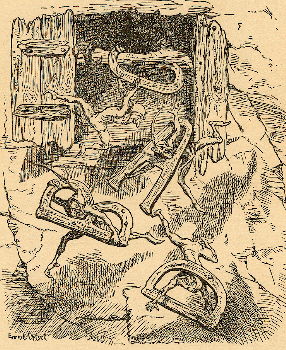
    My family’s been hunting snakes down around Lake Pepin for generations. My old man’s from one of the longest lines of snake hunters in the entire country, in fact. My mother’s own family was famous in those parts for creeping in caves, and the snake hunting, I gather, was sort of a natural off-shoot of the spelunking.

    There were also shoplifters –chronic shoplifters– on both sides of the family. From my experience snake hunting and shoplifting go hand in hand. That’s just a plain fact, and it would do me no good to deny it. Everyone around there knew it as well, but most of my kin were such accomplished shoplifters that they were damn hard to catch nonetheless.

    That said, snake hunters, I think you’d find, are for the most part pious folk, scared to death of the Lord God. I recall once asking my old man to resolve that contradiction for me –the compulsion to shoplift coupled with the fear of the Lord– and I’ll admit to being somewhat disappointed by what I took to be his lazy answer: “Let them who is without sin cast the first stone,” he said. My father could generally and reliably be counted on to come up with something more unpredictable and off-the-wall than that.

    Snake hunters are also by and large proud Americans and in favor of just about any war at all. Make no mistake about it: if called upon they’ll serve their country proudly, and many of them don’t even need to be called upon. There’s not much money in snake hunting, quite honestly, and shoplifting can only elevate a man in the world so far.

    At any rate, a disproportionate number of the members of my usual snake hunting posse would have American flag patches sewed on their jean jackets or baseball caps, and some of them had tattoos reflective of their generally hostile attitudes regarding belligerent foreigners.

    So, yes, I suppose some of what you’ve heard about us is true: we’re bellicose folk, and we see our dogged pursuit of snakes as symbolic of God’s war with Satan here on earth. We’re not all cut from the same mold, though. We’ve got our share of non-conformists. Some of us like to do creative and even eccentric things with our facial hair, and you might be surprised by the distinctive taste in eyewear that is characteristic of some of our more accomplished hunters, not to mention the various sartorial idiosyncrasies you’d doubtless take note of if you were ever to actually come snake hunting with us instead of just getting your stereotypical and misguided impressions from the liberal media.

  • Shrill Typist

    annblack.jpg

    One of the continuing mysteries in my life is how anyone can take Ann Coulter seriously.

    She’s the living example of how so called authors can take a smidgen of material and turn it into the most bald-faced lies…and get away with it. Thank God for Al Franken, who knows a lie when he sees one and says so.

    Unfortunately most journalists, especially of the broadcast variety, have long ago succombed to the myth of “balance.” You know, that’s what it’s called when they have one side on and let them lie through their teeth and then have the other side on. They are the ones, who, when they try to correct anything, are called traitors to America.

    So, it was with amusement that I ran across this. A very funny piece on what to call Coulter’s next book. Now if the author had only not tried to balance it by letting the distinctly un-funny Coulter have the last word…

  • Will the Wind Blow West?

    Time Out Chicago has finally launched, to lukewarm response from at least one critic. It’s hard to imagine anyone in Chicago getting exercised about a new magazine or newspaper. The city has been so awash with new pubs in the past five years, readers are probably asking themselves what more there is to say about their fair city. As we’ve noted previously, a city that is this overwhelmed with paper stands a fair to middling chance of burning to the ground—don’t laugh, it’s happened before.

    We don’t keep a close tab on Chicago anymore, particularly since today there are plenty of outposts here in the Twin Cities that know what Chipico relish is and where to get it and what to put it on. But we are certainly on the record as thinking that the Red editions are both insultingly bad, the venerable paid dailies are visibily confused about what happens next, and the Reader seems to be running away with it. A whole raft of second stringers could bear some scrutiny—from The Onion (can a dissipating humor sheet really be the first national freebie?) to New City to Chicago Social. We intentionally set Chicago magazine aside, because we think it’s good enough to qualify as a publication of national interest—although it is always struggling to emerge from the long shadow cast by Texas Monthly.

    So do the Time Out folks have their sights set on any other Great American Cities? Unlikely they’ll look twice at the Twin Cities, for the same old reason—we fall outside the top ten advertising markets, so national advertisers are nearly impossible to reel in here (even though most of them have their advertisements created here). Then again, a chain franchise like Time Out can presumably leverage national ads across all of their titles—but today that is merely New York and Chicago, and given the typical ten-year gap between developing new titles, we so no reason to fear the glacial advance of Time Out, Inc. (Also, we note that this model has hardly been a gold mine for others who are attempting it in a sorta half-assed way. We know precisely what the blockage is, but we ain’t talkin’. That’s called consulting, and we take a fee for that, heh heh.)

    More to the point, it is certainly worth pointing out that Time Out hardly has anything to add to any of its chosen American marketplaces—the scene here is lousy with paid and free publications (advantage to the latter), and even worse, the English-speaking world is utterly beset by capsule reviews, arts and entertainment recommendations, and all this interchangeable blurbism. In other wrods, there are so many mousetraps available today, it is only the arrogant and the stupid who insist on bringing new ones to market. (Yes, we know there are four fingers pointing back at us, thank you very much. But we’re not new anymore—we’re three years old!)

  • My Morning Game Of Scrabble

    abcd.jpg

    I close my eyes, whistle, and send the dogs off into the brush to see if they can scare up any words. I’m not sure how long I sit here –it varies, I suppose, from night to night. When it gets quiet like this, though, and I can’t even hear the rustling or baying of the dogs, I get a little bit spooked.

    Some nights –more and more often lately– they’re out there a long time, traveling great distances across the barren fields. It’s March, after all, and the winter tends to drive language underground. It’s too dark, there are too many rough patches, and I’m too tired to run with the dogs, so I just sit here quietly with my eyes closed, waiting.

    I no longer expect the dogs to bring back any stories or even paragraphs, and a sentence of any length would frankly be a surprise at this point. One night, I’ve no doubt, the dogs will finally disappear for good, but for now I’m grateful for whatever random, useless words they manage to drag back and drop at my feet. A ‘why’ or two, a ‘what,’ maybe a ‘mule,’ ‘moon,’ ‘river,’ or ‘road.’ A good night might net me a handful of multi-syllabic words: ‘casket,’ ‘donkey,’ ‘steeple,’ or ‘gasoline,’ although ‘gas’ is the more likely candidate.

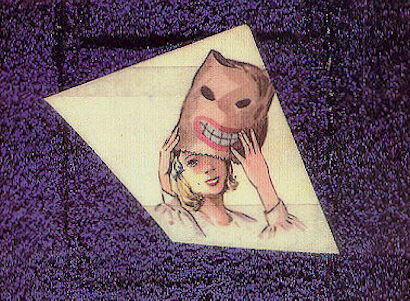
    At the end of the night, usually when the winter sun is casting its first bruise across the eastern horizon, I’ll gather up whatever words the dogs rustle up on their rambles, stuff them in a burlap bag, and tote them back home across the fields. I’ll then empty the bag onto the kitchen table and spend a couple hours moving the words around, trying with little success to make them say something.

  • Offsides

    So, it is day two of what amounts to a four-day Rosh Hoshanna for Minnesotans; it is the state high school hockey tournament. As threatened, we have set up the office television, stretched the bunny ears across the bookshelf, fiddled with the horizontal and the vertical. We only saw a little of yesterday’s game between Warroad and Albert Lea, such was the struggle to get tuned to the new channel—45 on the UHF.

    We’ve been meaning for a while to turn you onto a wonderful new Canadian magazine called The Walrus. Now is a perfect time to do that, because nothing brings Minnesota and Canada closer together than our mutual love for the game of hockey. While Canada may have a stronger claim on the game (having, after all, invented it), by proximity and practice, Minnesota is more or less a provincial extension of Ontario. We like it that way.

    In fact, there are two related articles in The Walrus that we wish to bring to your attention: This month’s cover story by Jeremy Rifkin (he’s the fabulous author, by the way, of that book everyone is talking about that describes how Europe will now eclipse the US as a superpower, so we better get used to playing second fiddle) describes a shadowy alliance between Blue State America (that’s us!) and Canada. (Let’s not get too excited. There is an accompanying article titled “Is Canada Fading From the International Stage?” Uh, we’re not sure anyone noticed one way or the other.)

    Secondly, last month’s issue had a wonderful story on hockey literature that asked why there has been no great hockey book since Ken Dryden’s wonderful book “The Game,” which was published way back when we were playing goalie for Mankato West High School. Indeed, it is hard to believe that a game that condenses the poetry of motion of soccer and combines it with the violence of pugilism, and the choreography of basketball, does not have a body of literature worthy of the game.

    For our own part, we pledge to work on this one of these years. We figure it’s a good start that we’ve had the skates out a few times this year to wet a blade with the young ones—nothing inspires a reconsideration like the next generation.

    And finally, we note that in that same back issue, a Walrus writer paid us the indirect compliment of rewriting one of our stories—about the innovative approach of a certain Minneapolis lawyer who is revolutionizing (and humanizing) the process of divorce. Oh, and Utne magazine, our hometown blue-state bible of self-help, has recognized The Walrus as “Best New Title” in its annual alternative press awards. (We have been jumping and waving our arms from across Hennepin Avenue for three years now, and no one seems to notice over there. We love them, and they don’t seem to believe us. We are very needy, it is true.)

  • There Are Some Things I Just Can't Bring Myself To Say Anymore

    Fantasy baseball is one of them. Fantasy league is even worse. There’s something essentially emasculated about these terms, and to use them in the form of an admission –“I am in a fantasy league”– seems somehow shameful. I’ve no doubt that a first-rate thesis could be written on the homoerotics of fantasy league baseball, but I’m not about to be the man to muck about in the subject. I’m not that desperate to be a pioneer.
    I also can’t deny that I have, in fact, been in a fantasy league, participated in just such a fantasy, but I am unable to feel proud of this fact.
    I certainly have nothing against those who continue to derive enjoyment from such unwholesome activities, but I think the whole thing requires too much explaining to sane people to be truly healthy. I just can’t bring myself to say those words with a straight face anymore.

    It’s like going up to the counter at Wendy’s and having to order a “Biggie” fries. I refuse to do it. Get a more dignified phrase, I say.
    I went into a Wendy’s the other day and tried to order a chicken sandwich and a large fries.
    “Biggie fries?” the woman asked.
    “Large,” I said.
    “Large or Biggie?” she asked.
    “I want the largest you have,” I said.
    “The Biggie?”
    “Is that the largest?”
    “The Biggie is the largest.”
    “Look,” I said, “I’m not going to play this game. Why don’t you just call it a large like everyone else?”
    The woman was clearly exasperated. “Do you want the large or the Biggie?”
    I wasn’t about to demean myself by taking the bait.
    “Fine,” I said, “Just give me the large.”

  • Sleep, That Wretched Nurse

    ball of twine.jpg

    I don’t suppose I can reliably claim that I have just seen, at four a.m. in the third day of March in the Midwest, the first firefly of the summer. That won’t, however, stop me from staking my claim. I see what I see, and the world can believe whatever the hell it wants.

    I fell asleep briefly an hour ago, in my chair, and woke with a start (as I often do) when a phrase bloomed in my brain, almost like the way that ghostly little box pops up in the corner of your computer screen to indicate you have a new email message. On this occasion the phrase was this: But I am not a fleet of tankers.

    From there the words will generally start drifting across my skull in random, almost spectral strands, like mist moving along a creek in the middle of the night. I had a brief image of an Amish farmer, standing at the window of his house in a dark valley, watching fireworks blow open the sky beyond the bluffs, at which point I noticed the firefly in the backyard.

    Time seems stranger to me all the time. It seems to seize up in me. I have these odd experiences, generally during the daylight hours when I so seldom can tell whether I am asleep or awake. I used to think that during these episodes I was slipping into some sort of trance-state, or having an out-of-body experience. Now, though, I just accept them as real.

    I’ll notice, for instance, that the clock hands are frozen, the second hand hanging in one place along the clock face. I’ll look out the window and see the old man next door paralyzed over a rake, or stranded halfway up a ladder, one foot suspended in space.

    I’m not talking about blackouts or mere repetition or some combination of aphasia and amnesia. No, I seem to literally and consciously fall out of time, out of step with the rotation of the planet, if in fact the planet rotates (my ignorance is vast). I get yanked clean out of time for ten or fifteen minutes at a stretch. I can move through the silent house, pause at the refrigerator to pour myself a glass of orange juice, and drink the orange juice while staring out the back window above the kitchen sink.

    If the clock stops at, say, five minutes to ten and remains seized up for ten minutes, within an instant of the resumption of its normal function the clock, and time in general, will have corrected itself. The clock hands will immediately read five minutes after ten, the old man will be bagging the leaves in his yard, and there will be no dirty orange juice glass in the sink.

    There have been occasions where during these otherwise frozen moments I have fetched the newspaper from the porch, sat down on the living room floor and read the paper from front to back, only to discover fifteen minutes later that the hands of the clock have resumed their normal operation and the paper is back on the welcome mat outside the front door. At which point, of course, I go through the whole routine all over again, and from time to time notice small (yet nonetheless disturbing) changes in what I read moments earlier.

    I hesitate, sometimes, to make these admissions, but I figure at this point there’s no sense in holding anything back.

  • A Year Since You're Gone

    A little over a year ago, Paul Gruchow killed himself—and we are still feeling robbed. At the time, we put pen to paper and tried to memorialize him as best we could. We still believe that he was one of the finest environmental essayists ever, anywhere.

    Just today, we finally got around to reading Michael Finley’s remembrance in an issue of Minnesota Monthly from a few months ago. Though he handles his subject delicately—and maybe just a hair too solicitously, but it is after all unkind to speak ill of the dead—Finley makes it clear that Gruchow was a troubled man. What was clearly a diagnosed case of bipolar disorder was activated and aggravated by Gruchow’s chosen profession. Gruchow was irritated that he hadn’t achieved wider acclaim. He knew what we know—he deserved it. Jealousy and envy are ugly emotions, but they are universal.

    Finley stumbles a little in his tribute to Gruchow in trying to explain what Gruchow did on the printed page. It would have helped to quote Gruchow himself more, but this is a challenge in trying to reproduce a writer whose impact was subtle and cumulative—no major fireworks, just the slow accretion truth, rather like the way hay is baled.

    The last time we spoke to Gruchow we talked about the unique kernal of truth that he shares with John Muir and with Aldo Leopold—but what is conspicuously missing in the writings of the better-known (and wealthy) Annie Dillard, and his real nemesis, the exceedingly popular Gretel Ehrlich.

    Ehrlich titled her seminal book “The Solace of Open Spaces,” which was published in December of 1986. Two years later, Gruchow published his indispensible “The Necessity of Empty Places.” The slight play in titles is rhetorically a key to understanding the difference between the writers and where each belongs, relative to the canon of nature writing.

    For Ehrlich and her long list of (predominantly female) acolytes, nature is really just a projection screen for an unrelenting program of self-help. To be fair, this tradition goes back to some fine American forebears—especially the Transcendentalists Ralph Waldo Emerson and Henry David Thoreau. Nature is a proving ground for the human spirit—the value of flora and fauna in the environment is their capacity to communicate profound truths for the betterment of the observer—that is, the writer. We concern ourselves with nature because “open spaces” have the capacity to provide “solace” to human actors in their midst.

    If that were as simple and true as many fleecey, tree-hugging, journaling hikers would like to believe, Gruchow would undoubtedly be alive today. Still, it’s not as if Gruchow didn’t cover some of the same territory, but he did it from exactly the opposite side of the mountain. Nature exists in, of, and for itself—it owes nothing to humanity. On the contrary, humanity owes it everything. It is enough to talk about conservation and perservation as goals in themselves—irrespecive of their “spiritual” or therapeutic value to the funny two-legged mammal with opposable thumbs.

    This dichotomy is, interestingly enough, built into the charter of the United States park service. Congress charges our rangers with administering the national parks for both preservation AND access. Today, we constantly see the users fighting with the preservers. If more people read Gruchow today (and we are sure they eventually will) we’d talk less about parks as a “national resource” or “reserve” and more about how to protect environments that show minimal human input (or, more commonly, outtake). In other words wilderness has value independent of humans, and we’d be wise to start acting that way. Ironically, it would serve our long-range interests better. Gruchow knew that. It was not a truth that could save one man, but one for an entire community.

  • Some Old Words While I Unpack My Bags: A Common Misconception Regarding Paradise

    willis 7.jpg

    I’d like, if I could, to correct a common misconception regarding Paradise. The animal sanctuaries are actually, in fact, offshore, a couple islands just off the coast which have been set aside for cats, primates, and horses. As with humans, however, not all cats, primates, and horses are admitted to Paradise, although virtue is not the determining criteria for these animals. To enter Paradise –or rather, to be granted eternal refuge on these Paradisiacal adjuncts– a cat, horse, or monkey has to have had the sort of relationship with a human whereby it was perceived by its human companion to have been in possession of a soul. Such relationships constitute what is offically called “Empathic Baptism.”

    This is admittedly a rule that doesn’t make a whole lot of sense, but it’s been in place since the last major ammendments and revisions to the admissions criteria were signed into the Book of Law at the end of the 19th century.

    Dogs are the only animals given a blanket pass to Paradise proper –good dogs, I should say, but there have been very few remembered examples of dogs having been denied admission. I have to admit that, being a dog person, I find this arrangement more than satisfactory. There are, though, plenty of people –equal rights animal rights activists, mainly– who carp about the issue all the time, but it’s the way things are in Paradise. This is essentially a very conservative place, where proposals for even minor changes are frowned upon and met with stiff resistance from the governing council. There are also, I should say, a lot of people here who have no apparent love for animals of any kind, and this is a constituency that is constantly complaining about the absence of meat from our diets. If we had a democratic system in place here and the matter of admitting animals was put to a vote I have no doubt that the animal lovers among us would be soundly defeated.

    Certainly people recognize that if you open the gates to such animals as cattle and chickens and rats and the like you’re going to have a big problem on your hands in a hurry. The mortality rate and life expectancy of most animals makes any sort of concessions or compromises on this point problematic, to say the least. We’re already packed in so tight that social interaction is all but impossible. The streets are always so crowded that I virtually never leave my dormitory any more, and I’m forced to share my bed with the six dogs who spent most of their lives with me. It’s admittedly not the most comfortable of arrangements, but I guess that’s the price you pay for attaching yourself to other living creatures, and I wouldn’t think of making a fuss.

    I had a neighbor for a time –a woman from Portland– who bitched so loudly and for so long over the refusal to grant an exception for her ferret that she was eventually shipped back to Purgatory until she learned to keep her yap shut. I can’t say I was sorry to see her go.