Month: July 2006

  • The Junk Lady

    “I consider myself extremely lucky,” artist Judy Onofrio has said. “Every day, I have the opportunity to construct a world of memory, humor, and stories through my work in the studio. Best of all, I live in that world and invite others in.”

    It is in this spirit of openness that the 2005 McKnight Distinguished Artist recently ushered an entire busload of adult learners into her home and studio and allowed them to roam her three-acre backyard hillside garden, populated by plastic swans and sculptures like the odalisk made of Jell-O molds. Onofrio is perhaps best recognized by Twin Citizens who remember her 1993 exhibit at the Minneapolis Institute of Arts, titled Judyland, which featured huge conglomerate pieces made of Mrs. Butterworth’s syrup bottles. Before our private tour, those of us who’d signed up for the University of Minnesota Curiosity Camp course “Come One, Come All to Judyland” had already been treated to a morning lecture on the artist’s work, as well as a boxed lunch on the bus en route to Onofrio’s solo exhibit Come One, Come All at the Rochester Arts Center.

    In her studio, two assistants were busy building the foundations for new pieces. Ryan worked in metal, and Jeremy, sitting at a large table littered with wooden parts, explained, “My task for today was to make a whole bunch of birds.” Those birds, which would be covered in an epoxy, smoothed, and painted until they looked like delicate porcelain creatures, represent a new direction in Onofrio’s work, an artist taking flight. Despite having a studio stacked high with storage boxes labeled “hummingbirds,” “lamp parts,” “bottle caps,” “door knobs,” “swans,” “animals and parts,” “fish,” “lids,” “dogs,” “tile,” “tiny tile,” “castors,” and the less-specific “political,” Onofrio is relying less on the found objects that are her trademark. Though she’s long had a penchant for bringing home buckets of garage sale junk, she admitted that she recently has been casting off entire warehouses of stored stuff. “Most of the found objects are pretty meaningless to me now,” Onofrio said.

    Onofrio began working in clay in the 60s, then moved on to large, soft textile works with an overt, overstuffed sensuality (think three-dimensional O’Keeffe paintings, think sea cucumbers). For a time she was creating large-scale wooden structures that, once finished, were set ablaze. (Onofrio confesses to being something of a pyromaniac.) It was after back surgery limited her mobility that she turned to her trademark assemblage, beginning with small brooches made from found objects—buttons and broken cups—and moving on to much larger pieces inspired by such diverse projects as Gaudi’s spiraling masterpieces, the Watts Towers in Los Angeles, and the Grotto of the Redemption in West Bend, Iowa.

    Onofrio approaches her work with that same sort of religious fervor and devotion. Her pieces, noted University of Minnesota Professor Robert Silberman, are “a testament to the decorative impulse,” but also are notable for the attention Onofrio pays to “both detail and coherence,” achieving in their chaos an incredible balance of color and form.

    The pieces in Come One, Come All were inspired by Onofrio’s memories of and dreams about the circus. The serene, ceramic-looking faces of women and monkeys, with their ruby lips and high cheekbones, call to mind Jeff Koons, but without the insincerity. Onofrio’s work is sensual, open, playful. And while recent pieces rely much more on movement, balance, and created forms—monkeys, elephants, acrobats, a crab, birds—closer inspection reveals that same attention to surface decoration, in cut shells and beads, along with the occasional cup handle, juice squeezer, or squirrel figurine found at a flea market.

    In the studio, demonstrating how she’s been experimenting with the positioning of objects in a new sculpture, Onofrio commented, “It’s like constant change and revision, playing with how the object interacts with the figure … I [still] have a collage aesthetic. I’m always moving things around and looking at the relationship between objects.” Onofrio spends hours in her studio fiddling around until she finds the right balance. “It’s like, you make this precious thing, and does it work? And you have a big band saw up there if it doesn’t.”

    Perhaps Onofrio’s transition to creating her own forms, instead of relying on found pieces, represents a kind of confidence in her own internal narrative and impulses. In a recent piece, Delicate Balance, for example, a woman does a one-handed balancing act, held aloft by two men, with a parrot poised on an index finger. Her new work, said Onofrio, is “about finding the content, and not having to show all my junk to everyone.”


  • Capote II?

    infamous.gif

    Hot off the wire! David Thomson, one of my favorite film critics, writes in the British broadsheet The Independent of a new film on the life of Truman Capote, called Infamous. This one is based on George Plimpton’s Truman Capote: In Which Various Friends, Enemies, Acquaintances and Detractors Recall His Turbulent Career. Unlike Capote, Infamous details Truman’s triumphs and tragedies in writing the masterpiece, In Cold Blood.

    No, wait, that is exactly what the last film was about.

    So this is pretty freakin’ bizarre. Thomson claims that Infamous is far superior to Capote, a film the irascible bastard actually admires. He writes that “if you thought it was too soon for another Capote, think again!” Well, I didn’t think it was too soon, I simply didn’t think anyone would make this story ever again… it’s not as if people are clamoring to remake these silly biopics.

    Infamous boasts a supreme cast, which includes Daniel Craig (the new Bond), Jeff Daniels, Peter Bogdonovich, Hope Davis, Sandra Bullock (yes, that’s not a supreme actress, but a popular one), Gwyneth Paltrow, Isabella Rosellini and Sigourney Weaver, with relative newcomer Toby Jones playnig our favorite screechy writer (I’m only partially tongue-in-cheek as I truly adore his work). Thomson claims that Jones is Capote, whereas Phil S. Hoffman was merely a mimic. Though I liked Capote, I didn’t think P. S. Hoffman was deserving of an Oscar, or the unanimous praise. Then again, I get sick of all this mimickry.

    In any case, this could make for an interesting film, a rousing success, or a case of bad timing, much like Valmont following on the heels of Dangerous Liaisons a good decade back. Right now, I don’t have any clue when this will hit the states, if it will hit our shores on the big screen, or die a quiet death and head straight to DVD. I’ll keep you posted.

  • Apple Dreams

    Picture1.gif

    I have an apple tree in my yard.

    This astonishing discovery came only a short while ago. We’ve lived here for six years.

    This tree sits in the back corner of the yard and has never been pretty or fragrant or useful in any way. Too low for a good climb, too spindly for a rope swing, too close to the swamp for a good sit.

    Last fall, I spied a round greenish bauble hanging on a low branch. At first it didn’t even register that it was an apple. Close inspection revealed a pink glow beginning of the back side. Glee. I quickly searched the whole tree and found only one other apple, near the top branches. That was it. Two apples.

    Despite their rough appearance, a brown spot here and a worm hole there, the bites I took were tart, sweet and crisp, not at all mealy or bitter.

    And I thought that was it. The tree was old and having one more fling with two apples. It always seemed weak and frail anyway.

    As luck would have it, we built a shed last year. Because the dimensions of the shed grew beyond what we originally planned, we had to cut off one of the limbs of the apple tree. I had already plucked my two apples, I thought it wouldn’t kill the whole tree.

    To the contrary. As of this week, my tree is draped with promising green orbs. Branch after branch, little apples peek out from under leaves. I’m not an idiot, I understand the principles of pruning, I just thought there was no hope after years and years of nothing.

    Now, in this heat that makes stove cooking unbearable, I’m dreaming of apple pie and apple muffins. I can almost smell the crisp autumn air dappled with cinnamon. Brats with apple-onion relish, pork roast with mashed apple sauce, baked apples with cream, all the things I couldn’t bear to eat in this heat are living in the back of my mind, patiently.

    But I see even further, to the harvest after this one. Because now that she’s given me the sign, I can figure out how to best prune her and protect her from worms. Feverishly, I’m online trying to find the best organic means of helping her thrive. And I don’t even know her name.

    We bought this house from the original owners, the people who built it over 30 years ago. How long was she neglected? How long did her apples go unpicked? Years of nothing, waiting.

    Waiting for me.

  • Screwballs and Supercops

    Scoop and Miami Vice

    scoop.gif

    Scoop, 2006. Written and directed by Woody Allen. Starring Scarlett Johansson, Allen, Hugh Jackman, and Ian McShane.

    Now showing in theaters around town.

    Used to be that you could spot a Woody Allen fan wherever they could be found sulking. Nebbishes to an extreme, they often were seen in oversized corduroy jackets with leather patches, didn’t care that their glasses were out of touch with the trendsetters, and could be heard in the arcades and K-marts debating the merits of Stardust Memories against Manhattan with their Allen-loving friends. Too often they would steal away from their high school dances to watch Hannah and Her Sisters, marveling at their own intellectual superiority, returning home at night dreaming their dreams of New York City and how much more superior it was to lousy Mt. Pleasant, Michigan.

    But that’s just me. In the years since I’ve come to wish that I had gone to more dances and seen less of Zelig and Radio Days, decent films but no match for the girls I passed up because they actually enjoyed Night Ranger and St. Elmo’s Fire.

    Still, there is some part of me that yearns for the old Woody Allen. I miss the guy who used to cast his muse/lover (Lasser, Keaton, Farrow) and gather his flock of fantastic supporting actors to wrestle with his humor and angst. And all this in the fantasyland of Manhattan, my personal Oz. For Manhattan in Woody Allen is so much more reasonable than Manhattan in real life.

    Woody isn’t haunting New York these days, having moved his shrunken frame to the upper class apartments and country estates of London. For whatever reason, this has seemed to resuscitate him. For although Scoop is not a very original film, it is a very funny film, more enjoyable than his very good Match Point. Scoop has no weight or meaning, and doesn’t address moral and philosophical issues. It has plot fashioned from cotton candy, a cast that includes Allen doing his stand-up shtick from start to finish, and a fairly predictable ending. I loved it.

    The facts: Joe Strombel (gravely-voiced Ian McShane) is an ace reporter who has just recently died. Lolling along on Charon’s barge, still baffled at his sudden demise, he meets a woman who claims to have found herself in the underworld due to poisoning. This poor lady was offed because she knew a dastardly secret: she discovered evidence that her employer, Peter Lyman, wealthy son of Lord Lyman, is the Tarot Card Killer. Lyman overheard, she had afternoon tea, now she’s dead. The math is simple.

    Strombol still has his reporter’s wits about him, so he jumps into the river hoping to escape Death just long enough to get the news back to the living. Enter Sondra Pransky (Ms. Johansson), a student reporter on vacation with some friends in London. She and her girlfriend take in a magic show by Sid Waterman (Woody), aka Splendini!, and, while making Sondra disappear into his ‘dematerializer’, she comes across Strombel’s ghost. He reveals his scoop: Peter Lyman is the killer, and Sondra has to investigate. With Woody Allen in tow, they meet the dashing young Mr. Lyman (Hugh Jackman), and hijinks ensue.

    And boy do they ensue. My wife loathes Woody Allen, and anyone who is of the same mind would do themselves a favor by staying away. Perhaps I’m reacting to a summer’s worth of virtually brainless fare, and am hungering for drawing rooms and jokes that equate Anthony Trollope with ‘trollop’. But I loved Allen’s shtick here, which is rolled on thick as wallpaper paste–it’s a nice reprieve from the jokes of You, Me and Dupree and the newest Pirates film, at least. I haven’t seen Allen do his thing for a good long time, and here he’s going for straight stand-up. His magic act is wonderful and spot-on (and I should know, my pop’s a magician), a combination of tics and stutters designed, like all great slight of hand, to distract.

    Woody seems to have found a new muse in Scarlett Johansson, who pushes him around and exchanges rapid-fire banter without blinking an eye. Forced to act like father and daughter, they dig at one another throughout, but manage to stir up a winning chemistry that is never discomforting sexually (though my wife, without having seen the film or any preview, shouted ‘pedophile!’ when I mentioned this). Hugh Jackman is light on his feet, and the love affair between him and Scarlett could almost be the heart of a Gene Kelly musical, it’s so breezy. Allen remains perhaps the best director of women in America–in fact, he is perhaps only surpassed internationally by Almodovar.

    Scoop flags a bit toward the middle, but then rights itself with a goofy ending that ties up its loose ends with magic tricks on the River Styx. There are some weird touches in the film, most notably the Diane Arbus-like characters wandering in the background, dwarves and hideously made up women. And I give kudos to a guy who wants to make his silly plots twist and turn on the word of ghosts. Hardly a masterpiece, Scoop is nonetheless a film whose maker cares about the people he’s written about, cast actors who can fill the roles with wit and energy, who’s still got his comic timing, and believes his audience has at least half a brain. The other night, that was more than enough for me.

    Miami Vice, 2006. Written and directed by Michael Mann. Starring Colin Farrell, Jamie Foxx, Li Gong, Luis Tosar, Naomie Harris, John Ortiz, Ciarin Hinds and Barry Shabaka Henley.

    For God’s sake, this is playing everywhere

    I was never keen on Miami Vice back in the day–as mentioned above, I was too busy checking out Woody Allen to care about Crockett and Tubbs. The pastel tales of the Miami PD, not to mention that grating theme song that played everywhere, got on my nerves. I hear tell that the show had its fair share of humor and cool, that it left an influence on Miami even today, but there was always something about Don Johnson and Philip Michael Thomas… I think it was the fact that they both can’t act their way out of a dry cleaning bag. That’s a problem in a pair of leading men.

    For whatever reason, Michael Mann has decided to resuscitate the TV show, but he’s changed the look and the style, and replaced two easily identifiable hams with two overpraised actors who are also easily identifiable hams. Sure, everyone knows Foxx and Farrell. But Foxx’s ill-deserved Oscar has sent him to the top of a heap he doesn’t deserve; Farrell is just plain lousy. Li Gong stands out as the lone actress trying desperately to give this soulless film some heart. And Michael Mann? Well, I have to wonder if ever a director has assembled such a daring collection of arresting images and visceral moments to support such a hollow plot?

    Like most of Mann’s films, the facts don’t amount to a hill of beans: The film opens with Crockett and Tubbs involved in a big mess. A pair of FBI agents is brutally murdered by some kind of informer leak (I didn’t really get what was going on for all the confusion), shot to death by what appeared to be anti-tank guns in a parking lot by the Miami piers, disrupting no one (large booms and explosions are obviously the norm in South Florida). The boys go undercover to take down a giant drug cartel. They are, of course, dressed in the finest clothes, surrounded by other cops equally sharp, who stand around our heroes looking like the gangs from the novels of S. E. Hinton. Once undercover, Crockett and Tubbs meet a number of hoods with greasy hair, have the usual tough-guy standoffs, get betrayed, get smacked around, fall in love, and in the end there’s a big, Saving Private Ryan-style gunfight (spot-on sound effects, verite camera work). The pair are shown making love to their women and falling for them, which, as reliable as Chekov’s gun, means that the girls will get kidnapped and/or beaten.

    Miami Vice is a gorgeous movie to look at. Mann’s cinematographer captured the sullen beauty of the Miami summers, with its endless thunderstorms creeping in from the ocean, the wide expanses of water that criminals can run and hide in like a jungle, and the highways stretching out to nowhere. But although Mann clearly seeks to make his film stand out above the rest of the usual action fare, Miami Vice isn’t worth caring about. What do the characters want from life? Is there even a society to protect? Their primary concern seems to revolve around lovemaking, shooting things, and keeping their Armani’s pressed. What is this movie if not a string of the usual cliches with a great score and top-notch costume design? But it doesn’t mean anything and moves too slow to be mindless entertainment.

    Even worse, there is no chemistry whatsoever between the actors. “I trust you,” Tubbs says to Crockett, an obviously important statement since we don’t see it for ourselves. Everyone here seems to exist in a narcissistic bubble, staring ahead, looking grim, flexing their muscles as they walk.

    Miami Vice is moderately entertaining–“Not as bad as I thought it would be”, my colleague admitted–but you could do better with a dozen other films in the theaters or on DVD. With its supercops and their superduds, Miami Vice says nothing about Miami, nothing about crime, nothing, even, about people. Failing all that, what’s the point?

    miami.gif

  • That's what I'm talkin' about (not the weather)

    What’s really goin’ on this weekend in all this hot hot heat:

    Well, for one, the Momentum Dance Series, as sponsored by the Southern Theater and Walker Art Center, will pick up much speed tonight when a troupe of dancers, performers, and clowns (but not in the Mooseburger sense) known as the Live Action Set (they’re famous for their show Please Don’t Blow Up Mr. Boban, which was a Fringe Festival hit a few years back) marries their work to the pretty music of Spaghetti Western String Co. Also showing with Momentum this weekend/tonight is a video/movement hybrid called Holiday House. (But I don’t know as much about the performance troupe in this case–The BodyCartography Project.)

    Then on Saturday, the Lit 6 Project is performing another radio show at the Bryant Lake Bowl–but not until the late hour of 10 p.m. Woe is me, how ever will I make it awake that long?!?! But it should be worth it since they’re not doing another show till September!!

    NOTE: There will be no Secret on Monday, as I’ll be locked in a wireless-free zone from 6 a.m. on. (Fashion shoot, not prison!)

  • Pazzanni

    So, there’s going to be this big, Cirque du Soleil-style spectacle of a show put on by all the aerialists-in-training at Circus Juventas, the St. Paul-based circus school for youth. Pazzanni, as the show’s called (sounds mysterious, no?), opens this afternoon… But d’Oh! Word is this first show is sold out! And at just fifteen bucks a pop, you can be sure that trend to continue, despite the fact that these be kiddy aerialists. (But they are the best ones Circus Juventas has to offer, at that! Plus, the company has invited real-life master Venetian mask makers to help pull off a certain Venetian carnivale effect.) I mention this today just in case the thing goes gangbusters and the run sells out completely.

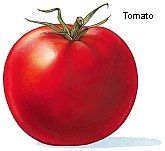
  • My Name is Tomato

    tomato.jpg

    Heirloom Tomato Names That I Fancy

    Green Zebra

    Hillbilly

    Mortgage Lifter

    Mr. Stripey

    Cosmonaut Volkov

    Isis Candy

    Jaune Flamme

    Ivory Egg

    Stump of the World

    Tappy’s Finest

    Wapsipinicon Peach

    Blondkopchen

    Bloody Butcher

    Dingwall Scotty

    Hank

    Purple Calabash

  • A handful of wheel, and a day off…

    Lookit: Barnes and Noble Galleria is hosting a reading by Robert Sullivan, author of the aptly-named CROSS COUNTRY: Fifteen Years and Ninety Thousand Miles on the Roads and Interstates of America with Lewis and Clark, a Lot of Bad Motels, a Moving Van, Emily Post, Jack Kerouac, My Wife, My Mother-in-Law, Two Kids, and Enough Coffee to Kill an Elephant. (Check the NYTimes review.) It’s worth noting that Sullivan is a contributing editor at Vogue… a magazine I can better tolerate now that I’ve read the “Age Issue.” (You, too, can be “Vogue at any age,” but first check the depressing essay about being sixty in the back of the book.)

    In any case, the real reason I’m interested in Sullivan’s travels is that, Man, have I got a hankering to go on a road trip! I’m tired of sitting in my office–which, yes, is actually just a cubicle and, despite how many cheery photos I tack up, it persists to be as gray as the skies were this past Monday night. I want away from my computer. I want to sweat it out in the car for so long. And I’d very much like to have along my high school friend Mary. After all these years, she and I still share a taste in music and we’ve even memorized many of the same lyrics. This is what makes an ideal road trip companion–someone to groove with! We’d probably pass the time belting out Joni Mitchell songs, trying like hell to hit those high notes. Coincidentally, this is the same friend who passed me a copy of On The Road in and about eleventh grade.

    Sullivan’s book contends that these road trips are something we Americans have in common with one another. Meet me there if you care later for a long, lingering drive up I-35 and then into Wisconsin on 70. We’ll hit every bar stop along the way.

  • Suffer The Paranoiac

    conversation1.gif

    The Conversation, 1974. Written and directed by Francis Ford Coppola. Starring Gene Hackman, Harrison Ford, Robert Duvall, Cindy Williams, Michael Higgins, and some of the finest character actors of the 70s: John Cazale, Frederick Forrest, Teri Garr, and Allen Garfield.

    Shows Wednesday night, July 26, at 9:00pm and Sunday, August 6 at 5:00pm on Turner Classic Movies.

    I was all of six years old when Richard Milhouse Nixon resigned. Too young to understand the full implications, too young not to keep pestering my mother and grandparents as they gaped at the television set, too young to do anything but make fun of the sweaty, pasty-faced fellow on the tv screen. This was Los Angeles in 1974, to me a world of Disneyland and Dodger Stadium; to my mom, no doubt it was a place where the sun was burning hot on a world that seemed to come unraveled.

    So, too, was I unable to appreciate the wealth of great films that year: 1974 was a feast of paranoid filmmaking, from Chinatown to The Godfather, Part II to The Parallax View to Francis Ford Coppola’s underrated The Conversation. Granted, the innocuous Sting made more than the lot put together, but it was a great year to exercise your frustrations onscreen.

    Sometimes it’s hard to for me to imagine how pervasive the Watergate scandal was back then. Nixon resigned, you may or may not recall because he was certain to be impeached, and that impeachment would likely result in a verdict of removal. Today, when we go into the details of Watergate to those who are too young to have experienced or remembered, there is often a look of bafflement: that is what got Nixon kicked out? Knowingly supporting the Watergate break-in? Add to this his secret bombings of Cambodia, the enemies list, and etc., and the youth of today probably think of the 70s as a simpler time.

    Which, in a way, they were. Somewhere it is written, by David Thomson (I think–I’m not going to look it up, either), that the films of the 1970s are so deeply cynical because the nation as a whole, the movie-going audience, was at its heart optimistic. Seeing a film like The Conversation was meant to anger and inspire, to make us understand that we didn’t necessarily have to have crooks in the White House. Today, I think, we’re pretty much resigned to having crooks in the White House, men who are more than willing to lie and plunder at will. And the crimes have become so abundant that you could not make The Conversation without its seeming deeply partisan at best, or, the stuff of crackpots at worst.

    But The Conversation still stirs your conscience, and it’s a sly and subtle masterpiece by a filmmaker who was in-between making two of the most highly regarded films in history. It still boggles my mind that Francis Ford Coppola followed up The Godfather with this nearly-forgotten film about a professional eavesdropper.

    The facts: Harry Caul (Gene Hackman, never better) is a professional surveillance man who is hired by the Director (Robert Duvall) of a giant conglomerate to listen in on the conversation between his wife and her suitor. Harry is the consummate professional with a crack staff and eavesdropping equipment that his competitors would give their eyeteeth to possess. With a great deal of finagling, Harry is able to piece together the details of this couple’s discussion. But now, Harry is concerned: in the past, his efforts to capture a secret meeting of a union official resulted in the brutal murder of a family. A shy, retiring, and paranoid man, who never indulges his secrets to anyone, Harry slowly begins to think that his recent work might result in this pair being killed as well.

    Like the aforementioned films, especially Parallax View and Chinatown, our hero ends up the victim, powerless against the forces of capitalism, Big Brother, and just plain evil. Like Jake Gittes in Chinatown (also nominated for Best Picture that year–it could have been the strongest Oscar year in history were it not for Towering Inferno), Harry slowly becomes obsessed with protecting this couple, but, like Gittes, is utterly incapable of protecting even himself. Unlike Gittes, however, Harry is a loner, who refuses to trust even his assistant, his girlfriend, and a man whose occupation is subject to spying even by his competitors. Cloaked in a gauzy trenchcoat or seen through shower curtains and glass blocks, (like the caul of his last name) Harry tries to remain at a distance, usually muttering that he’s “not responsible” for the results of his surveillance, but knowing full well that’s a lie. Eventually, in an interesting nod to Psycho, there is a brutal murder, and not the least what he expected. In the now-famous denouement, he realizes that, in spite of his extreme efforts, he, too, is under surveillance and rips his apartment to shreds looking for a bug.

    Whenever I watch The Conversation, I get quite uneasy. The plot is not necessarily brilliant, and, in fact, repeated viewings show off a few of its rusty spots. But Coppola and Hackman work in tandem to give us the plight of an everyman slowly drowning in the realization that his actions, whether intended or not, have ramifications that are unpleasant to say the least, and that the world is no longer an innocent place. This, from a movie that is over thirty years old. In the day, did my mother and grandparents still think the government was capable of the high standards that seem to exist only in myth today? In a time when the government admits to bugging millions of its people, and does so with impunity, Harry’s travails seem slight. After all, the film is about murder and corporations, not terrorism and the government, about which we are supremely concerned.

    So now do we look at The Conversation as nostalgia, a time when one man would still sacrifice his life and career, when his defeat was a rallying cry, when we still cared that people were bugged and destroyed by a reckless government. Or is it as earnest and silly as John Wayne’s World War II films? A relic from lost time, a lost attitude?

    I still hope that, like Harry, we cannot deny responsibility forever.

    conversation2.gif