Year: 2006

  • Tell Me The Truth: Where Is My Robot?

    mister steak.jpg

    Dear Sirs,

    I never asked for your treatise.

    Your recent manifesto bored me to tears.

    Every one of your manifestos, in fact, has landed unwelcome on my doorstep.

    No man over the age of twenty-five should write a manifesto. After that it’s just too fucking late.

    I want you to know that I haven’t forgotten a single one of your earlier promises. By now, you once led me to believe, I should be flying around with a rocket pack strapped to my back.

    By now I should have –at the very least– walked on the moon.

    So much of the future you told me about never happened.

    All those big ideas.

    Would you like to tell me just what the hell exactly you were talking about?

    Do you know what I have in place of my rocket pack and my moon buggy? Not much, I’m afraid. I am a blood mule. I spend my days walking all the fuck over a hospital with a cooler full of blood. There are a bunch of us. We have a softball team (3-16 last season in what is essentially a league for the geriatric and the obese) called the Blood Mules.

    I’m not complaining, exactly. The job comes with decent benefits, not the least of which is the frequent opportunity it provides me to get shit-faced with nurses, many of whom I also sleep with.

    Well, not many, actually. Some.

    I just thought you should know that you didn’t completely destroy all of us. Not that I expect you’ll take much consolation in that piece of information.

    Yours very sincerely,

    Brad Zellar

    mister pickle.jpg

  • The Return Of The Good News-Bad News Bears

    So, okay, after a woeful start on the road the Twins have come home and swept Oakland and shutdown a New York club that has been alleged by some to be one of the greatest offensive teams ever assembled.

    That’s been impressive. And that’s been entertaining. The Twins have won two one-run games, battled back in four straight, and have been consistently driving in runs with two outs (three two-out RBIs in last night’s win over the Yankees). Tony Batista has a .364 on base percentage. Torii Hunter has eleven RBI and ten runs in ten games.

    The bullpen’s also been mostly outstanding, and the defense has been terrific.

    For the time being, at least, the decision to keep Juan Castro over Jason Bartlett looks like pure genius.

    The most amazing thing about this blip of inspired baseball, however, is that Minnesota has managed to claw its way back to .500 without a single win from Johan Santana or any contribution whatsoever from key offseason acquisition and clean-up hitter Rondell White. The team leader in strikeouts is a 22-year-old middle reliever who hasn’t even logged seven full innings yet.

    This is a team, of course, that never quite managed to run on all cylinders last year, and I suppose you have to figure that just when guys like Santana and White start heating up, there’ll be a couple of guys whose production will start falling off. Still, it is sort of comforting that the players we’re still waiting to get going weren’t exactly huge question marks coming into the season.

    I still believe this is going to be a pretty good team, and like to think that its performance in the last four games is much more in line with my expectations than the squad that stumbled so badly out of the starting gate.

    I also still wish like hell Jim Thome wasn’t wearing a Chicago White Sox uniform.

    And, finally, I cannot begin to understand why any National League team would sign Matthew LeCroy. I wish somebody out there would try to explain that to me.

  • Rum Dumb

    Rumsfeld-cheney1975 (Custom).jpg
    Cheney and Rummy: 31 years of listening only to each other

    In case you haven’t noticed, we’re not winning in Iraq. It’s not the military’s fault, unless you fault them for not rising up, deposing Bush and Rumsfeld, and restoring the democracy that was taken from us in 2000. At any rate, the military has finally had enough, and is at least speaking out about what a boob Rumsfeld is.

    An old friend, who was an actual combat soldier for years, said to me two years ago that Bush and Rumsfeld were idiots. “Anyone who’s ever been in combat would never say ‘Bring it on,’” he told me. “Anyone who’s ever been in combat wants the enemy to take it somewhere else.”

    One day, Bush will wake up and realize he’s been duped by Rummy, Cheney, and the rest. Or maybe not. In the meantime, our soldiers continue to pay the price. Bush buries his mistakes. America buries its sons and daughters.

  • How the Other Half Lives

    L’Enfant and Friends With Money

    lenfant2.gif

    “L’Enfant”, 2006. Written and directed by Jena-Pierre and Luc Dardenne. Starring Jeremie Renier, Deborah Francois, and Jeremie Segard.

    Now showing at the Edina Theater.

    If you’ve ever lived in Michigan, specifically Detroit or one of the constellation of broken-down factory towns on the eastern side of the state (Flint, Saginaw, Bay City), you’ll probably have a special feeling for L’Enfant. The people that have to survive in these towns–and burgs like them everywhere in the world– have found their champion in the Dardenne Brothers.

    There’s one scene in the Dardenne’s L’Enfant that really sticks with me: of Bruno (played with verve by Jeremie Renier) wandering down broken sidewalks beside a busy street, shoving his pram along, going nowhere. There is no score in this gutsy little film, just the soundtrack of poverty, where we hear what people too poor to get an iPod or a television have to listen to: trains and cars, shouting, the hydraulic grind of buses when you have the change to ride, and the slamming doors of homeless shelters. These are noises I’m somewhat familiar with, and I have to say that there’s a certain beauty in the way they’re rendered here. Life just happens in L’Enfant, without dressing, without pomp. With its verite camera style, the thoroughly unglamorous look to the actors (Renier appears as if he hasn’t washed his face in weeks), and the only light seemingly filtered through relentless clouds, L’Enfant is refreshingly real and honest. It is to the Dardennes credit that they refuse to beat any manifesto into your head, allowing their simple story to affect you.

    L’Enfant opens with Sonia, a girl of eighteen, clutching a six-day old baby, Jimmy. Coming home from the hospital, she discovers that Bruno, who is also the father of the child, has sublet her apartment to a pair of lowlifes who won’t let her in. The opening minutes of the film show her wandering through the foul Belgian coal town of Seraing looking for Bruno. In doing so, she no doubt gives concerned mothers in the audience a coronary by being driven around on a scooter, clutching the baby while the vehicle swerves through traffic.

    Sonia finds Bruno living under a bridge, chides him for leaving them without a place to sleep, and then shows off Jimmy for approval. Bruno’s jacket is dirty, his face peppered with acne, and Sonia beams despite a future about as bright as the gray skies and polluted river that wanders by like a freight train. These kids are playful, horny, ignoring their fate but full of energy, as if sleeping under an bridge and having a child was the coolest thing in the world.

    L’Enfant isn’t brutal–there’s no indication that the Dardennes are trying to slap you in the face with the hardship. Instead, we get the simple details: the walking by the busy street, swaying on a bus, making a cup of instant coffee and the endless search for a match to light the last bent cigarette. In fact, for the most part, these two seem quite content with their lot in life, which involves petty theft, waiting for unemployment, sleeping in homeless shelters, and then tossing whatever money they glom away as soon as they get it. They’re so broke Bruno, at one point, has to sell that damned hat. Invisible forces push and pull them in every direction–Bruno gets a call to come to this seedy bar or that sewage pipe, to check stolen merchandise or fence it. He is scruffy and infinitely stupid–I would contend that he is the child of the title–but has a swagger of youth about him, and we can see why a young girl like Sonia, herself no genius, would be charmed.

    The plot is itself a fascinating little machine, subtle and fraught with tension as any action film. The Dardenne’s spent a great deal of their career making documentaries that focused on the underclass and the aforementioned verite style–handheld cameras, following their actors around seemingly without direction, no musical score–makes this fictional piece alarmingly realistic. But somewhere along the line they became master screenwriters–L’Enfant should be heavy-handed, should be as dry as a documentary, but it moves as swiftly as the best film noir, without any of the window dressing. Plot twists pop up when least expected, usually coming in through Bruno’s cell phone. A casual hint from a fence gives Bruno the bright idea of selling the baby without grasping any of the implications. While Sonia waits in line for her welfare check, Bruno takes the baby for a walk.

    The scenes of him moving aimlessly to the dropoff point, his face registering the anxiety and confusion of a daft hoodlum, are riveting. Finally, Bruno steals into an abandoned apartment, removes his jacket, and tenderly lays the baby down. Then he retreats to another empty room, its shades bent and plaster cracked and peeling. Bruno waits, pacing, hearing the sound of people opening doors, closing doors, walking away, all the while staring at his cell phone, waiting for it to tell him what to do. There is no music, no swelling violin or solo piano piece telling us to be afraid or melancholy. When he gets the call, his jacket is full of cash, and Jimmy is gone. And we are devastated.

    Bruno can’t seem to understand what’s wrong about selling the baby. After all, he reasons, it would be easy enough to produce another, and besides, as his cell phone again informs him, the baby will be going to someone with real money in their life. Sonia, after finally catching up with Bruno, collapses at the news. Bruno takes her to the hospital, and she tells the police what’s happened. Soon he is being questioned by the cops, manhandled by the thugs who sold his baby (which Bruno managed to buy back), and, in trying to get back some of the money he now owes, ends up being chased by vigilantes and nearly killing his young accomplice during a purse-snatching. And yet Bruno flits through his life without malice, and his redemption, though small, is a difficult scene to watch. But I could watch it again. A dozen times.

    L’Enfant is not without its faults. For a movie so embedded in reality, the baby is merely a prop. The Dardennes, in an interview in this month’s Sight and Sound, admitted that the baby had to remain an object, which I think slightly undermines some of the realism–we eventually notice that at no point in the movie does the child cry, or the characters react to a full diaper, or even scramble to feed the thing. And I was dying to understand Sonia as more than just a mother. The brothers supposedly came up with the idea for the film after seeing a poor young woman pushing a pram through the city and wondered where the father was. He’s here, in abundance, but the mother is given virtually no definition. But then, this is Bruno’s story, a story of a minor redemption, of how guilt eventually asserts its place in his soul, and makes him a wiser human being. But still without options.

    L’Enfant didn’t just thrust me into a pleasant melancholy but it also depressed me, because I wish–oh, how I wish–that we had the Dardenne brothers for Michigan, for Newark, for Gary, capturing the struggles of impoverished youth here. Paying careful attention to every detail of the life of our poor, or the kids begging for change in front of Calhoun Square, or the bums sleeping by the abandoned Tiger Stadium. Of course, there’s not a director here who would dare tackle such subjects with such humility. Any film in the American ghetto has to have a soundtrack to make the proper dough, filled with stars parading about for their Oscars, and with hamhanded plots. Belgium, then, is fortunate: L’Enfant captures beautifully the struggles of the truly poor and truly uneducated, the people for whom life holds such little promise but in the Dardenne’s eyes, also a little poetry.

    “Friends With Money”, 2006. Written and directed by Nicole Hofsteder. Starring Jennifer Aniston, Frances McDormand, Catherine Keener, Joan Cusack, Scott Caan, Greg Germann, Jason Isaacs, Bob Stephenson, Ty Burrell and Roman Polanski look-alike Simon McBurney.

    Now showing at the Uptown Theater.

    First of all, this review is going to have some plot spoilers in it. Secondly, I’m going to tell you straight away that I hated this movie. Thoroughly, and with a passion that rivals my wife’s loathing of Rachel Ray (“fuck her thirty minute meals!”). I’ll admit that Friends With Money inflamed my own sense of class prejudice, and seems especially trite in light of having recently seen L’Enfant. Perhaps this is an unfair comparison, like suggesting that The 40-Year-Old Virgin has no merit when you’ve just sat through, say, Shoah. And yet, I found myself consistently frustrated by Friends With Money, in the end feeling that I just wasted two hours of my life with a group of foolish people I would never spend ten minutes with in real life. The characters are lack insight, have crises that seem to be made for a weekly television show and are spoiled rich–even Jennifer Aniston’s poor girl, who is as ridiculous a caricature of a lower-class person I’ve ever seen. Frankly, I don’t have a clue why anyone would watch this movie. To be blunt: Friends with Money is the most hateful, uninspired, and shallow film I’ve seen in ages. It is a study of assholes and infuriating.

    Friends With Money is ostensibly the tale of a poor woman named Olivia (Aniston) who works as a maid while her other pals, the friends with money, fight their existential struggles. The details are as empty as you would see on TV: we know that Aniston is poor because she has to scam Lancome samples and can’t afford to buy the $70 dollar bottles (the price is mentioned in the film–a fine use of research). She has no problem dining out in the fancy restaurants of her friends, doesn’t have to take the bus, or even live in a dingy apartment. She smokes pot, which helps us understand that she’s aimless. Olivia was also once a teacher at a private school, but quit because the kids made fun of her cheap car. How she survived her student teaching, I’ll never know.

    Catherine Keener, Frances McDormand and Joan Cusack, three of my favorite actresses, are the friends, and are given nothing to work with. Keener is a screenwriter who apparently has been arguing with her husband since their wedding day, and yet collaborates with him daily. He is a jerk, ignoring her needs, making mean comments about her ass, and obviously cares little for their child, who, like all the kids in this movie, is nothing more than a moppet on which plot turns can hinge. Keener and the jerk are in the midst of building an addition to their house that ruins their relationship with their neighbors, and pushes their own marriage to ruin. McDormand is afraid of getting old, of losing the spark in life, and is growing more and more bitter, and taking to insulting acquaintances and strangers in public. She has a fine relationship with her husband, a polite, well-dressed fellow whom everyone believes is gay–a joke so startlingly original I’m shocked to the core that it hasn’t been used in other movies or television shows. McDormand’s tale is resolved as if this were a sitcom that needed its ending shoehorned in before advertisements (it also relates to McDormand washing her hair). Joan Cusack, one of the most gifted comic actors in movies today, is utterly wasted, a happy at-home mom who just plays with her kids and allows the Hispanic nanny (yet another truly poor character tossed under the rug) to do the hard work. She seems not to have too much to do other than donate her two million dollars (that’s right) to her kids’ school–what else is she going to do with it? Hell if I or anyone else knows; I’m sure financial planners and family members have no ideas whatsoever.

    All the while there’s bickering and fighting, four actresses chewing their scenes in the hopes of a future Oscar nominations, divorces and stale jokes that sound as if they were picked up off Nora Ephrom’s cutting room floor. Friends has not a whit of understanding, and is insulting to anyone who’s ever cleaned a house for a living.

    There may be some truths in this film, reflections of shallow people in their shallow worlds, but the point was lost to me. No one learns anything in this film, and Aniston, lucky girl, gets to finally fall in love with a fat man who shares her love of pot, a belief that fundraisers are silly, and who is unbelievably wealthy. She will get to spend her days picking out curtains for him and this is, apparently, good. Between her and Cusack’s stay-at-home mom, they are the only two women who have found happiness. The women who express themselves and work hard at what they do–as a screenwriter and fashion designer–are devoutly unhappy.

    Jennifer Aniston might end up a decent actress someday, if she can get it out of her mind to star in films like this one and The Good Girl. In the same way that it’s ludicrous for Tom Cruise to parade about as a grease-monkey in War of the Worlds, so it is that Aniston looks ridiculous pretending that she’s the one of all her friends who is flabby and out of shape. Since she’s apparently unwilling to soften that rock-hard body of hers for roles like these, or bring any insight to them, she’s doomed.

    Friends With Money has been receiving decent reviews, and maybe it’s worth watching: perhaps my own background keeps me from appreciating a movie about people who are too daft to notice that they’re nothing more than materialistic bastards. The director, Nicole Holofcener, has worked in television, and seems to have hauled the worst of its mechanics onto the silver screen. To make matters worse, this film, considered to be ‘art-house’, uses up space that the Landmark Theaters could seemingly dedicate to foreign films (dozens of which will be shown soon at the Mpls/St. Paul Film Festival). L’Enfant is being shuffled off to the Edina this weekend, while Friends gets to use up the large tracts of Uptown’s squeaky seats.


    friendsmoney.gif

  • Chez mon amie

    Now, I could humor you all with fake Secrets… Or I could just come clean and tell you what I’m really up to weekend. Meet me there, if you’d like.

    I’m going to that cool-sounding Days and Nights show at the Grain Belt Office Building tonight.

    I’m going running tomorrow morning–probably something like nine miles since I am now officially in-training for the Chicago Marathon. (Oi! Why am I doing this–this being ruining–to my summer?!) Then I’ll likely swing by the big textile garage sale at the Minnesota Textile Center, since I have resolved to start sewing again. I’ve also had this hankering to buy notions, although I’ll have to practice restraint in this area. I’ve decided to start honing in on the minimalist look.

    Saturday night: I’m going to see The Internationalist: A Foreign Play at the Red Eye, and I’ll be filling in for Mr. Papatola once again. So that makes two dark “experimental” works in just one weekend, which is fine by me since I have been yawn-yawn-yawning over all the explaining that’s been happening on the local stage. Oh, and if you must know exactly the definition of “experimental theater,” go ahead and bother yourself with this ridiculous thing.

    I hope to skip the family Easter function come Sunday. My brother and sister happen to be feuding, and as the neutral party in it all, I’m tempted to feign benevolence in skipping the torturous affair all together. (I’ll call it a “boycott.”) What I really want to be doing is drinking Bloody Marys on the back porch at my best friend Andrea’s place, and then moving into her kitchen, where we’ll content ourselves by microwaving Marshmallow Peeps–probably a much better way to commemorate the Second Coming, if you ask me. But there’s a good chance that my mother, preying upon my Catholic guilt, will make me go to my sister’s anyway. And there will be no Bloody Marys in sight. Just a whole lotta Lambrusco and boxed Zinfandel. Happy Easter anyway.

    peeps.jpg

  • Spotting the G

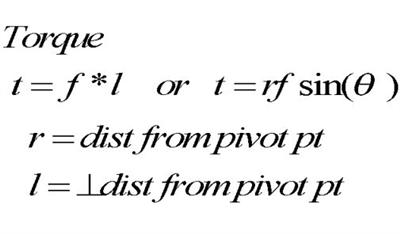
    Torque (Custom).jpg
    Got it? Good.

    Thrust as a concept is covered frequently on the internet. Car guys struggle to define the automotive equivalent—or that sock in the lower back that occurs under hard acceleration.

    There are many modern day muscle car that deliver this g-force experience. Yet if it’s thrust you seek, it’s not how fast you go, but how you go fast. This means, technically speaking, that you are looking for torque instead of raw horsepower.

    I won’t explain difference between torque and horsepower here. More horsepower almost always means more speed. More horsepower does not directly translate into more thrust, which is why you’ll never see “stump pulling” and horsepower appear in the same sentence. For earth-moving pull (with what feels like a push) you need torque.

    Thirty years ago, at the height of the first muscle car craze, buying torque was simple. You bought a muscle car and went for the biggest block engine you could find. Monstrous muscle car engines generated maximum torque and for brutal g-forces off the line, there will probably never be nothing like a 454, 455 or 426 Hemi.

    But what the heck. These cars and engines had some issues. There were inherently inefficient, not much fun over 4000 RPM, and were fairly nose heavy, which dampens the sensation of speed.

    Today, surprisngly, you have more options than you did thirty years ago. Once you are willing to face a few realities, you’ll end up with a lot more car than anything you could get back then.

    The first reality is that engines today are much smaller. They also tend to be multi-valve, aluminum block overhead cam designs. In most cases, achieving maximum horsepower from these engines requires either supercharging or turbocharging—which both tend to pull rather than push you forward.

    The second reality (related closely to the first) is that carmakers no longer build push-rod engines (outside of GM.). For some reason push-rod engines do a better job of generating low-end torque. They are, however, more thirsty and tend to lose power over 4500 RPMs. This is the main reason that carmakers have abandoned them.

    (All but GM, that is. And here GM has stuck with two engines that continue to defy the laws of physics, or the 3800 V6 and the 350 V8.)

    The third reality is that cars are getting heavier again, due to really egregious electronics. This is especially nasty, but not limited to, German cars. Unlike Mercedes and most Audis though, BMW continues to insist upon normally aspirated engines which delivers a more natural throttle response (i.e. you push down the accelerator and you move).

    The final reality is that you may need to wait one more nanosecond off the line today to achieve the g-force acceleration you are looking for unless you want to go straight to the track (which is the subject for another blog). The accelerative rush you get at slightly higher RPMS fortunately can be just as brutal as anything from the 60s—and often more terrifying (German Cars and centrifugal superchargers are especially adept at high-end acceleration).

    I have assembled a fairly lengthy list of cars to make the job of spotting the g easy. It is currently passing censorship and being vetted by local car dealers to assure that the cars will be available for you to drive. I have on hand–twenty five cars in three different price ranges.

    The good news is that 80 percent are under 35k–well under. Some will even save you gas (comparatively speaking).

  • Las Mariposas

    meeting sketch.jpg

    If you were to google-stalk me, which I’m sure you weren’t, but just indulge me here for a moment, and pretend, if you will, that the small matter of my incessant self-googling doesn’t exist. Now. Depending upon which search engine you were to use (note here how “google,” as a verb, is in danger of becoming a generic; you know, like “rollerblading”), you might stumble upon a certain Amazon.com customer review I wrote, in about 1998, for Julia Alvarez’s In The Time of the Butterflies. These things are embarrassing, and in this case the review comes replete with misspellings–my, that’s charming! But the more important thing is that I described Butterflies as a “very important book.” And that’s charm squared, if you ask me. I was a late-bloomer.

    This is a book I have since bought for blood-relatives and old chums in need of gassing up on some “girl power.” But sadly, I’m pretty sure none of them ever picked up the thing. I’m sure glad I did though, because I remember admiring the Mirabelle sisters and their varying paths to political resistance and feminism. This latter virtue was more important to me then, as I had not yet experienced life under a repressive regime. (Remember: Bill Clinton was president, and as a later-bloomer, I can hardly be expected to remember the administrations of Reagan and Bush Sr. Sheesh!)

    This, too, was my final tangle with that whole “multiple perspective” trick–you know, the same thing Barbara Kingslover used in The Poisonwood Bible and countless other authors have used for their popular books–although other examples don’t immediately pop to mind. It’s a crafty trick. Sure I’ll use it myself when I write my great novel one day. (Another note: late-bloomer + ADHD. Sucks for me, yo.) Nevertheless, the whole “multiple voice” schtick strikes me now as being rather non-committal, sorta like a theatrical revue or a faux-hawk. But I’m not above non-committal.

    I haven’t read Alvarez’s other books, including this newest one, Saving The World–which has great feminist potential. But because I have such fond memories of Butterflies, I hereby crown Alvarez’s Talking Volumes debut as Secret of the Day. There.

  • Fancy a Festival?

    foodfestival1.jpg
    What do you feel like doing today?

    If I was deeply and importantly bored for the rest of April and had a glass elevator that could take me anywhere at any moment, these would be appropriate diversions:

    The World Gourmet Summit in Singapore April 10-28
    Forget the exotic locale and international chef sightings, I’d go for The Macallan vertical tasting alone. The class details note that dress should be Smart Casual, as if we Macallan drinkers could be anything but.

    Country Cajun Crawfish Festival in Biloxi, MS April 20-23
    We’re talking 20,000 pounds of hot, spicy crawfish and The Charlie Daniels Band. That’s quite an afternoon. Fork over $10 to get into the judging area for the Super Boil Crawfish Cook-Off and help determine who gets braggin’ rights.

    Stockton Asparagus Festival in Stockton, CA April 21-23
    Everyone says they’re going to visit Asparagus Alley to pick up some recipe ideas, but what they’re really checking out is the World Deep-Fried Asparagus Eating Competition. How can you miss 105-pound Korean Sonya Thomas who can put down 5.7 pounds of the stuff in ten minutes? I’m assuming the Porta-Potties are situated a good distance from the festival grounds.

    Taste of Chinatown in New York City April 22
    They open at 1pm and close at 6pm. That gives us five hours to hit every one of the over fifty restaurants, tea houses, bakeries, and shops that are offering $1-$2 tasting plates. That’s roughly one sample every six minutes. It’s the New York marathon, my style.

    Vidalia Onion Festival in Vidalia, GA April 26-30
    No other onion deserves a festival, that’s for sure. I’d be snarfing onion rings all day long. It has the usual cook-offs and Miss Onion pageants, but I might camp out at the Boy Scout’s Vidalia dutch oven demonstration.

    Vermont Maple Festival in St. Albans, VT April 28-30
    I’m grabbing a stack of pancakes and heading to the Fiddlers’ Variety Show. Because when can you ever get enough fiddlin’ and pancakes.

    Show Me Gourd Festival in Sedalia, MO April 29-30
    I’m not exactly sure if they actually eat gourds at this festival, but they do make hats and quilts from them. So I have that going for me.

    Shad Fest in Lambertville, NJ April 29-30
    Stonyfield Farms is a Shad Fest supporter, might we expect a shad flavored yoghurt? I’d go simply to hear Susan McLellan Plaisted of Heart to Hearth Cookery give a lecture. To food geeks like me, she’s Aerosmith.

  • Living On A Thin Line

    figurine-rake.jpg

    The hostile colonization is now almost complete, my skull reduced to one more cluttered victim of American conquest and imperialism.

    I close my eyes and I still see giant petroleum and fast food logos, neon beer signs, beautiful celebrities. I hear voices that should not be familiar, the voices of complete strangers that someone has made it their business to convince me I know, intimately.

    Not someone: An immense network of someones.

    I hear television jingles and snippets of pop songs I would otherwise be prepared to swear I have never heard. I find myself desiring (in place of my true, unattainable desires) products of one sort or another.

    All of my dreams are now the Busby Berkeley productions of giant sydicates and corporations. Ideally, if the doctors ultimately have their way, the way I feel will not be the way I actually feel, but the way I have been made to feel. Even my subconscious has been plastered with decals for various corporations, exactly –or not quite exactly– like the jumpsuits of Nascar drivers.

    Every thought is like a link to the webpage of some pirate or entrepreneur. This, that, and the next thing —every last thing— is brought to me by who? By whom? The purveyors, the procurers, the fucking delivery men.

    figurine-running 6.jpg

  • Tings And Times: A Few Random Observations From The Home Opener

    This seems modestly interesting to me:

    Last night’s starting lineup included five players (Castillo, White, Morneau, Batista, and Castro) that were not in the lineup for last year’s home opener against Chicago. The 2004 lineup on opening day had six guys who are no longer even with the team (Rivas, Mientkiewicz, Koskie, Jones, LeCroy, and Guzman).

    In 2003 that number was seven, in 2002 it was eight (with Torii Hunter the lone carryover), and all nine of the 2001 opening day starters are no longer with the team.

    Patrick Reusse’s column today
    pretty much nails the feeling in the clubhouse and around the batting cage. So far, at any rate, this is the quietest Twins team in years.

    Still, it was a good ballgame, and demonstrated the sort of team this version of the Twins could be, or at least the sort of ball it needs to play to succeed: A hitting and baserunning clinic from Joe Mauer (who really does have a chance to be even better than advertised, which is, of course, saying something), stellar defense (most notably from new second baseman Luis Castillo), a shaky, then solid, workmanlike start from veteran inning-eater Brad Radke, and power when it came in most handy.

    That last business is certainly the thing that’s been missing the last couple years, and the thing you’d most like to be able to depend on from the Twins this season. As Earl Weaver always understood, a three-run homer can work wonders for a baseball team, particularly a baseball team trying to dig its way out of a 4-0 hole.

    I also thought this bit of information from the Twins media relations folks was interesting: Who do you think has thrown out the first pitch on opening day more times than any other person?

    Think hard, and I’ll give you a little hint: Nobody else is even close.

    I’ll also tell you that Rudy Perpich threw out the first pitch of the season three times. Rod Carew and Harmon Killebrew have each done it twice, as has Clem Haskins. Hal Greenwood shared the duties in 1973.

    Give up?

    Former Governor Wendell Anderson tossed out the first pitch for six straight seasons, from 1971 through 1976.

    Finally, I didn’t even notice: Did they trot out Lee Greenwood for the seventh-inning stretch last night?