Reflections and random scenes from Friday’s 10K Arts Party:
I ran into the Sock Puppet Lady, whose work is featured in the Feb. issue of 10,000 Arts

And here’s me, sandwiched between a couple of Live Action Set players

Reflections and random scenes from Friday’s 10K Arts Party:
I ran into the Sock Puppet Lady, whose work is featured in the Feb. issue of 10,000 Arts
And here’s me, sandwiched between a couple of Live Action Set players
ain’t happenin’ …
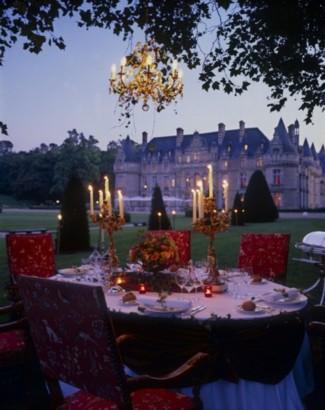
Valentine’s Day is an odd holiday for the restaurant industry. Yes, it’s a money maker, but most of the reservations are two-tops. And you can bet that your walk-in traffic will be next to nothing. And then there’s the fact that you will be working the holiday, so your spouse, ahem, will have to suck it up.
But I am a purist, celebrate the holiday ON the holiday, meaning dinner reservations should be on Wednesday. And if you ask me, mid-week dining is the best anyway: fresher chefs, less crowded, not as many drunk people. Many restaurants will be creating special menus, so it’s a great opportunity to see something creative from our local bunch.
Vincent’s five course tasting menu features poached guinea hen and lobster ravioli.
I’d be all over the pumpkin-lavender chevre tart at Heartland.
W.A. Frost does tasting menus every night anyway, as does La Belle Vie.
I don’t know if there are any tickets left, but you have to buy in advance for Solera’s V-Day gig which includes an eight course tasting menu and entertainment.
Don’t worry, if you’re one of those who doesn’t buy into all of the pink-smothered traditions of Feb 14, there’s a place for you: Joe’s Garage is hosting a Surly V-Day in conjunction with Surly Ale. They “invite the cynical people to drink through their angst with bargain basement prices…” and indulge in specially priced blue-plate specials. You’ll have to call, as their website’s events page isn’t updated … which makes me surly.
Again and again we put our sweet ghosts on small paper boats and sailed them back into their death, each moving slowly into the dark, disappearing as our hearts visited and savored, hurt and yearned.
—Jack Gilbert, from “Kunstkammer”
Another flower shall spring, because the soul of sweet delight
can never pass away.
What then is required? Light! Light! Light in floods!
–Victor Hugo, Les Miserables
A shattered mirror, I’ve discovered, really is bad luck.
I stare into the fractured reminder of this fact every morning, and it’s as if entire continents of my face have broken free and drifted out into the dark sea of who I once was and who I thought I was going to be.
Still, I thank god or someone, some big over-thing that lives above me or in my head –it doesn’t matter; whatever and whoever it or he or she is, I thank them. It could be a consortium or a cabal for all I know or care, just so long as they don’t forsake me.
It’s a big something, that’s all I know. It shoves me. It calls my attention to the sky when the sky is deserving of attention, which is often. It stirs things in me, and keeps moving words from my skull to my fingers and tongue, even when I am –or should be– too weary and brain-fogged to speak my own name, let alone form complete sentences.
It keeps shooting off bottle rockets, flares, and the occasional full-blown fireworks display. Time and again it drills its way through the murk to the place where my laughter and wonder are stashed, and calls them forth in bursts and spasms.
For all these gentle miracles I thank God or someone, some big over-thing, etc. I give thanks also for Otis Redding, for E.B. White, for Czeslaw Milosz and Stanley Kunitz, for the Brothers Grimm, for Tom Waits and Ornette Coleman, for sweat and love and tenderness and compassion, for human hands and hearts, for the companionship of dogs, and for Nat Kendricks and the Swans’ version of “Mashed Potatoes.”
And for mashed potatoes. And for fried potatoes at the Band Box. And for potatoes in general.
Because of this gratitude, I want, like Zbigniew Herbert, to make of my imagination “an instrument of compassion.”
Like Tolstoy (I think), I want to learn to believe that people are more important than art.
I want to believe that.
I want to offer love, understanding, and compassion to the troubled and broken people I come in contact with. I want to hear their stories, to listen to how they hurt and how they got hurt and how they got lost. I want to understand if I can their strange logic and imagine the unreal places that have become so terrifying and so real to them.
I know I will fail and fail miserably (I have failed and failed miserably), but these are things I want all the same.
I am trying very hard not to be sad in this world.
Last night, after midnight, I took my snow saucer over to the big hill by the lake and plunged again and again into the darkness until I got what I came for: tears. Tears of sorrow. Tears of joy. Tears of gratitude.
Lord, grant me the strength and agility of those who build sentences
long and expansive as a spreading oak tree, like a great valley; may they
contain worlds, shadows of worlds, and worlds of dreams.
—Zbigniew Herbert, from “Breviary”
I could write a treatise
on the abrupt change
of life into archaeology
–Zbigniew Herbert, from “Abandoned”
People pay for what they do, and still more, for what they have allowed themselves to become. And they pay for it simply: by the lives they lead.
—James Baldwin, Nobody Knows My Name
As the weather turns wicked, my automotive thoughts turn to something other than the utilitarian SUV. Or even, for that matter, the overweighted blinged out luxurious SUVs of today. My thoughts turn instead to luxury–pure luxury as it was once defined.
Of course what makes a luxury car truly luxurious is harder to answer in an era when your average Honda rides as quietly as a Rolls Royce of the David Olgilvy era.
Ah, yes, but have you actually ridden in a Rolls? Or, perhaps, a Mercedes prior to 1993–which, of course, was the last Big Benz engineered to spec, not cost. Both of these cars offered what Henry Royce called “Wafability.” This is a peculiar British affectation for the effortless, silent quality with which a classic Rolls (or Benz for that matter) accelerates.
While a Rolls Royces in good kit is overpriced and hard to service for the every day driver a twenty year old Benz with a good service history will provide you with the pleasures of an endlessly flat torque curve without trimming down your bank account.
I cannot say the same for Lexus.
In the Strib this morning was a photo of a Marine outpost in Iraq. On an interior wall was hand written the following: “America is not at war. The Marine Corps is at war. America is at the Mall.” (Sorry, photo is not online that I can find.)
Also, on the Strib’s website today, The Most Read and Emailed Story top spot is held by: “Anna Nicole Smith’s death a ‘medical puzzle’”.

I have a semi-quiet Saturday ahead of me so I’m a little excited to park myself at the kitchen computer with a steamy cup of French Roast and a slice of pumpkin bread while I catch-up with my food writer reading…
TONY rules, does he not? And thank goodness Michael Ruhlman allows him space to rant about all the gloriously eeeewy things on the Food Network.
Have we spoken of Orangette? Or have I been keeping that one for myself? I have to admit I am a little bit in love with Seattle Molly. And she’s one of the good bloggers who actually deserves the book deal she’s got cookin’.
I’ve been meaning to get the whole story on the Annie’s vs. Kraft mac n’ cheese discussion on Megnut. It’s a hot topic in my house because the kids sneak the Spongebob adorned Kraft boxes into my cart when I’m not looking, and they find Annie’s to be OK, but how do you fight crack-laced Spongebob?
I am seriously delinquent on my Grub Street patronage.
The re-design of Chowhound/CHOW mag has had loyalists in a quite a twist. I haven’t had time to really dig.

Blue Velvet, 1986. Written and Directed by David Lynch. Starring Kyle MacLachlan, Isabella Rossellini, Dennis Hopper, Laura Dern, Dean Stockwell (freaking unbelievable), Brad Dourif, Hope Lange, George Dickerson, and the original Eraserhead, Jack Nance.
Now showing in a new 35mm print at the Oak Street Cinema.
Valentine’s Day is Wednesday next, and it’s customary to celebrate on the exact day, surprising your gal or guy with something sweet on that oh, so sugary day. A bouquet of flowers showing up at work, a package of Russell Stover candies with the edges turned gray from age, a card you picked up at the SuperAmerica, maybe you make dinner or pick it up at Applebee’s. Then again, it might be beneficial to really tear it up on Saturday, to enjoy your festival of romance on the weekend. To celebrate, and celebrate late into the night. Have yourself a nice dinner at some joint and then, at 9:15 walk hand in hand past the inebriated college students wandering from Sally’s or Stub and Herbs and check out the best movie in town this weekend: Blue Velvet.
Consider: what else are you going to see? You artsies could end up checking out Jude Law going down on Juliette Binoche in the flawed Breaking and Entering and afterwards enjoy a glass of fine wine in Uptown, and ruminate over what you just saw. Flip through the paper, check out the online listings, and there ain’t nothing but movies you should have seen two weeks ago, horror, and some silly romantic comedies that’ll only make you feel as if love is something that comes in a Reddy Whip can.
Blue Velvet’s the exception. And, oh, is it the fucking exception. Something tells me most people haven’t seen it on the big screen, that giant blue velvet curtain swaying in the opening credits, almost a sexual thing in itself. The colors, the performances, Rossellini’s Dorothy Vallens stark naked and terrifying, a scene that not only will trouble you at night, but troubled the townsfolk where they filmed this masterpiece, and ended Lynch’s ability to film on the streets. Almost wrecked the picture, it did.
You’re going to be disturbed by Blue Velvet, you and your date. You’re going to go home wondering why your mate took you to this run down theater, what the living hell they were thinking, Dennis Hopper’s Frank sucking down that nitrous, that ear covered with ants, that God-damned white-faced Ben (Dean Stockwell), crooning–
A candy-colored clown they call the Sandman
tiptoes to my room every night
just to sprinkle stardust and to whisper
go to sleep
everything is all right
Everything is far from all right, especially when Dennis Hopper’s Frank interrupts the singing to slug the hero and shout “I’ll fuck anything that moves!”
I’ll spare you the rest of the plot. If you don’t know it, you should, and if you don’t, you’ll be all the more freaked. Which is just what Dr. Phil ordered.
So why not put some spice into the relationship? To go home, staring at your partner out of the corner of your eye. She seemed a bit turned on by that rough play between Kyle and Isabella… Did he think Dennis Hopper was cool? The guy’s a rapist, for Christ’s sake… What the hell was my boyfriend/girlfriend thinking? Those little tests endear us to one another, my friends. A restless night’s distrust is good for the soul, and sharpens the blade of love.
Above all, Blue Velvet is a stunner, and a must-see on the big screen, where Frank and Jeffrey and Sandy and Dorothy all loom larger than life, and stomp merrily into your nightmares. Nightmares are good–they make you curl up in the late hours with your loved one. They make you appreciate the waking hours, appreciate the familiar warm touch of your spouse’s back. What other movie will help you to appreciate that special someone like Blue Velvet?
OK, a quick tale of serendipity.
One of the chores of covering TV and media for the St. Paul Pioneer Press was attending the bi-annual Television Critics Association press tours in Los Angeles. As routines go, Was it better than sitting in Minnesota writing giddy featurettes about, “Joe Millionare”? Yes. Were there hundreds of more interesting and amusing things I could think of doing with my clothes on? Definitely. But it had its moments. A lot of them, actually. Most involved cliches and cocktails, both served cold, and in chest-brushing proximity to someone famous for being on television.
That was the scheduled gig. But being a model employee, I supplemented the press tour’s faux intimate schmoozing with reality TV producers and their briefly famous girlfriends with other stories from elsewhere around LA … which meant a hell of a lot of driving around in a rental car.
So one day five years ago, over in Westwood by UCLA, if I remember right, I was listening to some self-consciously urbane rock critic on MPR’s Pasadena-based public station, KPCC. The guy was ga ga over the Red Hot Chili Peppers’ new CD, “By the Way”. “Mature”, “sophisticated”, “playful” and “adventuresome” were a few of the gush buttons he pushed.
“Cool,” I thought. “I’ll get me one.” Even though it was LA, where the quality of the rest of your week can depend on paying close attention to traffic radio and the consequences of the latest big rig flipped over and blocking some major artery, I decided I needed some fresh, quality tunes.
“By the Way” lived up to the hype. I played it constantly. Especially a cut titled, “Don’t Forget Me”, a kind of junkie’s lament, in which I could see, vividly, Flea and Anthony Kiedis writhing in full, imploded LA rock doper glory.
Unfortunately, when the press tour’s siege of the Ritz Carlton Huntington finally ended, the last cocktail was sipped, the last transcript tucked in my computer bag and the last starlet cleavage disappeared down the hotel driveway, I flew home and left, “By the Way”, in the dashboard of the rental unit.
Bummer. But, being a grossly overpaid union journalist, I had a friend of my kid’s burn me a new copy.
Flash forward to a couple Fridays ago. Tobie’s gas station, Hinckley, Minnesota. A regular pit stop on the road north to the Lambert Fortress of Solitude. Powdered lemon bismarks? Check. Duluth News Tribune? Check. USA Today? Um, Ok. Check. Weekly World News? Anything this week on Bat Boy schtupping Hillary Clinton? No? Forget it.
An hour later I’m sprawled out on the sofa, fire crackling, adult beverage poured and poised, leafing through USA Today. A lot of lame pre-Super Bowl “coverage”. Like there’s anything we don’t know and haven’t been told a million times about Peyton Manning. Why do they bother? So I turn to the Life section and … hmmm … a feature piece on the Red Hot Chili Peppers. Cool. Seems they’re touring with Gnarls Barkley. Cool. Seems the two bands sort of discovered kindred souls in each other. Cool.
The story goes on and eventually gets to some quotes from Danger Mouse, a.k.a. Brian Burton, one-half of the Barkleys.
At this point I quote from the USA Today story:
….. Burton, who was born in New York and schooled in Georgia, resides in Los Angeles in part because of the Peppers.
“I was living in London and came out to California to do some recording,” Burton recalls. “I rented a car and somebody had left their By the Way CD in the car. I put that CD in and had it in there for the whole week. When I got back to London, it was freezing and raining. I put that record in and knew it was time to move to California.”
The adult beverage remained on “poise” for a moment. I re-read the paragraph. And then I asked myself, “What are the odds?”
How many people left “By the Way” in a rental car in LA in 2002? Ten? Twenty? One?
Then, just for laughs, what are the odds Danger Mouse would recall that particular incident for the USA Today writer … who decided it was interesting enough to put in his story … and it survived editing … and I … who may possibly have once owned that particular CD … picked up a copy of USA Today … like I do maybe every two weeks, at the most … and on that night read an A&E feature instead of just the usual politics and football coverage?
The odds are what?
Pals I’ve told this story to invariably say, “Oh, you’ve got to write them! Gnarls Barkley! And tell them.” Tell them what? That I want my CD back?
I say, “Invariably”, because of one buddy whose reaction was, “Sue ’em!”
Huh? “Yeah. See, they’re playing together because of you. Demand a cut of the tour profits!”
Show biz. Brings the best out in everyone.
Following up on the recent, “New Rules for Journalists” post via Dan Froomkin and the Nieman Center, (see below), here’s an excellent set of questions newsroom managers ought to be asked relative to their performance prior to “Shock and Awe”.
By Gilbert Cranberg
cranberg@verizon.net
As the war in Iraq nears its fourth anniversary, and with no end in sight, Americans are owed explanations. The Senate Intelligence Committee has promised a report on whether the Bush administration misrepresented intelligence to justify the war against Iraq. An explanation is due also for how the U.S. press helped pave the way for war. An independent and thorough inquiry of pre-war press coverage would be a public service. Not least of the beneficiaries would be the press itself, which could be helped to understand its behavior and avoid a replay.
Better a study by outsiders than by insiders. Besides, journalism groups show no appetite for self-examination. Nor would a study by the press about the press have credibility. Now and then a news organization has published a mea culpa about its Iraq coverage, but isolated admissions of error are no substitute for comprehensive study.
The fundamental question: Why did the press as a whole fail to question sufficiently the administration’s case for war?
More specifically:
Q. Why did the Knight Ridder Washington Bureau’s “against-the grain reporting�? during the build-up to war receive such “disappointing play,�? in the words of its former bureau chief?
Q. Why did the press generally fail to pay more attention to the bureau’s ground-breaking coverage?
Q. Why, on the eve of war, did the Washington Post’s executive editor reject a story by Walter Pincus, its experienced and knowledgeable national security reporter, that questioned administration claims of hidden Iraqi weapons and why, when the editor reconsidered, the story ran on Page 17?
Q. Why did the Post, to the “dismay�? of the paper’s ombudsman, bury in the back pages or miss stories that challenged the administration’s version of events? Or, as Pincus complained, why did Post editors go “through a whole phase in which they didn’t put things on the front page that would make a difference�? while, from August 2002 to the start of the war in March 2003, did the Post, according to its press critic, Howard Kurtz, publish “more than 140 front-page stories that focused heavily on administration rhetoric against Iraq�??
Q. Why did Michael Massing’s critique of Iraq-war coverage, in the New York Review of Books, conclude that “The Post was not alone. The nearer the war drew, and the more determined the administration seemed to wage it, the less editors were willing to ask tough questions. The occasional critical stories that did appear were…tucked well out of sight.�?
Q. Why did the New York Times and others parrot administration claims about Iraq’s acquisition of aluminum tubes for nuclear weapons when independent experts were readily available to debunk the claims?
Q. Why did the Times’s Thomas E. Friedman and other foreign affairs specialists, who should have known better, join the “let’s-go-to-war�? chorus?
Q. Why was a report by the Carnegie Endowment for International Peace accusing the administration of misusing intelligence by misrepresenting and distorting it given two paragraphs in the Times and 700 words in the Post (but deep inside), with neither story citing the report’s reference to distorted and misrepresented intelligence?
Q. Why did Colin Powell’s pivotal presentation to the United Nations receive immediate and overwhelming press approval despite its evident weaknesses and even fabrications?
Q. Why did the British press, unlike its American counterpart, critically dissect the speech and regard it with scorn?
Q. Why did the Associated Press wait six months, when the body count began to rise, to distribute a major piece by AP’s Charles Hanley challenging Powell’s evidence and why did Hanley say how frustrating it had been until then to break through the self-censorship imposed by his editors on negative news about Iraq?
With Congress jump starting long-overdue hearings on this disaster it would do the credibility of the mainstream media a world of good if it examined its’ work, or consented to an examination by informed critics … in an open and public way.