Month: February 2007

  • Year of the Boar

    lanterns.JPG

    Yesterday kicked off the 15-day Chinese New Year celebration. This is the Year of the Boar, and anyone born this year will have excellent manners, easily make and keep friends, work very hard and appreciate luxury. They are very loving people and make loyal partners. I am proud to say that I was born under the boar, as was Mozart, Hemmingway, Lucille Ball, and Alfred Hitchcock. Oh, and Hillary Clinton and Arnold Schwarzenegger.

    The two week celebration is marked with superstitions and traditions including visiting friends, honoring ancestors and, of course, feasting. Love that.

    For the sake of a little luck, and who doesn’t need some, you should plan to cook a Chinese feast at least one time during the next two weeks. Invite as many people over as can fit in your domicile and eat together.

    What an opportunity to get to the local Asian markets and just spend some time exploring, picking through the produce and oddly intriguing frozen goods.

    Try cooking a whole fish, which represents togetherness and abundance. Noodles should be uncut to symbolize prosperity through a long life. An overflowing table of dumplings bodes well for coming wealth. But stay away from fresh tofu as the whiteness is unlucky and signifies death and misfortune.

    I’m off to JunBo for lunch today to start things off right. But tonight I’m making jiaozi, aka chicken dumplings/potstickers, as my first humble offering to the gods.

  • Rundown

    Since there’s not much that could get me out to, say, a bar or a theater thing evening (I’ve got an interview to do anyhow), I think I’ll just skip the suggestions this time around. But I did have a very fine weekend taking in various arts-and-entertainments. On Saturday, I went to the comparatively unfunny BNW show. Then, yesterday, I missed Stuart Pimsler’s show at the Guthrie because I got the showtime all wrong (1 p.m., not 7!) So, to make myself feel better, I went home to drink wine and watch a screener of the short film Intolerable, which is scheduled for the Walker’s upcoming Women With Vision series. (It was directed by Alison Maclean whose most famous film is probably Jesus’ Son.) It was an interesting flick starring David Rakoff about a double-dealing, and fairly cruel director who screws with a bunch of actors who’ve lined up for what means to be a cattle call. Liked it very much, thanks. I wondered if this was’t inspired by the Maclean’s own experiences with auditions.

  • That's "Lapdog" to you, Buttboy. Franken's First Week.

    Minnesota Republicans regard thousands of hours of Al Franken speeches and air-checks as manna from heaven. They are certain their decent, rigidly traditional, God-fearing, Bachmann-ite base will develop chronic, moral whiplash from the volleys of vulgar imagery Franken has thrown at poor Norm Coleman and Republicans in general over his career. But judging by the non-reaction reaction to Repoublican party chairman Ron Carey air-quoting Franken calling Normie a “buttboy”, they may have to dig a little deeper for something that truly offends modern adult Minnesotan sensibilities. Since most of us get a joke, have watched primetime sit-coms and lived through Jesse Ventura, our threshold for shock is higher than your average butt.

    Political reporters with whom I spoke prior to Franken’s Valentine’s Day announcement were grumbling a bit. They weren’t so hot on being denied physical access to him in the studio at the moment he declared his candidacy, [there was a pool video feed, hosted by WCCO], and they didn’t much like his very Hollywood junket-style one-on-one interviews the following day. Not real upset. But some.

    Their thinking being that like our last celebrity politician, the Honorable Mr. Ventura, the boys and girls who are going to cover Franken for a good chunk of the next 21 months — TWENTY ONE MONTHS! — wanted to see if he can take a hit. They wanted to see how low his flashpoint really is set, and whether the aggregate effect of so much professional impertinence in one room for a mass press conference would prompt an early, out-of-the-gate, persona-defining meltdown. (Think: Denny Green after blowing a game to the Chicago Bears.)

    It didn’t work that way. By all accounts, Franken’s first few days reminded Minnesota’s political press corps that this is not going to be “Apocalypse II: Jesse Redux”. Beyond that though, I was curious if the local corps and their managers have examined their consciences in the years since Ventura left the stage and re-thought the gotcha-crazed pack mentality that had them following the big lunk everywhere short of the men’s room in hopes that — “Please, God!” — he would say or do something buffoonish enough for the top-of-the-10.

    “Well, I know I’ve done some personal re-thinking since the Ventura era,” says Don Shelby, who more or less big-footed ‘CCO radio’s half hour with Franken. [Shelby says it was his aggressive producer, and not him.] “Ventura was a novelty who turned himself into a joke and the joke was on us. And any reporter who hasn’t looked at that and admitted that that is what happened is kidding himself.”

    What Ventura never figured out was how to play the media’s catnip attraction to him for his benefit — beyond goosing his appearance fees for wrestling acts and whatever. As Shelby and WCCO-TV’s Pat Kessler and KSTP’S Tom Hauser and the Star Tribune’s Dane Smith all acknowledged, Franken is a much brighter bulb, a much savvier student of media than Ventura. Which means, doesn’t it? I asked, that the press corps’ radar will have to be set to “11” in order to avoid becoming a primary component in the Al Franken for Senate free media strategy?

    “I don’t know. Franken isn’t coming out of blue on us,” says Hauser. “He’s a much more known quantity. And let’s not forget that none of us really paid Ventura any attention until the last month of the campaign. After the debates. Until then he was just a radio station publicity stunt. This will be different. And in terms of why we covered Ventura like we did, I don’t see Franken making the mistake of taking things as personally as Ventura, who really was a loose cannon when it came to how he responded to criticism.

    “I’ve had him on ‘At Issue’ twice, I think. Once before 9-11, where he was very funny and got off a lot of good jokes, and then once after 9-11, when he was very serious and thoughtful. I think 9-11 changed a lot about how those of us in the media look at this stuff, too. I mean before it was all Monica Lewinsky. After, well, there are a lot more important things going on.”

    What Hauser says he took away from his first date interview Thursday was that Franken understands the importance of, “separating his comedic past from his political future.” The (sad) irony being that Franken the jokester-satirist, the guy calling buttboys buttboys, is a far better guarantor of free media than any thoughtful analysis of U.S. Mideast policies.

    “He’s going to have to walk a fine line between getting attention for being a serious candidate and getting attention for being Al Franken.”

    The Strib’s Dane Smith came away from his 30 minutes with the impression that Franken is determined to be taken seriously. “There are some concerns here,” says Smith, referring to the Star Tribune, “in terms of fairness to other possible candidates who don’t have his name recognition. But you know how we do these things, when they announce every candidate gets a 1-B piece that is a pretty straight-forward opportunity to say who they are and why they’re running. The other stuff comes later.”

    Smith cautions any celebrity candidate who assumes the local media will be a kind of inexhaustible ATM machine for profile-building to remember that, “Ventura left office a pretty unpopular figure.” Point being, the public is now appropriately suspicious about another self-serving, “Its All About Me” act.

    “But I don’t mind telling you,” says Smith, “I was impressed by how knowledgeable and business-like Franken was in our interview. I mean, he is a Harvard grad, and that comes across.”

    “That’s the biggest difference between Ventura and Franken,” says WCCO-TV’s Kessler. “All the butt boy jokes and whatever else he’s said, the guy really does know his stuff. I read his latest book, [“The Truth: With Jokes”], and its very thoughtful. You don’t get the impression talking to him that this is just another vanity candidate.
    Wait. Did I just make that up? That’s pretty good!”

    Shelby too was impressed. “I’ve known [Franken] for a long time and there has always been this serious side to him. You graduate summa cum laude from Harvard and there’s something going on there. So, again, the comparison to Ventura isn’t exactly appropriate.

    “But, yes, it would be wrong if there weren’t a higher level of restraint on the part of the press this time because of the way the tail wagged the dog with Ventura. And let’s not forget this is a campaign. We covered Ventura as an elected official. For that reason I think the Franken news cycle will slow down quite a bit here after this first rush.”

    Shelby and Kessler’s boss, WCCO-TV news director, Jeff Kiernan, wasn’t yet on the job when Ventura-mania struck in 1998, “So I don’t have the perspective Don and Pat have. So I’m trusting their judgment on these things as we begin here. But we understand the celebrity angle well enough to guarantee equal coverage. We certainly do not intend to give Franken any more or better coverage than say, Mike Ciresi, if he gets in the race.”

    An example of Franken’s new, more modulated demeanor is him declaring that for the foreseeable future he will refrain from calling Norm Coleman George W. Bush’s butt boy. “Lapdog” will do for the time being.

  • Sunday Sermon: Thieves Like Us

    wanda.gif

    Wanda, 1971. Written and directed by Barbara Loden. Starring Loden, Michael Higgins, Jerome Thier, and Frank Jourdano.

    You Only Live Once, 1937. Directed by Fritz Lang, written by Gene Towne and C. Graham Baker. Starring Henry Fonda, Sylvia Sidney, Barton MacLane, Jean Dixon, William Gargan, Jerome Cowan, John Wray Walter, and Guinn ‘Big Boy’ Williams.

    Who’s in prison today? The poor, minorities mostly, those gang-bangers who make us shudder en route to a night of fine dining in Block E? One thing I’m certain of: they’re no longer Clyde Barrow or Al Capone. Someone as handsome as Warren Beatty or trafficking in such luscious diversions as bathtub gin only inspires our imaginations, not our fears. We love those guys. Why, we have tours of Capone’s favorite hideouts, restaurants advertise as the place where bootleggers go, and Prohibition was a blast, don’t you know? Keillor telling us he used to imagine himself as Starkweather, but I doubt you’re gonna get any white writer to say he or she thinks of themselves as some kind of drug dealer, the Capone of today. Crime films, like those in the 30s and 70s, championed the white criminal, pushed into his or her trade by forces beyond their control, victims of an unjust and ironic world. Johnny Cash played concerts to these fellows. No one plays concerts to jailbirds anymore.

    If a guy pulls a gun on you, what difference does it make if he’s white or black? Well, in Hollywood, it makes the difference between boffo box office and a big-fat flop.

    Look there, at Fritz Lang’s You Only Live Once and Barbara Loden’s Wanda. 1930s. 1970s. In the first, an innocent man is convicted for a crime he didn’t commit. He’s a three time loser, this Eddie Taylor (Hank Fonda). His wife, Joan (Sylvia Sidney), implores him to give up at first, to trust the system. He does, fails to beat the rap, goes to jail to wait on the chair. And look at that prison! A gulag of hardworking European immigrants, many guilty as sin; others, like Eddie, victims of circumstance. It was the Depression after all. We can forgive these boys, with their funny way of talking tough, their hardened camaraderie. Lang makes Hank Fonda growl and rage with more intensity than he ever showed before (ever–it’s an amazing performance), and we growl and rage right along with him. When he busts out and kills a priest in the process, we’re aghast at the injustice. Eddie and Joan, on the lam, will meet a rough end, but they’ll also reach some sort of spiritual catharsis.

    Wanda, on the other hand, is just no good. She’s a white-trash blonde from Pennsylvania coal-country, who simply gives her husband the divorce he’s seeking (in order to be with a woman who will actually care for the pair of kids he and Wanda have sired) and she’s off, without money, hooking up with some of the most honestly portrayed men in cinematic history–losers all, yet everyone in possession of a tiny slice of dignity. Barbara Loden’s film is incredible in that it doesn’t politicize Wanda’s journey from man to man and finally to Mr. Dennis, a criminal who takes her on a bumbling and fatal robbery spree. Loden doesn’t care to damn Wanda, nor does she elevate her to being some sort of feminist icon, or a symbol of the free-love, wanderin’ decade. Wanda is simply a silly, lost woman, not bright, who seeks love in all the wrong places and whose ennui defines her. Nothing goes right for her, nothing will ever go right for her. We know that, and still we’re riveted by her sad story.

    Now imagine, if you will, a remake of both of these films today. Would we, white audiences (my guess is that Rake readers are predominantly white) who make up the lion’s share of the box office, embrace a black Eddie on the lam for a job he didn’t commit? Some three time loser from the North side, black and not wearing suits and ties (as Eddie does in this film), but as equally articulate as Fonda (Eddie’s a handsome and sharp tongued fellow in You Only Live Once, a far cry from anyone in his shoes in real life), who is set up in, say, a gang murder, or robbery?

    Or if a black woman, abandoning her kids because she claims she’s “just no good” and then hits the road holding up bars and banks would elicit any sympathy from us? She’d be a candidate for Jerry Springer, maybe, if she would shout more.

    Something tells me there’s not a chance in hell. These films wouldn’t play anywhere in the suburbs… unless they had some sort of Oscar-winning rap soundtrack. Even then, it’s a slim chance.

    Something also tells me there’s not a chance in hell that you could even get financing for such ventures. But if we want, we can try, I guess, to watch these movies, on DVD both (Wanda from the library, You Only Live Once from Netflix) and imagine ourselves in the shoes of today’s criminal. That’s the point, you know, the reason we watch these movies, and watched them, in years past (Wanda more today–the film played in literally one theater in America). We are not just supposed to be excited by the story, but relate, at least a little bit, to the characters we see. We are supposed to fall in love with Eddie and Joan, who rob gas stations and eventually get plugged. We are supposed to feel for Wanda, who’s probably never going to see her children again, choosing to fuck anyone and never have a good relationship.

    Get this: Eddie and Joan and Wanda walk these streets. We don’t need to walk up and hug them, don’t need to hope that criminals get soft sentences or forgiveness for violent crime. But perhaps we do need to watch movies like these and understand that old adage, “there, but for the grace of God, go I”. In the slums, in Uptown, even in the suburbs (perhaps especially in the suburbs), we’re all just a mood away from flooring it and being on the lam, two steps away from the gallows, a hair-trigger from ultimate freedom.

    youonlyliveonce.gif

  • Moyer Leaves … Avoid Wet Rodent Imagery, Please

    Upon hearing this morning of the latest departure/replacement at the Star Tribune, this time publisher J. Keith Moyer — I placed a half dozen phone calls to what I consider the usual suspects … plus. I expected to listen to another wave of stunned dismay. Wrong.

    Those Strib employees who weren’t either busy trying to make a deadline, or eager to avoid comment of any kind, essentially shrugged. “Moyer, too.” A bit like the announcement earlier this week of Nancy Barnes replacing Anders Gyllenhaal in the top editor’s job, the trenches-level employees at the place have significantly greater concerns than the shifting of chairs on the management deck.

    It seems fair to say the level of anxiety is extraordinarily high in Strib land. Ownership of the paper will switch hands certainly within the month, a “movement” toward early retirement/buyouts has not been discouraged and, more critically, no one has any way to assess new owner Avista Capital Partners’ commitment to newspapering as opposed to rank profit-seeking and profit-taking. With all that on their minds, the sight of another well-compensated executive, parachutes packed, leaping from the forward hatch is of comparatively little concern.

    But the appearance isn’t calming. As one reporter put it, “If you’re inclined to worry about what comes next, and a lot of us are, on some level you have to look at Moyer and ask yourself, ‘What does he know, really, that we don’t, but should?’ ” The underlying assumption being that as Gyllenhaal jumped to Miami he had some kind of heads-up to McClatchy dumping the Star Tribune eleven days later.

    Not that knowing what either Gyllenhaal or Moyer know/knows is a hell of a lot of consolation to the salary men and women, who have far fewer career options.

    Finally, give me credit for not using, “rats”, “sinking” and/or “poop deck” anywhere in this piece. That would be cheap.

  • Not So Neat

    scottishhighlands07.jpg
    I’ll take the highlands, you take the neat fee…

    This is ridiculous and embarassing. A “neat fee”? You pay for the ounces of liquor poured, not the amount of room in the glass.

    Scotch drinkers who enjoy their malt neat (of which I am one) expect a smaller portion, an unassuming golden slip of elixer in the bottom of the glass. If you’re up-charging to give us a bigger portion of booze to make the glass look fuller, well thanks, but you don’t understand Scotch or the people who drink it.

    Neat is not a cocktail, it’s not a version of the bastardized Martini. It’s a simple matter of delivery, that’s all. It would be interesting to see if they had ordered a scotch on the rocks as well … I wonder if they would have seen a “rocks fee”?

  • To The End of Love

    This weekend: Brave New Workshop‘s new show opens (it’s as close as I get to comedy and a boyfriend favorite to boot!) and Stuart Pimsler Dance Theater’s very smart-sounding To The Ends of Love, at the Guthrie. Daytime hours will be spent, in part, shopping for new bookshelves. I’m takin’ my snobby ass to Danish Teak Classics and Scandia.

  • (To Be Continued): Continued

    heart in a hand.jpg

    Oh, I have made myself a tribe

    out of my true affections,

    and my tribe is scattered!

    How shall the heart be reconciled

    to its feast of losses?

    Stanley Kunitz, from “The Layers”

    Two days and two nights the tiny ship sailed into the great lake. Just after sunset on the third day the ship came within sight of an island rising out of the lake.

    The island was shaped like a large puff pastry, and was dense with sturdy pines, many of which had survived generations in that inhospitable place. Jagged rocks were piled up all around the circumference of the island, and the wind was driving waves against these boulders, creating loud and frequently spectacular explosions of cold water that rose high into the night sky and were scattered like luminous fragments of colored glass.

    The Captain gave the order for his crew to drop anchor. My heart was once again loaded into a round tub of a rowboat and lowered into the heaving water. A dozen of the stoutest crew members manned the oars and wrestled the boat through the waves. My heart, frozen and lacquered with ice, was now a surprisingly heavy and awkward burden.

    A weathered dock jutted almost imperceptibly out into the lake at the bottom of a trail that emerged from the trees. The mice maneuvered their rowboat into a position alongside this dock.

    A trio of young women came down the trail through the woods, their way lit by a swaying lantern. No words were exchanged as my heart was transferred from the rowboat to a wheelbarrow. As the women began to push the wheelbarrow back up the trail, the little boat was already straining back out into the mist of the lake.

    The trail zigzagged through the trees, purposely digressive and worn over centuries at sharp, almost forty-five degree angles designed to ease the steep incline. The growth of old trees obscured the fact that the island jutted out of the lake to such an extent that its exact center was a strenuous climb from anywhere around the island’s perimeter. The trees also hid from view a large chalet-style cabin that had been constructed on a stone foundation at the top of the island.

    A sort of tribe had occupied this cabin for many generations. They were quiet, purposeful people, small of stature and somehow not entirely human. Though possessed of keen senses, every member of this strange tribe was mute. All of them, everyone that had ever occupied the island, was descended (in a manner of speaking) from a man who had settled there long, long ago, this after having traveled a great distance by boat, accompanied by three giant mastiffs.

    This man had fancied himself an alchemist. Once established on the island, however, all of his attempts at alchemy had been failures. Undaunted, and gifted with a prodigious and magical imagination, he had nonetheless succeeded in time in conjuring, out of the raw materials at hand, companions for himself. In the laboratory where he had hoped to turn base materials into gold he had learned instead to produce breathing beings. And having failed at alchemy in a literal sense, this founder of the island, and the generations that followed him, became in time recyclers of human hearts. They were surgeons and they were artisans.

    The first heart had arrived on the island in the middle of the 19th century, on a cool June night when the moon was full and the sky was so clear that the moonlight had made of the calm lake’s surface a glimmering jewel box. The original heart made its journey alone in a boat.

    Perhaps its arrival in that place was purely happenstance, and it is entirely possible that had not the moon been so bright that night, the heart would have drifted right past the island and continued on its solitary journey north. As it was, though, the heart had glowed like a luminous garnet floating far out in the lake, and some of the island’s residents had spied the mysterious object and rowed out to investigate. Puzzled and amazed by their discovery, they had towed the boat ashore and lugged the heart up the trail.

    The founder had known immediately that what he was looking at was a human heart, badly damaged if not entirely broken. Without hesitation he had determined that they would repair this heart, and after much trial and error he and his assistants succeeded in restoring it to perfect working condition.

    Having mastered the most difficult task of all, they were faced with the question of what to do with the heart. For a time they kept it in a jar in their laboratory, where it pumped and gurgled and provided continual astonishment. The old alchemist was troubled by its presence, though; he felt certain that the result of their hard work was destined to find its way south, back to the human world, where he knew good hearts were always in great demand.

    Eventually, as is so often the case, birds provided the solution. A charm of finches that often spent summers on the island had established a sort of telepathic communication with some of the mute residents, and when the finches flew south in advance of the first snow they carried with them the story of the repaired human heart. In the land beyond the lake the word traveled through all the animals of the forest, and finally was passed along to an ancient Guild of heart deliverymen. Though the members of this Guild hated being called fairies, they were in fact, at least technically speaking, fairies.

    The Potentate of the Guild of Heart Deliverers worked closely with a network of animals and angels (this sort of thing, of course, is always difficult to understand and explain), and had been providing heart transplants centuries before human medical science had ever dreamt of such a thing. Before connecting with the island laboratory, however, the Guild had always had to work with whatever raw materials (often damaged) they could get their hands on, even as they were diligent in attempting, as often as possible, to replace bad hearts with hearts possessed of genuine goodness.

    Once a relationship –however unusual, mysterious, and informal– was established between the Guild of Heart Deliverers and the old alchemist, hearts began to arrive at the island on a regular, if unpredictable, basis. Some were transported by geese; others, like my own, were ferried by boat.

    These days each of the hearts is boiled in a mixture of fish oil, cedar berries, and quicksilver, jostled for days in a contraption that resembles a giant rock tumbler, and then outfitted with all new plumbing.

    Twice a year –once in the early spring and again in the late autumn (usually as a harbinger of the first snows)– a flock of sub-angels arrives at the island. These creatures are grimy and ungainly, seemingly part geese, part human. They are, though, celestial beings, but crippled, still tormented by mortal dreams and aspirations, and as the lowest order of angels they are assigned a majority of the grunt work.

    The repaired hearts are fed to these angels, who fly them back south and implant them in the chests of their intended recipients as they sleep.

    The ragged angels will be making their semi-annual trek to the island in a few weeks. I’m holding out hope that I’ll be one of the truly rare and lucky recipients and will get my own heart back. Bigger, I hope, and better.

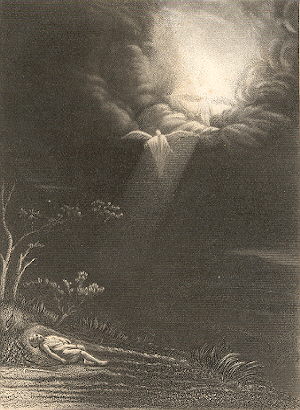
    visitation.jpg

  • The Inner Reaches of Outer Space

    inlandempire1.gif

    INLAND EMPIRE
    , 2006. Written (I guess) and directed (definitely) by David Lynch. Starring Laura Dern, Peter J. Lucas, Justin Theroux, Jeremy Irons, Harry Dean Stanton, Karolina Gruszka, Jan Hencz, Grace Zabriske, Julia Ormond, Diane Ladd, Ian Abercrombie, Bellina Logan, William H. Macy and the augmented Emily Stofle.

    Now showing exclusively at the Oak Street Cinema.

    In David Lynch’s new book Catching the Big Fish, the section on INLAND EMPIRE opens with this verse from The Upanishads:

    We are like the spider,
    We weave our life and then move along in it.
    We are like the dreamer who dreams and then lives in the dream.
    This is true for the entire universe.

    There’s a moment in INLAND EMPIRE, almost three hours in, when Laura Dern’s Nikki is confronted by a menacing figure with a face that appears to be made of wax. By now we are exhausted, and scared, having walked the sticky tightrope of Lynch’s spiderweb, which seems to have no end. Nikki is equally worn out. Terrified, she empties a revolver at the wax face, which accomplishes nothing, his face melting and filling the screen. Like the man behind the dumpster in Mulholland Dr., he is an unstoppable force, not a force of nature, but a pinpoint in the fabric of the reality, a tiny hole through that which protects us and hides the simmering unconscious. David Lynch enjoys punching through the screen that shields us, be it the image of a small town, the dream of Hollywood, or simply the appearance of reality.

    David Lynch has been studying Transcendental Meditation (TM) for over thirty years now. It seems time to come to terms with the fact that, like artists whose religion informs their work–be it Catholicism or Islam or Buddhism–David Lynch is a filmmaker who relies heavily on the visions that TM has offered him. TM is as real for Lynch as the Dalai Lama and Christ are for Scorsese, except that INLAND EMPIRE, in spite of its length and incomprehensibility, is eminently more watchable than Kundun or The Last Temptation of Christ. Where in the past many of Lynch’s efforts seemed purposefully incoherent, I’m starting to believe that, while still incoherent, they are accurate representations of a world distilled through the mind of an artist supremely in touch with his inner being.

    And at first INLAND EMPIRE seems to belie the criticism that the film is absurd and impossible to follow. A woman, Nikki Grace (Laura Dern) has signed on to play the part in a film ridiculously titled On High With Blue Tomorrows, directed by the pompous Kingsley Stewart (Jeremy Irons) and co-starring alleged hunk Devon Berk (Justin Theroux). Problems arise, in the person of the cryptic neighbor (Grace Zabriske), who promises Nikki that she will get the part, and yet warns the younger woman about unleashing evil into the world. Also, the leading man is constantly threatened by Janek, Nikki’s husband, played by the Jan Hencz with steely intensity and little else. If Devon sleeps with Nikki, Janek will kill him, or more likely, have him killed. To make matters all the more intriguing, it turns out that Blue Tomorrows is a remake of a Polish film, in which the two leads were murdered. As this is being explained to Nikki and Devon, they discover that someone mysterious is watching them from the shadows. Devon investigates, but the person, persons or spirit has vanished.

    That’s the swiftly moving first hour of this three hour film, though there are clues to the depths with which INLAND EMPIRE will dive: the rabbits, for instance. There are segments of Lynch’s online television show, Rabbits, which is nothing more than the interior of a spacious Hollywood pad, with people walking around in dull 50s-style suits, with giant rabbit heads. They talk and the laugh track engages at odd moments. There’s a prostitute with her face blurred out, and a girl crying at the events on her television set, which appears to be the action in the movie we’re watching.

    And then cut… to the set of Blue Tomorrows. Of course, Blue Tomorrows is a movie that no one in Hollywood would ever make, not with a title like that and Douglas Sirk dead and gone. Nor would actors with names like Nikki Grace and Devon Berk appear in anything other than mid-grade porn. As usual, Lynch doesn’t give a rip about making his movies-within-movies seem like real things, or his people talk and act in a manner that’s reflective of life as we see it on the streets. The people in Lynch’s films talk in sentences that are clipped, odd statements that are meant to infuriate, confuse, and often menace. Their faces seem pinched, as if the oxygen levels on the set were just shy of what human beings need, or the gravity’s just a bit too strong. David Lynch’s films–INLAND EMPIRE especially–seem shot on a distant planet, after the sun has set but it’s not quite pitch-black. The feeble light gives us just enough to make out and react to before the darkness swallows us whole. This is Hollywood, from Lynch’s point of view.

    INLAND EMPIRE loops in and out of the real and the imagined and the deeply imagined life, in which the Blue Tomorrows movie plays itself out, another movie (in which Dern is seen among prostitutes swaying to “The Locomotion” and she is eventually murdered), and some oddball scenes involving ketchup, Polish whores, an interview in a dark room, and, once again, a return to the square family with giant rabbit heads. Characters you’ve come to care about suddenly turn into actors in a film, then a different movie from that one, then back to INLAND EMPIREagain (ostensibly reality), and the fiction within the fiction vanishes and gives way to the rabbits and crying whores once again, each filmed in lonely, empty rooms that seem to have come from outer space. And you know that, deep down, that both the whores and rabbits will return yet again to trouble you later in the film, and probably later at night.

    And we ask ourselves: What are the rabbits? Does Lynch even know? Or the references to the circus? The barbecue and ketchup scene? The press notes for the film are as follows: “A Woman In Trouble”. Some help.

    Lynch explains (in Catching the Big Fish) that his friend, the actor Krzysztof Majchrzak is given a choice between three props for an isolated and seemingly unrelated scene at a shed. Krzysztof can choose between a broken tile, a rock, a red light bulb. He chose the bulb, which he held in his mouth the duration of the scene. This, according to Lynch, is a reflection of the Unified Field–that a man would come to the set wearing oddball glasses, pick a red bulb, and act in the scene with it in his mouth–they are all related.

    What that does for the audience is give us direct access to a world that is utterly different from our own experiences, and in the sense that INLAND EMPIRE gives us something we’ve never seen before, it works beautifully. And even better, the film maintains its menace, and its grim attitude about Hollywood. Between Mulholland Dr. and INLAND EMPIRE you have two of the most damning films ever made about the way the Dream Factory devours souls. In a startling scene, a ghastly Diane Ladd (Laura Dern’s mom) grills Nikki about having difficulty keeping her paws away from Devon, with whom she’s only just begun work. It’s a sickening, yet funny, parody of the Entertainment Tonight garbage, more real and ultimately more hilarious than Christopher Guest’s jokes in For Your Consideration. Perhaps because it nauseates as well as liberates–by this time already you’re looking for a laugh, and Lynch’s films always have one or two very good ones, and INLAND EMPIRE is no exemption.

    Nothing will protect the people of INLAND EMPIRE against the rot that will devour them. They are stuck, fighting against those vile creatures with wax faces who seek to devour their artistic souls, against their desires to make love to one another (prompted, most likely, by the dream world of their acting), and find that once they enter the labyrinth of Hollywood, there is no escape. Lynch pushes his people into the maze, but leaves them no bread crumbs or string with which to help them emerge. The audience can wish it had Chinatown or Hollywoodland to frighten them about Southern California in a funhouse way , but INLAND EMPIRE is the real thing, as real as the movies get. David Lynch dives deep here, has undoubtedly seen the system eat up talent like bon bons, and is out to remind you that your dreams come with a price. The actors, actresses, directors, screenwriters, they’ve all paid… won’t you?


    inlandempire2.gif

  • Guest: Pitchers and Catchers Report

    From my friend Andy Fuller.

    Pitchers and catchers report. We can arise from our slumber.

    Since the beginning of human civilization we have moved with the rhythms of the seasons. When most of us were tied to the land, we gathered and hunted and farmed and traveled as the seasons allowed.

    When the industrial revolution transformed our lives in every conceivable way, the great manufacturing centers attracted people from all over the countryside with promises of a better life. Perhaps life in these cities was better. Maybe it was worse. One thing is certain – as more of us punched a timecard and fewer of us planted seeds, we started to lose our seasonal rhythm.

    As we fell out of sync with the seasons, a game blossomed.

    Baseball became enormously popular during the most significant developments of the industrial revolution. As the railroad and internal combustion engine irrevocably sped up all aspects of our lives, we turned to baseball to regain our rhythm – the promise of Spring Training, the lazy days of mid-season and the All Star break, the drama of the Fall Classic.

    And so, 150 years later, we wait. We wait for the four words that will allow us to awake from our wintry hibernation. This Sunday we will hear them, for on Sunday the Minnesota Twins’ pitchers and catchers report.

    We know it’s coming. We can feel it. It’s primal, instinctual. We know pitchers and catchers are reporting like we used to know maples and cottonwoods were budding. We know we will hear familiar voices during the radio sportscast like we knew that sunnier days were in the forecast. We know when pitchers and catchers report we can shake off the listlessness that builds over the unrelenting winter.

    It’s time to wake up. It’s springtime. Pitchers and catchers report.