Month: July 2007

  • Wine: virtue, vice, or both?

    You may have noticed (at least I HOPE you’ve noticed) that I haven’t posted much lately. This is because I’ve been suffering from a monstrous head cold that’s made me pretty useless as a wine taster. It’s odd: feeling as if your one high-level skill — that ability to smell a whiff of nutmeg in an otherwise austere wine — is dependent upon something so pedestrian as post-nasal drip. Alas, it’s also true.

    I haven’t quit drinking wine altogether over the past week, but my consumption has been a great deal less enthusiastic. There were a couple nights when I couldn’t taste a thing and I decided it would be a waste to uncork anything that cost more than $10 a bottle. So mostly, I drank tea.

    And after a time I asked myself: Is this abstemiousness, in some ways, a healthy thing?

    I’m not, by most standards, a heavy drinker. I have roughly 2 glasses of wine a night — occasionally, I’ll have three when I’m attending a dinner that involves many courses; often, I’ll stop at one on a summer evening when I plan to walk or run.

    And I believe ardently in the health benefits of wine; in fact, I would say I even feel them. . . .But I’m also a woman over the age of 40, so the question of breast cancer does play on my mind.

    Apparently, it plays on yours, too, because I do get questions about wine drinking and women’s health. Even more frequently, however, people [of both genders] write to ask me about wine drinking and weight gain.

    “I’d love to follow your advice,” one man wrote when Beyond the Cask launched. “But I’m trying to lose 30 pounds, so wine’s off limits.”

    Well, here I am, all sniffly, my olfactory system hardly up to snuff. So I decided now would be a good time to research all those questions about hearts, gums, tits, love handles, and wine.

    The latest news to cross the transom is that wine may help prevent cavities, due to its antibacterial properties. It’s long been thought that red wine (in particular) prevents heart disease by raising good cholesterol (HDL), lowering bad cholesterol (LDL), and reducing clotting — but it’s only been in the past few months that scientists figured out why: a substance called resveratrol which has, according to an article in Science Daily “antioxidant, anticoagulant, anti-inflammatory and anti-cancer effects.” And one Harvard researcher is, apparently, trying to figure out how to synthesize wine-based resveratrol into an anti-aging drug so even beer drinkers can pop a pill and live longer.

    Those are all the widely-publicized feel-good stories: Wine is wonderful! Drink up! And you wonder (or at least, I wonder), Who’s paying for these studies? Gallo?

    Anyway, I went on a crusade to find out the truth about the two big questions:

    1. Does wine drinking make you fat?

    and, far more important,

    2. Does it increase a woman’s risk of breast cancer?

    Here’s what I found (please assume all the typical disclaimers about the fact that I’m a wine critic and not a physician):

    1. No, wine drinking does *not* typically make a drinker fat. And it’s a mystery as to why. . . .A case in point: I’m the sort of woman who gains weight if I lift a doughnut from one platter to another and lick the residue off my fingers. So you would think that adding two glasses (roughly 200 calories — the amount in two 6-ounce glasses of dry red wine) a day to my diet would cause weight gain. This is exactly what I did: I was a teetotaler while pregnant. After my last child was born, 12 years ago, I began drinking wine regularly with no discernible effect on my weight. I suppose it’s possible I’ve cut those 200 calories out of my diet subconsciously (I hear lab rats do this. . . .), but I don’t think so. For whatever reason, the calories from the wine just don’t “stick” the way they would if I consumed them in, say, butter. And I’m not the only one who’s noticed this. In a 2003 Wine News article, Dr. Harvey Finkel, a professor at Boston University Medical Center, wrote that research shows “moderate drinking usually helps correct weight excess and reduces the risks of diabetes and cardiovascular disease by several means.” These include energy “wastage” and a generally salubrious effect on the metabolism.

    2. About breast cancer, however, I’m far more circumspect. And serious. I am a habitual wine drinker. I also eat a low-fat, high-fiber diet, exercise daily, and avoid food additives, hair dyes, synthetic hormones, and toxic cleaners. I had three full-term pregnancies before the age of 30, breastfed each of my children for more than a year, and (this is the big one), I do not have a first-degree relative — mother, aunt, sister, or daughter — with breast cancer. Were any of these things different, I would be far more careful about my alcohol consumption. Even the way things are, I’m mindful. . . .I think there is NO question that there is a link between alcohol and breast cancer. The American Cancer Society has come out saying “for each 10 grams of alcohol consumed a day, the lifetime risk of a woman developing breast cancer increases by almost 10%.” But add to that this confusing bit of information: a recent study in the journal Cancer Research shows that red wine actually inhibits breast tumors. For women, it seems, a moderate amount of wine can be both a potential danger and a potent cure.

  • Gaga for Lava

    7895n3.JPGWeekend shopping notes: Work and family obligations might’ve kept me from Gwen Leeds’s legendary garage sale on Friday and Saturday, but I did stumble upon a pleasant surprise upon visiting the Lava Lounge yesterday afternoon. I’d stopped in with the boyfriend. (I’m trying to diversify his tastes–there is life beyond Len Druskin, you know.) There, I found a nice selection of modest-priced dresses. And they weren’t all funked-out, as I’ve found their dresses to be ever since turning twenty-six. (The Lounge was a favorite prior to my reaching that ripe, old age.) The current stock tends toward the flirty. I didn’t buy the pink ‘n gray dress with the wrap-around, bandage bodice. As it happened, I wasn’t feeling too hot and just couldn’t muster the strength to feel pretty in the thing. But I’m seriously considering a post-work pit-stop this p.m. As for boyfriend: He didn’t buy any of the fluorescent muscle shirts, which he found on the clearance rack (and which I quickly nixed).

  • We All Need More Reality Check

    Several times in recent weeks I have mentioned that as bad as this moment is for newspapers, local TV stations, by some key measurements, are even worse off. Ratings for Twin Cities late news shows are down 15 percent from May ’06 to May ’07, a greater decline than circulation at either of our benighted newspapers.

    The reasons for this slide are many, and depending where you are in the TV news food chain … station manager, reporter, scurrilous critic … you tend to saddle up one particular reason and ride it hard.

    Me, I’m flogging the notion that, like the standard daily newspaper, local TV news is under such tremendous pressure to produce revenue that it is locking itself deeper and deeper into stale, traditional, audience-appealing formulas, and being far too timid and near-sighted in creating the kind of value important to the most key of “key demographics.” And by that I mean the audience that is looking not just for “news” (car crashes, shootings) — but what the news means in a meaningful, relevant context.

    I got off on this tangent again the other night watching Pat Kessler’s latest Reality Check segment on WCCO’s 6 p.m. newscast. I’ve been a fan of Reality Check since WCCO started it and have always had the same complaint: “What’s the problem with making this longer?”

    Last week’s segment was devoted to Congressman Keith Ellison’s allegedly incendiary talk before a local atheist group, in which — if you listen to local talk radio and read the usual hysterical blogs — he called George W. Bush the next Hitler. Standard news reporting would state that Ellison was under fire from local Republicans for making a comment comparing Bush to Hitler … before a group of atheists … and this would be buttressed by a comment from some Republican mouthpiece and then balanced by a response from Ellison or one of his mouthpieces. And that would be that. A good day at the office. Mission accomplished, and we’re onto the next story.

    The great value of Reality Check is that even at a woefully compacted 80 to 90 seconds, it (Kessler) demonstrates enough instinct for context to include actual original tape, in this case of Ellison calmly and coherently explaining that post-Reichstag Hitler and the Nazis exploited the emotions of the moment to impose rigid and invasive controls on civil liberties similar to what Bush/Cheney have done post 9/11.

    OK, so Jason Lewis doesn’t agree with that analogy. But it’s a debatable point that deserves something better than hysterical spin and/or lazy “balance.”

    But as Kessler wrapped the segment, I thought what I almost always think: “Come on, Kessler. I’ve got at least three more questions for you to play with. What’s your damned hurry? It’s the middle of July. You got something better than this? Or maybe you gotta go because Douglas has to tell us it’s hot, or maybe Rosen’s got a scoop on the Twins’ latest call-up from Rochester?”

    Kessler, of course, is merely a salary slave at WCCO. Decisions on the running time of Reality Check are made out of WCCO news director Jeff Kiernan’s office.

    As I laid it out to Kiernan — for the umpteenth time, going back to when Reality Check started — the segment is clearly very popular, particularly with avid news consumers, all of whom I strongly suspect immediately identify it with WCCO-TV … in a highly positive way. (In my view this is a crowd you want to keep satisfied with your product.) The concept of cutting through spin and making credible judgments on hot button topics — particularly those bowdlerized by commercial demagogues — is, or should be, a fundamental process of journalism.

    Beyond that, as I pointed out, WCCO is currently devoting far more time — close to five minutes each — to purely promotional Rewind segments in which … its anchors interview and profile each other. Now THAT is dog days programming.

    There’s a back story to my Reality Check curiosity that made Kiernan insist on staying off record. But the nut of his defense is that, while Reality Check is popular, there is a balancing act to play. The intramural anchor profile gimmick is, as I read it, part of that balance.

    “Those stories,” said Kiernan on the record, “have been a fun way for our viewers to see the people they’ve come to know and respect.”

    My argument is that the promotional/personality/celebrity shtick of local TV news is now so well understood, certainly by those aforementioned avid news consumers, that it is veering dangerously close to Simpsons-like parody, and the inflated presence of “stories” like this Rewind stuff, in contrast to the obvious time constraints still placed on Reality Check so long after it has established both its credibility and value leads … a scurrilous critic … to ask if maybe someone hasn’t become a prisoner of a rapidly atrophying formula?

    Kiernan, who I regard as a smart, reasonably candid guy, didn’t want to say “yes” to that. But he couldn’t bring himself to flatly and emphatically say “no” either. His job depends on producing a product that returns very high profit levels to Viacom, Inc. The gamble is that he — and his counterparts in local TV news all over the country — can continue supplying those fat profits even as their business gets gets hammered and fragmented by on-line video news and, in the very near future, the convergence of internet and television.

    More to the point, the dilemma you can feel ratcheting tighter and tighter with each passing quarter is the consequence of a sort of Faustian bargain. Namely, holding a mass audience with celebrity foo-foo and the stale conventions of cops, mayhem and sports scores, while risking the migration of avid news consumers to sites where they are assured of getting the added value of spin and smoke-cutting analysis.

    Finally, a facet of Reality Check I particularly admire is the segment’s willingness to risk the wrath of the trolls. The campy levels of self-promotion sustaining local TV news are all designed to avoid offense, to present every topic — save crime and tragedy — as weirdly neutral. As much as anything the intent is to sustain the personal appeal of the anchors reading such news. By daring to make some kind of conclusive judgment, Reality Check actively invites the predictable barrage of correspondence from whichever camp got gored.

    If all this needs a slogan, try, “News with Guts.” Tell me the society soccer moms of Eden Prairie wouldn’t respond to THAT.

    Oh, one more thing. If Kessler/Reality Check/WCCO really want to wade into a taboo topic that badly needs an objective assessment, how about a clear-eyed piece on local atheists? With books like Sam Harris’s The End of Faith and Letter to a Christian Nation, Richard Dawkins’s The God Delusion, and now Christopher Hitchens’s God is Not Great — all enjoying broad readership in an age of roiling religious fanaticism — what kind of guts would it take for a local TV news operation, with their “Please love us, please” promotional mentality, to do a sophisticated feature on that “trend”?

    If they dare, they might need more than 80 seconds.

  • Great Deals, Great Reads, Great Outdoors

    First things first: Today is the final day of the Summer Sidewalk Sale at Calhoun Square, so go get great bargains on shoes, kitchenware, luggage, jewelry, and accessories from their fine stores. Hennepin and Lake St., Minneapolis.

    THEATER READING
    Sparkle, Serena!

    Be among the first to get a glimpse of Christopher Harmon and Doug Klozzner’s new musical screenplay. Catch a staged reading of Sparkle, Serena! this very evening at the Center for Independent Artists. “A zealous quest to save a friend’s life catapults a young girl into a magical world of old theatres, dance lessons and crystal shoes. Until a painful discovery pulls her back to the real world of limitations and disappointment — and a secret that shows her there are more choices than failure.”

    6 p.m., Center for Independent Artists, 4137 Bloomington Ave. S., Minneapolis; 612-724-8392; free with RSVP (call).

    BOOKS & AUTHORS
    Laotian American Literature

    2390977043.jpgOne of the first published Laotian American writers, Bryan Thao Worra, will be reading this evening from his first full-length book of speculative poetry, On The Other Side of the Eye, which will be released this August. Worra is literary editor for Tripmaster Monkey Magazine and Bakka Magazine, as well as advisor to AsianAmericanPoetry.com and a freelance writer for Asian American Press. His work has been featured in over 60 international publications in Singapore, England, Germany, Australia, and across the United States.

    6:30 p.m., Dreamhaven Books and Comics, 912 W Lake St, Mpls.; 612-823-6161; free.

    MUSIC & FILM
    There’s Always Tomorrow, but Why Wait

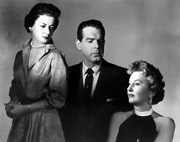
    img_ctqe_always_tomorrow.jpgIt’s Monday — time for another band and another Douglas Sirk movie in Loring park. The band playing tonight is The Plastic Constellations, playing “infectious, keenly lyrical rock that blazes, squirms, and churns with rhythmic intensity, anthemic melodies, and urgent hooks.” Following their performance, grab a spot on the Loring lawn, wipe off the sweat from all that dancing, and settle in for a sceening of Sirk’s 1956 There’s Always Tomorrow, featuring Fred MacMurray and the adorable Barbara Stanwyck. Having sacrificed his dreams in order to attend to the responsibility of home and family, Clifford finds solace in his rekindled friendship with Norma, who has just moved back to town. She provides the attention he’s missing from his wife and children, but their unconventional relationship raises eyebrows and suspicion among the local gossips.

    7 p.m. (movie at dusk, around 8:45 p.m.), Loring Park; free.

  • Locally Grown, Year-round

    Enterprising chef Lenny Russo, back at his Heartland Midwestern Restaurant after a stint at Cue, is working with the Saint Paul Growers Association to create a new retail store and distribution center next door to the Lowertown Farmers Market. The retail store will feature locally grown foods — fresh, canned, or frozen — year-round, while the wholesale distribution center will help small farmers cut out the middleman in selling to restaurants and co-ops, whose purchasing volume is greater than individual farmers can handle. The goal, says Russo, is to have farmers keep more of the profits and also spend less time and fuel making deliveries to the metro area. Russo hopes to break ground this summer and open for the 2008 growing season.

  • Do critics get better tables?

    Uh, yes. Better tables, better service, better food. This is the ugly truth of our business.

    Now that that’s out of the way, here’s why I bring it up: a reader responded to a recent post on my wine blog in which I praised a local restaurant. He’d visited the same place during the same time period, and while he agreed with me about the superior quality of the food and wine, he said his meal was all but ruined by bad service. He pointed out that I had a great experience in large part because I’m known at that restaurant — AND (actually, the reader had the tact not to mention this, but I will) because I have the power to give a restaurant smashing and absolutely free publicity.

    He was right.

    If you think there are other food critics out there who are avoiding the trap, my experience says you’re wrong. This is too small a place, and the community of restaurateurs too intimate, for real anonymity to exist for more than, say, a year. I’m willing to bet someone coming in from one of the coasts — someone who’s never been to Minnesota — could successfully hide his or her identity for about that long. And the better ones do expend a lot of effort: disguises, false names, hidden note taking devices, etc. But after a few years in the business, I’m sorry. . . . It’s simply a ruse, designed to make the public feel fairly represented.

    There are exceptions, of course. It’s certainly easier to visit a brand-new restaurant anonymously (assuming its chef and front-of-the-house man both are new to the industry or the area as well) than it is to slip in unnoticed to La Belle Vie. And reviews of small neighborhood joints, mom-and-pop shops, and ethnic restaurants usually are the real deal. But when it comes to the big, showy places or trendy urban spots, a food critic tends to get found out by visit number two or three.

    My colleague, Jeremy Iggers, and I have discussed this at length. One of the things we’ve pledged to do at The Rake is disclose when we are known to the restaurant (as I did in my wine blog), so there’s no wink-wink arrangement whereby we pretend to be anonymous while management rolls out the red carpet. Even if we only suspect we’ve been “made,” we’ll own up. Then we’ll do our best to assess the food, service, and ambiance of a place fairly. But it’s helpful for us to know what happens to other people when they walk through the door.

    And that’s where you come in.

    We want this blog to be a real dialogue. We’ll put forth opinions based on our years of journalism experience and culinary education. But so far as adding a genuinely egalitarian element to the site — and to the resource guide we’re compiling for local diners and wine drinkers — we’re relying on input from the community.

    The reader who commented on Sweet Spot did exactly what we hope people will do, adding his experience to the mix. So, if you see a post you agree with, we’d love to have you write in. But if you see a review you disagree with, or if you’ve had an experience that was significantly different from ours, please post away. . . .

  • Summer Rerun, with an Update: Was There, in Fact, an Alcoholics Anonymous Chapter in Rockford, Illinois with a Mascot Parrot tha

    banana footleft.jpg

    I broke my brain. I’m not shitting you. It was joggled around in some giant, anonymous pair of hands and tossed end-over-end, without hope or desperation, down a scarred velvet table in a dark and nearly empty casino.

    Have you ever felt like a moth that has been pinned to a post and is being swarmed by thousands of vague and terrifying lights? Has it ever seemed like you’ve been locked inside an old bank safe that has a rusty and long forgotten combination and has been flung into the Mississippi River on a moonless night?

    For many days now I have had a lost thought rolling around like a marble greased with gore in the back of my skull.

    You realize, of course, that I’m not kidding. I’m one of those guys who doesn’t tell the jokes unless I mean them.

    It’s not sleep that I occasionally, and increasingly rarely, find in the long hours after midnight, but something more…I don’t know, really, sleepish, is I guess the best I can do in describing it. Utter sleeplessness that lapses from time to time into weird, yet oddly merciful little spells of sleepishness.

    This is what I am.

    And I have decided that I want to take the idea of talking birds much further than anyone has ever taken it before, to explore the language of birds in the history of literature, music, and art, to get to the bottom of this queer and preoccupying business once and for all.

    I realize that I have, from time to time, gotten carried away with similar such quixotic pursuits. There was the time, for instance, when I was determined to make this…blog a portal for all manner of exhaustive scholarship regarding Calvin Coolidge, the thirtieth President of the United States. I honestly thought that I could –that I would– become the world’s preeminent Coolidge scholar.

    Little did I realize at the time, however, that Coolidge was such a thoroughly boring character.

    I have some reason to feel optimistic that my parrot project will be much more fruitful. No particular reason, really, but some reason, and that, at this point, is something.

    I have spent the last week or so assembling some preliminary notes on my exhaustive cultural study of parrotology, and will in all likelihood continue to work away at this long and ongoing project in this space. At the moment, at least, I am taking as my models for this compendium Walter Benjamin’s Arcades Project, Robert Burton’s Anatomy of Melancholy, and Isaac Disraeli’s Curiosities of Literature.

    For now I would ask your patience and beg your pardon for the disorderly nature of these notes and ruminations. What you have here is a both a crude document and a portrait of one man alone in the wee hours, fumbling his way into a vast and, in all likelihood, inexhaustible project. I would welcome any assistance or suggestions that might point me in potentially fruitful new directions.

    We need another and a wiser and perhaps a more mystical concept of animals. Remote from universal nature, and living by complicated artifice, man in civilization surveys the creature through the glass of his knowledge and sees thereby a feather magnified and the whole image in distortion. We patronize them for their incompleteness, for their tragic fate of having taken form so far below ourselves. And therein we err, and err greatly. For the animal shall not be measured by man. In a world older and more complicated than ours they move finished and complete, gifted with extensions of the senses we have lost or never attained, living by voices we shall never hear. They are not brethren, they are not underlings; they are other nations, caught with ourselves in the net of life and time, fellow prisoners of the splendor and travail of the earth.

    Henry Beston, The Outermost House. 1928

    Psittalinguistics: the science of context speaking parrots.

    A parrot, it has been alleged, was responsible for planting many of the more heinous perversions in the head of one of the most depraved of the Caesars, Tiberius, this after the bird had had read aloud to him (by a sociopathic dwarf tutor in the Caesar’s employ) from an early and particularly pernicious primer in lechery. (See: A. Towson Dandridge, The Psychology of the Tyrants of Antiquity, Stanhope and Adelman, Manchester. 1949.)

    We also learn, in Dr. Renata Steenblom’s Unnatural Nature (University of Winnipeg, 1963), of a parrot which was allegedly capable of divining –and divulging at inopportune moments– the innermost secrets of its mistress, including sexual fantasies of a shockingly explicit nature. The bird was notorious for regaling unsuspecting visitors with a tortuous impression of the poor woman’s whinnying orgasm.

    According to Fr. Xavier Empson’s Curiosities of Catholicism and Marvels of Mariolotry (Eternal Image Press, Skokie, Illinois. 1957), there was, once upon a time, a parrot belonging to a tavern owner in a small village in Italy, and this bird was renowned for its ability to recite the Rosary (in Latin) in its entirety. One day, Empson recounts, the bird solemnly proclaimed, “It is the will of God, and I am but His humble servant,” and promptly fell over dead.

    From the pages of the children’s magazine, Highlights, we learn of an unassuming insurance adjustor and confirmed bachelor in Dallas, Texas who purchased a blue-fronted parrot which, upon being installed in the man’s home, was discovered to have committed a number of Johnny Cash songs to memory. The bird was capable of singing these songs in their entirety, and in a passable impersonation of the country legend’s voice.

    The annals of parrotology are full of similar wonders, from the ancient world to the modern. In a little known short story by the Russian writer, Gogol, a bird is called upon to testify in a court of law as a material witness to its master’s infidelity.

    There is an obscure novel, Lucifer’s Bird, by a Depression-era Georgia writer by the name of Ernest Winter, which featured a talking parrot that was believed to be possessed by Satan. The bird’s sinister commands and insinuations lead a God-fearing local deacon to engage in acts of depravity that shake a small southern town to its core. William Faulkner reportedly attempted a screenplay of this novel for Charles Laughton, but there is apparently no surviving evidence of this aborted project.

    In the days before teleprompters one often heard stories of Catskill comedians in their dottage who resorted to being fed their lines by parrots, which were perched on stage in full view of the audience. One such bird was said to be such a quick-witted master of improvisation that in time it became an actual and valued partner to the comedian. Before it eventually passed away from advanced years (the bird survived the old comedian by more than a decade), the parrot had established itself as a successful solo act –if something of a novelty– in its own right.

    The legendary blues musician Skip James is another performer who was alleged to have used a parrot as a prompt, often, some accounts allege, after James had become so inebriated that he could no longer remember the words to his songs.

    There was a minor dust-up in academia in the 1950s when a man named J. Richard Stevens published portions of his doctoral dissertation in a then reputable scholarly journal. Stevens’ thesis, which was immediately and loudly discredited, was that a number of Emily Dickinson’s poems had been almost literal transcriptions of the utterances of her beloved parrot, Desdemona.

    In the early days of television, talking birds were often used to provide voiceover narration for advertisements, largely in an attempt to cut costs and circumvent union restrictions. The practice apparently continues –albeit somewhat clandestinely– to this day, most prominently in the dubbing of low-budget films from Asia.

    The debate over animal cognition: Dr. Irene Pepperberg’s famous gray parrot, Alex. Dr Pepperberg’s pioneering studies with Alex proved conclusively that the prevailing and disparaging notion of a “bird brain,” is grounded in ignorance. Many birds –parrots most particularly– have very large brains indeed, and possess a cognitive sophistication that is as wondrous as it is little understood. Dr. Pepperberg’s work with Alex is almost as important and influential as the better known work on animal communication and referential speech that has been conducted on the great apes.

    The Yellow Naped parrot, the most virtuosic and versatile of the Amazonian talking parrots, can often master an impressive vocabulary of upwards of eight hundred words, and is also capable of singing, dancing, whistling, and doing uncanny impersonations of animals and household appliances.

    Double Yellow Head parrots have long been recognized as accomplished opera singers, with extraordinary range. They are among the more excitable and motor-mouthed of talking birds. (See: Robert T. Nicolai, Caruso in a Cage: The Incredible True Story of Sergei, the World’s Most Famous Singing Parrot, Bristol House, 1983.)

    Budgerigars have been known to have vocabularies in excess of one thousand words. One such parrot, Victor, purportedly demonstrated that birds are capable of engaging in actual conversation, and was alleged to be an influential teacher and mentor to many other birds. Victor, according to its owner, presided over a de facto academy for talking birds, and a lexicon of the parrot’s impressive vocabulary, along with an archive of its recordings, can be found here.

    N’Kisi, a New York parrot with an almost 600-word vocabulary and psychic abilities, is purportedly capable of reading the thoughts of visitors.

    See also: Bruce Thomas Boehner’s Parrot Culture: Our 2500 Year Fascination With The World’s Most Talkative Bird.

    More audio recordings of talking birds.

    There have been innumerable documented cases of talking parrots thwarting robberies.

    Other literary examples:

    Eudora Welty’s The Shoe Bird

    Flaubert’s “Un Coeur Simple.” (See also: Julian Barnes, Flaubert’s Parrot)

    Somewhere in the works of Balzac (and I have thus far been unable to find the source of this story, although I maintain a clear memory of it nonetheless) there is a parrot that recites “The Lord’s Prayer.”

    There is also, of course, the foul-mouthed parrot in Errol Stanley Garner’s, The Case of the Perjured Parrot.

    More recently: Joe Coomer’s The Loop, which features a home invasion by an elderly parrot given to cryptic utterances.

    In the seventh century, Shui Shi Tu Jing published the Book of Hydraulic Elegancies. Indeed, one continually finds descriptions of such technological wonders as mechanical flying doves, dancing apes, and talking parrots in the literatures of Islamic nations, India, China, and Greece. In fourteenth century Florence, it was none other than Filippo Brunelleschi who designed a mechanical stage to bring Paradise to life.

    –Oliver Grau, “History of Telepresence: Automata, Illusion, and Rejecting the Body.”

    This defect or imperfection that stands in the way of man’s communicating with animals, why isn’t it as much our fault as theirs? For we don’t understand them any more than they understand us.

    Montaigne, “Apology for Raymond Sebond”

    Yet the animals are not incapable of being taught also in our way. Blackbirds, ravens, magpies, and parrots we teach to speak; and that facility with which we see them rendering their voice and breath so supple and manageable for us, to form and constrain it to a certain number of letters and syllables, testifies that they have an inward power of reason which makes them so teachable and determined to learn.

    Montaigne, “Apology for Raymond Sebond”

    This story of the magpie, for which we have Plutarch himself as sponsor, is strange. She was in a barber’s shop in Rome, and did wonders in imitating with her voice all that she heard. One day it happened that certain trumpeters stopped and blew a long time in front of this shop. After that and all the next day here was this magpie pensive, mute, and melancholy, at which everyone marveled, and thought that the sound of the trumpets had stunned and deafened her, and that her voice had been snuffed out together with her hearing. But they found in the end that it was a profound study and a withdrawal within herself, while her mind was practicing and preparing her voice to represent the sound of these trumpets; so that the first voice she used was that one, expressing perfectly their runs, pitches, and variations; and for this new acquirement she abandoned and scorned all she had learned to say before.

    Montaigne, “Apology for Raymond Sebond”

    An old Danish shipowner sat and thought of his young days and of how he had, when he was sixteen years old, spent a night in a brothel in Singapore. He had come in there with the sailors of his father’s ship, and he had sat and talked with an old Chinese woman. When she heard that he was a native of a distant country she brought out an old parrot, that belonged to her. Long, long ago, she told him, the parrot had been given to her by a high-born English lover of her youth. The boy thought that the bird must then be a hundred years old. It could say various sentences in the languages of the world, picked up in the cosmopolitan atmosphere of the house. But one phrase the old China-woman’s lover had taught it before he sent it to her, and that she did not understand, neither had any visitor ever been able to tell her what it meant. So now for many years she had given up asking. But if the boy came from far away perhaps it was his language, and he could interpret the phrase to her.

    The boy had been deeply, strangely moved at the suggestion. When he looked at the parrot, and thought that he might hear Danish from that terrible beak, he very nearly ran out of the house. He stayed on only to do the old Chinese woman a service. But when she made the parrot speak its sentence, it turned out to be classic Greek. The bird spoke its words very slowly, and the boy knew enough Greek to recognize it; it was a verse from Sappho:

    The moon has sunk and the Pleiads,

    And midnight is gone,

    And the hours are passing, passing,

    And I lie alone.

    The old woman, when he translated the lines to her, smacked her lips and rolled her small slanting eyes. She asked him to say it again, and nodded her head.

    Isak Dinesen, Out of Africa

    Parrot Science.

    AND THIS NEW
    addition, courtesy of reader J. Nathan Matias: John Kinsella, “Parrotology: On the Necessity of Parrots in Poetry.”

  • A Strange Team, No?

    And pretty tough, all things considered. On the heels of losing three straight to the first-place Tigers, Michael Cuddyer, who was 11-for-21 coming out of the break, goes on the DL, and the Twins come right back and take two straight from the West-leading Angels.

    Post break: four straight wins, three straight losses, two straight wins. The pitching staff has given up more than three runs just twice in nine games.

    I’m done trying to figure it out, frankly.

    The Detroit series was painful, and pretty much everybody –myself included– was ready to write off the team and the season. It still doesn’t look good, of course, but you have to admire the way the Twins have responded, and, regardless of whether Terry Ryan makes any moves, I don’t think this is a team that’s going to roll over.

    I’m headed out of town for a week, and likely won’t have much chance to check in from the road, but if the opportunity presents itself I’ll throw up a post.

  • Sunday Break: Be Cool. Fight Commonism.

    Again it’s a Sunday, and again I will take a break from cars. Hopefully, you glanced over the post from my first Rakette, Cyd. Cyd, you see, is a really cool young person, primarily because she doesn’t try to be.

    00_greece_01.jpg
    Two sunny people who don’t try to be cool (see also: Sun King)

    Cyd is not, in other words, a commonist. And neither, good reader, are you. Which may bring into question who I am and why this is so. I am nobody. You are somebody. So let’s focus on you.

    You, I am willing to bet, don’t really care about being cool. You would rather, in the words of the Sun King Louis XIV “be than seem.” In other words, you have no pretense, you don’t put on airs or attempt to be anything other than you are. That makes you uncommon. And heck, if you really do care about it, cool.

    I am willing to bet that if you have been reading this blog, you’ve taken an interest in vehicles and things that are also uncommon. You have also realized at some point in your life the utter futility of trying to be someone else.

    This is even more difficult for you if you have chosen to fill your life primarily with symbols instead of substance — you know, the biggest house, the hottest wife, the phattest rims. Because if history is any guide, Louis XIV had you beat long ago (check out Versailles–it all started as scrapbooking cabin of sorts.)

    sunking.jpg
    My house was, is and will always be bigger than yours. Luv, Louis.

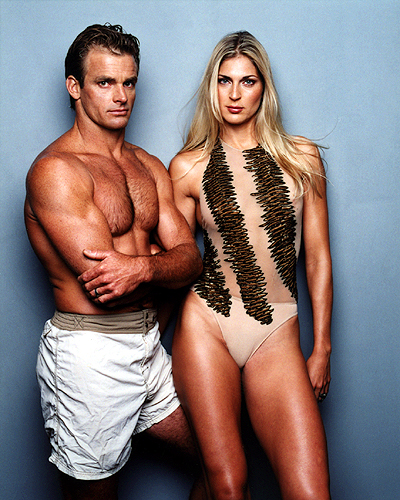
    Heck, even today you’re going to find it hard to match your shinny new trophy spouse up against the hottest couple on the planet (see Laird Hamilton and Gabriella Reece — Cyd looks a little like her.)

    But I know that’s not you. Because you, my friend, are not a commonist. You’re a fighter. And, to paraphrase a better jingle of the past twenty years (I am in the liquor biz now, this might be good karma), this blog, for all you do, is for you.

  • MN Monthly Gives CJ the Diva Treatment

    Do I put all the full disclosures in the lede?

    I admit: I have in years past been approached to write “the definitive CJ piece.” CJ, Strib gossip columnist (although I gather she objects to that description), was for a time a competitor, in that we both feasted the flame-outs of Twin Cities media “celebrities” — and, obviously, I’m writing this for a publication other than the one that chose to profile her so lavishly and uncritically. Is that all? I’m not sure.

    Anyway, here at the Lambert double-wide we observe strict gender protocol when it comes to life-style magazines. They arrive in the mail. I ignore them. My wife on the other hand, gathers them up, plops herself into her favorite chair, and happily leafs through them, ogling the ads for pricey hand-bags, chi-chi restaurants, $40 wine, boutique beauty salons, more upscale restaurants, and, oh yeah, the occasional story.

    Every so often I get the alert from the front room. As in, “Oh my God, you have got to read THIS.”

    So it was with Minnesota Monthly’s piece — now on the stands — titled, “The Power of One” (inside) and “Hot Gossip: Why CJ Is Swearing Off Sex” (on the cover). Heavens! What would the legacy doyennes of all things, Minnesota Public Radio, think of such salaciously exploitative hucksterism?! (MN Monthly is part of the MPR empire.)

    By the time my lovely bride got through three of her summer crime novels, four catalogs, and the latest issues of rival Mpls./St.Paul Magazine, I had already received a handful of e-mails alerting me to the MN Monthly story.

    I placed a call to the magazine’s new editor, Andrew Putz, but have yet to hear back. My curiosity focuses on whether, or how much, he ever considered the “definitive” angle on CJ, or Cheryl, as I still foolishly call her. (She objects to Cheryl, too.) When the idea of a CJ feature was brought up to me, primary points of interest were NOT focused on her begin single, black, female, or celibate. (Although, I gotta tell you, that part was news to me. Maybe too much news.) My angle was a lot wonkier, probably duller, and likely of little interest to lifestyle magazine gourmands.

    What intrigued me has always been what seemed from a distance a very unique, special relationship she has been allowed to have with the canons of old school journalism as practiced so assiduously everywhere else at the Star Tribune. Who signed off on that? I had curiosity because of the stories that kept being retold in my direction over the years — stories of editors supposedly “terrified” of her and unwilling to apply the normal controls to the way she did her business, or rework her copy, or counsel her on interactions with the rest of the Strib staff.

    What the reality of any of the complaints was, I am still not sure. But the stories are pervasive and fairly consistent. Beyond that — here comes the mewling critic part of this post — I always thought her column should be funnier. A lot funnier. I mean, screw the scolding shtick, girl. (Hell, screw the whole “Whitney Houston changed planes at MSP” shtick). Have a damned laugh occasionally at the expense of Twin Cities “celebrities,” of the media persuasion and otherwise.

    In my much more limited (and constrained) experience, most of them can take it. Like Frank Vascellaro and Amelia Santaniello. Nice people. Fairly hip to the business. They can take a zinging on matters of more significance than Frank’s helmet hair. Is it really necessary to treat them like your philanthropic cousins?

    It’s not like I, or those who had fleeting interest in me writing a piece about CJ, don’t understand the special role of a gossip columnist. MN Monthly’s story, written by Carol Ratelle Leach — who died suddenly before the story was published — seems accurate, and pleasantly written.

    While at the Pioneer Press I often heard tell of research showing that CJ and Sid Hartman were regularly neck and neck for the best-read columns in the Strib. (I backed myself deeper and deeper into the PiPress managers’ dog house by suggesting that instead of constantly aping the grayest aspects of our much larger rival we ought to get our own gossip columnist. Sour stares. Bad idea. I should learn to keep my mouth shut.)

    So why didn’t the people approaching me pull the trigger on the “definitive CJ story”? A lot of reasons, I suppose. But not the least of them was the obvious minefield of questioning whether or not a well-known minority woman had ever, in any way, abused her employers’ fear of being publicly charged with discrimination in the wake of behavior that would have gotten anyone else disciplined. You could never find out if any such thing had happened without asking, and asking was fraught with peril.

    This is the point where I say I’ve always been amused by her, personally. She’s ALWAYS working a story, and always playing the role. I have enough trouble with the reality of a bungling dumbshit. Hell, she even put my kid in a column once. Now THAT was a slow celebrity news day. And I can appreciate that growing up black and female in Alabama, and then moving up here — and getting the racist crap phone calls and mail I don’t doubt for a second she gets — has certainly made her life path tougher than mine.

    But I always thought there was a way to tell a more interesting, complex story of a woman like her surviving, especially now, in a time in the life of newspapers when, unions withstanding, it really is every man and woman for themselves.

    At what point do you get a pass for playing the toughest, wiliest, “don’t f**k with me, or else” game you can to hold on to what you’ve got? Would I, or any of the other kicked-out, bought-out newspaper types, do any differently if we were in her situation? Don’t know. But I thought it was worth asking the questions.

    Not that Cheryl … heh, heh, heh … would talk to me about it.

    I had to laugh at this paragraph:

    “Scaredy cat media people are endlessly entertaining,” CJ says. “I get a kick out of those who don’t want to return calls — but themselves count on people to return calls.”

    I laugh because I’m still waiting for her to call me back from that week this Spring when it looked like the Star Tribune was going to trim back from four to two columnists. I think somebody was scared.