Year: 2007

  • Stop The Presses!

    What the hell? This is what we’ve been waiting twenty months for?

    Here’s the lead from CNN: "Illegal steroids have been in widespread use in Major League Baseball
    for more than a decade and used by some of the game’s top stars, former
    Sen. George Mitchell said in releasing a report Thursday."

    Excuse me while I pick my jaw up off the floor.

  • Babes Without Beards

    Schick got themselves into infernally hot water for this one. Apparently Turbo Terry has been sourcing her likeness out to more than one razor company and automotive resource.

    The good news for The Road Rake is that Turbo Terry (indeed the honey on the lower right) is no longer capable of suing me for creating a verbally accurate picture of her likeness.

    Schick, on the other hand, is about to be sued by Pontiac for essentially using the same model that is in discussions with Gillette to cross-promote the "smoothest handling on the planet."

    What a mess. I detest the Pontiac product in all its forms and much prefer a low-priced Schick to the Mach III Turbo (the razor not the car). I also know for a fact that cross-dressing tends to be more successful than cross-promotions with this coveted demographic.

    A stumble with stubble it seems.

  • Shopping for Carl Pohlad

    Every year I have the same dilemma: What do I get Carl Pohlad for Christmas?

    Now, many of you may wonder why I need to buy Mr. Pohlad anything. The truth is that I have known Mr. Pohlad my entire life, and he has been more than just a friend of the family and business partner to my father….. He set me up on my first date many years ago.

    Yes, you read that right: Carl Pohlad set me up on a blind date, and without giving away too much… let’s just say that the young man he set me up with years ago is still someone I consider a friend and was a great Senior Prom date!


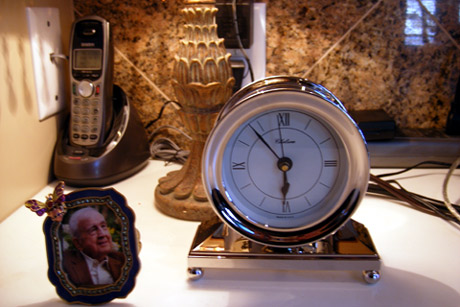
    Every year a big box arrives at my house with a gift from Carl, and it’s always beautiful. This year it was this clock, which will sit next to this exquisite picture frame that I keep in my office to remind me of how lucky I am to have such a special man in my life.

    Many of you know the public persona of Carl Pohlad, but few know the private man. Out of respect for him and his family, I will tread lightly when it comes to sharing personal stories… except for this one, which seems very timely:

    Carl and I have had lunch together a couple of times in the recent months, and he shared a story with me that I think would be OK to share with you.

    I asked Carl after all of these years, and through all of his business dealings (including a behind-closed-doors business deal with the reclusive Howard Hughes), what has been his favorite business that he just couldn’t wait to wake up in the morning and get to.

    His answer? You won’t believe this one — running and owning a car dealership, something he did early in his career.

    I got a big kick out of watching Carl light up as he reminisced about those days; but I got an even bigger kick out of his special car selling tactics. Carl used to sell up to six cars a day, which, as you may or may not know, is a lot in the car business — which, of course, compelled me to ask him what special technique he used. Customer service? Sort of… Carl and his partner had an "arrangement." When a potential car buyer would come into the dealership, Carl would serve as the salesman, and his partner would… well… be the owner/hard ass.

    As soon as a customer was even close to buying a car… here is how Carl would seal the deal: He would tell the customer(s) that he had to run the offer by the owner. (What they didn’t know was that HE was the owner.) So, he would excuse himself, telling the customer he would be back shortly, and he would go to a corner and talk to HIMSELF. Then he would return and tell the customer that HE really had to work over HIS boss and would probably take a loss on his commission, but if the price was a deal breaker, he was willing to forego his sales commission.

    Little did the customer know that even in those days Carl Pohlad had a brilliant poker face and was already in the green. 🙂

    I love this story, because I just can’t picture Mr. Pohlad selling cars. But as he told me… He was HIS number one car dealer, and repeat customers only wanted to work with Mr. Pohlad because HIS commission was not as important as HIS relationship with his customers!

    So, back to what to get my dear friend Mr. Pohlad for Christmas…

    Last year I went with UGGS, and they were a big hit. But this year is tough. Any suggestions anyone? Let’s see… he has owned the Tropicana Casino, Banks, Pepsi Co, The MN Vikings, our beloved Minnesota Twins, B96, JB Hudson — What do you get a man for Christmas that has everything?

    I guess since this has been a wonderful year for all of Mr. Pohlad’s family….. I am going to go with the Christmas Wish of another Happy and Healthy year filled with more lunches and more great stories!!!!!


  • Forget about What Everyone Else Thinks

    BENEFIT
    Ain’t No Party Like a Film Trade Association Party

    One can never have enough holiday parties, right? Especially if they benefit causes such as Shoot in Minnesota and The MN Film and TV Board. Not only will your donation of $25 or more benefit local filmmakers, but you can also enjoy food, drinks and “big rockin’” performances by local favorites. You can even get in on the action as part of the open mic portion of the night. So dust off that guitar or warm up that singing voice, ’cause nobody parties like those film industry trade associations! —Kate McDonald

    5 p.m., CINEQUIPT, 2601 49th Ave. .N, Suite 500, Minneapolis;
    612-627-9080; minimum suggested donation of $25.

    DANCE
    A Wild Goose Chase in Cloggs to Hip-Hop

    Who doesn’t love a good banjo- and fiddle-driven clogging number once in a while? Combine that with some impressively intricate percussive stepping, and you have one hell of a high energy performance. The Wild Goose Chase Cloggers have put together a performance — as part of the Stepping Out series at the Southern Theatre — that combines traditional Appalachian-style clogging with African American-inspired stepping by none other than the DeLaSouljah Steppers and the Xi Chapter of
    Omega Psi Phi Fraternity Hop Team
    . In addition to banjo and fiddles, the music will feature hip-hop artist RDM. This is a unique wild goose chase combination not to be missed. —Kate McDonald

    8 p.m., Southern Theater, 420 Washington Ave. S., Minneapolis; 612-340-1725; $20.

    FILM
    All Talk and No Action Makes You a Dull Critic

    Well, if you read at allwhich, clearly, you doand you’re at least minimally up to date with what’s going on in town (and beyond), then surely you’ve had your fill of Juno talk. Enough is enough; forget what everyone else is saying, and just go see it for yourself. Certainly it merits that. I mean, biting as it was, even our November 2007 review by Rob Nelson made me want to see it. "Juno, which placed second among a hundred-odd movies in
    competition for the Toronto Film Festival’s audience award in September, isn’t just a fully formed creation," writes Nelson, "but
    practically the blueprint for a commercial comedy in the
    post-post-feminist aughts. Well-rounded enough to reel in multiple demographics, the title
    character is a sassy adolescent from suburban Minnesota (the movie was
    shot near Vancouver, alas) who digs Suspiria
    and the Stooges (raw power, grrrl), discovers she has a bun in the oven
    (that geeky track star was too sweet to resist!), and calls Women Now
    for abortion info (choice!). But by the time she meets the hopeful
    adoptive yuppies from St. Cloud, a.k.a. ‘East Jesus Nowhere,’ young
    Juno has agreed ‘this is one doodle that can’t be undid.’ (Bring the
    whole family!)" Don’t wait any longer; catch a final sneak preview tonight. And meet the fabulous Brook Busey (no-longer-Hunt), a.k.a Diable Cody, a.k.a. Whatever Lewd Names You Want to Call Her She’s Now a Lauded Scriptwriter.

    7:30 p.m., Walker Art Center, 1750 Hennepin Ave., Minneapolis; 612-375-7600; $12 (members $10).

    Fearless Listening Project

    Sometimes listening is a more difficult undertaking then speaking.
    It’s not just the act of devoting all our attention to someone else
    that is difficult, it’s confronting whatever opinions come our way.
    Local filmmakers Dominic Howes and Joel Weber haven’t set out to make
    our lives easier with their new documentary. The Listening Project
    forces us, however uncomfortable it may make us, to listen to outside
    views on a topic that hits close to home — in fact, it is home. The
    film follows four Americans — a middle school history teacher, a
    probation officer, a poet/spoken word artist, and a human rights
    activist — as they travel across fourteen different countries asking
    people one question: What do you think of America? Beautifully
    shot, The Listening Project gives us a stimulating visual buffet of images of the
    people and countries the Americans visit — from Russia to Brazil to
    Afghanistan to Japan. While the visual aspects of the scenes are
    incredibly moving, however, the interviews that go along with them seem
    to fall a bit short of thought provoking. Aside from two interviews
    that seem to give a slightly deeper and more honest opinion about
    America, most of the interviews are too brief, barely scratching the
    surface of the issues by broadly stating general and already familiar
    global opinions. The
    film’s more valuable and interesting perspective is that of the
    American listeners themselves — their reactions to their new, global
    experiences and the opinions of others from differing cultures. We get
    to know more about these listeners (as they are called) than we do
    about the people interviewed; we get to know their backstories, the
    reasons why they decided to travel and talk to people, and what they
    got out of the experience. This is the final film in the Fearless Filmmakers series for the year, and a two-year anniversary party — complete with birthday cake and guitar hero — will follow. —Kate McDonald

    7:30 p.m., The Oak Street Cinema, 309 Oak St. S.E., Minneapolis, 612-331-3134, $9.

  • Abbreviated Three-Pointer: Same Lesson, Another Loss

    Game #20, Road Game #10: Minnesota 94, Philadelphia 98

    Season record: 3-17
     

    1. This Just In: Al Jefferson Has Problems With Big Centers

    The most valuable player in last night Wolves loss to Washington was opposing center Brendan Haywood, who was too much to handle for the tandem power forwards, Craig Smith and Al Jefferson, Minnesota deployed in its frontcourt. Tonight’s most valuable player in the Wolves’ loss to Philadelphia was opposing center Samuel Dalembert, who was too much to handle for the tandem power forwards, Craig Smith and Al Jefferson, Minnesota deployed, albeit slightly less often, in its frontcourt. Believe me, reading those two redundant sentences is less annoying than watching two redundant losses.

    Dalembert had 9 blocked shots, tying a Wolves’ franchise record for an opposing shot swatter. Five of those rejections, including the play that could have tied the game for Minnesota in the final seconds, came on shots by Jefferson, the gifted power forward compelled to play out of position because coach Randy Wittman wants to use his little bucking bronco frontcourt of Jefferson, Craig Smith and Corey Brewer. Against some teams–Atlanta and Phoenix are recent examples–this is a fine strategy. But against those with large, strong centers–the Lakers, the Wizards and now the 76ers qualify–Minnesota is overmatched.

    Jefferson battled all night, finishing with 22 points (10-20 FG, 2-5 FT) and 11 rebounds, 6 on the offensive glass. But once again, the plus/minus stat tonight is a reliable barometer of what really happened. Jefferson and rookie Chris Richard split the center position. In 31:49, Jefferson was a team worst minus -20 in a four point loss. In the other 17:11, Richard was a team best plus +16. He put that time to good use, with a pair a steals, a pair of blocks, and a pair of baskets in a pair of attempts. If only he had been paired with Jefferson once or twice so "Big Al" could have played the position he was meant to play.

    Is this the way it is going to be for the rest of the season? Of the four centers on Minnesota’s roster, Theo Ratliff may be taking millions in insurance not to play on that suspiciously balky knee; Michael Doleac is a journeyman; Mark Madsen is game but undersized; and Richard is a rookie. Nevertheless, it is unfair to Jefferson and to the team to ride the Smith-Jefferson power forward train when seven-footers are having a field day in the paint. Right now, I’d see if Richard’s past couple of weeks of impressive action in limited usage can be extended. I think Minnesota can get by with the two PFs against Seattle and Milwaukee. But when they go to Miami to meet Shaq and the boys, it would seem foolhardy not to go with a center by committee.

    2. Free throw woes

    With 1:15 left to go in the third quarter, the game was tied at 73. For the final 13:15, Minnesota shot 4-8 from the free throw line; Philadelphia was 7-8, according for 3/4 of its margin of victory. For the game, Minnesota had more field goals and three-pointers than the Sixers, but lost it at the free throw line, going 16-25 while Philly made 25 out of 31 attempts. When asked after the game how he would assess his squad’s 64% free throw shooting, Wittman responded, "There is nothing to assess. We’re a good free throw shooting team."

    Um, no they aren’t. Even before tonight’s clanking at the charity stripe, Minnesota ranked 23rd among the 30 teams in FT%, making a hair over 72% when the league average is better than 75%. Similar disinformation appears at nba.com, where Jefferson’s All Star credentials are buttressed with this statement: "Big Al has added a reliable free throw to his arsenal." Okay, if you count 69.1% as reliable. It is better than any of his previous three seasons, and he has shown steady improvement from 63% his rookie year to 64.2% and then 68.1% last year.


    Bottom line, despite everything else, if the Wolves make their free throws tonight they probably win the game.


    3. Quick hits

    Another double-digit assist outing for Sebastian Telfair, with 11 dimes versus only two turnovers. And Marko Jaric bounced back from an off night in Washington to put up 14 points on only 7 shots (4-7 FG, 6-8 FT).

    The general consensus is that the bench did a great job, and it is true that McCants, Gomes, Walker and of course Richard all had strong moments. But only McCants really seems to have consciously improved his ball movement recently, and even he is prone to egregious lapses where he starts firing away. The beautiful offensive flow of the last three quarters of the Atlanta game and the Phoenix upset has been pretty much absent.

    There’s plenty more to say: Have at it, and I’ll be back with a look at Friday’s tilt versus Kevin Durant, Jeff Green and the Sonics sometime over the weekend.

  • Higher than Fi

    The European sun shines on James Coburn, his lean frame in a white Mod jacket with red turtleneck. Putting on enormous sunglasses and flashing his classic chops, he sidles out of the palm-tree fringed villa, where he has just spent the night with Monica Vitti, and slips into his silver Ferrari. Bound for another criminal adventure involving diamonds, art, or cold hard cash, he speeds onto a cliff-side road, which just happens to overlook an endless body of crashing blue water.

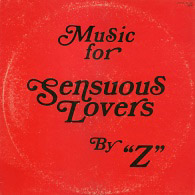
    None of this, mind you, is from any particular movie or real life situation. It is, in fact, one of the many exotic images you can’t help but conjure when listening to a typical night of Jet Set Planet on KFAI radio. Once a week, for ninety minutes, host Glen Leslie spins what he describes as “forgotten music from Thrift Store, USA”, most of it produced from the dawn of the 331/3 record through the close of the 1970s. And all of it on vinyl.

    The emphasis on turntable as opposed to digital jockeying is, in part, borne out of Leslie’s frustration with the substandard CD compilations of the music that he labels, in tribute to a favorite Marty Gold album, Higher Than Fi. But the real issue is that many of the audio treasures Leslie seeks out can still only be found on LPs.

    So far, over the course of fifteen-plus years, this record hunter can proudly claim 5,000 trophies, whose sounds he makes available to audiences courtesy of the two turntables in KFAI’s tastefully paneled, and notably clean, studio.


    The source of this collection, which Leslie pays for with his salary from the Geography Department at the University of Minnesota (KFAI, a listener-supported station, is fully manned by volunteers with other sources of income), are the thrift stores and record shops that continue to gather dust in various parts of the country. This includes Minneapolis, whose best source for vinyl is Hymie’s, on Lake Street. But it also includes the small towns and cities he and his wife, Carol, and friend, Steve, travel to throughout the year on cross-country expeditions. “The week, or month, before the show,” says Glen, whom I interviewed at Mapps coffee house, and who, with his mop of gray hair and Blanche glasses, reminds me of the latter-day Cary Grant in his LSD phase.

    “We hit the same thrift stores at the same time, because you only have a few hours to go through it. When I get home, I go over the piles we get from those trips. I draw up templates, so that, as I’m going through the pile, I kind of swaddle in songs that fit the genres. There is usually only one good song on each record, so if I make a mistake, the results can be devastating!”

    Clearly, the host takes the art of acquisition, and his show, seriously — good, clean fun notwithstanding. Fellow KFAI DJ Ron “Boogiemonster” Gerber confirms this commendation: “Glen is a record collector at heart, and he has great communication skills. Having those two things at the same time is a rarity, and it’s what makes Glen and Jet Set Planet so terrific.”

    Eschewing the bar room tones of Clear Channel brawlers and studied delivery of public radio commentators, Leslie, on-air, comes across as an arch, world-weary tour guide, who swills cocktails while leading cruises through exotic earthbound and intergalactic locales. In fact, each broadcast begins with a clip from a sound effects record in which a male voice on an intercom repeatedly tells an airport full of harried, oblivious travelers: “Attention passengers. Attention passengers. Please maintain contact with your personal belongings at all times.”

    The show’s current time slot, 10:30 to midnight each Monday, matches its after-hours vibe — though it must be said, its original post, 2 a.m. on Fridays, probably would have suited Dean Martin, or James Coburn, better. But the host does have a paying job to face, and he was grateful, after eighteen months on the graveyard shift, to join what is regarded as the station’s jazz shift in April of 2007.

    The move increased the program’s listenership significantly, since Leslie estimates the average KFAI devotee is 45, the same age as he is, and an age whose typical member goes to bed by the witching hour. “Nobody under thirty listens to radio,” he figures, “For older people, there’s more purity in genre distinctions. For example, there’s this one great box set put out by Reader’s Digest called Happiness Is …. It features a big band guy named Charlie Barnet, who retired in 1949, and came back twenty years later to do covers of ‘Light My Fire’ and ‘A Hard Day’s Night.’ People in their 30s and 40s get that clash. For younger people, it’s just music and nothing but.”

    Much of this “just music” is spoken of by the turntable operator in terms of title, artist, record, and recording label. After a block of songs, you might hear a track listed as, say, “Jean Carroll with ‘Girl-Talk in a Steam Bath’ from Girl in a Hot Steam Bath on the Columbia label.” In conversation off-air, he will do the same, even when remembering the album that triggered his obsession with all things Higher Than Fi. “In 1991, I found a Les Baxter record called Caribbean Moonlight, on Capital Records, at a sidewalk sale. I was rearranging my apartment, and I put on side two. I must have listened to it twenty times. A light went on, and I said, ‘I gotta get this stuff!’”
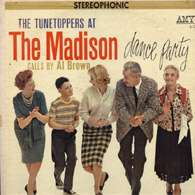
     

    This journey through the bins of yard sales, flea markets and, especially, thrift shops would continue with few interruptions as Leslie moved from Portland, Maine, to Maryland, to Milwaukee, and finally landing in his fourth “M” location of Minneapolis in 2004. Though he insists that working for KFAI, a community station of high esteem that he listened to online for four years prior, was not the main motivator in moving to the Twin Cities, he admits that on the same day he started his job at the U of M, he began volunteer training at the station in the nearby West Bank.

    As Pam Hill, the station’s volunteer coordinator, recalls, “He has been dedicated to the station’s mission since he joined us, at first volunteering in the music library, and asking how he can help the station in other areas. When he took the on-air training … little did I know what an entertaining, informative, and truly joyful program he would put on!”

    The fact is, he was already an experienced radio personality, having cut his teeth at WNPG at the University of Southern Maryland in the late ‘80s, while briefly forging a musical career of his own in what he refers to as a “white-bread, stiff-as-you-can-be funk band” called Chum.

    While the Jet Set Planet playlist may be derided by some as white-bread or elevator music, even its detractors would admit it always manages to evoke memories of pleasurable moments, or delightful scenes from movies — even if those moments or movies never existed.

    “Now, that doesn’t mean that every second of Jet Set Planet is a delight,” cautions Luke Andrews, a longtime friend and host of KFAI’s Groove Garden. “Sometimes, the music is torturous, like what you might hear while tra
    pped in the diaper aisle at the grocery store. But just when you think you can’t take another minute of it, Glen justifies with a complementary dose of something downright groovy.”

    That’s because for every corny farm ditty or sappy love ballad he pipes through the airwaves, there are at least three smooth, silky, and absolutely sweeping instrumentals (generally only one or two tracks per show feature a vocalist) performed by experienced jazz or pop musicians who, though they may be working on the album to pay the rent or feed their drug habits, perform with absolute dedication.
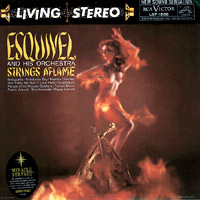
     

    Likewise, the host plays these cuts without a hint of irony — irony, in his mind, being a four-letter word. And even if the music isn’t always satisfying, the talk breaks that the radio guide usually prepares just before each show, to describe what audio vistas have passed by or lay ahead for his passengers, almost always are. When introducing a Sonny Lester belly dance instruction record, our radio instructor proffers this food for thought: “This is music for your international suburban pool party — that you proceed to destroy, when, drunk on Mai Tai’s and coveting thy neighbor’s better half, you strip down naked, tag a friend and say ‘you’re it,’ dive into the water, and come up for air just in time to see the last pair of tail lights pulling away from your driveway. I guess you should have learned your lesson from the last time this happened — there’s a big difference between fantasy and reality, my friend.”

    But not every aspect of the show involves fantasy. In between tunes, Leslie will relate personal anecdotes about his record buying trips, the most recent one of note being a visit to a home in Toledo, Ohio, whose lower floors were a makeshift vinyl store packed wall-to-wall with LPs. “He had all these really pricey jazz records for fifty bucks up in his bedroom,” Leslie recounts, “and he complained about these Japanese buyers who wanted the whole stock, but he would sell only a few. He was an old guy who chain smoked, and slept and ate around all these records. We figured what kept him from being killed by the mold from the records was the filter on his cigarettes.”

    He also has a distinctive take on the competitiveness of the strange creatures who comprise the vinyl collecting world. “In record stores, I’ve had people fart in aisles because they don’t want you in the area they’re sorting through. I’m convinced they’re doing that deliberately.”

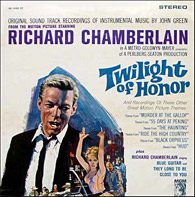
    This is indicative, more in terms of eccentricity than marking territory, of the many downright peculiar artists who are regulars on the Jet Set musical roster. This includes Pete Drake, a Nashville pedal-steel picker whose signature instrument is a “talking guitar” that, when played, suggests an unusually melodic tracheotomy recipient. Another frequent guest is Rod McKuen, a spoken word artist who relates vignettes about cross-dressers and omnisexual encounters while strings and pianos tinkle in the background. You will also hear selections from obscure movies like The Last Rebel, a Civil War drama starring NFL great Joe Namath, and The Day the Fish Came Out, a thriller involving atom bombs, gay stereotypes, and future Murphy Brown star Candice Bergen brandishing a whip. And then there are the Latin instrumental albums, many named with one or more uses of the word “Cha”, and the instructional records on exotic dancing and bongo playing, and the psychedelic concept albums by big band musicians who’ve fallen on hard times, and the song collections by TV and movie stars who can’t sing, and …
     

    So, what, in the end, is Jet Set Planet — or Higher Than Fi, as the program was going to be called before wife Carol thought up the more extraterrestrial title? Is it jazz? Is it pop? Is it easy listening — or, as the host describes many of the saucier selections, “sleazy listening”?

    When Leslie pitched the show to KFAI’s programming committee in 2005, he could only pin it down as “Not not-jazz.” Even if jazz is the category this music is stuck with, Ron Gerber, another member of the committee, is correct in his assertion that, “you can find a lot of jazz music elsewhere on the radio and the internet, but you can search the entire globe and not find anything that sounds remotely like Jet Set Planet.”
  • The Listening Project

    Sometimes listening is a more difficult undertaking then speaking. It’s not just the act of devoting all our attention to someone else that is difficult, it’s confronting whatever opinions come our way. Local filmmakers Dominic Howes and Joel Weber haven’t set out to make our lives easier with their new documentary. The Listening Project forces us, however uncomfortable it may make us, to listen to outside views on a topic that hits close to home — in fact, it is home.

    The film follows four Americans — a middle school history teacher, a probation officer, a poet/spoken word artist, and a human rights activist — as they travel across fourteen different countries asking people one question: What do you think of America?

    Beautifully shot, the film gives us a stimulating visual buffet of images of the people and countries the Americans visit — from Russia to Brazil to Afghanistan to Japan. While the visual aspects of the scenes are incredibly moving, however, the interviews that go along with them seem to fall a bit short of thought provoking. Aside from two interviews that seem to give a slightly deeper and more honest opinion about America, most of the interviews are too brief, barely scratching the surface of the issues by broadly stating general and already familiar global opinions. Many of the conversations — quick on-the-street interviews or bar-room chitchat — produce only safe and diplomatic answers that simply rehash viewpoints that the typical, globally conscious American viewer has already heard.

    The film’s more valuable and interesting perspective is that of the American listeners themselves — their reactions to their new, global experiences and the opinions of others from differing cultures. We get to know more about these listeners (as they are called) than we do about the people interviewed; we get to know their backstories, the reasons why they decided to travel and talk to people, and what they got out of the experience.

    Overall, The Listening Project effectively demonstrates how traveling changed these four different Americans, how it opened them up to new experiences and made them reevaluate their country’s role in the world. The only problem is that we as the viewer do not get to share in their enlightenment.

    While the film doesn’t expose any mind-blowing or unique insight into the world’s view of America, it certainly proves the general power of travel and cross-cultural communication.

    Midwest Premiere, Thursday, December 13th at 7:30 p.m., The Oak Street Cinema, 309 Oak Street SE, Minneapolis, 612-331-3134, $8.

  • My blog

    Thanks for checking out my new venture. Feel free to give

    me feedback and if you have any suggestions as to what you
    think I should "blog" about…… I am open:) 

  • Cheap Date

    It is that time of year when we pause and give thanks for small blessings. And among these I count Uptown, where my husband and I (who are saving up to send a kid to college) have had a succession of brilliant but inexpensive Saturday night dates.

    In this era of Transformers on 16 screens, where else can you find FIVE quality first-run films playing in a space of three blocks? Parking is free if you’re willing to walk a quarter-mile or so. And after the movie, there are no less than a dozen dirt-cheap places serving hot, tasty (mostly Asian) food. In the past couple months alone, we’ve seen Into the Wild, No Country for Old Men, Before the Devil Knows You’re Dead, and I’m Not There. We’ve eaten at the Lotus, Kinhdo, and Tum Rup Thai. Movie tickets are $8.25 apiece; and dinner usually costs less than $35, wine, tip and all.

    Last weekend, we went to Amazing Thailand for the first time. It was after No Country and there were many things to discuss: What was the significance of Tommy Lee Jones’ dreams? Was the dark mood of the film ironic or merely dystopian? Did the sinister-yet-clever airgun bit hold up over a period of two hours? Was the taciturn anti-hero evil, amoral, or simply a man with a solid work ethic, getting the job done?

    It turns out Amazing Thailand is a wonderful place to deconstruct: garishly neon on the exterior, it’s actually soft and dim and acoustically pleasant inside. We ordered stuffed chicken wings with broccoli in garlic sauce and pad thai with mock duck at their top spice level (5). Tucked snugly into a back corner, we held hands and ate off a single plate. The dishes were robust: not nearly so fiery as promised (we asked for extra chile sauce) but warm and good and full of flavors as obvious — and as comforting — as colorful baby blocks. And the total for our late meal? Twenty-six dollars, with enough food left over to feed a nearly college-age kid his hefty midnight snack.

    I lived in Providence for a year, where I had to drive to Seekonk, Massachusetts, and pay $10 a ticket (in 2002), in order to catch an independent film. Parking was impossible. The theater was surrounded by Applebee-like chains. I learned how hard life can be.

    So today, I give thanks for rugged, snow-covered Minnesota with its accessible culture and incredibly cheap pad thai.

  • Cookie Party

    Do you have a cookie party in your future?

    Is there a massive plan afoot to organize friends/co-workers/relatives/cellmates for a gathering in which an inordinate amount of cookies is exchanged?

    I have a love/hate thing going for the cookie party. The premise is a bit appealing, bake dozens of one kind of cookie and bring it to a social gathering where there will be dozens of other cookies for which you make an even swap: Ta-daa, now for the price of one recipe, you have a huge variety of cookies.

    But (and here comes the Scroogey part) most of them suck.

    Yes, we all know I am a control freak and a bit of a food snob, but I enjoy an M&M cookie just as much as the next coiffed Super-mom. Neither at issue are traditional cookies: iced gingerbread, frosted sugar cookies, spritz or the like. And ugly cookies are always welcome in my house, if it looks like a toddler iced it, great.

    It’s the non-cookies that bother me. Melting a Rolo on top of a bell-shaped pretzel does not a cookie make. Mixing cornflakes into melted chocolate and dropping them into blobs does not a cookie make. Dipping an Oreo halfway into white chocolate? Come one, why don’t you just kick me in the gut. If I’ve spent a whole afternoon mixing and baking and cutting and sandwiching and frosting for you, the least you can do is turn off Guiding Light, put down the Arbor Mist and dust off the Kitchenaid mixer you got as a wedding present.

    I’m not asking for anyone to go overboard, just cream a little butter, throw a little sugar, break an egg or two. Don’t hand me "busy", we’re all busy, there’s maybe two or three people in the state who aren’t. But it doesn’t have to be hard, and it doesn’t have to be elaborate, it just has to be real.

    Just try it this year, go for the real:

    Shortbread is easy and rich and seems like you worked really hard.

    Cranberry Hootycreeks are simple, and fun to say!

    Lace cookies are ridiculously good.

    Mini Black and White’s are worth the effort.

    Gingersnap Raspberry Sandwiches would be a welcome sight.

    There are those who can’t resist Chocolate and Mint or Chocolate and Ginger.

    When in doubt, go classic. Your house will smell amazing.