Author: Dylan Hicks

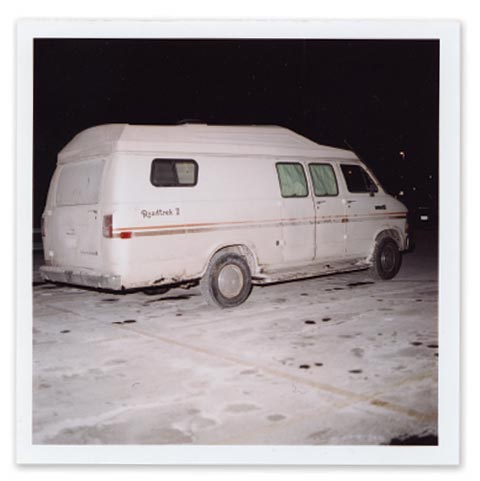
  • 1984 Dodge Ram Roadtrek II – $4500

    I bought this Roadtrek II, “the motorhome that drives like a van,” from a private seller (I want to say his name was Dan) three years ago. As transportation and sometime residence, the Roadtrek II has performed yeomanly. It is only because my mental health seems to be calling with some urgency for full-time non-vehicular lodging that I’m selling her at such an act-now price. I paid seven thousand dollars, cash on the barrelhead, for the Roadtrek II, on 7 April 2004. I can’t at present access Kelley’s blue book or a similar authority (Kelley’s website only estimates values for cars and trucks dated from ’87 to the current year, and Edmunds, though in command of a richer sense of history, appears to discriminate against motorhomes), but I think my (slightly negotiable) asking price fairly reflects standard motorhome depreciation, as well as the fact that the Roadtrek II’s water pump has of late been behaving in a way that might seem to controvert its manufacturer’s name (SHURflo). Also the stove, possibly, is discharging non-alarming quantities of gas. I’ve been getting mild headaches that seem inhalation-related, though I haven’t consulted a doctor about these (mild, as was said) headaches and can’t speak with any real conviction about their etiology. I’ve been having trouble distinguishing faces as well. Features—particularly eyes (and their brows), but also noses, mouths, chins, dimples—seem indistinct, washed out not only when I try to recall them at a later time (e.g.: orig. envisaging: 02/09/07; failed facial recall: 02/21/07), but also when I stare anxiously into eyes or onto faces. Has this ever happened to you?

    In general the Roadtrek II’s interior could use some TLC. Surely it’s not unique in that respect (:>).

    To pay for the motorhome, manufactured collaboratively by Ontario’s Home and Park and Michigan’s Chrysler Corporation, Dodge division, I used seven-tenths of an inheritance I received upon the death by ischemic heart disease of my mother, Leotine. The wisdom of the purchase was questioned by my vaulting younger brother, Shane, on whom more later, but I suffered no buyer’s remorse. In many respects I have “babied” the Roadtrek II. The metaphor is inapt in my case since I don’t like babies, but let it stand. In 2005 and early 2006, I was able to have the Roadtrek II’s toilet patched, replace its timing belt, and approve some two or three other tweaks to its Herculean V-eight engine, using money earned as a part-time—to the extent that thirty-five hours per week (give or take, mostly give) is part time—flooring installer for the Green House Effect, a Minneapolis seller of eco-friendly building supplies, and my benefit-withholding employer till six months ago, when the emotional hurdles I indicated above began to impede my ability to remove and install floor coverings with sufficient reliability or friendliness.

    During my stint with the Green House Effect, I spent much time laying cork or bamboo flooring and recycled-glass tile, to make way for which I’d have to rip up and discard perfectly good carpet, linoleum, or Pergo. The other, increasingly fuzzy installer didn’t speak much English, so I was the one forced to deal with the customers, mainly dishrags. Had I been in Kevin’s shoes (New Balance), probably I would have fired me, too.
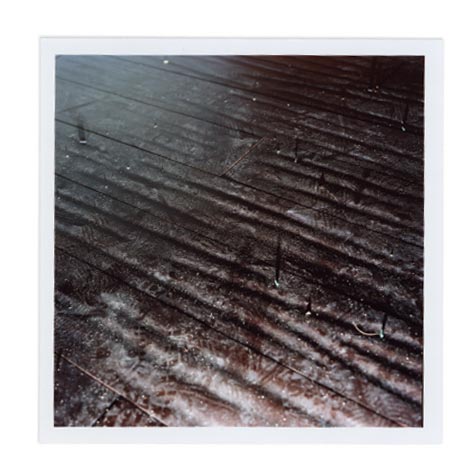
    As you will see, for the purposes of this notice I forbid my camera access to the Roadtrek II’s penetralia. I have never been much of a housekeeper. My mother could testify to that, were she not dead. When you come to inspect the Roadtrek II, however, you will see that she (the pronoun now refers to the motorhome) is only messy and dirty, and, to repeat, in general need of some TLC, rather than damaged in any serious/prohibitive way. I may as well point out here that the blood on the Roadtrek II’s not excessively punishing queen-sized stern bed is mine and commemorates no stageable drama (nosebleed, 12/19/06). To my rare good fortune (“If it wasn’t for bad luck, I wouldn’t have no luck at all”), my nose hasn’t hemorrhaged in four and a half months, though lately my skin has answered with raised, reddish marks to all but the most feathery touch or scratch. Any thoughts on this last malady? My Googling was inconclusive.

    I explain the bloodstain because I’m aware that long-term van habitation is a cliché of failure, and that single men in such situations are closely associated with creepiness. As it happens, thanks to the “kindness of strangers,” some of whom were not technically strangers, or, ultimately, kind, I have never really lived full-time in the Roadtrek II. (But try explaining that to the folks at Match.com.) (I haven’t, but you get my drift.) I mulled diligently over these stigmas before purchasing the Roadtrek II, from a Wisconsin rustic named, if memory serves, Dave, a Dave of the sort who says, “Hang on a sec; I gotta take a piss” before he even says hello. When you and I meet, at a spot of your choosing (if you’re stumped for an idea, one humbly suggested rendezvous is pictured directly below), I think you’ll find straightaway that I don’t fit the type.
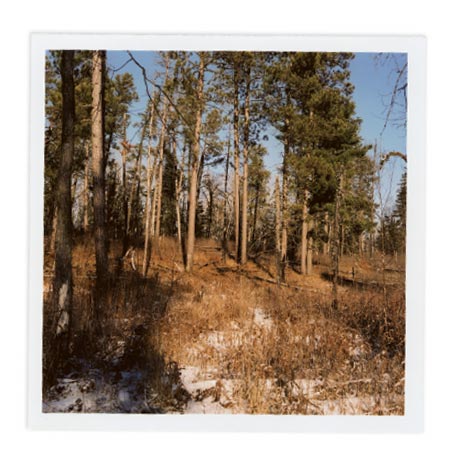
    I am only kidding. We can negotiate the sale in a more public place. I have the title and an extra set of keys in the glove box (latch broken). The transaction could easily be accomplished on your lunch break, should you be granted such a thing. For many employers, a lunch break needn’t afford time for proper digestion, much less an efficient test ride.

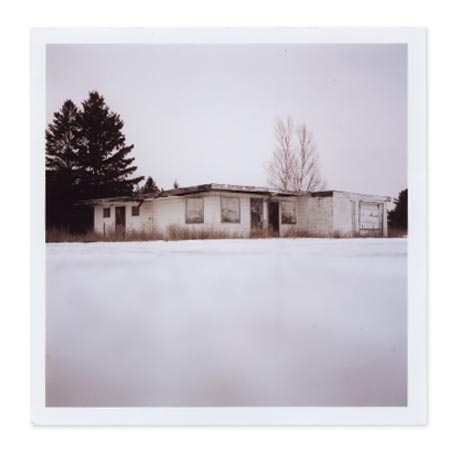
    It does seem fair to say, speaking experientially and with no wish to impute unbecoming thoughts to other motorhomeowners, that certain distressing yet provably normal male heterosexual fantasies can yield increased anxiety when they enter the mind of a man in the driver’s seat of a disorderly (“garbage-y,” I’ve been told) twenty-three-year-old Class B motorhome. One worries that the Roadtrek II, serving as a conduit of bachelor-van-dweller mythology, is encouraging profligate /lawless ideations/behavior in its owner that might not otherwise surface. For instance, in the parking lot of a Chicagoland Jewel-Osco, I spotted and was palpitated by two milky-skinned, strangely spectral young women, women most likely in advance of legal maturity, probable girls would be another way to put it, and it is true that I fantasized, with traces of serious intent, about offering them 400 dollars to perform (really quite routine) sexual acts on and around the Roadtrek II’s handsome central table and surrounding quartet of comfy swivel chairs (minor upholstery wear and tear). This fantasy, no cinch to dislodge, never occurred to me in the precise form described above (in scant detail; I am no pornographer) when I owned Ford’s Aspire, teal with pink brands and accents. Granted, the Aspire didn’t offer much privacy or room to stretch out in creative positions, such as the “Moravian pony,” but then again, when I owned the Aspire I was living in a proper home, pictured below, where an assignation might have been played out with somewhat greater civility.
    Probably I should depart from this line of my sales pitch. Early in life I became convinced of the salutary effects of relaxed self-censorship, but the practice has gotten me nowhere.

    The above photograph no doubt reveals that the proper home I spoke of three sentences ago was not Hearst Castle, nor was it “proper” in the sense of belonging to me through a rental, mortgaging, or gentlemen’s agreement. And talk about cold! Still, prior to my mother’s passing and my consequent flushness, the white country home was about as good a home
    as I could imagine mustering, though it’s true that my imagination has frequently been self-sabotaging or at least self-limiting. I did a good amount of thinking and reading in the white country home, and for a while was happy there, till various mental and physical ailments recrudesced or emerged, most distressingly the aforementioned problem with faces, which at first were blurry only sporadically and only in memory (though including short-term memory), but then, as explained above, became more and more amorphous even in the present. This condition, incidentally, can obstruct gender determinations, especially during winter, when people around here are bundled in form-concealing clothes, excepting some young people who make a display of underdressing, as I myself once did, refusing as a teen to wear winter caps, regularly emerging from the shower just minutes before having to hotfoot it to the bus stop (you will find that I have since come to value punctuality), so that my wet, gelled hair would often freeze en route to the corner and compel my bus-stop-mate Melinda to pat my hardened “do” in a way that I later (too late) realized was flirtatious.

    Interestingly, photographs of faces are clearer to me than actual faces. See, for instance, my portrait, below, of my brother Shane,
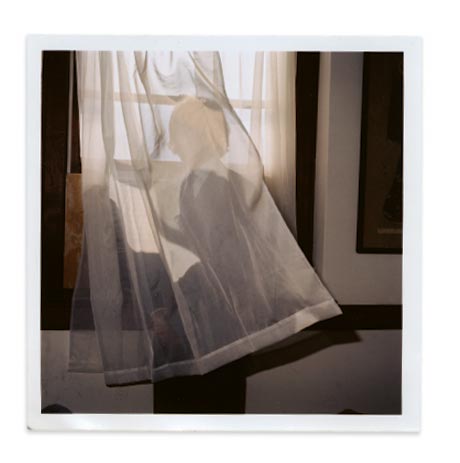
    whose downtown St. Paul apartment, where I am at this moment,
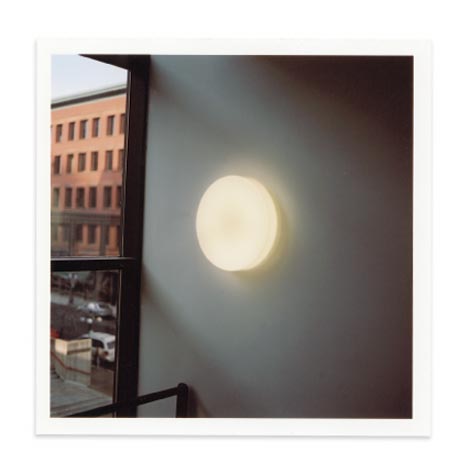
    is quite elegant (“Oh for fancy!” my mother might have said), as you might conclude from my admittedly evasive photographic composition. Shane works in product development at General Mills (or, in the unaccountable and unfunny Frito Bandito accent he affects for the name, “Mjels Xenerál”), for whom he spearheaded the “underpublicized” (per Shane) 2006 makeover of the Boo Berry mascot. Shane was always the achiever of the family, always the one to secure an extra letter of recommendation or deliver the more tasteful (dishonest, omissive, sentimental, unctuous) filial encomium at certain sparsely attended Twin Cities funerals. He was patronizing me before he was out of knee pants. If there was a time when he looked up to me in the usual fashion of younger siblings, it must have been during my prehistory. It will do to say that little love or even comprehension is lost or even misplaced between Shane and me, and that it was only after a traumatizing incident at the Minneapolis central library’s computer hive that I reluctantly petitioned to use his apartment as command post for the composition and design of this classified ad.

    I will also be here, over the lunch hour, while Shane is at work, responding to what I expect will be a Noachian inundation of queries regarding the Roadtrek II, which already I have begun to miss. I am nearly weeping. Under different medical and financial circumstances, I would happily be the one to add the expected 112,648 miles to her current 187,352 actual miles and 360 intangible (though recorded) miles. Sorry to confuse you with that last bit; in confusion we are united. I don’t mean to say that the Roadtrek II’s fully functional odometer (fuel gauge broken, by the way) has been jiggered. (Why would I set the thing back a measly 360 miles?) What I mean is that I once went to sleep—get this—in the passenger-side single bed of the Roadtrek II, parked at a rest area in western Wisconsin, and woke up to gray-tentacled dawn in the driver’s-side single bed of the Roadtrek II, stationed friendlessly and bewilderingly in the “Coyote” section of a shopping-mall parking lot in Schaumburg, Illinois. I wonder if you’ve ever experienced anything like this before.

    My schedule permits responses only to the obviously sincere among you. I will try to answer your questions by e-mail, but bear in mind that I am here for only part of each day. It might be best to simply arrange to take a look at the Roadtrek II. When we meet, I’ll want to begin by asking you to pose for a Polaroid headshot. I’ll return the photo to you at the end of our transaction/meeting. I have an immediate opportunity to sublet a reasonably priced if felinely scented room from an unaffiliated fraternity of Hamline University, and I could use the money for the deposit and some basic furnishings, and so, in hopes of hastening a sale, the Roadtrek II’s price, as I said, is (slightly to somewhat) negotiable. Let us talk further soon.

    This item has been posted by-owner.
    Location: arrange meeting place with seller
    it’s NOT ok to contact this poster with services or other commercial interests

    PostingID: 428675309

    Dylan Hicks’s fiction, criticism, journalism, and hack work have appeared in several dozen publications, including the Village Voice, The New York Times, City Pages, and the website Pindeldyboz. His previous short story for The Rake was anthologized in Da Capo’s Best Music Writing 2007.


  • Man in Love: Barbra Streisand, Barry Gibb, and the Autobiographical Criticism of Doug Belknap

    Some of you I would hope have read Dianne Hart’s monograph Enough Is Enough: Prodigality Celebrated and Condemned in the Carter-Era Recordings of Barbra Streisand. Although Dr. Hart’s study is limited in scope, her thinking is expansive. My own forthcoming book on Streisand’s middle period is indebted to her penetrating analyses. I must also thank Hart for exposing me to the criticism of Doug Belknap. A footnote in Enough Is Enough led me to the man’s review of Guilty, Streisand’s 1980 collaboration with Barry Gibb, and I have since become an admirer of Belknap’s idiosyncratic and loudly autobiographical work. The review of Guilty appeared that year in the September issue of Spunk magazine, a formerly influential rock monthly by then considered debased by the relevant tastemakers. Spunk at the time was mostly devoted to rock of a decidedly masculine cast. One imagines that Spunk readers were united in enmity or at least apathy toward Streisand and Gibb, and would have considered an endorsement of Guilty distasteful and a pan gratuitous. It’s odd, then, that the magazine gave the album any coverage at all, odder still that they ran Belknap’s long, discursive review.

    What I’ve since managed to learn about Belknap is that he lived in Minneapolis, briefly attended the University of Minnesota, and worked, moonlighting presumably, as a freelance writer, most provably during 1979 and ’80. I found one piece published in the University’s Minnesota Daily in May of 1972, a recommendation of Weather Report’s I Sing the Body Electric notable for employing two food metaphors. In the first paragraph Belknap calls the album a “spicy gumbo of New Thing jazz, acid rock, hot-buttered soul, classical gas, and Latin passion”; in the closing paragraph he likens it to a “steaming bouillabaisse.”

    Belknap may have written as well for community newspapers throughout the 70s, but his byline doesn’t return to an officially archived publication until late ’79. Again it’s attached to a review of a Weather Report album—the concert recording 8:30—penned for the short-lived Rhythm-A-Ning magazine. A warm appraisal of the music quickly gives way to a digression about a record reviewer, apparently a gastronome and fusion buff, who constructs a model suspension bridge from clippings of the 147 reviews he has written for a jazz newsletter. Each review contains at last one food metaphor, a feat of stylistic persistence that apparently went unnoticed by the newsletter’s subscribers or its alcoholic editor. The reviewer then takes a fatal dose of sleeping pills and lies down next to the model bridge, in effect jumping off his own work.

    Belknap wrote three relatively restrained reviews for Spunk in the summer of ’80, followed by the Streisand piece, which is quoted in its entirety below, and which seems to mark the end of his career in music criticism. My efforts to track down Belknap have been unsuccessful. If you know anything about his whereabouts, please contact me. I remain eager to speak with him.

    Barbra Streisand

    Guilty

    CBS Records

    Reviewed by Doug Belknap

    I see that Guilty’s liner notes have Richard Tee playing electric guitar on the “The Love Inside.” If you know your session men, you’ll raise an eyebrow at the credit, and sure enough, the electric instrument Richard Tee is playing is a piano, not a guitar. One thing Barbra Streisand’s latest success is guilty of, then, is shoddy liner-note composition. Otherwise it’s pretty much blameless.

    Maybe you’ve already seen the jacket, with Gibb, who wrote or co-wrote all of the album’s songs, wrapping his arms around a coquettish Streisand, both dressed in angelic white, à la Johnny Mathis on the cover of Heavenly. It would be too much to call this music heavenly, but it is ethereal, so light you have to adjust your tone arm to play the LP version. And yet the album’s consommé of pop and Broadway, disco and light R&B isn’t wholly insubstantial. I find it moving. Streisand and Gibb haven’t lent great stores of genuine emotion to their collaboration, but they’ve given the listener the tools to do so: the bravura phrasing, a drama in nearly every measure; the voluptuous, occasionally capricious melodies and chord changes; the trademark vocal harmonies, both transcendent and rodential, that Gibb honed with the Bee Gees.

    I’ve liked Barry Gibb ever since I heard “Massachusetts” on the radio of a cream Mercedes 450 SEL belonging to Linda Morgan’s mom. We kissed that night, Linda and I, standing up in front of the car, and her breasts were large and her sweater was softer than any fabric I had ever felt. I hadn’t previously associated with people who could afford cashmere sweaters, or even cashmere socks. Our subsequent outings, however, were washouts.

    Let me return to “The Love Inside,” which is indeed lovely, and not only on the inside. Expansive, resigned, middle-aged, it’s like a Sondheim ballad minus the erudition. The clever turns of phrase have been replaced with clichés—“I’m just an empty shell” and so forth—but the lachrymal high notes are present, yearning and wheedling. During this song one might pause for a pensive break from preparing something out of Elegant Dinners for Two, perhaps absentmindedly taking a sip of economical red wine. I did just that earlier this evening. Also, I cut the recipe in half. “The Love Inside” isn’t free of the breathless histrionics Streisand brings to nearly every performance, but it is sung with the proper subtlety, which is to say, neither too much nor too little. Streisand remains a stage singer, of course, a belter for whom amplification is a luxury rather than a necessity. Only a fool would refuse to use such a voice to its full capacity.

    A fool or an ascetic, because it must be a pleasure to sing like that. It must be a pleasure to be outstanding at something. Yesterday I was given my United States Tennis Association rating. I’ve decided to play competitive tennis in a league, to meet new friends as they say, and because Sharon once said I looked good in white. Before signing up, you must have a coach rate your game on the official scale. There’s an official scale that goes from one to seven. One is a paraplegic three-year-old with imperfect vision and a carelessly strung racket. Two is a paraplegic three-year-old with perfect vision and a decent lob. A 6.9 is John McEnroe. I’ve been judged a 3.2, just below the mean. I’m competent, obviously no beginner, but also not impressive, not the sort of player whose strokes inspire admiration from passers-by in the park. I suspect I’m a 3.2 in general. Once I asked a girl from work how she would rate my looks on a scale of one to ten. She said I was a seven, maybe even an eight. I’m not sure how that translates to a one-to-seven scale, but it beats a 3.2. Of course she would never have called me a six or below to my face. And she wouldn’t have given me a suspiciously generous nine or ten. Really, then, she was working on a two-point scale, seven acting as one and eight as two. And she went with one, approaching two on a good day. So that probably is a 3.2.

    Sometimes when Sharon would play her Barbra Streisand records, I would make noises of disapproval. One time she responded by hissing, “anti-Semite,” jokingly. I laughed enough for the joke to become a ritual. Sharon wasn’t routinely funny, but when she was, she was, I thought, quotable. My complaints were good-natured, you see, in contrast to how she and Donald would disparage my Weather Report and Chick Corea albums, once quite harshly when I was allegedly reading in the other room. “Oh, don’t take off the Chick Corea album, Sharon,” Donald said, coaxing a laugh out of Sharon. “I’d love to hear it again and again!” His sarcasm was strictly of the meat and potatoes variety, never clever.

    I doubt it would interest Donald or Sharon to know that Steve Gadd, featured on the Chick Corea album derided that night, also plays on Guilty. He plays superbly, with manly assurance. Thanks to his hiccupping fills toward the end of “Promises,” even Barbra Streisand can claim to have almost made a funk single. What a sad, strange song that is, Gibb’s hooks like icicles, Streisand’s singing joyfully desperate. “I am the love, don’t let me die away,” she sings, with several Barry Gibbs answering “Die away” in harmony, appropriately stretching out “die” like a last breath. I wish I could hear this album with Sharon. I could listen to it every night with her, twice. I would gently rub it with a pink felt record-cleaning cloth after each airing, apologizing for the tiny needle pricks.

    When we first started dating I perhaps mislead Sharon by saying that I liked Barbra Streisand, too. What I meant is that I found her charming in the mid-60s, especially on the “My Name Is Barbra” TV special, flirting with kettle drummers and singing songs about poverty and against materialism while vamping and hamming, by turns enviously and contemptuously, through Bergdorf Goodman. She was brilliant, funny, and gorgeous. I watched the show with my mom. I guess I was fourteen. My mom grew up in New Jersey, and although she was estranged from her family, she missed the East Coast, missed the Italians and Jews she used to hang out with. Not that there aren’t Italians and Jews in Minneapolis, but they’re much scarcer. My mom loved Streisand, loved her misfit glamour, her wit, her Jewishness, her abnormal voice. “She has the lungs of a beluga whale,” said my dad, passing through the room. “You flatter the beluga whale,” said my mom.

    I also sheepishly enjoyed The Way We Were, which I saw on an inauspicious first date with Lorraine Ibsen. But for the most part though, prior to Sharon, I ignored Streisand. I mainly listened to jazz and rock and fusion and hardly ever tuned in AM radio. Streisand’s sometimes maligned attempts to sing contemporary material couldn’t bother me because, except for the hit she had with Laura Nyro’s “Stoney End,” I didn’t hear them. I was unaware of her version of John Lennon’s “Mother,” for instance, until Sharon and I moved in together and Sharon’s extensive collection of Streisand records and memorabilia arrived as an unwelcome dowry. “She’s singing it like it’s called ‘Second Cousin Twice Removed,’” I cracked, as Sharon arranged the furniture. It came out more cuttingly than I intended, but Sharon chuckled. Later we made love on a mattress on the floor, and the night proved to be the apex of our predominantly healthy sexual relationship. There are at least two images from that night that I still use, not always happily, as masturbatory aids.

    Every morning, except Tuesdays and Sundays when she didn’t work at Carson Pirie Scott, Sharon would do her ablutions to Streisand’s “I Can Do It.” Most evenings she would play a Streisand album or two, and occasionally Donald would come over for a “Babsanalia.” Mostly this just meant talking and playing records, but sometimes they’d pantomime and dress up, Donald in half-drag, or they’d reenact scenes from Streisand’s movies. The Babsanalia were always spontaneous, usually involved pot or coke, and often lasted into the small hours, at which point the accuracy of the reenactments was suspect. My only contribution to these endeavors was the coinage “Babsanalia.” I participated once, on a night when I felt it was important for me to get high. It was hard to be the third wheel. I was insufficiently equipped with knowledge or enthusiasm.

    Sharon and Donald were too sophisticated to be truly idolatrous, but not sophisticated enough to blend sincere passion and self-aware irony in the manner of high camp. That was how I saw it anyway. The frivolity of it all chafed me. Nothing important was important to Sharon or Donald. Their Streisand club was purely escapist, of course, a means of pretending not to be of our generation and not from Minnesota, or to be witty and urbane and to have a bona fide witty and urbane gay friend instead of a dim closet case. I was never explicitly excluded from the Babsanalia but it became clear that these evenings were for serious fans only and that I should find other amusement. Usually I’d read in the bedroom. Sometimes I’d go to a bar alone.

    Donald also worked at Carson Pirie Scott, in the men’s casual wear department. He was not an ethical man. When a shirt came in that he liked he would hide it the backroom until it went on final clearance. Then he would sneak it back to the sales floor, as if it had been languishing on the rack the whole time, and he’d get it for even cheaper than his employee discount. Donald was reportedly straight, but I knew this to be untrue, at least not entirely true. Sharon accepted his bluff, though she was attracted to his apparent gayness in the way my mom was attracted to Streisand’s Jewishness. Sharon did acknowledge that Donald moved and talked in a way that would lead many if not most to unfairly question his sexuality. Then there was his Streisand fixation, his interest in clothes (though he dressed badly if you ask me), his passion for the theater, his insistence on being called Donald and never Don, the fact that he had once lured me into the bathroom at Deborah Curtis’ Christmas party, and that once inside Deborah Curtis’ bathroom he had whipped out his cock or at least not strenuously protested when I slowly unzipped his jeans and executed my first and only act of fellatio.

    Sharon didn’t know this last piece of evidence regarding Donald’s homosexuality.

    Donald had one good male friend that I knew of, a short, part-time actor with Aryan features and the physique of an amateur weightlifter who was even dumber than Donald, and lazy. He didn’t work other than the three or four parts he landed a year, usually one lead in a community-theater embarrassment and a few spear-carrying gigs at the big theater in town. Mostly he cadged from girlfriends and half-heartedly sold drugs. I called him the Slothario, which Sharon, who didn’t like him either, thought was clever. Donald and the Slothario would go to nightclubs often, reportedly to pick up women. They even bought notch-less belts from a neighborhood cobbler and leather worker, stole a leather punch from a hardware store, and would actually add notches to their belts in commemoration of successful seductions. Of course anyone can punch a hole in a belt, and no way was Donald getting it up for all those girls. My theory was that Donald and the Slothario were lovers. Donald also had steady girlfriends, including a tiny, laconic brunette named Sara with no “h” who, when she worked as a peep-show model, called herself “Sar-ahh!” Donald and Sara dated for almost a year. My theory was that Sara was also gay, either by birth or as an occupational acquisition. During the year that Donald and Sara were going out I sometimes found myself in situations that led me to wonder how effectively the tinted windows at Paulie’s Hot Tomatoes cloaked the peeping customers. I figured I caught a break when Donald and Sara broke up.

    It was around that time, though, that Donald and Sharon started spending even more time together, mostly away from our apartment. By then there were a few clubs in Minneapolis where one could disco, and they would do that, sometimes going to a party after the bars closed so that Sharon wouldn’t return to our bed until 3:00 a.m. One Easter Sunday I remember she was logy and irritable all day. It didn’t occur to me until late in the afternoon that she was hung over. I was so slow on the uptake, such a dolt. She started telling me about a group of East Indian guys who were also going out dancing, how charming they were. One, an aloof, lanky guy named Divyanga who was said to have fallen out of favor with his Brahmin parents, came to a party that Sharon insisted we throw. He said, “It’s nice to meet you. Sharon’s a great dancer,” as if I had given her instruction. He wasn’t charming.

    One night I bought a new edition of Password, the game, and suggested we share a bottle of wine and play a round or two. Sharon and I both liked Password. She however had plans to go out for drinks followed by dancing and then who knows what with Donald and the Slothario and the East Indians. I was welcome to come, she insisted. But I wasn’t. I noted that she took almost forty-five minutes to get ready, roughly twice as long as usual. I also noted that she looked really good. After she left I tried to read but couldn’t concentrate and resorted to TV, which, predictably, only aggravated my depression.

    That night Sharon came into bed around

    3:00 a.m. again, maybe 3:30, and her breath smelled like vodka and orange juice and cigarettes and she tried to arouse me but I rolled over and feigned sleep. The moment was not unlike those described in “You Don’t Bring Me Flowers.” Later, I suspected that she had gotten horny dancing with the East Indians and had hoped to seduce me in order to pretend I was someone else. Once during lovemaking she had asked me to portray Hubbell Gardiner, the Robert Redford character from The Way We Were, but that was different. I didn’t mind. After Divyanga moved into our apartment and I moved in temporarily with Gary the building manager, I also began to doubt the plurality of the East Indians, a ruse no doubt to make de facto dates seem like non-threatening group socializing. Only Divyanga, whom Gary the building manager seemed to know well, had come to our party, and when I asked Sharon, a poor ad-libber, what the others were named, she pretended not to hear and then when asked again came up with “Ravi” and, after yet another pause, “Big Ravi.”

    Two days after my Password proposal was rejected, Sharon told me that she did love me, but she was no longer in love with me. I had no use for the distinction. I fell from the couch sobbing, not a long fall, but dramatic. I held on to the coffee table, my legs were folded up like a little boy’s. Sharon was faced with the situation in which you want to comfort the person whom you have just discomforted. She sat there quietly until I stopped blubbering. Stupidly, we slept in the same bed that night. In the morning I stared apocalyptically at her un-blanketed body. She was wearing only underwear, which I took for effrontery. In fairness it had been a warm spring night.

    I’ve been crying with decreasing regularity, though still frequently, during the six months since. Actually, my crying has increased over the past few weeks, since I was assigned to review Guilty, in six hundred words. Guilty is a sad record, a record about being made foolish by love, about desperation and deceit. Gary the building manager is an AC/DC fan and will be glad when my assignment has been dispatched. Gary’s a good guy. Divyanga is cheesed with me for extending my temporary stay at Gary the building manager’s, and seems to think I’m not allowed to do my stair-climbing and hall-walking exercises throughout our apartment building, as if I had access to some other building. But I guess Divyanga isn’t the boss of me. I notice that Donald never comes around anymore. Divyanga has barred him, no doubt. The guy is paranoid, though he’s right about Don.

    Guilty ends with a song of romantic betrayal called “Make It like a Memory.” But that’s silly because what’s worse than a painful memory? Barry Gibb has not read his Proust, at least not carefully, though his melodies sometimes approximate Proustian delicacy.

    My current favorite is “Never Give Up,” quasi-Arabic funk to my ears, potentially a showstopper, but comparatively paired down, the string and horn players sent home for the night, the bass creeping or maybe skulking. Streisand is self-important where she used to be self-deprecating, but she’s jive talking on the verses and it’s funny, deliberately funny. The lyric has her suffering from a dry throat. She’s non-metaphorically lovesick. “I will never give up,” she sings, stretching out “I will” for a full measure, eliding the “r” in “never,” making the word an even more emphatic “neva!” The point is reiterated on its way to the chorus’ staccato conclusion and the album’s summary question: “I will never give up, never give up, never give up. I will follow you home. How can you turn me away?”

  • Don’t Play That Song

    I’ve been doing some work lately that’s forced me to become at least casually reacquainted with pop music, a reunion that distresses me as if I were being dosed with booze after a happy stretch of sobriety. For the past three or four years, I have sheltered myself from developments in music, and have enjoyed the isolation. Before, I was a self-confessed record geek, the kind of emotionally arrested, obsessive collector lampooned in Nick Hornby’s High Fidelity. In my early 20s, I allocated 90 percent of my post-rent budget to record-store binges, leaving just enough ready cash for one Totino’s Party Pizza and a Diet Shasta per day.

    But as I approached 30, and my wife and I started talking kids, I became concerned for my future. I had a nightmarish vision of a father-son chat from my vinyl-hoarding tomorrow: “Son, I need you to be a man about this and sleep on the couch so I can move the jazz section to your room.” But before I could enroll in a twelve-step program, the addiction loosened its grip without coaxing. To my occasional sorrow, my diehard rock-and-roll ideals began to quietly erode. I was slightly disturbed to discover that my non-conformist instincts, my passion for records, fanzines, and nightclubs ebbed in my late 20s, at about the same age most regular folks, by which I guess I mean the non-non-conformists, lose touch with youth culture. My response to this loss of faith was to become a pop ostrich, avoiding exposure to new music as much as possible. Music couldn’t suck, I reasoned, if I sealed myself in a vacuum.

    Just a few years ago, dissecting the music scene and tirelessly surfeiting my lust for records was so self-defining that I couldn’t imagine my interest fading. But along the way, band profiles and record reviews began to interest me about as much as the copy on a box of Honey Nut Cheerios. Soon I started to bog down in the middle of 100-word concert previews (“Oh God, when will this end, and what are they talking about?”). I reduced my record-store visits from three or four times a week to once or twice a season. Hearing a good song on the radio became an unexpected day-brightener, rather than a call to action; for the first time, I felt approval of a record didn’t morally obligate me to own it. I started leaving the (eternal, infernal) gaps in my collection unfilled, tuned in NPR, and dropped out.

    For most people, the golden age of music conveniently climaxed when they were about 18. Having danced and moped and cruised and groped to (depending on their generation) Benny Goodman, the Beatles, Boston, or Public Enemy, they find it especially difficult to tolerate what they regard as the vastly inferior effluvium being spoon-fed to kids today. I’d like to think my neglect of new music is not driven by this kind of cranky nostalgia. I’d like to think my tastes weren’t so rigidly formed in my youth that I couldn’t see the merit in the cream of today’s crop. If I immersed myself in it, I could judge the newfangled on its own terms. I figure the aesthetic quality of pop music is fairly constant, that there is always at least a small percentage of great stuff being made. Sure, particular genres and even particular musical values wax and wane. But for the kids—the abstract, mythical kids—I suspect the music has the same transcendent, liberating, intoxicating wallop it has always had. Ever the populist optimist, I cling to the idea that if the “kids” think it’s great, then it possibly is great.

    At least that seems like a reasonable theory, but one I haven’t tested too rigorously as of late. And that’s why, when I learn, for example, that Nelly and Nelly Furtado are two different people, or that the Hives are helping resuscitate garage rock, my curiosity is tempered with fear. It makes me want to hear their music, and I don’t want to hear their music. If curiosity gets the best of me, and I blow my next paycheck at the record store, I might find the music uninspiring, perplexing, boring, trite, rehashed, juvenile. It’s too risky. The chasm between youth culture and my own increasingly bourgeois world-view could suddenly yawn in front of me. I could start to feel old, cranky, and sentimental, like a white-flannel-trouser-wearing beachcomber, when all I want is to be the eternal pop fan on an indefinite leave of absence.

    And so the irony (you’ve undoubtedly heard how much my generation loves irony) is that in the midst of trying to dodge a buzz-band-induced buzzkill, the opportunity has arisen to earn a little cash by writing about pop music. And I guess there’s some rule about “journalistic integrity” that requires the critic to actually listen to the music before evaluating it. So I’m hearing new music again, and it doesn’t seem worse than when I left it a few years ago, but my relationship with it, once so intimate, now feels long-distance.

    A few weeks ago, I heard the new Missy Elliot single, “Work It,” as I pulled into my garage, and I waited in the car until it finished. I love it, but I feel I’m enjoying it out of context. I want to hear it in a club, or at a party, or with a carload full of stoned friends. But I can’t stand clubs anymore, and parties start too late, and it’s dangerous to drive stoned. Still, I bought the twelve-inch. On some level, I’m back.