Category: Fiction

  • The Happy DMV

    When Sarah Jones opened her eyes, the very first thing she noticed about the local Department of Motor Vehicles was the pervasive, defiant perfection. The immaculate office immediately struck her, the climate controlled setting blotting out the stifling memories of the trek from the asphalt parking lot. Her headache receded as she admired the emptiness which was the antithesis of her prior visits to the DMV. Long velvet ropes cordoned off empty space, like markers wound around a pristine excavation site. Sarah wound through the cordoned line with deliberate glee, directing herself towards the closest counter. The dearth of customers and abundance of central air soothed Sarah’s mind and allotted her a newfound patience. She appreciated the accommodating precinct; soft, natural light glittered upon the freshly waxed floor. Contributing to the exotic environment were the employees, who lined the oblong counter with the perfect posture of sentries.

    As Sarah reached the bureaucratic delta, a male teller waved her over.

    “May I help you, Miss?” he asked, moving his gold spectacles down from the crown of his bald head.

    “I was hoping you could change the title on my car over to my name.” After declaring her single need, Sarah commenced a cold sweat. She clasped the technicolor title in sick anticipation for the drudgery to come.

    “Phil, do you think you’ll need any help with this one?” his neighboring coworker asked. Her cheery expression and thick makeup clashed with the apparent rudeness of her interruption.

    “Excuse me?” Sarah asked, believing with a cynic’s joy that her benign first impression had been the result of a mere façade.

    “Oh, I’m sorry miss, I just thought I could give Phil a hand and get you out of here a lot quicker. We feel it’s best to get the customer the fast service necessary to get he or she back on his or her way.”

    “Oh,” Sarah responded.

    “And where exactly are you headed today, Miss…”

    “Jones.”

    “Miss Jones. Ready for a date?”

    Sarah looked herself over, redirecting the question to herself. She studied her street clothes.

    “No, Ma’am,” Sarah responded, “I’m not going anywhere special.”

    “Well, you look like you’re ready for anything.”

    “Sharon,” Phil interjected, “I think I can handle this one myself. Why don’t you and the others go ahead to lunch?”

    Sharon nodded. She turned and exited the lobby through a back door marked ‘Employees Only,’ with each subsequent teller following in suite. Only Phil and Sarah remained.

    “Crap,” Sarah said, glancing at her watch. “I forgot it was twelve-thirty. Don’t you all take the same lunch hour?” Her determination to experience frustration overrode her desire for speedy service.

    “We do,” Phil responded. “I thought I could stay and help you out, if that’s all right with you.”

    “Yes, it’s fine. That’s so sweet,” Sarah replied, each word growing upon the next with a slow, uncertain pace. “Are you sure this is the DMV? I mean, I just moved here this year, and I’ve never actually been inside-

    “Miss, you’ve found the right place.”

    “Are you sure this DMV stands for ‘Department of Motor Vehicles’? Is this a different DMV?”

    “Yes it does, and no, it isn’t. This is exactly where you need to be, Miss.”

    “Alright,” Sarah said, a trace of uncertainty still floating in her voice. Phil removed a pen from his pocket and clicked it on.

    “Then let’s get cracking on that title, shall we?”

    After a short while, Phil had sorted out the nuts and bolts of the paperwork and only the incidentals remained. He rubbed his blond beard as he examined and re-examined the necessary forms.

    “How many miles does your car have on it?”

    “I don’t know,” Sarah said. “I’ll have to go check.” Her eyes wandered back to the entrance and out over the baking-hot asphalt lot. Waves of heat danced up towards the molten sun.

    “You can just give me a rough estimate,” Phil said, his eyes still glued to the necessary documents.

    “Are you sure?” Sarah asked, surreptitiously reaching her arms beneath the counter and pinching herself. Phil looked up and met Sarah’s incredulous gaze.

    “Positive.”

    Relief and relish pulsed through Sarah as she estimated her overall mileage.

    “About one hundred and thirty thousand,” she said.

    “Don’t worry about it,” Phil continued as he made a swift notation, “it doesn’t have to be exact.” His lips had formed a smile to follow his comforting words. He wrapped up the remainder of the document and proffered his pen to Sarah. “All the odds and ends are covered. Now all I need is your signature, and we’ll be done.”

    “But it only took five minutes,” Sarah said, expecting an arcane annex of red tape to rear up at the moment of closure.

    “I’m sorry I couldn’t get you through any quicker, but my hands and mind aren’t what they used to be.”

    “That’s not what I meant. I thought maybe there’d be something more.”

    “Nope, only your John Hancock.”

    Sarah signed where Phil indicated. He collected his pen and the paperwork, stowing each in its respective receptacle. Then he reached behind the counter and produced a plain brown bag.

    “If there’s nothing else I can help you with today, Ms. Jones, then I hope you don’t mind if I have lunch.”

    “I don’t mind, as long as, well,” Sarah paused, searching not only for words, but also for motives.

    “As long as?” Phil asked.

    “As long as I can stay and talk with you for a minute.”

    “Sure,” Phil said with a friendly smile.

    “Are you sure it’s okay if I stay?” Sarah asked. “Now that I think about it, maybe you want to go have lunch in back with your coworkers.” Sarah already feared the answers she might gain, as if any errant truth could rip apart the framework of reality and reveal The Twilight Zone.

    “No, I usually stay out here anyway, in case someone shows up.” Phil removed a sandwich and a can of soda, and set each neatly in front of him. “We’re allotted an hour for lunch, but it only takes me about ten minutes. Might as well be out here and ready for the next customer.”

    Sarah’s confusion only grew.

    “Do you mind if I ask you a couple of questions?”

    “Go right ahead, Miss. Shoot.”

    Sarah closed her eyes and concentrated on the strain of her interrogation. She wanted to ensure she received the answers she needed. A few moments passed, and she aligned her thoughts. Her questions formed, she opened her eyes and sized Phil up, taking in everything from his ironed dress shirt to his gleaming, gold glasses.

    “Why did you get this job? No, scratch that,” Sarah closed her eyes again, a brief flash of pain eclipsing her thoughts.

    “Are you feeling well, Ms. Jones?”

    “Yes, I was merely correcting my thoughts,” Sarah said, her wincing subsiding. She opened her eyes and cleared her mind. “How did you get this job?”

    “I applied for it.”

    “I figured that. But how did you get to be so desperate?” Sarah caught herself, but Phil had already started laughing. Her apologies perforated his dwindling chuckles, and after a few moments, Phil’s laughter retreated to a mere smile.

    “I guess I took this job,” Phil said, pausing to look around the empty, flawless DMV, “because I wanted to help people. It’s all I’ve ever wanted to do, and with my eyesight and looks, I thought this might be the only place I could make a serious dent. Here, perhaps I can do the best I can to serve with honor and commitment, and he
    lp out a few harried citizens in need. Plus,” he added, “I really love forms.” It was Sarah’s turn to laugh, and soon the two were sharing a protracted giggle.

    “I don’t know why I find this all so difficult to believe,” Sarah said, as much to herself as to Phil.

    “Maybe it’s because it isn’t real, Ms. Jones.”

    “Maybe,” Sarah said, renewing her giggling.

    “Wake up,” Phil said through a grin of his own.

    “Wake up,” he repeated, and Sarah laughed even harder.

    “Wake up,” he said for the third time, only now the smile had disappeared.

    “Phil?”

    “Wake up,” Phil chanted for the fourth time. Sarah’s smile flickered.

    “What-”

    “Wake up!” Phil commanded, punctuating his order with a firm slap. Phil’s blow knocked the smile off Sarah’s face, and Sarah off her chair. She looked up from the floor in amazement.

    “Phil, what the hell are you doing?”

    Phil stood up and leaned down over her.

    “Wake up,” Phil screamed, and after his second slap, Sarah closed her eyes and did just that.

    A series of painful moans escaped Sarah’s lips and coalesced into an inarticulate cry. Her senses united; the copper filled her mouth, whining bombarded her ears, darkness assaulted her eyes, dirt touched her hands, and the smell of urine wafted into her nostrils. She sensed a presence standing over her.

    “You need to wake up, lady,” the unseen man said. His voice was drained of all humanity.

    Sarah opened her eyes and took in the figure leaning over her. After a few moments, a middle-aged bald man came into focus. Familiar eyes danced behind a pair of gold rims, only jovial cooperation had been replaced by sheer malice.

    “Phil?” Sarah asked, her voice as bruised as her head.

    “I ain’t fillin’ shit for you, lady. You took a real cute spill and screwed up my line nice and fine. Now I’ve got to use up my one sanctioned break mopping up your filthy blood.”

    Sarah touched her face and head. Her fingers found a pool of dried blood and traced it back to her dripping ears, and then up and over into her gore-drenched scalp. She fought her aching head and turned over to inspect the floor. A dingy wasteland of chewed gum and scuffmarks isolated a half-dozen singular slick spots. In her pain, Sarah noted that her blood had mixed with a thick mud stain. She looked past a section of sweaty, seated patrons and saw a book rack replete with roadmaps, driving guides, and licensing textbooks. Bumper stickers held up drooping tatters of wallpaper. “Don’t Drink and Drive,” and “I Lost My Patience at the Centraldale DMV” stitched the walls like lurid tattoos. A “Have a Nice Day!” poster peered over the DMV, presiding over the municipal circus like a demented dictator. Razorblade slashes desecrated the familiar yellow smiley face.

    Sarah moved her lips, but sound was reluctant to follow.

    “Hospital,” she finally managed.

    “If you think I’m wasting my time and gas to haul your ass, you got another thing comin’. Like I’m gonna drive you to the meat factory, then come all the way back to this hellhole just so I can punch in for another three hours? You must be dreamin’, lady.”

    “Help,” Sarah moaned.

    “Ambulance is on the way. Don’t worry your little head. Although, it’s not like we’re liable.”

    “Can you help me up?”

    “Sorry, Princess, I’m on lunch break.”

    “I just-”

    “Do you think I care?”

    Before Sarah could answer his rhetorical question, he stood up and strode out the door.

    Sarah abandoned her goal of sitting up. Instead, she fanned her face with a bloodstained hand. Even on the floor, where cold air was physically bound to sink, heat stifled every surface. In lieu of the ambulance, Sarah tried to calm herself. Minutes dragged like the shadows of the other bureaucratic prisoners shuffling past, momentarily blocking the sharp, fluorescent light. Coughs and complaints peppered the atmosphere, and Sarah groaned inwardly. In the distance, a baby began shrieking.

    Sarah closed her eyes and pined for the happy, fictional place spawned by her imagination. The fleeting memories of her ideal errand-run filled the dark space behind her lids, and in the black void she attempted to conjure what was already gone. The buzzing and aching of her brain fueled the hope that maybe it had been real, and would materialize again the next time she opened her eyes.

    Sarah kept her eyes closed and kept hoping.
     

  • Asher’s Land

    I just got back with a shitload of red lights. You know, Christmas lights, my wife calls them twinkie lights. At the junk store they were 20 cents a box, dirt cheap, so I bought 170 boxes. 100 lights to a box, that’s a shitload of lights.

    I come in the house with as many as I can carry in one load and the wife says, “What the hell you got there? Cupcakes? Let me see what you got there.” She’s got sweets on the mind so I sour her mood and show her the lights. “What we need these for? You old fool.” She walks to the kitchen to cough up phlegm. After 51 years of marriage she’s still private about some things.

    I go to the kitchen; the wife’s sitting down at the table with a flame under the teakettle that looks like it could get out of hand. I think of the Holsteins across the road and how the summer of ’76 they fried to a crisp after lightening hit Asher’s land. “Sure hope you’re watching the stove.” My wife looks at me through cloudy glasses and says, “What do we need all those lights for?” I don’t want to answer this question.  It will just lead to another.

    I look at her as the kettle takes to screeching and hear those Holsteins plain as day, belting to break free. Red lights flashed that night through these kitchen walls and we lost power for five days. I think about the boxes of red lights I’ve stacked in the other room, wondering what I might do to warn the weather that its comeuppance is due. I take to the road, arms full of lights, and hike over to Asher’s land, dirt cheap now that Clint Asher’s gone and not a one of his kids left to farm. I’ll stake out the land and run the lights along the border so God can look down and weep all the same. Off in the distance I see one cow chewing her cud. One cow silhouetted in the back, mirroring the outline of the wife in the window.

    My son’s hiding behind the wife’s dress sucking his thumb. Dirty feet on the both of them. The wife’s stirring ingredients for a devil’s food cake, spatula heavy with candied cherries. Cats flying through the yard. Crows cackling. Within minutes the sky’s tumbling and daylight is only a memory. “Come on in,” I hear the wife say. “You old fool,” she says as she tosses the tea leaves out the back door on top the bed of jonquils.

    That’s a shitload of lights I found today. I head closer to what remains of Asher’s barn and leave the lights I’m carrying. The cow has jumped the fence and a flash of red rises from the ground. Those lights, 20 cents a box, someone’s junk times one hundred, have found their new resting place under God’s stirring sky that may soon leave us powerless.


  • The Mice

    For the Greeks, who had no word for irreversible death, one did
    not die, one darkened.

    —Mark Strand

    Where the Japanese iris right
    now stand ready to
    accept the inevitable
    purple blossom

    she found four dead mice
    in their nest of dirt and dusty fur
    all with their small ears pointed like pilgrims
    toward the trunk of the huge cottonwood.

    What happened here?
    Cat? Owl? Dog? A silent disease?
    Or had they just frozen one night as the air
    on their bodies fell back to winter?

    Their dusk bodies were soft as she picked them up
    unsure of whether to leave them buried where they would
    melt back into earth, first fur, then intestine,
    vertebra, and finally small pocket of skull.

    She put a rock over them but came back later,
    removed them to a black plastic bag, afraid
    of something, some disease, that the cat
    would chew on them, get sick, maybe die.

    Now where the grave was there is a space
    in the clump of iris, a darkness, an open mouth.


  • Cherry on a Spoon

    What she didn’t understand, Miriam thought, what she really didn’t understand was this stupid cherry on a spoon. The huge sculpture sat there in its lake, its bright red cherry poised happily on the grey spoon-bowl’s ridge, a symbol of Minneapolis. What about it excited people? What, exactly, was the point? She sat on the grass by the pond, head tilted upward, mulling it.

    Miriam was a museum studies major, although she had started college doing studio art. During that long first year, she spent more time in the art supply store than actually making art. She loved to touch the taught canvases and read the names of all the colors of paints. Ochre seemed to promise sex, cerulean undiscovered planets-every object was expectant, waiting. But when she set up an easel in her room or in class, the brush made primitive, directionless marks, unresponsive to her oblique desire to paint something. In the hours just before an assignment was due, she would chew on the dead ends of her long brown hair or the handles of her wooden brushes. Finally, she understood why someone might throw a bucket of paint over herself and then run hard into a wall one hundred times.

    But self-abuse wasn’t art.

    When she expressed that opinion in her art history seminar-having by then cut her hair into a blunt bob and changed her major-the professor shook his head. “What, then, is art, Miriam?” Allowing a short pause, he then pressed the forward button on the rickety slide machine with greater than usual verve, as if having made his point.

    If self abuse was art, Miriam had thought, freshman year of college had been a post-modernist masterpiece of cheap keg beer and dubious sexuality, encapsulated in the nickname that still made some of her old friends laugh. Before learning about “Black-out Sniper,” Miriam had never thought about her liaisons buffered by alcohol and darkness as being anything but normal-at least normal within the realm of freshman year. At parties everyone was drunk and looking, scanning dimly lit, crowded rooms with hopeful and later glazed eyes for another pair of eyes with the same idea. Every tasteless poster on her guy friends’ walls validated that practice. Beer Goggles, one read, getting ugly people laid for fifty years! She was under no illusions about her appearance, and was in fact more critical of herself than anyone else.

    She reminded herself of a painting by Goya; her face pale, eyes big, chin receding just a little, like those inbreed Spanish aristocrats. Arrested by her face, people were often surprised by the solid, almost voluptuous frame that contrasted sharply with the fragile tint of purple under her eyes.

    The cartoon man on the poster gave her the thumbs up and smiled, holding his frothing pint out in a gesture of toast. Go for it, he seemed to say. So how could she be doing the wrong thing when, drunk at a party, if she met someone she liked, she stuck with him until the party was dying down, and, if he was willing, took him back to her dorm room? It was true, the guys she picked up usually turned out to be way more intoxicated than her, having proven their manliness by doing beer bongs and 40’s, and they rarely remembered her the next day. But that suited Miriam just fine-they had both gotten what they wanted, after all, and it wasn’t like anyone was watching.

    Or that was what she had thought. As she was leaving a party one Saturday night, a drunk friend grabbed her elbow and whispered, “‘Black-out Sniper.’ Get it?” For a moment, she didn’t get it. She looked around her, trying to figure out what her friend was talking about. The she turned to look at the boy she was with-his drunkenness was suddenly far more apparent. Miriam felt nauseous as the heat of embarrassment mixed with the alcohol in her stomach. She left the boy standing by the door and fled to her empty dorm room, her eyes burning and itchy from tears she wasn’t yet shedding. In the silence of that night, as the alcohol wore off, Miriam’s emotions moved from shock and embarrassment to shame to anger and indignation, then back to shame that felt like anger until the emotions couldn’t be distinguished. That she should have to feel this shame was more than a betrayal of privacy. It was a betrayal of the mantra, the promise, that had helped her, helped them all, get through high school. The promise that when they got to college, the holding back, the fear of discovery, the claustrophobic family dinner table at which nothing could really be hidden, would be gone. No one would be watching them anymore.

    But people were still watching.

    Exhausted and still awake as the sun came into her dorm room window, Miriam decided that she was done. Done with college boys who couldn’t handle a woman taking what she wanted without becoming a needy mess afterwards; done with girls who called you a whore if you tried. After that party, Miriam stopped hooking up with guys and stopped drinking anything except for good wine. After all, she reasoned, she couldn’t be in the art community without learning to like good wine and despise the swill served at openings.

    Miriam had left freshman year and the Black-out Sniper behind her, but she was still of the opinion that if you waited for a man to make the move, you would end up watching hundreds of fucking piano concerts and contracting cancer from second hand smoke in shady music venues. That was why she had sat down on Jason’s piano bench, and why she had held his hand in the light rail, and why she had finally suggested that they move from the couch to the bed.

    Jason. He was probably still sitting in the coffee shop with a stupid look on his face, his forgetful fingers clutching his coffee mug.

    Her eyes filled with angry tears and she was back in the sculpture garden.

  • The Neglected Breast

    He
    couldn’t help glancing at her legs. It wasn’t just that they
    were long and slender and perfectly tapered, or that she had swung one
    over the other and now tapped the air with a sling-back stiletto, or
    that they were smooth and tanned and flawless, but that they were bare.
    Like so many young professional women down here, she did not wear stockings
    and for a man of his age and tradition, he found that slightly crass
    and sexy as all get-out.

    She
    had dark eyes and olive skin and over-the-shoulder black hair — too long,
    he felt, for a marriage counselor, although she usually had it in some
    kind of bun or twist or something that held it up. Today, she
    was wearing a pencil skirt, navy blue, a white silk blouse, and
    black-rimmed glasses. He fancied her tossing those glasses on
    to her desk and in one fluid motion, reaching back and releasing that
    bounty of hair. But hell, he thought, even if she had, what would
    I
    do about it?

    "Mr.
    Raffort? Mr. Raffort, do you agree with what Mrs. Raffort just
    said?"

    "Art,"
    Mrs. Raffort said. "Doctor LaMetti is speaking to you.
    Arthur!" she jabbed him.

    "What?!"

    "Mrs.
    Raffort says your affection for her has waned."

    "Aw,
    Jesus. Do we have to talk about everything?"

    "I’m
    trying to help you understand each other, Mr. Raffort. I’m not
    asking these questions out of idle curiosity."

    "Right.
    How old are you, anyway?"

    "I
    don’t see the relevance of that."

    "What
    difference does it make, Art?"

    "I
    want to know. For the last month, we’ve been answering every
    little thing she’s asked about us. Can’t I ask one question
    of her?"

    "I’m
    thirty-seven."

    "See?
    I told you. She’s not even Mimi’s age. I’m not going
    to sit here and discuss our love life with a total stranger, especially
    one who’s not even as old as our youngest child."

    "Mr.
    Raffort," she said, taking a breath. "Is it true what Mrs.
    Raffort said about your affections waning?"

    "None
    of your business."

    "It
    is, Doctor. He hardly ever makes love to me anymore, and when he
    does, he never touches me. Not like he used to at least."

    "What
    are you talking about? Of course I touch you when we’re having
    s– Aw, geez, can’t we just get out of here?"

    "Mrs.
    Raffort, would you like to tell Mr. Raffort what you mean by ‘not
    touching you like he used to’?"

    "No,
    she wouldn’t."

    "Well,
    for one thing, he never touches my left breast."

    "My
    God, Helen."

    "Well
    you don’t!"

    "Do
    you have anything you’d like to say to that, Mr. Raffort?"

    "Yes.
    ‘Goodbye.’"

    "Please,
    sir. Sit down. Go ahead, Mrs. Raffort."

    "Well,
    that’s it, really. He touches the right one, but never the left
    one. It’s as though he’s intentionally neglecting it."

    "Oh,
    for Christsake."

    "Ever
    since I had that lump removed."

    "I
    didn’t want to disturb the sutures."

    "They
    were taken out over a year ago, Art."

    He
    glared at his wife, his face reddening.

    "I’ll
    be in the car," he said, and against their pleas, he walked out.

    The
    heat rose visibly from the blacktop as he crossed the parking lot, never
    mind that it was the dead of winter. This was Naples, Florida
    and if it wanted to be 85 degrees with 90 percent humidity in mid-February,
    then by God, that’s what it would be. He opened the car door
    to a plume of hot air, reached inside for his cell phone and saw that
    he had a message. It was the call he had dreaded, or at least
    it had been before he’d had these few days to try on the possibility.
    He pressed ‘call-back’ with an air of acceptance.

    "I’m
    sorry, Art."

    "You’re
    sure."

    "Yes.
    You’re free to get a second opinion, but–"

    "No,
    I figured as much. Well, shit."

    "We
    need to get you in for surgery right away. It’s just on the
    edge of the pancreas, so there’s a chance–"

    "No,
    I’m not having any surgery. No chemo either."

    "But–"

    "I’ve
    already thought this through. Look, my wife’s coming.
    I’ll call you later. Not a word of this to anyone, you understand?"
    and he flipped the phone shut.

    "Well,
    that was the rudest display of behavior you’ve ever exhibited,"
    she said as she approached.

    "I’m
    sorry, I just can’t– Why are we doing this anyway? All these
    years, we’ve been able to solve our own problems and now you want
    to share our most intimate moments with some kid who’s not even–"

    "She’s
    not a kid; she’s a woman. And she’s trying to help us."

    "She’s
    a kid. She says like all the time and sooo.
    ‘I’m like sooo proud to be like
    working with you.’"

    "She
    does not. She never talks that way, and even if she did, so what?
    Every generation has its idioms. God knows ours did."

    "I
    feel as though I’m talking to the grandkids, to Billy. When
    I disagree, I half expect her to say, ‘So sue me.’"

    "Quit
    being ridiculous. Besides, none of this excuses your rudeness."

    "I
    said, ‘I’m sorry,’ OK? Let’s just go home."

    "I
    have to pick up my medication."

    "All
    right. I’ll browse the liquor store."

    "We
    have enough booze."

    "I
    said, ‘browse.’"

  • Campfire

    One
    muggy Minnesota morning during the summer straddling the scrawny divide
    between my fanciful childhood and jaded adolescence, my best friend
    Robby and I found religion. It’d been hiding, not surprisingly, inside
    the whitewashed pine chapel of Lake Bronson Galilee Lutheran Bible
    Camp.

    Robby
    and I first met, with a magnetic force, five years earlier at a
    baptism. Hayseeds both, we each had Elmer’s Glue skin, John Deere
    green eyes, and an electric shock of curly blond hair. We also shared
    a passion for C.S. Lewis’s stories, a furious love of outdoor
    exploration, and a consuming need to spend time together. Bible Camp
    was just an annual extension of that need.

    The morning we discovered religion, head counselor Neil finished Rise And Shine services by directing all campers to join hands around the chapel’s suspended oak cross in a chorus of “Sing Hallelujah to the Lord.”

    Robby took my hand in his.

    Seven
    measures into the round, late morning humidity oozed in through the
    levered windows. Sunlight beamed through the bible stenciled into the
    center of the most prominent stained glass window, angelfying each
    crooning countenance. Robby’s slick and gamy hand swung gently with
    mine in time with the music.

    Just
    before the last bit, Neil twirled his finger in the sunlit dust,
    indicating we should repeat the entire hymn, splitting the stanzas
    between the boys and the girls. With exponential vigor the music
    bounced from us to the chapel walls and back again. This swirl of
    echoes tugged at me with an insistent, muscular strength.

    Something
    was at work. The song, the sunlight, the heat, Robby’s hand,
    collectively they pierced through my skin, infusing a soulful mood. I
    felt sheltered, peaceful, and poised.

    “I
    feel…religious,” I thought. Not a jarring revelation, as I was after
    all in church, in bible camp. But God wasn’t really what I was there
    for, and yet, in some form, He appeared anyway. How odd. Eventually
    Neil axed the air, and everyone filtered out into the muggy broth,
    eager to shed their clammy church clothes for swim trunks.

    But
    neither Robby nor I could recede easily into camp tomfoolery. He too
    had felt simultaneously elevated and anchored by the music. While
    changing in our cabin we discussed that feeling, then religion, which
    inevitably fell to talk of Heaven.

    “Maybe
    it’s like Narnia,” Robby gushed. “Aslan, enchanted candies, talking
    animals!” Any other camper would have saved face by chiding this
    fancy, but I admitted I had a similar hope. Heaven had to incorporate
    some childish magic, or it’d just be eternally dull.

    Later
    that day we sprawled on our coconut-scented beach towels on the coarse
    pebbles above Nestea-colored Lake Bronson. Our conversation hadn’t
    stopped, so naturally we came to hell. On this subject we knew only
    what we’d been taught by rural Lutheranism: whoever accepts Christ as
    his savior has a free pass through Heaven’s Gate, as long as he asks
    regularly, meaningfully, for forgiveness of all sins. But within
    individual families, the rules were murkier.

    Robby’s
    family was bent meekly inward toward his father, Herald, who ruled
    fiercely, religiously, using confusion as a tool and hell as a strap.
    And occasionally he used an actual strap.

    “Sometimes,”
    Robby confessed, “like when we stole those crabapples, I’ll think,
    ‘What if I died, right now? Would I wake up in hell just because I
    haven’t, yet, told God, sorry?’”

    “It’s
    a puzzle,” I admitted. “And what about all the sins we forgot to ask
    God’s forgiveness for? What happens to those when we die?”
    Robby frowned. “It’s not like we see a priest; nobody’s hearing the sins and asking, ‘Sure that’s all of them?’”

    “Right,” I said scraping sand from my taffy. “It’s just God and us.”
    Lutherans
    are proud to have removed the Catholic’s confessional middleman, but at
    that moment I feared perhaps we’d been too efficient.

  • Monster

    Benjamin Blake is a freak. He is part of the new freshman class of Adelphus & Smyth Financial. He is also absolutely out of his mind. He likes to walk around his apartment with his dress socks over his hands, making his fists talk to each other. The left is always his supervisor TJ Anderson and the right is the sock version of himself—or Monster Ben, which is what he likes to call it. The hands bicker back and forth, always ending in an argument where Monster Ben seizes TJ Anderson’s neck in a death bite, punctuated by his left hand’s fading scream. Monster Ben holds TJ Anderson’s neck until pins and needles let him know it is time to stop.

    Benjamin is an award-winning triathlete who has never been beaten in an amateur sprint triathlon. He likes to ride his speed bike around Lake Calhoun until the creases of his pelvis bleed. He likes to rub Vaseline between his toes, under his groin, and over his nipples before he goes for blistering fifteen-kilometer runs at two in the morning. He likes to swim the butterfly stroke at full speed, until rolling waves seep over the lane lines and swamp the lungs of lap swimmers. After exercising, he likes to stand naked in front of the mirror and call himself a stupid, fat motherfucker until he wants to beat his reflection into bloody glass. He lies awake in bed at night, fantasizing about college girls in tight pink leather tying him in a monkey knot, facedown on his Ikea dining table. They pound the muscles in his back with Wiffle bats and plastic hockey sticks until the chinks in his spine finally set. Each time they hit him, he gives in more and more, until he can no longer hold back from touching himself.

    Benjamin remembers his first day at Adelphus & Smyth Financial. He had been on time, but the rest of the class showed up late—some in wrinkled business wear, some in business casual. TJ Anderson, their new supervisor, stood at the front of the room frowning. Every time a freshman straggled in, his frown deepened. The information Benjamin had read on TJ Anderson said that he was a third-year team lead, two steps away from junior partner and invincibility. TJ Anderson had climbed the corporate ladder quickly, and it showed, because when he cleared his throat the freshmen immediately quieted. Benjamin closed his mouth and breathed through his nose. The slender girls pressed their legs together.

    “The alpha male is the leader of the wolves,” said TJ Anderson. “So, if you kill a deer, you go out of your way to bring me a bite. And not just any bite. You bring me the prime rib. You bring me the filet mignon.” He paused. “Ladies, ignore this next part… Guys, if you pick up some hot ass in a bar, you let me hit it first. Understood? You are my little insignificant omega bitches. You do what I want, when I want. Okay, ladies, you can listen now.”

    He pointed to the door at the back of conference room 2B. Their heads followed his fingers. “That is the cat door back there. If you can’t handle this, feel free to walk out. Understand, though, no man or woman walks out the cat door—only pussies.”

    When Benjamin laughed, TJ Anderson asked him, “And what is your name, tons-of-fun?”

    Benjamin told him.

    “That’s refreshing to hear you laugh, 7,” said TJ Anderson. “I’m glad to see such positivity. You know, it’s that type of attitude that moves employees ahead, laughing at alpha wolf’s jokes. But, you have to realize, 7, I wasn’t joking with you. I was being quite serious. If I were telling a joke, I would say that you would get out of here before midnight on Friday. Now that’s a joke.”

    The List of Rules for incoming Adelphus & Smyth freshmen:

    1. First-year employees of Adelphus & Smyth will make an annual salary of $65,000 and a silver-level benefit package. There are no set hours of work per week and first-year employees are not eligible for overtime or comprehensive return time.

    2. First-year employees are required to pass the five parts of the Certified Public Accountant (CPA) examination by their third year of employment or face termination.

    3. First-year employees must carry their Adelphus & Smyth cell phone at all times. At night, first-year employees must tuck their Adelphus & Smyth cell phone into the covers of their bed or sleeping area.

    4. First-year employees will have three goals in life: pass the CPA examination, become an Adelphus & Smyth partner, and run a marathon in more than four hours but less than five hours.

    5. First-year employees will spend their free time either: studying in groups or individually for the CPA examination, eating or consuming alcohol with other Adelphus & Smyth employees, fantasizing about becoming an Adelphus & Smyth partner, sleeping, pursuing a life partner, or running on a treadmill between speeds of four to six miles per hour.

    6. If the first-year employee is male, he will consider the Dave Matthews Band his favorite musical group. If the first-year employee is female, she will consider Kelly Clarkson her favorite musical group. If the first-year employee is not of European descent, he or she will consider Ben Harper his or her favorite musical group. Other musical varieties may be appreciated as long as they are on the playlist of an Adelphus & Smyth-sponsored varietal station.

    7. First-year employees will not exceed their physician-recommended body mass index.

    8. First-year employees will not say the word “fuck” in any of its versions or tenses more than five times a day if they are male and five times a month if they are female.

    9. First-year employees will wear nothing less expensive than a $400 suit (not including tie, shoes, and undershirt) if they are male, and a total outfit worth no less than $550 if they are female (the price of shoes, bras, and panties may be included, but all bras and panties must be purchased from a Victoria’s Secret lingerie store and must be generally acknowledged as at least “kind of sexy”).

    10. First-year employees will submit to all senior members of Adelphus & Smyth without question.

    “And in case you’re wondering,” said TJ Anderson. “That means me.”

  • Bitter

    After the radiation treatments, my mother wanted only green bananas. Bananas that weren’t even fruit yet, not a drop of sweetness throughout.

    “These I can taste,” she said. “My tongue has all but died.”

    She hadn’t died. Yet. Although she was past bargaining with God, she still wanted to barter with me. She would try to quit smoking, she said, but only if I promised not to drink and drive.

    “Ah … you must be thinking of one of your children from a previous life. Mom, it’s me, Charlene, remember—the nerd? I barely drink, and I don’t even own a car.”

    Tears appeared as spontaneously as an accident. The past clung to her eyelash like an unripe fruit. I caught a glimpse of my younger, glamorous mother, dazzled and bewildered, plucked from circumstances and asked to dance.

    “One has regrets.” She stared. “And requests.”

    “OK; it’s a deal,” I said.


    Soon, the materiality of the bananas
    grew indigestible. The disease or the treatment had turned her stomach, so she switched to chocolate, the darker the better. Less solid, still strong. She could taste it along the back of her life, she said.

    She got the idea from To Kill a Mockingbird. She wouldn’t smoke while I read aloud, two whole hours. Instead, she ate one square of 85 percent cocoa, bit by oily crumb. Like scary Mrs. Dubose, she’d drool, curse, and shake until the timer sounded. Unlike Jem, I hadn’t been made to read to her as apology for my temper. Still, guilt tapped my shoulder like an addict.

    I lied to keep my bargain. After readings, my mother’s back was straight as a dancer’s as she bragged of her twitchy muscles, dry mind, wavy mouth. She’d had two fewer cigarettes than the day before. I said I was trying, but that the cravings were too strong; I couldn’t resist always having one more beer. Worse, I’d crashed into the garage door, mangled it and the fender too.

    “An accident means you didn’t mean it.” She spat from the back of her tongue. “Bastard. I didn’t mean it.”

    By the time I was bringing her Turkish coffee for her meals, my mother’s words were turning to steam. Still, she put her hand on mine when I relayed my troubles.

    “Mom, I’m so sorry. Last night, Mom, I hit a cat. I killed it; horrible, Mom. I promise I’ll stop now; I really will.”

    “Relapse … cat … ” she whispered. “Reprieve … ”


    As always, books were closed
    , stories told and not told. I wanted to sit on the aqua couch at the coffee shop and stare at the mural of Audrey Hepburn; I wanted to hear Jem’s father in the book say, “She was the bravest person I ever knew.” Shifting in the café line from foot to foot, I’m not sure what I forgave my mother for.

    Maybe the smell of the roasting beans would be enough to open the cliffhanger back of my throat. Myself, I’d never had a cup of joe; I was thinking of trying one, that universal morning bitter. In front of me, the black liquid poured.


    Cindra Halm is the author of
    Inflectional Weather, a poetry chapbook published by Press of the Taverner. She teaches at The Loft Literary Center and contributes to Rain Taxi Review of Books. “Bitter” is part of a forthcoming anthology, Blink Again: Sudden Fiction from the Upper Midwest (Spout Press).


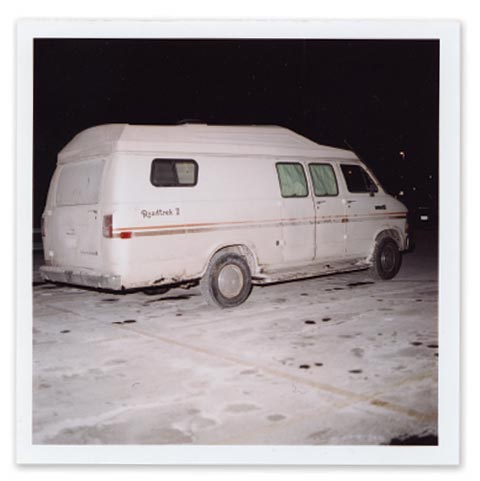
  • 1984 Dodge Ram Roadtrek II – $4500

    I bought this Roadtrek II, “the motorhome that drives like a van,” from a private seller (I want to say his name was Dan) three years ago. As transportation and sometime residence, the Roadtrek II has performed yeomanly. It is only because my mental health seems to be calling with some urgency for full-time non-vehicular lodging that I’m selling her at such an act-now price. I paid seven thousand dollars, cash on the barrelhead, for the Roadtrek II, on 7 April 2004. I can’t at present access Kelley’s blue book or a similar authority (Kelley’s website only estimates values for cars and trucks dated from ’87 to the current year, and Edmunds, though in command of a richer sense of history, appears to discriminate against motorhomes), but I think my (slightly negotiable) asking price fairly reflects standard motorhome depreciation, as well as the fact that the Roadtrek II’s water pump has of late been behaving in a way that might seem to controvert its manufacturer’s name (SHURflo). Also the stove, possibly, is discharging non-alarming quantities of gas. I’ve been getting mild headaches that seem inhalation-related, though I haven’t consulted a doctor about these (mild, as was said) headaches and can’t speak with any real conviction about their etiology. I’ve been having trouble distinguishing faces as well. Features—particularly eyes (and their brows), but also noses, mouths, chins, dimples—seem indistinct, washed out not only when I try to recall them at a later time (e.g.: orig. envisaging: 02/09/07; failed facial recall: 02/21/07), but also when I stare anxiously into eyes or onto faces. Has this ever happened to you?
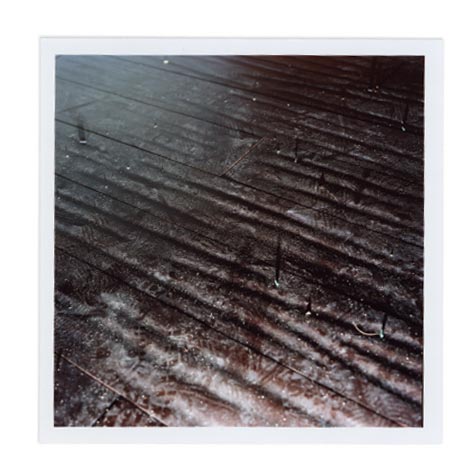
    In general the Roadtrek II’s interior could use some TLC. Surely it’s not unique in that respect (:>).

    To pay for the motorhome, manufactured collaboratively by Ontario’s Home and Park and Michigan’s Chrysler Corporation, Dodge division, I used seven-tenths of an inheritance I received upon the death by ischemic heart disease of my mother, Leotine. The wisdom of the purchase was questioned by my vaulting younger brother, Shane, on whom more later, but I suffered no buyer’s remorse. In many respects I have “babied” the Roadtrek II. The metaphor is inapt in my case since I don’t like babies, but let it stand. In 2005 and early 2006, I was able to have the Roadtrek II’s toilet patched, replace its timing belt, and approve some two or three other tweaks to its Herculean V-eight engine, using money earned as a part-time—to the extent that thirty-five hours per week (give or take, mostly give) is part time—flooring installer for the Green House Effect, a Minneapolis seller of eco-friendly building supplies, and my benefit-withholding employer till six months ago, when the emotional hurdles I indicated above began to impede my ability to remove and install floor coverings with sufficient reliability or friendliness.

    During my stint with the Green House Effect, I spent much time laying cork or bamboo flooring and recycled-glass tile, to make way for which I’d have to rip up and discard perfectly good carpet, linoleum, or Pergo. The other, increasingly fuzzy installer didn’t speak much English, so I was the one forced to deal with the customers, mainly dishrags. Had I been in Kevin’s shoes (New Balance), probably I would have fired me, too.
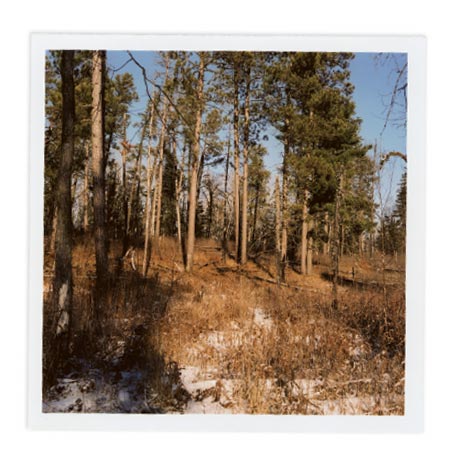
    As you will see, for the purposes of this notice I forbid my camera access to the Roadtrek II’s penetralia. I have never been much of a housekeeper. My mother could testify to that, were she not dead. When you come to inspect the Roadtrek II, however, you will see that she (the pronoun now refers to the motorhome) is only messy and dirty, and, to repeat, in general need of some TLC, rather than damaged in any serious/prohibitive way. I may as well point out here that the blood on the Roadtrek II’s not excessively punishing queen-sized stern bed is mine and commemorates no stageable drama (nosebleed, 12/19/06). To my rare good fortune (“If it wasn’t for bad luck, I wouldn’t have no luck at all”), my nose hasn’t hemorrhaged in four and a half months, though lately my skin has answered with raised, reddish marks to all but the most feathery touch or scratch. Any thoughts on this last malady? My Googling was inconclusive.

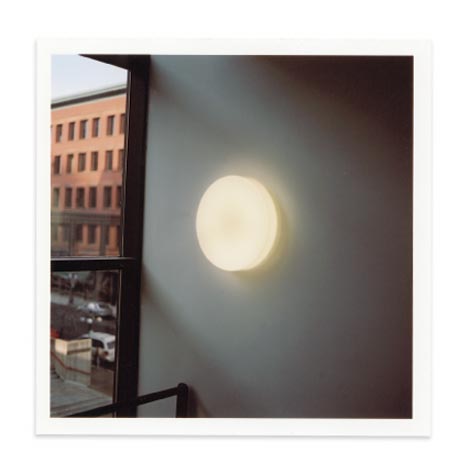
    I explain the bloodstain because I’m aware that long-term van habitation is a cliché of failure, and that single men in such situations are closely associated with creepiness. As it happens, thanks to the “kindness of strangers,” some of whom were not technically strangers, or, ultimately, kind, I have never really lived full-time in the Roadtrek II. (But try explaining that to the folks at Match.com.) (I haven’t, but you get my drift.) I mulled diligently over these stigmas before purchasing the Roadtrek II, from a Wisconsin rustic named, if memory serves, Dave, a Dave of the sort who says, “Hang on a sec; I gotta take a piss” before he even says hello. When you and I meet, at a spot of your choosing (if you’re stumped for an idea, one humbly suggested rendezvous is pictured directly below), I think you’ll find straightaway that I don’t fit the type.

    I am only kidding. We can negotiate the sale in a more public place. I have the title and an extra set of keys in the glove box (latch broken). The transaction could easily be accomplished on your lunch break, should you be granted such a thing. For many employers, a lunch break needn’t afford time for proper digestion, much less an efficient test ride.

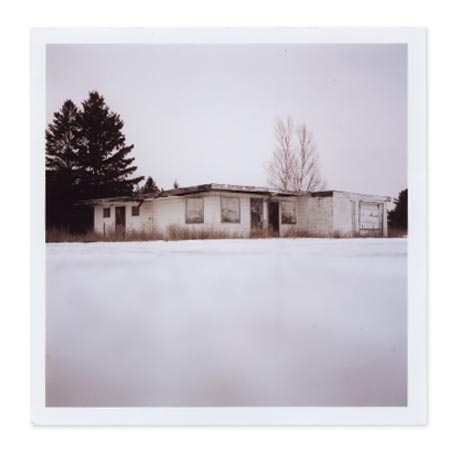
    It does seem fair to say, speaking experientially and with no wish to impute unbecoming thoughts to other motorhomeowners, that certain distressing yet provably normal male heterosexual fantasies can yield increased anxiety when they enter the mind of a man in the driver’s seat of a disorderly (“garbage-y,” I’ve been told) twenty-three-year-old Class B motorhome. One worries that the Roadtrek II, serving as a conduit of bachelor-van-dweller mythology, is encouraging profligate /lawless ideations/behavior in its owner that might not otherwise surface. For instance, in the parking lot of a Chicagoland Jewel-Osco, I spotted and was palpitated by two milky-skinned, strangely spectral young women, women most likely in advance of legal maturity, probable girls would be another way to put it, and it is true that I fantasized, with traces of serious intent, about offering them 400 dollars to perform (really quite routine) sexual acts on and around the Roadtrek II’s handsome central table and surrounding quartet of comfy swivel chairs (minor upholstery wear and tear). This fantasy, no cinch to dislodge, never occurred to me in the precise form described above (in scant detail; I am no pornographer) when I owned Ford’s Aspire, teal with pink brands and accents. Granted, the Aspire didn’t offer much privacy or room to stretch out in creative positions, such as the “Moravian pony,” but then again, when I owned the Aspire I was living in a proper home, pictured below, where an assignation might have been played out with somewhat greater civility.

    Probably I should depart from this line of my sales pitch. Early in life I became convinced of the salutary effects of relaxed self-censorship, but the practice has gotten me nowhere.
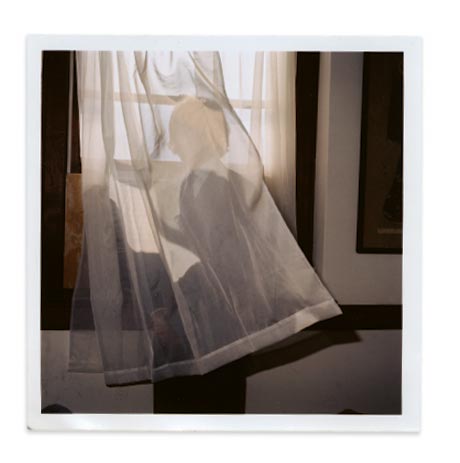
    The above photograph no doubt reveals that the proper home I spoke of three sentences ago was not Hearst Castle, nor was it “proper” in the sense of belonging to me through a rental, mortgaging, or gentlemen’s agreement. And talk about cold! Still, prior to my mother’s passing and my consequent flushness, the white country home was about as good a home
    as I could imagine mustering, though it’s true that my imagination has frequently been self-sabotaging or at least self-limiting. I did a good amount of thinking and reading in the white country home, and for a while was happy there, till various mental and physical ailments recrudesced or emerged, most distressingly the aforementioned problem with faces, which at first were blurry only sporadically and only in memory (though including short-term memory), but then, as explained above, became more and more amorphous even in the present. This condition, incidentally, can obstruct gender determinations, especially during winter, when people around here are bundled in form-concealing clothes, excepting some young people who make a display of underdressing, as I myself once did, refusing as a teen to wear winter caps, regularly emerging from the shower just minutes before having to hotfoot it to the bus stop (you will find that I have since come to value punctuality), so that my wet, gelled hair would often freeze en route to the corner and compel my bus-stop-mate Melinda to pat my hardened “do” in a way that I later (too late) realized was flirtatious.

    Interestingly, photographs of faces are clearer to me than actual faces. See, for instance, my portrait, below, of my brother Shane,
    whose downtown St. Paul apartment, where I am at this moment,

    is quite elegant (“Oh for fancy!” my mother might have said), as you might conclude from my admittedly evasive photographic composition. Shane works in product development at General Mills (or, in the unaccountable and unfunny Frito Bandito accent he affects for the name, “Mjels Xenerál”), for whom he spearheaded the “underpublicized” (per Shane) 2006 makeover of the Boo Berry mascot. Shane was always the achiever of the family, always the one to secure an extra letter of recommendation or deliver the more tasteful (dishonest, omissive, sentimental, unctuous) filial encomium at certain sparsely attended Twin Cities funerals. He was patronizing me before he was out of knee pants. If there was a time when he looked up to me in the usual fashion of younger siblings, it must have been during my prehistory. It will do to say that little love or even comprehension is lost or even misplaced between Shane and me, and that it was only after a traumatizing incident at the Minneapolis central library’s computer hive that I reluctantly petitioned to use his apartment as command post for the composition and design of this classified ad.

    I will also be here, over the lunch hour, while Shane is at work, responding to what I expect will be a Noachian inundation of queries regarding the Roadtrek II, which already I have begun to miss. I am nearly weeping. Under different medical and financial circumstances, I would happily be the one to add the expected 112,648 miles to her current 187,352 actual miles and 360 intangible (though recorded) miles. Sorry to confuse you with that last bit; in confusion we are united. I don’t mean to say that the Roadtrek II’s fully functional odometer (fuel gauge broken, by the way) has been jiggered. (Why would I set the thing back a measly 360 miles?) What I mean is that I once went to sleep—get this—in the passenger-side single bed of the Roadtrek II, parked at a rest area in western Wisconsin, and woke up to gray-tentacled dawn in the driver’s-side single bed of the Roadtrek II, stationed friendlessly and bewilderingly in the “Coyote” section of a shopping-mall parking lot in Schaumburg, Illinois. I wonder if you’ve ever experienced anything like this before.

    My schedule permits responses only to the obviously sincere among you. I will try to answer your questions by e-mail, but bear in mind that I am here for only part of each day. It might be best to simply arrange to take a look at the Roadtrek II. When we meet, I’ll want to begin by asking you to pose for a Polaroid headshot. I’ll return the photo to you at the end of our transaction/meeting. I have an immediate opportunity to sublet a reasonably priced if felinely scented room from an unaffiliated fraternity of Hamline University, and I could use the money for the deposit and some basic furnishings, and so, in hopes of hastening a sale, the Roadtrek II’s price, as I said, is (slightly to somewhat) negotiable. Let us talk further soon.

    This item has been posted by-owner.
    Location: arrange meeting place with seller
    it’s NOT ok to contact this poster with services or other commercial interests

    PostingID: 428675309

    Dylan Hicks’s fiction, criticism, journalism, and hack work have appeared in several dozen publications, including the Village Voice, The New York Times, City Pages, and the website Pindeldyboz. His previous short story for The Rake was anthologized in Da Capo’s Best Music Writing 2007.


  • National Guardsmen Roamed the Subway

    Things changed. National Guardsmen roamed the subway terminals now in their fatigues and black berets, brand-new assault rifles cradled in their arms. The homeless were suddenly visible again. Irony had reached the far end of its arc—Johnny Cash was covering Depeche Mode’s homage to Johnny Cash. It was a confusing time for me, after my neighbor went missing.

    “Who?” Jenny said.

    “The guy in 2B,” I said. “I forget his name. But it’s been days since I’ve seen him.”

    At 6:45 every evening, my neighbor and I would converge from opposite ends of the block like somebody walking up to a mirror. Once at the stoop, we’d grimace at each other and say, “Hey, what’s up, thanks, cool, alright.” We’d enjoy the mailbox moment, inspecting our envelopes with the focus of men at adjacent urinals; then, eyes on the floor, saunter in a way that suggested we were not following each other up the stairs. After a round of key jangling, we’d open our doors at opposite ends of the hall and, with a last glance-and-grin before crossing the threshold, shut doors and lock locks.

    Static from the outer reaches of the universe came to me through the phone receiver. Finally, Jenny said, “So what are we doing this weekend?”

    “I think it was Maximus.”

    “Anyway, that whole thing with the ringing turned out to be nothing. Did I tell you?” She knew she had. Telling me a second time was her way of chastising me for forgetting to follow up about it. “I got them irrigated and now my clothes hiss when I move and the sound of my own chewing’s driving me crazy.” Truthfully, I had trouble keeping up with the various ailing tracts in her body.

    “Geronimus?” I asked. “Heronimus? Something Roman. You told me so obviously you know.”

    “I’m talking to a deaf person here. Can we talk about something real for once? Can we? And not some bullshit fantasy of yours?”

    The residue of past arguments made it impossible for us to ever have a pure moment. It was combustible stuff, this residue—and each word a spark—making every conversation an exercise in damage control, in taking and offering the least offense.

    I unscrewed the cap on my beer and, holding the phone’s mouthpiece to my forehead, pulled a long, sudsy gulp. “OK,” I gasped. “When are you coming over?”

    The real problem was that Jenny was just Jenny to me. Her lips were no longer the kiss-raw genital echo they’d been those inaugural weeks; now they were plain old Jenny lips, cracked and bleeding in winter, greasy while slurping Thai noodles, painted on increasingly rarer occasions. She had become, as of late, so unmoored from me that we found ourselves—on our way back, say, from Sunday brunch somewhere—drifting as far as five or six paces from each other. A stop-and-linger at the local kitsch store window led to half a block of catching up on days I felt like catching up, or—on days that I didn’t—a phone call (after not finding her at my apartment) trying to untangle the misunderstanding around what the plan after brunch was exactly. “I told you I had work to do.” “You don’t just disappear!”

    I interpreted the permanent interment of her contacts in their little screw-top coffins and the donning the black horn-rims as an act of hostility. I couldn’t remember the last time she took her hair out of its ponytail, pulled back so tightly that dead-on she looked bald. And it wasn’t like she didn’t own slinky dresses or a decent pair of fuck-me boots. These days on “date night” she bounced along beside me like someone being baby-sat. She came to me on the days she worked in her chinos and bleach-yellowed oxford smelling of fried onions and boiled chicken. All of this I took as personal affronts, so that by the time she opened her mouth to say something at the end of a day, she was already at a disadvantage.

    And who had I become—to her, to myself? Lately, with Jenny, I seemed to be someone else entirely. He was a mask, a foil, some part she had driven me to play. I detested this guy.

    As I started in on the dishes, I continued our bickering in my head. I squeezed out some dish soap into the stagnant pool. An orange grease-slick dilated like something shocked, revealing a sunken pot with burnt meat sauce stuck to the bottom. I turned on the faucet and let the water froth, then left the dishes to soak. Wandering the confines of my apartment aborting tasks, I imagined myself being filmed—opening a pile of mail, looking for a CD to play, separating the strewn clothes into a Mine pile and a Jenny pile, leaving the two mounds as I went on to start something else—an imaginary camera on me the entire time, my self-esteem bolstered by millions of viewers, fans and critics interpreting my inability to stay focused, my meandering around the house as meaningful meandering, important meandering, a semiotic-generational meandering. I pictured this raw, aimless footage—me staring into the empty fridge, me flipping through the Daily News television insert for twenty minutes before realizing it was three months old—being edited into something funny and tragic and hopeful.

    But we were careful with each other that night. I opened the door to Jenny, flushed and pink-cheeked, snow melting into drops on her coat. She found the odd root vegetable or two in my crisper. She cut off the flowering portions and popped open dried and canned stuff I didn’t even know I had. She boiled a pot of water. She chopped and sautéed dinner, the peculiar odor of dust baking off the long-disused broiler preceding the more pleasant one of things being caramelized.

    At that moment I was grateful. I felt as though I were being rescued.

    The evening, however, went downhill after that. We sat on my futon. I wanted to say something but she preempted it by switching on the tube. We descended into a labyrinth of reality game shows and cop dramas and fell asleep without a word. I woke at three and turned off the television. Jenny, in a stupor, undressed. I did the same. We lay naked next to one another. I slipped into a dream where we were fucking and got up several hours later to find her, and her pile of laundry, gone.

    I hesitate to mention what I did for work in an effort
    to avoid it defining me. I am not what I do, contrary to what’s said about that; or rather, I am not what I do for a living. Who would hold a person to the eight hours spent sleeping as a measure of the kind of man he was? My eight hours at work were just as compulsory, and as inert. It required of me a certain mode of dress, a certain conduct toward others. My interior life there was busied with the usual fantasies: that gust of courage which might allow me to say certain things to my superiors, to coworkers I despised, to subordinates I longed for. I was required to remember things and relay these things to others. I gave input when prompted. Sometimes I delegated. There were lunch breaks, coffee breaks and cigarette breaks (until I quit smoking, at which time I began taking fresh-air breaks). I went to this place five times a week, no more, and took off the occasional nationally appointed three-day weekend. My work schedule made me a good candidate for one of those cards you could swipe through a turnstile every seventeen minutes for a month, but I found myself these days walking back to the apartment rather than completing the circuit on the subway.

    Then it was Saturday. I was coming back from an overnight at Jenny’s. A postal handcart with its rubberbanded handle was parked by the front steps. I unlocked the front door and caught the mailman mid-sort: the entire row of mailboxes was tilted forward so as to allow him access to each through the top. We exchanged hellos. He asked my apartment and then offered several envelopes out of his stack.

    “You wouldn’t happen to know by any chance,” I asked, “if the guy in 2B did a change of address in the last month or so, would you?”
    “No,” he said
    , “but if he doesn’t come for it soon I’ll be filling out a fifteen-oh-nine on him. Will you look at it in there?”

    I peered into the box and saw a tubed mass of envelopes and catalogues. “I could hold them,” I offered.

    “And I could go to jail. I can’t just hand this off to you, just like that. He gives you the key, that’s between you and him.”

    Shortly after that, however, my neighbor’s mail began appearing in with mine, and as a result I learned some things about him. For instance: his first name was “Darius,” last name “Mies” or “Mieskowicz”; he was eligible for several major credit cards; and apparently his subscription to Guitar Player had run out. Also, I learned it was exactly five brisk strides from my door across the hall to his and with an ear pressed to the door, one got a thrumming, submarine hum—which was either coming from the apartment or from inside one’s own ear. The door handle was icy and, when turned, opened. The mail I’d slid under his door lay scattered on the other side among an accumulated litter of take-out menus.

    “Hello,” I asked into the darkness. I felt something move, and as I was piecing together a reason why I was bothering him, I heard a voice.

    “Hey there!”

    I stepped back and shut the door.

    The voice had come from above me. It was a neighbor, coming down the steps. She appeared on the second-floor landing holding a potted plant.

    “Locked out?” She was young, pretty.

    “I wasn’t thinking,” I said, and then, patting myself down, “I must have left them in my other jacket.” Even as I said it I realized that I wasn’t wearing a jacket. Or shoes.

    “Do you have a fire escape?” She leaned the plant onto her hip and jingled the keys in her pocket. “Because, if you promise you’re not a burglar or a rapist, I could let you climb down through mine.”

    “No,” I said. “I mean, there’s no fire escape.”

    She gestured with her chin at my neighbor’s apartment. “You live there?”

    “Yes,” I said. We both regarded the crooked gold sticker-stencils, “2B,” on the door with the measured silence one gives to a painting at an art gallery.

    “Because the guy I’m staying at’s is right above you,” she said, “and there’s a fire escape up there. That’s weird, isn’t it? It should come down right outside your window.”

    Sweat prickled my scalp. I felt strangely disoriented in this lie, expecting at any moment my neighbor to open the door and ask what was going on. “The problem is,” I said, “I do, but the window that goes out to it’s locked.”

    She seemed satisfied with this. A moment of silence passed.

    “It’s probably best,” she said. “I’m only crashing there while he’s away. He’d be pissed if he came back and found out I let some stranger into his place, right? I’m totally the worst housesitter! Look at this thing.”

    She held out the plant, which I noticed now was dead. It rattled as she turned it this way, then that, dry husks floating to the floor by her feet. “I need to find a replacement. But do you think that’ll work?”

    I shifted my posture—the whole time I’d been holding onto the door knob, which had become warm in my palm—and before I knew what I’d done, my wrist turned and the door clicked open.

    This, of course, didn’t escape her notice.

    “Wow,” she said. “That’s lucky! You should have that fixed, huh? Just think if you actually were a burglar or a rapist. Well of course if it were actually you, you’d be doing it to yourself, so I guess it wouldn’t be so bad, or at least not a crime. But if it was me? I could just go on in there and do whatever I wanted, wreak havoc, which for me is, like, not watering your plants.”

    She seemed to be waiting for me to make a move.

    I said, “There’s a hardware store down on Seventh that has plants in the window. I don’t know if they’re for sale, but it’s worth a shot, I guess.” My cheek muscles ached from smiling politely. I examined my socks. It occurred to me that she knew I was lying, and was, for some reason, playing coy. Was this a dare? I let the conversation lapse, but she continued to wait there. I stood my ground until I couldn’t stand it anymore. The only place for me to go now seemed to be through my neighbor’s door. “Well,” I said, “Good luck.” I turned and stared at the rusty nameplate beneath the peephole for a moment before stepping inside.

    It was cold in here, and still. I swayed awhile just on the other side of the shut door, listening for her footfalls down the steps. Through an open window somewhere a truck rumbled past. I felt along the wall for a light and turned it on.

    The place was empty.