Category: Yo Ivanhoe

  • Desideratum

    willis-livingston-smile.jpg

    The clock is ticking.

    The clock is always ticking, always tick-tick-ticking.

    The sun is burning, burning, burning. The moon is rising. The moon is rising. The moon is rising.

    The world is turning. This world is turning, turning, turning.

    Our hearts are yearning. Our hearts, our hearts, our hearts are yearning.

    The days get away from us. The days roll right out from under our feet and leave us reeling, leave us tottering, wobbling, unsteady, old.

    We get broken.

    That puppy that used to strain at his leash and lunge his way through every day, where has he gone? And how did he go so quickly?

    The dog that could never get enough of life, who wore out hours and whose heart blazed like a great, burning thing, that dog who lorded over an entire island every summer and who was ever ready to go wherever there was to go, our bright and raging boy, paragon of ‘good dog’ if ever there was one, how could he have grown old already?

    How is that possible? How could any just and loving god allow such a thing to happen?

    It hurts. It aches in a million ways. It shakes my faith to the core.

    Yet at the end of another hot, rough day I nonetheless find myself begging for grace, for mercy, for patience, for time. More time.

    Please.

    More time.

  • A Summer Kind Of Sad

    stars on stars.jpg

    Good lord, the stars, the dusty, glimmering sprawl above some dark, quiet place in America, the stardust, star-scatter, the worlds stretched up there above this one.

    Remember? Remember standing on a gravel road in Vermont –along a big river in a Montana valley, on a dock jutting out into a lake in the Adirondacks, at the edge of the ocean in Oregon– watching stars shake loose and heave themselves down the sky? Remember standing in the damp country in Michigan, in Minnesota, in Iowa, in Illinois, watching fireflies wheel and tumble above the black fields?

    I remember.

    I also remember –where the hell was it?– the old man wobbling aboard a bicycle who emerged like a vision through the ground fog, paused to wish us a good evening, and quoted Thucydides: “They have the numbers; we the heights.”

    I remember the wind whistling through open car windows and the hum-thumpa-hum of tires on the pavement of dark highways and music carrying in the darkness and the bright lights of carnival rides whirling on the horizon and days and nights so permeated with wonder that they leeched the words right out of me and left every letter of the alphabet in fuzzed and uselessly abstract isolation fluttering from a clothesline stretched across the roof of my skull while backyard sprinklers shook their maracas up and down the block of my old neighborhood and I drifted all night at the margins of sleep.

    mo co fair-19.JPG

    What explanation is given for the phosphorous light

    That you, as boy, went out to catch

    When summer dusk turned to night.

    You caught the fire-flies, put them in a jar,

    Careful to let in the air,

    Then you fed them dandelions, unsure

    Of what such small and fleeting things

    Need, and when

    Their light grew dim, you

    Let them go.

    There is no explanation for the fire

    That burns in our bodies

    Or the desire that grows, again and again,

    So that we must move toward each other

    In the dark.

    We have no wings.

    We are ordinary people, doing ordinary things.

    The story can be told on rice paper.

    There is a lantern, a mountain, whatever

    We can remember.

    Hiroshige’s landscape is so soft.

    What child, woman, would not want to go out

    Into that dark, and be caught,

    And caught again, by you?

    Let these pictures of the floating world go on

    Forever, but when

    This light must flicker out, catch me,

    Give me whatever a child imagines

    To keep me aglow, then

    Let me go.


    Siv Cedering, “Ukiyo-E”

  • The Basics, More Or Less

    openallnight.jpg

    Source materials for the project at hand, whatever it is, and whatever it might yet be: Grimm’s Fairy Tales; Hans Christian Andersen; William Graham Sumner’s Folkways; Frazer’s The Golden Bough; Mythology (Graves, Bulfinch, Hamilton, etc.); the Icelandic Sagas and Norse myths; The Odyssey and The Iliad; The Aeneid; Ovid’s Metamorphoses; The Divine Comedy; James Brown; Little Nemo in Slumberland; Goethe’s Faust; Skip James; Shakespeare; the fables of La Fontaine; Tacitus; the stories of Chekhov; George Herriman’s Krazy Kat; The Koran; The Bible; Jay Robert Nash’s Bloodletters and Badmen; Brewer’s Dictionary of Phrase and Fable; Hank Williams; Butler’s Lives of the Saints; Suetonius’ Twelve Caesars; August Sander’s People of the 20th Century; Cellarius’ Atlas of the Heavens; Jessie L. Weston, From Ritual to Romance; Dale Pendell’s Pharmako/Poeia; Louis Charbonneau-Lassay’s The Bestiary of Christ; Frans Masereel, Passionate Journey; Lempriere’s Classical Dictionary; Burton’s Anatomy of Melancholy; The Oxford Unabridged Dictionary; Aristotle; Anomalies and Curiosities of Medicine; Alan Lomax’s The Folk Songs of North America; The Book of Fabulous Beasts; Mad magazine; The Thousand and One Nights; Flann O’Brien; Extraordinary Popular Delusions and the Madness of Crowds; The Hardy Boys Detective Handbook; Walter Benjamin’s Arcades Project; Harry Smith’s Anthology of American Folk Music; Christopher Alexander’s A Pattern Language; Plutarch’s Lives; Jay’s Journal of Anomalies; Robert Frank’s The Americans; Mabille’s Mirror of the Marvelous; Kafka’s Complete Stories and Parables; Paracelsus; Paradise Lost; William Blake; Alberto Manguel’s Dict
    ionary of Imaginary Places
    ; Eudora Welty; In the Night Kitchen; Tex Avery; Goodbye Babylon; The Elements of Style; William James’ The Varieties of Religious Experience; Aesop’s Fables; Sun Ra; Borges; Hesiod’s The Works and Days; St. Clair McKelney, True Tales from the Annals of Crime and Rascality; Carl Jung; King Arthur and the Knights of the Round Table; E…T…C….

    samson and the lion.jpg

  • Because, Finally, It Was Real Dark Out There And Astronomy Makes Me Nervous

    schopenhauer 5.jpg

    Because you ask things like what the hell? and why?

    Because I guess you want to know.

    Because I joined up with the Amish after my dad decided it would make a man of me and it was either that or go to work at my grandfather’s automobile dealership and I knew damn well that I couldn’t sell cars if my soul depended on it, and I didn’t want to believe that it did.

    Because I got kicked out of the Amish after just eight months, ostensibly for dropping one too many F-bombs and being royally pissed about the no television rule.

    Because I have to admit that my beard was pretty shitty and they were some serious customers and I was in way over my head right from the start and didn’t have the slightest idea they were going to make me read the Bible all the time and work like a mule –the whack costumes, yes, I knew about those, but you don’t know how ridiculous and uncomfortable that shit is until you actually have to wear it– and let’s just say I wasn’t the happiest camper and so wasn’t inclined to be terribly cooperative.

    Because when they realized how essentially worthless I was when it came to stumbling around behind horses in fields and trying to build stuff without any power tools, etc. they made me go out to sell quilts and honey by the side of the road with the women, all of whom, I’m pretty sure, were forbidden to speak to me.

    Because they didn’t speak to me at any rate.

    Because at that point, snubbed by a bunch of girls in widow-granny dresses and bonnets, I said, Fuck this noise, apparently a bit too forcefully, or apparently once too often.

    Because getting kicked out of the Amish was the best thing that ever happened to me, although I still hold out hope that something even better than that will eventually happen to me.

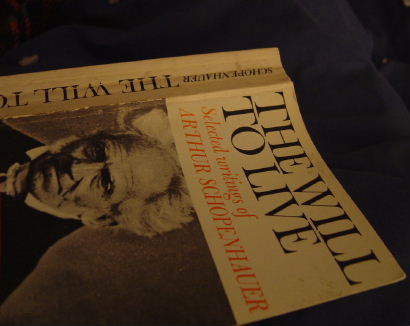
    Because I’m starting to read philosophy.

    And because, really, what choice do I have?

    That’s why.

  • Like This

    prisoner.jpg

    I don’t know what to tell you. I don’t know what to say. I have absolutely no idea. I can’t even begin to imagine. I’m speechless.

    Seriously, words fail me.

    The cat’s got my tongue. I’m tongue-tied. There is nothing on the tip of my tongue. I can’t explain. I have no comment. I’m at a complete loss for words. There is apparently no ax to break up the frozen sea within me, assuming there even is a frozen sea within me, and I honestly have no reason to believe this to be the case.

    It’s like this, do you understand? Do you understand what ‘like this’ means? Can you even imagine what ‘this’ means in the present context?

    I can’t. I guess I can tell you that much.

    So, listen to me: I’ve got nothing for you. The English language has become a puzzle to me. I can’t seem to find the right word, never mind the right words.

    I do know that when I say ‘like this,’ or even just ‘this,’ I’m referring to a crisis. I don’t, unfortunately, (as I’m trying to explain) have any words to explain this crisis.

    It strikes me as some kind of miracle that I have been able to dredge up from someplace a word like ‘crisis,’ or a word like ‘miracle’ or, holy shit, ‘dredge.’

    At this point such words represent major discoveries. Seeing them mysteriously appear on the page beneath my pen is like watching an entirely new continent surface in the middle of the ocean.

    As such, I must say (and I must say, I must say, I must, helplessly, say), they leave me dazzled. Wholly dazzled, and delighted, which is more, so much more, than I have any right to expect given my present frame of mind.

  • Slow Dazzle: Living Outside Of Words

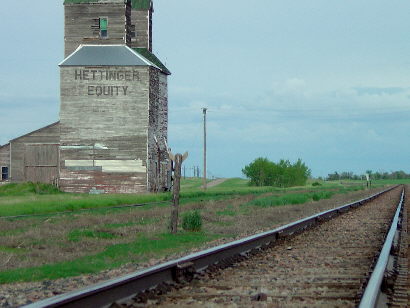
    west-hettinger.jpg

    Disappointed in love and broken

    at forty she married a small town

    in Ohio

    it made no brash promises whispered nothing

    sweeter in her ear than good morning

    good afternoon good evening good night

    my dear

    good night my darling

    good night my dear

    in the morning

    I’ll still be here

  • The Heart Can Be Killed Anywhere On Earth

    concrete swan.jpg

    Burch woke up one morning in a ditch in some low-lying country. He had no idea where he was and no recollection of how he might have arrived there. Whatever possessions he might once have owned –and he had a vague recollection of a backpack full of belongings– were nowhere to be seen.

    He was thirsty as the devil himself for a can of Coca-Cola.

    Alongside the damp ditch in which he found himself there was a poorly-maintained dirt road, its surface pocked and worn with deep ruts. In the distance Burch could see smoke rising from the chimneys of a little town, and he set out along the road in the direction of this unfamiliar village.

    As he walked it became apparent to him that somehow, and somewhere in the lost stretch behind him, he had acquired a rather pronounced limp. Burch felt a dull ache extending from his left buttock all the way down to the area behind his knee. The pain became more acute as he hobbled along the road.

    An angel appeared to him just as he was approaching the outskirts of the village. Burch watched as the angel glided down from the bare branches of a tree.

    You are to undertake a quest, the angel told Burch. An old horse will be provided for your journey, and you are to learn that the heart can be killed anywhere on earth.

    That, Burch said to the angel, does not sound like a quest. It sounds like a sentence.

    To which the angel replied, That is only because you fail to understand the full meaning of the phrase.

    Burch considered the angel as it fluttered there above him on gray and dusty wings. This, he thought, was a most unwelcome and untimely visitation.

    It seems to me that the phrase could not possibly be plainer, he said.

    Only because you cannot yet see clearly, the angel said.

    Burch was in no mood or condition to argue with an angel. For his part, the angel felt obligated to remind his charge of the seriousness of his mission.

    You will understand, I’m sure, at what grave peril to his soul a man refuses to carry out the orders of an angel, he said.

    I understand no such thing, Burch said. And surely you understand that you are looking at a man whose soul is already in considerable peril, if, in fact, it has not already been entirely lost to him.

    What I am telling you, the angel said, is that there is yet hope for you. You are being given a rare opportunity.

    I can barely walk, Burch said.

    That is why you are being provided with a horse, the angel told him.

    From the village Burch heard the ringing of church bells.

    I suppose, he said, that I am to regard that as a sign.

    The angel cocked his head and listened to the sound. The bells? he said. That is nothing more than a custom of the village.

    Burch spit into the road and pawed at the dirt with his boot.

    Let’s have a look at that horse, he said.

    concrete deer.jpg

    Slayed.

    Slaughtered.

    Shattered.

    Crushed.

    Obliterated.

    Burst.

    Busted.

    Broken.

    Destroyed.

    Rubbed out.

    Squashed.

    Flayed.

    Annihilated.

    Massacred.

    Snuffed.

    Shredded.

    Spent.

    Jolted.

    Struck.

    Moved.

    Electrified.

    Blown wide open.

    Stunned.

    Tickled.

    Elated.

    Overjoyed.

    Lit up like a jack-o-lantern.

    Delighted out of all proportion.

    Rocked.

    Resurrected.

    Reborn.

  • Night Falls, And Keeps On Falling

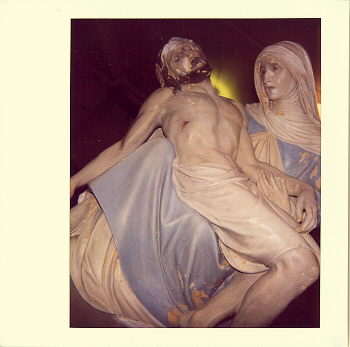
    pieta.jpg

    Waking, by reason of their continual cares, fears, sorrows, and dry brains, is a symptom that much crucifies melancholy men.

    Robert Burton, The Anatomy of Melancholy

    All he could do was transcribe the interminable babbling voice of the night, the insinuating perverse voice of the demons.

    Pietro Citati, Kafka

    What if an individual is perceiving a daydream and a series of external sensory inputs at precisely the same time, and has lost the capacity to distinguish one from the other? What happens to his perceptual world? Clearly he will be peopling his universe of awareness with elements that are altogether private, presences generated from within which for him will be a genuine part of the real world; these are what he sees, or hears, or is otherwise sensing. And should he then be unable to differentiate these from his everyday perceptions, then indeed he may move into a haunted, nightmarish world, and be a very troubled human being.

    Joseph D. Noshpitz, “Reality Testing: A Neuropsychological Fantasy,” in Comprehensive Psychology

    A common notion about the relationship of sleep to mental health is that total sleep loss…deranges the mind and may result in some kind of breakdown….When serious sleep disturbances are present, as they almost always are in the mentally ill, the patient’s history often indicates that the sleep disturbance preceeded the actual break from reality.

    William C. Dement, Some Must Watch While Some Must Sleep –Exploring the World of Sleep

    On particularly dark nights the seven black rabbits that live somewhere in the bushes in my backyard emerge from their burrow or bunker (or whatever it is that rabbits live in) and move about upright, staggering and lurching around on their back legs.

    It seems to me that they’re uncommonly large for rabbits. Some of them probably stand at least four feet high. There’s nothing even remotely human about their movements.

    They were particularly active in the winter months, and I spent a good deal of time watching them closely from the darkness of my room. One night, quite inexplicably, I saw them hang a puppet from a tree by its neck. I eventually concluded that they were members of some kind of rabbit version of a religious order. I’d see them coming and going from my garage at all hours. I gathered they were building tiny coffins.

    I surmised this last bit of information from the fact that I had seen what were unmistakably funeral processions and burials. I’d watched as the rabbits shouldered caskets through the snow in the moonlight, and dug holes with their long legs. It was clear that my backyard was becoming a rather crowded burial ground.

    What exactly the rabbits were burying remained a mystery for a number of months, until the night I saw several of them drag a baby across the yard and disappear into the garage.

    They’ve been a bit scarce of late, now that the snow’s gone, but I have occasionally seen them out there milling around the garage or skulking furtively up and down the alley. The last time I saw them I could have sworn they were smoking cigarettes.

    I’m not sure how exactly one would go about negotiating with rabbits, but I would very much like to strike some sort of deal that would involve these creatures delivering to me a living infant. I’ve wanted a little bitty baby of my own for quite some time now, ever since I lost contact with so many children of my acquaintance.

    Should I somehow manage to procure a child from these animals, I shall name it either Ezra or Ezrena (or perhaps Theodore), and I will love the child and it shall be the King of Nothing Never, and a keeper of beasts, and full of joy.

    The victim of insomnia, having seen the slowness of the dawn, arises with every nerve tattered and the capacity for happiness ruined. His morning is a desolation.

    Arnold Bennett, Things That Have Interested Me. Third Series. 1926

    Melancholics are not so sleepless as maniacs, yet the want of sleep is often an early and prominent symptom. They do not readily sleep, and if they do, they awake soon to be tormented by the vilest misery that it is possible for human creatures to endure.

    A.W, MacFarlane, M.D., Insomnia and its Therapeutics. 1891.

    Under [insomnia’s] influence injurious changes are permitted by the patient to be made in his daily habits; pursuits which formerly engaged his attention no longer interest him; even important business concerns are sacrificed; and against such tendencies no pre-existing vigour of intellect will afford any defence; the strongest minds (intellectually considered) may sink into apathy and feebleness.

    James Russell, M.D., “On Sleeplessness.” British Medical Journal, November 16, 1861.

    After dinner, my friend drove me, in a carriage, some five miles back into the country –the greater part of the way, along the margin of Migunticook Lake, and under a terrific precipice, whose boulders every moment threaten destruction. In fact, the whole of a bright sunny day, cooled with healthful zephyrs, was spent in pleasurable excitement. Interesting conversation beguiled the evening; and, after family worship, I sunk to rest in a luxurious curtained bed. Ere long, I slept; and, about five o’clock next morning, was awakened by the crowing of the cock. This was the only night’s sleep I have had these last six years and seven months; so help me God. Since then, my nights have been tedious, as usual, without sleep, and some of them distressing.

    “An Example of Protracted Wakefulness,” Boston Medical and Surgical Journal. July 31, 1845.

    Experience in private practice, and extended observation in the wards of general and lunatic hospitals, have taught me that the ordinary hypnotics are frequently unreliable, and that in some instances their use is attended by results as bad as, if not of more serious consequence than, the conditions they were intended to remove. I do not wish by this somewhat sweeping assertion to be understood to condemn the ordinary hypnotics, or to doubt their efficacy in suitable cases; but it seems to me that we run great danger of becoming routinists in the matter of sleeping-draughts….Like most of my fellow practitioners, I constantly meet patients who have run through the whole gamut of sleep-producing drugs, and find their last condition, in many instances, worse than their first.

    Edward N. Brush, M.D., “Some Clinical Experiences With Insomnia,” The Practitioner, January 1889.

  • The Heart’s Ventriloquist

    rangertoes.jpg

    He knew how to make the heart sing and yodel and howl with joy, could coax from it creaks and croaks and murmurs. He seemed to be able to make it confess its secrets, its hopes and desires, fears and needs.

    His performances were uncanny, the stuff of growing legend, and would leave audiences spellbound. He had the ability to make people believe that what they were hearing was an expression of the universal heart, yet in a way that felt both ancient and painfully real and personal to each individual who heard it. Some people proclaimed him an expert in the mysteries of the human heart; others believed that he literally had the ability to channel these mysteries.

    In what was left of his own battered heart, however, he knew that he was at best a mimic or a conjurer, at worst a complete fraud.

    The heart’s ventriloquist was a solitary and broken man. His work exhausted him. After each show he would retire to his dressing room and lock the heart in a metal trunk. And then he would go back to his motel room and spend the night drinking, smoking, and reading novels.

    He recognized that many of the words the heart spoke came directly from the novels he read, and he often felt like he was trapped in a past that not only wasn’t his own, but, more pathetically, wasn’t even real.


  • One Moment Sometimes Doesn't Lead To Another

    planetarium wi - 2.JPG

    The little house with its peeling paint and mossy shingles was set well back from the street and appeared to be floating in a sea of saffron grass bleached by the sun and burnished by the fleeting sweep of twilight.

    It was hot. There wasn’t a shadow left in which to take refuge, and there wasn’t a single thing moving in any direction.

    If you stood in the middle of the street you would hear the unreal, thrumming silence of dusk in a dead-end place and you’d smell the rain that would creep in after darkness fell. If you stood still and listened hard you could probably hear the surf of truck traffic on the highway at the edge of town. And if you stood there long enough you might eventually see a child aboard a bicycle glide silently like a dream fragment through the intersection at the end of the block.

    You might.

    But you might not. There weren’t a lot of children around anymore.

    If you took a few steps up the front sidewalk you’d smell the cigarette smoke that was drifting in almost rhythmic waves through the window screen. And if you were bored or curious enough to press your face to the screen you’d see an unfinished jigsaw puzzle spread out on a card table, a windmill and a field of red tulips shot full of jagged holes. You’d see an orange plastic ashtray with a burning cigarette wedged in one of the badly-stained slots, and an abandoned game of Solitaire lined up on a coffee table. An old woman would be sitting there in a faded sun dress imprinted with a pattern of what might have been sunflowers. Across the room from her, sitting utterly still in a recliner, his bare feet just jutting into the left side of the frame (you’d have to move or crane your neck to take him all in), would be a shirtless man wearing nothing but boxer shorts and holding a pistol in his lap.

    From another room in the house you’d hear the disconsolate burst of a television laugh track.

    You wouldn’t necessarily know this, though, so I’ll tell you: I’ve fired that gun before, but I’ve been waiting my whole life to really shoot something.