This play, Everywhere Signs Fall, has been around my life in some form or another longer than any other play I’ve written. When I was 24 and still more of a person who said he was a writer than a person who wrote, I remember sitting at a bar somewhere with my girlfriend-at-the-time and the friendly bartender who knew us well enough to keep us in free liquor all night long. I said I wanted to write a memory play. I wish I could remember why, particularly, at that moment I wanted to write a memory play. Maybe I had just read The Glass Menagerie and was feeling inspired. In retrospect, I’m not even positive that "memory play" is a genre that a person can write on purpose.
On the other hand, memory – or at least the way in which were constitute our memories in the form of narrative – has always been and continues to be a big issue in my writing. My first real play (whatever that means) was called The Past is Always Present. It isn’t the greatest play in the world, it isn’t even one of the better plays in my file cabinet right now, but I’m still a fan of the title.
Very soon after this evening in the bar, which I don’t remember well except for this particular announcement that I was going to write a memory play, I found myself in grad school in Phoenix, Arizona. (Very soonafter that I found myself without that particular girlfriend-at-the-time.) I don’t like Phoenix, Arizona for a variety of reasons, but I have to say that it’s a great location for noir-ish stories. How have I heard it described by the many other visitors who hate it? "An overgrown truck stop." "The valley where all the shit in an otherwise beautiful state comes to rest." "A mirage in the middle of the desert." The place just ain’t right somehow. Strip malls, strip clubs, and movie theaters. New York bagel shops, Chicago hot dog joints, and bright green grass lawns – in the desert inthe southwest!
Grad school in Phoenix, Arizona wasn’t a well-thought out decision on my part. I was running from stuff – a fact that probably, unintentionally, informs a number of character choices in Everywhere Signs Fall.
During the first day of the first seminar, Professor Guillermo Reyes chatted with second year grad student Trista Baldwin about her play Accidents and Short Conversations.(Trista, by the way, has since moved to Minneapolis too. Dear Jerome Foundation, the fellowship program is working.) Guillermo to Trista: "Are you rewriting Accidents."Rewriting accidents? Rewriting accidents?!?! People trying to rewrite the accidents that have changed their life! That’ll be my memory play.
I walked out of this seminar, looked up at the sky in Phoenix, which is humongous and always blue all the time no clouds ever or maybe one cloud every few days and stunning especially if you’re used to pale-ish, low-hanging Midwestern skies, and I started writing this play. I wrote the first 75 pages of it in less than three days. I remember writing fast. I remember flying. I don’t think I planned much out. The characters toldme who they were by the language they used. Somehow a gun snuck in and got passed around among the characters and the heightened reality of film noir became an integral part of the play.
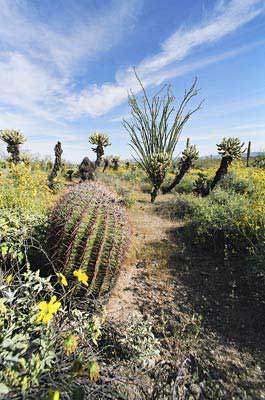
Though I didn’t set out to write about my life at the time, I’m sure, in retrospect, that the environment of the play was informed by my surroundings. My apartment complex was right off a highway, five minutes down the road from the airport. Life around airports in most cities is somewhat seedy. Though a few blocks of desert was a buffer between me and the strip, I knew exactly where I could find the good and the bad drugs and the hookers if I wanted them. I drove by them all the time on my way to the central post office.I suspect that this is a side of Phoenix most people don’t know about or notice because the place seems so sunny and clean so much of the time, but, as a character in this play says, "If you were a crack addict, wouldn’t you want to be where you could tan and smoke up at the same time?"
In general, Phoenix and its surrounding suburbs are, from what I remember, a feudal society with a rich, anglo Republican and corrupt royalty at the top and everyone else, mostly middle and lower class people of all ethnicities, just happy to be somewhere that is all 80 degrees and sunny all the time. A shiney surface with a dirty underbelly. An ideal situation from which a noir-like thriller to spring. It seems so obvious now. . .
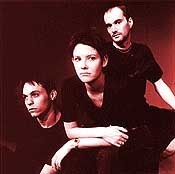
Throughout grad school, I was forced to tweak and rearrange and rewrite various parts of this play until it made me almost sick to think about. Also, the play, in its early drafts, was produced under the title of Mourning Rituals by a small theater company called Blackball Ensemble. (That’s the young cast in 1998, looking all serious and Mourning-like.) It was well-reviewed – surprisingly earning praise from thealternative newspaper’s resident snark. We don’t appear to have this type oftheater critic in Minnesota – the one who only tears down because tearing down is funny and fun and he hates himself for being a critic and therefore hates everyone who isn’t a critic. Even this self-loathing piece of trash grudgingly complimented the play. And the critic at the largest daily newspaper, apparently, began to obsess about it. He gave the play an initial mediocre topositive review but then seemed to revise his opinion with each passing week, praising the play more and more in blurbs in the entertainment section and calling up my professors at the grad school to amend his opinion directly to them.
The play deals, in part, with loss, with learning to live with grief. Apparently, the critic’s mother had recently passed away, and something in the play struck a chord that kept vibrating in him long after hesaw the play. Which of course makes me humble and happy. Nobody else, however, really came to see this production. Minnesota theater makers really wouldn’t complain about attendance problems if they ever lived in Phoenix. Theater simply doesn’t make sense in a place that is 80 degrees and sunny all the time (except for the 3 months that are 110 degrees and sunny). Why would you ever want to be inside? Also, I suspect the title, Mourning Rituals, wasn’t a big draw. "Hey, Honey, it’s Friday night. Wanna go to a funeral?"
So you know: The play isn’t funereal, so I’ve changed the title.
In 2001, back in Chicago and living with my friend, Narciso Lobo, I pulled out a copy of this play just to hear it read by a bunch of actor/friends who graciously came over to our place every other week or so just to keep me writing. Seriously. They were really sweet people who somehow, subtly, forced me to continue to be a writer simply by coming over to my apartment with the expectation that I wrote something for them to read. I am grateful.
After reading this play out loud, Narciso leaned back alittle, looked at me, and said, "It’s good and all. It is. But if you ever want anyone to produce it, I think you’re going to have to cut out a lot of the poetry and give it more plot. Your choice. It’s still good. I’m just saying. .." Ciso would probably fit right in Minnesota. He’s passive-aggressively effective. It’s always like he’s saying, "I’m not telling you what to do but – I know exactly what you should do if you’d just listen to me."
I rewrote the play. Played up the psychological thrillerparts and, as much as I felt I could without losing some really cool stuff, played down the poetic, lyrical memory parts. I renamed the play Everywhere Signs Fall and sent it to the Playwrights’ Center, where someone liked it enough to give me a Jerome Fellowship for it. The play has also been read by a bunch of edgy theaters around the country and, for a while, I really believed that some mid-sized major theater might produce it.. .
By the way, all the rewriting I did on this play at Ciso’s request happened in October of 2001. Again, I’m struck by how, in retrospect, the world around us finds itself creeping in to the work we do without our knowing it. I wasn’t consciously thinking about the events that occurred on Sept 11, 2001 as I worked on these rewrites, yet a play that deals with unexpected loss and grief seems like an ideal outlet for my feelings at the time.
Bare in mind: I don’t believe that artistic expression should attempt to tackle the "important issues" of our time head on. I think that if you have opinions about politics then you should write editorials. If you think you can solve the health care crisis, then you should solve it in the health care industry. I think that if you want to stop war, then you should march on Washington, or something. Not theater. But it is so hard sometimes to resist the urge to write directly about whatever topic is much in everyone’s minds. As in, this is my play about the war. Or, this is my play about women’s body image issues. Or, this is my play about this important issue in the news.
But – as William Faulkner said in his Nobel Prize speech: "Our tragedy today is a general and universal physical fear so long sustainedby now that we can even bear it. There are no longer problems of the spirit.There is only the question: When will I be blown up? Because of this, the youngman or woman writing today has forgotten the problems of the human heart inconflict with itself which alone can make good writing because only that is worth writing about, worth the agony and the sweat." I take that to mean, in part, that the anxieties of the day are too hard for writers to ignore but an impediment to truly transcendent writing. When will I be blown up? How did we get to this place where we all might be blown up? What should we do about thefact that we all might be blown up? But these literal-minded responses to the culture at large don’t make for effective writing. . . You should google Faulkner’s entire speech. It’s fantastic. . . Creative writer’s concern, our usefulness, our purpose is not to explicate the issues of the day directly but to search deeper in to the "human heart in conflict with itself." This is what we can and should do that others don’t. The rest we should leave to the political pundits. I don’t mean that we write in a vacuum and don’t consider or write about the world we live in; I simply mean that we should come at the topics from better, more original, more exciting and transformative creative perspectives. The experience of an intense, entertaining, relevant but original story is as valuable, if not more valuable, than any editorial expression I may have on the news of the day.
At the same time, I guess, I’m saying, I found this play that I wrote about three damaged people in a hot motel room in Phoenix with a gun, liquor and some entertaining memories to be somehow worth working on inthe late months of 2001. I don’t want to make any claim more broad than that.
Some larger, edgier theaters clucked a little about looking at Everywhere Signs Fall, but nothing really happened. For some reason, the expectation seems silly now. On the really silly side of the spectrum of silliness, an actor friend of mine who was a waiter in Hollywood passed the script along to Maggie Gyllenhaal for her and her brother to make in to a movie of it. Maggie Gyllenhaal ate at his restaurant, and he was absolutely positive that they were the best of friends.. . What is it about Hollywood that actually turns people in to clichéd sitcom characters? Of course, nothing came of that either.
In 2004, I began a period of writing and producing that was incredibly fruitful. I wrote more than 10 short plays. Invented and produced Thirst Theater (with Tracey Maloney and Chris Carlson). Completed four full length plays and two one-acts. Saw three productions of my work in Minnesota. Saw a production of my show about goatherding in New York that was nominated for some kind of award. Forgot entirely about this play.
Then my wife read it and begged me to let her direct it. I said no. Repeatedly. But she wore me down. She connected with the play on a visceral level as a result of the experience of her own life, and she seemed to know how to direct it in a way that I had never thought of. I love working with people who have ideas that I have never thought of. This is another one of the joys of collaboration that is theater.
Gremlin Theatre, who commissioned me to write a new play for them two years ago, agreed to produce the play, and I started rewriting it AGAIN.
So here we are. With a play that was initially written in one big burst of inspiration in 1997 and then rewritten at odd moments over the next 10 years. We’ve got a great cast. A great director. In a hardworking small theater. And I’m probably a much better writer than I was ten years ago, so hopefully I’ve made the right rewrites. I’m genuinely looking forward to seeing what it is on stage after all this time.
While this long post may make the play seem somehow dark and therapeutic, please let me remind you that I believe all theater should be a good evening of entertainment. Ideally, we transform our personal thoughts into something engaging and sometimes funny and thrilling on its own merits.
I just thought it was fascinating for a moment to look at how plays sometimes develop over time. Regardless, I think you’ll enjoy the experience of the production, and my own journey with it won’t even enter your mind.