Tag: poetry

  • The Mice

    For the Greeks, who had no word for irreversible death, one did
    not die, one darkened.

    —Mark Strand

    Where the Japanese iris right
    now stand ready to
    accept the inevitable
    purple blossom

    she found four dead mice
    in their nest of dirt and dusty fur
    all with their small ears pointed like pilgrims
    toward the trunk of the huge cottonwood.

    What happened here?
    Cat? Owl? Dog? A silent disease?
    Or had they just frozen one night as the air
    on their bodies fell back to winter?

    Their dusk bodies were soft as she picked them up
    unsure of whether to leave them buried where they would
    melt back into earth, first fur, then intestine,
    vertebra, and finally small pocket of skull.

    She put a rock over them but came back later,
    removed them to a black plastic bag, afraid
    of something, some disease, that the cat
    would chew on them, get sick, maybe die.

    Now where the grave was there is a space
    in the clump of iris, a darkness, an open mouth.


  • Spearthrower

    We piled off the bus—field trip!—
    my teacher saying, suggestive and disinterested, “Just look.”
    The Minneapolis Institute of Arts free and full of kids,
    Chinese jades, gods and goddesses from everywhere,
    room after room of very old faces looking back at us.
    And here this one naked man
    so tall and alone in his own room,
    “The Spearthrower” though he’d lost his spear long ago
    along with the hand that held it. Such a serious look
    on his face, his cheeks and lips worn down, misty,
    naked for so long! His stomach sticking out
    with a little hip shimmy, from the side he was
    sort of a blockhead. His cock and balls
    gone, we giggled and pointed and I felt the little cock
    in my pants and felt funny still circling him,
    like I was naked too.
    Nobody said don’t stare. I stared,
    the Roman looking out over me. I think
    I was aware in a cloudy but not confusing way
    this body was a made thing,
    the mottled gray-white marble, smooth but not soft,
    somebody made it long ago, hand and chisel to stone.
    He seemed to step forward, out into the room
    the same step for so many years.
    I circled him to see where he stared,
    circled and somehow it was better
    than trips to look at the monkeys and tigers at the zoo.
    Maybe I spun around, maybe I flapped my arms,
    maybe I struck a pose too, imaginary spear in my left hand.
    He wasn’t getting back on the bus with us
    but still mine to keep, this way to stand—
    right foot sneaking forward for balance
    me and my Roman ready, come what may.

    Note from the poet: I wrote “Spearthrower” to honor a moment of being a child and blown away by a work of art. I don’t recall being “prepared” for the museum or what I might see, just set loose. It was an early experience of being pulled out of my body (or maybe deeper into it) toward something larger, something old, beautiful, and strangely compelling.

    For more poetry, see “What Light: This Week’s Poem” on mnartists.org

  • Tank-Like Titilation

    As I mentioned before, my 166 piece photo library from the national automotive museum in Alsace is unweildly for online use. I focused mainly on potrait shooting of the most amazing vehicles on the planet–like this very early racing Bugatti from the 1920s.

    I’d show you some photos of the Royale (the rarest and most expensive car in the world) but the lighting was terrible–at least for my phone camera. But heck, I consider the "tank" shot above pretty good for a phone camera. And I’ve never minded titilation.

    P.S. If your tastes run modern, here’s clip of an M3 and an Veyron dragging it out (I have a pic of a Veyron but who cares.)

    ERRATA!!!: In my previous post, I said that Ettore Bugatti’s Dad was a celebrated sculptor–alas, it was his brother, Rembrandt. (Does AP suggest the use of stitled words like "alas"?. Anon.)


  • Paul Muldoon

    Paul Muldoon is a curious character, even by artistic standards, andhe’s been on a serious roll of late. To his growing list ofaccomplishments—including ten collections of smart, allusive, and oftenvery funny poetry, as well as a Pulitzer Prize—he recently landed theprestigious (and influential) gig as poetry editor at The New Yorker.That’s all impressive scuttlebutt in the poetry world, but theIrish-born Muldoon also fronts the rock band Rackett, and collaboratedon a song (subsequently recorded by Bruce Springsteen) with the lateWarren Zevon. Muldoon has also penned librettos for three operas,authored four children’s books, and published numerous poetrytranslations. One way or another, it seems highly likely that poetry’s21st century Renaissance man will rock the house.

    7:30 p.m., University of Minnesota, Coffman Union, 300 Washington Ave. S.E., Minneapolis; 612-625-3363; free.

  • After Watching Carlos Saura’s Film of Lorca’s “Blood Wedding”


    Your wife had left you post-diagnosis

    yet here you were this night stumbling on fire

    with dance and blood,

    a retired high school Spanish teacher,

    now learning the new syntax

    of multiple sclerosis.

    It burned from your hands and feet,

    the castanets, the dark mole

    on the flamenco dancer’s cheek,

    All the broken stomping, clapping,

    duende of dark.


    We stumbled into the lighted lobby

    where you grabbed my friend and me,

    said we must all go now,

    tonight, for roja, for wine,

    for the dance and the darkness.


    But we sad women demurred

    to the rain in our hearts,

    afraid of the blood call.

    We scurried like mice into hoods, coats,

    another night we promised.

    But it would not come again.

    I knew then that I had

    been called, chosen,

    and all these years have remembered only

    what it was like not to go.


    Note from the poet: I hope wherever Lew is, he will remember
    that night and accept my regretful apology. Lorca writes: “duende is a power
    and not a behavior, it is a struggle and not a concept.” These are the moments
    we live for.


    For more poetry, see mnartists’ “What Light.”


  • Losing Oak

    To lose an oak
    is no heartbreak.
    —No,
    but to see them go
    by the acre,
    at a stroke,
    is enough to
    crack a man open,
    the heart not broken
    so much as stricken,
    torqued at the root
    and left in a thick
    choke of ache.
    Just so,
    a whole forest’s
    felling will take
    faith’s poorest
    dwelling down and
    leave the chimney—
    stark
    in an open space
    —like a brick
    marker indicating
    a once good place.


  • The Way Things Sometimes Play Out, Unfortunately


    balancing bear.jpg


    I’ll be honest with you, I don’t know what a dream is anymore. I got a lot of shit kicked out of me.

    Have you somehow made your peace with this world? I’m curious: without getting all religious or flaky on me, can you tell me how you did that?

    Once upon a time, lord, wasn’t I sweet? A more mild-mannered, easy-going guy you couldn’t find. We all know, though, that things change, and often enough we’ve no good idea why, or how. Not exactly, anyway. The goodness bleeds out of you. The world takes your trust through a series of thefts both large and small. One day you wake up and you no longer recognize your face in the mirror. The muttering voice in your head is as unfamiliar as the face.

    Dreams are tough things, cruel schoolchildren, cheap balloons, faded flowers, broke down hot rods, blind dogs, etc. Time carves them all down to dim wishes and fragments of memory.

    In my more chipper moments I like to imagine that all those old childhood dreams are still out there somewhere, drifting in the gloaming of another waning summer, waiting for their dead mothers to call them home. It’s sort of lovely to think so.

    Meanwhile, my daughter is a sad, pretty girl who is well on her way to becoming a woman every bit as miserable as her mother. At the age of fifteen she has no broader desire than to be a cheerleader –a cheerleader, period. The poor girl is so dim that she actually seems to believe that being a cheerleader is a realistic occupation for an adult in America.

    I’ve tried to explain to her that cheerleading is an extracurricular activity for a very few, mostly unfortunate, high school and college students, and that paying jobs in the field are pretty much non-existent. She counters this argument with the claim that she sees cheerleaders on television all the time, performing in a clearly professional capacity.

    At fifteen years of age she is apparently already calculating enough to recognize that professional cheerleading would offer her the best opportunity to meet, date, and eventually marry a professional athlete.

    The fact that I don’t feel this represents a very healthy or realistic goal for any young woman doesn’t seem to carry much weight with her.

    My own life, I’m willing to admit, hasn’t exactly been a blockbuster success, and I’m also quite clearly no paragon of happiness. All the same, I try to explain to the poor girl –my daughter, I have to constantly remind myself– how such dreams usually play out.

    This pathetic little town, I tell her, is full of old cheerleaders. On any given Sunday the church pews are crowded with unhappy women who had variations of the same ridiculous dream my daughter harbors. Look around, I say to her. There are no professional athletes here, so chances are good you’ll settle for a star on the high school football team, who will become in very short order –after he’s knocked you up– a miserable fuck in hog kill at the plant, or maybe an insurance salesman if he’s really ambitious. He’ll gain weight faster than you can pump out the infants, and drink like a fish, and there’ll always be some other unhappy woman who remembers that he was once a local football hero and is still willing to sleep with him while you stay home and take care of the kids and watch television.

    You’ll see, I say. Just ask your mother.
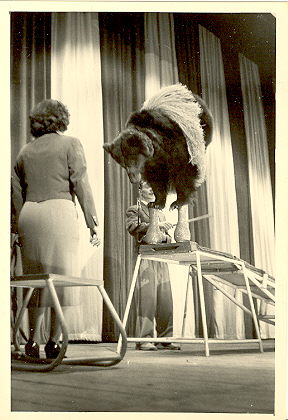
     

    balancing bear-2.jpg


  • An Appalling Group Hug, A Poem, And Two Love Letters To My Dogs


    fair-group hug 2.jpg


    I have seen the sun break through


    to illuminate a small field

    for a while, and gone my way

    and forgotten it. But that was the pearl

    of great price, the one field that had

    treasure in it. I realize now

    that I must give all that I have

    to possess it. Life is not hurrying

    on to a receeding future, nor hankering after

    an imagined past. It is the turning

    aside like Moses to the miracle

    of the lit bush, to a brightness

    that seemed as transitory as your youth

    once, but is the eternity that awaits you.


    –R.S. Thomas, "The Bright Field"


    willis left ear.jpgwillis right ear.jpg willis left eye.jpgwillis right eye.jpg

    Nose Blast

    Nose blast, both

    holes, first

    thing in the morning.

    Acid old fellow

    on my ground.

    I know the one:

    slow, moves through

    here every morning,

    signing my trees.


    Bright day, cold

    feet. Getting colder.

    The grouchy one there

    with my line, the one whose

    smell I love best,

    the one with such soft magic

    in his hands, good cupboard

    things, a voice that tells me

    the only truth I need

    or know, that one, mine,

    he has me in his grip,

    he will never let me go.


    willis nose.jpg


    For Chula

    Evolutionary distance meant

    nothing when I looked into

    your eyes and saw no distance,

    no distance at all.

    I found all sorts of things

    there, but absolutely nothing

    in the way of distance.

    There is something so repellently

    human in that concept, something that

    stinks of privileged conceit.

    Is it so strange that a dog

    could teach a man almost wrecked by

    disgust for humankind to love again?

    No, not strange, but marvelous all the same.

    Domestic animals?

    Just what the fuck are we?

  • Robert Bly’s Greatest Hits

    Selected Poems, 1986
    A “best of” anthology of a kind, these are really good poems—and the mixture of work sheds light on Bly’s stylistic and topical meanderings. You’ll find “Counting Small Boned Bodies” and other lamentations on Vietnam, as well as more than a hundred examples from three decades of work. The prose poems from This Body Is Made of Camphor and Gopherwood (1977) are beautiful and show off Bly’s command of the unwieldy form.

    Sleepers Joining Hands, 1973
    To understand how Bly got to be so Blyish, look back to some of his earlier work. His third poetry collection is filled with vigorous incantations on the good, the bad, and the ugly, and it is punctuated with a long discourse on the Great Mother. The essay makes a good primer for Iron John and The Sibling Society.

    The Night Abraham Called to the Stars, 2001
    This is Bly’s most recent collection. If you’ve joined the current Rumi rediscovery trip, you’ll have a better appreciation of why Bly seems to be jumping all over the place—that’s part of the beauty of this old Islamic form (ghazal). He’s trying to get your head to stretch some great distances, to make those “psychic leaps.” Even without knowing anything about the Battle of Ypres, you can easily appreciate Bly’s incredible energy, insight, and wit.

    A Little Book on the Human Shadow, 1988
    This is a highly readable collection of essays that offers up “the philosophy of Robert Bly” in less than one hundred pages. He explains his connection to Jung and gets into the feminine, masculine, and then some.

    The Sibling Society, 1996
    It’s an artful diatribe on our moral decay and the dominance of American popular culture. But unlike other polemics of this ilk, Bly digs deep and blames our own selfishness for squandering the knowledge of how to live in community. The result: permanent adolescence. Be prepared to look in the mirror.

    Iron John, 1990
    Read it and you’ll be able to start an argument at nearly any party. If you want to understand it, though, you may want to take a few classes in psychology, mythology, classics, sociology, anthropology, women’s studies, and men’s studies. It’s heavy stuff, and it’s very easy to get lost in the forest. Bly is extremely blunt and often his take on male-female relations can sound harsh toward women. No good pickup lines here. We’re supposed to embrace our differences before we can enjoy our sameness. For some that’s not so easy to swallow.

  • Repetition Compulsion

    “We have to speak up about this war. Now we don’t even count the bodies. We only count the American bodies. Woo-hoo. That’s even more self-obsessed. We kill hundreds and hundreds of Iraqis, and we don’t pay any attention to how many there are. We don’t call up the hospitals; we don’t call up the morgues. Let’s count the Iraqi bodies over again. Maybe we can bring them over to this country. Prop them up at some of Bush’s speeches, so we know what the money is going for. Americans want their money’s worth.

    “It’s so interesting that Canada doesn’t have anywhere near our percentage of murders. Why is that? Maybe it’s because we were the ones who had slaves and killed the Indians. After the civil war, we let men go and some went west. Martine Prechtal has said that many of these men had untreated trauma just as many Vietnam veterans had. Imagine what that was like after the civil war. Unbelievable, the brutality of that. We sent them right out West, where they became the Indian fighters. We have the stupidity typical of a country that doesn’t realize what the killing of war can do to a human being. We just send them out. That’s called the repetition compulsion. We have to look for more Indians and kill them. If we didn’t learn anything from the first killing of the Indians, every ten or twelve years we have to do it again. Bush, of course, that coward, was never in the war at all; he sneaked out. It’s not as if you have to be in a war to want the repetition. Now repetition is built into the American culture.

    “The invasion of Iraq is the biggest mistake this country has ever made. The most dangerous and greatest confrontation is between twentieth-century capitalist fundamentalism and eleventh-century Muslim fundamentalism. I’ve translated much Islamic poetry and I admire the Islamic culture. We have no idea how great their poetry is, but you’re also looking at a social culture frozen by the mullahs, frozen in the eleventh century. That’s the worst thing we could possibly do, to get into an antagonistic relationship, and that is exactly what Bush did. Bush Sr. was intelligent enough to pull back and not go on towards Baghdad. There’s nothing we can win in this war. Our new war is a war against the terrorists, but Bush Jr. has created ten thousand new terrorists.

    “Bush and Wolfowitz and Cheney are repetition compulsion people. It’s wrong to give into them. We have veered off our own path completely. We’re pouring billions into Iraq, and Oregon has just taken nineteen days off the school calendar.

    “Lincoln and Douglas had debates. They’d go on for four hours in the afternoon, then they’d take a break and come back for two hours more in the night. You could say that people in the audience were watching them speak to see if their words fit their bodies. Is this the real person? But on television no one is real. They’re all being someone else. The entire American nation has lost that ability to decide if those words are genuine. That’s why Bush won the election. He never would have gotten near winning an election in the nineteenth century. They would have seen immediately that his words and his body don’t fit.”