Category: Blog Post

  • Inky Wretches

    A couple of interesting meditations on the newspaper industry today. Generally, we just feel like we want to disagree on principal with such grandiose pronouncements as Michael Malone makes today over at ABC news, namely that “newspapers are dead.” All you need to do to refute such a silly claim is to look over the past fifty years of media history. Both television and radio were supposed to obsolete the printed word, but they didn’t—in fact, they helped build a readership which saw the inherent, qualitative differences in media. Now, according to Malone—a weird holdover from the heady days of the Web’s initial revolutionary zealots—the web will be the final coup de grace.

    We hate to break it to Malone, but he simply doesn’t matter as much as he thinks he does: It is not the readers who will determine the fortunes of newspapers. It is the advertisers. We all know that readers are the third wheel in this relationship, have been for a long time… Recent circulation scandals are not scandals because they reflect badly on Americans reading less. They are a scandal because newspaper executives are lying to advertisers about their rate-bases. The basic paradigm—that advertising in print works—has not changed one iota, and there is a massive support industry designed to convince advertisers and publishers that their endless toil has the result they want to believe it does. (Interesting, innit, how there has been so much trouble transferring that same confidence to the web, where the science and technology of tracking actual readers through the content is so much more advanced.)

    More to the point, as Jack Shafer makes clear in his excellent piece today about the strange maneuvers of Philip Anschutz, the only thing that is really outdated about newspapers today, in a concrete business sense, is the margins in which they continue to operate. Thirty percent is typical at a strong metropolitan daily! Those are numbers anyone in the media buisness, outside of television, would die for.

    We’re not sure we agree with Shafer’s assertion that these healthy margins are due to “harvesting market strength” in the short term— but then we live in a city with one of those exceptional dailies that has actually managed to sustain growth in circulation. The other thing that is exceptional about the Twin Cities is that Kinght-Ridder—the bedraggled bridesmaid here—is everywhere else considered forward-thinking, whereas here the Pi-Press’s website is one of the most shamefully useless sites on the web, which comports well with the generally cadaverous scent of the whole operation down on Cedar Street.

    No, newspapers will stick around just as long as TV, radio, and the web stick around, but they will continue to evolve—some for the better, some for the worse, many for free…. but all somewhat independently of whether the reading (listening, browsing) public thinks there is any value in them.

  • They Shoot Tornadoes, Don't They?

    tony o.jpg

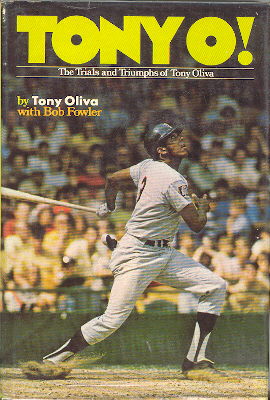
    In Cuba, when they have tornadoes, they kill them. When they see one coming, they start shooting it with their rifles and shotguns, and the explosions make the tornadoes disappear. When I tell people in America that they shoot tornadoes in Cuba, they don’t believe me. But I believe because I’ve seen it happen; I’ve seen the dark funnel drop out of the sky, then disappear when the men from the farms start shooting it.

    Tony O! The Trials and Triumphs of Tony Oliva, Tony Oliva with Bob Fowler. Hawthorn Books, 1973.

  • Kindertotenlieder

    holy ghost 16-2.jpg

    The knowledge of evil is an inadequate knowledge.
    Spinoza, Ethics

    But the most important thing is that one can no longer be sure nowadays who is and who is not in a state of temporary insanity.

    Dostoevsky, The Brothers Karamazov

    The Shatterer has come up against

    you.

    Man the ramparts;

    Watch the road.

    The Book of Nahum, 2.1

    avenging angel.jpg

    …Something real amongst shadows.

    Socrates, Meno

    …We do not dare to be philosophical.

    William Barrett, Irrational Man

    There is no denying that we fear the end of things because our way of life has brought so many things to an end.

    Wendell Berry, “Discipline and Hope”

    death.jpg

    Is it not against all natural reason that God out of his mere whim deserts men, hardens them, damns them, as if He delighted in sins and in such torments of the wretched for eternity, He who is said to be of such mercy and goodness? This appears iniquitous, cruel, and intolerable in God, by which very many have been offended in all ages. And who would not be? I was myself more than once driven to the very abyss of despair so that I wished I had never been created. Love God? I hated Him!

    Martin Luther, in Roland Bainton’s Here I Stand

    mask shadow.jpg

    We fly forgotten as a dream, certainly, leaving the forgetful world behind us to trample and mar and misplace everything we have ever cared for. This is just the way of it, and it is remarkable.

    Marilynne Robinson, Gilead

    …how quickly the burnt-out candles multiply.

    C.P. Cavafy, “Candles”

    We are only dogs chasing cars.

    Joseph Schumpeter

    screen saint.jpg

    Who, then, are the immortals? Those who lived a long time, those who reappear time after time, those who had more life than death, but less time than life.

    Carlos Fuentes, This I Believe

    From too much love of living,

    From hope and fear set free,

    We thank with brief thanksgiving

    Whatever gods may be

    That no life lives forever;

    That dead men rise up never;

    That even the weariest river

    Winds somewhere safe to sea.

    Swinburne, The Garden of Proserpine

    When do we set sail for happiness?

    Baudelaire, Journaux Intimes

    west bend 21.jpg

  • Last words on Terri Schiavo

    I’ve been thinking a lot about Terri Schiavo, which, I think, puts me in some pretty good company–that of people who believe life is sacred and we shouldn’t allow it to end without good reason.

    Like the abortion and death penalty debates, poor Terri has become a nexus of American confusion among our nation of laws, our nation under God, and our nation currently being run by the people who only believe in the law or God when it suits their political purpose.

    As for what I think of whether Terri Schiavo should die, I couldn’t put it nearly so well as Harriet McBryde Johnson did on Slate yesterday. If Terri can live, like any profoundly injured or ill person–with care and feeding–she should. What’s being done to let her die is wrong, but it does have a rationale I can understand. It is not murder theologically unless Michael Schiavo believes it to be. He doesn’t. Unlike DeLay, Frist and Bush, he’s not a cynic. And whether Michael Schiavo is right or not, someday he will know when his own time comes.

    What makes the political right’s attempt to keep Terri alive even more vile than her husband’s desire to let her die though is beautifully summed up by this piece by Dahlia Lithwick, also posted on Slate yesterday. She points out the irony of the right’s signature “defense of marriage” at the same time they are willing to put government firmly between a man and his wife. (Lithwick also notes that the money which has paid for Terri’s care came from a malpractice lawsuit of just the sort Congress wants to limit.)

    When it comes down to it, I think I’d rather have someone like Michael Schiavo representing my interests than DeLay, Frist or Bush. I can only hope that that epiphany I spoke of above comes, too, to that unholy trinity. It would be great if it came early in November 2006, but I can wait for St. Peter if I have to.

  • The Rake Magazine Memorial Ballpark

    We had a laugh a few months ago, when there was that little dust-up between the gay fellows over at Powerline and the Star Tribune’s Nick Coleman. They’d all been in a running firefight—liberal this, neo-con that—and while we’ve come to appreciate the deceptively euphonious rhetoric of the full-time bloggers and Rather-slayers, they were far outmatched in wits by Coleman, who is, after all, a professional.

    But that little flap went nookular when the bloggers’ boss at TCF Bank decided to step into this little flea-circus with a sledgehammer. Bill Cooper, an excitable, longtime GOP honcho, pledged that his bank would buy no more advertising with the Star Tribune so long as he was at the controls. (We commented at the time that TCF stockholders and directors were no doubt gratified with Cooper’s decision to make sure the last anyone heard about the company was that its CEO was making such an aggressive personal stance with ~their~ money.)

    Now TCF has ingeniously gone one better—they’ve committed to buy the naming rights to the new stadium at the University of Minnesota for the kingly sum of $35 million. That kind of cabbage would have bought a lot of advertising in the Strib, of course, but we think it’s a brilliant move. Given that the daily—and all dailies like it—have rolled over on this insidious form of commericalizing public information, TCF will get its advertising and brand extension into the fish wrap anyway, without having to give the employers of Nick Coleman one red cent. Take that, you pantywaist, glue-sniffing liberals!

    We note that the words “Target Center” have appeared in the pages of newspapers around the land more than one thousand times in the last month—ninety-seven times in the Strib. The cancelled NHL season didn’t prevent the words “Xcel Energy Center” from being recorded in the Newspaper of the Twin Cities nearly sixty times in the last three weeks.

    This give us a great deal of Adidas-brand pride in the Visa-Mastercard ingenuity of the entrepreneurial spirit, still so manifestly alive and well here in the United States of Halliburton.

  • From The Request Line: Hayjo Revisted

    hayjo.jpg

    Bloom of fireworks above a black field, the idle of insects throbbing from the damp ditches. Distant petroleum carnival of light, dark steeples, and a watertower announcing the presence of a town. Is that the rattle of a snare drum from somewhere out in the fields? Tell me again what lives in that place beyond this darkness. The bonfire will signify what again? When it all goes up in flames what is it we’ll be burning?

    I like this song, it reminds me of something. I can’t put my finger on it, but it involved, I’m sure, a night just like this. We were in a car, going somewhere else, or perhaps just somewhere.

    Somewhere else came later, I suppose. Back then there was only this. Remember? When there was only this? It was never enough. Perhaps that was the problem. You can’t put your finger on it. I love that about you, how you can never seem to put your finger on it, and how badly you would like to put your finger on it. Things, in general, the way they don’t seem quite real to you, within reach. Graspable. The way you’re always saying Hold out hope, as if it could mean the many things it could mean. Not just a clinging to, not just something desperate, but an offering. Something extended. Something shared.

    I love these quiet roads, just outside what is our life, that feeling of being lost in a still unfamiliar place, of being plunked down on another planet, looking out with dim longing and dimming wonder at the distant glow of the puzzle that will never be home. Can’t say. That’s another one of yours that I love, as if you mean it, as if there’s some mysterious proscription, as if you honestly cannot say, cannot utter whatever words might explain, whatever words might possibly make a difference.

    Because –and this I choose to think and believe– those words are still forming in you, still turning over and lining up in your head, still drilling and taking shape and preparing for the long march up into the light, when they will become, magically, truth, the truth we’re going to need to turn finally and forever away from that dark, still-mysterious planet barely rising across the black, empty fields.

    hayjo 2.jpg

  • More Spring Training Nonsense

    If you go beyond the Twins’ so-so 8-11 record in Florida and scrutinize what they’ve actually done in those games, you might be tempted to forecast a rather alarming repeat of what made the team so maddening for much of the 2004 season.

    Look at the runs scored and runs allowed numbers for the AL Central teams this spring:

    Detroit: 125 RS/97 RA

    Chicago
    : 122 RS/112 RA

    Cleveland: 132 RS/107 RA

    Minnesota
    : 77 RS/76 RA

    Kansas City: 99 RS/105 RA

    I doubt that it means a damn thing, but you see an awful lot of high scoring games in spring training, and seventy-seven runs seems pretty shocking. I guess if you want to take the glass-is-half-empty approach, you could be alarmed that the Twins have scored at least 25% fewer runs than every other team in the division. And the glass-is-half-full folks can always take comfort in those pitching numbers. All around, though, the math looks pretty damn familiar.

    Finally, here’s a little spring training trivia: Gary Gaetti set the club record with ten spring homeruns in 1983. So far this year the entire team has hit ten homers in nineteen games.

    As I say, I’m sure it’s nothing. I’m sure it doesn’t mean a damn thing. I wouldn’t even give it another thought. I’m sorry, in fact, I even brought it up.

  • The Hacks: Manhattan Edition

    Here is a true-life fairy tale for all embattled and embittered freelance writers everywhere—and we can say with some satisfaction that we know this fable by heart. But let’s run through the paces anyway, and we may arrive at a new and surprising moral to the story.

    A solid mid-masthead writer at a New York magazine has been writing good if not sizzling feature stories for several years. He is already way ahead of most of his peers; it is a dream job to have a writing contract for a Manhattan glossy, a lot like reaching the Major Leagues. But after a change of management, he is suddenly out of favor, and he is fired. He spends the next year or so trying not so much to get another contract as to merely land an assignment. He finally gets one at another major publisher, and he produces the story. It is killed. He progresses slowly down the long list of potential markets, hitting what finally appears to be the bottom of his list—some city magazine in the outback, which likes the story and publishes it.

    In the meantime, the writer manages to land another assignment back in Manhattan, but this story too is ultimately killed—for no apparent reason other than the caprice of the editors. This story too finds a home at that same humble city magazine. So now virtually every prestigious magazine publisher in New York—Conde Nast, Rodale, Wenner, probably Hearst too—has had its crack at Potter, and has taken a pass.

    Early the following year, both stories are nominated for the industry’s highest honor—the National Magazine Awards, the Pulitzers (?) of the glossy world. So, then. A happy ending indeed, for Max Potter—and, one surely hopes, a shaming experience for Jim Nelson, Michael Caruso, Jann Wenner. And a sobering one for any other editors-in-chief with nose to grindstone in the slabs of Mid-Town. (Well, we don’t really expect such a widespread deflation of ego over there, but it’s fun to fantasize.)

    As Potter mentions in today’s Observer, though, the really shameful thing is that his story is literally the exception that proves the rule. One can only imagine the hundreds of stories that never get published nor even written, because New York editors are too concerned about lunch at The Four Seasons and too worried about out-manuevering one another for whoever passes for the A-Rod of the moment in magazine writing. See, the thing is, the reading public cares less than anyone dares to imagine about bylines and mastheads, and while we editors are busy googling ourselves and calculating our own Q-ratings, the public yearns to be surprised, entertained, enlightened—and they do not need to see a writer’s resume first.

    What we’re trying to say in our clumsy way is that there simply is not enough curiosity, good humor, and open-mindedness in an industry that takes itself far too seriously, and honors committments to ego before it ever gets around to processing and properly rewarding solid journalism that happens to be produced by a nobody.

    Now, the surpising moral of this story: It is the same editors who rejected Mr. Potter’s stories the first time around who sit on the juries that this time not only accepted them, but considered them some of the best journalism produced in the nation last year. How did that happen? Whether this confirms or contradicts your own worst impressions of the magazine industry, we say bravo to 5280, and we think it bodes well for publications that don’t operate with the same levels of narcissism required of our New York friends.

  • The Right and Life

    We’ve been on vacation in Florida this week and for us news junkies it’s been a pleasure to partake of the St. Petersburg Times, and ignore the usual suspects. In consequence, we’ve been able to read the local, rather than national, coverage of the Terri Schiavo case, and get the perspective of the people who have been covering the story since way before DeLay and Frist decided to play God.

    One story today noted the outrage of Florida Republicans at DeLay referring to Florida judge George Greer as a murderer and terrorist. It happens that Judge Greer is himself a Republican, and has a lot of Republican friends who have rallied to his defense. The irony of the Republican Congress violating its own oft repeated mantra of states’ rights to interfere in a Florida matter is not lost on the people down here. Say what you want about Florida (and we are certainly guilty of calling them names ourselves on many occasions,) but the folks here, even many right-to-lifers, don’t care much for DeLay’s cynical grandstanding.

    Also today, an editorial pointed out that President Bush’s pronouncement that he should “err on the side of life” rings a bit hollow when one takes a look at the executions he approved while governor of Texas, including that of Gary Graham, the last American to be executed for a crime committed while a juvenile. As the Times points out, Graham was almost certainly innocent, and yet Bush rationalized his execution by asserting that he was guilty of other crimes. Actually the Times didn’t equivocate at all on the topic of Bush’s pronouncement: “That is a contemptible hypocrisy,” is the exact language they used.

    Finally, columnist Howard Troxler asked today why DeLay and Frist waited during a legal procedure that has been going on for years before they acted “to say our [Florida’s] law does not count.” He recounts the story of Thomas More, albeit the fictionalized one of A Man for All Seasons. You may remember Thomas More as a genuinely religious man who gave his life for his principles when he refused to approve the divorce of Henry VIII. Troxler notes that the government of Henry was willing to trample its own laws for its political ends.

    No matter what you think of whether Terri Schiavo should be kept alive or allowed to die, it is clear that the Florida judiciary did not take the matter lightly. The litigation has been going on for years. All sides have had their day in court, and the Florida legislature has had ample opportunity to make its wishes known.

    In that context, the self righteous Thomas DeLay stands out in sharp contrast to the righteous Thomas More. One can only hope the Christian voters in Florida remember the difference the next time they get a chance to make their opinion known as to which sort of religion they prefer.

  • Happy As A Flapper To No Longer Call That Miserable Planet Home

    I had to wait.jpgideological.jpg

    I’m not talking about that old world, mister. I’m trying to forget I ever lived there. All those bastards had ants in their pants, and you’d think it wouldn’t be possible to cram that many drunken jackasses in a Volvo, but you’d be sadly mistaken. I saw it all with my own eyes.

    Oh, Lord, now you’ve got me started. Katie bar the door.

    There used to be this punchy little Irishman who worked as a doorman in my building, and I couldn’t even tell you all the beatings that hateful devil gave me over the years. He was what I’d guess you’d call a stickler, and I had –or so he avowed– issues with compliance. You name it.

    What it really boiled down to, what it always boiled down to, was that the fellow didn’t like the cut of my jib. He said as much, on more than one occasion. He’d accuse me of ‘randy couplings,’ and the absurdity of that unjust allegation can still make my blood boil. I was –and remain– a gentleman through and through.

    Whatever it was I tried to carry into the building, whether briefcase or grocery sack, the Irishman would insist on ‘having a little peek in my trunk.’ There were scenes, I can assure you, that went beyond mere humiliation into the territory of violence and perversion. Just the thought of the little storage closet he had there in the lobby makes the hair stand up on the back of my neck.

    Believe me, I saved my pennies, and when they began to take reservations for the rocket ship off that godforsaken planet I was among the first to put down a deposit. I’m happy as a clam these days until some miserable, homesick joker starts prattling on about the good old days and then –just like that– I’m right back in that storage closet with the Irishman.

    forsaken 3.jpgfrigidaire.jpg