Category: Yo Ivanhoe

  • From the Scrap Heap: Richard Kunkel's Christmas Pageant

    A lot of folks around town thought there was something special about
    Richard Kunkel. Big things were expected of that poor fellow. Certainly
    no one believed that such a fine, bright boy as Richard Kunkel would
    stick around a tiny little jerkwater village like ours for the rest of
    his life. Many assumed Kunkel would follow his fathe into the Armed Forces, and would rise quickly through the ranks. Others thought
    certain that with that fine voice of his he would become a supper club singer. He was always getting up to sing at parties and special
    occasions around town, and he knew all the songs from the famous
    Broadway shows. As for myself, well, I thought perhaps Richard Kunkel
    would carve out a place for himself in the political arena. I always
    pictured him smiling and blowing kisses from the back of a train, waving
    goodbye to that little town of ours forever.

    But, no sir, it turns out that our Richard Kunkel didn’t have the
    ambition God gave a field mouse, and he never went anywhere. As he grew
    older it was always one odd job around town after another. The fellow
    couldn’t seem to hold a position to save his soul, and it was the death
    of his poor mother. After a time rumors began to circulate that Richard
    had a fondness for liquor and played cards with the priests for money.
    He never married, but he never did stop being the same friendly,
    outgoing Richard Kunkel the town had known as a boy. He never amounted
    to a hill of beans, either, which saddened all of us. You like to see
    your bright young people go out into the world to make something of
    themselves.

    Then one year Richard Kunkel did an unusual and entirely unexpected
    thing, a rather scandalous thing in our little scheme of things.
    Richard recruited some children from the church youth group and mounted
    a Christmas pageant from a play he had apparently written himself,
    based on some of the questionable stories regarding St. Nicholas of
    Myra. In actuality the play had absolutely nothing whatsoever to do
    with Christmas and focused almost entirely on the legend of St.
    Nicholas’ resuscitation of three boys –Timothy, Mark, and John– who
    had allegedly been slaughtered, pickled, and sold as meat during a
    fourth century famine. This peculiar incident was described by Richard
    Kunkel –and most clumsily enacted by his rankly amateur players– in
    obsessive and grotesque detail, complete with much shrieking, writhing,
    and the liberal spilling of false blood.

    This inappropriate production was staged as a prelude to a chili
    dinner in the church basement, and needless to say whatever point
    Richard was trying to make was entirely lost on the horrified
    spectators, most of whom were elderly folks from the local senior
    citizen center who had come expecting some celebration of the spirit of
    the season.

    Richard –playing a filthy and half-dressed pawnbroker (St. Nicholas
    being the patron saint of pawn brokers, or so Kunkel explained in the
    program notes)– narrated the play with a disturbing and incoherent
    zeal. There was much speculation that Richard was, in fact,
    intoxicated, speculation which was perhaps fueled by the fact that his
    character was swilling messily from a large bottle of whiskey
    throughout the production. A prop, Richard later claimed, but there
    were few believers.

    People need to recognize the effect one untoward incident can have
    on a man’s reputation in a small town. I’m not saying it’s always fair
    and square, but after Richard Kunkel’s little lark at the church dinner
    people’s attitudes towards him changed. He’d been a bit of a
    disappointment to that point, but this was something else entirely.
    Richard Kunkel went from a boy of failed promise to the sort of
    mystery nobody really wanted around. It’s sad, but that’s the way of
    the world.

    He finally left town a year or so later, and the word around
    here is that he’s working at a Fleet Farm up in Rochester these days.

  • Great Joy

    It was an old, quiet horse, the color of
    gray corduroy, or child’s clay, those elephant slabs wrapped in wax paper that
    Reston remembered from classrooms in his childhood. Six months earlier the horse had been delivered to the pasture
    out back of Reston’s trailer, and it had taken four men to coax her from the
    truck. She didn’t kick or fuss, but
    simply refused to budge. Reston had
    paid 100 dollars for the horse to save it from being put down. He had inherited his ex-girlfriend’s
    pathological weakness for downtrodden animals of all kinds, and he had a dog
    that was crazy about horses.

    One of
    the delivery fellows had kept referring to the horse as ‘daft,’ which Reston
    thought was an unusual word choice for a young man who couldn’t have been more
    than 20 years of age. He didn’t think
    the horse was daft, at any rate, just depressed. She tended to stand, with her head down, in one place for long
    stretches of time, but there were signs that she was coming around. She and the
    dog seemed to get along just fine, and it gave Reston real pleasure to see them
    trot around the pasture together.


    Reston
    had never
    in his life spent Christmas alone, and he wasn’t quite sure what to
    do with himself. The day before
    Christmas eve he drove into the nearest decent-sized city, a college town of
    maybe 70,000 people, just under a half hour’s drive from his trailer. The city was crowded with last minute
    shoppers from the small towns that were clustered in the long valleys
    throughout the mountains. He stopped at
    some chain steak place for lunch, and later splurged on a bunch of new CDs, as
    well as nearly fifty bucks worth of treats for his dog. Heavy snow was falling as he made his way
    back out of town, and by the time he pulled into the half-mile gravel road that
    led to his trailer, visibility had been reduced to next to nothing; Reston
    couldn’t even see the gray horse in her pasture. The snow was really swirling in the valley, and the Christmas
    lights of Reston’s nearest neighbor a half-mile across the way had disappeared
    as well. He couldn’t find the trailer
    in his headlights until he was within maybe fifteen or twenty feet.

    He sat
    out in his truck for perhaps a half hour, maybe longer, listening to Christmas
    carols on the radio and drinking beer.
    Somehow he seemed to be pulling in a radio station from the Midwest; he
    noticed that when they gave the time there was an hour difference from the
    clock on the truck’s dashboard. By the
    time Reston vacated the truck in the driveway he was well along the way to
    drunk and had already switched over from beer to whiskey. He stumbled through the blowing snow to the
    door of the trailer. His dog, a herding
    mongrel so strained as to look exotic, was waiting for him in a state of
    pitched agitation, and Reston opened the door and watched the dog disappear
    into the whiteout beyond the trailer.

    That
    night he drank enough to feel genuinely sorry for himself, and almost managed
    to talk himself into flying out to spend Christmas with his sister’s family in
    Colorado.

    The next
    morning
    , Reston woke up on the couch, as hung over as he’d been in years. The trailer was completely drifted in, and
    the wind was still tossing snow around and obscuring the range down the valley
    to the north. Every light in the place
    was still on. The only radio station he
    could pick up in the valley was wheedling with Christmas carols, the signal
    drifting in and out –some choir somewhere, with a big echo effect that
    suggested a live feed from a cathedral.
    Reston was determined to force down some Alka-Seltzer and go back to
    bed, but he realized with a start that his dog was still someplace out in the
    storm. It was rare that the dog would
    spend the night outside in any weather, and Reston was alarmed and appalled
    that he had left him out in the storm all night.

    He went
    to the door and called out into the blowing snow. There was no response, and he still could not even make out the
    gray horse in the pasture less than 100 yards away. Reston pulled on a pair of boots, parka, mittens, and a hat with
    earflaps, and ventured out into the drifts that had developed all around the
    trailer. His truck was almost
    completely buried. He tried to call out
    into the snow for the dog, but his voice was swallowed in the swirling
    wind. Wading knee- and sometimes
    hip-deep through the drifts, Reston made his way around the side of the trailer
    and managed somehow to locate one of the fence posts from the horse
    pasture. He couldn’t see much, or far,
    but there was no sign of either the dog or the horse. The wind was blowing so
    hard that when he turned back his footsteps were already almost completely
    blown over. Reston tried again to call
    the dog’s name, but realized it was pointless and returned to the trailer.

    He
    crawled back into bed, bundled himself in blankets, and tried to nap. His head was throbbing, and as Reston lay
    there he kept imagining that he heard the dog barking somewhere out in the
    storm. He got up twice and went to the
    door, but there was no sign of the dog and no sound other than the howling of
    the wind. At some point Reston managed
    to find his way back into sleep while listening to Christmas carols on the
    radio. It seemed to be a loop of the
    same program –the same choir– he’d heard the night before; every single song was
    reduced to a melancholy, echo-chamber lament. It sounded like a death row choir, complete with all the mournful
    sonic effects you might expect from an institution constructed entirely of
    concrete and steel. It was breaking
    Reston’s heart and blowing all sorts of painful memories around in his
    head. Even as he slept fitfully he was
    aware of his heart pinging in his chest like sonar in an abandoned
    submarine.


    It was
    Christmas
    Eve.

    Reston
    had traveled so far from the man he’d once been that the people he had allowed
    himself to be close to, as well as those to whom he was conjoined by blood, had
    become mostly uncomfortable strangers to him.
    Or at least that was the way he had come to think of the situation. There was now too much time and too much silence
    and distance between himself and what for lack of a more strictly truthful term
    he thought of as his loved ones. He had
    no axe to grind, no extravagant grievance or baggage, and it now seemed sad and
    even a bit shameful to think that his mother did not even know where he was now
    living or how to get in touch with him.
    He hadn’t spoken with her in over ten months. When Reston’s girlfriend had grown tired of the west and had
    moved back to Boston –it had been nearly two years– he’d given up the apartment
    in Bozeman and taken the trailer in the valley. He was supposed to be finishing a set of illustrations for a
    children’s book –the sort of clunky and typically lazy and manipulative story that
    people were always writing for kids– and he hadn’t made any progress in weeks.

    In the
    years since his girlfriend’s departure, Reston had almost gotten used to the
    loneliness and its odd, romanticized solace and pleasures. His girlfriend had been in possession of a
    more polished set of social instincts.
    She’d been an English professor at a local college, and liked to host
    small gatherings, enjoyed going out for dinner and shopping. Left to his own devices, Reston seldom did
    anything that might be considered social.
    He had made few real friends in the years he’d been living in the west,
    and still hadn’t even bothered to have the trailer wired for a telephone. The dog was a perfect companion; it was all
    the things people who were nuts about dogs claimed dogs to be: a good listener,
    an enforcer of reasonable routine and satisfying daily order. It was also absolutely companionable:
    patient, even-tempered, and eager to please.
    That Man’s Best Friend business really was not overstating, not in this
    instance. This dog was an ideal, Reston
    believed, a study in refined, dignified behavior that seldom strayed into true
    stoicism. It could muster real,
    contagious enthusiasm in a heartbeat, yet also seemed to have mastered
    serenity.

    Reston
    was projecting, of course; he could see that.
    The dog was exactly what he needed and wanted it to be. It was unconscionable that he’d allowed
    himself to get so drunk that he’d left the dog outside in a raging blizzard all
    night. The poor animal could have
    trudged miles in search of shelter by this time. The odd thing about the whole affair was that Reston had seldom
    even gone into town without taking the dog along, and he virtually never simply
    let him roam freely, as he had the night before. He’d been made careless by melancholy and liquor, by the
    crippling, almost narcotic nostalgia of the holidays, and he knew that he would
    chew himself up forever with grief if anything had happened to the dog. In the two preceding years the only real
    highlights of the holiday season had been the long walks they’d taken together
    on Christmas Eve.

    As he
    lay there hung over and drifting miserably along the blurriest edges of sleep,
    Reston imagined being hounded to the end of his days by a canine ghost. By mid-afternoon, as he forced himself to
    listen to an old Jackie Gleason Christmas album –the ultimate expression of the
    Christmas carol as suicide note– he believed he felt as wretched as he ever had,
    and found himself actually attempting to squeeze out tears for the first time
    in years.

    He
    finally bundled himself up again and ventured out in what was left of the
    afternoon light to look for the dog.
    The storm was lifting. A bank of dark clouds was rolling steadily down
    the valley. The odd and alarming new
    development was that not only was Reston’s dog missing, but there was no sign
    of the gray horse anywhere in the pasture.
    The sky had cleared to the point that the entirety of the fenced pasture
    was once again visible, and the horse was nowhere to be seen. Reston waddled along the drifts that were
    built up along the fence line and inspected the gate. It was not only firmly latched, but drifted completely shut. He walked the length of the road leading to
    his trailer, all the way out to where it intersected the main gravel road that
    led to the state highway. He saw no
    evidence of any traffic whatsoever, no animal or vehicle tracks other than
    those from his own truck the previous evening, and even those were mostly blown
    over.


    Reston
    managed to
    get the truck started and backed out to the turnaround. The four-wheel drive got him
    through the drifted snow to the gravel county road, which was in pretty
    good shape. From there to the blacktop
    state highway, a distance of just under two miles, he saw no signs of either
    the dog or the horse. Once he hit the
    stop sign at the highway he decided to make another trip into town. He had no idea what he expected to
    accomplish there on Christmas Eve; it was almost four o’clock and already
    growing murky. The highway had been
    plowed and road conditions were fine.
    There were still carols looping on the radio station, and Reston made up
    his mind to attend Christmas Eve services at some church in town. He hadn’t been in a church in many years,
    but he had fond memories of holiday services from his childhood, and felt very
    much like a man who needed somehow to be forgiven. If God was ever going to grab him, he figured, this was probably
    a good opportunity. He’d certainly never felt so susceptible.

    In town
    Reston found a phone book and tried to call the local animal shelter, but got
    the answering machine and a deadpan voice wishing him a merry Christmas and
    encouraging him to neuter his pets. He
    walked around downtown checking telephone poles and bulletin boards where he
    thought he might find notices of lost and found animals, but turned up nothing
    that fit the description of his dog. In
    the empty Greyhound station he picked up a copy of the local newspaper and
    found an advertisement for Christmas Eve services at area churches. There was a six o’clock service at a big
    Lutheran church right in town, so Reston left his truck on the street and went
    off in search of the place.

    The
    church was packed with families, and there were dozens of scrubbed and
    squirming children. Reston had a tough
    time staying awake through some of the readings and much of the sermon, but
    afterwards, walking back to his truck, he felt somehow better for having
    gone. His heart felt lighter and
    heavier at the same time, a strangely emotional state that he had always
    associated with the holidays.

    Before
    driving back to the trailer Reston stopped off at a 24-hour place for
    breakfast. Sitting in the church it had
    occurred to him that he hadn’t had a bite to eat all day. The restaurant was located in the middle of
    a strip mall parking lot, and the lot was packed. Reston ended up parking several hundred yards from the
    restaurant, and as he walked from the truck he was greeted warmly by at least a
    half dozen strangers. He remembered his
    late father coming in from a last-minute errand on Christmas eve long ago; the
    old man was rosy-cheeked, half in the bag, and happy as a clam. He was a man who loved special occasions,
    and as he came in with his arms loaded with shopping bags he had bellowed, "The
    whole damn town is lousy with Christmas spirit!" Reston tried to remember how many years now his father had been
    dead. He’d been killed in a car
    accident on the Fourth of July, the car he was driving having collided with a
    train while he and a couple buddies were returning –drunk as skunks– from an
    early morning round of golf. It had to
    have been at least fifteen years.

    All the
    way out to the trailer Reston tried to put back together the years, to line up
    memories and freeze them back there when there had still seemed to be so much
    time, time passing and carrying him past dark off-ramps, dimly-lit
    intersections, and all the forks in the road where he had chosen –or,
    unconsciously, not chosen– the direction that had led him to the road along
    which he was driving alone now on Christmas eve, as lost and uncertain of his
    ultimate destination as he had ever felt in his life. Reston couldn’t even say for certain what he was, or what he
    might have been but wasn’t, or even what he might one day be. He’d basically let each day shove him
    wherever it wanted, and when it stopped shoving he stayed put. He missed the old man, a guy who’d been a
    shover, a dictator in the best and most intoxicating way; he’d always gone his
    own way and dragged others along who were helpless to resist him, right to the
    end. After his death, Reston’s mother
    had admitted that she’d been little more than one more of his tag-alongs. "He told me he was going to marry me," she
    said, "and I believed him."

    Back at
    the trailer
    Reston stood out in the middle of the drifted-in driveway and called
    out to the dog. The storm had blown
    over, and there was a bright quarter moon.
    There was no sign of the dog.
    Reston craned his neck and watched a jet make its way right through
    Orion’s belt in the east. He was so
    tired. It was already close to ten o’clock,
    and he went back into the trailer, mixed himself a glass of eggnog, and cued up
    the Jackie Gleason record on the stereo.
    He fell asleep on the couch and was awakened by what he thought were
    bells. Reston sat up in the dark of the
    trailer and listened. All was silent,
    and then he heard voices. He pulled on
    his boots and stepped outside the trailer.
    It was a gorgeous night, and though Reston knew that voices could carry
    a great distance on cold nights in that place, these voices had sounded like they
    were right outside his windows. He
    could see the Christmas lights twinkling from his neighbor’s yard across the
    valley, and could hear laughter from what sounded like a party. The trees at the farthest edge of his fence
    line seemed to be nested with glowing corposants. Reston walked around the trailer and there, a hundred yards away
    in the pasture, was his dog, sitting attentively before the gray horse.

    The
    horse’s big head was hanging directly above the dog’s, steam streaming from its
    nostrils. The horse and the dog were
    right in the middle of the pasture. It
    was an absolutely clear night, and it sounded like the voices were coming from
    the pasture. Reston approached the
    fence and swore he heard the dog emit what sounded like a hoarse, incredulous
    chuckle. The stars were stretched out above the valley, precise, detailed
    constellations embroidered across the clear, dusty clutter of the Milky
    Way. Reston heard a pop and was
    astonished to see modest fireworks of some sort bloom above the valley in the
    direction of his neighbor’s house, and he was inexplicably moved to see the dog
    and the horse raise their heads at once to marvel at the display.

    Reston
    let out a whoop that snapped out into the cold air and was quickly swallowed
    up. And just then the dog looked in Reston’s direction, threw its head back,
    and stretched out its front legs and executed a sort of bow of acknowledgement.
    Reston watched the dog roll over on its back and begin to writhe happily in the
    snow, kicking up a cloud that briefly enveloped both dog and horse. Reston
    stood still for what felt like a long time. He closed his eyes briefly and when
    he opened them again the whirling snow in the pasture was dissipating in a slow
    shower of fine particles that shivered almost like sparks in the moonlight.

  • The Unfortunate Fate of Our Local Giant

    I don’t recall if the local giant ever actually claimed to have special
    powers. It did, however, seem to me that he conducted himself as if he had
    sprung from the pages of mythology.

    What I’m trying to say, I guess, is that this didn’t appear to be just
    another ordinary, run-of-the-mill giant. For one thing he was a good head
    taller than any giant I’ve ever seen, and he could balance small children on
    his nose and juggle dogs without seeming to cause the animals the slightest
    alarm or discomfort. The dogs actually appeared to enjoy being juggled, in
    fact. Some of them even slept while the giant was juggling them.

    The giant didn’t have much to say, but he was one of those giants whose
    actions spoke louder than his words. He had a real knack for catching people
    when they fell, as well as for locating lost objects. He was always returning
    things to their rightful owners, things that had been missing for great
    stretches of time –decades, in several notable instances.

    Some folks were suspicious of this talent, and spread rumors that the giant
    had actually stolen the items in question, and was hoarding these things in his
    lair. To dispel such rumors the giant took out a full-page advertisement in the
    local newspaper, announcing an open house to which the entire community was
    invited to inspect his lair and sample his baked goods.

    The giant, it turned out, was a damn fine baker, which honestly came as no
    surprise to his many local admirers. His generous selection of baked goods
    –many of them quite exotic– put to shame the offerings of any of the small
    bakeries in town.

    Needless to say, those who chose to take advantage of the giant’s
    hospitality –and there was quite a turnout– saw absolutely no evidence of
    lost or stolen items. And the very next morning the giant delivered a pristine
    1969 Chevrolet Impala, a vehicle that had been missing for over a decade, to
    the home of its owner, a local school board member.

    Any explanation of how or where the giant found these lost objects was never
    forthcoming. The man was, as I mentioned, notoriously tight-lipped, and most of
    us had learned to live with his amiable silence.

    The giant also had a special rapport with birds; he could persuade them to
    perch on his head and eat grain from his scalp. On occasion, when he wished to
    entertain children, he could coax birds to pluck sunflower seeds from his
    nostrils.

    There were some in the community who resented the fact that the giant
    contributed nothing to the local economy. I have no idea how he survived, but
    he didn’t seem to have anything to do with money, and eventually there was a
    successful movement to drive the giant from his lair along a river outside of
    town to make way for new commercial development.

    When the giant left his lair for the last time he did so peacefully, and
    comported himself with the quiet dignity many of us had come to expect from
    him. He left behind all of his possessions, with the exception of an opulent,
    handcrafted, and intricately detailed dollhouse that he carried away in his
    arms.

    A large family of musically gifted grasshoppers inhabited this dollhouse.
    These grasshoppers, it was said, slept in tiny four-poster beds and filled
    their little mansion each night with the strains of beautiful music.

    The giant finally established a new home for himself (and his family of
    grasshoppers) in a smaller neighboring community. A short time later we began
    to hear reports that he was healing people and performing miracles, and that,
    of course, was when the real trouble started for the poor fellow.

    If you’ve done any reading at all –from the Bible to the Greeks right through to some of your classic fairy tales– you’ll know that life is generally hell on giants. And unfortunately our fellow didn’t fare much better than most of his more celebrated predecessors.

    It’s a rather discouraging story, really, and I am frankly too tired at the moment
    to continue with it.

    But what the hell, I’ll just cut to the chase: one snowy night just after Thanksgiving some years ago, the local giant was flushed from his
    burrow by a mob of drunken locals and stoned to death. He was interred along with his beloved dollhouse –the musical grasshoppers having been adopted by the daughter of a Lutheran minister– in a plot next
    to the old courthouse dome at the county fairgrounds, and folks still come from all over the place to pay their respects. The county historical society has a pair of the giant’s old handmade shoes on display, and they allow visitors to stand in them to have their pictures taken.

  • Beauteous Munch, Popular Show Dog

    One
    night long
    ago in a once-upon-a-time world there was a little lost dog in a
    faraway forest. The dog was alone and hungry, and it was a bitter winter in the
    forest. The little dog was settling into the cold den he had burrowed for himself
    in the snow around the roots of a tree, and as he curled up there in the
    darkness he heard the distant shimmer of bells and, a moment later, voices
    carrying in the forest, a great many voices joined in some happy song. The dog
    had never known anyone to pass through the faraway forest, not once in his lost
    time in that cold and lonely place had he heard voices like these, or the
    beautiful and wondrous stamping of bells.

    The
    little dog crept to the edge of his den and sniffed, peering, in the direction of
    the music. A moment later, light from the many torches of the travelers crept
    dimly into the clearing outside the den, then chased completely the darkness
    before them, becoming full, woofing light. The dog watched in wonder as the
    brightly clad travelers paraded into view, a moving cloud of steam and smoke
    rising above them, carrying within it much laughter and song.

    There
    were many tiny acrobats and a great thin fellow toddling upon stilts and
    several laughing jugglers. There were five shy horses pulling bright clattering
    wagons, and interspersed amongst the parade were dozens of chattering clowns.
    At the very end of this colorful parade, lagging almost outside the very last
    of the torchlight, there was a small and limping sad-faced clown, leading an old
    and slow donkey. As the dog crept from his hiding place in the snow and the
    roots of the giant tree, the happy songs and jangling bells of the travelers
    were already fading away into the distance and the darkness of the faraway
    forest.

    The
    dog trotted along after the parade and soon found himself beside the limping
    clown and the old donkey. When finally the sad-faced clown became aware of the
    dog’s presence, a look of surprise and happiness came over his face and he let
    out a cry that startled the little dog. The clown crouched in the snow
    alongside the donkey and clapped his hands and called out, and when the dog
    came into the clown’s arms the little clown began to laugh and the small, laughing clown held the dog in his arms, rocking him gently.

    The
    clown carried the little dog in his arms -murmuring and giggling happily all
    the while-as they brought up the rear of the noisy and colorful and clanking
    parade.

    They
    traveled that night until the torches had all burned down to darkness, and then
    they stopped and set up their camp alongside a frozen river. It had grown quite
    cold, and the travelers bundled together under their blankets beside roaring
    fires, with the horses and the donkey huddled stamping and steaming just
    outside the circle of jugglers, acrobats, and clowns.

    The
    clown had swaddled the lost dog in an old wool blanket, and he held the dog in
    his arms and rocked him as the others told stories and laughed and gradually
    drifted into silence and sleep.

    The
    limping little clown’s name was Munch, or so he was known to his fellow
    travelers, and now he whispered to the dog in his arms, "I shall call you
    Beauteous Munch." Together they sat up until the bonfire had died away to
    embers, and together they saw a sky above them where there was no darkness at
    all, where there were millions upon millions of bright stars. The clown sang
    quiet lullabies and interrupted himself at one point to say, "Look, there goes
    a shooting star! Sweet dreams,
    Beauteous Munch."

    And
    that night, as he lay curled up beneath the blankets with the little clown,
    Beauteous Munch was warm and slept without shivering for the first time since
    the long ago day when he had first found himself lost in the faraway forest.


    There
    had been
    a time when Beauteous Munch was a puppy living contentedly with his
    mother and his brothers and sisters in a wooden box in a small town. One day an
    old man and woman had come to take him away to live with them in their house.
    They were loud and unhappy people, and try as he might Beauteous Munch could
    not make them any less unhappy. The old man was impatient with Beauteous Munch
    and shouted at him often.

    All
    day Beauteous Munch would sit at the window staring out at the children playing
    in the street and passing by his house. Then one day when the nights were
    beginning to get cold, the old man put Beauteous Munch outside and it was
    raining very hard, and cry as he might and scratch at the door as he did,
    Beauteous Munch could not get the old man or woman to open the door for him so
    he could come in out of the rain. Beauteous Munch sat on the steps of the house
    for a long time that night, until he saw the lamp in the front room
    extinguished and it was dark up and down the street and the rain was beginning
    to turn to snow. That was the night Beauteous Munch wandered away and
    eventually found himself exhausted and lost in the faraway forest.

    The
    first night in the faraway forest Beauteous Munch tried to sleep, but he was
    wet and cold and lonely. He was a sad little dog, and he missed his long ago
    once-upon-a-time life. He peered up through the big, wet snowflakes that were
    cart-wheeling out of the sky and he found a star there barely twinkling, a
    little star that looked lost and distant and alone. And as Beauteous Munch
    closed his eyes he wished upon that lost and distant star, wished that
    somewhere there was another wish lost and longing for a dog, and that attached
    to that wish was someone special with quiet magic in his hands and a soft voice
    and a smile that could wag a little dog’s tail.


    That
    same night
    , far away from the faraway forest, Munch the clown was bundled up in
    a blanket next to his donkey, listening to the laughter and the songs of his
    traveling companions. He was stout and not as graceful as any of the others,
    nor as skilled. Even as a clown his only real role was to lead the donkey and
    the horses around the ring, and to assist some of the others with their stunts.
    He could not sing, and because he spoke with a slight stutter he was the
    quietest of the troupe, and tended to settle by himself into the background,
    talking quietly with the donkey and the horses.

    And
    so it was that that very same night the little clown looked up into the
    sky and wished upon a small and distant star; Munch the clown closed his eyes
    and showed his crooked little teeth to the moon and offered only the simplest
    and most humble of wishes: Please, he
    whispered, Something Nice. Something happy. A small, happy thing.


    And
    now Beauteous
    Munch and the little clown were together, and that first night as
    they curled up together beside the fire and Beauteous Munch was warm and happy
    for the first time in a great many days, the little clown saw the beautiful
    shooting star tumble all the way down the sky and he thought to himself, So that is what happens when two wishes
    collide
    with one another: An old star
    is freed from the heavens and falls into a distant sea where it becomes a
    thousand bright and shimmering fishes. A wish come true is a gift that sets the
    stars free
    .


    So
    that is
    the story of how Beauteous Munch came to live with Munch the sad-faced
    clown. Together they learned many tremendous and difficult tricks and Beauteous
    Munch learned to ride on the old donkey’s back and walk across a rope and leap
    into the arms of Munch the clown, and all the signs the performers took around
    and posted in the towns and villages now said "BEAUTEOUS MUNCH -POPULAR SHOW
    DOG!" He was very popular indeed, and people everywhere would come from far and
    wide to see the little clown and his astonishing dog.

    And
    on clear nights, as Beauteous Munch and his friend the clown
    curled up and drifted off to sleep, they would stare into the sky above them
    and watch with drowsy wonder as star after star tumbled through the darkness
    and somewhere, they knew, wishes came true.

  • A Man Goes on a Journey, a Stranger Appears in Town: There Are Only Two Stories in All the World

    Prentice had changed so much in twenty years. You could stop by the little
    local historical society at the County Fairgrounds and look at photographs of
    the way the town used to be, but pretty much every striking thing you would
    encounter on the walls there had been knocked down –the old courthouse with the
    ornate cupola, the Prairie School bank downtown, and the beautiful
    turn-of-the-century railroad depot: all gone—and the place was now just another
    anonymous town comprised of nothing but squat, rundown neighborhoods surrounded
    on all sides by retail colossi: superstores, multiplexes, giant warehouses full
    of everything from office supplies to pet food to hardware to electronics. All
    sorts of useless 24-hour everything.

    Some people, of course, were appalled by all the change, and galled by the
    complicity of their fellow citizens. It went well beyond complicity, in fact;
    for the most part the townspeople seemed to love this acknowledgement from the
    outside world that their dollars were important, and they were excited to
    suddenly have so many shopping and dining options, including many they had
    always associated with the big cities.

    The downtown saloons and corner taverns had been all but abandoned, and many
    of them had closed entirely, most of their old clientele having taken their
    business to the sports and motel bars that were prominent features
    of the commercial strips just outside town. Increasingly the community’s
    more churlish and entrenched residents found themselves drinking alone at home
    and watching movies that they found at the only locally-owned video store still
    left in town, a Mexican place that rented American films that were likely
    pirated and often subtitled or poorly dubbed in Spanish.

    Even with all the new development you still couldn’t properly call Prentice
    a city. Its population had been stalled at around 20,000 for almost thirty
    years. Yet in the not-so-distant past Prentice had been a town of distinct
    neighborhoods and ethnic character. There was a time when every neighborhood
    had its own market, its own church, bakery, and bar.

    A man named Martin Ankeny had once owned all the little markets around town,
    as well as the dairy that supplied milk and cheese to his markets. He also had
    some kind of deal worked out with the German brothers who owned the
    slaughterhouse in town, and would get meat for his markets every day, fresh
    from the abattoir. Ankeny
    had butchers on the premises, cutting steaks and roasts and churning out
    sausage and hamburger for the neighborhood customers.

    All the men who worked in the slaughterhouse –the Germans, Italians, Irish,
    and Poles– had their own little sections of the town, but they all lived
    within walking distance of one of Martin Ankeny’s markets. Over time Ankeny had also acquired
    a great deal of other property in and around Prentice. He owned many of the
    taverns, or the buildings in which they conducted business. Most people in town
    assumed that Ankeny
    was a tough businessman, but he was also a highly respected member of the
    community and was generally regarded as honest. And though he was widely
    suspected to be among the community’s wealthiest residents, he lived quietly
    and simply, in a modest house across from the big Catholic Church downtown, a
    church to which he contributed large sums of money.

    Ankeny had
    never married, and he had long shared his home with his severe and pious old
    mother. She eventually died, and Ankeny
    stayed on in the house alone. Then one day, quite unexpectedly, the managers of
    Ankeny‘s many
    businesses received letters informing them that he was embarking on a long
    journey, and was appointing a mysterious stranger by the name of Lester
    Nightengale to oversee his little financial empire.

    So far as anyone in town knew, Nightengale had only recently arrived in
    the community. He’d been seen in conversation with Martin Ankeny, and had
    apparently spent several afternoons accompanying him on his rounds. Nightengale
    aroused some suspicion right from the start; something didn’t seem quite right
    about the man. He had a lean, almost starved-looking face and a prominent cleft
    chin and high forehead. He also wore eyeglasses that were too big for his face,
    and, with his shiny wingtips, smart fedora, and long cashmere coats, dressed
    like someone from the big city.

    Not long after Ankeny left town on his
    journey, Nightengale announced that he was closing several of Ankeny‘s neighborhood markets. No explanation
    for this decision was offered, but a short time later a brief item
    appeared in the local paper noting that Nightengale had acquired some land for
    a new development just outside of town and had made known his intentions of
    building a giant market and car wash complex on the property.

    Almost immediately after breaking ground on this project, Nightengale
    announced plans to expand the development to include a multi-screen movie
    theater and several national restaurant franchises. This news was once again
    accompanied by the closing of several more of Ankeny‘s neighborhood markets in town.

    The reaction of much of the local citizenry was one of initial trepidation
    tempered with a sort of helpless bumpkin excitement. Their town was growing so
    swiftly; these new businesses that were going up in what was all of a sudden
    being referred to as "the Nightengale Development," were big city
    things, and this notion did something irresistible to the townspeople’s concept
    of their little community.

    In the midst of all this excitement there was mounting speculation regarding
    Martin Ankeny’s prolonged absence. What sort of journey had he undertaken?
    And when was he expected to return? Lester Nightengale offered no answers to
    these questions, and it appeared that Ankeny
    had told no one of his intentions or destination.

    One day, then, after Ankeny had been gone many months, Emil Schenk, who was
    the old janitor at the Catholic church, became suspicious and was surprised to
    find the back door of the Ankeny home unlocked. He ventured inside and made his
    way through the murkily lit home. As he moved from the kitchen and into the
    living room he saw nothing amiss, and he proceeded down the narrow hallway to
    the back bedrooms, both of which he found absolutely tidy, with the beds made
    up and nothing out of order. Just to put his suspicions entirely to rest, Emil
    flicked on the light switch in the bathroom at the end of the hall, and what he
    found there –a pair of eyeballs floating in the toilet bowl, still trailing
    rusty streamers of blood– drove him yowling from the house, and touched off
    the biggest scandal in the little town’s long history.

    Emil Schenk, upon discovering the eyeballs in Martin Ankeny’s toilet bowl,
    ran back across the street to the rectory behind the church. Father Petrick,
    who was officially retired and spent most of his time alone and lost in rambling flights of dementia at the picnic table
    in the back yard, was the only priest
    home at the time. The younger priests, Monsignor Dunn and Father Stryken, were
    downtown, playing racquetball at the YMCA.

    Emil Schenk was incapable of making any sense, and Father Petrick could not
    have understood him even if Emil had somehow been able to communicate his
    dismaying discovery. Laura Halvorson, who did some housekeeping for the
    priests, happened to come along just as Emil was going through his
    traumalogue–complete with hysterical pantomime– one more time. Emil took
    Laura by the arm and led her across the street and through the open back door
    of Martin Ankeny’s house, where he steered her down the permanently
    crepuscular corridor to the bathroom and directed her attention to the
    horrible evidence in the toilet bowl.

    Shocked as Laura Halvorson was by this sight, she nonetheless calmly made
    her way back across the street to the kitchen in the basement of the church,
    from where she placed a call to the town’s emergency services.

    By evening half the town was gathered outside Martin Ankeny’s home, inside
    which virtually the entire Prentice police and sheriff’s departments were
    sequestered. At some point Lester Nightengale arrived at the scene and was
    shepherded through the throng by two deputies.

    By the next morning, of course, speculation was rampant. The local police
    tore up Martin Ankeny’s house looking for further evidence of foul play, but
    turned up nothing. Though the entire town by this time had concluded that
    Lester Nightengale was surely guilty of some crime, and perhaps even murder,
    the authorities could apparently find no evidence linking him to the mysterious
    chain of events. There was also the thorny matter of the letters Ankeny had written before
    his departure, authorizing Nightengale to run his business concerns in his
    absence. Frank Drake, a local lawyer who had had a long professional
    relationship with Ankeny, vouched for the authenticity of these letters, and
    also produced another document that Ankeny had drawn up and had notarized
    before his disappearance, granting Nightengale full power of attorney over his
    estate both in his absence and in the event that something should happen to
    him.

    The eyeballs were obviously seized as evidence, but this was before the days
    of scientific testing that might have proved that they had, in fact, once
    belonged to Martin Ankeny. After a lengthy investigation Nightengale was
    eventually cleared of any wrongdoing, immediately after which he announced the
    closing of the remainder of Ankeny‘s
    businesses, and began to sell off sub-developments in his growing tracts of
    land outside of town.

    A year passed, and then two years, and eventually virtually all of the
    businesses in town were either closed or relocated to one of the sprawling new
    developments that now surrounded the community. These developments were in
    short order cut off from the town proper by a growing system of highway
    interchanges and freeway ramps that funneled traffic to the new strip malls,
    restaurants, and super stores. There was no longer a single compelling reason
    for anyone passing through to actually drive into Prentice, and the town became
    a dark and moldering afterthought, huddled in the shadows of the
    slaughterhouse.

    Though widely reviled, Lester Nightengale became fabulously wealthy and
    built a giant mansion in the country outside of town. He also had a private
    jet, which he used to make frequent and increasingly longer visits to a home in
    Florida.

    And then one day early in the summer, several years after his initial
    disappearance, Martin Ankeny was found wandering along a road not far from the
    little municipal airport. He was blind, of course, and where his eyes had once
    been were now terrible, puckered scars. Ankeny
    was neatly enough dressed, but terribly confused, and almost completely deaf.
    He was transported to the hospital downtown –where there was now a new wing
    that bore Lester Nightengale’s name– and was interrogated at frustrating
    length by doctors and local authorities, who determined that he was suffering
    from some form of dementia with amnesic complications. He was unable to shed
    any light whatsoever on his whereabouts over the last several years, and was
    also unable to say with any certainly what had become of his eyes. They’d been
    poked out, he would occasionally offer, but he could proceed no further than
    that with an explanation. It was clear enough that he’d suffered some terrible
    trauma, and he quietly lived out his days in the local ElderRest center,
    where despite occasional outbursts of nonsense he apparently never strayed any
    nearer to offering up a satisfying resolution to the sad mystery of his last
    years.

    Upon Ankeny‘s
    death, Lester Nightengale saw to it that Martin’s remains were housed in
    the largest and most ostentatious sepulcher the local cemetery had ever known.
    Engraved upon the monument were the words: A Great Friend to the Community.

  • Excerpt From A Failed Attempt At A Novel

    My family had always been a
    remarkably insulated and self-contained unit. Despite my parents’ divorces
    (they divorced when I was eight years old, remarried two years later, and divorced again just after I graduated from high school) there really hadn’t been much in the way of drama or anything you could call
    real tragedy in my life. Even when my parents would fight they would do so with
    a sort of quiet resignation; we didn’t have a lot of shit storms around our
    house. We weren’t people who made scenes, which was both a point of pride and a
    sort of mantra with both of my parents.

    Because my family was so small, and
    I suppose because we lived in a quiet suburban neighborhood, my childhood was
    relatively untouched by grief. We were this strangely insulated little group of
    emotional spectators, distantly puzzled by suffering and calamity and the usual
    public and private responses to it. Typical small, ugly things happened to us,
    but we had been spared calamity, let alone anything approaching true tragedy.
    People in my life didn’t die, or hadn’t died, and in this, I realize, I was
    remarkably lucky.

    There had been an older boy in my
    neighborhood that had drowned when I was a kid, and a couple of high school
    classmates were killed in a car accident, but I hadn’t been close to any of
    these people and hadn’t attended their funerals. Their deaths had been shocking
    in that general way that all sudden deaths are shocking, I suppose. They had
    also been profoundly mysterious to me, largely because of the way they had been
    announced, briefly tsk-tsked over, and then dismissed by one or the
    other of my parents with a rattle of newspaper pages being turned. Yet death
    didn’t hold any emotional mystery or meaning for me. It seemed to be
    simply this strange or puzzling thing that happened to other people.

    I suppose I would have to
    characterize both my mother and my father as reserved. They were self-contained
    people, buttoned down. My mother could get paranoid, and had a voluble,
    eccentric streak, but she didn’t do hysterical. If I thought about it hard
    enough I might consider my older sister the most thoroughly rational person I
    know.

    I remember when I was young and
    something disruptive happened in my life or around my house my mother would say
    to me, “How do you feel about that, David?” Yet it was always clear to me that
    this was something almost uncomfortable for her, something she assumed was
    expected of her as a parent. She was attempting to communicate with me, I know,
    but I also know that what she really wanted from me was almost always what she
    got, a shrug. There was nothing more reassuring around our house than a shrug.
    A shrug might mean, “I don’t really care,” “It’s no big deal,” or “What can you
    do about it?” And all of those things ultimately meant that we weren’t going to
    have any big scenes or make a fuss.

    I suppose you could infer something
    about my emotional makeup as a child by the nickname that dogged me through
    junior high school: The Zombie. And also from the fact that being called The
    Zombie never really bothered me in the least.

    One of my first jobs out of college
    was as a legal assistant at a large Chicago law firm, and I remember the first
    apartment where I ever lived alone was in this non-descript five-story
    cinderblock building, one of those absolutely generic and utilitarian examples
    of (I assume) 1960s architecture that you’ll see all over every big city. My
    apartment was in the back of the building, and every one of my windows had a
    view of the brightly lit parking lot of a huge funeral home.

    Shortly after I moved into this
    place I developed a severe and persistent case of insomnia, and I got tuned
    into the disturbing nightly routines of the funeral home. From appearances the
    place did a bang-up business. It seemed like several times every night hearses
    –and the occasional ambulance—would pull into the parking lot after midnight
    and disappear into the darkness of the underground garage. Night after night I
    found myself sitting in my living room with the lights out, drinking beer and
    watching this mysterious and very final transfer or transaction taking place. I
    found the routine oddly compelling.

    Often in the aftermath of the
    arrival of the hearse or ambulance there would be other visitors to the funeral
    home. Cars would show up and take a space in the huge expanse of the otherwise
    empty parking lot. It was always curious to me that most of these people would
    choose to park at some distance from the actual entrance. I’d watch as these
    people made the long walk to the backdoor, where there was a lighted vestibule.

    Sometimes people came alone to the
    funeral home in the middle of the night. Other times they would come in pairs,
    or in even larger groups. However they came, they would make their way,
    clinging to each other (if they had anyone to cling to), up the incline of the
    long sidewalk that led to that backdoor.

    I have to admit that this spectacle
    was gripping theater, and it reached the point where the basic routine became
    pretty much predictable. Once I’d seen the people into the building I felt
    strangely obligated to sit there in the darkness until they came back out.

    Sometimes they’d be back out in
    fifteen or twenty minutes, and other times they’d be in there for what seemed
    like more than an hour. What they’d do when they came out, however, virtually
    never varied. If there was more than one person and they had arrived in
    different vehicles they would gather around their cars under the lights of the
    parking lot, and they would stand there quietly, alternately embracing and
    moving away from each other and pawing at the pavement with their shoes. In
    warm weather, when I had my windows open, I could often hear them weeping,
    sobbing, choking through great, wrenching, congested squalls of grief.

    If they had come alone, or in a
    pair, they would almost invariably sit there in their car in the parking lot
    for a prolonged period of time –I once saw one man sit there all night in his
    running car. I assumed they could not bring themselves to go home.

    This nightly ritual made me feel
    lousy, but I couldn’t seem to escape it. Every night I found myself making my
    way out to the living room and settling into the one chair in the room,
    directly facing the windows. I’d tell myself that I was just checking in, but
    inevitably I’d end up sitting there for the whole grim spectacle.

    It didn’t take long for that
    experience to sort of infect my entire life and affect my job. I felt like I
    had acquired a dark secret, and was carrying it around with me every day. I
    never told anyone about it, and I didn’t have any close friends at work.

    This business went on for many
    months, through one entire summer and into the late fall. I suppose it was
    inevitable, but one night about five or six months into what I had come to
    think of as a sort of vigil I watched as a car pulled into the parking lot and
    a woman I recognized from my office emerged alone and made that long walk to
    the backdoor of the funeral home.

    I saw this woman every day; she was
    a secretary on my floor, and I suppose she was probably in her fifties. She
    wasn’t in the funeral home for very long, but after she came back out she
    followed the standard routine by lingering in her car in the parking lot for
    more than an hour.

    The woman didn’t show up at work
    for a couple weeks, and I never heard anyone in the office discuss a reason for
    her absence. I couldn’t even tell you whom the woman had lost, whether it was a
    husband (my first assumption, I guess, although now that I think about it I
    never even entertained the notion that she might have lost a child) or a
    parent. For several days I carefully studied the obituaries in the local
    newspaper (another disturbing habit I’d gotten into, trying, I suppose, to fill
    in the missing pieces of the puzzle), but I never saw her name –or what I
    understood to be her name—show up in any of the fine print.

    Partly in an attempt to break
    myself of this increasingly disturbing habit I volunteered to go to Phoenix for
    three months to work on a case that involved a lot of document retrieval. I was
    going to be set up in one of those large extended-stay hotels right downtown,
    and as I’d never really gone anywhere, I was actually somewhat excited to be
    embarking on something that amounted to an adventure for me at the time.

    My first night in Phoenix I had
    just gotten settled into my room and I was sitting in the little dining room
    area eating a pizza and watching TV when I heard the thump of a helicopter
    outside my windows, growing insistently louder until it was literally rattling
    the silverware in the kitchen drawer. I watched, astonished, as the helicopter
    dropped into view directly adjacent to my window; I could literally see into
    the helicopter, could see the pilot in his headset.

    The helicopter landed on a rooftop
    pad that was at almost exactly the same level as my room, and perhaps a hundred
    yards away, separated from the hotel by a ground level parking lot. The cargo
    doors of the helicopter were opened and several people dressed in surgical
    scrubs dashed across the rooftop in that unsteady lurching wobble that is
    characteristic of people approaching a helicopter. These people unloaded a body
    from the copter and placed it on a waiting gurney. The body was already hooked
    up to various I.V. bags, and it was obvious that I was watching a victim of
    some calamity or mishap being delivered to a hospital’s emergency room.

    It should have been obvious, at any
    rate, yet it took me several disoriented moments to process what I was seeing.
    There was a sort of floodlit glare to the proceedings that gave it both an
    astonishing clarity and an unreal quality.

    After this patient had disappeared
    into the hospital through what looked like the gabled entryway to a saloon, I
    didn’t have to wait more than ten or fifteen minutes for the appearance of the
    first ambulance, moving in silence up the empty service road with its lights
    tossing a strobing red wash over the dark adjacent buildings and empty parking
    lots. The ambulance disappeared beneath an overhang, and shortly after its
    arrival –and the arrival of the helicopter—I witnessed the appearance of a
    solitary car in the parking lot beneath my window, and saw a young man spring
    from this car and run full speed toward the area of the hospital into which the
    ambulance had vanished just moments earlier.

    As attracted as I had gotten to my
    grim vigil each night in my apartment across from the funeral home, this new
    spectacle was certainly a noisier and more dramatic deal all around. I was
    astonished by how many emergencies a big city can manufacture in the middle of
    the night. This hospital, of course, was merely one of any number of hospitals
    in the Phoenix area, yet virtually every night brought the appearance of at least
    one helicopter, and it was not uncommon for them to come and go a half dozen
    times in the course of a single night.

    The ambulances came steadily, at
    all hours, almost like taxi cabs. I supposed that the appearances of the
    helicopter must have represented some truly life threatening crisis. Why else
    resort to such extravagant transportation in the middle of the night? The
    ambulances, however, could be carrying anything from heart attack victims to
    hypochondriacs.

    I’ll admit that I found it a bit
    disconcerting that in attempting to escape my morbid routine back in Chicago I
    would now find myself a helpless spectator to a variant spectacle. There was,
    though, a crucial difference here; these people’s lives still hung in the
    balance, and they might yet be spared the ride to the funeral home.

    My own response to these nightly
    dramas continued to disturb and puzzle me, mostly because I was fully conscious
    that I was sort of blankly fascinated by what I was watching, and recognized my
    almost complete lack of any kind of real emotional connection to events that I
    was witnessing from the comfortable distance of my dark room.

    Eventually I went back to Chicago,
    got a different job and a new apartment, and gradually moved beyond the strange
    vigils of that year. I’d sometimes think about those days, though. The memories
    would come to me at odd times, and I would marvel at the things I’d seen and
    try to make sense of that time in my life, and to figure out what it was I’d
    felt sitting there night after night watching the private dramas of complete
    strangers unfold.

    I felt compelled, I knew that much.
    I kept returning to the windows, after all, often for hours at a time.

    But had I ever felt real
    compassion? Had I ever felt frightened, for either those strangers or for myself
    and whatever unhappy surprises the future might hold for me? Had I been moved?

    I don’t think I ever did manage to find an honest
    answer to those questions.
  • A Kingdom of Stinks and Sighs

    Come on, give a rat’s ass, would you, you fuckers? Give it the old college try.

    Take a good look around and tell me what you see.

    Don’t lie to me.

    My kingdom is a laughingstock. I’ve let myself go, grown fat on the sautéed kidneys of disc jockeys and dickweeds whose gross ambition offended my eroding sense of decency. I’ve eaten other things I’m not proud of. So-called professionals.

    What I wouldn’t give for a second chance.

    What I wouldn’t give, you fuckers, but it’s too late for that and I have nothing left to give.

    This confusion of dialects, poverty, and heat. I can’t get any more naked, have no more grease left to sweat.

    From my window I can see the laborers dragging bodies across the dirt courtyard and stacking them on a flatbed truck. It’s not a pretty picture, but I am incapable of painting a prettier one.

    Near as I can tell the engineers have cobbled together some sort of crematorium in the laundry room of the Super 8 across the courtyard. Three tin smokestacks that weren’t there yesterday are belching out clouds of thick black soot, an additional layer of grime that is trapped beneath the over-gloom.

    Mine is now a kingdom of branded cattle swilling 3.2 beer, feral dogs in shopping malls, brain-damaged lab rats shuffling along in flip-flops and ridiculous sunglasses, and genetic monsters with perfect teeth. Dime-store dollhouses and teetering castles made of recycled plastic sand. The fine bones of dead roses. Fields of loud pastel crows, screaming for attention. Almost trees. Burned-out rocket ships that never left the launch pad. All our dreams, dreams written in invisible ink and nightmares etched in the more permanent kind.

    When night falls I draw the shades and listen to Samuel Barber’s Adagio for Strings over and over as I imagine –or cannot imagine– the next crippling blow, the next wave of sorrow, the inevitable endlessly repeated slow-motion montage of flag-waving catastrophe. You can bet, by God, that when again this world begins to fall down around me they’ll once more dust off the old reliable Barber.

    Didn’t any of you remember to bring a flashlight? Did it not occur to a single one of you that it would be dark in the belly of a whale?

    You tricked me into this covenant, but I have no one to blame but myself.

    These words –the last I have left– are the ghosts of dead snails. I give you my word: you haven’t been haunted until you’ve been haunted by the ghosts of dead snails.

    Come on, let me have it. I’m ready for my medicine. Give me my bitter pill.

    I am waiting, my little sparrows, to hear from you.

  • Sursum Corda: Give Thanks

    I’d say it’s a decent idea, Thanksgiving, even if it’s one of those old, decent ideas that means almost nothing anymore. Still, it does strike me as a worthwhile thing, the notion of taking time out of your life to give thanks for whatever the hell you have to give thanks for. And surely you have something to be thankful for –come on, pull your face away from that bong for a moment and think about it.

    I know I do. A few for instances:

    Microwave popcorn.

    Tabasco sauce.

    Canned chili.

    Willie Nelson.

    Cold beverages.

    Dune buggies.

    The Colonel’s blend of special spices.

    The grand-fetuses –if I’d known the little bastards were going to be so much fun I’d have had them first.

    The troops, which I nonetheless feel strongly should be spending the holidays with their families at home.

    Zigaboo Modeliste.

    Al Jackson, Jr.

    Air hockey.

    Paper boys, even –or perhaps especially– if they’re middle-aged men working three jobs just trying to get by.

    Grasshoppers.

    Formaldehyde.

    Mutterers.

    Television evangelists.

    A good cat mystery.

    Robert Goulet.

    Vespers.

    U-turns.

    Pre-history.

    Mason jars.

    The down-on-his-luck hippie magician.

    The spinster librarian.

    The smooth Lothario.

    This sneaking suspicion.

    This magic moment.

    That tragedy narrowly averted.

    Nose-diving birds.

    Twizzlers.

    Dumplings.

    Nancy and Sluggo.

    The great hearts gone, and those still beating.

    The ink I still, astonishingly, feel compelled to use.

    Unexpected eruptions of pleasure and recognition.

    Mercy.

    This life, what it helplessly is, and what it yet could be.

  • He's Abbott, I'm Costello: Cross-Wired Conversation With My Dog At Two A.M.

    Would you say?

    I would say, yes.

    Say what?

    That is the question.

    Yes, that’s the question.

    No, that is the question. No question mark.

    What is the question?

    Say what?

    I said, "What is the question?"

    And I said, "Say what?"

    I heard you the first time, but I still haven’t heard your answer: What is the question?

    That was the question.

    That?

    Yes, that.

    That?

    Yes, goddamit, that is the question.

    What?

    Yes.

    Yes what?

    I just said: that is the question, which is exactly what I said at the beginnning.

    That isn’t what you said at the beginning. You said you would say.

    I said I would say, yes.

    And I said, "Say what?"

    I understood you perfectly well, and if I’m not mistaken I answered you quite clearly.

    In that I’m afraid you are badly mistaken.

    Did I not respond, "That is the question"?

    You did.

    Then where is the misunderstanding?

    You said you would say, and when pressed on the matter asked, "That is the question?" At which point I said, as would any reasonable person in my position, "Yes, that is the question."

    I did not ask. I said.

    Said what?

    That is the question.

    What?

    Yes, precisely.

    But what is your answer?

    That is my answer.

    May I have a biscuit now?

  • Tears of a Clown, Redux

    I was born a clown, and in retrospect my parents were incredibly good sports about what must surely have been on a number of levels a shock and a disappointment. They’d been trying for years to have a child, and they accepted me immediately as a blessing and loved me unconditionally for what I was.

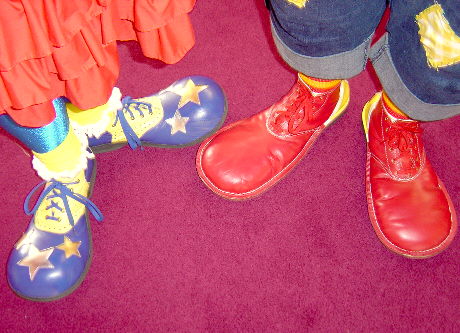
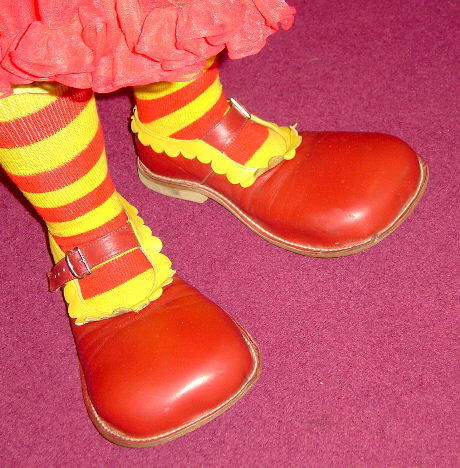
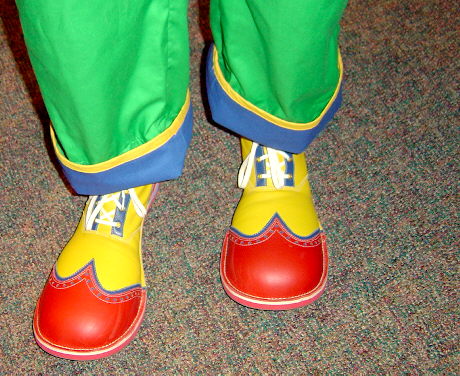
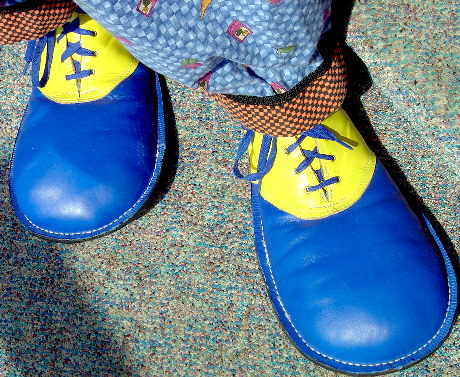
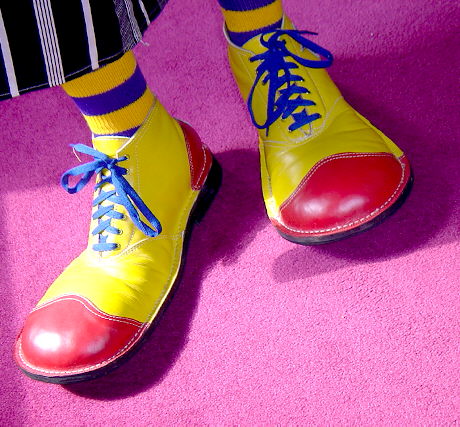
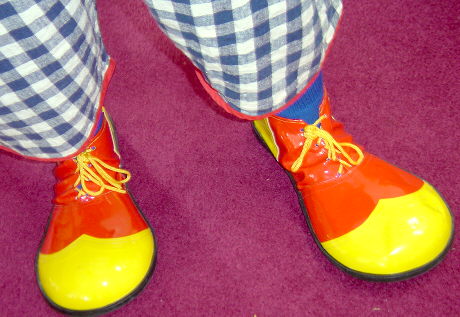
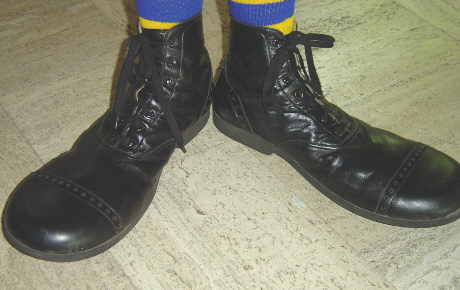
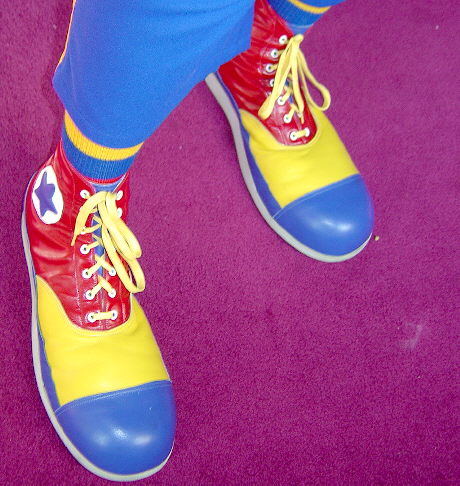
    My father likes to tell the story of how on the day I was born he went right out and bought me my first pair of big red shoes. I took my first tentative steps in those shoes.

    From the very beginning my lips were preternaturally large, and I have never required much in the way of embellishment beyond a basic application of lipstick for color and a bit of accenting around the outline. I have no memory of being outfitted with my rubber nose, but from the first time I can recall gazing at my reflection in a mirror it was a source of great pride and enduring pleasure.

    One morning in early childhood I awoke to discover that overnight my chin and jowls had acquired an application of Vaseline and coffee grounds.

    I was, I am told, an uncommonly stubborn and willful child, with a clear and unwavering self-image. I was as a result always allowed to choose my own clothing, and favored a ragged old porkpie hat, an oversized smock with red polka dots and shiny buttons, and baggy trousers covered with brightly colored patches. I was a very happy boy, and a happy clown.

    Childhood is of course an awkward and confusing time in the life of a clown. By the time I was old enough to attend school I had grown used to the charmed attention of adults. All of those I had come in contact with had seemed both amused and enchanted to find themselves in the presence of a happy little clown. I suppose in hindsight there was a good deal of condescension in this response, but I loved the attention all the same. I craved and needed attention; there was nothing I could do about it. It was hard-wired in my brain. My self-esteem was entirely dependent on entertaining people and making them laugh.

    My parents were an unfailingly compliant audience. They adored me, and I could induce heaving fits of laughter in them with little more than a wide-eyed grin or a startled spit-take at the breakfast table.To their credit they never pushed me. They didn’t have to. I was, however, an unusually sheltered child, and though I don’t believe this was ever a conscious decision on the part of my parents, I had had precious little interaction with other children by the time I started elementary school. As such I was utterly unprepared for the reactions I received from the other students. I understood neither the casual cruelty of children, nor the irrational fear that clowns seem to inspire in so many youngsters.

    There were long, unhappy stretches where I got the shit kicked out of me every day I went to school. Bullies on the playground held me down and wiped my beard of coffee grounds from my face; they stole my ragged hat, stepped on my big red shoes, and tore the shiny buttons from my polka dot shirt.

    In my teenage years I would stand alone and friendless in the darkened gymnasium at school dances. No girl would dance with me. Even balloons could not get me a date. I eventually taught myself a few simple magic tricks to try to impress my classmates, but it was too little, too late.

    In what I can now see was a desperate plea for help and attention, I fell in with a bad group of self-destructive adolescents during my junior year of high school, and was persuaded to join a heavy metal band called Lucifer’s Dong. The band was terrible, and was completely and justifiably ignored. I also realized pretty quickly that I was just a gimic the band hoped would help it to secure a certain reputation, and practices tended to be little more than a series of mean-spirited jokes at my expense.

    Even so, it was only at my parents’ insistence that I quit Lucifer’s Dong.

    I ate too much candy, gained a great deal of weight, and learned that a clown is simply not equipped to handle the brutal truth.

    By the time I dropped out of high school to join the circus my fate was sealed: I would be a sad-faced clown to the end of my days.