Tag: death

  • Chris Adrian's New Collection of Short Stories

    These angels are useless. The heavenly agents that populate Chris Adrian’s new story collection, A Better Angel, sit idly by their hapless wards, disappointed and impotent. Their existence, it seems, is incidental, and at times they are nothing more than a higher order of fuck-ups. Which somehow makes these angels strikingly believable.

    A trinity of woes dictates the nine stories herein — sadness, illness, and death. It’s hard not to view this as the thematic culmination of Adrian’s educational background: he holds and MFA from the Iowa Writers’ Workshops (tantamount to a masters degree in sadness); an MD from the University of Virginia (illness); and is currently a divinity student (mapping out, I assume, the world of death). Thankfully these narratives are not so academic or esoteric as one might fear; Adrian explores his subjects with caution, respect, and most of all, imagination.

    If the angels might be described as inactive, then many of the characters can be called hyperactive. Adrian’s protagonists range from children to the geriatric, but don’t waver in their desire for pain. In this world, it seems that suffering is the most effective means of communication and solidarity. "My father warned me that sadness cleaves to sadness," says the protagonist of "Why Antichrist?" – in which a sixteen-year old lacrosse player discovers that he is the devil incarnate. "And that depressed people go around in hangdog packs." This collection is itself one such hangdog pack.

    The narrator of "Stab" – a seven-year-old boy who is mute except for his narration – wants to die because he knows death will reunite him with his dead brother. Likewise, in "The Changeling," a father mutilates himself because causing himself pain is the only way to bring his son out of his ominously catatonic state. In "The Vision of Peter Damien," the eponymous character wants to be sick, and rubs his skin with hickory root to simulate jaundice, so he can be more like his brothers and sisters. For many of these characters, death and illness are natural as sunlight. All but one of the protagonists has lost a loved one before their story even begins. It’s only natural that their ambitions pertain to more sickness and more death.

    The rules of Adrian’s world are vague enough to be plausible. The semi-magical setting is akin to that of Karen Russell’s recent collection of stories St Lucy’s Home for Girls Raised by Wolves, or any collection that George Saunders has put out in the last decade. Here there are angels, and there are demonic, masochistic children. The prose and dialogue are striking for their plainness (by which I do not mean dullness) – as it’s hard to imagine Dali creating his surrealist designs with ordinary paint. But when Adrian begins to add in elements of the real-real world – Happy Meals and Spiderman, for example – his stories become less convincing. In fiction (and maybe life in general), the balance between real and unreal is always tenuous. Perhaps because so much of Adrian’s world is heavenly, when Earth gets involved it is too obviously mundane.

    In "The Vision of Peter Damien," for example, a Big City Doctor is brought in to help out the community when a sort of epileptic illness spreads from child to child.

    "An upsetment in the blood," said Dr. Herz, summoned all the way from Cleveland by Sara’s father. For her he prescribed opium and antimony and cinchona.

    Both the diagnosis and prescription are, to say the least, archaic. When the reader finds out this story is actually about 9/11, then, it’s shocking – and not in a revelatory sort of way. Sadly, it’s more like the obvious twist in M. Night Shyamalan’s The Village than any sort of meaningful convergence of tragic old world and tragic new. Still, when Adrian delves into the metaphysical parts of this same story, his narrative strength shows through. His prose is heady enough to support Big Statements — he has the rare ability to talk about souls and be sincere, as with Sara’s final revelation:

    The mirror me – the one that is all of this world and all surfaces – is spotted up and bruised and jaundiced and thin, and my hair, as Mother tells me, has lost its spirit. But beyond my body I am a growing giantess, and every time I enter another vision I get a little closer to an end that I know is not death. You are a giant too – I see it no matter how you seek to hide from me. We stand over all the others the way the towers once stood over us, before we became them. Don’t you understand the progression – from frail little person to soaring angel to monolith? What next, except the sky above it all, and a spirit that comprehends everything, and is apart from nothing?

    Thankfully, Adrian plays heavily to his powers. There are stories so thoroughly imagined and expertly written that alone they warrant the price of the entire collection.

    "A Better Angel" succeeds because it contains a character that is keenly aware of his failures, but still does nothing about them. Early in life Carl was granted a sort of guardian angel, a privilege given only to people destined to go on to greatness ("There were fewer than I expected, and as many who were greatly bad as greatly good," he says.) His angel, though, has no power of Carl’s actions, and every time there’s a chance to make a bad decision, he makes it. Upon viewing his 7th-grade classmate’s ‘pooty,’ Carl says he first "understood that I could want – so badly – something the angel thought I shouldn’t." Finally he is summoned to take care of his dying, cancer-ridden father. Armed with Ativan and morphine, he adheres to the one-for-you-one-for-me policy, and spends his last night with his father in a druggy haze. Meanwhile his angel becomes more and more perverted and jealous, unable to guide his hand. "If you were a great man," she tells him, "If you were president – and you could have been president – then I would be a national conscience!" Carl is sympathetic because so many of us are so much like him — he isn’t a bad person, just a little lazy; his angel’s inefficacy grants us an unwanted hint into just world the dying father may be entering.

    "A Child’s Book of Sickness and Death" re-introduces us to some of the characters from Adrian’s recent novel The Children’s Hospital, in which the world is flooded in seven miles of water and the only entity to survive are the NICU and PICU wards of a San Francisco hospital (it’s narrated by angels). Here we focus on Cindy Flemm, who was born with a foot less of small intestine than normal. Sixteen years old, she proudly sports tube tops and hot pants in the antiseptic hallways. One night she develops a crush on Dr. Chandra (also a transplant from the novel), who is something of a tragic fool, severely under-qualified for his job and with pants that inadvertently ride low on his girlish hips. Much to Cindy’s disappointment, Chandra is gay. "How can someone so unattractive, so unavailable, so shlumpy, so low-panted, so pitiable, keep rising up, a giant in my thoughts," she wonders. It emerges that she is attracted to impossibilities, to the allure of cures that will never come (even if the cure is death – death is impossible for her, we find out). The interplay of her desire for health and desire for love, and how she goes about reaching for them, is something wonderful to witness. Finally Cindy submits to her position, which perhaps stands in for the overarching philosophy of the book:

    < blockquote>It seems to me, who should really know better, that all the late, new sadness of the past twenty-four hours ought to count for something, ought to do something, ought to change something, inside of me, or outside in the world. But I don’t know what it is that might change, and I expect that nothing will change – children have died here before, and hapless idiots have come and gone, and always the next day the sick still come to languish and be poked, and they will lie in bed hoping not for healing, a thing which the wise have all long given up on, but for something to make them feel better, just for a little while, and sometimes they get this thing, and often they don’t.

  • As If

    Psychology class, at the Saint Paul campus, ended its session. Two students remained. He opened the door for her. She wore a baggy, off-white dress shirt with a narrow, new-wave neck tie. She approached. As if gentlemen’s rules, he opened the door wider. She stopped a few paces from the door.

    He extended his arm, as if displaying to her, go first. She tapped her foot, showing as if the nerve. He raised his brow as if he had all day. She folded her arms as if she couldn’t take this bull anymore about men thinking women are weak. Ha! He shrugged as if, C’mon, just walk through the damn door. She placed her hand on her chest as if scumbags like you make this world what it is.

    He brushed his sleeve, rubbing his eyes as if, Boo-hoo, you poor helpless feminist. Making a hacking sound, she stuck her tongue out as if barfing from chauvinism. He slammed the door as if declaring war. She scowled, shaking her finger as if there are other exits in this room, like windows, so would he hold one open for her, too? He pointed to the window as if to dare her. She made an oinker sound.

    He clucked like a chicken. She threw her book bag at him. He mooed like a cow. She gnashed her teeth to a grind. He slapped his own face. She grunted like a Neanderthal. He screamed, "Oh, as if!"

    She spun around three times and charged toward the window, while flailing her arms. He said, "Whatever."

    She crashed through the top story window, smashing atop the sidewalk. He rushed to the window and said, "Oh, my Lord."

    She rolled over and looked directly at him before dying in a dramatic pose as if Christianity is the only Afterlife. He exhaled as if in her Afterlife gateways open automatically, without anyone else there to hold them, at least he hoped.

  • Xbox and Body Bags

    I opened the door to hear, “Stop! Don’t come in! I’m jacking off!” My roommate was leaving to go back to the States in thirty minutes, but apparently he felt the need to do it one last time before he left. And there he was, wearing nothing but a University of South Carolina Gamecocks hat, rolled onto his stomach in pure terror that I had caught him.

    “You’ve got five minutes!” I said.

    I shut the door and returned to the command post, where the business of war was conducted. Our priorities for running combat operations in the Middle East were as follows:

    1. “Madden 2007” on Xbox. (We had a fantasy league going.)

    2. Eating/sleeping. Basic stuff in order to survive.

    3. Combat patrols.

    My roommate came in ten minutes later with a grin on his face.

    “You’re going to be in the States with your girlfriend in twelve hours. You couldn’t wait?”

    “It doesn’t matter, I couldn’t finish.”

    “What do you mean you couldn’t finish?”

    “You ruined the aura, sir.”

    “What aura? You were watching porn and jerking off. I don’t think there was anything spiritual in your hands at that moment. By the way, I hope you don’t mind, I told everyone.” I put down the Xbox controller and headed for the door.

    “Sergeant Thomas?” said one of the soldiers. “Why were you only wearing a South Carolina hat?”

    Two months into our deployment, the days were already running together. I had yet to experience the “war” that everyone kept telling me about. I was bored. That was about to change.

    Later that day, the troops were preparing their trucks, and their platoon leader, a friend of mine, approached the commander.

    “Is there a task and purpose for tonight?”

    “You could go check to see if they opened the road again.”

    “Can I leave a team behind to hit them if they try?”

    “As long as the rest of your guys are nearby to help them if they need it.”

    “Done.”

    There was a road out there, a road that we’d tried to close many times before, but the barricades could always be moved with enough determination and the right equipment. The Iraqis had both.

    With that, the plan was set and the men loaded their trucks.
    The rest of us sat down to watch The Grudge. I like horror films (and Sarah Michelle Gellar), and was looking forward to having the shit scared out of me.

    But before the movie got going, the radio blared: “… I can’t … we got hit … I can’t get to the truck … it’s on fire, rounds are cooking off at us and I think there are two guys still inside!”

    The moments immediately after that are hard to recall. I don’t remember putting on my equipment. I don’t remember whose truck the commander and I commandeered to get us there. But I do remember hearing the words “anti-tank mine” and “pressure wire.” I remember screaming down a dirt road, wondering if we were going to be next. I remember seeing the truck in the distance, on fire, helpless. I remember the faces of some of the Iraqi police who helped me move pieces of the truck in which my friends were trapped. I remember working all night. I put two young men into body bags.

    Three earlier trucks had missed the mine by five inches. Five inches was the distance between life and death. (I’ve since learned you can shave it even closer.) That night, and that arithmetic, would forever change the way I look at what I do. No matter what I do.

  • Back to Our Regularly Scheduled Irrelevance

    2007 was almost certainly the first year in my adult life that I abandoned more books than I finished. For years I was a masochist about reading, and once I made any sort of investment in a book –bought it, checked it out from the library, cracked the pages– I felt obligated to finish the damn thing, no matter how unpleasant I found the actual reading experience. But after gutting out way too many lousy books in 2006 —The Emperor’s Children, for instance– I was reminded of something that someone (John Irving, I think) once said about the subject in a Paris Review interview. I’m paraphrasing here, but the gist of it was this: When you get to be a grown-up you no longer have to finish everything on your plate if it doesn’t taste good or you’ve had enough.

    I’m also at an age where the math has become daunting. I now have to face the sad fact that I’ll never get around to reading all the books in my house, let alone all the other books that I keep bringing home with me or would still like to acquire and read. A lot of probably essential stuff just isn’t going to make the cut, so why should I be making crappy compromises at this point?

    I shouldn’t, of course, but I still do. I still get sucked into all manner of atrocious nonsense, some of which I have to confess that I genuinely enjoy. In the last year I’ve read or spent too much time looking at books on rats, ants, dowsing, stuttering, flying saucers, tongue speaking, cremation, and circumcision. I’ve read what is essentially a history of dirt (Theodor Rosebury’s Life on Man), as well as pulp histories of torture, the Black Hole of Calcutta, and Voodoo. I spent a good deal of time browsing in The Faber Book of Madness and The Oxford Book of Death.

    There are also books that I return to year after year: the stories of Borges, Eudora Welty, and Chekhov, Burton’s Anatomy of Melancholy, Cellarius’ Harmonia Macrocosmica, Lempriere’s Classical Dictionary, Grimm’s Fairy Tales, the Pushcart Prize anthologies, and various collections of photographs.

    Every year, as I spend more and more time trying to play catch-up, I seem to read fewer new books, and to spend more time simply looking at books, and many of my favorite books from 2007 were visual pleasures, which isn’t to say they didn’t have stories to tell. My favorite, in fact, is a small and lovely collection of photos and captions that is as powerful, heartbreaking, and life affirming as any novel I read all year. It made me, however briefly, glad to be alive, even as it made me terrified to grow old.

    Here are my favorites, roughly in order of how much time I spent looking at and thinking about them:

    1. The Day-to-Day Life of Albert Hastings, KayLynn Deveney
    2. The Collected Poems: 1956-1998, Zbigniew Herbert
    3. Tree of Smoke, Denis Johnson
    4. The Secret Commonwealth of Elves, Fauns, and Fairies, Robert Kirk (a classic of 17th-century weirdness reissued by New York Review of Books)
    5. The Savage Detectives, Roberto Bolano. The other Bolano stuff I tracked down was equally terrific.
    6. Nature’s Engraver: A Life of Thomas Bewick, Jenny Uglow
    7. Dog Days Bogota, Alec Soth
    8. An American Index of the Hidden and Unfamiliar, Taryn Simon
    9. Cultural Amnesia, Clive James. I found this obsessive and irresistible, despite the wrong-headed takedown of Walter Benjamin.
    10. Like You’d Understand, Anyway: Stories, Jim Shepard
    11. The Last Novel, David Markson
    12. Paris-New York-Shanghai, Hans Eijkelboom
    13. The Principles of Uncertainty, Maira Kalman
    14. Neck Deep and Other Predicaments, Anders Monson

  • The Leo Chronicles, Part II

    As I was saying, we Crystal Methodists have some unusual customs and rites when it comes to preparing our loved ones for mortal coil off-shuffling.

    But first I must apologize for the delay in posting this entry. My mound of dirty clothes finally reached a point where I could no longer get out of my bedroom door and I was trapped for several days without computer access. Fortunately a passing neighbor finally heard my pitiful cries for help and shoveled the snow away from my bedroom window so I could escape, albeit as a quivering and shrivelled husk of my former self. However, you’ll be happy to hear that I wrote a bunch of blog notes on my cat with a Sharpie so I’m ready to leap back into this whole thing with a vengeance. Lucky for all of us I have a white cat.

    Anyway, my brother Leo lay dying of cancer in his apartment so my family and I and members of the local CM church all worked together to improve his odds of landing a cushy night-watchman job in Heaven.

    The first thing we traditionally do for a bed-ridden hospice patient is to turn on the TV and leave it on 24 hours a day. In Heaven’s Trailer Park one spends an eternity watching standard cable, so we like to get them used to it here on Earth where the family can support them in the initial stages of having their brain turned to mush. If the patient is in the more advanced stages of death, they are unable to change channels themselves or hit the mute button on the remote so we can make them watch whatever infomercials we choose and they can do nothing whatsoever about it except make feeble whimpering noises. This is particularly true if we leave the remote control out of their reach entirely.

    Next, the entire Crystal Methodist congregation works out a schedule whereby elderly couples stop by with casseroles each night for the family and dying person. For some reason these are called "hot dish" here in Minnesota, probably because the word ‘casserole’ looks like one of those foreign words that can’t be pronounced correctly so why bother. At any rate, the rules for a traditional CM casserole are that it must be beige (or at least an earth-tone of some sort), it must have cream of mushroom soup in it, and it must be bland and mushy. Other than that, the sky’s the limit. The better casserolers try to include a vegetable, usually peas, somewhere in the mix, but this is considered "fancy" and is entirely optional.

    The purpose for bringing casseroles over to the family is unclear, but we do it because we always have. The dying person is not able to eat it at this point but the mother makes him eat it anyway while the elderly couple stands there and watches him. Of course, as soon as the elderly couple hobbles out the family calls out and orders pizza for themselves. But of such things are traditions made.

    Another rite we perform is to sit around the dying person and mouth platitudes. We Crystal Methodists actually have a Book of Platitudes from which we read, much like other churchs have hymnals. Some of the Platitudes are intended for the dying person: "…" is the most common one by far. Others include "…?", "Hey, Leo, you’re looking good, how are you feeling?" and "Sure, you cheap bastard, go ahead and die and stick me with the cable bill." (I made that last one up.)

    Other Platitudes are meant to comfort the family and are best said in front of the dying person as if he can’t hear: "He’s going to a better place," "His suffering will be over soon," and "Can I have his stereo?" are all examples of this type of Platitude. Generally everyone just tunes these out and ignores them except for the dying person who thinks to himself "Um, hello, I’m right here, why are you pretending I can’t hear you and wasting my precious last minutes with conversational goo?"

    One of the stranger rites we Crystal Methodists have developed as we are faced with more and more cases of prolonged and agonizing deaths from cancer is something we call Character Building. We take the God-given opportunity of having a bed-ridden loved one completely at our mercy and make him as miserable as possible in his last days. He is alredy completely unable to get comfortable in his bed because of the disease itself and because of the various rashes and atrophied muscles that accompany it, so we Build His Character by putting steel wool in his adult diapers and duct-taping Brillo pads under his armpits. While it may seem cruel to outsiders to watch a dying person writhe in agony with tears leaking out of the corners of his eyes, we CM’ers take comfort in the fact that his character will be totally buff when it comes time for the Big Hearing. And if the person should end up going to Hell, it might not seem so bad after what he’s been through in his last days on Earth.

    In the final installment of this short treatise on rural Midwestern customs associated with death and dying I want to talk about the many Crystal Methodist sacraments and how they are administered and discuss the esoteric rituals that occur after the person’s death. That is, if someone comes over and does my laundry for me. Otherwise all bets are off.

  • Sweet Dreams, Always, Dog Of My Soul


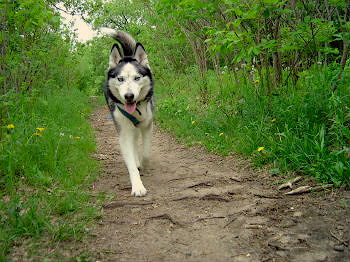
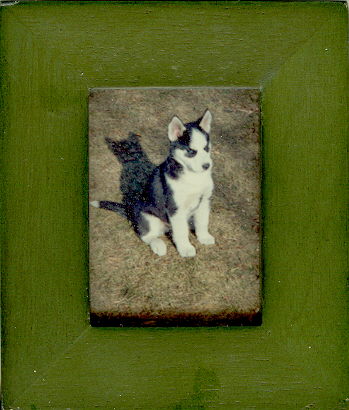
    You were born thirteen years and seven months ago, in the middle of a January night so cold the defroster in my old pickup truck wouldn’t work on the drive to the emergency clinic. You were the last pup born, the runt of the litter, and I watched in exhausted wonder as you were delivered and held aloft like one more beautiful wish that had been granted, a dream made flesh, at a time when so many beautiful wishes were being granted and dreams being made flesh that I thought my life was charmed beyond measure.

    It was. And in a way that no one who has not shared their life with a dog can ever understand you were inextricably tangled up with every one of my dreams and blessings. You spent your first days in a box in my little attic apartment on Pleasant Avenue. You were the first of the litter to figure out how to scale the sides of the box and make your way to my bed, and that was when I knew you were mine.

    Throughout our life together, you went everywhere I went. You traveled, swam, ran, hiked, and rambled with me all over the country and up into Canada. You were always nothing but at home, whether in the backseat of a car or at a five-star hotel.

    You spent a lot of time in the backseat of cars.

    When you weren’t in the backseat of a car, you were right by my side, or moving with your calm curiosity somewhere in front of me, connected either by the tether of your leash or simply by your unflagging connection to me, and to us.

    You were our guide dog. You took us places we otherwise would never have gone, compelled us to pull aside in out-of-the-way towns to investigate and allow you to nose around. You forced us to seek lodging in places interesting enough to welcome you as a guest. You were our ambassador, our introduction to all manner of oddballs and genuinely wonderful people.

    At home you would settle into your green chair while I sat on the floor beneath you, rummaging through books and listening to music and trying to tell stories. We kept that vigil together, night after night, too often into the early hours of the morning, and eventually you, too, learned to live on Hong Kong time. You learned to sit patiently through some of the thorniest, most bracing music ever committed to tape, and in time I honestly believe you grew to enjoy Roscoe Mitchell and Albert Ayler and Sun Ra and Cecil Taylor. They, and countless others like them, were the soundtrack to our long nights together in that room crowded with records and books.

    You had a lot of names: Willis. The Cheetah. Cheetah Boy. Buddy Klunk. Buddha. The Boy. Good Boy.


    cheetah baby.jpg


    You had seven original Sweet Dreamers who slept by your side: Hairy Man, Snowman, Bumble, Pork Chop, Monkey, Alf, and Creature. Dozens more piled up next to your bed over the years, and each one was assigned a name. You remembered each of those names and could keep them straight, which was one of your many peculiar gifts.

    You had many peculiar gifts. You had many gifts, period.

    You could run like no dog I’d ever seen, and had an extra gear which could be exhausting. But you knew when gentle was called for, and would instinctively attach yourself to the most vulnerable person in a room.

    Time after time you demonstrated conclusively that you were a dog who was most at home in the country, where you could ramble freely, but you never raised a fuss. You never strayed. You couldn’t stand a mess, and couldn’t bring yourself to destroy even things that were made for dogs to destroy. Or eat. You would carry a rawhide pretzel around, but you would never get around to untangling it.

    You were patient. You were calm. You laughed and sang. You would sprawl with your head in my lap for hours at a time, and the smell behind your ears became one of my favorite smells in the world. You gave me birthday cards and Christmas presents, and every day during the month of December you would go and sit beneath the advent calendar in the kitchen to see what wonders waited behind that day’s window.

    Honest to God, you did. I wouldn’t have believed it if I didn’t see it every year.

    We had a secret place –Dog World: like all the best places not quite imaginary, not quite real– that we explored together.

    I routinely wrote things on my hand that I wanted to tell you, places that I wanted to take you. One such note is written there now.

    I often told you that I was together as long as you breathed.

    I often told you that evolution could mean nothing to me when I looked into your blue eyes.

    There were times –many, many, many times– when you were my only lamp in the darkness. At the bottom of every day we prayed together to the God of the Seven Sweet Dreamers, and every time at the conclusion of our prayer you gave me two kisses. Always two kisses. Even tonight, as I held you in my arms in the wet grass and you prepared, with your characteristic patience and dignity, to die.

    Even tonight, when I had finished with my prayer to the God of the Seven Sweet Dreamers, you raised your head one last time and gave me my two kisses.

    And then you left another hole in my world.

    I know how weak and hungry you were at the end, so I put food and water out for you when I got home tonight, just in case.

    And now I’m not sure I know how to go about the world without a dog at the end of my arm.

    I wish you peace, my boy. I wish you nothing but sweet dreams. I desperately want to believe that you will live forever.

    I don’t much care if there’s an afterlife for humans, but this morning, just as every other morning, I will throw my head back, show my teeth to the God of All Sweet Dreamers, and pray that there’s a heaven for dogs, and that you are running there now, and remembering us.


    DF9.jpg