Tag: jazz

  • Willie Nelson and Wynton Marsalis

    Joe Fornabaio

    If you regard this Willie-Wynton matchup as a strange bedfellows mating of country and jazz, you’re missing the forest for the trees. These two iconic masters have far too much in common for any genre differences to disrupt their stylish little party, a series of live performances recorded at Lincoln Center in January 2007. Both artists are conservative to the core. All that talk about Willie as "country outlaw" in the late 70s was a fleeting-truth-cum-marketing-coup for a singer who literally has become indistinguishable from, say, Tony Bennett, in his choices of concepts and cover material–with an abiding love for the verities of musical Americana. That the two musicians have the good sense to emphasize the contribution of New Orleans jazz and Delta country blues in their Great American Songbook reveals how tastefully attuned they are to the real history of song in this country. No, nobody is trying to reinvent the wheel here–they just want to create the roundest, smoothest-rolling, structurally-solid wheel possible. And they do, with the kind of refined, sublime, consistently ingenuous collaboration that can give artistic conservatism a proper good name.

    The ensemble is a septet that includes four stalwarts from various Marsalis bands and Nelson’s trusty harmonica player Mickey Raphael. They don’t play the music so much as decant it, adding their distinctive flavor to the essential ingredients of the songs like an oak casket imbues the taste of the whiskey. They haven’t stinted on the aging process either: The newest material among the ten tunes were the ones composed by Nelson himself: "Night Life," which was a hit for Ray Price in 1962, and "Rainy Day Blues" from 1965. Willie’s vocals are renowned for the conversational way he takes his time, so that even as the band is nailing the groove of a jump blues like Louis Jordan’s "Caldonia," for example, he’s lagging, savoring the length of a vowel or a nuance in the narrative. But the jazz cats thrive on such improvisatory wrinkles and Raphael is intimately familiar with Willie’s wiles. They don’t "wait;" they pivot and freelance, secure in the knowledge that these songs are in everyone’s DNA.

    The least interesting, albeit capably rendered, songs are the Hoagy Carmichael numbers Nelson has recorded before, "Stardust" and "Georgia On My Mind" (although Wynton’s wah-wah-with-mute solo on the latter track is delightful). But they’re in the middle of the set between the sprightly openers and the razor-sharp clowning of the last four numbers, where the performers make the audience relax and laugh with deceptively crisp mugging and interplay. "Rainy Day Blues" benefits from some tambourine and Willie’s banjo-ish guitar; "My Bucket’s Got A Hole In It" features Wynton’s vocal detour into "I Hear You Knockin’ (But You Can’t Come In)" before some wonderfully weepy horn exchanges between Wynton, Raphael, and the resourceful saxophonist Walter Blanding. The rhythm section of rising-star pianist Dan Nimmer, drummer Ali Jackson, and Carlos Henriquez on bass, can, as inferred earlier, jump and clatter with barrelhouse gusto or mine a stark and plaintive blues vein.

    Willie Nelson and Wynton Marsalis have become such brand names to the general public that it is easy to be skeptical of their mainstream success. Two Men with the Blues is an ironic title for a disc that reminds us not only of the creative depth of their predictable stylistic choices, but the sheer joy that they derive, and impart, performing this music they so obviously cherish.

    **** (Four stars)

    Willie Nelson will be appearing at the Grand Casino in Hinckley Saturday, July 18.

  • You're Invited: Dinner and Jazz at T's Place

    Please join us for dinner and jazz on Wednesday, February 27 at T’s Place, 2713 E. Lake St. Minneapolis.

    We stopped in the other night at T’s Place, the Ethiopian-Malaysian fusion restaurant a couple of doors down from the Town Talk Diner, to check out Yohannes Tona and his band. I’d read a piece in the Twin Cities Daily Planet by Dwight Hobbes that described Ethiopian-born Tona as "the baddest bass guitar player in the Twin Cities."

    As luck would have it, Tona was off gigging in Las Vegas, but we weren’t disappointed: his replacement was an amazing Cameroonian guitar player named Kenn Wanaku, who led Tona’s regulars in a couple of high energy sets that ranged from reggae and merengue to Congolese soukous and West African hilife, with a little Paul Simon and Bob Marley thrown in as well.

    The only sour note was that the place was nearly empty. So Carol and I decided, we have to get a bunch of friends – and Breaking Bread Readers – together and come back and make an evening of it: Tona and his band play (almost) every Wednesday night. So we are scheduling our little get-together for a week from today – Wednesday, February 27.

    Carol and I will plan to arrive by 8 p.m., and the music starts at 9:00.

    T’s Place offers a unique menu – a combination of traditional Ethiopian dishes, served on a tray covered with injera (a pancake-like flat bread), and some Malaysian-Ethiopian dishes that chef T Belachew invented when he was a chef-partner with Kin Lee at Singapore!. For menu details, check the website. Prices for food and drinks – they have a full bar – are very reasonable, and there is no cover charge for the music.

    We’re asking everybody to order – and pay – for themselves, though you are very welcome to follow the Ethiopian custom of eating from a shared tray.(With your fingers, if you really want to be authentic.)

    Please email me at iggers@rakemag.com, if you plan to attend. Or just show up.

  • Planet Pickett

    A gauntlet of black-and-white portraits of jazz luminaries lines the walls of the Dakota Jazz Club & Restaurant on the Nicollet Mall in downtown Minneapolis. Nearly all of these musicians have appeared at the Dakota in one of its two incarnations. The trick with this sort of self-promotion-as-interior-decoration is in the execution. To do it right, a place needs to have attracted top-notch talent and established a unique rapport with artists over many years, to the point that the portraits themselves seem to address the wistful adage "If these walls could talk."

    Veering left from the Dakota’s entry, the first portrait you see is of Joe Williams, the Count Basie Orchestra vocalist. Back in ’96, the then-seventy-eight-year-old Williams frolicked with unvarnished joy across the Dakota stage, delivering an unbelievably potent performance. Recalling that night in Richard Grudens’ book The Music Men, Williams said, "I don’t remember feeling that good. I think every pore in my body was open…. " The singer inscribed his Dakota portrait to the man most responsible for the club’s legacy-founder, co-owner, and frontman Lowell Pickett: "Lowell, Best. Love, Joe Williams."

    Next in line is a similarly signed shot of Stanley Turrentine, a man of massive physique and a tenor saxophone tone to match. Many years ago, Wynton Marsalis and his band finished their concert at the Guthrie and hurried over to catch Turrentine’s final set at the Dakota, only to discover they’d arrived too late. No matter. Lowell (as he is known to most everyone) invited them in, convinced a cook to stick around and feed them, and the two bands ate and jammed in the empty club until two in the morning. Beside Turrentine on the wall is a picture of trumpeter Roy Hargrove. Lowell first met Hargrove at the 1989 Umbria Jazz Festival in Italy; he was the road manager for Moore By Four and Hargrove was still a teenager yet to release his first record. Since then, the Downbeat poll winner has performed at the Dakota on numerous occasions. "To Lowell, The most comfortable jazz club in the world for musicians and patrons. Peace + Love."

    The tributes go on and on: nationally renowned jazz cat, pungent memory, heartfelt inscription. Finally, there’s McCoy Tyner, the pianist in John Coltrane’s legendary quartet who went on to become an influential dynamo in his own right. Tyner and Pickett were friends for more than a decade before Tyner became the Dakota’s first national jazz act in the fall of ’88.

    Then the legacy jumps from the wall of portraits to the bandstand. It’s the week between Christmas and New Year’s, and for the eighth year in a row, that means hip, ironic trio The Bad Plus are playing the Dakota. Lowell introduces the group, wryly noting that the crowd is larger now than it was for the band’s first show at the club in 2000; also that the trio is fresh from a sold-out show at Carnegie Hall and an effusive write-up in The New Yorker. What he doesn’t say is that back in high school, before they even knew each other, two of the three Bad Plus musicians, pianist Ethan Iverson and bassist Reid Anderson, were at the Dakota for that first McCoy Tyner gig.

    Three weeks before The Bad Plus took the stage, the Detroit blues singer Bettye LaVette played her now-regular winter engagement at the Dakota. After decades of barely scraping by, LaVette’s career was finally showing a pulse when she got a call from Lowell. Four years later, LaVette sits in her dressing room after wowing the capacity crowd she now typically draws to the Dakota. She talks about "the night Lowell and I sat right here and talked until almost daylight. Oh, you should have heard us going back and forth from the ladies rest room that night! I’m threatening to burn down the bathroom because my picture isn’t in there. And he’s saying, ‘Well, let me get to know you better.’" LaVette lets out a big laugh, then suddenly gives me a no-bullshit look from behind her tinted glasses. "Lowell is just somebody I want to hang with. I do a million gigs a year and I don’t know any other club owner or any other promoter who I’d want to hang with."
     

    Judging from his childhood and public mien, Lowell Pickett is one of the last people you’d expect to be earning hanging privileges and trading bathroom bon mots with a sassy, streetwise black woman from Detroit. He was born and raised in Austin, Minnesota, the Hormel company town where his father ran the local J.C. Penney and his mother was a music teacher and ardent cellist. Lowell was their third child and second son, reared in a quiet neighborhood, tucked away from the countercultural changes of the ’60s. Lowell’s folks were molded by the Depression, which meant that the family never ate out and pinched pennies to invest in education.

    "My father grew up dirt-poor in the middle of North Dakota; at sixteen he had to find a place for his family to live. He couldn’t afford school, and used to read college catalogues the way other people read travel brochures," Lowell says, explaining how his dad gently coaxed him into attending Shattuck Academy, at the time an Episcopalian military school in Faribault (now most famous for such alumni as Marlon Brando and Nick Nolte), first for the summer and then for a year. When he graduated from Austin High in ’67-right in sync with the Summer of Love-he had already been accepted to St. Olaf College in Northfield. He planned to earn a law degree, and was considering a double major in business administration.

    That careful, cultivated side of Lowell, now fifty-nine, can be seen as he introduces acts from the stage or roams the club troubleshooting. He’s almost always attired in a gray suit and matching tie, and his longish hair and short, graying beard are immaculately groomed. He’s a bit hangdog around the cheekbones and shoulder blades, but his voice has the dulcet, reassuring tone of an FM radio host. He can also display the unerring formality of a funky but ace maître d’.

    But that’s the master disguise, the veneer of decorum acquired (and required) when you grow up in the sticks. A less obvious but more important side of Lowell is the dreamer and adventurer-the one who’s always ready to receive, or concoct, what the flamboyant reedman Rahsaan Roland Kirk once referred to as "Bright Moments." The moments when Joe Williams turns back the clock and breathes through every pore; when Turrentine and Marsalis are sharing a blues and some blackened fish in the wee hours; when McCoy Tyner passes a baton to The Bad Plus before the group even existed in the minds of its members.

    This side of Lowell was kindled at St. Olaf, where he landed a roommate from Philadelphia. Lowell’s mother had made sure her children took piano lessons and w
    ere steeped in the classics. Show tunes were also played around the Pickett household, and Lowell had ventured further, from the New Christy Minstrels into songwriting-oriented folkies such as Donovan, Tim Hardin, and his first musical hero, Bob Dylan. But this dude from Philly had been a drummer in a rock band back home and had an entirely different crate of sounds. "Cream and Moby Grape and the Grateful Dead and the Mothers of Invention," Lowell says, reverently rolling out the names. "I had never heard that stuff before. I just loved it."

  • Higher than Fi

    The European sun shines on James Coburn, his lean frame in a white Mod jacket with red turtleneck. Putting on enormous sunglasses and flashing his classic chops, he sidles out of the palm-tree fringed villa, where he has just spent the night with Monica Vitti, and slips into his silver Ferrari. Bound for another criminal adventure involving diamonds, art, or cold hard cash, he speeds onto a cliff-side road, which just happens to overlook an endless body of crashing blue water.

    None of this, mind you, is from any particular movie or real life situation. It is, in fact, one of the many exotic images you can’t help but conjure when listening to a typical night of Jet Set Planet on KFAI radio. Once a week, for ninety minutes, host Glen Leslie spins what he describes as “forgotten music from Thrift Store, USA”, most of it produced from the dawn of the 331/3 record through the close of the 1970s. And all of it on vinyl.

    The emphasis on turntable as opposed to digital jockeying is, in part, borne out of Leslie’s frustration with the substandard CD compilations of the music that he labels, in tribute to a favorite Marty Gold album, Higher Than Fi. But the real issue is that many of the audio treasures Leslie seeks out can still only be found on LPs.

    So far, over the course of fifteen-plus years, this record hunter can proudly claim 5,000 trophies, whose sounds he makes available to audiences courtesy of the two turntables in KFAI’s tastefully paneled, and notably clean, studio.


    The source of this collection, which Leslie pays for with his salary from the Geography Department at the University of Minnesota (KFAI, a listener-supported station, is fully manned by volunteers with other sources of income), are the thrift stores and record shops that continue to gather dust in various parts of the country. This includes Minneapolis, whose best source for vinyl is Hymie’s, on Lake Street. But it also includes the small towns and cities he and his wife, Carol, and friend, Steve, travel to throughout the year on cross-country expeditions. “The week, or month, before the show,” says Glen, whom I interviewed at Mapps coffee house, and who, with his mop of gray hair and Blanche glasses, reminds me of the latter-day Cary Grant in his LSD phase.

    “We hit the same thrift stores at the same time, because you only have a few hours to go through it. When I get home, I go over the piles we get from those trips. I draw up templates, so that, as I’m going through the pile, I kind of swaddle in songs that fit the genres. There is usually only one good song on each record, so if I make a mistake, the results can be devastating!”

    Clearly, the host takes the art of acquisition, and his show, seriously — good, clean fun notwithstanding. Fellow KFAI DJ Ron “Boogiemonster” Gerber confirms this commendation: “Glen is a record collector at heart, and he has great communication skills. Having those two things at the same time is a rarity, and it’s what makes Glen and Jet Set Planet so terrific.”

    Eschewing the bar room tones of Clear Channel brawlers and studied delivery of public radio commentators, Leslie, on-air, comes across as an arch, world-weary tour guide, who swills cocktails while leading cruises through exotic earthbound and intergalactic locales. In fact, each broadcast begins with a clip from a sound effects record in which a male voice on an intercom repeatedly tells an airport full of harried, oblivious travelers: “Attention passengers. Attention passengers. Please maintain contact with your personal belongings at all times.”

    The show’s current time slot, 10:30 to midnight each Monday, matches its after-hours vibe — though it must be said, its original post, 2 a.m. on Fridays, probably would have suited Dean Martin, or James Coburn, better. But the host does have a paying job to face, and he was grateful, after eighteen months on the graveyard shift, to join what is regarded as the station’s jazz shift in April of 2007.

    The move increased the program’s listenership significantly, since Leslie estimates the average KFAI devotee is 45, the same age as he is, and an age whose typical member goes to bed by the witching hour. “Nobody under thirty listens to radio,” he figures, “For older people, there’s more purity in genre distinctions. For example, there’s this one great box set put out by Reader’s Digest called Happiness Is …. It features a big band guy named Charlie Barnet, who retired in 1949, and came back twenty years later to do covers of ‘Light My Fire’ and ‘A Hard Day’s Night.’ People in their 30s and 40s get that clash. For younger people, it’s just music and nothing but.”

    Much of this “just music” is spoken of by the turntable operator in terms of title, artist, record, and recording label. After a block of songs, you might hear a track listed as, say, “Jean Carroll with ‘Girl-Talk in a Steam Bath’ from Girl in a Hot Steam Bath on the Columbia label.” In conversation off-air, he will do the same, even when remembering the album that triggered his obsession with all things Higher Than Fi. “In 1991, I found a Les Baxter record called Caribbean Moonlight, on Capital Records, at a sidewalk sale. I was rearranging my apartment, and I put on side two. I must have listened to it twenty times. A light went on, and I said, ‘I gotta get this stuff!’”
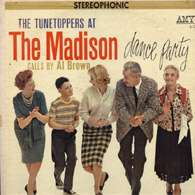
     

    This journey through the bins of yard sales, flea markets and, especially, thrift shops would continue with few interruptions as Leslie moved from Portland, Maine, to Maryland, to Milwaukee, and finally landing in his fourth “M” location of Minneapolis in 2004. Though he insists that working for KFAI, a community station of high esteem that he listened to online for four years prior, was not the main motivator in moving to the Twin Cities, he admits that on the same day he started his job at the U of M, he began volunteer training at the station in the nearby West Bank.

    As Pam Hill, the station’s volunteer coordinator, recalls, “He has been dedicated to the station’s mission since he joined us, at first volunteering in the music library, and asking how he can help the station in other areas. When he took the on-air training … little did I know what an entertaining, informative, and truly joyful program he would put on!”

    The fact is, he was already an experienced radio personality, having cut his teeth at WNPG at the University of Southern Maryland in the late ‘80s, while briefly forging a musical career of his own in what he refers to as a “white-bread, stiff-as-you-can-be funk band” called Chum.

    While the Jet Set Planet playlist may be derided by some as white-bread or elevator music, even its detractors would admit it always manages to evoke memories of pleasurable moments, or delightful scenes from movies — even if those moments or movies never existed.

    “Now, that doesn’t mean that every second of Jet Set Planet is a delight,” cautions Luke Andrews, a longtime friend and host of KFAI’s Groove Garden. “Sometimes, the music is torturous, like what you might hear while tra
    pped in the diaper aisle at the grocery store. But just when you think you can’t take another minute of it, Glen justifies with a complementary dose of something downright groovy.”

    That’s because for every corny farm ditty or sappy love ballad he pipes through the airwaves, there are at least three smooth, silky, and absolutely sweeping instrumentals (generally only one or two tracks per show feature a vocalist) performed by experienced jazz or pop musicians who, though they may be working on the album to pay the rent or feed their drug habits, perform with absolute dedication.
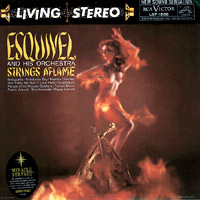
     

    Likewise, the host plays these cuts without a hint of irony — irony, in his mind, being a four-letter word. And even if the music isn’t always satisfying, the talk breaks that the radio guide usually prepares just before each show, to describe what audio vistas have passed by or lay ahead for his passengers, almost always are. When introducing a Sonny Lester belly dance instruction record, our radio instructor proffers this food for thought: “This is music for your international suburban pool party — that you proceed to destroy, when, drunk on Mai Tai’s and coveting thy neighbor’s better half, you strip down naked, tag a friend and say ‘you’re it,’ dive into the water, and come up for air just in time to see the last pair of tail lights pulling away from your driveway. I guess you should have learned your lesson from the last time this happened — there’s a big difference between fantasy and reality, my friend.”

    But not every aspect of the show involves fantasy. In between tunes, Leslie will relate personal anecdotes about his record buying trips, the most recent one of note being a visit to a home in Toledo, Ohio, whose lower floors were a makeshift vinyl store packed wall-to-wall with LPs. “He had all these really pricey jazz records for fifty bucks up in his bedroom,” Leslie recounts, “and he complained about these Japanese buyers who wanted the whole stock, but he would sell only a few. He was an old guy who chain smoked, and slept and ate around all these records. We figured what kept him from being killed by the mold from the records was the filter on his cigarettes.”

    He also has a distinctive take on the competitiveness of the strange creatures who comprise the vinyl collecting world. “In record stores, I’ve had people fart in aisles because they don’t want you in the area they’re sorting through. I’m convinced they’re doing that deliberately.”

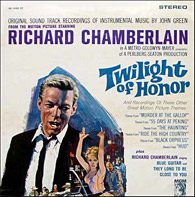
    This is indicative, more in terms of eccentricity than marking territory, of the many downright peculiar artists who are regulars on the Jet Set musical roster. This includes Pete Drake, a Nashville pedal-steel picker whose signature instrument is a “talking guitar” that, when played, suggests an unusually melodic tracheotomy recipient. Another frequent guest is Rod McKuen, a spoken word artist who relates vignettes about cross-dressers and omnisexual encounters while strings and pianos tinkle in the background. You will also hear selections from obscure movies like The Last Rebel, a Civil War drama starring NFL great Joe Namath, and The Day the Fish Came Out, a thriller involving atom bombs, gay stereotypes, and future Murphy Brown star Candice Bergen brandishing a whip. And then there are the Latin instrumental albums, many named with one or more uses of the word “Cha”, and the instructional records on exotic dancing and bongo playing, and the psychedelic concept albums by big band musicians who’ve fallen on hard times, and the song collections by TV and movie stars who can’t sing, and …
     

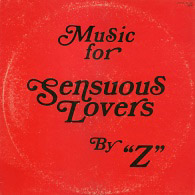
    So, what, in the end, is Jet Set Planet — or Higher Than Fi, as the program was going to be called before wife Carol thought up the more extraterrestrial title? Is it jazz? Is it pop? Is it easy listening — or, as the host describes many of the saucier selections, “sleazy listening”?

    When Leslie pitched the show to KFAI’s programming committee in 2005, he could only pin it down as “Not not-jazz.” Even if jazz is the category this music is stuck with, Ron Gerber, another member of the committee, is correct in his assertion that, “you can find a lot of jazz music elsewhere on the radio and the internet, but you can search the entire globe and not find anything that sounds remotely like Jet Set Planet.”

  • Honorable Exit

    My mother took me on a wild, unforgettable ride the morning she died. Drugged and nearly comatose for about twenty-four hours, she suddenly started breathing heavily, opened her dull, mucus-covered eyes, and began writhing her shoulders off the bed. I was holding her hand, and she gripped me so hard that her bones stabbed painfully into my palm. This intense, disquieting resistance lasted between five and ten minutes, and then Jeanne Northridge Robson was dead from cancer at age fifty-nine.

    Nearly twenty years later, I can say it was the last of many incredible gifts she bestowed upon me. I’d anticipated a subdued, imperceptible death; the nurse would come in and check for a pulse, whisper the news, and then pull the sheet up over the body. I’d coated my thoughts with that scenario the way one applies sunscreen on the way to the beach. But my mother burned through the balm and peeled away some mystery for me. She showed me how you can be alive one minute and dead, tangibly dead, the next. Ever since that morning, I have urged friends to be present, if at all possible, when someone they love dies. My younger sister, the only other person in the room at the time, changed her career to hospice work.

    Among all of the claptrap surrounding death in our culture, only some of it involves our fears and ignorance of the dying process. Much of it is more ignoble, tied up in melodrama and titillation. “Gawker slowdown” describes a certain type of traffic jam, but that term also factors into the way we patronize artists, being drawn magnetically to those who die tragically and early. Every generation has a few potently dead icons (James Dean, Jack Kerouac, Janis Joplin, Kurt Cobain, et al.) whose live-fast, die-young biographies are seductive to fledgling artists at least in part because of the promise of self-destruction as a lazy shortcut to celebrity.

    Among jazz artists, the most insidious icon of this type was Charlie Parker. Heralding the revolution of bebop, he had the perfect sobriquet—Bird—because his alto saxophone solos could levitate and veer and soar like none before him. But Bird was flighty in other ways, too; he was a man of great appetites and impulses, and died of drug addiction in 1955 at the age of thirty-four. Dozens of talented musicians emulated his heroin use in the mistaken belief that it might unlock some of the secrets of his artistry.

    Whether he fell prey to Parker’s mystique in particular or the ravages of the jazz life in general, John Coltrane was among those addicted to heroin and alcohol in the 1950s. After celebrating his sobriety with the classic A Love Supreme in 1964, Coltrane became more overtly spiritual; Ascension in particular is unremitting in its intensity and became a hallmark of late ’60s avant-garde for its “sheets of sound” saxophone wail. In 1967, in the midst of this obsessive and uncommonly beautiful spiritual journey, Coltrane’s death at age 40 from a liver ailment put an immediate and lasting luster on his legacy. It is no coincidence that Ken Burns’s PBS series on jazz—probably the closest thing we have to a historical overview of the music for the masses—states that “John Coltrane was, after Charlie Parker, the most widely imitated saxophonist in jazz.”

    One wonders if Burns would still be making that claim had ’Trane lived to a ripe old age, and another saxophonist of that era—say, Sonny Rollins or Wayne Shorter—had died young instead, in the midst of one of his own high-profile, quickening phases. In the wake of Parker’s death, Rollins (born just four years after Coltrane) was generally regarded as the new saxophone king. Academics transcribed his thrilling improvisations and revealed them to be geometrically pristine, compositions of integrity conjured on the fly. Today, at seventy-seven, Rollins continues to top critics’ polls and is generally regarded as the most compelling soloist in jazz. Meanwhile, Shorter, due to both his brilliance as a composer and his acute intuition as a player, has dramatically raised the caliber of any ensemble he joins. It happened to Art Blakey’s Jazz Messengers in the ’50s, the Miles Davis quintet in the ’60s, and Weather Report in the ’70s. Today, at seventy-four, his Wayne Shorter Quartet is probably the most intellectually rigorous and rewarding ensemble in jazz.

    These comparisons certainly aren’t meant to denigrate Parker or Coltrane. But how clearly would we peg their influence if, instead of dying at thirty-four and forty, they’d each lived another forty years? What if they’d gone on to respond to the music’s artistic ferment on a day-to-day and year-to-year basis, if they’d had to face challenges from younger generations—even as they struggled to remain vibrant and innovative through the watershed perspective of middle age and beyond? The point is, the persevering excellence of Rollins and Shorter is equally heroic, and should be equally emblematic of jazz sainthood.

    Which is why, while it’s an admittedly macabre notion, I hope that Rollins and/or Shorter have the foreknowledge and facility to deliver artistic works influenced by their impending mortality. Put bluntly, I want them to make music that shows an awareness that they are dying. It doesn’t have to be soon—may they both live to one hundred. But it seems only just that death should come forth in art that reflects the tangible reality of old age and disease as well as the romantic titillation of youthful tragedy.

  • LOCAL MUSIC: Cubano Libre!

    At times during his monthly performances at the Dakota Jazz Club & Restaurant in downtown Minneapolis, Cuban-born Nachito Herrera seems less intent on playing the piano than on consuming it—greedily, octave after octave—his thick, muscular fingers tenderizing the keys under a barrage of powerful yet precise blows, his stocky frame bouncing up and down on the bench like a little boy waiting to rip open presents on Christmas morning. This is the Nachito described as “Explosive. Crowd pleasing … Jaw-droppingly good” by music critic Tom Surowicz in the Minneapolis StarTribune.

    But there’s another side to Herrera’s playing, a dimension that reflects decades of formal training in classical music. The delicate lyricism and sensitivity he brings to the passages of, say, Bach or Chopin, he weaves unexpectedly into jazz medleys, as he did in a recent show dedicated to the music of Duke Ellington. This is the Nachito Herrera whose virtuoso riffs moved Latin Beat Magazine’s Jesse “Chuy” Varela to marvel at Herrera’s “unbridled freedom,” at the “solos that can melt snow off the sidewalk.”

    “It’s hard to believe,” Varela declares, that Herrera’s music is “coming from St. Paul, Minnesota, and not La Habana, Cuba.

    Hard indeed.

    Long day’s journey to White Bear Lake

    Herrera’s story has a fairy-tale quality to it—a gifted protagonist rescued from the grip of some dark force by a fairy godmother. Only in this case, the fairy godmother was a fairy godfather: Lowell Pickett, owner and founder of the Dakota. It wasn’t Pickett who first brought Herrera to Minnesota, but he’s largely responsible for the fact that this Latin jazz prodigy now resides among stolid, northern European types in a modest ranch-style house in White Bear Lake.

    Like the nineteenth-century graduates of the traditional atelier system in France, who went on to invent modern art, Herrera earned his chops the old-fashioned way, studying classical piano for 16 years before making his name in jazz.

    The pianist was born Ignacio Herrera (“Nachito” is the diminutive of “Ignacio”) on May 31, 1966, in Santa Clara, his mother’s small Cuban hometown. His parents, Ignacio and Romelia, met in medical school but never became doctors. Both were pianists and outstanding musicians in their own right. As Nachito puts it, “My mother had very good ears.”

    Like his son, Herrera’s father was a performer, who also conducted, arranged, and composed music. His father’s pursuit of a music career led to the family’s move, not long after Nachito was born, to a suburb of Havana offering many more performance venues and opportunities than Santa Clara. The family home was also Ignacio’s rehearsal space, and it was here that Nachito first encountered many of the greats of the Cuban jazz world.

    “Through my father, I was exposed to all different styles of music,” Herrera recalls. “He had working relationships with Rubén González, Chucho Valdés, Joseito Gonzales, and the like. Watching them perform, I realized I would be able to play classical and Cuban music, too, if I wanted.”

    At the age of five, Nachito was enrolled in one of Cuba’s top music schools. From there he went on to the National School of Art, a highly competitive institution, and then to the Superior Institute of Art, where he studied piano with a focus on classical training and technique. “Chopin, Liszt, Bach, Gershwin, Beethoven, Rachmaninoff, you name it,” he says. “We were immersed in them all.” Even before he finished school, his prodigious talents stood out. Herrera’s first taste of fame came at the age of twelve, when he performed Rachmaninoff’s notoriously difficult “Piano Concerto No. 2” with the Havana Symphony Orchestra. Today, his extensive classical training is evident even when he’s playing jazz, in the extraordinary touch and precision he brings to the music’s quiet moments.

    After graduation from the Superior Institute of Art, Herrera toured with a number of jazz groups and served as musical director of the Tropicana Club in Havana. His big break came in 1996, when the lead pianist of ¡Cubanismo!, Cuba’s foremost Latin jazz ensemble, fell ill; Herrera was asked to sit in for him at the Montréal Jazz Festival and on a subsequent two-week tour of Europe. A year or so later, he ended up as the troupe’s musical director, traveling around the world (the group performed in the U.S. two or three times a year) as well as arranging music for the ensemble. In the meantime, he met and married Aurora Gonzales, a law student at Havana University. The couple has two children—sixteen-year-old Mirdalys, a vocalist who regularly performs with her father, and David, age twelve.