Tag: performance art

  • One Day, One Night, Saturday's Alright

    AMONG THE GREAT unanswerable questions that haunt our city is this one: Why is there a giant, crappy K-Mart superstore sitting in the middle of Nicollet Avenue?

    For a city that is second-to-none in making catastrophic urban planning blunders, surely the decision in the late-‘70s to plop down a strip mall in the middle of one of the city’s most-used thoroughfares ranks as one of the most nearsighted. It has essentially created two different Nicollet Avenues in south Minneapolis: the fun Nicollet Avenue north of Lake Street that is full of bubble tea, brownstones, MCAD students and Asian fusion restaurants; and the crappy Nicollet Avenue south of Lake Street, where you go to drop off U-Haul trucks and test drive your new car tires to find out how well they deal with potholes.

    It’s on the latter Nicollet Avenue that Art Of This Gallery is located. While I shouldn’t write the neighborhood off as completely charmless – the Mexican place across the street isn’t bad, and there’s a great little vintage shop next door – the stretch of Nicollet Avenue the gallery is located on at 35th Street is pretty featureless. It’s a lot of vacant lots and generic mid-century beige boxes. Of course, it’s these sorts of unremarkable neighborhoods that afford the best opportunities for imaginative use of space – before the 1970s and 1980s, the Warehouse District was a gritty, post-industrial nowhere, and before the 1990s, Northeast Minneapolis was a sleepy, vaguely ethnic enclave with some terrifying corner bars and some very charming churches. Both these areas were full of pretty cheap, open, modest spaces that gave young emerging artists and curators room to try anything they could think of. Perhaps this slice of the southside, choked off from the cosmopolitan delights of Eat Street by bad urban planning, will spur similar practices in this decade. That’s how these things work. The practice of making contemporary art is so informed by real estate that they probably ought to teach land-use regulation in art school right between color theory and Joseph Beuys appreciation seminar.
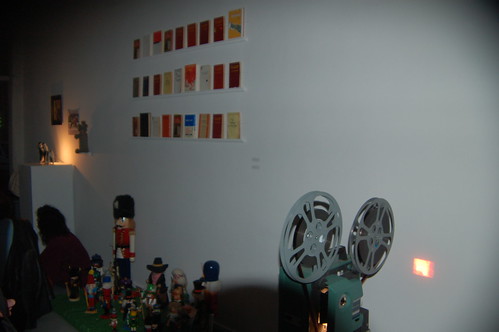
    Art Of This, a sort of odd name choice I always assumed must be a tribute to Peggy Guggenheim’s Art Of This Century, was started a few years ago near Powderhorn Park by a few local artists, and recently relocated to its present Kingfield location. Art Of This is, like the neighborhood in which it sits, modest – a storefront, a few hundred square-feet of open space, a basement with a bar and a small movie screen. But it’s hard for me to think of any gallery space in the Twin Cities that has so consistently in recent years devoted itself so wholeheartedly to recklessly passionate all-over-the-map programming. Perhaps the word "reckless" gives short shrift to the obvious planning that goes into each show, but every show I’ve seen there since the beginning of the year has been at the very least thought-provoking, and at best totally thrilling and strange and confounding in a way that makes me feel like I’m not quite living my life to it’s full potential, if that’s not, um, overstating the case too terribly.

    Even the shows that don’t completely work (I wasn’t a big fan of the Jo Jackson/Chris Johansen exhibition, for example) aren’t for lack of trying. Art Of This succeeds largely, I think, because whatever is happening in the space is always about the artist – the gallery is very neutral and unadorned, completely blank and with no architectural or design-related distractions, but it’s small enough to impose potentially-interesting logistical restrictions. Some contemporary art spaces, especially located in reclaimed buildings, can either give the artist a lot of leeway in providing interesting distractions to play off of, like odd fixtures or textures. Others are large enough in scale to impart a kind of monumental quality to work that may not totally deserve it. Art Of This provides neither of these qualities, physically. It’s the classic "clean, well-lighted place," as the art critic Dave Hickey memorably named his 1960s-era Texas gallery.

    This summer, the gallery has been using the space to positive effect to forgo standard multi-week programming in a series of what they’re calling One Nighters, a series of one-night-only openings that blend visual art, performance, video and anything else the artist brings to the table. There’s something appealingly ephemeral about this sort of undertaking, and maybe even a wry little dig at gallery-going conventions – who goes to shows after the opening night anyway? Like the Ramones used to say about their setlist, if you don’t like one song, you just have to wait around for two minutes and there’ll be a new one. You don’t like a One Nighter, there’ll be a completely new one soon enough. And regardless of whether or not you like it, you’ll certainly be moved to consider your values as they relate to art, which is something a worthwhile exhibition, large or small, will always do.

    Case in point: I wandered into Golden Energy, Heartland/Hardland‘s recent One Nighter performance-cum-thrift-shop-freakout, and after ten minutes felt half like a confounded old man (I believe my esteemed Vicious Circle colleague Michael Fallon had a similar reaction to their work recently), and half like it was time for me to strip down to caveman underwear and go running through Kingfield yelling lines from Wild in the Streets at the top of my lungs. How many recent art openings can you say that for? We can debate in the comments below whether inducing complete sensory overload is a valid aesthetic technique or not, but that night at least, I was sold.

    There’s several more planned for the rest of the summer and fall, including this upcoming Saturday night, August 16. A small group of Minneapolitans and Madisonians calling themselves the Rotarians Society, who seem to position themselves somewhere on the ideological spectrum between Mad Men and the International Order of Friendly Raccoons on The Honeymooners, will be making a presentation about a project they’ve been working on called "Tate Fabrication." It begins promptly at 7:30pm, and seating is limited.
  • The Paintings Have Been Drinking (Not Me)

    Travel back with me, if you will for just a moment, to those happy, halcyon days of the year 2001. Oh, what a time to be a young American artist it was!

    The world waited breathlessly for the final bombshell in Matthew Barney’s Cremaster film cycle to drop (spoiler: Gary Gilmore did it!), and your hipper, richer, better-looking friends were cashing in their trust funds and moving en masse to some sort of Italian-speaking suburb of Manhattan called Williamsburg. Fashionable young men were rapidly perfecting the art of ironic facial hair, and their female counterparts had finally harnessed the unstoppable power of the knee-high boots/vintage skirt/wrinkled Mogwai t-shirt combination.

    Oh, what a time to be a young American artist it was!

    Amidst all of this excitement and bustle, your humble correspondent was an apple-cheeked 21-year old BFA candidate in Louisville, Kentucky, learning the twins arts of oil painting and quoting Foucault in the course of casual conversation (the latter being a skill set I still have yet to master). Like the rest of my newly-legal art school peers, I typically spent one or two Friday nights a month out viewing challenging video installations and half-baked performance art in the upstairs loft of a decrepit Clay Street warehouse or a little Frankfort Avenue storefront (the former being a favorite target of the Louisville Metro Police Department for repeatedly violating local noise ordinances).

    What was it that brought me out to those openings, weekend after weekend? Was it the thrill of newness? The excitement of being part of a community? The chance to hobnob with successful young emerging artists? The opportunity to meet prominent local gallery owners eager to display my crappy paintings of cigarette butts?

    Well, sort of. But not entirely. Truthfully, I was there mostly because these spaces usually served free Falls City Beer at their openings. I expect many of my peers were also there for the same reason.

    Now of course this isn’t the only reason I went to art openings in college. I was there to see some art, too. But if you’ve been involved in the art world in any capacity, you know this scenario well. It’s not Louisville, but maybe it’s Northeast Minneapolis, maybe it’s Lowertown St. Paul, maybe it’s Chelsea, maybe it’s whatever the arts quarter of your college town was called; but wherever it is, you know it.

    This is one of the first magical lessons of college: dude, they totally have free beer at art openings.

    If it’s not free beer, it’s free wine. And if you’re lucky, it’s free liquor. If it’s not free, it’s cheap. And if it’s not cheap, your friend working the bar will slip you a cup anyway. The point is, if you have an artsy bent and like to have a few drinks in you, there’s no better place to be than an opening on a Friday night. Openings and alcohol go hand-in-hand, like Gilbert and George, like Andy and Edie, like Jeff Koons and the feeling of wanting to punch Jeff Koons in the face.

    I began thinking about this after some rumblings in a few art blogs last month following the arrest of New York gallery owner Ruth Kalb during an opening at her gallery in the East Hamptons. The charge was violating liquor laws and entertaining without a license. Normally the goings-on of the Long Island art world have little interest to me personally, but this is really a universal theme. How many art openings have I been to that have been shut down by the cops for this very reason? Not a lot, but certainly a notable handful.

    Moreover, how many openings have I been to where someone got a little too drunk on the house wine and wanted to start a fight outside about the relative merits of shooting digital vs. Super-8? Or where the gallery owners had to kick someone out for sloshing their drinks a little too close to the artwork? Or where the aftermath of the night’s festivities was a catastrophic scene of discarded beer bottles, crumpled plastic cups and sticky spots on the floor? More than a few.

    Then again, there have been the many times when I’ve thanked the booze-soaked ghost of Jackson Pollock that I had a little cup of wine to look at the art with. Openings can be awkward, stifling affairs. People go to openings to see art, sure, but they also go for a multitude of non-art related reasons.

    People go to openings to see who else will be there. People are there to impress their friends and confound their rivals.

    People are clustered in unnatural little conversational groups – you’re spending a half-hour talking to that sculptor whose name you never remember, an adjunct professor you once had, your younger brother’s fiancée and that girl that works at the co-op, all at the same time. None of them have met each other. They all expect introductions.

    People are nervous. People want to look good because they may be photographed by The Minneapoline and get their pictures on the Internet. People want to look good because their ex-girlfriends will be there with their new, hotter boyfriends.

    Galleries can be stuffy and overheated in the summer and drafty in the winter, and a lot of the time it’s impossible to even see the art, much less form a coherent opinion about it because people are so crowded around it. If there is music, the music is loud and you have to shout over it. Even worse, the music may quite possibly be "experimental" in nature.

    You often have to seem smarter and/or cleverer than you may actually be.

    Needless to say, a little beer or wine in this context can be a godsend.

    It gives you something to look busy with if you’re by yourself, and gives you a little bit of impetus to talk to people with whom you might not otherwise think of much to talk about. It’s a scientifically-established principle that alcohol makes you smarter, or barring that, at least more confident about seeming smarter. Standing in front of a canvas with a little cup of wine in your hand feels right. It feels natural.

    From the gallery’s perspective, it can be helpful, too. It draws people in, for one. Healthy attendance numbers look good on those grant applications. If it’s a commercial gallery, a little libation gets people in the mood to buy. If the alcohol is donated, the gallery can even cover some additional costs in the process. No huge profit margins, obviously, but enough to make it worthwhile.

    I talked to the directors of a few Minneapolis galleries to get their take on the subject. Was serving alcohol at openings worth it? The general consensus, of course, was a qualified "yes." But within that consensus, there were a range of opinions. Everyone I spoke to wished to stay anonymous, for obvious reasons, so you’ll have to use your imaginations.

    There are some legal issues involved in serving alcohol, of course. Obviously, you can’t sell it without a license. Actually, legally, you can’t really even serve it without an entertainment license (you can read all the statutes yourself to your heart’s delight here on the city’s website). What you can do, though, is suggest a donation, and so this is the way most of the gallery
    owners I spoke to went about things. A lot of it really seems to be semantics – most galleries you’ll go to will have a posted sign asking for donations, and that covers some of the liability, anyway. Everyone was careful to stress that they run a clean house as far as underage boozing, outdoor drinking and slopped-out jerkiness are concerned. Young-looking types get carded, people aren’t permitted to wander around the street outside waving their beer bottles, and troublemakers get the boot. This generally keeps police and city inspectors away. As one owner pointed out, the cost of a license is a piddling little amount compared to attorney’s fees. Another even went so far as to regular hire off-duty cops to keep everything nice and legit for larger, more heavily-attended openings.

    Legal issues aside, there are also the behavioral and trash disposal issues. Most owners here, as well, had specific strategies for making sure people have fun without landing everyone in the drunk tank or the Broken Bottle Fight Injuries Ward at HCMC. Openings occur for a specific and set amount of time, end before the neighbors start complaining, and filter out collectively to neighborhood bars afterwards so people have somewhere to go and finish the conversations they started. Everyone I spoke to recycles bottles and plastic.

    Basically, all gallery heads reported back to me that their crowds, though they do love the beer and wine, are pretty reasonable, intelligent people that aren’t there to bankrupt the gallery, start fistfights or urinate Phillips vodka on the video art set-ups. Mostly they come to see art, meet up with friends, and generally have a good experience. The setbacks are far outweighed by the benefits. An art opening is, in the end, about the art – if it was just about boozing, all of our local gallery runners would be nightclub entrepreneurs instead. This is as it should be. Because let’s face it: Minneapolis, to her eternal credit, has much better galleries than it does nightclubs.

    So enjoy your beer and/or art this weekend, and just make sure the empty bottle makes its way to the recycling bin.

  • The Renegade

    Billy X. Curmano, performance artist and provocateur, doesn’t care much for the conventional wisdom that says artists must live in a large city. He may have grown up in Milwaukee and spent time in the East Village and other urban centers of art, but ultimately he decided to make his base of operations a picturesque corner of rural southeastern Minnesota. From there, he plans extravagant performance pieces and publishes wry, pun-filled newsletters, all of which dare the audience to face a fundamental question: “What the hell is art, anyway?”

    Curmano’s work also challenges the idea that grand adventure is the exclusive right of those who can afford it. Billionaires might be traveling around the world in balloons and paying to get towed up Mount Everest, but they’ve got nothing on Billy Curmano. He decided it’d be an eye-opening performance project to swim the Mississippi River from Lake Itasca to New Orleans, an undertaking he accomplished over eleven summers, landing in the Big Easy on “Billy X. Curmano Day,” 1997, thus culminating Swimmin’ the River, his best-known and most grandly scaled performance.

    “I like the idea of getting out to different audiences and doing work that intrigues them, whether they understand it as art or not. I like tweaking them,” Curmano says on the phone. When we talk, he’s in the midst of a massive move from his studio space in Rushford, which suffered extensive damage during the Winona-area floods last summer. “I think about it the way I think about homosexuality—if someone’s secure in their sexuality, they aren’t homophobic. I feel secure enough about my work that I like to get a response from the audience, but if it’s not the right response, I don’t mind. If you’re doing work just to please other people, you’re not getting at the root of your soul as an artist.”

    An overview of Curmano’s career indicates that, for all of his wide-ranging work, he has indeed stayed true to his roots. The twin poles of his work have always been to raise perceptions and have a little fun. These aims are evident from his early anti-Vietnam war installations at the University of Wisconsin-Milwaukee, where he trained as a sculptor; his forty-day “performance fast” in the Mojave during the Y2K freak-out; and his Buried Alive project, in which he spent three days entombed near Winona in an effort to bring art to the dead. For that matter, his Swimmin’ the River project managed to make an environmentalist statement, an individualist argument, and a decade of entertaining summers all at once.

    “The Coast Guard came after me just past St. Louis,” he recalls, thinking about one of the most intense days of the swim. “It was a really tough run through a major shipping center, about one-hundred miles with coastline and barges. I yelled at them, ‘I’m okay, fellas, thanks for checking.’ Through the megaphones, they yelled back, ‘It doesn’t work like that.’”

    Despite losing his studio to the floods, the move has provided Curmano with new opportunities (including the offer of a dehumidifier from FEMA). His new space is a complex that includes a personal studio; a home for his New X Art Ensemble, which features a rotating cast of musicians; and performance and gallery space that can serve as an alternative to destinations in the Cities. The Ensemble performs frequently both at home and in the Twin Cities, and Curmano is also working on other projects like an annual “Anti-Shakespeare Festival” to run in conjunction with Winona’s Shakespeare Festival; the first, two years ago, ended with Curmano having to canoe around an island looking for campers that had spent the night. And he continues to shoot videos, craft sculptures, and design sets for his performance work. Overall, his tendency to mix the ephemeral with the lasting allows him to shift freely between performance and visual art. For a guy dedicated to flouting art-world “rules,” Curmano is serious about his dedication to leaving something of himself behind through his work. “As I began working … the term ‘traditional artist’ doesn’t really apply, but I made objects,” Curmano recalls. “The sculpture department at my college didn’t take real kindly to performance art. It wasn’t heavy enough. But one professor I had, he once told me, ‘Billy, we were always proud of you, because you didn’t lose sight of the object.’ And I haven’t.”

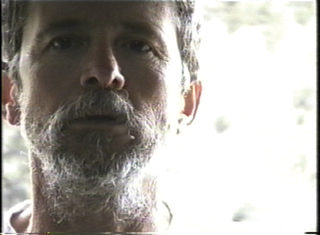
    A portrait of the artist on the last day of a forty-day performance fast in the Mojave desert


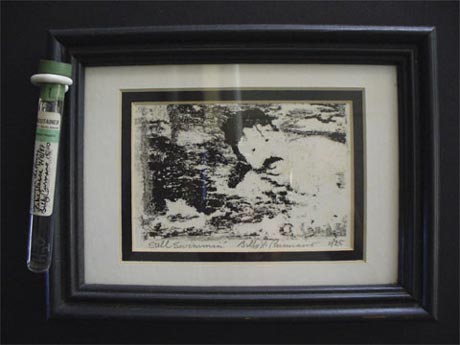
    Two pieces related to Curmano’s magnum opus, Swimmin’ the River: Aqua/Terra, from 1993 (bottom); and from 1994, Still Swimmin’, a lithograph with a vial of water from Lake Itasca (top)

  • Theater in Motion

    In accordance with standards for staging cosmic spectacles, (however low-budget), the cast of A Gift for Planet BX63 (above photo) appeared in glittering, metallic costume. But Off-Leash Area, an inventive, burgeoning troupe based in Minneapolis, had injected its intergalactic show—think The Little Prince—with another, rather unexpected feature: zero gravity. Rendered as a six-foot cube, simply constructed from plywood, mirrors, and Plexiglas, this tiny onstage world was a place in which the performer, Jennifer Ilse, could wall-dance. By balancing on her hands and kicking off the cube’s various surfaces—even its ceiling—Ilse created the illusion of floating in space.

    Her performance mixed dance, mime, and traditional text-based theater, not to mention gymnastics and contortionism. In all, it was an extraordinary demonstration of “movement theater,” a performance genre increasingly popular in the Twin Cities. It is, in essence, an approach that requires a heightened use of gesture and body language, as well as an awareness of the spatial relationships among the actors, the audience, and the performance space. In simple terms, it’s theater that has been choreographed. And as a matter of fact, there’s a permeable boundary between “movement theater” (or “physical theater,” as it’s often called) and “dance theater.” Both communicate with motion more than words. The difference between them lies in the varying measure of each ingredient.

    When it comes to distinguishing theater from other entertainments, especially film, immediacy and common experience are, perhaps, its supreme virtues. Theater is unique in the way it unfolds in real time at a common point shared between artists and audience, thus imbuing the live performances with a sense of connectedness that film and literature simply cannot possess. But there’s another distinction less often discussed: A theater audience observes the action through a window more sweeping and panoramic in scope than that offered by film.

    Exposure to cinema has caused many theatergoers, including this one, to tire of dialogue-heavy theatrical realism. Filmmakers have the luxury of using close-up shots when they wish to emulate the intimacy of real life, person-to-person conversation. In a playhouse (or for that matter, an ancient amphitheater) it’s difficult for the audience to see the teardrop streaking an actor’s cheek—that tear is simply too remote. Theater must provide something altogether different. Since the scale is so much larger, a performer’s broad, gestural movements will register far better than, say, the nuance of his facial expressions, especially in larger venues. The performer better communicates with thrashes and wails—and, come to think of it, the Greek chorus often functioned in this style, too.

    Theatre de la Jeune Lune’s Tartuffe


    In short, with movement theater, character is rendered physically, not emotionally. Locally, well-known examples include Steven Epp’s portrayal of Tartuffe in Theatre de la Jeune Lune’s now-classic production of Molière’s play: Epp crouched in the shadows as would a predator, before leaping forth to center stage. He didn’t walk so much as slither. On the other hand, in Or The White Whale, last spring’s adaptation of Moby Dick, director Jon Ferguson called for a lack of movement—stillness in an otherwise kinetic universe—to illustrate the alienation of Ishmael. In both instances, actors and directors worked to distill from complex characters their most basic, core elements. But, in translating those elements into evocative physical presences onstage, they offered more powerful understandings of these characters.

    What’s more, movement theater tends not to be burdened by the formalities some folks perceive in much of the performing arts. Chalk it up to the pervasive influence of clowning and circus arts, but movement theater practitioners, to their credit, do not shy away from silliness, even if their subject matter is solemn, be it war (Please Don’t Blow Up Mr. Boban, Live Action Set, 2005), the great American novel (Or The White Whale), or feigned piety (Tartuffe). That may be, in part, because the practice of such intense, often athletic physicality requires of the actors a certain youthful vigor. The resulting aesthetic is light and playful; it has a hand-made quality; it’s full of action, and a pleasure to behold.

    Live Action Set’s Please Don’t Blow Up Mr. Boban

    Many of the Twin Cities’ current crop of movement theater practitioners are linked, in some way, to Theatre de la Jeune Lune. It was this company that, in 1979, imported a European style of theatrical clowning to our city. These were the very methods that the founding artistic directors—Barbra Berlovitz, Vincent Gracieux, Robert Rosen, and Dominique Serrand—learned from their Parisian teacher, the legendary Jacques Lecoq. (The most famous graduates of the École internationale de théâtre Jacques Lecoq are the founders of the enormously popular Cirque du Soleil.) The curriculum includes work in miming, masks, improvisation, studying the dynamics between performer and stage, and something called “finding your inner clown.”

    Lecoq’s teaching also emphasized a collaborative approach to creating new theatrical works, a tradition still deeply rooted in the movement theater community. This is, perhaps, the most important factor in the recent explosion of the form. From the very start, a student or apprentice of movement theater functions as an integral part of his or her ensemble. At the time of graduation, the student has already helped write, choreograph, and perform several original works. In other words, this newly minted performer is no stranger to the entire artistic process, and is therefore better prepared to strike out on his own, and, along the way, to pass these traditions along to other collaborators.

    In 1985, Theatre de la Jeune Lune settled permanently in Minneapolis. As the company grew, so, too, did an inner circle of artists who studied and subscribed to this form of theater. Local clown Luverne Seifert was a company member between 1994 and ’99. (These days, Seifert regularly appears with Ten Thousand Things and Frank Theaters.) Joel Sass, the Jungle Theater’s associate artistic director, was a Jeune Lune company member during the early ’90s. Puppeteer Michael Sommers (who founded Open Eye Figure Theatre in 2000) has been a frequent collaborator. Emerging performers like
    Lisa Rafaela Clair (who studied clowning with the esteemed Pierre Byland at the Burlesk Center in Switzerland) and Katie Kauffman (a graduate of the California-based Dell’Arte International School of Physical Theatre) came to Minneapolis to study and intern with Jeune Lune. Capping off this by no means exhaustive list is freelance director Jon Ferguson—in my opinion, the most exciting movement theater artist in town. And he has said he was drawn to Minneapolis, at least in part, because of the mood set by Jeune Lune. (Full disclosure: I worked for several years at Jeune Lune in an administrative capacity.)

    Over the years, other movement theater companies have sprung up. Outstanding midsized companies like Ten Thousand Things and Frank Theaters frequently incorporate movement theater. Bedlam Theatre, founded in 1993, practices its own homegrown approach to creating playful, collaboratively created spectacles, relying heavily on the tenets of movement theater. Paul Herwig, who is the co-artistic director of the nine-year-old Off-Leash Area, is also a graduate of Lecoq’s school; his wife and co-director, the aforementioned Jennifer Ilse, is a veteran of ballet and contemporary dance. Like Off-Leash, the delightful Live Action Set, founded in 2003, is peopled by both dancers and movement theater artists. And with any luck, a tiny troupe called 3 Sticks will soon rise to prominence as well. Founded in 2005 by students from the London International School of Performing Arts (a two-year program based on the teachings of Lecoq), 3 Sticks already has two outstanding Minnesota Fringe shows to its credit (2005’s Mythed and 2006’s Borderlines). Artistic director Jason Bohon recently announced a slate of upcoming shows; look for their take on Alfred Hitchcock’s The Birds later this year. And, of course, as these artists continue to practice their craft, thereby hooking a new generation of performers, the list of must-see movement theater will continue to grow.