Tag: sports

  • Monkeywrench Movie Review. Part One.

    I am a gearhead, or as they say across the pond, a "petrolhead." While this ostensibly disqualifies me from writing a movie review, my British friends think otherwise. Particularly if I am writing about British films.

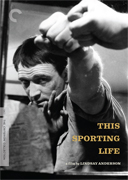
    The flim you need to watch is called This Sporting Life from 1964. It is a classic of the British New Wave (predated the French) and perhaps the most famous of the "kitchen sink dramas" set in the economically-depressed regions of Nothern England.

    It is directed by the great Lindsay Anderson (his first feature film) who went on to direct the scandalous …If with Malcom McDowell at the end of the decade. It also features the performance of a lifetime by Richard Harris (his first feature flim lead) and Rachel Roberts (nominated for an Oscar, as was, I think, Harris.)

    For a critical appraisal of this classic, simply read the review on the Criterion Flims website (get all your flims–buy and own them— from this website and waste no time with anything else) or check out Strictly Film School.

    For a monkeywrench review, here are my thoughts:

    This is a brutal flim. Many consider it the finest British flim ever made (questionable, but worth considering). It is unflinching and unstinting in its attention to emotional and aesthetic detail.

    What really makes it work for me, however, is Richard Harris’ perfomrnace and that of Ms.Roberts. While it was said at the time that Harris was aping Brando in This Sporting Life, I feel he provides a far more emotionally nuanced performance of an athlete with feelings than "I coulda’ been a contenda" Marlon and his assorted women.

    I wonder if there is even such a thing as a British method actor?

    Leave it to the Americans to coin a buzz phrase. Leave it to the British to mint the finest actors on the planet. (Think Tom Hollywood Hanks in Forrest’s Hump versus Peter Sellers in Being There.)

    Alas, why should you watch this film about sports?

    1) Because it is about sports.

    2) Because it is about women.

    3) Because it has not one, but two classic Bentleys.

    4) Because it shows that apes like you and I can have feelings.

    5) Because it says something about living life over keeping your head in the sand (whether in the suburbs or the skyscraper you inhabit downtown).

    Part Two, including a very greasy plot synopsis, to follow soon. I am too drained from watching. I have feelings.

    (Impatient? There’s always Wikipedia.)

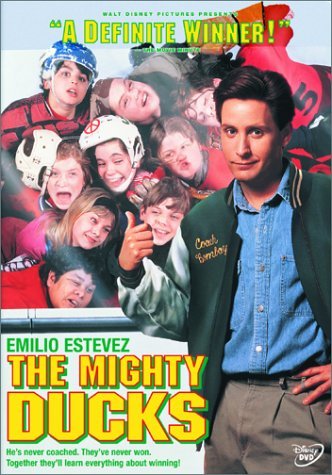
  • 12 Things about the Mighty Ducks Movies that Bothered Me

    The Mighty Ducks trilogy is easily the best movie franchise ever to come out of Minnesota (as far as I know). Still, I take issue with a few things in the movies. Specifically, twelve things.

    1. Coach Bombay must have been on something if he was under the impression that he had a shot at pro hockey. Considering that the reason he started coaching the Ducks in the first place was related to community service for his drunk driving transgressions, it’s safe to say that he was more than likely on something — and Disney neglected to inform viewers of this fact. (D1&2)
    2. How many kids play hockey in Trinidad and Tobago? Are there even enough hockey-playing kids in Trinidad and Tobago for kids to scrimmage against each other in order to improve their skills? Even if there are, how the hell did Trinidad advance to the World Championships while Canada didn’t? (D2)
    3. What kind of gerrymandering put a rich kid from Edina on a team with a bunch of poor kids from Minneapolis, yet preserved the rest of the Edina team? Wait, Adam Banks lives within the poor kids’ boundaries? How did no one else figure this out before Bombay? How didn’t the rich parents on his team take care of this by relocating him to one of their homes? FAIL. (D1)
    4. At the very least you’d need a helmet to be out on the ice playing; it’s highly unlikely you’d be able or want to play without all the necessary equipment. And lassos and whatnot are neither necessary nor legal .(all)
    5. The image of a fancy hockey hall loses its impact when you know that it’s really the Blake Lower/Middle cafeteria. (D1)
    6. Mickey’s Diner: Not in Minneapolis. Not even on the same side of the river as south Minneapolis. Try St. Paul.
    7. MSHSL rules would make the team ineligible for varsity for a year due to transfer rules. That means you, Adam Banks. It seems like there would be some provision banning giving out athletic scholarships too. I’m just not sure. (D3)
    8. Anyway, why would you give athletic scholarships to a bunch of people who aren’t good enough to play varsity? (D3)
    9. Also, there really wouldn’t be that big of a conflict between the Ducks and the rich hockey players of Eden Hall because, well, that many rich kids complaining would probably get their way. (D3)
    10. Olympic/Goodwill/Global Domination Championship teams are usually made up of the best players in the country not the best team in the country. (D2)
    11. The "Flying V" doesn’t really work that well as a hockey strategy. My JV hockey team tried it in a game against South St. Paul. We won that game but failed miserably when it came to the "Flying V." (all)
    12. Rollerblading is not allowed in the Minneapolis Skyway system. Those kids would have been sent to juvie — or at least gotten kicked out of the skyway. Wait, there were kids of color. They totally would have been sent to juvie. (D1)


  • Simulated Madness

    Who could forget the game last December when Douglas Stewart, the low-scoring walk-on from Minneapolis, stepped out from the shadows of his all-conference teammates to lead the Annapolis Fightin’ Crabs to a national championship?

    You’re forgiven if you don’t follow the defending champs; they don’t, alas, exist in the realm people persist in calling the “real world,” but rather as data warriors in the complex alternate universe that is SimulatedSports.com College Basketball.

    It’s a world that lurches to life every Monday, Wednesday, and Friday at the stroke of a keyboard, and to the flesh-and-blood coaches who guide the teams, its reality is corroborated by the hours they spend poring over play-by-plays, box scores, individual statistics, and the high school recruits that are the virtual game’s future. Take your pick: SimSports is a community, an extended metaphor, a reason to get up in the morning or stay up late into the night.

    The free online game, created in 1999 by SmartAcre LLC, is not a typical fantasy league; instead of using the stats generated by real-world collegiate hoops stars, the coaches playing SimulatedSports basketball recruit and coach randomly named players with computer-generated attributes.

    There is no actual on-court action, only static data posted to web pages. Games are viewed as box scores or play-by-play accounts (“D. Watson passes to M. Williams”). Of the dozens of pages detailing team statistics, players’ strengths, league standings, top performers, game strategy, and much more, only a few are interactive. Coaches set pre-game lineups and strategy through drop-down menus, and likewise apply points toward next season’s preferred recruits. Yet out of the numbers leap beloved players, future stars, bitter rivalries, miraculous victories, and another grueling March Madness-style tournament every nine weeks.

    It’s a pretty decent and entertaining simulation of real college basketball, but with better team names: Santa Fe Steaming Toads, Jackson Five, Amarillo Needs Women, Olympia Dukakis, Erie Coincidence, Twin Falls Hurt Twice.

    My own Boston Stranglers have hovered near the top of their league for a half-dozen seasons now, but have never quite managed to go all the way. That failure certainly can’t be attributed to lack of effort. I spend hours each week checking scores, adjusting lineups, scouting opponents, and browsing the ranks of high school recruits to build my dynasty.

    I’ve logged in at work, coached from Palm Pilots and public library computer terminals, from internet cafes in Mexican mountain towns and Garifuna villages in Belize. On my recent three-week honeymoon, I didn’t miss a game. What can I say? Addiction is a high-maintenance mistress.

    And I’m not the only junkie. According to Todd Nevin, who runs the game from his Baltimore home, in between his job as a programmer and his kids’ real-life Little League games, of the more than 4,600 teams in eighteen leagues, 4,035 have active human coaches (the computer runs the others). While coaches can buy credits (with small amounts of real money) to enhance their recruiting, that income covers costs but is “not nearly enough to make it my full-time job,” says Nevin.

    Coaches hail from as far away as Europe, Australia, and Japan, and include servicemen stationed overseas. “It sure helps to relieve the stress of war,” wrote one (who continued to coach while deployed in Iraq) in response to the questions I posted on the league’s very active message board.

    The online responses revealed the strength of the game’s grip on its devotees. One coach admitted spending twenty hours a week on the site; another coaches twenty-four teams at one time. Some use Excel spreadsheets and formulas to track statistics and gain an edge on opponents and recruiting. Computer programmers make their own custom-written game viewers and other software to track every imaginable aspect of each contest.

    As addictions go, SimulatedSports is a relatively benign one. Even so, not everyone understands it. “They definitely don’t get it but are happy I don’t do other drugs,” wrote one coach of his loved ones.

    Another said he’d used the game as “an escape from a marriage that had gone very wrong … I absolutely immersed myself in [the game] … I knew everything about every team in the league. The game actually helped me in some way get through a very difficult time in my life.”

    Others relish the real-life relationships formed through the message boards and, of course, the spirit of competition. Those champion Fightin’ Crabs are coached by a guy I introduced to the game, a Minneapolis IT professional who wouldn’t let me use his name because, he said, “people will make fun of me.” In less than a year and a half, he’s racked up a hundred and twenty-eight wins and forty-nine losses, two Final Four appearances and a league championship. After four years, I’m still waiting to win it all, but I continue to take no small pleasure in beating him.

    One local coach, who called the game his “dirty little secret,” recently walked away, discarding his Syracuse Lords A’Leaping (and four other teams) like so many unsmoked cigarettes. He claimed the habit wasn’t hard to kick, but it’s not like he went cold turkey. “I do spend a lot of time on the Xbox 360 now,” he said.

  • Go{pher} Broke

    University of Minnesota Athletics Director Joel Maturi is a triple-A battery of a man. Walk into his office at the Bierman Athletic Building on the East Bank and he leaps out of his chair and shakes your hand as if you’re about to parachute out of an airplane together. Trim and fit at 62, Maturi is glib and empathetic. He’ll spread his hands in a “that’s all there is,” or “what are ya gonna do” fashion, but he searches for eye contact and listens carefully. Even under the best of circumstances, he’s not the kind of guy who relaxes easily.

    Personality aside, Maturi has had plenty of other reasons to be moving through life on the balls of his feet lately. The ramifications from the most turbulent thirty-five-day period in Gopher sports history are still in flux. Over the next three or four years, however, the fallout from the chain of events Maturi helped set in motion last winter will not only define his legacy as the University’s athletic director, but will have a huge bearing on the health and vitality of U of M sports for decades to come.

    Of the twenty-five varsity sports programs at the U, only three–football, men’s basketball, and men’s hockey–operate at a profit. Consequently, these programs are enormously influential, helping absorb the red ink created by other sports. On the last day of November last year, Maturi pushed his men’s basketball coach to resign just seven games into the coach’s eighth season. On the final day of December, Maturi fired a football coach who had compiled the best career winning percentage at the U since 1950 and taken the team to five straight bowl games. “I am probably the only AD in the history of NCAA sports who has dismissed the men’s basketball coach and men’s football coach within thirty days,” Maturi says. “I am not proud of that.”

    Three days after the football coach was canned, a special meeting of the University’s Board of Regents was convened to deal with the rising cost of a new on-campus football stadium scheduled to open in September 2009. In May 2006, the state Legislature had approved a funding package that had taxpayers forking over nearly fifty-five percent of the tab on a $248.7 million stadium. Since then, for a variety of reasons, the price tag had risen to $288.5 million. The revised budget approved by the regents precludes the U from going back to the Legislature or increasing the $25 annual fee levied on University students. Instead, the additional $40 million will have to come from an existing stadium fundraising campaign that was initially charged with soliciting $86.5 million from private donors. If local corporations and well-heeled alumni can’t hit this much more ambitious target, profits generated by the stadium will have to make up the difference. Either way, to sufficiently excite would-be donors or fill the stadium beyond the two- or three-year novelty period, the Gophers must field a quality football team.

    The faith healer
    Maturi is standing at the back of a small room in the bowels of the Metrodome. The Gopher football team has just been pasted, 30-7, by Ohio State, Minnesota’s fourth loss in five games thus far this season. Reporters and University personnel are filing into the room for new coach Tim Brewster’s postgame press conference, and Maturi offers them a curt nod or a tight grin. He is trying to strike an impossible pose, combining the ire a competitor is supposed to feel after his squad gets whupped by more than three touchdowns, and the brazen nonchalance required to quell panic or derision over what has become a spectacularly dreadful football season.

    About the only saving grace for Brewster and Maturi was that nobody seemed to be pining for the return of Glen Mason, an uncharismatic man who had come from the University of Kansas. Mason wielded his comparatively successful Minnesota won-loss record (64-57) like a cudgel, implying at every turn that without his extraordinary skills and savvy the football program would return to its previously dire straits.

    Mason’s critics—including many members of the media and influential alumni—contended that his “success” was merely the result of a devious formula for mediocrity. They noted that Mason padded his record by front-loading the schedule with a succession of nonconference patsies. Those easy victories, combined with an undistinguished record in the rugged Big 10—where Mason’s career record was 32-48 and his teams never finished higher than a tie for fourth—would be enough to secure an invitation to one of the minor, inconsequential bowl games that glut the calendar in December. This pattern played itself out in Mason’s last five seasons, ossifying the positions of both sides. After the Gophers pulled off the largest collapse in the history of NCAA Division I-A bowl games, blowing a 31-point lead in the 2006 Insight Bowl, Maturi saw his chance to pull the plug.

    Less than three weeks later, on January 17, Maturi made the stunning announcement that he was replacing Mason with Brewster, a 46-year old with no head coaching experience above the high school level. But Brewster was a successful recruiter for coach Mack Brown at both North Carolina and Texas, and rose to the rank of assistant head coach with the San Diego Chargers in the NFL. “When I started the search process, I had never heard of Tim Brewster,” Maturi admits, launching into a twenty-minute recitation of all the steps he took before settling on Brewster. What follows is the severely abridged version.

  • Marathon Man

    Beyond a long window that offered a panoramic view of the Minneapolis skyline, the end-of-the-workday exodus was already under way. Traffic was snarled on the streets stretching all the way downtown. Dave St. Peter had his back to the window, and he was looking and sounding like a man whose day was just getting started. St. Peter has a big, open, Midwestern face—it could be the face of a small-town high-school principal or insurance salesman—and he somehow manages to come across as both relaxed and impatient. He also looks like a guy who needs to duck into the men’s room several times a day to address his permanent five o’clock shadow. 

    “My dad was an accountant,” St. Peter said. “And I love my dad to death, but I knew I didn’t want to be an accountant. I wanted to do something I was really passionate about. I grew up a huge sports fan, and I was just hoping I could end up doing something along those lines. I used to think that maybe I’d be a sports information director somewhere. I can definitely tell you that there was never a day, never a moment, when I could have imagined I’d be sitting where I’m sitting right now.”

    Where St. Peter is “sitting right now,” and where he has been sitting since November 2002, is in the president’s chair at the Minnesota Twins’ Metrodome offices. On a late afternoon in early March, he was up to his elbows in preparations for his eighteenth season with the ball club, at the end of his rope with the ongoing wrangling over land acquisition for the team’s new ballpark, and still managing to do a pretty convincing impersonation of a man who loves his job.

    St. Peter’s story is the sort of improbable Horatio Alger yarn that seemed to have vanished from American business in the age of hotshot MBA programs and the get-rich-quick booms fueled by Wall Street and the Internet.

    St. Peter graduated from the University of North Dakota in Grand Forks in 1989 and set out for the Twin Cities with a marketing degree in hand and the modest goal of simply getting his foot in the door somewhere. He had been raised in Bismarck, North Dakota, the middle kid in a family of five children (he has two brothers and two sisters), and, like a lot of people just out of college, he was ambitious but a bit vague regarding where exactly his dreams might lead him.

    Despite his long tenure with the team, St. Peter is still only forty years old, which makes him one of the youngest team presidents in Major League Baseball. Other than a very brief stint with the North Stars in 1989, he’s never worked anywhere else, and, over the course of his Twins career, he has, by his own account, spent time in “every corner of the organization.”

    “Coming to the Twin Cities was in itself a huge move for me,” St. Peter said. “You’re talking about a kid who used to think that going to Fargo was a big deal. I didn’t know anybody and didn’t have the slightest idea what to expect when I came here, but I always felt that if I could get an opportunity nobody would ever outwork me and I’d get noticed.”

    He got his break with the Twins when he was offered an unpaid internship in the marketing department in 1990. Mark Weber, at the time the team’s director of promotions, was the guy who originally brought St. Peter into the fold, and he remembers the qualities that distinguished the new kid right out of the blocks.

    “Teams didn’t do as much in terms of promotion back then,” Weber said. “We had a very small staff; there were three of us, including Dave, so he got thrown right into the fray. He was responsible for a lot of the communication with players in terms of pre-game activities and working with some of our corporate partners. After a week you could already see that he had what it took to succeed in what is a very challenging environment. He had a great work ethic and tremendous passion.”

    Talk to anybody involved in baseball at the Major League level and he’ll invariably mention the 162-game season and the ridiculous demands it makes on everybody in an organization. “The number of hours you have to work in that business is beyond comprehension,” Weber said. “During the season you’re often at the ballpark from 8:30 in the morning until 10:30 or 11:00 at night. It can be an incredible challenge and it’s definitely not for everybody. But right away you sensed that Dave could both survive and thrive in that atmosphere. I’m not going to claim that I knew he was one day going to be president of the team, but I definitely felt that wherever he ended up he was going to be successful.”


    Halfway through St. Peter’s internship the club offered him a full-time position. There was a bit of a hitch, though—the job wouldn’t be within the front office, or even within the confines of the Metrodome. What the Twins were offering was a decidedly unglamorous managerial position in the team’s Twins Pro Shop retail outlet in Richfield.

    “I’ll admit that I had to sort of pause and ask myself if I really wanted to work in retail,” St. Peter said. “But I also recognized that this was an opportunity to actually get paid, receive benefits, and be a part of the Twins organization, so ultimately it became a pretty easy decision.”

    St. Peter ran the Pro Shop from the summer of 1990 through February of 1992. By all accounts sales went through the roof. St. Peter acknowledged as much, but deflected credit. “That had a whole lot less to do with me,” he said, “and a lot more to do with Kirby Puckett, Jack Morris, and the rest of those guys who won the World Series in ’91.” He admitted, though, that his stretch in Richfield was a wholly positive experience. “In terms of managing staff, developing customer-service skills, and really learning to understand our fans at a very grassroots level, it was invaluable,” St. Peter said. “Those Pro Shops are a ticket outlet, but they’re also a place where the average guy stops in to buy a cap or to complain about everything from ticket prices to the lousy pitching performance the night before. That experience really helped me to learn how important this team is to the community.”

    After St. Peter’s success in Richfield, the team offered him a newly created position—communications manager—in the front office. In many ways, the move represented a recognition on the part of the organization that the game was changing dramatically. “This was really the first time the Twins had a media-relations person devoted exclusively to the business side of the operation,” St. Peter said. “This predates the stadium issue, but if you really look at it, we were ahead of the curve. I took that job in 1992, and since then there has probably been as much or more stuff written about the business of baseball as there has been about the game itself.”

    St. Peter’s move into the Twins’ front office, and his subsequent rise through the ranks, came during the most challenging period in the team’s history, both from a franchise standpoint and in terms of systemic turmoil throughout the business. The growing economic disparity between the big-market and small-market teams led to the impasse between the players union and management that resulted in the 1994 strike and the first-ever cancellation of a World Series. The increasingly grim economic realities hit the local franchise particularly hard; attendance declined as the team endured eight straight losing seasons from 1993-2000. And, as flashy new ballparks (and revenue juggernauts) opened all around the Major Leagues, the Twins found themselves embroiled in an agonizingly protracted and frequently contentious battle for a new stadium of their own.

    The low point for the Twins came in the autumn of 2001, when Commissioner Bud Selig announced that the team was being targeted for contraction—this following the club’s first winning season in almost a decade.

    But the next year the team pushed the contraction threat to the back burner in spectacular fashion, by winning the Central Division before losing the American League Championship Series to the big-market Anaheim Angels. St. Peter assumed the presidency following that season, and the team has been on a roll ever since, winning three of the last four Central titles and stockpiling talent up and down the organization.

    “There’s no doubt that we went through a very dark period as a franchise,” St. Peter said. “We sort of hit bottom with the contraction thing, but we had a stretch in the late ’90s nineties where I can tell you pretty candidly that there was a lot of apathy in terms of our product. We’d had a lot of challenges, with [general manager] Andy MacPhail moving to the Cubs, the early retirements of Hrbek and Puckett, and the failed stadium efforts. It was pretty scary to think that we opened the decade winning a World Series and ended it with a lot of people maybe wondering whether they really cared about the Twins anymore.”

    With Jerry Bell giving up day-to-day management of the franchise to focus on getting a new stadium built, the challenge for St. Peter and the Twins’ front office was to stabilize the business operations and get the focus back on the players and the game itself, and away from the divisive politics surrounding the stadium push and the sport’s ever-exploding economics. St. Peter gives the 2001 team a lot of credit for the organization’s ultimate turnaround. “There are very few guys left from that team,” he said, “but that year we unveiled our ‘Get to Know ’Em’ ad campaign and then got off to a 14-3 start. The combination of those things went a long way toward restoring some credibility for us with our fans. That team really connected with people, and that season created an incredible amount of momentum as it relates to marketing our team and building our identity around the players. That was a very conscious decision on our part, and we’ve been able to build on that momentum year after year. Of course that only works when you’re as blessed as we have been to have guys who are not only good players, but who are also accessible, who are tremendous spokespeople for the franchise, and who have for the most part been—knock wood—wonderful role models.”

    St. Peter also has praise for the often-reviled owner of his ball club. “I’m sure his patience was tested plenty of times,” St. Peter said. “But Carl Pohlad stayed the course through all the chaos. He’s been incredibly loyal to his staff, and that’s created real stability within the organization. If you really look at it, in the last twenty-plus years we’ve had two team presidents, two general managers, and two field managers. We have the longest tenured scouting director and farm director in all of baseball. What that all boils down to is continuity; we have a lot of people who’ve been in this organization and in their positions for a very long time. We know each other, and over time we’ve developed an agreed-upon philosophy about the way we go about things both on and off the field.”


    Most baseball fans have a pretty good idea regarding the basic responsibilities of the manager and general manager of a Major League team. The president, however, occupies a hazier sort of position in the public’s mind. So what exactly does the president of the Minnesota Twins do?

    The answer, if you’re Dave St. Peter, is a little bit—and sometimes a lot—of everything.

    “I’m sure it varies from team to team,” St. Peter said. “But at the end of the day, I think the core responsibilities are the same. You’re responsible for managing the baseball team as a business and as a public trust. And in the Twins organization, the business and baseball operations have always been one and the same, so I work very closely and collaboratively with [general manager] Terry Ryan. We deliver Terry a budget and try to give him the dollars and resources that are going to allow him to put a competitive team on the field. It’s Terry’s job to work within that budget and manage the personnel of our baseball team. But if we’re going to be successful we have to be able to work well together and bounce stuff off each other. Very rarely is Terry recommending something to ownership that I’m not on board with, and vice versa. I think we do a pretty good job of working together in lockstep.”

    That, it turns out, is a seriously shorthand version of St. Peter’s job description. His co-workers will tell you that the team president is a guy who likes to be involved in every area of the business, from ticket sales and corporate sponsorships to advertising and promotions.

    Patrick Klinger, the Twins’ vice president of marketing, was hired by St. Peter in 1999, and like his boss (and pretty much everybody else in the organization) his first gig with the team was as an intern. “Dave knows more about every element of this operation than anybody around,” Klinger said. “I don’t think there’s a job in the organization he couldn’t do. For a guy in his position he’s as committed as anyone I’ve seen. Even as his responsibilities have grown, and with all the ballpark stuff, he’s still very involved in the day-to-day operations and wants to know what’s going on in every department. He also has a lot of good ideas, and doesn’t mind getting down in the trenches and getting dirt under his fingers. There isn’t anybody in the office who works longer hours. Dave’s good at preaching balance, but he’s not very good at practicing what he preaches.”

    St. Peter admitted as much, but insisted that he’s working on it. He and his wife Joanie have three pre-teen boys, and this year, he said, he intends to help coach Little League. “I may end up missing a game here or there,” he said. “I’m trying to find ways to create more balance and be there as a dad, but the reality is that I’m going to be here most of the time. It’s just the nature of the job. From the very beginning it was drilled into me that eighty-one nights a year what’s happening down here is the most important thing going on in the state of Minnesota.”

    Given that grind, you’d think that a guy in St. Peter’s position would have frequent occasion to look at the folks in the Vikings’ front office with a little bit of envy, but he just laughed at that notion. “I’ve never understood how you could play just one game a week,” he said. “I literally can’t imagine working for an NFL team. It would be like having ten weeks of vacation. I say this all the time: The NFL is a country club. The baseball season’s a marathon, and that’s a badge of honor for those of us who thrive on this atmosphere. It’s all I’ve ever known, and what we’re going through right now is the best time of the year. There’s nothing better than spring training and the anticipation of opening day.”


  • As It Was Meant to Be Played

    I sat in a lawn chair in the middle of frozen Lake Nokomis, nibbling on chicken kabobs and sipping a tequila slushy, thinking, How serious can this pond-hockey thing be?

    A minute after the puck dropped in my first game, I immediately regretted my warm-up smorgasbord. This pond-hockey thing was apparently very serious. We were playing a team named the Whiskey Bandits, an ass-kicking juggernaut of players in handsome red jerseys who were definitely in it to win. My crew, the Arden 6, was there to play and to party. While the Whiskey Bandits were a team of sculpted Adonises in their mid-twenties, the Arden 6—made up of a forklift driver, two office maxes, a stay-at-home dad, and a couple of slackers—looked like a bunch of Chris Farleys on skates.


    The Whiskey Bandits skated with crisp, robotic efficiency. We chased them like slobbering dogs, somehow managing to score a lucky goal before the onslaught began. Within moments of the opening face-off, we were losing 10-3. A Whiskey Bandit made a wicked tic-tac move on me, twisting me right, then left, then right. I almost pooped my pants. The referee called out the score. “27-5.” Slight pause. “28-5.” They scored more than a goal a minute. The final tally, 37-5, represented one of the worst defeats in the two-year history of the U.S. Pond Hockey Championships.

    The beleaguered Arden 6 headed into the massive party tent to regroup over a few beers. We were baffled by the extreme drubbing we had suffered because we thought we had a pretty good squad. All of the players on my team played high school hockey in the Twin Cities. Nick Brown, our ringer, even played at Dartmouth and has fantastic speed and silky moves. As we sat and sulked, the Whiskey Bandits strolled in without a hint of arrogance; they came over to apologize for the slaughter.

    “Sorry ’bout all that,” a fresh-faced Bandit said sheepishly. “I had to get a waiver to come play here this weekend.”
    “A waiver from what?” I asked.

    “I play pro hockey in Oklahoma,” the guy said. He took a giant chug from his plastic keg cup. “Most of my teammates played in the minors, too.”

    My posse spit up their beers.

    “You guys are pros? Big deal,” I said facetiously. “Our right-winger is a thirty-eight-year-old stay-at-home dad who calls himself The House Admiral.”

    I walked outside to the patio that overlooked the entire tournament. Bright sun filled the blueberry sky with blinding light. A horn blew across the frozen lake, signaling the start of another round of play. All at once, on twenty-four rinks, forty-eight teams accounting for 288 players started playing hockey the way it was meant to be played: wide open, four-on-four, with no offsides, no goalies, and no hitting.
    Before our next game, I made my way to a giant board containing the tournament schedule and scores from all of the games. It gave me hope to see that many of the other teams had pathetic names like A Lot Better than Last Year, Fattys, and Footlong Meatball Sub on White with Double Pepperjack Cheese!—indicating they probably wouldn’t be as awesome as the Whiskey Bandits.

    We held a team meeting over doughnuts, hotdogs, and more beers while The Admiral talked to his babysitter on a cell phone. Back on the ice, the junk food in our systems worked like magic. We spanked our opponents, the Campbell Avenue Crawlers, a team that traveled from Connecticut just to get whupped, 20-3, by our sorry asses.
    The day ended with more hockey, more beer swilling, and a funk band named the Prophets of Soul jamming tunes like “Ain’t That a Bitch!” and “Skin Tite!”

    The next morning, cold air burned my lungs like shots of vodka; an orange sunrise painted a few white clouds the color of a dreamsicle. Our game against the Flying Saucer Attack was hard fought with lots of slashing and chipping, but we eventually lost 14-8.

    That afternoon, the beer garden bristled like a busy trading session on the New York Stock Exchange. Hordes of sweaty bastards, grown men still wearing breezers and shin pads long after their games were over, waved dollar bills to pay for beer. I asked an old-school guy in a vintage helmet how his team was doing. “I ain’t playing,” he mumbled. He pointed to the helmet and said, “I just fall down a lot.”

    Later my team stood rink-side and watched the Whiskey Bandits dismantle Kari Takko (a team named after a Minnesota North Stars backup goaltender) to win the championship game 10-2.
    “Next year, I think we should use steroids,” I suggested to my teammates. They chuckled and ambled on sore legs back to the beer garden.

  • The Man & The Woman on The Hill

    A red sun is setting over the lake, its hue cast through the shutters of a rustic living room where a small television atop a white wicker stand is tuned to a Twins game. “Get some hits, damn it,” seethes the increasingly agitated sports agent on the wicker couch. “Crying shame.” The agent glares at a listless Twins hitter, stands abruptly in anger, and steps out to tend to his steaks on the outdoor grill. His son—the other lawyer in the room—remains on the couch reading the New Republic, shaking his head in parallel disgust.

    For six innings, Brad Radke, the Minnesota Twins’ ace starting pitcher for most of the past decade, has pitched a masterful game, giving up just six hits, no walks, and one run. “He’s pitching a Van Gogh,” his agent, Ron Simon, says as he stomps back into the room. “And they aren’t doing a thing to help him.” It’s true: Despite the ace’s ace start, Twins batters are getting smoked by a twenty-year-old fastball phenom in just his second major league start. Simon takes a seat on the couch and grabs a handful of jalapeño-flavored potato chips. “Drives me crazy.” Radke goes to the mound, and Simon leans forward, chomping angrily. “Upper right corner,” he demands with a clap of his hands. “Change-up.” He takes a swig from a bottle of James Page and then quietly, gently confides, “I love watching him. Especially when things are going well.”

    Truth is, things are going very well for Brad Radke. At age thirty-one, he is the finest pitcher—and the finest player—employed by the Twins in a decade. His ability to throw a ninety mph baseball sixty feet, six inches, and have it strike exactly where he wants it, is feared, admired, and very well-compensated. Four years ago, Radke signed the largest contract in Twins history. However, unlike Kevin Garnet, a celebrity athlete recognizable on the basis of his silhouette alone, the Twins’s highest-paid player is a low-key, shy, and even anonymous presence in Minnesota. Yet as the 2004 baseball season comes to an end, Brad Radke’s profile is about to rise. The Twins, on the verge of another division title race, will depend on him as never before to be their clutch big-game pitcher. As a sideshow, the team will also deal with the fact that Radke’s contract expires at the end of the season.

    A ruthless competitor on the field, away from it, Brad Radke is a soft-spoken and retiring husband and father of two sons.

    His wife, Heather, is a successful businesswoman in her own right. She already spends most of the year near her family in Tampa, Florida—a town, she will have noticed, with its own Major League baseball team. Though deeply supportive of her husband’s career, Heather is quite open about the stresses it can put on a family. As she and Brad prepare to decide whether they will remain in Minnesota, it is those concerns, as well as the baseball and salary issues, that will carry the discussion.

    “They’re gonna relieve him,” sighs Simon as Radke finishes the seventh. “No runs, they’ve gotta do it.” Disgusted, Simon returns to the steaks on his grill. Meanwhile, the camera slowly follows Radke from the mound into the dugout as the score at the bottom of the screen is momentarily pinned on his chest. His head is down, his lips are tight and angry. He walks in short, petulant steps, his wiry body strung tight with competition and frustration. This is a man who makes a living by throwing very hard things very fast at other people.

    At 7:20 on a Wednesday night, halfway through the first inning, Heather Radke and her two boys—eight-year-old Kasey and four-year-old Ryan—arrive at their seats behind home plate at the Metrodome, in the section informally designated for wives. She wears a black coat over a white blouse and black skirt. The boys wear warm-up suits, carry baseball gloves, and clearly want to be somewhere else, even if it is their father who is standing on the mound, throwing strikes. “They ask me, ‘Why do we have to watch it up here when it’s on TV downstairs [in the Twins’ family lounge]?’” she says in her South Florida lilt. “And I tell them, ‘Baseball’s not forever.’” Hers is a modest presence, the only suggestion of baseball-wife status being a diamond tennis bracelet that hangs loosely from her wrist as she hands money to the hot dog and Cracker Jack vendors. “After the second inning, I’ll take them down to the family lounge.”

    Heather Radke attends most Twins home games. “Brad goes to the park at one, so by seven I’m ready to get out.” As she watches, she tenses, and her hands are clasped tightly. Strikeouts and pop flies result in short, polite applause; hits, hit batters, and home runs result in sighs. Her approach to the game is more nerves than emotion, except when she sees Brad in danger. Late in the game, when he rushes home to make a defensive play against a runner, she grabs my arm in alarm and exclaims, “They almost hit him in the head!”

    The pitcher doesn’t seem to share his wife’s concern. He returns from home plate with a glare at the first baseman—a glare meant to acknowledge the superb role that the first baseman just played. Later, when the first baseman makes a phenomenal out, Radke gives him another steely gaze, this time accompanied by a harsh nod. And when the catcher makes an athletic stolen-base put-out at second, Radke gives the young player a glare, a nod, and a stab of his index finger.

    “That’s always been the question,” explains Heather. “How to put together the Brad on the field with the Brad at home.” As she fiddles with her tennis bracelet, Heather relates how, after Brad was injured in a game two years ago, she rushed to the locker room only to find him “in game mode, with that fire in his eyes.” Her eyes go wide and she gives a slight shake of the head. “That was weird. I don’t see that very often.”

    The yellow Cape Cod-style house sits on a narrow gravel road that runs a hundred feet off the Lake Minnetonka shoreline. Parked in the driveway is a black Ford Expedition with Florida plates. Through the home’s front windows it is possible to see a sunken living room, overstuffed couches, and a breathtaking panorama of the lake glowing in the early afternoon.

    A soft presence passes in silhouette and the door opens. Just over six feet, slight, in sweats and a T-shirt, he is a boyishly handsome young man with a shy smile. “I’m Brad,” he drawls, extending a very soft handshake. “C’mon in.” His face is unshaved, his hair is wet. His walk is a slow, lazy shuffle, his bare feet barely rising from the floor. He runs his right hand through his hair, and the sleeve of his shirt falls to his shoulder revealing the rest of his lithe pitching arm. Walking beside him is blond-haired Kasey.

    Heather approaches from the hallway in black sweats and bare feet. “Brad, why don’t you sit over there,” she suggests, gesturing toward the dining room, with its massive wooden table set beneath a swirling baroque ceiling and an ornate iron chandelier. Doing as he’s told, Brad comfortably slouches into a chair at the head of the table and props a knee up on the edge. Heather gets some bottles of Dasani from the pantry adjacent to the dining room, stops in the kitchen for some large goblets, and places them on the table. She is just a shade over five feet tall, but I would not describe her as small; she moves with a sureness that is big. When she sits, she leans forward, elbows on the table, her chin propped, monitoring the bashful, brief glances that her husband gives me.

    “My dad played college ball in Bemidji and Mankato State,” Brad explains. “I was born in Eau Claire.” The family moved to Florida when Brad was one. “When I was two, three, my dad says I was throwing things. Rocks.” There’s a pause, a shrug. “I guess I just liked to throw things.” When he was old enough to pitch, his father—a schoolteacher—coached him, suggesting an unusual wind-up that emulated the high leg kick of Hall of Fame pitcher Jim Palmer. As for further instruction, Radke shrugs. “Just throw strikes.”

    At Jesuit High School in Tampa, Radke could not only throw strikes, but he could throw them at “ninety, ninety-one miles per hour.” Naturally, pro scouts were aroused by heat like that. But there was another factor: Radke had the uncanny ability to locate the ball wherever he wanted it. “People always ask me where I get that from,” he says with a shake of the head. “I don’t know. It’s just what I do.” Radke is unfailingly modest and terse about his skills, but it’s not just politeness. He wears his talent with a quiet confidence that precludes questioning it. When pressed to define what makes him successful, he is more inclined to credit factors like “the zone” than his years of practice and training. So, for example, when discussing what went into a win-streak, he explains, “When you’re in the zone, you just see things better.”

    Heather, a Tampa native, was a friend of Brad’s older sister, and she recalls herself “and a lot of pretty girls” being around the Radke household while he was in high school. Two years older, she didn’t initially see herself as a potential girlfriend. But as time passed, the attraction grew. “I was so outgoing,” she explains, looking directly at her husband.

    “And I liked his passiveness.”

    The ace remains impassive at this revelation.

    They started dating on the assumption that the relationship would continue while Brad was pitching at the University of South Florida. But in June 1991, he was drafted by the Twins and so began a four-year minor league career that went from Florida to Wisconsin, back to Florida, and then Nashville. “We took it day by day,” Heather recalls of their early relationship. “It was the only thing I could do. I didn’t really aspire to become a baseball wife.” Early on, there wasn’t much reason to believe in a future. For example, during his summer playing in Kenosha, Wisconsin, Heather saw him only once, despite the $500 phone bills. “Sure, I would’ve liked to have seen him more,” she admits. “But from the beginning, I always thought that baseball should come first.”

    Brad seems a bit embarrassed by Heather’s revelation of self-sacrifice, but he acknowledges that baseball had to be the priority if he was going to make it to the big leagues. “Yeah, I’m not gonna lie,” he concedes. “But I’m not saying she was a distraction. I just didn’t think I was gonna make the team.”

    “That’s not true,” Heather retorts. “You always told me you’d make it.”

    Brad smiles bashfully. “But I didn’t think that way. I really couldn’t think like that.”

    Heather persists, recalling a trip the pair took to Wrigley Field in Chicago during a break in the Kenosha season. “I remember standing outside of the stadium and asking, ‘Will you make it?’” she says, turning to her husband. “And you said, ‘Yes.’”

    Brad, still smiling, looks down at the table. “I don’t remember that.”

    In 1993 Radke was promoted to the Twins’ minor league team in Nashville, and Heather went with him. They were engaged shortly thereafter and married in 1994. “We weren’t stressed, but we were strapped,” Heather recalls. “We ate a lot of mac and cheese,” Brad adds. While Brad played, Heather worked in the fragrance department at Dillard’s department store, where she made more money than he did. Alone much of the time, she became close to the group of wives and girlfriends surrounding the Nashville team. “When the guys were gone, we’d go to the movies, do other things.”

    Brad helpfully adds, “They had their hen parties, that’s for sure.”

    Meanwhile, Brad was beginning to show the stuff that would get him promoted to the major leagues. In the middle of the 1994 season, he pitched three consecutive complete games while allowing a mere 1.69 walks per nine innings for the entire season. He was invited to spring training during the strike-shortened 1994 season, and he was finally called up to join the Twins in 1995. During his first major league appearance he managed to bean Cal Ripken—who was then in the midst of his record-setting consecutive game streak. “Afterward, Heather asked me how it went and I didn’t remember a thing,” he admits. “I still get nervous. If you don’t, there’s something wrong.”

    When I ask him whether he ever feels vulnerable on the mound, he answers: “You’re alone out there. It’s kind of like you’re king of the hill.” Slowly, he windmills his pitching arm, working out some of the stiffness that lingers from the previous night’s strong start. “You kind of have to feel that way. Above and beyond. It’s like you’re at war. Sometimes when I’m doing my thing, it’s like, ‘If I can’t get this guy out, it’s like taking food from my kids’ mouths.’”

    Beside him, Heather visibly flinches at this admission.

    “When you’re getting hit around, sometimes you try to throw harder,” he continues. “But the right thing is probably to pull back. You’re fighting yourself, and that’s the mental side of it. You and the hitter, too. It’s a mind game. Sometimes they give me a look before they get in the box, just to get an edge. And sometimes I’ll look at a hitter—” he pauses, with his boyish smile. “I try and look mean, but I know I don’t.”

    Modesty aside, Radke’s ability to control the ball with consistency is his strength as a pitcher. In more than two thousand innings pitched, Radke has thrown just twenty-four wild pitches. That averages to one misfire for every nine complete games. Over his entire career, Radke has averaged 1.68 walks per nine innings. The league average this year is 3.37.

    Yet statistics also tell a different, more frustrating story with Radke. Dating back to the start of his career with the Twins, his win-loss percentage has mostly not been as rosy as the team’s. (There was that memorable twenty-win season that marked him for greatness in 1997.) Why? For the past decade Brad Radke has had less run support than almost any other pitcher in major league baseball. Many of his best performances on the mound ended in frustration; the Twins lost by one or two runs. Just this year, Number 22 had a long run of beautiful seven-inning games by failing to put more than a single run across. In fourteen losses in which Radke started this summer, the Twins produced an average of just 2.4 runs per nine innings. For all other pitchers this year, the team has scored twice as many runs. This has been the anemic pattern for most of Radke’s career in Minnesota. It is this more than anything else that had him considering the possibility of leaving the Twins four years ago. Ever the team player, though, he refuses to place blame. “Run support,” he says with a shrug. “Yeah, it’d be nice. But I can’t yell at them for not scoring runs. And the flip side is that when you get a lot of runs, pitching gets harder.” He pauses, considering how to describe the subtle shift in the mental game. “In a one-run game, you’re in it for every pitch. If I have more runs, I might not pitch so well.”

    Nevertheless, there have been indications during the 2004 season that Radke is becoming frustrated by the lackluster bats of Twins hitters. In June, after a 4-2 loss in Tampa where he gave up nine hits, three runs, and one walk, the ever-polite Radke left the stadium without talking to reporters. Meanwhile, influential Twin Cities sports columnists and commentators began to publicly note that if Radke had benefited from even average run support, he’d be approaching a twenty-win season—or perhaps even a Cy Young Award. Things came to a head on July 31, after manager Ron Gardenhire pulled Radke in the seventh inning of a game against Boston. The move was a bad one. The relief pitcher gave up a run and Radke ended up with a “no decision” instead of a win. After the game, he trashed the team clubhouse and openly questioned Gardenhire’s judgment to the media. Agent Ron Simon, when asked if the lack of run support bothers Radke, answers simply, “Oh yeah, it ticks him off.”

    Radke’s first two years with the Twins were workmanlike. “From my point of view, I didn’t think they were so great,” he admits. But the Twins, well known for their thrift and willingness to develop low-paid players, allowed him to grow. By the start of the 1997 season, Radke was showing some consistency, but there was no indication that by midseason he would be on the verge of putting together one of the most impressive and unlikely twenty-win seasons by a major league pitcher in recent baseball history. The first month of that year was not strong for Radke. But after a particularly poor start in Texas, “I took a couple of beers from the park back to the hotel,” he recalls. “And then I won twelve straight.” That is as simple as it gets in explaining how a pitcher could supply a team with nearly one-third of its wins (twenty of sixty-eight) in a season.

    Now, approaching the peak years of his career, Radke not only is relied upon as the team’s ace starter, but he is also a model for younger pitchers, who, prior to his starts, can be seen reverentially watching his warm-ups. Carlos Silva, a young Twins starter, refers to him as “the professor.” Radke laughs when I mention this. “Yeah, and get three or four bad starts and they don’t call you ‘professor’ anymore. They start calling you something else.”

    Heather’s earliest memories of being a baseball wife are not altogether warm. At the time Brad reached the majors in the mid-1990s, the culture of the baseball wife was very much about projecting a wealthy, conservative image. “Wearing suits to games, things like that,” she recalls from the Metrodome’s stands during the middle innings. There was a hierarchy—and a rookie wife, naturally, was at the bottom of it. “The tone is really set by the guy,” she explains matter-of-factly. “And Brad was a rookie.” She recalls a meeting of wives where a woman announced “everyone we have pregnant this year.” Heather was seven months pregnant at the time. “But she didn’t mention me.”

    The culture has since changed, according to Heather. “There’s a lot more camaraderie among the wives, and over the last couple of years there hasn’t been a pecking order.” She pauses. “There was a wife a couple of years ago who would say things like, ‘Great, there goes my husband’s win.’ But that’s pretty rare.” Nevertheless, Heather keeps her distance from the other wives. “There’s so much that goes on in baseball and in your own marriage.” She smiles tightly, reflecting on what happens when very young couples are confronted with sudden wealth and fame. “And I learned very early to keep my mouth shut.” Watching as her husband stalks—yet again—from the mound, she adds, “I used to worry so much about being pretty enough, young enough. The women calling after Brad at games, as he’s getting off the bus.” She stops. “You know, it’s flattering now. But it’s only in the last four years I’ve had that maturity. Now I have more important things to worry about, like what kind of men my boys will be in spite of all these blessings.”

    She is particularly proud to relate moments when her sons seem to reject the glamour of the life that surrounds them, such as when Ryan “blew off” Derek Jeter in the family lounge. Yet she is quick to acknowledge the challenges inherent in parenting “baseball children.” “When Brad leaves for spring training [in February] I go through weeks of hell to the point I’m ready to call in counseling,” she jokes. “I’m effectively a single parent until we get up to Minnesota [in May].” Despite their Lake Minnetonka home, Heather spends only three months per year in Minnesota (during school summer vacations), but even the extended periods in Minnesota don’t make the child-rearing challenges any easier. “It’s the same thing during and after a road trip,” she explains. “Those first couple of days after Brad leaves or comes back, the kids are difficult. It sort of puts me in the unnatural role of being a dominant parent, and Brad gets to be the ‘good guy.’”

    The dynamic that Heather first accepted early in her marriage—baseball comes first—is still maintained. Days when Brad is pitching are sacrosanct around the Radke household: “We try to give him his space.” Heather doesn’t really discuss the game with him, or even acknowledge it until he’s almost out the door, when she’ll say good-bye with a “good luck.”

    Though there is no denying the importance of the money in Brad’s 2000 contract, Heather is much more likely to cite the “no-trade clause” that Simon negotiated against the wishes of Major League Baseball (at the time, it was one of only two in the entire league). “The money allowed us to take care of our family,” she explains. “But we’ve had so much certainty because of the no-trade clause. It allowed us to buy a house and let the kids see Minnesota. That’s been really great. Not many baseball families have had that kind of stability.”

    In conversations with Heather, or with Heather and Brad, the phrase “after baseball” recurs repeatedly. Both are aware of and comfortable with the fact that Brad will not be pitching at age forty. “And when baseball is over,” Heather says. “It’s over.” In other words, baseball will no longer come first, and Heather is preparing for the change. Three years ago she started a prestigious salon and spa in Tampa with her sister and mother. “I always said that once Kasey entered kindergarten, I wanted to regain some independence. I didn’t want to wait until after baseball.” In addition to overseeing her business, she also runs the Brad and Heather Radke Foundation, which was established in 2000 and is the only such foundation currently operated by a Twins player or family. Its contributions so far have followed Heather’s interests. “We took a tour of Hennepin County Medical Center in 2001, around the time they started cutting health care,” Heather recalls. “And I asked for a wish list.” That list resulted in a major donation to the hospital’s neonatal care unit. The foundation also supports families with children in treatment at the University of Minnesota’s pediatric bone marrow transplant unit and underwrites performing arts programs for low-income children.

    On a cool summer morning, Ron Simon stokes the kindling in the fireplace at his lake home. He’s relaxed in baggy jeans and a polo shirt; his son sits across from him, still reading the New Republic. In a sports-agency career that began in the 1970s, Simon has amassed a client roster that could serve as a short-list for a Minnesota Sports Hall of Fame: Molitor, Hrbek, Broten, McHale. “You know, the thing about Radke is that I’ve never had a guy so quiet,” Simon says, when I ask him what stands out about the pitcher. As for Heather, Simon just smiles. “You know, Brad isn’t into too much socializing or business. That’s her thing.”

    Simon was introduced to Radke by Radke’s financial advisor. “I thought he was a pretty good pitcher. But I didn’t think he’d become a great pitcher. And I don’t think he thought so, either.” The twenty-win season changed perceptions. “My thoughts were that he’d probably want to leave the Twins and go somewhere he could win.”

    The 2000 contract negotiation lasted for much of the season, and both sides became increasingly frustrated. In the media, various suitors were mentioned for Radke’s services, and neither Radke nor Simon did much to dissuade the speculation. Nevertheless, it was clear that the Twins wanted the young pitcher, and they wanted him badly. Simon, meanwhile, was not only asking for serious money, he was also asking for that no-trade clause. The Twins, reportedly at the behest of Major League commissioner Bud Selig, were encouraged to reject the deal. They didn’t: Radke got the money, the no-trade clause, and a provision that would allow him to opt out of the contract after the first season (he never exercised it).

    As the next contract approaches, Simon and the Radkes are hopeful that the negotiation will be less contentious, and less public. Still, some issues could result in an impasse. “Well, one problem is that Brad lives in Tampa,” Simon says simply. “And they’ve got a young family.” Playing for the Tampa Bay Devil Rays probably would not mean a significant boost to Radke’s run support, win total, or salary prospects. But that may not matter so much at this stage in Radke’s career. This next contract, more so than the last one, will be about stability and family. “It’s up to him. If he wants to stay with the Twins, I’ll put him there. If he wants to go to Tampa, I’ll make it happen.”

    At nine o’clock on a summer’s evening, the Radke residence casts a warm glow on the lake. Brad, who has just come in from an evening of fishing with Ryan and Kasey, is in a relaxed mood. He’s chatting happily in the foyer about his bass boat, and the other boat he has in Florida. Heather, busy making dinner, hears us talking and encourages us to sit in the dining room. The night before, Brad had started a no-decision game at the Metrodome. “It’s hard sometimes to come down, especially if it’s a loss,” he says. “It can stay with you.”

    Heather sits at the table. “He leaves work at work,” she says. “If he’s going to complain about something, it’s after the kids go to bed.” But if work stays at work, the opposite is not always the case. “If we have a rift, he has a good game. If he leaves the house and we’re mad at each other—he has a good game.”

    Brad continues the list of what might generate an inspired performance. “On the road, if something goes wrong—if room service is late or bad—that might give me the edge. Or maybe the luggage is late or lost.” More often than not, though, the life of a major league ball player offers few discomforts that occur on schedule. So, on pitching days, in hope of creating that edge, Radke drives to the Metrodome with Metallica and Kid Rock pumping in his SUV. “Some wives will drive their husbands to the game,” explains Heather. “But I don’t.”

    Radke leans back, his arms behind his head, and yawns. “It’s a great job, but when baseball is over, it’s over. I won’t miss the travel and bouncing around.” He glances at Kasey. “You just miss so much. And they’re growing up so fast.”
    As if on cue, Kasey announces, “I like it when Daddy is here to give us baths.”

    Brad smiles bashfully and says nothing.

    Heather, though, can’t help herself. “You act like a superstar, you get treated like one.”
  • The Long Bomb

    The last time our Golden Gophers won a Big Ten football championship, none of this year’s players had been born. It’s possible that some of their parents hadn’t either. In 1967, we had a shifty quarterback named Curt Wilson, a bruising fullback from South St. Paul named Jim Carter, and an All-American defensive end in St. Louis Park’s Bob Stein. The team finished 8-2 and shared the conference title with Indiana and Purdue.

    The Rose Bowl invitation went to the Hoosiers, even though the Gophers had trounced them 33-7 during the season (conference officials gave them the nod because Indiana had never won a conference championship). Even as a sixteen-year-old fan I was convinced that some sort of curse had been placed on my team, though I told myself hopefully it wouldn’t be long before the Gophers would rise again. They never did.

    It’s been nearly forty-two years since the Gophers have been to Pasadena, California, home of the Rose Bowl, on New Year’s Day. Four decades have passed since that marvelous 1960 team—featuring the legendary Sandy Stephens, Tom Brown, and Bobby Bell—was crowned national champion. Since then, the University of Minnesota’s football program has wheezed its way through five coaches, a handful of minor bowl appearances, and an annual struggle with major college football reality.


    Sure, there have been moments; but shockers like the 1977 upset of top-rated Michigan and the 1999 squeaker over second-ranked Penn State really only served to illustrate the futility of the team’s mission. And the periodic trips to places like Shreveport or Memphis for bowl games named after lawn-care equipment have done little to push the program toward respectability.

    The sad fact is this: The economics of major college football essentially disqualifies the Gophers from competing with the Ohio States or the Michigans or the Penn States of the world. And to spend any time, energy, or money on this particular pipe dream is neither helpful to the university’s mission nor charitable to the dwindling number of Gopher football fans who still happen to care.

    Since 1997 the University of Minnesota has invested more than $17 million on a football program that in a good year might generate $12 million, about what Michigan takes in from a couple of home games. And now there’s talk of building a new stadium on campus, a $100 million exercise in delusion that, coming on the heels of major budget cuts at the university, is guaranteed to generate more campus controversy than quality competition.

    It is, in fact, a kind of neurotic enabling pattern, not unlike offering a drink to the guy right out of Hazelden. There’s nowhere to go but down. Yet here we are again this fall, hearing the perennial silliness about Rose Bowl prospects and the great young running backs and the improved defense and how, if things break just right, anything can happen.

    You can argue, of course, that this is no different from any dreamy-eyed sporting delusion that strikes at the beginning of any season, but it’s different when you’re talking about Gopher football. Here the deck is stacked as it is nowhere else in sports. Not only do the Gophers have almost no chance to rise to the top of the Big Ten, they have almost no choice not to try.

    Writing in the New York Times Magazine last year, Michael Sokolove described the trap that is major college football thus: “Football is the SUV of the college campus: aggressively big, resource-guzzling, lots and lots of fun and potentially destructive of everything around it.” To Sokolove and other critics, big-time college football is a no-win situation for all but a handful of schools whose gridiron tradition easily lures the top high school recruits, rakes in millions in endorsement and TV money, and supports a lavish athletic department. None of these apply at the University of Minnesota. The football team averages barely 40,000 fans at its home games and generates less revenue in a season than the University of Michigan rakes in during a couple of home games.

    Gophers athletic director Joel Maturi understands the ultimate futility of this pursuit probably better than anyone else in town. His arrival last year coincided with the near-death experience of three Gopher teams during a massive athletic department budget deficit. The men’s and women’s golf teams and the men’s gymnastics team eventually cobbled together enough donations to survive another year, but the cup-in-hand episode (which included a uniquely humbling telethon) had to inspire some doubts about the viability of Gopher sports in general and the football program in particular.

  • The Missing Links

    A green sign on the east end of the National Sports Center in Blaine beckons young golfers with a verdant 18-hole putting course called “Tournament Greens.” On a late July afternoon, the course crawls with boys and girls as young as six years old practicing their putting. They wear lime-green T-shirts that advertise the Southwest YMCA in Eagan. They’re on a big field trip to learn a game that enthralls and frustrates millions of Americans, and they seem pleasantly amused while watching their balls roll lazily on perfect grass, oblivious to the noise of trucks and earthmovers tearing apart landscape beyond the chain-link fence surrounding the putting green.

    The rolling brown hills and occasional thirty-foot-high dirt mountain beyond the fence reveal the beginning contours of fairways, tees, greens, berms, and sand traps. Just to the east of Tournament Greens and across Radisson Avenue, periodic dust storms whip up as trucks full of dirt and brush roll noisily by. A heavy-metal chorus of bulldozers and earthmovers can be heard braying. It’s hard to imagine now how this battered landscape will soon be Minnesota’s premier youth golf course and a training ground for future stars.

    But it will. Proponents promise the 450-acre course will be a first-class facility and they hope it will introduce golf to a generation raised on skateboards, videogames, and other less noble sports. The project is being built by the Minnesota Amateur Sports Commission, which operates the sprawling NSC complex in Blaine that also features soccer fields, ice rinks, and even a velodrome. In a tough year at the legislature, during which budget cuts were visited upon dozens of programs, the course project survived, in part because it is a product of a $3.1 million commitment legislators made back in 1998. But the effort has had its share of setbacks. The commission’s handling of it has raised a lot of hackles, earning an investigation by the state auditor’s office, a barrage of criticism from private golf-club owners, and the continued skepticism of legislators.

    To Curt Walker, the course is a sham and a waste of taxpayers’ money. He points out that there are already three public golf courses in and around Blaine. They each have a program for junior golfers—as does every course in the metropolitan area. Walker is the executive director of the Midwest Golf Course Owners Association, which represents private golf course owners, many of whom are outraged by the construction of a course they say is not needed, competes with existing links, and looks to be far more difficult than most young golfers can handle. “We believe the allegation that golf is unavailable to youth through conventional means is bogus,” he says. “It’s interesting that the $3.1 million was supposed to go for a golf course in Blaine and there is still no golf course in Blaine.”

    Walker’s not opposed to municipally owned golf operations, since he realizes that most players begin there and graduate to private clubs. What he sees emerging is a scenario where the youth course may allow adult golfers at some point. They will play on what amounts to a subsidized course for fees that could be lower than private courses can offer. He questions, too, whether the golf course is less about growing the game and more about the Sports Commission building a state-sponsored empire in Blaine.

    The debate over the course hinges on a simple question: Do the Twin Cities really need another golf course? For that matter, does the state need any more golf courses anywhere? Even golf’s proponents find it hard to make a case for building another course at a time when—both nationally and locally—there are more than enough tee times to handle the demand.

    Standing up to developers is something Minnesotans don’t do very well, but there seems to be a growing contingent willing to say no. And Minnesota’s not alone in bogeying golf developers’ plans; activists in New York and other states have fought the onslaught of tees and greens. They point to the sport’s dwindling number of participants and to a retrenchment in such golf capitals as Myrtle Beach, S.C., where links have died and been reborn as strip malls.

    As it turns out, the national backlash, especially among environmentalists, has been inspired by locals. The Sierra Club’s national website prominently features efforts by activists here. Just a year ago, in Eagan, the City Council seriously studied turning a substantial part of its largest park, Patrick Eagan, into a championship golf course. An exploratory committee returned with a report carrying the sticker-shock-inducing sum of $20.9 million for land purchase and course development. Sensing a financial sand trap in the making, the council smartly scotched the concept.

    Meanwhile, the Duluth City Council voted 5-4 in May to deny a proposal to build a golf and resort complex on Spirit Mountain, land considered sacred by Native Americans. Though Native Americans played a part in the defeat of the measure, many city residents joined a protest group to argue for preserving the lovely patch of undisturbed hardwood forest. Refusing to pull back from the fight, though, Duluth mayor Gary Doty still wants to continue exploring the issue after hearing from state officials that a course could be built if the city received land in exchange for it.

  • Stranded On Third

    I feel like throwing up: Willie Mays is screaming at me. He’s slammed the brakes on, and his sports car is screeching to a halt, and he is throwing me out. I feel nauseated, even though I’m perfectly aware of the fact that the “Say Hey Kid” of yore has famously turned into the Say Hey Asshole of bitter ex-athletes, and even though I’ve been warned to expect an unsettling, possibly random dressing-down. One just doesn’t expect Mays to go to Defcon Five at the mere mention of Ray “Hooks” Dandridge, his Mr. Chips roommate with the minor league Minneapolis Millers in 1951.

    A legend in the Jim Crow Negro Leagues, Dandridge had mentored Mays and several other young black men half a century ago as they tried to make the transition up one notch to the majors and the New York Giants, the last stop after their Minneapolis farm team. Tragically, Dandridge, still worthy then of several good years in the major leagues, would be cheated out of even one at-bat in the big time. Still, he had such an effect on the naïve and yet-unspoiled Mays that Willie showed up at Cooperstown in 1987 when Hooks, by then an ancient pensioner, was finally elected to the National Baseball Hall of Fame.

    Sadly, few had actually seen Dandridge’s magical work in the field and at the plate with segregated teams—long-forgotten clubs with names like the Nashville Elite Giants and Newark Eagles that had operated in the shadows of American sport since the early 1900s. “Ray Dandridge helped me tremendously when I came through Minneapolis,” Mays said the day Ray was inducted, uncharacteristically charitable for a superstar never known to speak kindly about other players. “You just can’t overlook those things. Ray was a part of me.”

    Years later, Mays drives his Porsche with “SAY HEY” vanity license plates through Scottsdale, Arizona, from the San Francisco Giants training camp, where he shows up each spring as a promotional gimmick. This reporter innocently opines, “Too bad the Giants never brought Ray up to the majors, huh? After four years starring in Minneapolis you’d think…”

    Mays slams on the brakes. “You saying it’s the Giants fault?” he begins yelling. “You see what it says here on my chest?” He points to the team’s name on the uniform he’s still wearing. “What kind of trouble are you trying to make for me?”

    “None, I mean, you saw how great Ray was…”

    “You saying it’s my fault Mr. Stoneham never called him up?” Mays harangues, his tires screeching to a stop. “Get out! I’ve changed my mind, I don’t want you around here!”

    Though he was only berating a shlumpy reporter, it was a sentiment the late Horace Stoneham, owner of the late New York Giants, might as well have communicated to the great Ray Dandridge, languishing 50 years ago in Minneapolis.