Month: June 2007

  • American Aluminum. Good for cans. Bad for engines.

    So I am sitting here at Starbucks this morning and I just overheard something that troubles me. A guy having a drink with his coffee klatsch is saying to his buddy that his “engine blew up” after three years and needs to replaced.

    It is an aluminum block engine in a Cadillac. That would make it a Northstar engine. I have picked up from sources recently that this engine is not all that reliable. I have to careful making that statement because I do not have sufficient, empirical evidence.

    On the other hand, I know that American car companies came around to making aluminum engines later in life. It stands to reason, therefore, that an engine like the Northstar was not sufficiently stress tested before being rushed into production (to compete with the Germans and Japanese who were then, as now, kicking their butts very, very badly.)

    American car companies, you see, still have a thing for iron. Big iron. Massive lumps of wasted alloy. While the strength of this material is beyond reproach, it is also a waste in a car engine. Iron adds weight, and weight, as any hot rod fanatic will tell you (or Richard Simmons for that matter) is never good. Far better to build with a lighter material then add to its tensile strength. This is a lesson the Europeans and Japanese grasped long ago.

    I believe than an aluminum engine block in an average BMW lasts longer than one in a Cadillac. The same can be said for a Lexus or Porsche. That is generally accepted amongst car guys.

    Sadly, America has always been at the forefront of aluminum technology (think and many, many more.) It’s a shame that the progress we have made in recycling cans does not appear to have extended to the Cadillacs some still drive.

  • Amateur Psychos

    VARIETY by Eeva-Liisa Waaraniemi

    The name is a bit misleading — Amateur Psychologists Convention. I was a tad let down when I found out that the APC is actually a variety show of “folk and future music, stories, poetry, dance and film.” That sounds pretty darn good, actually, but it’s not the same as a convention of amateur psychologists. In my books, though, if you are the type attracted to odd conventions (so odd that they don’t even exist, in fact) that means you will also dig an alternative variety fest. That’s just my amateurish psychological perception. In its third year, this “convention” differs from your typical huge summer shindig: most notably, there’s no booze! Food choices include a raw vegetarian kitchen and authentic Mexican food. There’s fun stuff for kids. For anyone, chair massages. The wonderfully varied acts, each lasting about a half hour, are constant from noon until 2 a.m. “This event costs no money to attend and your mind is allowed to be free.”-their words. And, this all happens “on the full moon.” If that’s the spirit, those chair massages must be free. All recollection of the psychologists who were to be present will be blissfully lost.

    Saturday from noon to 2 a.m., The Overlook, Outdoor Ampitheatre Downtown Arts District, St. Croix Falls, Wisconsin (just across the river from Taylors Falls, MN); 612-385-4598; free.

  • This Is The Life

    remy.gif

    Ratatouille. Now showing in theaters everywhere.

    Directed and written by Brad Bird

    Someday, audiences and critics will wake up from their studio-induced stupor, rub their eyes and realize that Brad Bird is en par with the greatest filmmakers in the firmament. I mean, really, if you see enough movies at the Cineplex, taking in whatever the machine feeds you, you probably get a bit jaded, at the very least confused about what you’ve seen over time. In five years time do you really think you’ll remember your feelings coming out of Spider-Man or the forthcoming Transformers? But even though Bird’s Ratatouille benefits from the largess of the Disney promotional combine, it is a masterpiece–not a small masterpiece, but a classic to be regarded with the best work of Preston Sturges, Vincente Minnelli, Ernst Lubitsch, and Howard Hawks.

    This is so much quote-whoring, it’s true, but I think that modern critics all like to pat themselves on the back that they would have banged a loud drum had they been alive when The Shop Around the Corner hit the screens. Who, today, wouldn’t have acclaimed that the best film of an already strong year? (I’m sure we’d all argue over that film against His Girl Friday… still, neither was a Best Picture nominee.) Well, boys and girls, now’s your chance to say you appreciated a great movie when it was still fresh. Hop on board.

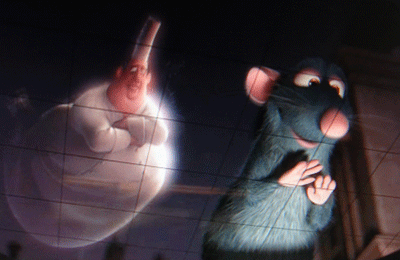
    Ratatouille is the story of Remy (voice by the very perfectly-cast Patton Oswalt,) a sewer rat who adores food. Good food. The runniest cheeses, harmonic pairings of cream and stock, the best cuts of meat and fresh vegetables and spices. He lives to try new things, to the extent that he’s willing to risk his life in the five-star kitchens of Paris. Spurred on by the his hero, master chef Gusteau (played by the greatest vocal man in Hollywood today, Brad Garrett), Remy learns the ins and outs of kitchen work, how to engage his sense and create fabulous dishes. And, best of all, how to live.

    Gusteau is actually dead. This robust man succumbed to the indignity of losing one of the five stars his eponymous restaurant has earned. But his ghost lives on, following our hero, Remy, trying to impart the wisdom of a lifetime of cooking. Gusteau is a chef from the Julia Child school–brimming with happiness, fat as a spinning planet, and eager to teach. Anyone. His restaurant is the pinnacle of French dining, and yet this man’s most famous, perhaps, for his cookbook, simply titled Anyone Can Cook. Amazingly, it is a rat that most perfectly exemplifies Gusteau’s philosophy.

    Poor Remy! On his chosen path he will suffer all manner of indignities, but perhaps most painful are the blows to his ego. In order for Remy to become a chef, naturally he needs a human ally. Vermin are not welcome anywhere but crushed under traps. So enters Linguini (voiced by the animator Lou Romano), an inept but goodhearted mop-handler. In a lovely twist of fate, one that sees Remy unable to escape to safety because he must repair some poorly made soup, our hero is captured by Linguini, who knows this rat can cook. So Remy climbs into the boy’s hat, yanking on tufts of hair and controlling our poor red-headed idiot as if he were a marionette. Eventually, Remy is going to be tested, making the titular dish for the most damning of culinary critics, the acidic Anton Ego (Peter O’Toole, who will not get yet another Oscar for this fine work).

    How does Brad Bird get to make these films? Like The Incredibles before it, Ratatouille does not rely on Hollywood in-jokes, scatological humor, or mediocre sitcom drama to chug its plot along. Instead, Ratatouille is infused with the spirit of Preston Sturges. In fact, Linguini could have been played in the past by Eddie Bracken, Sturges’ own bullied-upon, trembling, stuttering and stumbling muse. It’s magnificently written–Ratatouille delights in its own conceit, that anything with taste buds can experience this holy love of eating, and assumes the audience will hang on for the ride, one where your arm grips the side of a motorbike, the rest of the body flailing about with the elasticity of Gumby, and the resignation of Buster Keaton. Bird has given us a movie that asks us to pay attention–and pay close attention–not just to the humor, whose structure is perfect, jokes building for twenty to thirty minutes before payoff, but to the wealth of details, the likes of which have not been matched in animation since Pinocchio. The kitchen itself is a wonder, the marble steps worn away where footsteps have trod, the gleam and reflections off copper pots, the faces of the patrons like something from Mad Magazine in its 1950s prime (Bird also understands perfectly that computer animation has its limits, and only humans must be caricatured to look real).

    Better still is Remy’s life–these rats talk to each other, squeak around humans, listen to music. And yet the film is not obsessed with anthropomorphism as in past Disney efforts. These rats are still rats.

    Bird also assumes we know what it is to be shocked by a first bite of a perfectly cooked meal. And this is where Ratatouille takes its most surprising turn. When Mr. Waverly Root, journalist, adventurer, and perhaps best of all, devout eater, ventured to France, he discovered the following: As far back as records go, the people of the land now known as France have thought of food in terms of its taste more often than in terms of its nutritive qualities. It is one of the greatest of all of life’s pleasures to have that encounter, that awesome recognition that food isn’t there just to quell those gnawing pangs in the pit of the stomach. After our first bite of ice cream we understand perfectly that food is not just there to build teeth, muscle, brains and then waste. A good meal is there to inspire imagination, trigger memory, to encourage great conversation. It’s a part of most, if not all, religious lore. Very simply, it is fun. And sometimes, most complexly, it kindles love.

    A few, not too many, but a few movies have made clumsy attempts at capturing the meaning of eating, and what it does to us as thinking, feeling creatures. Thus far, most have failed–perhaps Ang Lee’s Eat Drink Man Woman is the lone picture to have found success (and I’m including the tedious Big Night). That delightful movie drew saliva by simply showing us amazing dinners, from their inception as simple ingredients to the alchemical creation of eye-popping dishes. Without dwelling too long on the meals, Lee gave us a tight, moving, and often-hilarious plot that functioned in addition to the characters gorging themselves.

    But that film couldn’t integrate our relationship food seamlessly into its plot. In Ratatouille, however, the titular meal both brings this plot to its moving denouement, but is a great visual essay on food and memory (and criticism). This part of the plot–the meeting of the food critic, the restaurant on its last legs, the fate of Remy–takes, I believe, a good forty minutes in the gestation, and when it hits, the results are moving beyond belief. Eventually the film, ostensibly a children’s picture, becomes a deeply felt meditation on the pleasures of hard work, friendship, eating (of course), and, surprisingly, the often cantankerous (and loving) relationship between artist and critic. The clash between the critic Ego and the chef Remy is not just exciting, not just hilarious, but moving, and might just leave you in tears. It did me.

    There has not been a better moment in film this year. But Ratatouille is filled with such moments. Like a Hawks film, you emerge from the theater disappointed a little bit, wishing that the camaraderie onscreen asserted itself in the sunny and disappointing life raging outside. And you wish that our disappointments, when overcome, had triumphs as great, and as real, as Remy’s. But then again, chomping into a crisp water cracker loaded with d’Affinois cheese and a drop of balsamic vinegar isn’t an experience for every meal. You have to appreciate it when you get it. So it is with Ratatouille–savor the film, delight in its pleasures, and work toward honing your palate. Brad Bird has shown us that it is worth every minute.


  • Brewhaha

    beer.JPG

    Last night I had a particularly tasty brew. I’m in Denver and while dining at the Denver Chophouse and Brewery, I happened upon their Wild Turkey Barrel Conditioned Stout. After home-brewing the stout, they “cure” it for a time in used bourbon barrels. Being a bourbon girl, and a stout girl, it was like winning the liquid lottery. The beer was smooth and rich with serious vanilla creaminess. The oak barrels impart a warm toastiness that mellowed, but not overwhelmed, the strong beer.

    Speaking of Colorado brewing, did you know that Fat Tire is finally locally available? The New Belgium Brewing Company has added MN to it’s territory and I couldn’t be happier. Any beer drinkers who have spent time out West will already know about Fat Tire Amber’s malty/hoppy Belgian kick. Check out your local liquor store, it’s probably already sitting on the shelf.

    Locally, I recently found a nice Belgian called Fatty Boombalatty from Furthermore Brewing in Wisconsin. Yes I bought it for the name, but now I love it for its mind, not just its body.

  • For the Young at Heart

    MUSIC by Eeva-Liisa Waaraniemi
    All That Jazz

    483_Back_Cover_of_Booklet_crop.jpgJazz artists are not just middle-aged or elderly men, although that may be a common assumption. At this weekend’s Twin Cities Jazz Festival more than a few talented young ‘uns are getting into the groove. Alto-saxophonist Grace Kelly, who’s hardly turned fifteen, will be “gracing” the stage with both instrument and voice; Dan Kusz, also on the alto-sax, is in his early twenties; and saxophonist Alex Han is nineteen. Local school MITY, is lending its youth jazz band to the event. On its second (and last) weekend, the festival has hopped the river from St. Paul to Minneapolis’s Peavey Plaza. Unlike moments last weekend, you won’t be rubbing damp elbows with strangers; the weather forecast bodes well. Listening, watching, and dancing (if you choose to) are free for the vast majority of you. Those who wish to see performers a block away at the Dakota Jazz Club will pay a reasonable cover charge.
    Friday from 4:30 p.m., Saturday and Sunday from 2 p.m. (see schedule), Peavey Plaza, 11th & Nicollet Mall, Minneapolis; 612-371-5693; free.

    American Routes

    spitzer200.jpgThe Twin Cities Jazz Festival finds some sister sensibilities in the American Routes radio show, also on the local radar this weekend. Each week host and producer Nick Spitzer floats interviews and music of the Gulf South down public radio frequencies. This Saturday you can see the host and performers in the flesh onstage at the Fitz as Spitzer brings his New Orleansian show to the northern, stiffer end of the Mississippi (that would be us). Tonight you will be treated to conversations and jammin’ from Kermit Ruffins and the Barbecue Swingers and The Pine Leaf Boys. The latter are a band of young men who play some serious (by this I mean authentic-serious, not solemn-serious) Cajun/Creole music yet apparently are known for wild antics onstage — they call it “youthful exuberance.” This being a radio show, it should be interesting to see how these crawfish festival men enliven the tamer atmosphere of a radio broadcast.

    Saturday at 8 p.m., Fitzgerald Theater, 10 E Exchange St., St. Paul; 651-290-1200; $22-$31.

    ART
    All S.P.A.M. Is from Minnesota

    67738.jpgWe’re responsible for that nasty meat-like substitute from Hormel. We’re responsible for the loads of emails you get about penile enlargements and erectile dysfunction. And we’re responsible for S.P.A.M., the Sexy Poster Artists of Minnesota, who now bring you Plaster the Town 2007, the best in rock poster and flyer design. This year’s Plaster the Town features art for sale by Aesthetic Apparatus, AmyJo, Burlesque of North America, DWITT, Squad19, Tooth, Adam Turman, Unitus, and more. The opening party will feature music by the Birthday Suits, The Deaths, Seawhores, Mute Era, Death to our Enemies, DJ Mike, 2600 King, and DJ Plain Ole Bill.

    6 p.m., The Soap Factory, 518 2nd St. S.E., Minneapolis; free.

    FILM by Eeva-Liisa Waaraniemi
    Careful What You Bring Home from a Scavenger Hunt

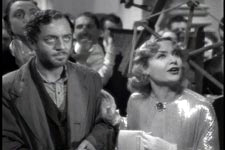
    my-man-godfrey-dvd-image-01.jpgIt’s film night at the St. Paul Central Library. What do reasonable people schlep to an outdoor film? Lawn chairs, blankets, snacks, beverages — yeah, yeah, you know. But, oops. Forgot the bug spray. Again. Not to worry, though. Tonight, you’ll still be reasonable rather than irresponsible if you forget the pesticide. The mosquitos should be scarce (dare I say non-existent?) thanks to the dry weather and temps are promised moderate. The perfect night to view My Man Godfrey whilst lounging under the heavens. There will be more outdoor films at the library this summer, but tonight’s viewing conditions are ideal for seeing this depression-era comedy starring William Powell and Carole Lombard. The film, which starts at dusk, shows what transpires when a crazy rich family hires a new butler straight from the dump.

    Friday at 9 p.m., St. Paul Central Library, 90 West Fourth St., St. Paul; 651-266-7000; free.

    If you’re a film classics freak like me, then you should also know that the Uptown Theater will be featuring Arsenic and Old Lace this Saturday at midnight. Good old Cary Grant! (and a couple creepy old ladies)

    If it’s not the classics but the outdoors you crave, then you’ll be pleased to know about Sunday’s movie in the parking lot outside Patrick’s Cabaret (3010 Minnehaha Ave.). This week’s movie is Chris Smith’s The Yes Men, a comedy following the exploits of a group of jokester liberals who make a name for themselves as they mimic members of the World Trade Organization at venues around the globe.

    FILM OPENINGS by Peter Schilling
    Ratatouille

    ratatoulle.jpgThis collaboration between writer/director Brad Bird (The Incredibles) and the animation geeks at Pixar takes the medium to new heights. Ratatouille is the simple tale of Remy (voiced by Patton Oswalt), a rat hiding in the shadows of a famous Parisian restaurant who seeks to become a chef. Like The Incredibles, Ratatouille is a comedy of startling action, consistently hilarious jokes, and mechanically brilliant slapstick. But the film is also a deeply felt meditation on the pleasures of hard work, friendship, eating (of course), and, surprisingly, the often cantankerous relationship between artist and critic. Avoid pigeonholing this one as a child’s diversion; Ratatouille is a profound joy, and the best film of the year.

    Also opening tonight is Michael Moore’s Sicko, an investigation of the American Health Care System; and Lajos Koltai’s star-packed Evening, a story about a dying woman reflecting on her life, written by Susan Minot and Michael Cunningham.

  • The Best Of All Possible Worlds: Get Away Day At The Dome

    If you’re the sort of fan who has an appreciation for both the home team and the history of the sport, today’s Twins/Jays finale was a pretty fabulous proposition all around, particularly if you were one of the 31,038 folks in attendance at the Dome to see Frank Thomas’ 500th home run in an 8-5 loss to the home club.

    I still get a little thrill out of baseball’s statistical milestones. For those of us who grew up with a Baseball Encyclopedia next to the bed, who lived for the annual arrival of the Bill James’ Baseball Abstract, and who felt that our lives would never be truly complete without a visit to Cooperstown, that short list of individual achievements that, regardless of team success, conferred immediate baseball immortality were firmly cemented in our brains: 3000 hits, 500 home runs, 300 wins.

    There is now considerable argument regarding whether 500 homers should still be regarded the benchmark for inclusion in the Hall of Fame. When you really think hard about that number, though, it’s difficult not to dismiss the grousing of those who would pooh-pooh the credentials of the latest members of the club. Granted, the steroid issue has cast a rather large shadow over the game’s relatively recent power explosion, and though Thomas was just the 21st Major Leaguer to reach 500, there are a number of guys –Jim Thome, Manny Ramirez, and Alex Rodriguez– who are likely to join Thomas on that list this season.

    Still, shit, 500 home runs. That’s ten fifty-homer seasons, or twenty seasons of twenty-five. I guess when you’re a Twins fan those numbers still seem mind boggling. 600 may be, as some claim, the new 500, but not right now it’s not, and I say 500 remains a mighty impressive feat, even with all the question marks –juice, juiced balls, diluted pitching, smaller parks.

    It’s also pretty fabulous that on the same day that Thomas hit number 500, Craig Biggio became the 27th player in history to reach 3000 hits. Again, when you break that number down into single-season benchmarks, it’s pretty impressive: 3000 hits translates into fifteen 200-hit seasons. In other words, a guy has to play a long time, and be pretty damn consistent and pretty damn good to get there. Biggio, of course, has long been a favorite of stat-heads, and there should be no real argument about his Hall of Fame credentials; he’s always played a key defensive position, for one thing, and is the only player in major-league history to have 600 doubles, 250 home runs (286), 3,000 hits, and 400 stolen bases.

    Barry Bonds will probably reach 3000 hits as well, but after that we might be waiting a long time for another player to reach 3000. The active career leaders list is filled with old guys –following Biggio and Bonds on the list are Julio Franco, Steve Finley, Omar Vizquel, Ken Griffey, Gary Sheffield, and Luis Gonzalez, and all of those guys are somewhere in the range of 400-600 hits away. Derek Jeter had 2150 hits going into this season, and Alex Rodriquez had 2067.

    The most impressive –and likely the most increasingly elusive– number at this point is 300 wins. Tom Glavine will get there this year. Randy Johnson is next on the active list with 284 wins, and after him there’s a huge drop off to Mike Mussina, with 242 wins. Assuming Johnson eventually reaches 300 –and that’s assuming quite a lot right now– I think it’s possible we’ll never see another 300-game winner. Glavine will be the 23rd player to achieve the milestone, and in this era of pitch counts, relief specialists, band boxes, and explosive offense, 300 wins is all the more impressive. Again, to break it down by single-season achievement, that number translates to fifteen twenty-win seasons. How many starters even manage to stay healthy and productive enough to last fifteen seasons in the Major Leagues anymore?

    Maybe this will put it in perspective: at the age of 28, Johan Santana has 86 wins. If he pitches another ten years and manages to win 20 games a season that would leave him with 286 victories. How likely do you think that is to happen?

  • Toast Wine Bar & Cafe

    Somebody famous once said, if you can’t stand the heat, get out of the kitchen. The city inspectors took one look at the kitchen of this cozy little wine bar and cafe in the warehouse district and said, if you can’t vent out the heat, don’t put in a fryer, or grill. So chef-owner Scott Davis has had to create a menu that can be prepared with a minimal kitchen. They do offer a few hot items, including thin crust pizzas, and a white bean vegetable soup, but most of the menu is no-heat or low-heat, and perfect for summer: an antipasti plate of cheese, cured meats, olives and nuts; a spinach and arugela salad with marinated tomatoes and feta cheese; a grilled portabello sandwich with red peppers and provolone. The crostini, open-faced sandwiches with toppings that range from black olive and Italian tuna to avocado, tomato and Serrano ham, are a great deal at $1.50 each. The wine list offers some interesting choices by the glass, including a Prazo De Roriz Douro ($7.50 / $30) from Portugal, and a Sollner Danubio Gruener Veltliner ($6.50/ $27) from Austria.
    Open Tuesday to Thursday 5-11, Friday and Saturday 5 to midnight, Sunday 5 to 11 p.m. Closed Monday.
    415 N. 1st. St., Minneapolis,612-333-4305.

  • Heartland goes on holiday

    It is a sad fact that every year Heartland, the restaurant and wine bar on St. Clair Avenue, closes its doors for two weeks in summer. This is because owner Lenny Russo (formerly the executive chef at Cue) and his wife, Mega Hoehn (the wine maven), work non-stop the other 50 weeks a year — also, because there’s a death-like lull in our region’s food service industry during cabin season.

    What it comes down to is this: you have only two more days to get into the Heartland Wine Bar — arguably the best little boîte in St. Paul — for a glass of something truly unique and great. Along with your wine, you’ll enjoy the eclectic musical selections of manager Christa Robinson (from The Floaters to Brenda Starr), and the evening’s amuse bouche: a tiny ramekin containing chilled carrot mousse with fresh dill or duck confit and grilled ramps on a homemade wheat cracker.

    Then, on July 1, Heartland will close for two weeks, reopening at 5:30 on July 17. So if you have time this warm, sunny, summer weekend, I heartily suggest you stop by to try one of Mega Hoehn’s hand-picked whites:

    Von Schleinitz “Slatestone” Riesling 2004 (Mosel, Germany) — Sweet on the middle of the tongue but tart around the edges, this wine is full of honey and orange zest; it’s also thicker than you might expect a Riesling to be, filled with wild flowers and the taste of warm sunshine. I recommend this wine with light food such as pasta, risotto, or broiled whitefish. (10% alcohol)

    Domaine de la Racauderie Demi-Sec Vouvray 2004 (Loire Valley) — This buttery golden wine has an astonishing bite that’s all sweet onion and chive; but its lingering flavor is slightly citrusy, grassy with a hint of marigold, and very sturdy. The extra-long finish makes this Vouvray a red drinker’s white. Drink it with shellfish or salmon, paella or pork. (12% alcohol)

    Marqués de Cáceres Rioja 2005 (Rioja) — Who knew a Rioja could be so white? This wine is a confetti of lemon and musk and a weirdly satisfying hint of roquefort cheese. Crisp, smooth, and very dry, with firm fruit and a lingering finish on the back of the tongue. A white that can stand up to pork, lean meat such as bison, or cave-aged cheese. (12.5% alcohol)

  • If Only We Could All Get in Touch with Our Inner Par

    For me, the on-going Par Ridder saga/scandal/circus has become an anthropological study as much as legal story. I’ve seen the rich operate before, but rarely with such a flagrant indifference to moment and setting.

    I’m ashamed to admit that I’ve misspent thousands of hours fawning over movie and TV stars, (and local TV news readers who thought they were Hollywood stars). I should have known better. But the (free) drinks were strong and the objects of my attention much better-looking than your average robber baron. But this Ridder business, in the context of the death spiral of newspapers and the lay-offs and backsliding wage standards of literally hundreds of middle-class households here in the Twin Cities has truly been startling.

    During one of Par’s patience-testing explanations of why those confidential spreadsheets were booted off his Pioneer Press laptop and into the Star Tribune system, he used the term, “labor line”. Someone correct me if I’m wrong, but I believe over his three days in court that was the only reference he made to the people who actually provide the content for the newspapers he has treated like his own personal fiefdoms. (The context for mentioning the “labor line” was Ridder’s satisfaction at seeing how well one of his executives had REDUCED the impact of labor costs on the company revenue stream. A quality manager, in other words.)

    I was struck how at every turn in the proceedings, in videotaped testimony from Knight Ridder execs and Star Tribune managers, there was never a sense that news gathering and/or the quantity and quality of journalism being practiced had any relation whatsoever to the “business” at hand. In stark contrast to the feckless “reorganization” /”right-sizing” of both newsrooms under Ridder, (first the PiPress than the Strib), and the pittance people like Doug Grow, Rick Linsk, etc. took with them after years of service, you don’t have to be Michael Moore to be appalled at the contrast in how Ridder has treated himself amid The Great Downturn. The hearing was full of references to extraordinarily comfortable-to-lavish executive employment and severance packages, with endless clauses and legal safeguards designed to buffer upper level managers from any heaving in their career paths.

    A favorite of mine, mentioned only in passing, was the $600,000 “double trigger” Change of Ownership Agreement/pay-out Par Ridder agreed to and collected under the terms of his contract with Knight Ridder. This came as compensation for, (A.) the company being sold, (to McClatchy), and (B.) the “adverse” effect it had on him.

    As it is explained to me, for the pay-out to kick in, both “triggers” have to fire simultaneously. Obviously Knight Ridder was sold. But it remains a mystery how exactly Ridder endured anything remotely “adverse.” McClatchy, after all, was asking him to stay on.

    Whatever the explanation, and I’m guessing it will fall under “standard executive compensation,” my point here is just populist outrage at the thought of a $600k payday being considered fair and normal compensation for one already wealthy individual facing far less uncertainty and travail than any average employee. (Ridder’s six-member Operating Committee at the PiPress all received “stay bonuses” to keep them in place through the sale.)

    (The legal curiosity here is that Par Ridder signed this formal Change of Ownership bonus “rider” in November 2005, or at almost the exact time he supposedly sought and got — he says — verbal authorization from Knight Ridder corporate to tear up his own non-compete. In other words, he agreed to a contract rider that would pay him lavishly in the event of a sale and any career inconvenience at the same moment he appears to have commenced the process of extracting himself from the company giving him $600k to stay.)

    Meanwhile the sweet old ladies canned from the Star Tribune switchboard … oh, never mind.

    It’d be bad enough if it were just the outrageous amounts of money tossed around to these apparently irreplaceable numbers people — playing simultaneous with both Avista and MediaNews (like Knight Ridder before it)slashing staff, stagnating salaries and sucking health care benefits away from the people who provide the actual content they sell. But in Ridder’s case there is also a second whammy. This is the ethical double-standard separating him from his employees.

    Whatever Judge David C. Higgs decides, however he assesses “irreparable damage” to the Pioneer Press as a result of Ridder’s cavalier actions, the appearance of waiving your own non-compete and disseminating confidential information to a long-term traditional rival in a cratering market, Ridder’s behavior would not survive the lofty standards he imposed on the rest of the Pioneer Press when he ran the place.

    His tenure as publisher was marked by an upsurge in unpaid disciplinary suspensions, some over perceived “ethics” violations.

    The most notorious case involved veteran reporters, Chuck Laszewski and the above-mentioned Rick Linsk. The two attended the Bruce Springsteen, Neil Young, Michael Stipe, John Fogerty Vote for Change concert at the Xcel just prior to the ’04 election. The case, such as it was, was led by then editor, Vicki Gowler. But like other such suspensions it had to be approved by Ridder. In this case the two reporters were suspended three days without pay for their “conflict of interest”. (A year and a couple comically inept presentations by Gowler’s “team” later, the paper dropped the case, conceding it lacked merit … although refusing to return two of the three day’s pay. Probably saved them $1000. Classy, huh?)

    The other incident involved part-time copy editor and Vietnam vet, Tim Mahoney, who in 2005 was suspended without pay for attending an anti-Iraq war rally in D.C. … on his own time. This one came with the stamp of approval of current editor Thom Fladung, (hardly his finest hour). But again, Ridder would have had to have been advised of the publicized (and snicker-inducing) action. (To protect its integrity, Ridder’s Pioneer Press prohibited Mahoney from copy-editing — not writing, mind you, copy-editing — anything related to the Iraq war. You can’t make up stuff that loony.)

    And this doesn’t even get into the “insubordination” kick that went around the PiPress shortly after Ridder arrived, where “pushing back” or arguing with a superior became grounds for disciplinary action. Reporters arguing with editors! Where did they think they were? A newsroom?

    It’s too trite to say the rich are different. But the entitlement factor in Ridder’s behavior is so out of whack with the underlying condition of the industry as to be clueless. I doubt Par ever has or ever will go a day without full compensation-plus.

    Lion copy.jpg

  • Sundresses: It's Where The Boys Are.

    sundress.jpgOur June issue included a short Fashion As It Happens piece about babydoll and potato sack dresses. And while the photos that month weren’t my favorites, the piece’s overall point remains: The figure-obscuring, Christening dress look has been pretty hot this summer. I bring it up now, a month later, because more than one man has mentioned to me, since the article premiered, that he doesn’t much care for this trend. In fact, a friend just mentioned that her husband was “disappointed” in me for having done this piece. Why? He doesn’t much care for the “maternity dress” look. Heh.

    What do gents like, then? I’m sure this comes as news to very few of you, but dudes dig the sundress. It’s a genetic predisposition, I swear. If there is one thing I can count on from my significant other, it is this: If a woman comes breezing by in her sundress–hell, if we even walk by Local Motion’s window display, where there are oodles of sundresses–my boyfriend ceases to hear me, see me, or, in general, notice that I’m alive. Because I don’t wear sundresses–save the few that have been gifted to me, generally by ex-boyfriends, which are relegated to the back of my closet and only come out for housework and long road trips. To me, sundresses are dinosaurs, reminiscent of a time when women didn’t have their own money and had to beg daddy or husband to buy ’em some new threads (sundress as symbol of oppression – ha!). Ironic though it may be I much prefer my poofy (or “full”) and even rather infantile-looking babydoll dress. But boyfriend calls it my “clown dress.” Hmpf.