Month: January 2008

  • What You're Tasting When You Kiss

    It’s a slippery, messy business, kissing. Two tongues meetings in one person’s mouth, touching and rolling and wrestling like snakes. The transfer of saliva. The hot, warm breath vaporous with what the kisser has most recently consumed.

    Not only that, even strangers do it. People who’ve only just met in bars; partygoers on New Year’s Eve; returning soldiers and can-can girls.

    The fact is, even those of us who are married, living and trading body fluids with the loves of our lives are rather irrational. I mean, would you use your spouse’s toothbrush? Soiled strand of dental floss? Already chewed gum?

    Of course not! And yet, we invade the oral — and other — cavities of our partners quite whimsically. No matter how we think it through, the strangeness of kissing as a modern-day practice, we keep on doing it. Why? Well, it turns out scientists have an answer. It’s because we’re hard-wired to taste our mate’s body chemicals — essentially, through their spit.

    I’m sorry. You’d like me to put a nice veneer on this. But the fact is, according to an article called Why We Love in the January 28 issue of TIME, we’re actually "sampling" the major histocompatibility complex (MHC) of a person when we kiss. This is a gene family involved in tissue rejection, and it’s important that we mate with people whose MHC is different from our own.

    "Conceive a child with a person whose MHC is too similar to your own, and the risk increases that the womb will expel the fetus," writes Jeffrey Kluger in TIME. "Find a partner with sufficiently difference MHC, and you’re likelier to carry a baby to term."

    So you see? Kissing is a biological process, intended to help us propogate the species. Now it all makes sense. . . .

    Well actually, it does. It makes far more sense than Valentine’s Day, which is an incredibly manipulative and commercial annual event (second only to Mother’s Day in this respect). Cupid would have us kissing and doing all the wonderfully irrational natural things that come next. Nevertheless, we persist in celebrating this stupid holiday [myself included] with overpriced flowers and cards and shiny red things ranging from candy boxes to cars.

    My colleague, Jeremy Iggers, recently wrote about Valentine’s Day dinners, and I’d like to add a few suggestions of my own.

    Chef Jon Radle at Grand Cafe is offering a prix fixe dinner featuring gnocchi with braised leek cream; pickled beet and watercress salad; a choice of roasted prime rib, butter poached lobster, or pan-fried polenta; and a malted chocolate tartlet or coconut-cardamom trifle. The price is $55 per person, $85 per person with a flight of suggested wines.

    With its French-bistro-by-the-Seine sort of feel, Barbette is a romantic place to kiss in a dark corner any night of the year. But on V-Day, you can get a four-course meal for $42. Beet and walnut soup; stuffed quail on Swiss chard or pistachio-crusted goat cheese; cream cheese stuffed beef tenderloin or seared scallops or wild mushroom risotto; and petit fours with hot chocolate.

    Now, I have to admit, I’m throwing this last one in simply for the name: Give the treat of meat on Valentine’s Day. It’s a dinner going on at Fogo de Chao Brazilian Steakhouse, which promises to "shower" guests with "15 savory cuts of delicious meat." Personally, I’ve never been to Fogo de Chao and I’m not a big meat-eater. But with messaging like that, even I’m tempted to give it a try.

  • Art Market

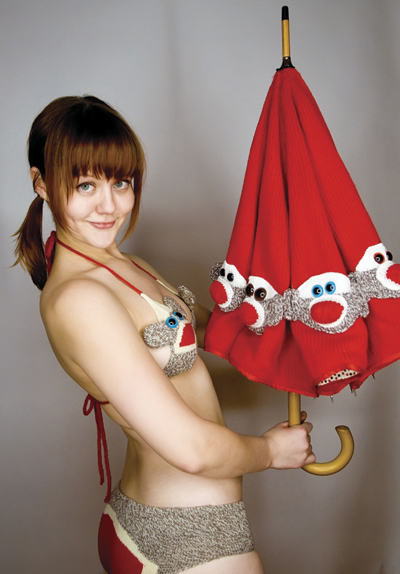
    Not all fashion designers consider themselves artists, but there is certainly a fine art to developing an exciting and cohesive line of clothing, a one-of-a-kind gown, or, for that matter, a sock-monkey bikini. Just five years ago, when home-grown clothing was paraded on First Avenue’s stage at the first Voltage fashion show, resources in the Twin Cities—for designers and their customers—were just beginning to emerge. Five years later, the response and outpouring of support speaks volumes about the growth, both current and future, for local fashion.

    Russell Sheets is best known for the tailored, high-quality, vintage-inspired looks in his Russell Bourrienne menswear.

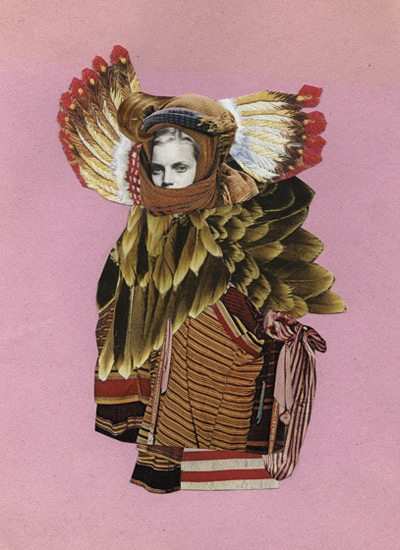
    Forts, foolery, dioramas, ugly hats, and god’s eyes are just some of the inspirations Crystal Quinn uses in her clothing and collages.

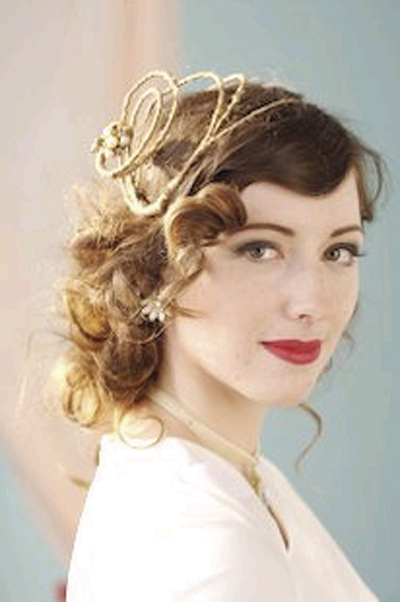
    Hat by Anna Lee; see more details on Lee in author’s page.

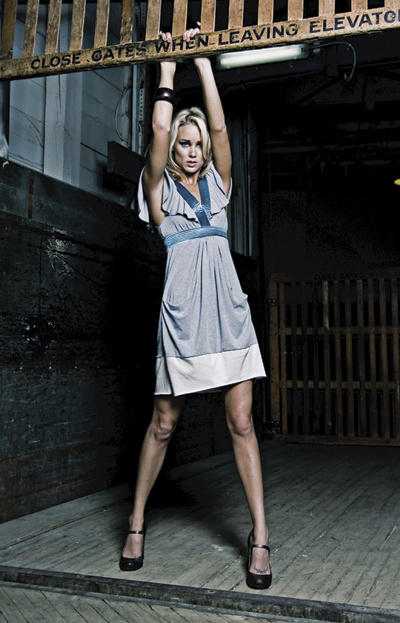
    Women love Katherine Gerdes’s designs for their mix of casual comfort and cocktail style.

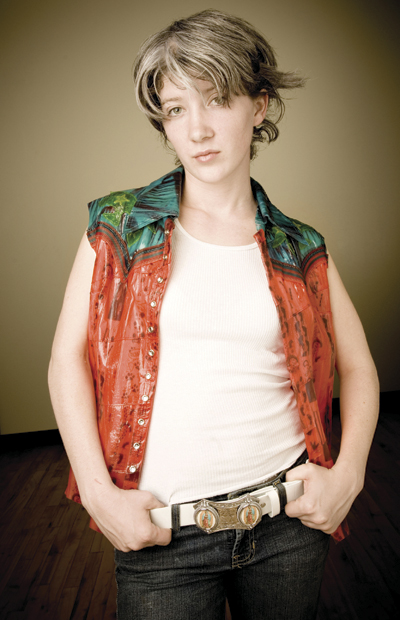
    Rebecca Yaker’s designs are fun yet luxurious plays on baseball jackets, sock monkeys, and other all-American icons.

    Bright prints and plush fabrics are hallmarks of the energetic, chic House of Henry designs by Michele Henry.

  • Spearthrower

    We piled off the bus—field trip!—
    my teacher saying, suggestive and disinterested, “Just look.”
    The Minneapolis Institute of Arts free and full of kids,
    Chinese jades, gods and goddesses from everywhere,
    room after room of very old faces looking back at us.
    And here this one naked man
    so tall and alone in his own room,
    “The Spearthrower” though he’d lost his spear long ago
    along with the hand that held it. Such a serious look
    on his face, his cheeks and lips worn down, misty,
    naked for so long! His stomach sticking out
    with a little hip shimmy, from the side he was
    sort of a blockhead. His cock and balls
    gone, we giggled and pointed and I felt the little cock
    in my pants and felt funny still circling him,
    like I was naked too.
    Nobody said don’t stare. I stared,
    the Roman looking out over me. I think
    I was aware in a cloudy but not confusing way
    this body was a made thing,
    the mottled gray-white marble, smooth but not soft,
    somebody made it long ago, hand and chisel to stone.
    He seemed to step forward, out into the room
    the same step for so many years.
    I circled him to see where he stared,
    circled and somehow it was better
    than trips to look at the monkeys and tigers at the zoo.
    Maybe I spun around, maybe I flapped my arms,
    maybe I struck a pose too, imaginary spear in my left hand.
    He wasn’t getting back on the bus with us
    but still mine to keep, this way to stand—
    right foot sneaking forward for balance
    me and my Roman ready, come what may.

    Note from the poet: I wrote “Spearthrower” to honor a moment of being a child and blown away by a work of art. I don’t recall being “prepared” for the museum or what I might see, just set loose. It was an early experience of being pulled out of my body (or maybe deeper into it) toward something larger, something old, beautiful, and strangely compelling.

    For more poetry, see “What Light: This Week’s Poem” on mnartists.org

  • Zoom In: Susan Hensel

    I’m greeted at Susan Hensel Design Gallery by the gallery’s namesake, a small, ebullient woman who is a nationally recognized book artist and recent Minnesota transplant. “I’ve had friends here for years, my son was away at college—it was time,” she explains. As for her gallery, “I wanted the opportunity, not only to show my own work, but to find new work by emerging artists with guts, who have a story to tell—a story that might not be commercial, but that needs to be seen.”

    Pick up any of Hensel’s own artwork, and it’s apparent that she’s an inveterate reader and an avid (perhaps even obsessive) journal keeper. Her smaller pieces are clever plays on paper and form, rich in wordplay and visual wit; larger works, whether “narrative sculptures” or installations, are endeavors for which her extensive reading on a subject serves as fodder. Hensel’s talent lies in what she calls “taking the personal and turning it into gestalt.”

    As we browse through her intriguing “literary sculptures,” the artist observes: “We are a story-making species, no matter what. When we see artwork, we need to assign it meaning, a narrative. My installations include sound, scent, light, image, and words to help get you into the arena. But once you’re there, the experience of the story is all yours.”

    Originally published in issue 16.1 of access+ENGAGE. Subscribe to this free arts e-magazine at mnartists.org/accessengage.

  • Noises Underground

    It must be something in the water. One hundred years after Saint Paul experimental composer Arthur Farwell dissected Native Indian melodies and piled up unrelated tonalities, a core of dedicated underground Minnesota sound explorers is still sampling, mashing-up, and otherwise taking musical liberties. Although largely unsung in this state of above-ground musical champions, there is a rich vein of experimental music that runs from Sauk Rapids to Duluth and Rochester, and through both of the Twin Cities.

    Music lovers often assume that such nonconformists are simply out to be belligerent, making unlistenable noise in order to annoy and make a mockery of the true musical family. Actually, thumbing our nose at all that is good, tonal, and Pulitzerian is rarely in our minds; experimental musicians are just curious about sound and will stop at nothing to hear where that might lead.

    Thanks to the invention of the laptop, a costly conservatory education is no longer necessary for a so-called career in music. Everyone can be equally ignored or celebrated. But, just as there’s more than one way to skin a piano, no two machines will spit out the same music. That’s because in the end, it is up to the human imagination to determine what goes in and what comes out. Preston Wright, Scott Miller, and Brian Heller, to name three examples, are each blazing entirely independent digital trails.

    Being emancipated from the orchestra also sets one free from the orchestra’s usual habitat, the concert hall. The place you choose to insert your music into society, the venue you select for your compositions, can be as creative a decision as the sequence of waveforms you choose. Sound has become one of the public arts, a way to shape the environment in which people live and move—just take a shadow-walk with Viv Corringham.

    Viv Corringham on one of her “Shadow-Walks”

    Minnesota’s musical ecology is fragmenting nicely into multiple niches; while the mainstream media can’t imagine life beyond the tightrope that runs from classical to pop, the people actually making the stuff couldn’t be less bothered about such irrelevancies. Even within the body of work of a single artist, like Abinadi Meza, variations extend beyond any single genre, technique, or aesthetic: A list of pieces may include glitch, sound poetry, circuit bending, improvisation, scavenging, theatrical music, performance art, and even work for orchestral instruments… In other words, we have all had to become format-hopping digital-media sluts (“What has music got to do with sound, anyway?” asked Charles Ives).


    Every tribe needs people to fill a variety of functions—makers, techies, critics, consumers, and bill-payers. Several artists have discovered the joys, benefits, and headaches of being presenters as well. From the Acadia Café to Studio Z, from the online Some Assembly Required and the lavish campus-based Spark Festival to the Strange Attractors series in a former funeral home, we underground musicians are everywhere if you look and listen closely. But without these saints and other supporters of our offbeat work we’d be even deeper underground without a paddle.

    As the bandwidth widens, we are less bound by state lines and can continue to expand our communities online. There is no locus like home though, and one day our beloved state may be known as much for the Minnesota Noise as it is for the Minnesota Sound.


    Fantastic Merlins take improvisation beyond jazz

    Originally appeared in issue 18.2 of access+ENGAGE. Subscribe to this free arts e-magazine.

  • The (Indie) Play’s the Thing

    While a handful of large companies give our city its national reputation, small, independent theater remains the life-blood of the local scene. Audiences are built by smaller theaters with more affordable ticket prices. Great actors have the opportunity to stretch and grow in smaller venues, without the pressures that they may experience later, in larger productions. Most important, baby theaters grow up to be robust adult theaters. Jeune Lune began in small venues, and the Jungle Theater got its start doing shows in a store front. Some of us can even remember the ’60s, when the Guthrie was a modest, one-theater venue. What was true then still holds true: the Twin Cities theater scene gets its ongoing vitality by fostering little companies and offbeat or challenging performances.

    So which tiny theater will grow into the next big thing, with
    burgeoning audiences and plusher venues? Will it be Nimbus Theatre?
    Live Action Set? Torch? Wouldn’t it be exciting to watch for yourself
    as it happens?

    In just a few short years, Jon Ferguson has shown himself to be one of the Twin Cities’ best directors. If you wonder what Jeune Lune was like in its early days, Jon is your man. He’s gained quite a cult following and has uniquely talented actors at his disposal. To see one of his shows is to see beauty, humanity, and surprise; to be engaged, touched, and to leave the theater more fully yourself. (Pictured below: Ferguson’s Ligustrum Vulgare, a “dark tale of suburban brutality” created in collaboration with actors Tim Cameron, Adam Hegg, and Katie Kaufmann.)

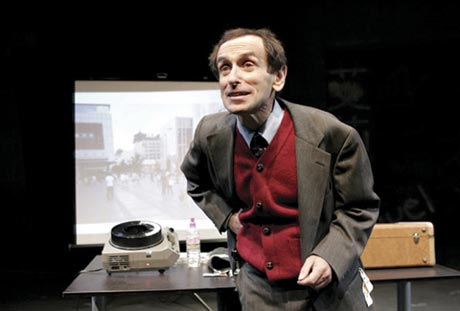
    Pillsbury House Theater is committed to the surrounding Powderhorn community, but its audiences come from all over. They produce raw, gutsy plays about the gritty stuff of life. (Above: John Shuman in 2007’s Glen Berger’s Underneath the Lintel: An Impressive Presentation of Lovely Evidences.)


    Mu Performing Arts
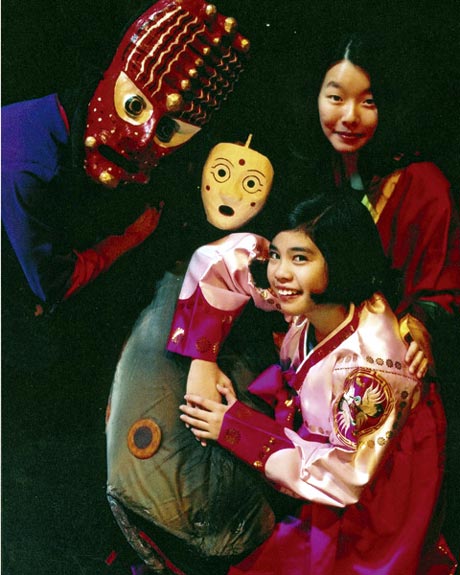
    is one of the leading Asian arts organizations in the country, so this theater, growing by the year, is not exactly “small.” Each year they do a Taiko drumming show (very cool) and three theatrical productions combining Western and Eastern, ancient and modern (very, very cool). Rick Shiomi has recently taken on board Randy Reyes, a smart and energetic young director who moonlights with Workhaus Theater. (Pictured: Isabella Dawis and Sara Ochs, from Mu’s production of The Walleye Kid)

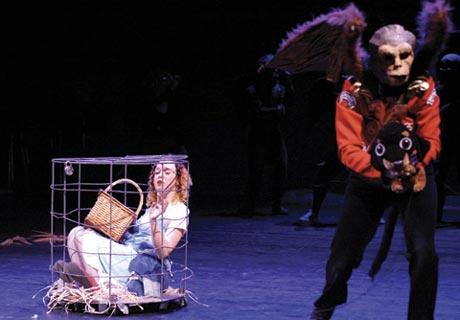
    Expect most anything from Bedlam’s slightly punk brand of theater. The company recently celebrated the first year in their brand new space on the West Bank. It’s a cool spot for hanging out, with a flexible theater, a bar in the lobby that could be in an old Western, and a rooftop patio. (At left, Bedlam’s “fifth” of The Wizard of Oz, an annual Fringe Festival event in which five theater companies deconstruct a classic script.)

    Adapted from issue 14.2 of access+ENGAGE. Subscribe to this free arts e-magazine.

  • The Renegade

    Billy X. Curmano, performance artist and provocateur, doesn’t care much for the conventional wisdom that says artists must live in a large city. He may have grown up in Milwaukee and spent time in the East Village and other urban centers of art, but ultimately he decided to make his base of operations a picturesque corner of rural southeastern Minnesota. From there, he plans extravagant performance pieces and publishes wry, pun-filled newsletters, all of which dare the audience to face a fundamental question: “What the hell is art, anyway?”

    Curmano’s work also challenges the idea that grand adventure is the exclusive right of those who can afford it. Billionaires might be traveling around the world in balloons and paying to get towed up Mount Everest, but they’ve got nothing on Billy Curmano. He decided it’d be an eye-opening performance project to swim the Mississippi River from Lake Itasca to New Orleans, an undertaking he accomplished over eleven summers, landing in the Big Easy on “Billy X. Curmano Day,” 1997, thus culminating Swimmin’ the River, his best-known and most grandly scaled performance.

    “I like the idea of getting out to different audiences and doing work that intrigues them, whether they understand it as art or not. I like tweaking them,” Curmano says on the phone. When we talk, he’s in the midst of a massive move from his studio space in Rushford, which suffered extensive damage during the Winona-area floods last summer. “I think about it the way I think about homosexuality—if someone’s secure in their sexuality, they aren’t homophobic. I feel secure enough about my work that I like to get a response from the audience, but if it’s not the right response, I don’t mind. If you’re doing work just to please other people, you’re not getting at the root of your soul as an artist.”

    An overview of Curmano’s career indicates that, for all of his wide-ranging work, he has indeed stayed true to his roots. The twin poles of his work have always been to raise perceptions and have a little fun. These aims are evident from his early anti-Vietnam war installations at the University of Wisconsin-Milwaukee, where he trained as a sculptor; his forty-day “performance fast” in the Mojave during the Y2K freak-out; and his Buried Alive project, in which he spent three days entombed near Winona in an effort to bring art to the dead. For that matter, his Swimmin’ the River project managed to make an environmentalist statement, an individualist argument, and a decade of entertaining summers all at once.

    “The Coast Guard came after me just past St. Louis,” he recalls, thinking about one of the most intense days of the swim. “It was a really tough run through a major shipping center, about one-hundred miles with coastline and barges. I yelled at them, ‘I’m okay, fellas, thanks for checking.’ Through the megaphones, they yelled back, ‘It doesn’t work like that.’”

    Despite losing his studio to the floods, the move has provided Curmano with new opportunities (including the offer of a dehumidifier from FEMA). His new space is a complex that includes a personal studio; a home for his New X Art Ensemble, which features a rotating cast of musicians; and performance and gallery space that can serve as an alternative to destinations in the Cities. The Ensemble performs frequently both at home and in the Twin Cities, and Curmano is also working on other projects like an annual “Anti-Shakespeare Festival” to run in conjunction with Winona’s Shakespeare Festival; the first, two years ago, ended with Curmano having to canoe around an island looking for campers that had spent the night. And he continues to shoot videos, craft sculptures, and design sets for his performance work. Overall, his tendency to mix the ephemeral with the lasting allows him to shift freely between performance and visual art. For a guy dedicated to flouting art-world “rules,” Curmano is serious about his dedication to leaving something of himself behind through his work. “As I began working … the term ‘traditional artist’ doesn’t really apply, but I made objects,” Curmano recalls. “The sculpture department at my college didn’t take real kindly to performance art. It wasn’t heavy enough. But one professor I had, he once told me, ‘Billy, we were always proud of you, because you didn’t lose sight of the object.’ And I haven’t.”

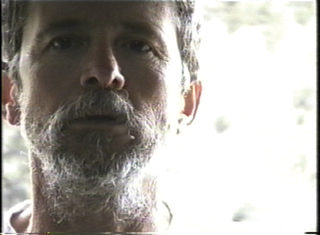
    A portrait of the artist on the last day of a forty-day performance fast in the Mojave desert


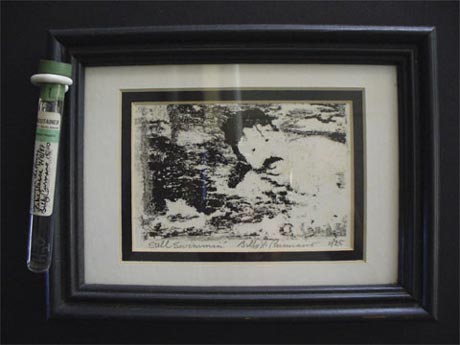
    Two pieces related to Curmano’s magnum opus, Swimmin’ the River: Aqua/Terra, from 1993 (bottom); and from 1994, Still Swimmin’, a lithograph with a vial of water from Lake Itasca (top)

  • Zoom In: Usry Alleyne

    As we talk in his loft above the Midtown Global Exchange in South Minneapolis, Usry Alleyne mentions that he was caught a bit off-guard by mnartists.org’s request for an interview. That’s likely because he is better known as a teacher or a photographer of arts events than as an artist. “Most of the time, I document other people’s work—tons of dance and theater performances around town, little documentaries for theaters and all kinds of things,” he says. “Sometimes people are surprised when you say you do your own stuff, too.” His work spans a variety of media—video art, sound art, photography—and it is unconcerned with the audience. “As an artist, I work for myself. Left alone, I go around observing, creating, reflecting, making, and [doing] very little talking.”

    A short survey of Alleyne’s work makes his preference for graphic simplicity clear. Not Signs of Culture, a series exploring death, consists of lovely, vibrant photos of the disgusting. Some subjects are more readily identifiable than others, but none is an abstraction. A dead rat. Maybe some kind of food. Maybe a wound. Regarding pain and ugliness, he says, “We try to ignore it, to put it aside and pursue our lives. But I can’t. There’s a need to acknowledge that it happens.” If he could, Alleyne would “give the audience the experience of the process, along with the work that they see. When I’m painting, making video, listening to sound—there’s this process that happens that’s extremely wonderful, even if it’s looking at something disgusting.”


    Originally published in issue 22.1 of access+ENGAGE. Subscribe to this free arts e-magazine at mnartists.org/accessengage.

  • Theater in Motion

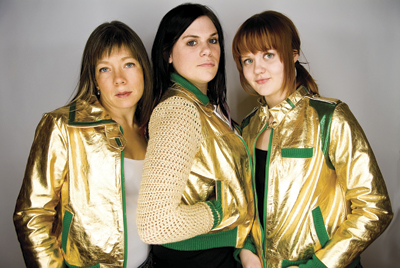
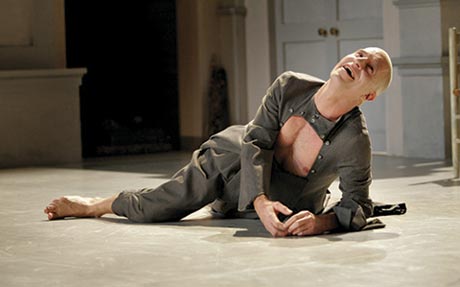
    In accordance with standards for staging cosmic spectacles, (however low-budget), the cast of A Gift for Planet BX63 (above photo) appeared in glittering, metallic costume. But Off-Leash Area, an inventive, burgeoning troupe based in Minneapolis, had injected its intergalactic show—think The Little Prince—with another, rather unexpected feature: zero gravity. Rendered as a six-foot cube, simply constructed from plywood, mirrors, and Plexiglas, this tiny onstage world was a place in which the performer, Jennifer Ilse, could wall-dance. By balancing on her hands and kicking off the cube’s various surfaces—even its ceiling—Ilse created the illusion of floating in space.

    Her performance mixed dance, mime, and traditional text-based theater, not to mention gymnastics and contortionism. In all, it was an extraordinary demonstration of “movement theater,” a performance genre increasingly popular in the Twin Cities. It is, in essence, an approach that requires a heightened use of gesture and body language, as well as an awareness of the spatial relationships among the actors, the audience, and the performance space. In simple terms, it’s theater that has been choreographed. And as a matter of fact, there’s a permeable boundary between “movement theater” (or “physical theater,” as it’s often called) and “dance theater.” Both communicate with motion more than words. The difference between them lies in the varying measure of each ingredient.

    When it comes to distinguishing theater from other entertainments, especially film, immediacy and common experience are, perhaps, its supreme virtues. Theater is unique in the way it unfolds in real time at a common point shared between artists and audience, thus imbuing the live performances with a sense of connectedness that film and literature simply cannot possess. But there’s another distinction less often discussed: A theater audience observes the action through a window more sweeping and panoramic in scope than that offered by film.

    Exposure to cinema has caused many theatergoers, including this one, to tire of dialogue-heavy theatrical realism. Filmmakers have the luxury of using close-up shots when they wish to emulate the intimacy of real life, person-to-person conversation. In a playhouse (or for that matter, an ancient amphitheater) it’s difficult for the audience to see the teardrop streaking an actor’s cheek—that tear is simply too remote. Theater must provide something altogether different. Since the scale is so much larger, a performer’s broad, gestural movements will register far better than, say, the nuance of his facial expressions, especially in larger venues. The performer better communicates with thrashes and wails—and, come to think of it, the Greek chorus often functioned in this style, too.

    Theatre de la Jeune Lune’s Tartuffe


    In short, with movement theater, character is rendered physically, not emotionally. Locally, well-known examples include Steven Epp’s portrayal of Tartuffe in Theatre de la Jeune Lune’s now-classic production of Molière’s play: Epp crouched in the shadows as would a predator, before leaping forth to center stage. He didn’t walk so much as slither. On the other hand, in Or The White Whale, last spring’s adaptation of Moby Dick, director Jon Ferguson called for a lack of movement—stillness in an otherwise kinetic universe—to illustrate the alienation of Ishmael. In both instances, actors and directors worked to distill from complex characters their most basic, core elements. But, in translating those elements into evocative physical presences onstage, they offered more powerful understandings of these characters.

    What’s more, movement theater tends not to be burdened by the formalities some folks perceive in much of the performing arts. Chalk it up to the pervasive influence of clowning and circus arts, but movement theater practitioners, to their credit, do not shy away from silliness, even if their subject matter is solemn, be it war (Please Don’t Blow Up Mr. Boban, Live Action Set, 2005), the great American novel (Or The White Whale), or feigned piety (Tartuffe). That may be, in part, because the practice of such intense, often athletic physicality requires of the actors a certain youthful vigor. The resulting aesthetic is light and playful; it has a hand-made quality; it’s full of action, and a pleasure to behold.
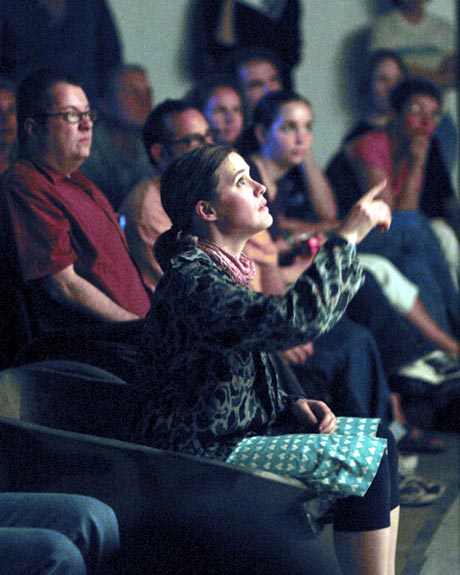
    Live Action Set’s Please Don’t Blow Up Mr. Boban

    Many of the Twin Cities’ current crop of movement theater practitioners are linked, in some way, to Theatre de la Jeune Lune. It was this company that, in 1979, imported a European style of theatrical clowning to our city. These were the very methods that the founding artistic directors—Barbra Berlovitz, Vincent Gracieux, Robert Rosen, and Dominique Serrand—learned from their Parisian teacher, the legendary Jacques Lecoq. (The most famous graduates of the École internationale de théâtre Jacques Lecoq are the founders of the enormously popular Cirque du Soleil.) The curriculum includes work in miming, masks, improvisation, studying the dynamics between performer and stage, and something called “finding your inner clown.”

    Lecoq’s teaching also emphasized a collaborative approach to creating new theatrical works, a tradition still deeply rooted in the movement theater community. This is, perhaps, the most important factor in the recent explosion of the form. From the very start, a student or apprentice of movement theater functions as an integral part of his or her ensemble. At the time of graduation, the student has already helped write, choreograph, and perform several original works. In other words, this newly minted performer is no stranger to the entire artistic process, and is therefore better prepared to strike out on his own, and, along the way, to pass these traditions along to other collaborators.

    In 1985, Theatre de la Jeune Lune settled permanently in Minneapolis. As the company grew, so, too, did an inner circle of artists who studied and subscribed to this form of theater. Local clown Luverne Seifert was a company member between 1994 and ’99. (These days, Seifert regularly appears with Ten Thousand Things and Frank Theaters.) Joel Sass, the Jungle Theater’s associate artistic director, was a Jeune Lune company member during the early ’90s. Puppeteer Michael Sommers (who founded Open Eye Figure Theatre in 2000) has been a frequent collaborator. Emerging performers like
    Lisa Rafaela Clair (who studied clowning with the esteemed Pierre Byland at the Burlesk Center in Switzerland) and Katie Kauffman (a graduate of the California-based Dell’Arte International School of Physical Theatre) came to Minneapolis to study and intern with Jeune Lune. Capping off this by no means exhaustive list is freelance director Jon Ferguson—in my opinion, the most exciting movement theater artist in town. And he has said he was drawn to Minneapolis, at least in part, because of the mood set by Jeune Lune. (Full disclosure: I worked for several years at Jeune Lune in an administrative capacity.)

    Over the years, other movement theater companies have sprung up. Outstanding midsized companies like Ten Thousand Things and Frank Theaters frequently incorporate movement theater. Bedlam Theatre, founded in 1993, practices its own homegrown approach to creating playful, collaboratively created spectacles, relying heavily on the tenets of movement theater. Paul Herwig, who is the co-artistic director of the nine-year-old Off-Leash Area, is also a graduate of Lecoq’s school; his wife and co-director, the aforementioned Jennifer Ilse, is a veteran of ballet and contemporary dance. Like Off-Leash, the delightful Live Action Set, founded in 2003, is peopled by both dancers and movement theater artists. And with any luck, a tiny troupe called 3 Sticks will soon rise to prominence as well. Founded in 2005 by students from the London International School of Performing Arts (a two-year program based on the teachings of Lecoq), 3 Sticks already has two outstanding Minnesota Fringe shows to its credit (2005’s Mythed and 2006’s Borderlines). Artistic director Jason Bohon recently announced a slate of upcoming shows; look for their take on Alfred Hitchcock’s The Birds later this year. And, of course, as these artists continue to practice their craft, thereby hooking a new generation of performers, the list of must-see movement theater will continue to grow.
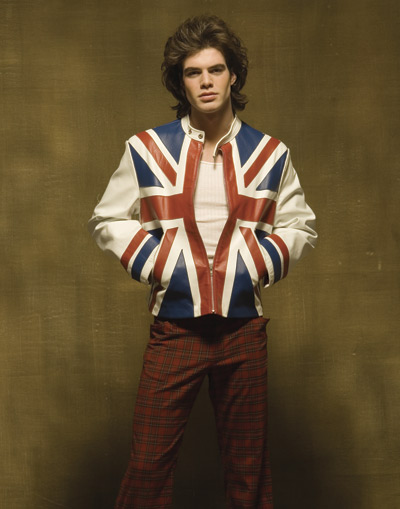
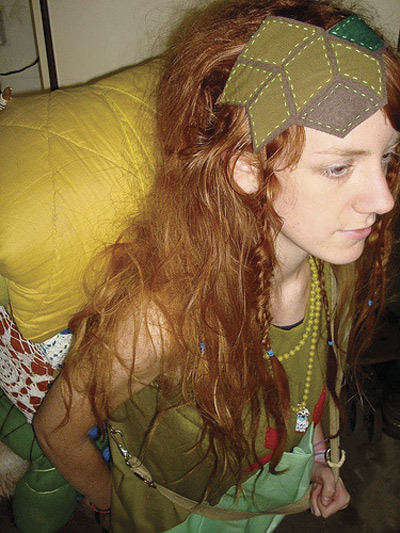
  • Claude Wampler: What Just Happened?

    There’s some interesting discussion over at the Walker blogs concerning the
    performance career ender that was staged, just this past weekend, by
    Claude Wampler. I saw the show on Friday but, sadly, didn’t stick around for
    the Q&A, which sounds to have been very tense. Truth be told, my date was
    so angry as to be agitated; after the show, he wanted a drink in his hands, stat!
    So did I, of course, except I found myself more amused by the thing … But I’d been lucky
    enough to notice, as we waited for the house to open, that there were likely "plants"
    among the audience members. How and why? Because there were too many folks with
    asymmetrical haircuts, and too many wearing shiny fabrics–that’s why. The "real"
    audience members were swathed in wool and down parkas. (It was freakin’ cold
    outside.)

    According to some of the folks posting at the Walker
    blogs, Wampler made a [condescending?] statement at the Q&A regarding the
    difference between NYC and Minneapolis
    audiences. Well, we’re quieter, for one. But we probably don’t dress as
    often in metallics, either. By show’s end, some of the plants were up and
    dancing in the aisles. Others were tossing light-up toys onstage. My suspicions
    were confirmed.

    In case you missed it, Wampler basically staged a band
    practice. From beginning to end, the frontman had to communicate his vision for a
    song to his bandmates. But a visual trick was employed: images of the trio were projected onstage. The lead singer’s image fell onto a screen, so his remained crisp. But in the cases of the keyboardist
    and drummer, smoke was occasionally pumped into the vicinities of their
    instruments–and so, their ghost-like images would materialize, every now and
    again, on the canvas of that haze.

    But, going back to my original point: the real story is that the audience was "seeded," or full of planted performers. These folks
    hooted and, in some cases, heckled and behaved all-around badly, which inspired
    imitative behaviors from others. For example, when the lead-singer character
    made a funny comment about how the band must "finesse" its way out of his song (presumably by playing fancily),
    my date shouted (seemingly with glee): "Sure do!"

    And that, friends, made the whole thing worth it–the fact
    that my well-behaved friend felt compelled to act in such a dramatic way, and the
    fact that he felt SAFE enough to do so. In other words, Wampler tinkered with
    the audience/performer dynamic to great success. Sure, her show was repetitive,
    perhaps even boring (although I must admit to being amused by the rock-n-roll clichés). But I appreciated being jolted out of my expectations
    and, for once, at a theater, having absolutely no fucking idea what was going
    on. Sweet chaos. As I exited the theater that night, I turned to an usher
    and asked (also with glee): "What just happened?" Then I went to the bar with my friend and
    enjoyed one of the most spirited conversations I’ve had about art in a long, long while.