Author: Ann Bauer

  • Oktober Wine from Germany and Spain

    Earlier this week, I received a note from a reader who wanted me to recommend a German Riesling for her office Oktoberfest celebration. I was stumped.

    If you lined up all the varietals in the world from goal post to goal post on a football field — jammy, dark, South American Malbecs at one end and extra-sweet, sparkly whites at the other — I would drink from the 20-yard-line in on either side. In other words, I don’t have a favorite Riesling.

    images-products-s2-St_Urbans-HOF_Riesling.jpg.
    So I dropped by Sam’s Wine Shop in the North Loop to ask Sam [Haislet] himself. He likes a wine called St. Urbans-Hof Riesling 2006 and described it as a “kabinett-level” German white that’s balanced and not too sweet.

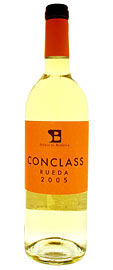
    1022716l.jpgWhile I was there, he gave me a taste of one of this month’s specials: the Con Class Rueda Blanc 2005, which Sam’s is selling for $8.97. This was a 35-yard-line wine: full and floral with very little acid, the taste of gardenias, ripe melon, and grass. It’s made from 100% Verdejo grapes, a native Spanish varietal related to Sauvignon Blanc, and has 12.5% alcohol (which is hot, for a white).

    According to Haislet, the region of Rueda recently passed a law that only white grapes can use the appellation, because it is — apparently — a territory unsuited for growing red. He was impressed enough with the Con Class to buy 10 cases and says it’s so popular he’s about to pick up a dozen more. So if you’re interested in a bottle, act fast.

  • The Mystery of Musashi

    Japan.jpeg

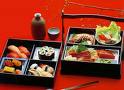
    It started with Don Lee, my colleague in the English department at Macalester. Don is new to the Twin Cities, author of the novel Country of Origin, and we’re very pleased to have him. So when he told me he was mostly happy with Minnesota but disappointed in the small number of restaurants serving authentic Japanese cuisine, I was concerned.

    I sent him to Obento-ya, Sakura, and Anemoni, where the head sushi chef, Kenji Sakomoto, is from Japan. Then I promised to check into Musashi, the new place that was supposed to open downtown, in the old Olive Garden spot on Hennepin Avenue, in summer. This was mid-September.

    Not two days later, I got a phone call from a reader asking when Musashi was due to open; he drove by it every morning, he said, and though the signs were in place, it looked like construction had stopped.

    I called both the Downtown Chamber and the Greater Minneapolis Convention and Visitors Bureau (now, unfortunately, called Meet Minneapolis); representatives from both responded that they, too, were perplexed. The family-owned Japanese restaurant had been busy with pre-opening activity until suddenly, one day, everyone just disappeared. The man from the GMCVA even offered to walk by on his lunch hour.

    “I looked in the windows,” he reported back. “It’s dusty and there’s construction equipment all over. That place can’t be opening any time soon.”

    Finally, on the advice of my co-blogger, Jeremy Iggers, I looked up the restaurant’s liquor license and got a telephone number from it. I called and a man answered. “Oh, we’re opening in November now,” he said. “Plans were delayed.” I asked what sorts of items Musashi will serve and the man offered to send me a menu. . . .even asked for my e-mail address and seemed to be writing it down. But no menu ever materialized.

    I’m hoping, for Don’s sake — and for the sake of retaining great literary talent in Minnesota — that Musashi opens next month and serves delicious, authentic Japanese fare. But I guess we’ll just have to wait and see.

  • Breast Awareness, Part 2

    gupta.jpeg

    I was — perhaps rightfully — taken to task by a reader (see comment on the entry below) for downplaying the risks of wine by posing questions about whether the most recent study to find a link between breast cancer and alcohol consumption also controlled for things such as smoking, high-fat diets, misreporting, etc. Mr. Johnson’s comment was well articulated and I took it to heart.

    I also became curious about what the nation’s medical news experts are saying. So I looked at articles by a few of the big ones, including a blog by Dr. Sanjay Gupta’s CNN health team. (If you click on the link, scroll down to the October 1 entry.) And it turns out even the widely-revered Dr. Gupta and his associates were criticized for their handling of the Kaiser Permanente study which found red wine is as prone to enhance breast tumors as beer or hard liquor.

    Several readers — including a few medical professionals — wrote to CNN hawking a paper from 2005 that was authored by a team of Melbourne-based researchers and claimed high levels of folate (a B vitamin necessary for the production of red blood cells and the synthesis of DNA) may mitigate the effects of alcohol when it comes to breast cancer. It’s worth noting, however, that at least one of the people responding to Gupta was a doctor (of what kind, I cannot say) with the American Roots Winery in Napa Valley.

    For the record, I’m not recommending that women swallow handfuls of B-complex capsules before slugging down liters of wine. . . .I’m only putting out all the information I can find so careful readers and cautious drinkers can make informed choices of their own.

  • Across the Universe: All you need is plot

    th-trawberrySoldier.jpg

    Occasionally, I’ll give my creative writing students an exercise that goes something like this: take a candelabra, a piece of fishing wire, a map, a casual lie that can’t be taken back, and come up with a story. It must contain all of these elements, but beyond that the world of fiction is open to you. Now, just let yourself write. . . .

    The 3 people (Dick Clement, Ian La Frenais, and Julie Taymor) who worked on the screenplay for Across the Universe seemed to be operating on a similar paradigm. Take all the Beatles songs you can think of, match them up with random historical events from the 60’s and 70’s, and create a story based on the characters and situations therein. Ready, set, go!

    The result is a herky-jerky peace-love-and-war narrative that plays like Forrest Gump (another weak, insipid film, in my opinion) on acid. As in Gump, there’s a slender, blonde heroine with woeful eyes, a rather dense love interest, a best friend who goes to war and comes back changed. A stoic mother, a mysterious father figure, the list goes on and on. . . .All this film is missing is the footage of John Kennedy, a character with AIDS, and Buffalo Springfield’s “For What It’s Worth,” which is a sad omission indeed.

    Across the Universe follows — and I use that term loosely — the life of the bastard Liverpudlian Jude in his quest to find his American father. He meets up with Max (who does, in fact, wield a hammer, though it’s not silver), Sadie (sexy as all get-out), and Lucy, that doe-eyed heroine who does, by the end of the film, actually appear from out of the sky. The whole lot lives together in a walk-up in Hell’s Kitchen, hopping from one bed to another, experiencing the turbulent 60’s, visiting smoky bars and relying for spiritual sustenance on rock-and-roll. They ride a psychedelic bus and debate the war and hurt one another on the road to finding true love. Sound familiar?

    It is. And it’s probably not a bad story, even if it has been told 3,000 times. But what’s missing in this film is good old-fashioned plotting: rather than allowing events to lead from one to the next — giving the impression of an organic and inevitable outcome — everything in this film is gerrymandered to fit the music. The screenplay reeks of writers who wandered around thinking, “Oooohhh, the race riots in Detroit, I can link those to Let It Be.” and “Strawberry Fields. . . .whoa that’s deep.” Those song lyrics that don’t lend themselves to an easy narrative device, such as the strawberries, simply get wedged in: Jude, the artist, staring at a bowl of fruit; Jude going into a frenzy and pinning strawberries to the wall; Jude struck by inspiration as he watches the strawberry juice bleed. Uh, yeah.

    There are some incredibly watchable scenes in this movie. You’d have to have a heart — and ears — of stone not to be overjoyed when Joe Cocker appears on screen, dressed as a beggar, a prophet, and a pimp, to belt out Come Together. But in the gestalt, this is a well-intentioned mess of a movie that uses a flimsy narrative device rather than simply telling a story. As a teacher, I’d give this effort a C+. And that’s if it was executed by my sophomore students at Macalester.

    My advice? For the best, most startling wartime tales, check out Tim O’Brien‘s The Things They Carried. For a heartbreaking and beautiful tribute to the Beatles, read the Modern Love written by novelist Ann Hood on the event of her daughter’s death. And if you want to see a couple landmark films about re-entry after Nam, watch Coming Home and The Big Lebowski. In that order.

    Across the Universe is showing on two screens at the Edina Cinema.

  • Bye Bye Big Buck

    buck.jpeg

    To know thyself. . . .no less a mind than Socrates said it’s important. And I agree.

    For example, I’m a food writer but I am not Ruth Reichl or Calvin Trillin. Culinary trends don’t rise and fall with my whims. And I’ve come to terms with this. OK, I’m working on coming to terms with it. But in any case, at least 90 percent of the time, I’m pretty clear about who I am.

    Many restaurateurs struggle, however. Little Midwestern bistro chefs suddenly start thinking they’re on par with Lupa and take to offering scrambled eggs with foie gras toast at $24 a plate. Successful coffeeshop owners decide to open three-tier dance clubs, or franchise their “original” concept in 37 little towns. In other words, they forget who they are. And the results are rarely good.

    Take Big Buck. It was opened in Minnetonka a couple years ago by Jennifer Jackson and Eliot King — the couple who brought you Prima, on 53rd and Lyndale in Minneapolis, and Three Fish on the perimeter of Lake Calhoun. Big Buck was supposed to be their “destination” spot: they were serving wild game — elk and boar — along with steamed mussels and something they called “roasted duck cigars.” But within months, the critics shouted en masse: great hamburgers and grilled salmon; forget about the rest. It never caught on.

    So recently, Jackson and Eliot did a very smart thing. They closed Big Buck — quietly — and replaced it with Prima-Minnetonka, a larger, full-bar rendition of the little Italian eatery, serving panninis, pastas, and a tasty little Caesar salad, along with wines in the $5-8 a glass range.

    I want to be clear: these people are very, very good at putting together a nice, neighborhood meeting place. A restaurant where you can feel comfortable and well taken care of and get out for under $25 a head. Prima is a lovely little 55-seat bistro; and Three Fish is one of the most reasonably-priced nice seafood places around. But Jackson and King simply don’t have the drawing power of a Tim McKee or a Stewart Woodman or an Alex Roberts — all chef-owners whose reputations will cause people in St. Cloud or Red Wing to get into their cars and drive into town.

    Score one for self-awareness. And as it turns out, the move probably was good for the Jackson/King duo financially, as well as in a personal growth sort of way. Their press release [curiously] reports that since the change to Prima, female diners are flocking to the Minnetonka location. And wine sales are way, way up.

    I grew up in Minnetonka, actually. I’ve been acquainted with the housewifely lunching crowd in that area for more than 30 years. And no one understands better than I the way the wine flows over servings of butternut squash pasta with pine nuts and caramelized pears.

    So I may not be Calvin Trillin — yet — but I know myself well enough that I’m aware running to Cub and Tonkadale Nursery, then ducking in for Happy Hour at Prima every afternoon, is not for me.

  • Be Aware If You Have Breasts

    bc.jpeg

    A couple months ago, I posted a piece about the health benefits of wine — including the information that red wine had been found to have both cancer-enhancing and cancer-preventive effects on breast tumors in women. My hope — quixotic, perhaps — was that it was a wash: the antioxidants in wine would cancel out any damage done by the alcohol.

    Well, a cautionary story published this week in the Scotsman and by the Associated Press says that’s just not true. According to a study conducted by the European Institute of Oncology, wine drinkers are just as likely as drinkers of beer and other spirits to be diagnosed with breast cancer. Of more than 70,000 women surveyed during health examinations over a period of 7 years , those who reported drinking wine developed the disease at roughly the same rate as those who said they drank beer or hard liquor. But “light” drinkers (defined as less than one glass per day) and non-drinkers in the study suffered from breast cancer at a much lower rate.

    I think this is worth knowing. But note a couple things: first, the study appears to have relied on self-reporting — a notoriously inaccurate way to collect data. (It sounds a lot better to say to one’s doctor, “I have a couple glasses of wine with dinner” than “I knock back three or four rum and Cokes every night.”) Also, I can find no evidence that the wine drinkers in the study were exclusive about what they consumed; did a few of them, maybe, follow those couple of glasses with the rum? Finally, there are other factors to consider, such as the fact that drinkers tend to eat rich food and this was Italy, after all, where smoking is still de rigeur.

    But enough rationalizing. It appears to be sadly, horribly true that alcohol promotes estrogen production and estrogen feeds breast tumors. Which is a problem for women prone to cancer — or, for that matter, anyone with a set of breasts. So ladies, if you’re going to drink wine, be careful. Follow a low-fat diet, exercise, try not to eat hormone-laden meat, avoid taking the birth control pill, and DON’T SMOKE. And if you have risk factors beyond your control — such as a genetic predisposition — you might want to limit yourself to one glass a day.

    If you must do this, however, please, make it a good one.

  • The Perkins Paradigm

    zenocafe.gif

    I stopped at Zeno one afternoon last week to meet a friend for a glass of wine. A lot has changed since the new owners took over last year.

    When Zeno first opened in late 2003, it had an aggressive “we’re the coolest” culture: thrumming techno music, servers with multiple piercings, and two New York founders who were constantly circulating among the guests and slapping backs but — rumor had it — never paid their bills. But what irked me the most was the inconsistency: wine pours were sometimes five ounces, sometimes nine; the bottles would be freshly opened one time I visited, nearly vinegar the next. There seemed to be no standard.

    I’m happy to say that the new and improved Zeno IS. The music has been turned down just a notch; the servers (at least the ones I’ve encountered) are friendly and knowledgeable; the wine menu is a little more refined and pours are a standard 7 ounces. But there is this oddity: Zeno now runs a “bottomless wine glass” special in the afternoons, from 3-7 p.m., serving customers as much wine as they can drink during that four-hour period. The cost is $10 for their bottom-of-the-barrel wines (Glass Mountain and Bella Sera) and $20 for the “premium” wines on their list.

    A great deal? Well, yeah, it can be. . . .but that’s exactly the problem, as I see it. In order to make the $20 glass pay, you have to drink the equivalent of three glasses of wine (priced, per glass, at 7-10 dollars) before the dinner hour. Not to mention, you can buy an entire bottle of Glass Mountain Chardonnay retail for about 7 bucks. My friend loved the special because it allowed her to taste (and discard) several different options. And maybe I’m just more fretful than most, but the whole thing made me nervous. A bottomless wine glass at 4 p.m. seems like an invitation to be blotto by 6. Much like those bottomless cups of cheap coffee restaurants used to serve: I can still remember leaving Perkins at 15 with a sour stomach and a nearly deafening caffeine buzz.

  • So you want to be snapped at by Anthony Bourdain?

    Anthony_Bourdain.jpg

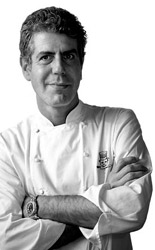
    OK, so you probably can’t be a Food Network star, but you can be in the presence of an infamously uncensored one. Anthony Bourdain is coming to Solera on Tuesday, November 27, for an evening of Spanish wine and tapas, during which he will answer questions [beware!] and autograph copies of his new book, “No Reservations: Around the World on an Empty Stomach.” There are a limited number of tickets available at $80 a pop. Click here, if you’re so inclined.

  • Conquering Maple Grove, Then the World

    xfiles.jpeg

    Here’s my theory: the brains behind Parasole Restaurant Holdings (owners of Manny’s, Chino Latino, Good Earth, Muffuletta, Figlio, Salut, and Pittsburgh Blue; and originators of Oceanaire and Buca di Beppo) have buried enormous, powerful magnets beneath all their restaurants. Then they abducted the entire citizenry of our state, one by one, and implanted corresponding metal chips in our necks.

    Now maybe I’ve just watched too many old episodes of the X-Files. But you have to admit, it would explain a lot.

    I was at Pittsburgh Blue, the newest Parasole creation, last Saturday. And it was mobbed: mobbed in that can’t-get-into-the-parking-lot, six-deep-at-the-bar sort of way. The food was good, tasty but definitely not arterial-cleansing. It was mammoth and meaty: salads heaped with bacon, huge hunks of beef, the best yellow corn I’ve ever tasted, though I’d bet my next paycheck it was swimming in heavy cream. People were — literally — eating it up.

    The same thing happened when Salut opened in 2005: I remember walking in one night and asking for a table, to which the young host gave a snort. “How’s a week from Thursday?” she asked before disappearing again into the fray. It’s still packed every night. And now, Parasole is planning to open a second one next spring, in the Milton Mall, across from J Crew on Grand Avenue in St. Paul. The restaurant will be about the same size as the one in Edina, but Salut St. Paul will sport a large, secluded patio, rather than having its outdoor dining streetside.

    And the partners at Parasole are already thinking about the next Pittsburgh Blue location, too; less than three weeks after opening, PB Maple Grove is looking at a “run rate” (that’s restaurant-speak for annual gross profit predictions, based on the average so far) of more than $7 million. It’s a potential gold mine.

    Phil Roberts, co-founder of Parasole, says they’re scouting for locations like Maple Grove and Edina. “We’re talking about the Chicago suburbs,” Roberts told me. “Places like Northbrook. But Northbrook is just a metaphor for the kind of place we want: a high-income bedroom community.

    In fact, Roberts is — even as I write — on his way to Honolulu, home to one of the biggest Buca di Beppos in the country (piles of pasta on the beach. . . .it doesn’t sound right to me, but that’s why I’m not a restaurant mogul) to shop for real estate. There’s talk that Parasole will start doing “communities” of restaurants in particularly favorable locations.

    Imagine: a Manny’s, a Chino Latino, a Salut, and a Pittsburgh Blue all lined up like storefronts on Hawaii’s white sands. Mark my words. Tourists will begin disappearing for a couple hours at a time and when they come back, they’ll all have incisions just under the left ear and a rabid craving for bacon, steak, creamed corn, and red wine.

  • Fortress Wine: Talk about focus!

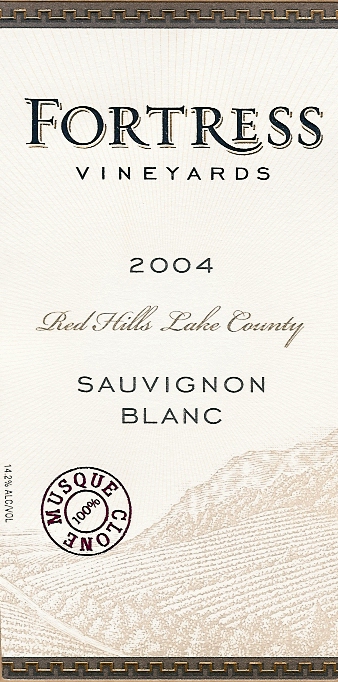
    Here’s a winery on Mt. Konocti in Napa Valley’s Lake County that produces exactly ONE wine: a Sauvignon Blanc made of 100% Musque clone grapes.

    04FortessSavBlanc.jpg

    “My husband believes in doing one thing well before he moves on to something else,” said Barbara Snider, co-owner of Fortress Vineyards and — by the way — mother to Tim Snider, who happens to be vice president of the much larger Fess Parker Winery as well as the son-in-law of Fess himself. “We decided to focus on the Sauvignon Blanc until we got it just right.”

    I’d say the Sniders (senior) can start experimenting with Pinot Noir.

    Their Sauvignon Blanc 2004 is almost startlingly clean, with a nose of cucumber, citrus, and minerals, and a full flavor like a lime that’s been cut with a steel knife. The finish is bigger than you might expect; there’s even a tiny hint of vanilla in the wine’s wake. But the overall experience is one of clear, sparkling water, tart fruit, and flinty soil.

    My husband and I split a bottle last night while sitting outside on what probably was the last sultry night of the year. A perfect way to punctuate the end of summer.