Author: Ann Bauer

  • The Sweet (and Saucy) Transvestite

    In the early 1980s, when I was 16, my friend, Martha, picked me up at 11 p.m. in her father’s enormous Buick, and we drove from our neighborhood in Minnetonka to the Uptown Theater for the midnight showing of The Rocky Horror Picture Show.

    I was brought up on an entertainment diet of The Carpenters, The Waltons, and films like The Goodbye Girl. And Rocky Horror was like nothing I’d ever seen: its black-lipsticked hero, wearing dominatrix garb and wielding an ax; colorfully-dressed Munchkin-like people doing the “Time Warp”; a bizarrely compelling hook-nosed butler who had an unorthodox relationship with his sister, the wild-haired maid.

    Then there was the audience: kids chanting lines along with the characters and throwing things at the screen. Rice, toilet paper, toast. I didn’t remember much about the storyline (in fact, when I saw the film again, recently, I was amazed by its sci-fi ending); what made an impression was the experience. Raucous and sexually-charged, yet strangely wholesome.

    That’s why, when my not-quite-13-year-old daughter came home from a sleepover last summer, proclaiming that she’d watched Rocky Horror twice and it was her new favorite film, I didn’t fret. Despite its themes of party sex, incest, murder, and cultishness, I believed it was pretty harmless. I’d known interesting people over the years who hadn’t fit in anywhere else but found a home in one Rocky troupe or another. I was all for it.

    As an English professor, I realized Rocky Horror was informed by a wide range of classics: it’s a sexually-charged homage to Frankenstein, with a healthy dose of The Fall of the House of Usher, and a little bit of Hansel and Gretel thrown in. This is the story of two naïve kids who fall in love, then travel out into the world and become both wise and jaded. The protagonist, Tim Curry’s Dr. Frank-N-Furter, is sympathetic but deeply flawed — a character that turns from sinister to childlike but appears, in his twisted little heart, simply to want everyone who visits his castle to disrobe, dance, and have a good time. What’s so wrong with that?

    Nothing, I decided. . . .even for my adolescent. And it struck me, too, how remarkable it was that Rocky Horror — which was made when I was seven — remains relevant today. The film has, indeed, time-warped.

    I thought it would be interesting to sit down with an expert to find out why.


    We meet at the Longfellow Grill at 9:30 on a rainy Saturday night. I’m in straight-leg jeans and a purple blouse. She’s wearing a leather corset, fishnet stockings, and four-inch heels. We start by talking about regular life.

    Five days a week, Diana McCleery drives a school bus in the mornings and afternoons, spending the hours in between with her three-and-a-half-year-old, Morgan. She loves being a mom, and she’s grateful for the job that allows her so much time to parent. It’s only on weekends that she leaves her husband home with Morgan and goes to the Riverview Theater in Southeast Minneapolis, where she simulates sex on stage.

    For the past couple years, McCleery has served as the director of Transvestite Soup, a troupe of fifteen local volunteers that puts on a live performance of The Rocky Horror Picture Show while the 1975 cult classic film screens behind them. And she’s well qualified for the job. In addition to holding a psychology degree from the University of Memphis, the forty-one-year-old witch (McCleery is a third-degree leader in the Blue Star tradition of Wicca) has been performing in live renditions of Rocky Horror—here and in Tennessee—since 1990.

    “I went to Rocky every so often in college,” she says. “Then one day my boyfriend and I were like, ‘Let’s dress up and get crazy.’ So I wore my sexiest underwear, and he put a leash on me. I found out I enjoy performing, and I love this movie. In fact, the more I see Rocky, the more I want to get up on stage and show it to people.”

    McCleery points out that there are subtle, heartfelt relationships between the characters, such as Riff-Raff and Dr. Frank-N-Furter, which casual viewers often miss.

    “Frank is beautiful, and Riff-Raff is ugly; Riff-Raff has no one but Magenta, while everyone adores Frank.” She ticks these things off on her long fingers. “And there’s a hint that Riff is in love with Frank-N-Furter. At the end, when he kills Frank, Magenta says, ‘I thought you liked him,’ and Riff answers, ‘But he never liked me.’ If you look closely, he has a little tear in his eye.”

    Her college boyfriend didn’t enjoy their Rocky experience, she admits. As McCleery grew increasingly uninhibited, wearing less clothing for performances and experimenting with different roles, he became uncomfortable. She soon broke up with him and immersed herself fully in the show.

    Luckily, her husband, Rob, an administrative assistant at Wells Fargo whom she met long after starting with Rocky, is a big fan. Before their daughter was born, he attended nearly all her shows.
  • Mastering the Art of Service

    1001MarkDenise.jpg

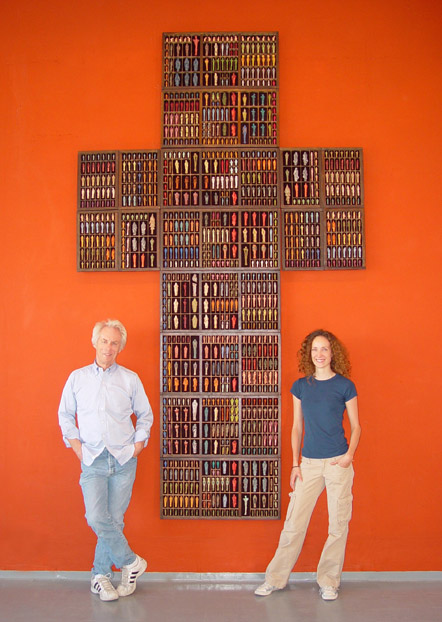
    He looks like a waiter out of a New Yorker cartoon. Crisp shirt, ramrod straight back, tray held aloft on his fingertips. He wears reading glasses on a chain around his neck, makes the best wine recommendations, calls all the ladies “dear” no matter what their age, and sports a wild, white mane of hair. No wonder he’s the most popular server at La Belle Vie.

    In fact, Mark Roberts may be one of the most popular, oft-requested servers in town. He is that quintessential pro. And very few of his regular customers know he’s also a nationally-known photographer and protégé of Ansel Adams; a former concert pianist; and the 1970s-era art gallery owner who helped Hollywood’s Steve Martin acquire his personal collection and gave Annie Leibowitz her first Twin Cities show.

    They likely wouldn’t guess that he didn’t start waiting tables until he was well into his 40s, after he went broke because his string of one-hour photo labs in the Caribbean was wiped out by a freak hurricane. Or that he was fired from his first restaurant job for knowing absolutely nothing about food service.

    Most of the people sitting in the dining room at La Belle Vie don’t even know that’s his art hanging on the wall.

    I first met Roberts in the St. Anthony Village home of Jack Hunt, owner of Billman-Hunt, our region’s only remaining independent funeral home.

    I was there to interview Hunt about his religious paintings and his audience in Rome with Pope John Paul II. We were standing in the living room, looking at a set of ancient triptychs, when Roberts sauntered through, shirtless and barefoot, still rumpled from bed, walking across a room crowded with statuary to the bathroom where he kept his favorite set of drums.

    Hunt rolled his eyes. “It’s only Mark,” he said, as if that explained everything. Later, Roberts came out, midway through pulling a shirt over his head and sat down with us. The men explained to me that they were former business partners and friends, that Roberts had only just arrived back in town after a surfing hiatus in Miami, and that he was staying with Hunt while he started a job at the newly relocated La Belle Vie.

    “So you used to be a mortician, too?” I asked. And they both laughed.

    Roberts was born in Carmel some time during the World War II era — he won’t say how old he is now, only that he’s in his mid-60s, “leaning” toward 70. As a child, he was a gifted piano player, and by the age of 14, he was on the road, giving concerts all over the United States. Often, he would stop in Minneapolis on his way cross-country to visit his godparents. He loved music but hated performing.

    “I would be sick for three or four days before every concert,” he says. “Even after I played, I’d still be throwing up.”

    Around the same time, his next-door neighbor, a photographer named Ansel Adams, asked if Roberts would like to work with him. Thinking it might help their son become more adventuresome and get over his stage fright, Roberts’ parents agreed. So in what Roberts calls “the pivotal moment” of his life, he went to Yosemite as Adams’ assistant. And there, he fell in love with photography.

    He was accepted to Stanford on a music scholarship, but he took a job there as a teaching assistant for Imogen Cunningham, and — despite earning his master’s in musical performance — went on to become a photographer. Also a surfer and a real party boy. . .

    He lived high: traveling, driving sports cars, buying exotic hallucinogenic drugs. But despite his love for big cities and oceans, Roberts kept coming back to Minneapolis — the place where his godparents had lived and he’d always felt safe. On one trip through in 1972, a local art dealer called Roberts to ask if he’d be willing to photograph a funeral: some family members of the deceased couldn’t make it from the East coast to see their loved one buried, so they wanted pictures.

    Roberts agreed, on the condition that he could take some portfolio shots for himself — stylized profiles of the dead. He thought it might help him make his mark. A couple hours later, Hunt picked him up in a long, dark hearse.

    They talked on the way to the funeral, determining quickly that they were both into art. Before the evening was over, the men had decided to open a gallery called J Hunt.

    They opened with a show devoted to the work of a prison guard and painter from Duluth.

  • NEWS: Breaking Bread


    Click here for Breaking Bread, the FOOD NEWS blog by Jeremy Iggers and Ann Bauer.

  • Beyond the Cask


    Click here for Beyond the Cask, Ann Bauer’s WINE blog.

  • Wine for Thought

    I’m not a traditional Jew.

    My parents were mixed (one Jewish, one Catholic) and my upbringing was secular — more intellectual than religious. I do not observe the eight days of Passover or go to Shul. But I believe in Yom Kippur, which began at sundown last night and extends until this evening.

    This is the day of atonement. And while I neither fast nor abstain from the other prohibited activities (bathing, wearing leather shoes, anointing one’s body with perfume, and engaging in marital relations), I do think about guilt, responsibility, and repentance. I try to let go of old grudges and right whatever wrongs I have committed. The list is long. . . .

    On it are several things I’d like to forget: a particularly divisive conversation with my sister; an old friend ill, frustrated, and mired in anger; a mentor whom I no longer trust. It’s thorny, this business of trying to figure out where the truth lies — which grievances to forgive and which to hold onto because they make one aware.

    And while thinking about all this last night, I drank a Minervois — the Abbaye de Tholomies 2004 — by the light of our sabbath candles. This is a wine I tried by chance and grew to love in a wary way. Every bottle is different: some fruity, some leathery, some astringent and dry. This last was full of saddle and plum. Cigar box, chalky soil, and ancient trees. It tasted to me the way musty oaken library stacks smell. An excellent wine for thinking by.

    26456.jpg

    The label shows three men, intellectuals by appearance, deep in discussion over glasses of their own. And the wine’s history goes deep as well. Abbayes de Tholomies was a monastery founded in 990 A.D. The monks grew wine grapes until the Inquisition, when their home — a refuge for heretics — was destroyed. In 1981, a dental surgeon named Lucien Roge bought the property and resumed winemaking there. Roge adheres to Ben Franklin-like philosophies: growing is coordinated with “biodynamic” law, such as the phases of the moon and stars. And he uses no chemicals on his crops.

    This is not a wine for light occasions, afternoon barbecues or quick drinks with colleagues or casual friends. It is, however, perfect for those solemn moments when you are deep in thought. I like to imagine wisdom coming from that soil, from those monks, from the ruins of an abbey lying in pieces under the ground.

  • Former A Rebours Owner Sets the Record Straight

    Back on the 7th of September, it was — for some bizarre reason — front-page news for the Pioneer Press when A Rebours, the little bistro on St. Peter Street, closed its doors.

    Now, I loved A Rebours. The classic menu and long picture window and ridiculously unpronounceable name. But I didn’t think its closing was on par with stories about war or poverty or even the strike of 3,500 union workers at the University of Minnesota. Another odd thing: on the day A Rebours closed, owner Doug Anderson supposedly insisted it was due to circumstances beyond his control — the 35W bridge collapse, for instance, and the general dullness of downtown St. Paul.

    "It got to the point where I couldn’t make a living downtown," he reportedly told Kathie Jenkins.

    The following day, Jenkins wrote a second piece that said Anderson was selling the restaurant to former W.A. Frost chef Russell Klein and his wife, Desta. And they would soon open a place of their own, called Meritage.

    So here was my problem: If A Rebours — an established restaurant — was being driven under by ongoing traffic SNAFU’s caused by the 35W bridge collapse, why would the Kleins dive in and buy it? And if Anderson was in the midst of a negotiation to sell, why would he tell a reporter the location sucks?

    Further: Why was the phone number for Nick and Eddie, Anderson’s new Loring Park restaurant which was supposed to open some time in summer, not in service?

    Now, you should know up front, I like Doug Anderson.

    Last time I talked to him, back in June at A Rebours, he said, "I hate all these haughty food weenies. Who are the customers I love? The people from over on 7th Street who make $50K a year and they’ll come in here and have a cheap bottle of wine and a nice meal and then go home and screw. Not talk about the fucking food."

    He told me during the same conversation that he’d recently quit drinking at his wife’s request. And this is what’s truly magnificent about Doug — stone cold sober, he’s less politic and more profane than the rest of us are roaring drunk.

    Today, I dropped in on Doug to get the real scoop about A Rebours and Nick and Eddie. And here’s what he said:

    He never blamed the 35W bridge collapse for the failure of his restaurant. "Sure, it made traffic difficult, but 35W had nothing to do with what happened," he told me. And he didn’t sell the place, either. Russell and Desta Klein "inherited" it in a complicated deal he calls too "big a fucking mess" to discuss.

    He is in debt, no question, and has pledged to repay his lenders by "getting a real job." To that end, he no longer has an interest in Nick and Eddie, which will open on or around October 8 and will be owned by his wife, Jessica Anderson, in partnership with Steve Vranian, formerly the chef at North Coast in Wayzata.

    Also, he’s joined a punk rock band, called Sam Planet, that’s "extremely loud." Doug plays guitar.

    I don’t know what’s happened over in St. Paul. And I’m pulling for Meritage to do well no matter what the issues between Anderson and Klein, because with the closing of Margaux last week, there’s practically nowhere left in St. Paul to get a decent upscale meal. (The exceptions are Heartland and I Nonni, but neither is downtown.)

    As for Doug, I’m hoping against hope that he stays sober, pays off his collectors, makes his loud music, and rejoins his wife and Vranian on Loring Park. We need someone who just wants to sell us cheap wine so we can go home and screw, not talk about, well, you know. . . .

  • Free news from New York and great $9 wine!!

    stamp-nowimpywines.png

    C’mon, isn’t this every over-educated, artsy, navel-gazing intellectual’s dream? Well, I know it’s mine.

    First, the New York Times announced on Monday it would stop charging for certain “select” (read: everything with wit, context, opinion, or Thomas Friedman’s byline) articles. And today, they not only run a terrific piece on the legendary Alice Waters, there’s also a column called Happiness for $10 or Less, all about great, high-quality but ridiculously inexpensive red wines.

    You have to scroll all the way to the end of the second page to see the full list of top-rated 7, 8, 9, and 10-dollar wines. Of them, I heartily recommend the Ravenswood (though they cite the Merlot and I’m partial to the Zin). This label is a staple in my house, especially toward the end of the month when money is tight.

    Check it out. And write in if you have any contenders to add.

  • Grab your rifle and head to the MOA

    index_01h.jpg

    Last time I went to the Mall of America was about ten years ago. My sister was getting married. And my mother swore I would find a good deal on a rehearsal dinner dress at Nordstrom.

    I parked on Level 26. Entered through a door that I would find out later looked like every single other one at the mighty mall. Walked a few miles through oodles of gadgets and clothing tables, burping electronic devices and at least three Disney stores. Then I found myself in what was then Camp Snoopy: roller coaster overhead, children screaming, lights flashing, and the smells of all those foods that aren’t really — hot dogs, cotton candy, synthetic nacho cheese — wafting through the air.

    I fled, dress-less, and promised myself I would never go back.

    Yet, here I am — not only going to the Mall but asking you to go as well. Because on Wednesday, September 19, winemaker Barbara Snider will be hosting a food and wine pairing dinner, featuring Fess Parker wines, at the Napa Valley Grille.

    I’m not quite old enough to remember Fess Parker. But I hear he played some frontiersman, Davy Crockett or Daniel Boone — one of those guys who carried a long, mean gun and wore a dead animal atop his head — on 1950’s-era prime time TV. After several decades of wearing a coonskin cap, Parker was typecast. (Who’da thunk?) So in the ’80’s, tired of the acting gig, he took his Hollywood riches, bought some land in Santa Barbara, and opened a winery.

    Against all odds [at least, if I were making the odds], Parker’s wines are terrific.

    There’s Frontier Red, a big, happy beefsteak of a blend, made from a half dozen different kinds of grape. A Chardonnay that’s full and fruity and rich, not quite buttery but creamy smooth. And Parker Station Pinot Noir, a nicely structured cherry-forward wine that’s better than most in its price range.

    Nothing but wine of this quality could make me brave the monstrous mall. But for dinner with Barbara, I’m willing. Meet me at Napa Valley Grille for a menu of onion toast with smoked trout, lamb lollipops, oysters, braised oxtail, octopus salad, corn cakes, and coffee ice cream sandwiches, served with four select Fess Parker wines. Tickets are only $55, and 10% of the proceeds will go to the Sow the Seeds fund, helping regional farmers who lost their crops due to flood.

    For more information, call 952-858-9934.

  • Spanish Wine Syndrome

    Twice since I began this blog, someone has told me, “It’s painful to read your entries on red wine. I love the taste. But I can’t drink it; I get a terrible migraine if I take even a sip.” One, a male, said he’d been this way all his drinking life. But the other, a woman about ten years older than I am, told me it had come on suddenly in her mid-40’s. This, I found frightening. So I’ve done some reading on the syndrome, sometimes called Red Wine Headache.

    I count myself as lucky that I’m not generally sensitive to wine — especially as I’m a pale-skinned redhead who’s allergic to about a dozen other things, including mushrooms, which I love, and lanolin, one of the greatest natural moisturizers on earth.

    I do, however, have to be careful. Every once in a while, a wine will affect me poorly: causing me to feel tired and headachy but making me restless when I do sleep, leaving me listless and dyspeptic the next day. And I can’t even tell you why. . . .

    Here’s what I can say: when this does happen, it’s nearly always after an inexpensive Spanish, Portugese, or South American wine made exclusively from Tempranillo or Malbec grapes.

    Last night, for instance, I drank a single glass of the Bajoz Tinta de Toro Crianza. It’s an interesting wine: soft on the tongue at first, then full of dark cherry and oak, with such a tannic finish it makes the insides of your cheeks pucker and leaves them dry. Typically, I like a fuller, warmer finish. But the bottle was open, and my husband — who lived in Barcelona for several years — loves a Spanish red.

    bajoz.gif

    Today, however, I’m regretting my adventurous, it’ll-be-different-this-time attitude. Though I enjoyed the flavor of the Bajoz Crianza, I felt totally wiped out just 40 minutes after finishing it (which was frustrating, as I’d drunk only one glass because I had a lot to do) and went to bed early but was fitful all night. I slept in a little yet awoke this morning with that dull mallet-to-the-head feeling that I associate not with overindulgence but with certain wines.

    Make no mistake: this is in no way an indictment of the Bajoz — any more than my allergy to mushrooms reflects negatively on wild shitakes or morels. I, for some reason, simply don’t respond well to Tempranillo, particularly if its very tannic.

    I used to believe it was added sulfites causing my adverse reaction. According to experts, such as this biochemist-turned-winemaker, that simply isn’t the case. And if the problem is indeed a slight tannin or histamine sensitivity, it’s possible I might circumvent it by drinking a cup of black tea (whose bioflavonoids are anti-inflammatory) beforehand.

    With so many wonderful wines in the world, it’s not hard to find alternatives. Even four-dollar Chiantis tend to agree with me. But for the sake of science, and the woman I know who can no longer drink red wine, I may try the tea cure on a night when I can afford (in case it doesn’t work) to lose the sleep.

  • Frito Pie and Red Bicyclette

    picture.jpg

    My children have been blessed with a wonderful stepmother who is unlike me in most every way. She is tall, a statuesque brunette, while I’m the sort of mom a teenage boy can pick up and move out of the way. She’s concrete and detail-conscious where I am abstract and forgetful. She loves to shop, drinks sweet, sparkly wines, and eats red meat on a near-daily basis. Also, she’s from Oklahoma — and a great southern cook.

    When my 13-year-old daughter needs to buy party clothes or bookshelves from IKEA, I give her my credit card and she goes to her father and stepmother’s house, with my blessing. (Me. . .I get hives whenever I drive within 5 miles of a mall.) Often she’ll stay for dinner. Last time she came home all excited about a delicacy called Frito Pie.

    So for our family dinner last night (mine and my husband’s with the children we all share), my daughter made her stepmother’s version of this Texan dish: Fritos, ground beef, spicy chili beans, diced tomatoes, onions, cheese and sour cream. As it happened, my husband had stopped at Byerly’s earlier in the day and they were having a penny sale on Red Bicyclette wine (buy one bottle for $10.99, get the other for a penny — who could resist such a deal?), so he picked up a couple to try.

    What a happy coincidence. Talk about a pairing! I can imagine nothing better to go with Frito Pie — which was tasty and filling and, in our house at least, a fun departure from the usual vegetable-heavy fare — than this profoundly adequate French table wine.

    First, you have to admit, the label is just too cute. It’s like something right out of the canon of François Truffaut — or, for you more modern cinephiles, this past summer’s Ratatouille.

    But also, this is exactly what a mediocre rural French table wine should be: fruity, drinkable, and inoffensive, meaning there is no bitter, sour, sharp, or syrupy flavor. Red Bicyclette is rather like Fritos and sour cream in this respect: no matter which “varietal” you buy, it is generic and soothing, pleasantly bland, straightforward and serviceable.

    Don’t be fooled, though. While Red Bicyclette may appear to be a charming little garage wine from the south of France, it is in fact a product of the California-based winemaking monster E. & J. Gallo, the same people who brought the world Carlo Rossi and Chardonnay-in-a-box. Is it worth $5.50 a bottle? I’d say yes, particularly if you’re having Fritos for dinner. But not a penny more.