Author: Ann Bauer

  • Waitress

    If you haven’t seen Waitress, now’s your chance. It’s showing at the Hopkins Cinema for $2.50 per ticket. Part fairytale, part romantic comedy, part cautionary fable, this film is far from perfect but it’s fun, colorful, unique, and features a killer performance by, of all people, Andy Griffith. A modern morality play about infidelity, spousal abuse, parenting and the importance of good friends, Waitress uses pie — what could be more wholesome? — as a literal emblem for just about every American value. And it features a diner that seems real, despite the fact that bizarre and unlikely things converge there: a wedding, a spacious and spotlessly clean restroom, and an owner (Griffith) who stops in wearing a bow tie to dispense salty wisdom.

    1175824.jpg

    It’s rare that you find a film this light, yet wending and unpredictable. And for $5, it’s a terrific cheap movie date that will give you much to talk about over dinner.

    Speaking of waitresses — I attended a family reunion of sorts at Lord Fletcher’s and had a great one. In our party was one child with a severe peanut allergy, an adult with a raging gluten intolerance, two people celebrating birthdays, and a teenager who’d recently had his wisdom teeth removed and was high on Vicodin. The woman dealt with our motley crew graciously and the food (believe me, this came as a surprise to many of us) was actually quite good. I’m not a fan of big, huge beefsteaks or fried fish or the usual “choice of potato” array, so I asked them to double a dinner salad and throw on every vegetable the chef could find in the kitchen. Not only was it tasty, the six other special orders we requested (my family can be a wearying lot) were perfectly executed as well.

    Old school, yes. I think our table had the lowest mean age in the dining room by about 15 years (which is scary, as one of the birthdays was a 70th). But Lord Fletcher’s is, frankly, better than I remember. And the Fess Parker Chardonnay made for a lovely screen deck summer wine.

  • Take this cup and drink from it

    pavao3.jpg

    My mother is a gifted caretaker.

    She’s nursed me through three births and two surgeries. I’ve watched her sit with dozens of friends and relatives who were sick or grieving. When I was very young, she volunteered at a hospital and I remember the things she told me when I would go with her: people who are frightened or heartbroken need to be touched, carbohydrates are comforting, those who are stricken often want to talk.

    It was with these things in mind that I made dinner last week for friends whose teenage son had been killed suddenly in an accident. Remembering all my mother’s wisdom, I made a very simple meal: marinated chicken, cold tortellini and vegetables, a green salad with fresh strawberries and a balsamic vinegar dressing.

    Midafternoon, my husband called to ask what kind of wine he should pick up. I had never seen this couple consume alcohol. And the funeral for their son had been a conservative Christian ceremony with incense and scripture, so I told him the wine likely was unimportant. But just in case, could he get something very light, easy and drinkable, a Viognier, or perhaps a Vinho Verde.

    He came home with a wine I’d never before seen: Pavão Vinho Verde, with a picture of a peacock on the label and no vintage.

    Our friends arrived at 6:30, clearly exhausted but bearing a gift for us. At first, they refused anything but water, sitting close on our couch, holding hands. “We’ve lost our appetites,” the husband admitted. He didn’t need to: both of them were worn-looking, drawn and small.

    Like many parents, I’ve dreamed that one of my children was dead and I know what it’s like to awaken with my heart pounding and my legs full of ice. I’ve written a novel in which I imagined the death of a child for the characters, and it felt — for those few minutes that I made myself re-live the nightmares — like a loud, black, empty place from which there was absolutely no escape. There is, I think, a wildness to this grief: something you must work every minute to contain. What I wanted, more than anything, was to reach through that darkness if only for a few minutes.

    We moved to the table. These two gracious people took tiny spoonfuls and placed them on their plates. Then they sat staring at them, as if wondering how it would be possible to open their bodies enough to put the food in.

    My husband offered wine. “I would take a little,” the wife said. “Maybe half a glass.” So we opened the peacock wine and I tasted it, hoping it would be right. And it was. The most utterly drinkable white I’ve ever had: not so effervescent as other Vinho Verdes and a little drier, too, but lemony and clear and glinting with a touch of steel.

    I’m not a believer in the divine intervention of God or the wisdom of the world — I don’t adhere to the “everything happens for a reason” school of thought. But if there is luck, it was with us that night. The couple tasted the wine and said, as if surprised, “This is good!” Both of them pushed their glasses forth.

    Do I care that they drank or that the wine was successful? No. Here’s what I care about: their world was gentled, however slightly. Because I recalled another of my mother’s donations to my bank of knowledge — a little wine or beer can stimulate the appetites of people who need desperately to eat: the elderly, pain patients, those who are lost in grief.

    The light dimmed, which helped somehow. The gift our friends had brought was a rosewood candle with a wooden wick and we lit it. I watched as our guests relaxed, the wine and the candlelight softening their world, if only for an hour. Over dinner, we talked about their son, about his love of cars and his mastery of certain video games and his plans to attend college in the fall. Once or twice, they laughed. And they actually ate.

    It is my business to talk about the qualities of wine and most of the time I do this as if the substance itself is the focus. In this case, however, the wine was simply a palliative — one that the savior in whom our friends believe ardently offered to his followers when times were tough.

    It was comforting, just as my mother said it would be. And for that, I am grateful.

  • Living large

    So it’s clear these are tough times, financially speaking. What with a recession looming, the Fed staying a grim course with interest rates, gas prices hovering in the $3 a gallon range, and housing values all over the country tanking like so many penny stocks — the future for middle-American homeowners is looking mighty cloudy.

    Each of us deals with this in his own unique way.

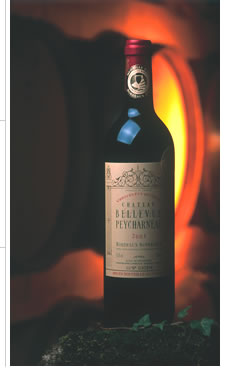
    Me? I’m reverting to my college days, lying on an air mattress on the bare wood floor of a 300-square-foot efficiency, enjoying the damp breeze from a wheezy, old window air conditioner, and drinking a glass of Château Bellevue Peycharneau 2004. OK, I guess I’m not reverting all the way. . . .

    ch_bellevue_peycharneau.jpg

    Last time I had a lease on an apartment like this one, I was 19 years old and prone to drinking wine coolers. But the rest — the solitude, the feeling of freedom, the inexpensive lifestyle — is the same.

    You see, when my husband and I were married about a year ago, the plan was that we would sell his suburban townhome and then my tiny two-bedroom cottage near the city, so we could buy a house that would fit all our collective stuff plus my three adult-size teenage kids. Within weeks, news reports about the declining real estate market started to eke out. We lowered our expectations and put my husband’s house up for sale. Eight months and four price drops later, it sold. But by this time, we’d paid out more than $10,000 in mortgage and maintenance for a home no one was occupying and taken a loss against the principle he owed. There was no way we could start all over with my house.

    Instead, we got creative. And that’s where the efficiency comes in. Living in less than 1,500 square feet and sharing a bathroom with three teenagers takes its toll. There was no place to work, to think, to kiss without someone popping around a corner and saying, “Eeeewwww, people live here.” So we took 1/4 of the money we were no longer spending to maintain two houses and rented ourselves a tiny little room with no view. An office for me, a place to have an occasional dinner for two, a getaway.

    Anyway, back to that first night: the air mattress, the a/c, and the wine. It’s a funny one, this Bordeaux, with so much structure, it may be possible to pour it out and make shapes with it — like plaster of Paris. The nose is full of cherry but the flavor is far more austere: oak and tannins, just a hint of something sharp that isn’t quite anise (no matter what the bottle says) and the oddest taste of graphite. It’s like licking the tip of a #2 pencil, the taste of which sends me right back to fourth grade. . . .or rather, fourth grade if the Hiawatha School lunchroom had had one hell of a sommelier.

    There’s an extra long finish on the Château Bellevue Peycharneau, as well. A finish so long it gives you time to think about the last time you lay on an air mattress in the middle of a tiny, darkening room. And I’m a woman who likes that suspension, senses swinging on a trapeze swing, ideas intruding that are not entirely my own.

    This was a special-occasion wine for us, meaning it cost more than $15 — though every retailer I’ve checked sells it for less than $20. To the best of our recollection, we picked it up at Surdyk’s. And it’s worth noting that my husband was far less entranced than I. He loves thick, jammy, fruity Malbecs whereas I’m a sucker for willful wines that taste like things I never would have imagined, like wet cement or Cuban cigars or pencil lead.

    So on our second trip to the tiny apartment, I was able to finish off the bottle myself, feeling as if I’d come full circle — shucking off the opulent dreams I’d had when I was 19, becoming downright grateful for 300 square feet of quiet and a really interesting wine.

  • Via la France!

    Viaimage.jpg

    Via, the stylish new restaurant by Mission American and Atlas Grill partners Anoush Ansari and Hadi Anbar, is now open in the old Pizzeria Uno location on France Avenue, across from Southdale, in Edina.

    If you sensed a few freakish juxtapositions in that sentence — “stylish” “Pizzeria Uno” and “Edina” — you’re not alone. The last guy who tried to bring sophistication to the Southdale area, David Fhima, went down in flames when people flat-out refused to see Louis XIII (which was tucked in between Maggiano’s and an Ulta outpost) as a destination on the level of La Belle Vie.

    Via has a couple things going for it that Fhima’s restaurant did not: first, it’s separate from the mall; second, it’s coming in just ahead of the Westin at the Galleria; and third, it doesn’t take itself quite as seriously as the heavily-chandeliered Louis XIII. Also, these guys have proved their mettle with Mission American and Atlas — two long-lasting and consistently high-quality restaurants.

    Still, Via is ambitious. The décor — similar to Mission with its bold, masculine, geometric scheme that fairly screams “Do your billion-dollar real estate deals here!” — barely clings to the frame of the old pizzeria. And the menu, featuring items such as a $32 New York Strip in red wine reduction and an $11 chocolate fondue for two, assumes a certain blasé spendthrift quality. The wine menu is pretty ballsy, too, with a few “low-end” $30 wines and a number of reserve bottles priced in the $120 range.

    If anyone can pull it off, though, it’s Ansari — our area’s most consummate restaurateur, a man so courtly and well-presented you can imagine him in a coat with epaulets announcing the queen’s guests: Lord and Lady Throckmorton now arriving on France.

    Even in Edina, across from the 16-screen AMC Theater, in the site of the old Pizzeria Uno. I can see it. . . .

  • They speak for the bees

    images.jpeg

    The title character of “The Lorax,” a 1971 parable by Dr. Seuss, is a tufty, little bearded creature who’s determined to fight big business and save the endangered Truffula trees. He is perpetually jumping atop stumps outside the Thneed factory run by Mr. Once-ler and declaring in a siren-like voice, “I am the Lorax, I speak for the trees.” Then he begs, pleads, demands and argues in an attempt to get the environmental devastation to stop.

    Kyle Peterson, co-owner of Winehaven Winery & Vineyard in Chisago City, Minnesota, is clean-shaven and about seven times taller than than the mythical Lorax, but he and his family are engaged in a similar battle: trying to preserve the area’s bees.

    No one knows exactly why, but the world’s bee population began to plummet a couple years ago, threatening crops ranging from almonds to oranges to avocados, and sending a clear signal that our ecosystem is wildly out of whack. Some experts suspect digital cell phone frequencies, which is bad news for bees, because we’re certainly not, as a nation, going to give up our iPhones. No, the only way bees are going to survive is if beekeepers put in a lot of extra time and effort.

    And that’s what’s happening at Winehaven. They’ve even put a bee on the label of all their wines, to remind us of the insects who are responsible for, basically, fertilizing everything that lies at the base of our food chain.

    0_18748_lglogo.gif

    Back in the 1960’s, when Peterson Honey Company by Kyle’s father Kevin, it was simply an apiary. They specialized in basswood honey — a mild variety that comes from bees who drink nectar from the blooming linden trees lining the St. Croix. There’s a ten-day window around July 4 when pollination occurs. And it’s such a frenzied period, the Petersons say they know it’s happening because the trees along the river begin to “vibrate” with activity.

    It wasn’t until the mid-90’s that the Petersons got into commercial winemaking. They did this for a number of reasons. First, they discovered that the 50 acres they own in the Chisago Lakes Area is on approximately the same latitude as the Bordeaux region of France. Second, they’d dabbled in homemade fruit wines for years and found they were becoming pretty good at the process. But perhaps most important, two of the family’s members developed life-threatening bee allergies.

    Lucky for us, though — both wine-wise and in a global survival-of-the-species way — the Petersons stayed close to the spirit of Kevin’s original business plan. They moved their honeybees off-site, renting space on neighboring farms to house them, and turned 15 acres of their land over to the growing of grapevines. But they also launched Minnesota’s only official meadery, becoming one of about a dozen wineries in the nation to specialize in honeywine or mead.

    0_18578_7_OurWines2.jpg

    If you’re a fan of Beowulf or Renaissance plays with lots of jewel-encrusted goblets, you have to try this. It’s got history going back to the time of Pliny the Elder. Would I drink it every day? No, it’s a bit sweet — plus, it’s reputed to enhance fertility (which, so far as I’m concerned, ought to be on a warning label somewhere, even if it’s only lore). But this is one of those products I’m just glad to know exists.

    Winehaven’s Semi-Sweet Honeywine is thinner than I expected — I’d imagined those Norsemen quaffing wine the quality of molasses — but exceedingly pleasant, with the aroma of wildflowers and a flavor that’s both sweet and buttery with just a tiny (9%) zing of alcohol.

    It’s worth mentioning that Winehaven also makes fruit wines (cranberry, raspberry, and rhubarb), as well as traditional grape wines: an interesting Riesling with notes of green apple and peach, a boring but competent Frontenac, and a too-sweet but tasty Marechal Foch. I’m dubious, frankly, about the practice of growing grapes in Minnesota and have yet to try a local wine that comes anywhere near West Coast standards. But if any of the local players is going to leap the barrier between Midwestern grape juice and real wine, I’ll put at least a little money on Winehaven’s being the one to do it.

  • NEWS: Breaking Bread

    We stopped for happy hour at Harry’s Food and Cocktails, 500 Washington Ave. S., Minneapolis, a few weeks ago, about fifteen minutes after they’d opened for business, and found lots of intriguing items on the menu, including starters of grilled beef ribs with garlic and ginger ($11) and braised pork ribs with lentils and escarole ($10). But there was no poutine, the legendary Québécois delicacy of fries, cheese curds, and brown gravy that chef Steven Brown had promised would be on the menu. When asked for an explanation, he said the current menu is just a preview as the kitchen gets up to speed. “Rest assured, the poutine will be there or I’ll be a monkey’s uncle. Part of the issue was getting fresh curds versus frozen, so they squeak.”

    The tiny new Hyderabad House Restaurant (1831 Central Ave. N.E., Minneapolis; 612-706-3292), next door to Patel Brothers Indian grocery, bills itself as an “Authentic Hyderabadi Restaurant”—and who are we to doubt it? Hyderabad, in the southern Indian state of Andhra Pradesh, has a reputation for great cuisine, which it traces back to the Moghul conquerors. Prices here are extremely reasonable (entrées range from $4.99 to $6.99), but the award for the first Hyderabadi restaurant in the Twin Cities would go to Kabob’s at 7814 Portland Ave. S. in Bloomington (612-636-7786).

    Oh boy, it’s a sushi tsunami in downtown Min-neapolis! We’ve already got Origami, Nami, Wasabi, and Koyi Sushi in the warehouse district, sushi at Martini Blu at the Grand Hotel, Ichiban on the Nicollet Mall, and Tensuke Sushi in the skyways … and joining them in mid-August, in the former Olive Garden space on Hennepin Avenue, will be Musashi Japanese Restaurant. According to manager Mickey Liu, owner Tyu Di Chen, a native of China, worked at Japanese restaurants in Japan for ten years before coming to the States. Just how Musashi will differentiate itself from its competitors isn’t clear, but Liu says his restaurant’s cuisine will be better.

    We found Doug Anderson and Steve Vranian surrounded by clouds of plaster dust at the new restaurant taking shape in the gutted shell of the former Loring Grill on Loring Park. The owner and chef, respectively, of Nick & Eddie are racing toward a late-August opening date. It’s a reunion of sorts, as they first worked together at Jeremiah Tower’s legendary Stars in San Francisco. Anderson now owns A Rebours in St. Paul; Vranian’s résumé includes stints at the California Café and Murray’s.

    Enterprising chef Lenny Russo, back at his Heartland Midwestern Restaurant after a stint at Cue, is working with the Saint Paul Growers Association to create a new retail store and distribution center next door to the St. Paul Farmers Market in Lowertown. The retail store will feature locally grown foods—fresh, canned, or frozen—year-round, while the wholesale distribution center will help small farmers cut out the middleman in selling to restaurants and co-ops, whose purchasing volume is greater than individual farmers can handle. The goal, says Russo, is to have farmers keep more of the profits and also spend less time and fuel making deliveries to the metro area. Russo hopes to break ground this summer and open for the 2008 growing season.

    Check out the brand-new Jasmine 26, next door to The Bad Waitress at 26th and Nicollet in Minneapolis, which is owned by the same family as the nearby Jasmine Deli. Expect a lot of the same beloved Vietnamese soups, noodle salads, and spring rolls that bring hungry patrons to Jasmine in droves, plus Chinese and Thai specialties and a full bar, all in a much more stylish—and less cramped—setting.

    Half a block away, at 25th and Nicollet, Yummy, which happens to be one of our favorite Chinese restaurants, now has another attraction, besides fresh (i.e., live) seafood, daily dim sum, and bargain-priced Peking duck. Monday through Thursday, bottled beer is just a buck, and that includes Tsingtao, imported from China. And, starting this month, the restaurant is open every day of the week.

    For more restaurants, food news, and tasting notes from Ann Bauer & Jeremy Iggers visit www.rakemag.com/eatersdigest

  • Reservations

    I first met Dennis Banks two years ago, at a gallery opening featuring the work of Dick Bancroft, a local photographer who specializes in chronicling the American Indian Movement (AIM) and father of the famous polar explorer, Ann Bancroft.

    We were at Ancient Traders Gallery, on Franklin, and Banks was dressed that night in feathers and skins, his long hair loose, eyes tired but warm. Someone mentioned I was a food writer and suddenly Banks chimed in, saying he’d recently started a natural foods company up on the Leech Lake Indian reservation. He was selling native foods, such as chokecherry syrup and wild rice. Was I interested?

    I was. My editor at the time was not. Dennis Banks was old news, he told me. But I was dogged: I’d read Larry Oakes’s terrific 2004 series on the Leech Lake reservation in the Star Tribune. I knew about the soaring rates of obesity and diabetes on Indian reservations nationwide. Later that year, when I visited Pine Ridge, a woman whom I met told me all her granddaughter’s teeth were pulled when the child was three, because the Coca-Cola in her baby bottles had destroyed them. We were in Kyle, a town of just under 1,000 families. She took me to the area’s only “store” — a shack that sold mostly Doritos, white bread, cigarettes, and bottled soda pop.

    I never forgot that meeting with Banks. And when I got a new food-writing job with a different editor, I called him and asked if he was still willing to talk.

    He was silent for a long time. I expected him to say no. In my mind, I was already going through the list of other people I could call. Then he cleared his throat and said, “Sure I remember you. How about tonight? I have to go down to the Cities anyway.”

    Originally, he chose the buffet at Mystic Lake Casino for our dinner. And I have to admit, I paused. It’s my policy to go wherever my guest chooses, but I never expected this: the lights, the noises, the sheer quantity of food — not to mention my ambivalence about state-sanctioned gambling. But I swallowed and said, certainly, I’d meet him there.

    Three hours later, when I called him to confirm, he told me his plans had changed. There was a barbecue being held in his honor and I should meet him there. “Won’t the host mind?” I asked. Again, Banks was silent for a time.

    “Nah,” he finally said, then gave me the address. “I have to go; I’m supposed to pick someone up at the airport in three and a half hours.” He was still in Leech Lake, about four hours away.

    I took this into account and showed up at the barbecue roughly half an hour late, ready to slink away if the owner seemed miffed. The address led me along winding roads to a rambling wooden structure on a treed lot in Plymouth. Inside the garage, four dark-haired young people were preparing mountains of food: burgers, grilled chicken, a gargantuan bowl of macaroni salad of which Mystic Lake would be proud.

    “I’m here to interview Dennis Banks,” I said.

    “He’s not here yet,” said a man in his 20s. Then he grinned. “But there’s a bunch of Indian guys inside. Pick someone else.”

    He wasn’t kidding. Sitting in a screened porch, decorated with dream catchers and strings of white lights that hung like shards of broken glass, were Vernon Bellecourt, Bill Means, and Floyd “Red Crow” Westerman.

    I explained to Syd Beane, the owner of the house: I’d been invited by Banks, whom I hoped to interview.

    “Welcome!” he said. “We have plenty of food.” He introduced me to everyone seated on the porch; each of the elders rose to shake my hand. “Now sit,” said Beane. “We were just discussing some of the issues we face as Native Americans. Our agenda.”

    “What is your agenda?” I asked.

    “The protection of sacred sites.” It was Westerman’s voice, a low sound that unfurled like smoke. “Better media to advance our causes. A treaty for all indigenous people. Also,” his face barely changed, “we build canoes to send Europeans back to their native land.” Everyone laughed. Even Westerman smiled, like a baby does, pleased but surprised.

    I was convinced we’d met before, and we might have crossed passed once or twice. But the real reason this man seemed so familiar was that I’d seen and heard him at least a dozen times: as the shaman in Oliver Stone’s The Doors, “One Who Waits” on Northern Exposure, and Albert Hosteen on the X-Files. He rose with a bowl and a sheaf of herbs to perform a smudging ceremony before the meal, and I felt as if this were something I knew. Westerman recited a prayer that sounded like a song. He purified the room and the people in it with the burning sage. Then he walked to a tree I hadn’t noticed before — the porch is built around it, with a hole cut in the ceiling that allows it to grow upward — and blessed it, patting the bark all around, as if it were a brother.

    Then it was time to eat. We trouped to the garage, all but the elders — Bellecourt, Means, Westerman, and Beane — whose plates were filled and brought to them by Beane’s three 20-something daughters. The burgers were fat, juicy, cooked medium rare at most; in a word, perfect. The macaroni salad, which one of the daughters proudly told me was made with a whole jar of mayonnaise, contained crunchy bits of apple and celery. But it was the homemade baked beans, spiked with sorghum, that tasted like every summer barbecue should: sweet, smoky, wholesome, chewy.

  • Sweet and Savory

    People who work in fine dining tend to be night owls who eat their first meal of the day around two p.m. They carry a wine service wherever they go but often lose their car keys. They’re rock ’n’ roll junkies who, more often than not, have been married multiple times. They put up with exorbitant urban rents in order to be close to the action. As a rule, they don’t balance their checkbooks. I’m not being critical here, simply stating facts, based on four years of reporting on restaurants, which also happen to apply to me. They do not, however, describe Karl and Annamarie Rigelman.


    We meet at Brix, the suburban bistro on Excelsior Boulevard in St. Louis Park. Karl orders a bottle of Sauvignon Blanc, pronouncing it “light, crisp, and simple.” He bicycled eighty-seven miles that afternoon and this—in addition to plenty of water, his wife reminds him—is exactly what he needs. After the glasses have been poured, the Rigelmans sit close to one another and speak in voices so soft, I have to strain to hear.

    They met at the Culinary Institute of America, in Hyde Park, NY, early in 1986. He was a 20-year-old from Red Wing. She was an older woman—26—and Southern. After graduation, they went to Alaska for their first chef jobs, surviving for a year despite the fact that Annamarie hates cold weather.

    “So what did he do?” she deadpans. “He moved me from Alaska to Minneapolis.” They married in 1988. Karl was working as a cook on the line at Goodfellow’s. This was when the art deco space with enormous chandeliers and somber, tuxedoed waiters was a top-rated fine dining spot. Then Karl encouraged Annamarie to apply. “Goodfellow’s had the most extraordinary pastry kitchen,” she says. “It was climate-controlled, with its own thermostat. It had a sheeter, a steam-injected oven—and all this in the tiniest space.”
    She’s a morning person and always has been. This is one of the reasons Annamarie became a baker. She liked the solitude: “starting off when the kitchen was empty and quiet and still.”

    Karl, on the other hand, loved the movement and buzz of a busy restaurant at night. After a second tour of Alaska, where he bartended by night and ice climbed all day, the Rigelmans returned to the Cities in 1990 and he managed the bar at Azur.

    “That’s where I found out I love wine,” Karl says. “The flavors, the styles, the parts of the world they come from. Every wine I taste, I keep notes—I have scribbles going back to the mid ’80’s. I like to taste blind and guess what a wine is and where it comes from. I can do it, too.” His wife touches his leg and he laughs. “About half of the time.” He loves the wines made from European varietals grown in California, what he calls “developing international style.”


    For some couples, working opposite shifts would be a problem, especially in an industry that encourages the every-night’s-a-rock-concert mentality. But for Karl and Annamarie, it was a means to an end. Their daughter, Sophia, was born in 1992; the following year, Annamarie took the job she still holds as pastry chef for Lucia’s restaurant. She gave birth to Celeste in ’94.

    “Being a bar manager was surprisingly great for when the kids were young,” Karl says. “I was the day shift, Annamarie was the night shift, and we were able to raise our kids without any daycare at all.” Adds Annamarie: “I think it was easier on our marriage to be apart so much during those years. We were actually glad to see each other at the end of the week.”

    Shortly after Celeste was born, Karl took a demanding job as general manager of the downtown Minneapolis Table of Contents—a glitzier reincarnation of the former St. Paul location that was once attached to the erstwhile Hungry Mind bookstore—but Annamarie had built a career at Lucia’s by this time.

    “Lucia [Watson] is tough,” Annamarie says. “But as long as you’re turning out good food, she’s pretty flexible. When my kids were out of school for summer, she let me work a schedule with three days off in a row.”

    Meanwhile, after the St. Paul storefront closed in 2000, TOC-Minneapolis began to flounder. Karl eventually left to help JP Samuelson open jP American Bistro, and stayed on as general manager for several years. Then Lucia’s Bakery and Take Home opened, with an emphasis on baked goods, and Annamarie’s job became more demanding. So last year Karl went to work for the Minikahda Club as food and beverage director; he misses the activity and late-night vibe of a real restaurant. But this job is secure and consistent. And it was his turn to step back.

  • Crazy

    This is a story with a hopeful ending. Lucky, even. But be forewarned, you have to get through a lot of hopeless, unlucky crap before you find it.

    Here’s how it all starts: My first-born son has autism.

    Now that isn’t hopeless or, in my opinion, unlucky. Autism isn’t sick or crazy. It’s rigid and routine, a little eccentric. Autism is multiplying columns of numbers easily while being unable to look anyone in the eyes; listening to only one band’s music, and always in the same order, for a period of six weeks; refusing to eat anything orange. It’s also being able to remember the exact date and time you ate a bison burger in Chamberlain, S.D., when you were six. But there’s a really charming side to all this, a wonderful tilted perspective on life that, if you’re a parent of autism, you come quickly to enjoy.

    I was a parent like this.

    Until he was 17, my son was unique and funny and odd. He was difficult in some ways but incredibly easy in others. He washed the family’s dishes precisely, went to bed at exactly the same time each night, and sorted our mail into careful piles. He did fairly well in school—above average in math, a little below in social studies—and spent his weekends playing tournament-level chess. He was a loner, but sweet and articulate and very close to his only brother.

    Then junior year came. He met a girl, he went to a dance, he thought life was better. And for a night it was. Then the dance ended, the girl decided she was interested in someone else, and the boy became depressed.

    Was this cause for alarm? I thought not. Teenage boys routinely get depressed over girls and fickle friends and school dances. It was painful, but I assumed it would blow over. When it didn’t, after six months, I took him to a psychologist who recommended a psychiatrist who put him on a newfangled antidepressant she said would have the added benefit of controlling some of his obsessive tendencies, like stacking the dishes and sorting the mail.

    I didn’t want to control those things—to me, these weren’t symptoms, they were characteristics of my son. And I’d fought for 17 years to keep him drug-free. But the psychiatrist and the psychologist and several family members insisted: He’d become unhappy, his routines were getting in the way of his developing a social life. This pill, they said, would help him.

    Instead, he gained thirty pounds and began to lose his mind.

    It happened slowly, over a period of months. First his grades began to fall. There were some random episodes of violence—nothing major, just an out-of-control moment here or there. A tendency to stand up from the dinner table, after a full meal, and walk to Arby’s for a snack. Eerie giggles that seemed involuntary. A flat expression on his once-curious face.

    Senior year, he started an after-school job at an auto parts factory but lost it when he couldn’t keep up with even the elderly workers. He stopped speaking to his brother entirely and even hit him several times. He lost interest in music, computers, and chess.


    I talked all this over with his father, my ex-husband, who said, “Maybe he needs a man’s attention. Let me give it a try.”

    So our now eighteen-year-old, autistic, depressed, and quickly losing ground, moved across town, to live with his father in a small, quiet apartment. My ex worked odd shifts, so our son began wandering the city on foot, early in the morning and late into the night. He told his dad about how he had to fight the bad thoughts that were crowding in his head. And when he wasn’t out walking, he slept a lot—around two-thirds of his life, in fact—despite the fact that he drank twelve to fifteen cups of coffee a day.

    Together, my ex-husband and I took our son to a highly respected neuropsychology clinic housed in a suburban office building. The doctors there even looked like bankers; they wore regular clothes and carried clipboards and fancy pens embossed with the names of drug companies, rather than stethoscopes.


    After meeting our son twice, they conferred with the original psychiatrist (who, we discovered later, was employed by the same large healthcare conglomerate) and came up with an altogether new diagnosis. This wasn’t autism at all, they told us, but “psychomotor slowing”—a form of schizophrenia. Our son was just unlucky, they said sadly, the victim of two devastating neuro-behavioral disorders. Completely unrelated.

    It was critical that we begin treating him immediately; they couldn’t stress this strongly enough. We were given a prescription for a brand-new antipsychotic medication with the inspiring name Abilify that was direct-to-consumer advertised in Newsweek and Time magazine. It featured a woman gazing into an azure sky and copy promising the drug would work on the brain “like a thermostat to restore balance.”

    We were skeptical. But the experts were firm: He would continue to deteriorate if we didn’t catch this now. Did we want our son to end up institutionalized? In jail? Sick to our stomachs and desperate, we gave him the drugs. Then he got much, much worse.

    He stayed with me on weekends, and twice during the workweek he would come to my house for dinner. We would sit at the table—my husband (his stepfather), his brother and sister and I—but my once-reserved older son would only stand over us acting crazy. Humming, shifting foot to foot, screaming if anyone touched him or tried to move him to the side. Often, he would talk back to the people who were speaking to him inside his head, telling him to do things. He would not, however, say a word to us.

    He wasn’t eating meals. But he was eating—constantly. After graduating from high school, during the period when he was still holding the voices at bay, he’d started a government job through a disability work program. I’d given him a car and helped him open a checking account during this period of lucidity. Now, he began stopping at fast food restaurants on his way home from work to consume nachos, burgers, brownies, and lattes. He ate with his hands and wiped them on his clothes, which he’d quit washing. He stopped bathing altogether.

    We discontinued the Abilify, tapering it off as directed. Two days after taking the final pill, he got out of bed at 2 p.m. and stood in one place for a solid hour. My husband had taken our daughter roller-skating; our younger son was at work. It was just me, alone with this six-foot-three-inch man I’d given birth to but no longer knew. I put my hand on his back and tried to push him forward, toward his shoes. And he turned to look at me—his eyes empty and cold—then grabbed me by both arms and beat me until the neighbors heard me screaming and called 911.

    You think you know what crazy is, but you don’t. Not unless you’ve been there.

    In the movies, it might be depicted as quaint or flat-out violent. But whichever way it goes—Hannibal Lecter or the wacky old ladies of “Arsenic and Old Lace”—crazy is portrayed as consistent, interesting, narratively coherent. Not so in life.

    In reality, crazy is like war. It’s tedious for long periods of time, until it turns around and is devastating. It’s random, senseless, all-consuming, financially draining, destructive, ugly, sickening, and gross.

    It’s standing in the front yard wearing nothing but torn underwear and trying to control the thoughts of people who drive by. It’s saying yes to every question, no matter what the real answer. It’s drinking compulsively, straight from the faucet, then spewing a stream of clear-water vomit like a geyser.


  • Passion Play

    privatelivescut copy.jpg

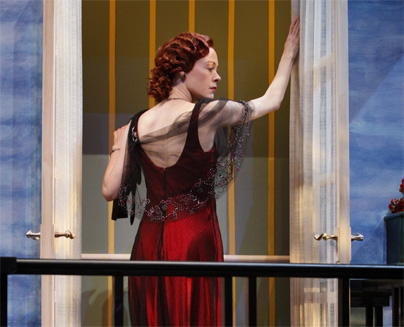
    If you’ve ever fallen in love too quickly or divorced with ire or married the same person twice or threatened to maim your new spouse on your honeymoon (and meant it), you must see Private Lives, the 1930 Noel Coward comedy now showing on the McGuire Proscenium Stage at the Guthrie. As someone who’s done all of these things, I feel uniquely qualified to tell you that the story holds up incredibly well and — until the last act, where events devolve in traditional screwball mode — feels current nearly 80 years later.

    More important, the theater is a simply gorgeous place, cloaked in brilliant red with a remarkable set that makes you feel sorry for all those poor New Yorkers who must make due with Broadway while we have this lush, stunning venue plus the brilliance of artistic director Joe Dowling (who did not direct this production, but had the good sense to hire Peter Rothstein) AND it costs only $5 to park. . . .

    Private Lives is the story of a divorced couple, Amanda and Elyot, who just happen to meet up five years after parting when they are each on their second honeymoons — in adjoining hotel rooms in France. It sounds like a Frank Capra set-up; and, indeed, Coward had a great deal in common with the beloved American director of romantic films like “It Happened One Night.” Only the British playwright was deliciously nasty about the whole messy deal. “Certain women should be struck regularly, like gongs,” says Elyot in reference to Amanda. And when his new young wife is mewling: “I’d like to cut off your head with a meat ax.” There’s also a beautifully-drawn scene of the two ex-spouses discussing their sexual liaisons, in which Elyot says, “It doesn’t suit women to be promiscuous.” Politically correct this is not, but it does capture a variety of passions. And two things save this play from sinking into misogyny.

    The first is, of course, context. Period costumes and a bizarrely frequent use of the word “gay” to mean carefree remind you that this is a different era — one in which a man in high society could demonstrate his love for a woman by spanking her. The other is Amanda herself, a strong, sharp-tongued woman (unlike the bafflingly stupid romantic heroines of today), who spanks right back and responds with, “It doesn’t suit men for women to be promiscuous.”

    It is for both of these reasons — context and the character Amanda, who is played by the absolutely marvelous, smoky-voiced Veanne Cox — that I recommend you try Amanda’s Ambrosia. The Guthrie came up with this cocktail specifically for the run of Private Lives: a canny concoction of sparkling wine, Campari, and puréed passion fruit.

    Frankly, it looks pretty awful in the glass, all murky and orange-ish and rather thick. But it’s an odd thing about this drink — though I don’t care for the intensely tropical taste of passion fruit (which, by the way, has been proved to help lower blood pressure) and I’m bored by the majority of cheap sparkling wines, together, these ingredients become weirdly interesting. The effervescence of the wine softens the acidic quality of the passion fruit; and it, along with the Campari, stiffens the candylike wine just a bit. As in the case of Amanda, her namesake ambrosia is an acquired taste: aggressive and unique, bold, colorful, and unapologetic. But even if you don’t care for passion fruit or sparkling wine or slinky but outspoken women, it’s well worth a try.

    It’s also a great way to get into the spirit of the play, where brandy flows and glasses shatter while two people locked forever in a tumultuous love affair pummel one another before breaking into a kiss.