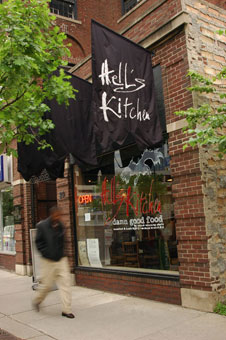
 Turns out it’s paved with delays. Hell’s Kitchen 2, the Duluth location, was originally slated to open in June. Then construction and equipment problems pushed the date to July 16. But new partner and GM Mark “Pappy” Anderson says everything has been surprisingly pacific since. “We opened for business nearly two weeks ago and it’s all been good,” Anderson says. “We were up to an hour wait by the third day. But we’ve got a great staff and everything seems to be running smoothly.” Of course, Anderson’s last gig was teaching 8th grade social studies for three years on the Red Lake Indian Reservation, so managing a staff of pajama-clad servers and a couple thousand unruly tourists probably seems like a cakewalk. Unlike the Minneapolis HK, this Canal Park restaurant serves three meals a day and sports a full liquor license. . . .also an iron-gated private dining room called Purgatory that seats 8-10, and the finest collection of black chandeliers in the entire Midwest.
Author: Ann Bauer
-
The road to hell
-
Some like it hot
I don’t. In fact, between summer allergies and the recent heat wave, I’ve been driven indoors. But luckily, there are equatorial creatures who actually thrive in this weather. One of them is John Schneider, my friend, colleague, and loyal reader — a man whose palate I trust like my own. He celebrates the season by going to Zelo several times a week and drinking a New Zealand wine called Kim Crawford Marlborough Sauvignon Blanc 2006, which he tells me “cuts through the bullshit” with a sharp, clean, thirst-quenching taste. Others clearly agree: Wine Spectator gave this wine a 92 and amateur raters crow about its notes of gooseberry and passion fruit. So go, sun yourself and enjoy. Me? I’m huddled in the air conditioned comfort of my dining room drinking Zinfandel and dreaming of fall. . . .
-
Wine: virtue, vice, or both?
You may have noticed (at least I HOPE you’ve noticed) that I haven’t posted much lately. This is because I’ve been suffering from a monstrous head cold that’s made me pretty useless as a wine taster. It’s odd: feeling as if your one high-level skill — that ability to smell a whiff of nutmeg in an otherwise austere wine — is dependent upon something so pedestrian as post-nasal drip. Alas, it’s also true.
I haven’t quit drinking wine altogether over the past week, but my consumption has been a great deal less enthusiastic. There were a couple nights when I couldn’t taste a thing and I decided it would be a waste to uncork anything that cost more than $10 a bottle. So mostly, I drank tea.
And after a time I asked myself: Is this abstemiousness, in some ways, a healthy thing?
I’m not, by most standards, a heavy drinker. I have roughly 2 glasses of wine a night — occasionally, I’ll have three when I’m attending a dinner that involves many courses; often, I’ll stop at one on a summer evening when I plan to walk or run.
And I believe ardently in the health benefits of wine; in fact, I would say I even feel them. . . .But I’m also a woman over the age of 40, so the question of breast cancer does play on my mind.
Apparently, it plays on yours, too, because I do get questions about wine drinking and women’s health. Even more frequently, however, people [of both genders] write to ask me about wine drinking and weight gain.
“I’d love to follow your advice,” one man wrote when Beyond the Cask launched. “But I’m trying to lose 30 pounds, so wine’s off limits.”
Well, here I am, all sniffly, my olfactory system hardly up to snuff. So I decided now would be a good time to research all those questions about hearts, gums, tits, love handles, and wine.
The latest news to cross the transom is that wine may help prevent cavities, due to its antibacterial properties. It’s long been thought that red wine (in particular) prevents heart disease by raising good cholesterol (HDL), lowering bad cholesterol (LDL), and reducing clotting — but it’s only been in the past few months that scientists figured out why: a substance called resveratrol which has, according to an article in Science Daily “antioxidant, anticoagulant, anti-inflammatory and anti-cancer effects.” And one Harvard researcher is, apparently, trying to figure out how to synthesize wine-based resveratrol into an anti-aging drug so even beer drinkers can pop a pill and live longer.
Those are all the widely-publicized feel-good stories: Wine is wonderful! Drink up! And you wonder (or at least, I wonder), Who’s paying for these studies? Gallo?
Anyway, I went on a crusade to find out the truth about the two big questions:
1. Does wine drinking make you fat?
and, far more important,
2. Does it increase a woman’s risk of breast cancer?
Here’s what I found (please assume all the typical disclaimers about the fact that I’m a wine critic and not a physician):
1. No, wine drinking does *not* typically make a drinker fat. And it’s a mystery as to why. . . .A case in point: I’m the sort of woman who gains weight if I lift a doughnut from one platter to another and lick the residue off my fingers. So you would think that adding two glasses (roughly 200 calories — the amount in two 6-ounce glasses of dry red wine) a day to my diet would cause weight gain. This is exactly what I did: I was a teetotaler while pregnant. After my last child was born, 12 years ago, I began drinking wine regularly with no discernible effect on my weight. I suppose it’s possible I’ve cut those 200 calories out of my diet subconsciously (I hear lab rats do this. . . .), but I don’t think so. For whatever reason, the calories from the wine just don’t “stick” the way they would if I consumed them in, say, butter. And I’m not the only one who’s noticed this. In a 2003 Wine News article, Dr. Harvey Finkel, a professor at Boston University Medical Center, wrote that research shows “moderate drinking usually helps correct weight excess and reduces the risks of diabetes and cardiovascular disease by several means.” These include energy “wastage” and a generally salubrious effect on the metabolism.
2. About breast cancer, however, I’m far more circumspect. And serious. I am a habitual wine drinker. I also eat a low-fat, high-fiber diet, exercise daily, and avoid food additives, hair dyes, synthetic hormones, and toxic cleaners. I had three full-term pregnancies before the age of 30, breastfed each of my children for more than a year, and (this is the big one), I do not have a first-degree relative — mother, aunt, sister, or daughter — with breast cancer. Were any of these things different, I would be far more careful about my alcohol consumption. Even the way things are, I’m mindful. . . .I think there is NO question that there is a link between alcohol and breast cancer. The American Cancer Society has come out saying “for each 10 grams of alcohol consumed a day, the lifetime risk of a woman developing breast cancer increases by almost 10%.” But add to that this confusing bit of information: a recent study in the journal Cancer Research shows that red wine actually inhibits breast tumors. For women, it seems, a moderate amount of wine can be both a potential danger and a potent cure.
-
Do critics get better tables?
Uh, yes. Better tables, better service, better food. This is the ugly truth of our business.
Now that that’s out of the way, here’s why I bring it up: a reader responded to a recent post on my wine blog in which I praised a local restaurant. He’d visited the same place during the same time period, and while he agreed with me about the superior quality of the food and wine, he said his meal was all but ruined by bad service. He pointed out that I had a great experience in large part because I’m known at that restaurant — AND (actually, the reader had the tact not to mention this, but I will) because I have the power to give a restaurant smashing and absolutely free publicity.
He was right.
If you think there are other food critics out there who are avoiding the trap, my experience says you’re wrong. This is too small a place, and the community of restaurateurs too intimate, for real anonymity to exist for more than, say, a year. I’m willing to bet someone coming in from one of the coasts — someone who’s never been to Minnesota — could successfully hide his or her identity for about that long. And the better ones do expend a lot of effort: disguises, false names, hidden note taking devices, etc. But after a few years in the business, I’m sorry. . . . It’s simply a ruse, designed to make the public feel fairly represented.
There are exceptions, of course. It’s certainly easier to visit a brand-new restaurant anonymously (assuming its chef and front-of-the-house man both are new to the industry or the area as well) than it is to slip in unnoticed to La Belle Vie. And reviews of small neighborhood joints, mom-and-pop shops, and ethnic restaurants usually are the real deal. But when it comes to the big, showy places or trendy urban spots, a food critic tends to get found out by visit number two or three.
My colleague, Jeremy Iggers, and I have discussed this at length. One of the things we’ve pledged to do at The Rake is disclose when we are known to the restaurant (as I did in my wine blog), so there’s no wink-wink arrangement whereby we pretend to be anonymous while management rolls out the red carpet. Even if we only suspect we’ve been “made,” we’ll own up. Then we’ll do our best to assess the food, service, and ambiance of a place fairly. But it’s helpful for us to know what happens to other people when they walk through the door.
And that’s where you come in.
We want this blog to be a real dialogue. We’ll put forth opinions based on our years of journalism experience and culinary education. But so far as adding a genuinely egalitarian element to the site — and to the resource guide we’re compiling for local diners and wine drinkers — we’re relying on input from the community.
The reader who commented on Sweet Spot did exactly what we hope people will do, adding his experience to the mix. So, if you see a post you agree with, we’d love to have you write in. But if you see a review you disagree with, or if you’ve had an experience that was significantly different from ours, please post away. . . .
-
Sweet Spot
I’m not a sweets eater — not unless it’s something magnificent. I love a really flaky scone with my morning coffee. I’ll indulge in pecan pie with heavy cream at Thanksgiving. And my husband is addicted to a combination of dark chocolate and halvah that I must admit is a mighty aphrodisiac.
But ordinarily, I prefer dry wine, salty snacks, and savory food.
At the Sample Room one night last week, I made an exception. It’s no secret that I adore this place — every food critic has a few restaurants that he or she patronizes *personally* (as in, when they’re meeting friends and actually picking up the tab) and the Sample Room is in my top five. I love the ambiance, the simple but quality wine list, the fresh, uncomplicated food.
And whereas I won’t heed the recommendation to try a sweet wine from much of anyone, I will here. Which is how I ended drinking the Peltier Station Petite Sirah 2005.
This wine is *not* as sweet as I’d feared it would be. Or rather, it was at first — simple and fruity and full of berry juices — but then it changed on my tongue, becoming ever-so-slightly (and pleasantly) tannic, with the clean flavor of wood.
Shortly after I finished the glass, however, chef Peter Maccaroni appeared with a blackberry cobbler he wanted me to try. Now, ordinarily, as I say, I wouldn’t be inclined. . . .But this is Chef Maccaroni, after all, so I took a bite and was entranced: fat, juicy blackberries swimming in a compote spiked with mace (spicier than cloves — closer to pepper than most dessert flavors dare be) and topped with just a smidgen of buttery crinkle-cut crust.
It turns out, Maccaroni has a pastry fetish. He’s a chef’s chef, a line cook — but he’s always had the yearning to try out pies and sweets. Since becoming top guy at the Sample Room he’s been expanding the after-dinner options. Lucky us.
And if this weren’t enough, the bartender snuck over with a bottle of something I’d never heard of before: Toschi Nocello Walnut.
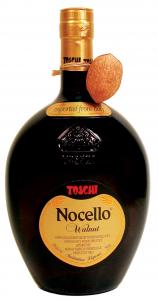
Now, I swear, this liqueur is not my thing. It’s thick and syrupy and as confectionery as wedding cake. But there was something about that slippery slope down (or up?) into the hinterlands of sugar that made me weak. So I sipped this liquid that was full of gold and walnuts, while eating Maccaroni’s cobbler and left quivering with a sweetness that is — I assure you — utterly unlike me.
-
A little slice of Campania

Say what you will about St. Paul and its quaint Norman Rockwell roll-up-the-streets at dusk culture — its dearth of “urbane” fine dining and plethora of ultra-conservative politicos. No place has neighborhoods like St. Paul. Mac-Groveland, Frogtown, Highland Park. And my favorite: Selby-Dale.
Maybe it’s because when I was 15 and living in an apartment about a mile from the intersection (long story), Selby-Dale had the shivery mystique of being where all the drug dealers and hookers hung out. But today it is what we in the big cities call “gentrified,” which means, I think, that we made all those down-on-their-luck shifty characters move somewhere else so condo developers could come in. . . .Even so, I can’t help but love it.
And nowhere but in this resurrected area could a restaurant like Il Vesco Vino exist, inside a crumbly turn-of-the-last-century building with a glorious patio half again as big as the dining room itself. I’ll leave the sunning and eating to others, however, and sit inside every time. Because this is where Irv “Junior” Williams — bar manager and son of Irv Senior, the legendary jazz saxophonist — works and pours his wares.
Il Vesco Vino is the place where I tasted the De Angelis Lacrima Christi cited in my last entry (see below). This is, in fact, that rare Midwestern bar that specializes in the wines of Campania: “If you took Italy and look at it like a boot,” says Junior, “Campania is the shin.” It’s also the site where grapevines grow in the volcanic soil of Mt. Vesuvius, giving them an ancient, ashy, earthy taste.
I tried several of the region’s wines and while I loved the Bianco Lacrima Christi, I cannot say the same of its cousin, the De Angelis Rosso Lacrima Christi 2005. I found the red version of Tears of Christ overwhelming, with a bouquet of overripe fruit, dust, and piano wire, and a long finish slick with star anise. If you like jammy wines and black licorice (I do not), this one may be worth a try.
If, however, you’re more of an earthy bent, I heartily recommend the Donnafugata Nero D’Avola Sedàra 2004 — as rank, meaty, and sexy a wine as I’ve ever drunk. The aroma is rife with peat, almost sweaty — eau de men’s locker room, and I mean that (truly) in a positive way. This is a wine filled with dark fruit and tannins, tobacco, and what the tasting notes call a “persistent” finish. Very persistent.
Likely, the Sedàra isn’t for everyone. But if you’re the sort of once-lost soul who walked ungentrified windswept city streets and watched the streetlights flicker across people wearing tattered clothes, smoking cigarettes, and patiently waiting for dawn, you just might find something familiar here. (14% alcohol)
-
Manhattans in Minneapolis
Back when Zeno opened, its New York owners — two attorneys, no less — thought they’d make millions bringing their ultra-hip wine bar-sandwich shop-coffeehouse concept to Minneapolis. And they might have, if they’d stuck it out with their flagship storefront in Uptown for more than about 30 seconds. Instead, they rushed to open a second store in a risky Hennepin Avenue location and made plans to expand to the suburbs. By 2006, their tiny empire came crashing down.
Enter Daniel Gelb, president of Plaza 1, Inc. He and his partners were smart. They bought the law guys out, closed the Uptown Zeno briefly and re-opened it under the same name some weeks later. But the downtown restaurant — an odd split space with a bar facing Hennepin Avenue and a separate seating area across the hall from Palomino — stayed vacant for a while.
Last month, Gelb took advantage of the weird layout to open Manhattans, a clubby restaurant and martini bar designed to feed the State Theater crowd. It’s decorated in olive green and charcoal gray and features a “boardroom” for private dining. The wine list is varied, with a lot of robust California options, but some others — including a Spanish Albarino and a Tuscan Chianti — and the drinks menu features cocktails so complicated they require a “mixologist.”
Currently, Manhattans is serving dinners only — and here’s a lineup of good, solid standards: steak, pork tenderloin, pasta in vodka sauce. For those who want to re-live the stock market boom of the 1980’s, I suggest you make a reservation. Leave today’s real estate crisis behind, order calamari, a Caesar salad, maybe a NY Strip. And imagine your portfolio growing. . . .
-
Moved to tears
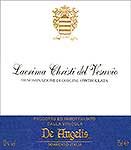
You might think that a pagan Jew with a taste for dry, fruity, lusty red wines couldn’t fully appreciate a luminous white called Lacrima Christi, or “Tears of Christ.”
You would be wrong.
I’m actually a big believer in Jesus Christ. I think there’s little doubt he existed: a fine man, a prophet, and a pious Jew — observing Pesach as he did on what has come to be known as the Last Supper — who was crucified, as many innocents were back then, by a cruel and raucous crowd. It’s only when you come to the bit about his being any more a miracle of God’s invention than you or me or Neil Young (to whom I’ve long accredited divine status) that I begin to question. Up until that point, I’m totally on board.
What’s more, when one of my kids was going through a medical crisis recently, I listened relentlessy to DMX’s Christian ode “Lord, Give Me a Sign“. And I have to admit, I mist up every time I read Footsteps or Footprints or whatever it is that hangs on every Protestant octogenarian’s bathroom wall. You know, it’s the story about the man who complains to God that there was only one set of footprints in the sand when he was going through periods of strife, implying that the Lord had abandoned him. And God answers, “But you weren’t alone. Those are the times I carried you.” Doesn’t matter what you believe, that’s good stuff.
Nearly as compelling, narratively-speaking, is the story about LaCrima Christi, which goes like this: Jesus wept when the archangel Lucifer fell from heaven to hell, and his tears fell on the land at the base of Mt. Vesuvius, inspiring blessed grape vines to grow there. Varietals including Aglianico, Sciascinoso, Falanghina, Piedirosso, and Caprettone are used in varying blends to produce this celestial wine.
Several vintners have a version of Christ’s Tears, alternately called “Lacrima” and “Lacryma;” and there is both a white (Bianco) and red (Rosso). The one I tried was the De Angelis Bianco Lacrima Christi del Vesuvio 2005, a dry, full wine that tastes like rain — mineral-rich and brilliant — with hints of grass and exotic, unnameable fruits and a surprisingly buttery finish. (13% alcohol)
It is a complex and important question: whether a man like Christ sits in heaven looking down and weeps to see the sadness in our world. But if he does — and I’m hoping that in some plane of our existence this is the case — I believe the artisans of Campania have succeeded in approximating the flavor and tenor of his tears. This is a wine to be drunk reverently, even if you are uncertain, undefined, or lost.
Maybe even especially so.
-
Diner beware
For those who aren’t into speed-clogging their arteries, I want to make it clear that poutine is, literally, a dish that takes French fries, tops them with cheese curds, and finishes them off with a ladle full of gravy. I swear, I am not making this up. Please see my colleague Jeremy Iggers’ entry on Harry’s Food & Cocktails below. And note that Steven Brown is the chef who once gave me a tour of the kitchen at Levain and insisted I take a sprig of just-picked microgreen and savor it, so I would know how good food is supposed to taste.
-
License to serve
My husband, older son, and I spent the weekend in Duluth, helping friends get their new Canal Park restaurant ready to open later this month. After a day of schlepping waffle irons, shelving, and cookware from a third-floor storage space to the kitchen, using a hundred-year-old elevator whose gates you had to close with a strap, we headed to dinner — filthy, exhausted, ready to relax.
I won’t say where we went. But it was one of those bustling tourist meccas on the North Shore. I ordered a glass of Zinfandel, my husband did the same, our friend Cynthia ordered a Cabernet Sauvignon, and then my son piped up and said, “That sounds good. I believe I’ll have a glass of Cabernet, as well.”
Now, here’s what you should know about my son. He stands six-foot-three-and-a-half and has a full beard and a weary expression and a way of speaking that makes him sound as if he once wrote speeches for Winston Churchill. He’s also 19. . . .and autistic. So the arbitrary rules of society — like, for instance, you can be shipped off to fight in a senseless war at 18, but you can’t legally buy alcohol until you’re 21 — are lost on him.
I expected our server to ask for his ID, so I moved toward my son in order to explain and save him the embarrassment he might feel. But before I could say a thing, our server said, “Thanks! I’ll go get your drinks and be right back for your order.” And off she went. . . .
Later, after he’d drunk his glass of wine (which we felt conflicted about, but allowed rather than making a scene), we pulled our son aside and told him it is illegal for a restaurant to serve him alcohol. The woman who waited on us could have been fired, and the restaurant could have lost its liquor license. [His response: “Oh, is that so? How odd.”] I did not alert the manager, for fear of getting the poor, frazzled server in trouble.
But I’m warning them now, along with all the other packed, lakeside, summer-season restaurants in town. Have a talk with your staff. Tell them to card even those who appear to be of age. It’s the law — whether or not we agree. And the consequences of ignoring it can be pretty deadly for a hard-working restaurateur.