Author: Ann Bauer

  • Survival of the Fattest

    Dr. Charles Billington divides his obese patients into two distinctly different groups: those who have choices, and those who don’t.
    “Demographically, we know that people in lower socioeconomic areas are greatly, disproportionately affected by obesity,” he says. “Folks in those lower-economic, lower-education situations have little or no access to whole foods. They also have a lack of options.”

    A tall, lean, full-bearded man, Billington is laconic, more like a North Dakota farmer than a famous research doc. “When it comes to entertainment and reward, people with more money can go to the theater or to concerts; but the lower you go on the socioeconomic scale, the more important eating becomes relative to other affordable activities. We in the privileged class can join a gym, whereas lower-income people who want to exercise will probably end up at a community center, where there isn’t much. What it boils down to is this: Highly educated people with money tend to know how to change their lives. But people from a lower income and education bracket often feel a lack of self-efficacy, which means they feel like they have less ability to affect their own situation.”

    In other words, it’s not simply the lack of grocery stores full of affordable fresh produce and whole foods that makes it harder for poor, inner-city residents to stay fit (though this remains a significant factor). It’s also lack of empowerment: Poor people have been conditioned to accept their circumstances—which all too often include growing fatter with every passing year. Billington is working to change that.

    As an endocrinologist, a professor of medicine at the University of Minnesota, the team leader of the obesity program at the Minneapolis VA Medical Center, associate director of the Minnesota Obesity Center, and a nationally recognized expert on weight-related disease, there’s no question that Billington has an impressive track record. What makes it even more so is that he was warned early on (he is now fifty-four) that his chosen career path was a dead end.

    Thirty years ago, when he graduated from medical school, Minnesota’s obesity rate was less than ten percent and “real” doctors didn’t think of obesity as an important area of study. Medicine had perfected drug therapies for treating chronic weight-related illnesses such as type 2 diabetes. When then-young Dr. Billington began telling his diabetic patients to reduce their body mass through diet and exercise rather than simply inject more insulin, he was branded a bit of a nut.

    Today, however, his concerns are shared by leaders from the National Institutes of Health and the American Medical Association. More than twenty-three percent of Minnesotans are now considered obese (that is, they have a body mass index greater than thirty), and nationally—especially in urban, low-income, Southern communities—it’s ticking even higher. The rise in obesity has caused a subsequent surge in everything from high blood pressure, heart disease, and sleep apnea to arthritis, non-alcoholic cirrhosis of the liver, gallstones, infertility, incontinence, and certain kinds of cancer. On top of that, approximately twenty million Americans now have type 2 diabetes. The problem has officials in sectors ranging from public health to education to government casting about wildly for answers, coming up with some that appear to be taken directly from Lord of the Flies. For example, legislators in Mississippi, which has the highest rate of obesity in the U.S. at 29.5 percent of residents, actually drafted a bill earlier this year that will—if it is passed—make it illegal for restaurants to serve obese people.

    The problem, Billington says, is that he and his colleagues spent decades trying to develop pharmaceutical and surgical solutions to type 2 diabetes and obesity. Now, however, the problem is too pervasive for that.

    “We thought twenty years ago, and I still think now, that the key mechanisms are in the brain,” he says. “But that idea normally is interpreted as the need to find a drug that would allow us to control appetite or metabolism. I no longer think this will be the answer, because at this point about seventy percent of the American population is overweight or obese and that means a drug as the primary strategy would be fantastically expensive.”

    Instead, Billington advises his patients to cook at home as often as possible. He helps them find ways to obtain fresh, wholesome ingredients, tells them to avoid fast food, and teaches them about NEAT: non-exercise activity thermogenesis.

    The theory behind NEAT, which was developed at the Mayo Clinic, is that people with so-called “fast metabolisms” burn up to a thousand calories a day through spontaneous movement, such as fidgeting, pacing, and gesturing. But these things are governed both by genes and by girth. The fact is that heavier people move less than skinny ones, probably because their bodies have settled into stasis due to weight—it requires greater effort to move their bodies around. Studies show they sit an average of a hundred and fifty more minutes each day than people of normal weight. So Billington is training his patients, one by one, to twitch.

    He admits, however, that the problem goes well beyond basic health care. Obesity is the natural outcome of a world in which foods that are cheap and plentiful are also calorie-rich and processed.

    “Evolution dictates that we seek out energy-dense foods,” says Billington. “And it’s not just humans. Rats like them, dogs like them. All God’s creatures do. It’s a matter of survival—there are biological cues telling us to get calories when we can. But now we have access to energy-dense foods all day, every day, in the gas station and the break room at work. Their value biologically hasn’t diminished; in fact, it’s been enhanced by repeated exposure. People are just doing what their bodies tell them to.”

    When caring for patients who do have means and options, Billington makes two additional recommendations. He likes Volumetrics, the diet plan conceived by Barbara Rolls (a Ph.D. nutritionist from Penn State) that advises people to eat satisfying portions of low-density foods, such as fruits, vegetables, and whole grains. The caveat, of course, is that these foods tend to be more expensive and quicker to spoil than Hormel cold cuts and Hostess pies.

    “Rolls is the only diet book author I know who bases her writing on actual evidence,” he says. “Her theory is that you can train yourself to choose whole foods, and on average they will be low-density. The truth is, people who are doing well with their weight tend to eat quite a large volume of food, but it’s all of very high quality.”

    An at-home chef who used to belong to a local gourmet dining club, Billington also advises his patients who can afford to dine out to choose places such as Meritage and Heartland, rather than steak houses or high-end restaurants where the entrées are swimming in butter or cream.

    “Heartland is a perfect example of the way people should be eating,” he says. “The food is really good, of extremely high quality, and the vegetables are often the star of the plate. There is protein—which is an obligatory dietary requirement—but the portions aren’t huge. People tend to feel satisfied with this sort of meal.”

    But that doesn’t solve the problem for people who cannot afford to shop at the Wedge or pay fifty dollars per person for dinner. Even educating people and telling them to avoid French fries and convenience store burritos won’t help those most at risk.

    “If you learn to cook and you live in south Minneapolis, you can eat pretty well for not a lot of money,” says Billington. “But if you’re living in north Minneapolis and your only option is the local market because you don’t have a car, you’re not going to be able to eat well. We tend to frame this as an in
    dividual choice, but for a very large number of people it’s not. Rampant obesity is, in this sense, simply an outcome of poverty.”
  • The Syringa Tree: Strange Magic

    Every morning, I get up all bleary and I pour my coffee and I sit down with my laptop and I tell my little stories. Character, plot, narrative, theme. I think I have a handle on these things. Most days, I feel competent.

    Then I read or see something like The Syringa Tree, which is playing at the Jungle Theater until March 9, and everything I know about how to construct a story seems hopelessly naive.

    Here’s the thing. I know beginning, middle, and end. I understand the journey, the epic, the Once Upon a Time. . . . and Happily Ever After motif.
    What I do not get is how playwright Pamela Gien took shreds of dialogue
    and monologue and memory and wove them all together into a sparkling web of a tale that spans 30 years and includes the politics of
    apartheid, the complicated allegiances of a liberal white South African family, and
    the shame that comes to those — both white and black — who feel
    responsible for the vicious acts of their kind.

    This is a one-woman show in which one actor (Sarah Agnew at the Jungle) plays 22 different characters — ranging from a six-year-old named Elizabeth Grace to a Catholic priest to Zephyr, a 60-year-old Zulu gardener — using nothing but the pitch of her voice, accents, facial expressions, and body language. She turns ever so slightly to one side, straightens her spine, and suddenly becomes someone else. Never do you wonder whether she is the child or the mother, the white doctor of the black maid. Agnew’s body is like liquid on the stage. She skips, weeps, cowers, and grieves. There is a world of people within this single small form.

    Watch in particular for the scene that takes place in a car — which does
    not, of course, actually exist. There are three people in the invisible
    vehicle: Elizabeth, her mother, Eugenie, and a driver. And Agnew moves
    in a continuous circle playing them all, carrying on a conversation
    with herself, until you could swear there actually are three people on
    the stage.

    No less is this alchemy present in the set. There is only a bare stage with a large swing hanging from the rafters, a backdrop cracked with sky-colored hues: pink, yellow, and blue for daytime; gold and green for dusk; shadows with slats of light. A man is beaten, a little girl watches in fear. It all happens before your eyes though of course, there is nothing there, really. Somehow, this amazing play makes you conjure the hat-sized blooming jacarandas and sly Rhodesian freedom fighters all on your own.

    How is this done? I only wish I knew. I feel as if I need to get ahold of a copy of the play and shake it until the secret falls out.

    Part of it must have to do with Joel Sass’s brilliant direction. It is worth noting that Sarah Agnew — who is luminous in this performance (or these performances, as the case may be) — also played Margaret in the Guthrie’s recent production of The Home Place. And though Star Tribune theater critic Graydon Royce singled her out as the "most satisfying" among a muddled cast, I, frankly, was hard pressed to see it. There, she faded. Here, in Syringa Tree, she is mesmerizing. But so too is the careful attention to movement, to her position on the stage, to the carefully choregraphed glances she casts to indicate action in another plane.

    It is only partly coincidence that I followed this magnificent evening at the theater, a mere 90+ minutes that seemed to go by in half the time, with a South African pinotage.

    In truth, I’ve always wanted to like South African wines. I like the idea of South African wines. But sadly, I’ve never tasted one that turned me on. Then, I found out there’s a Minneapolis company called Etica distibuting only Fair Trade winemakers — those that ensure workers are paid a livable wage, pay producers a premium for their products, adhere to eco-friendly methods, and re-invest in the local communities where there wine is made — and one of their top offerings right now is the 2006 Goue Vallei Pinotage.

    Pinotage is the principal grape in South African winemaking. A combination of Pinot Noir and Cinsaut, it has a distinctly dirty taste. I don’t mean earthy, peaty, or rich with soil. I mean old ashtray with a hint of green banana peel.

    But after becoming entranced by The Syringa Tree, I figured I was in as hospitable a mood as possible. So I opened the Goue Vallei and gave it a try. Perhaps it was due to Gien’s work and the memory of Agnew on her swing, but I can safely say this is the best inexpensive Pinotage I recall. It is dirty, but not intensely so. There’s a robust layer of fruit, cherry with a whiff of something tropical, and a rutting goat-ish finish that lingers for quite a while.

    I find it strange that this wine has no more in common with a French Pinot Noir than it does, say, with an egg salad sandwich. It’s not for refined sipping and it’s probably best drunk with plenty of sinewy dark meat, such as elk or deer. But it is — like the play — an interesting and entirely different experience. Plus, it’s probably the most humane and ecologically-responsible way to drink, right down to the bottle’s synthetic cork.

    If you want to try a glass, it’s on the menu at Birchwood Cafe, The Sample Room, Via, and, of all places, Green Mill. For a complete list of local retailers carrying Etica wines, click here.

    But here’s my advice: First, you should call The Jungle to reserve your tickets to Syringa Tree.

  • No More 2 a.m. Runs for Calamata Olives and Camembert

    I hear other teenagers hang out on street corners and in pool halls. My son and his friends? Throughout all four years of high school, at every time of the day and night, they could be found clustered in the same place: the St. Louis Park Byerly’s.

    Until now.

    Tonight (February 18) at midnight, all Byerly’s and Lunds stores will close their doors, not to re-open until 6 a.m. tomorrow. And this is the way it will be from here on in. It’s the end of an era: Byerly’s has operated 24 hours a day since 1971 and Lunds since the early ’90s. My son and his crew — many of them Orthodox Jews who rely on the kosher deli for a late-night, after-party nosh — are devastated.

    You may be, too, the next time you get a craving for baguette, fig spread, and cave-aged cheese after the jazz clubs close. Because from now on, Cub, Rainbow, and Perkins will be your only options.

    "This is mostly an effort to focus our resources on those hours when most of our customers are in the stores," said Aaron Sorenson, a spokesperson for Byerly’s and Lunds. "By closing overnight, we can take some of our staff and move them to peak hours. We expect aisles will be cleaner during the day and there will be more people there to increase levels of service."

    When pressed, however, Sorenson admitted there was another reason for the change in hours: A rash of recent late-night robberies have made store management fear for the security of its staff members.

    "We realized our overnight team members were vulnerable," Sorenson said. "There was only a skeleton crew and people knew it. So they were more likely to take advantage and put our people — and our customers — at risk." (Note: Sorenson asked me to be careful with this information, which is why I waited until the new hours went into effect to post — so as not to publicize the problem and invite more walk-in thefts.)

    From now on, Byerly’s and Lunds will operate more like other high-end grocery stores, locking their doors to stock and clean at night, then opening with sparkling, full shelves the following day.

    As for my son and his friends, I do worry. . . .Frankly, the deli and luncheon counter WAS a nice place for them to congregate: Wholesome, close to home, and full of exactly the sort of quality food I advise them to eat. Now, when I want to find my 17-year-old, I’ll have to start calling people’s houses instead of simply driving over to Byerly’s. Next thing I know, he and the boys will be reduced hanging out at Walgreen’s. . . .or Holiday.

    And who, I ask, will bring them kosher club wraps and cream sodas there?

  • Ancient Aborigines and $6 Australian Wine

    Here it is, practically the eve of the Oscars, and I’ve yet to see two of the five movies nominated for best picture. I didn’t care for No Country; I liked but did not absolutely love Juno. So far, my money’s on There Will Be Blood, which was not only a magnificent film but the richest evocation of loneliness and megalomania I’ve watched since Citizen Kane.

    Saturday night, we decided to see Michael Clayton. My husband, myself, and about 200 other middle-aged, middle-income, mid-level professionals. John and I got to the theater in plenty of time but there was a line, literally, around the block. Round white faces and L.L. Bean-clad bodies for as far as the eye could see. Damn, it’s humbling to be confronted with your own incredibly predictable, privileged, demographically determined life. . . .

    By the time we’d stood waiting for ten minutes and hemmed and hawed and finally departed because we didn’t want to be stuck inside some crowded auditorium with all those other lemmings, it was too late to catch any other show. So we dashed to Hollywood Video and picked up a film sure to make us different from all of THEM: A Cannes winner from last year called Ten Canoes.

    Then we stopped at Hennepin-Lake Liquors for a bottle of wine.

    Now let me remind you that Henn-Lake DOES NOT TAKE CREDIT CARDS. I do this, of course, because we didn’t remember ourselves, and John and I ended up digging through pockets and purse to come up with the price of an Australian Pinot Noir from Lindemans Wine that was bottled — get this — in 2007.

    This made the pinot roughly the same age as the orange juice in our refrigerator. And it cost only a tad more at $5.95. But the Lindemans came highly recommended by the girl behind the counter, who was at least 21 years and 2 months old. Also, luckily, we had just enough pennies and dimes between us to take it home — which we did, along with our DVD.

    It turned out to be a very odd but charming little film. The first full-length feature ever made in native aboriginal language, Ten Canoes is more fable than drama. It begins with a voiceover narrator, then reverts to a tribe in which an elder is telling a story to his younger brother, then reverts a second time to an ancient camp in which men’s instinctual jealousies cause a series of dire things.

    This is what I call a "recessive" narrative — one that goes back in time then flashes back yet again, so like concentric ripples in a pond, you can never quite remember where you started. It is, in fact, a structure I advise my undergraduate writing students to avoid. It’s nearly always confusing. (Last year’s Sweetland suffered from the same problem.) I can think of only two films that used this paradigm well: Sophie’s Choice, in which the adult Stingo recalls his young adult years in Brooklyn then yields to Sophie’s memories of the war; and The Princess Bride, which broke all the rules anyway and still managed to do everything well.

    Ten Canoes is not quite so successful. At least one of the stories — the "middle" one, if you’re looking at them chronologically — eventually fizzles out and gets lost. But the cast is extraordinary, actors who do as much with facial expression as they do with words. And it was wonderful simply to be some place else for 90 minutes: In this case, the swampy northern tip of Australia camped by the side of a river with men (mostly) who think nothing of walking around with only a braided string tied around their waists and routinely have three wives at a time.

    In the end, the central story — the one that takes place in ancient days — is tight and satisfying, its life lessons relevant even today. And it is comforting to me, somehow, to know that men take the same scatalogical glee in their own body emissions and sexual habits whether they’re carrying cell phones or spears. (See the extended flatulence scene, which is oh, so effective, by the way, when done nude.)

    And about that wine, you’re wondering?

    It was. . . .fine. Strawberry, cherry, and raspberry, like liquid candy with a tiny bit of oak (a very tiny bit) and a hefty kick (13.5% alcohol). This is the Tom Collins of wine — appealing, apparently, to those drinkers who are stranded in the decade or two between Juicy Juice and Chatauneuf-de-Pape. Even for we grown-ups, sitting curled up in a big chair and watching a magic realism tale about dignified warriors who giggle as they fart, it was pretty damn good. Especially for six dollars and change.

  • Fugaise: Have You Forgotten?

    Tons of successful restaurants are hidden in obscure buildings or out-of-the-way places: duplex, cafe Levain, 112 eatery. In these cases, the humble, back-door, sidestreet locations seem only to make them hotter. . . .more desirable. So I can never figure out what, exactly, is going on with Fugaise.

    The two-and-a-half year old enterprise of wunderkind Don Saunders (formerly of La Belle Vie and A Rebours), Fugaise consistently gets excellent reviews. Saunders serves a classy short menu of contemporary French cuisine with a beautifully-tailored wine list to match. And while his restaurant is a cool, windowless cave without a real storefront presence — sandwiched between Pizza Nea and a high-end baby store called Pacifier — it’s located on Hennepin Avenue North, just to the east of Surdyk’s. Not bad in terms of demographics: a great many well-heeled, wine-drinking people move through here.

    Yet, despite a nearly pathological precision in the kitchen, and heaps of raw talent, Saunders and his Fugaise have never quite hit the big time.

    This is the restaurant everyone means to visit, but they don’t. On the Friday night I was there, my friend and I occupied one of four full tables at 7 p.m. And I have to admit, I was offended on Saunders behalf: at two of the other tables sat people in scruffy jeans and weekend sweatshirts. I’m all for casual dress. But c’mon people: This is a really nice place and it deserves better than your Green Bay Packers gear.

    We drank a bottle of the Bouchard Pere & Fils Bourgogne Rouge, a light, cherry Burgundy made entirely of pinot noir. Then we started with a butternut squash soup, which was nutmeg-laced and creamy, scattered with pecorino and drizzled with pumpkinseed oil. It was more delicate than most pumpkin and squash soups, which was nice, and a little sweet for my taste. But my friend loved it, and I am generally less inclined toward sweet than salty.

    The second course, however, was perfect all the way around: Foie gras with carmelized apple and parsnip couscous on a bed of braised Swiss chard. The dish was finished with a Moroccan vinaigrette and full of those marketplace flavors such as pepper, mace, and allspice. The serving of chard was hefty, enough to get a forkful, and like the couscous, it was ideally cooked. Soft leaves under firm grains. The foie gras, from Hudson Valley, was tender and crustily seared.

    With food this diligent in its marriage of color, nutrients, and taste, I find it’s easy to feel satisfied with only a small amount. This is the paradigm on which Fugaise operates: carefully prepared medium-sized meals with a basket of crusty, wholesome bread on the side.

    Which brings me full circle.

    Now, I don’t want to set off alarms. Other critics once sounded a "death watch," saying Fugaise was so slow it had to be on the way out. Not so. It turns out Saunders has a cadre of dedicated fans who keep the restaurant alive by booking it for private parties. He’s stopped serving lunch because, he says, it simply wasn’t worth it, given the overhead. In other words, Fugaise is getting by. But the dining public’s tepid response does, frankly, have me perplexed.

    It is true that the decor is not for everyone: While other, more popular neo-French bistros go for the cozy, candlelit look, Fugaise is stark and silvery, with slashes of colorful modern art hanging on the walls. The name, too, is odd. People say it’s slang for a lot of things; Saunders claims it stems from a childhood nickname. Whatever the case, it’s not as approachable as, say, The Beautiful Life (La Belle Vie) or simply, Vincent.

    Whatever the reason, people haven’t flocked to Fugaise the way one might expect. And time may be running out (remember, you heard it here). No, the restaurant is not closing for lack of business. But it may be closing because its chef — 31 years old and a brand-new dad — says he’s thinking about switching careers. After more than ten years of cooking, Saunders is going back to school to pursue his education degree.

    The man wants to be a high school social studies teacher, in part so he can be home in the evening for Henry John, his now two-month-old son.

    "Having a baby is awesome," Saunders says with a grin. "It’s definitely changed my life. It’s crazy how much Henry changes on a day-to-day basis. If I have a long day at Fugaise and go home, I feel like I’ve been gone a week."

    Barring a fire in the kitchen, Saunders says he’ll probably stay open for the next two years while he earns his degree. After that, if the restaurant is doing well, he’ll stay on as owner and weekend chef. If not, no hard feelings, he’ll close the doors.

    So in a way, the decision is up to you.

  • Letting Go Of The Hate

    I used to think hating Diablo Cody was only a regional pasttime. This is, after all, an area lousy with writers who have not written Writers Guild of America award-winning screenplays or gotten incredibly rich and famous or appeared on David Letterman. And sometimes, when the wind is blowing in the right direction, I swear you can hear about 500 of them grumbling: I wrote for City Pages once years ago. . . .and I could have been some skanky sex worker if I were willing to stoop that low. . . .and every single one of those screenplays sitting on my closet shelf is about a million times better than Juno.

    Of course no one says exactly this. They jeer at her nom de plume and make fun of the length of her skirts and talk about how Juno — a sweet, decent film in a year full of overblown, overdone losers — sucked anyway. If Cody wins an Oscar, I imagine the gnashing and retching will go on in our local writing community (and believe me, I use that phrase loosely) for years to come.

    Now, however, I come to find that the irrational antipathy for Cody has spread. In an article in Slate, writer Dana Stevens describes how what I previously thought of as a Minnesota phenomenon exists from coast to coast. People all over the world, apparently, hate D.C. and her movie (which, by the way, has grossed over $100 million, so some people must like it. . . ). And despite a mostly even-handed exposition of the whole controversy, Stevens herself even gets in a few digs.

    In a strangely similar turn of events, it seems Hillary Clinton hating is on an upswing as well. Now, the Bush-Cheney set has always hated Hillary. (Since the day she announced her candidacy, my father has called her "Billary" — which causes me to grind my teeth practically into dust each time we’re seated next to one another at Sunday dinner.) But here’s a new twist: now, just as with Cody, it is Clinton’s putative fellow thinkers who are spewing the most bile.

    In "Hate Springs Eternal," his column in the New York Times yesterday, political commentator Paul Krugman wrote, "I won’t try for fake evenhandedness here: most of the venom I see is coming from supporters of Mr. Obama, who want their hero or nobody."

    What’s going on here? We’ve got two immensely talented women — and I’m not going to make this a gender thing, because I truly don’t think it is — being reviled as sport. Why? Jesus, I don’t know. Pure envy in the first case, it seems. Zealous and cult-like political behavior [and let me say, I think this has little to do with Obama himself] in the other.

    Now, listen my children: You should know that hate — whatever its genesis — will curdle your blood and cause painful ingrown hairs. It leads to cancer and shingles and bad posture. And more important, it’s just bad juju for the rest of us, making this world an uglier place in which to live. So stop it!

    And why should you listen to me? Because, I’m going to lead by example. I, too, have allowed hatred to creep into my heart. But I’ve seen the light and banished the darkness from my soul. I. . . .are you ready for this?. . . .have returned to Trader Joe’s.

    Back in November, I wrote about their trademark wine, Three-Buck Chuck, in a post that began, "Have I mentioned how much I hate Trader Joe’s?" Well shame on me! I have been guilty of doing the devil’s work with my foul words. What’s more, I’ve actually, sort of, in a sense changed my mind.

    It all started one day last week when I got a craving for white cheddar popcorn. One of my guilty secrets — even back when my soul was sullied — was my love for the snacky popcorn products available only at Trader Joe’s. So at 3 in the afternoon, I drove over to get a bag. And while I was there, I stopped into the wine shop and picked up an $8 2006 Bordeaux from Chateau Michel de Vert.

    It had a nice label. And we’re working on saving money, my husband and I, particularly where wine is concerned. What the hell, I thought. And I trotted home with my white cheddar popcorn, which I ate immediately, and wine, which I uncorked around six o’clock.

    I was dismayed even as I poured. The wine had a thin purplish color I didn’t quite like. And it tasted. . . awful. A combination of fireplace ash and cough syrup. I took a swallow, gave my husband one. Then we stuck the cork back in and opened a bottle of the Portuguese wine I was raving about last week that we now buy by the case.

    I had planned to absorb the eight dollar loss and call it a lesson: Trader Joe’s is vile (unless you need a popcorn fix). But then, I recalled something vaguely. I’d heard a rumor, once, that TJ would take back any product for any reason. All you had to do was show up and demand your money back.

    I was skeptical even so. I called the manager to ask, Could I return a bottle of wine that wasn’t corked or heat-damaged or in any other way defective, simply because it wasn’t to my taste?

    "Absolutely!" he said. "Just look for me."

    And so I did. Yesterday afternoon, I grabbed that old, warm bottle, took it back without so much as a receipt, and the manager — no questions asked — handed me my money. So pleased was I, it seemed natural to pick up yet another ultra-cheap Bordeaux: Les Caves Joseph 2005, which sells for (you’re sitting down, right?) $5.99.

    Was it special? Er, no. But what do you expect for six bucks. It was a spot-on average table wine, sweet and decent (much like Juno!), with a cherry-ish flavor and a little bit of rough wood.

    So. Heed this story. I have seen the light, given up my hatred, and cleansed my spirit with a profoundly mediocre French wine. If I could, I’d buy a thousand bottles, get all the writers and rabid Obama supporters I know, and put them all together in a room. I see a big, diverse Bachannalian event. An orgy of the liberal and literati. All cheaply lubricated, thanks to Trader Joe’s.

  • Wi-Fi Vampires

    photo by McClatchey News Service


    It was, says Lisa Berg, a "humbling" note to write.

    The single sheet of paper hangs inside the restroom at her coffee shop, Blue Moon Coffee Cafe, and describes her plight. The place is nearly always full — in that there’s nowhere for walk-ins to sit — and people are reading, writing, typing away. But there’s often only one customer to a table. Few people are talking, and those who do are shushed. Worse, patrons will order a single drink and sit for hours, occupying a four-top spread with computer, books, legal pads, and pens. Business is down more than 30 percent. For the first time since she opened the shop in 1994, Berg is afraid she might have to close.

    "This has been happening since last summer," says Berg. "We look out and the place seems busy. And I love the company and love our customers and I’m grateful. But what we notice is that even though it’s full and people will come in and leave because there’s no place to sit, is that people will linger with one cup of tea for three or four or five hours, getting water refills while they do their work. And I don’t think that’s going to work much longer for us."

    Granted, Blue Moon and other Lake Street businesses were dealt a blow by the year-and-a-half-long construction project that routed traffic away from their doors. Profits began to flag back then. But though they’ve had Wi-Fi for more than three years, Berg has noticed a shift recently. In short, people are treating her coffee shop — and others, according to her friends who own similar places — like a public facility where they can get a free Internet connection, ice water, and bathroom facilities.

    "We’ve always had lots of writers and students and teachers," Berg says. "That’s the coffeehouse culture. But the atmosphere used to be about conversation and it had that sort of vibrancy. Now that the shift is to study hall, it’s so quiet. People are tippy-tapping on their computers and I want to accommodate that but I also want to have people be mindful that this is a business, not a library."

    Several times lately, she’s had to mediate when a customer who was working became irritated because there were children gabbling and playing nearby. She’s even watched people come in with a bag lunch and bottles of their own drinks, claim a table, and sit for an afternoon buying absolutely nothing.

    Friends have told her to shut down the Wi-Fi when freeloaders park and use it. Other coffeehouse owners use this method, whispering to their regular, paying customers that the outage is temporary but leaving it off until the vampires pack up their gear and leave.

    Berg thought she’d try writing a civilized note, instead. After all, most of the offenders are themselves writers and scholars. A month ago, she says ruefully, this seemed like the best way to get their attention.

    Not so.

    There was little response to Berg’s plea. A few customers mentioned it and were concerned, she reports. One was offended. But nothing changed. Even people who acknowledged her situation and talked at length about the sad state of the economy did not start buying more. So Berg is faced with a few tough choices: She can raise prices, increase seating, or hang signs — similar to the ones at Coffee News and other high-volume, college-area coffeeshops — insisting people buy something, share tables, and vacate within one hour during peak times.

    "I think the solution is to provide more seats and maybe to raise our prices a little, which we haven’t for a couple years," she says. "We serve mostly organic and stuff has gone up but I just hate raising prices because this is a humble neighborhood in a lot of ways and I want to keep Blue Moon accessible to people."

    Of course, she admits, it won’t be accessible if it’s gone.

    As for the last option — demanding that people buy something and sit for no more than an hour — Berg says for partly selfish reasons, she is unwilling to go that far.

    "I want to keep this a place where people can just come be and hang out," she says. "I love seeing people doing their day, whatever that means: reading the paper or writing a dissertation or doing the crossword. I wouldn’t enjoy what I do so much without that kind of thing."

  • Diet Coke Will Make You Fat & Other Truths

    So it’s not just your imagination, it actually is true. Those zero-calorie sodas people are popping left and right and up and down, ordering with their cheeseburgers and large fries and drinking instead of coffee in the morning or wine at night, actually lead to (or, as they say in medical-speak, "are linked to") metabolic syndrome, which is a fancy way of saying fat and all its attendant ills.

    An article in the New York Times, based upon a study done partly at the University of Minnesota, states that people who drink diet sodas are 18 percent more likely to have high cholesterol, high blood pressure, diabetes, and abdominal obesity. Now, I have to admit, there’s a part of me that wants to lecture here because WHAT after all did you expect, drinking something that contains not a single natural ingredient (except water) and floods your system with something called Aspartame — which is, by the way, one of the most widely-tested "foodstuffs" in history because it has been "linked to" (again, those words) a variety of different cancers and neurological disorders?

    Not that I blame you. I don’t mean to be churlish. Big advertising did a huge number on the population of the entire world. But come on, this isn’t rocket science. What it is is rocket fuel.

    Moving on, after years of pushing decaffeinated coffee on us, calling coffee a vice, and putting it on the health questionaires alongside queries about things like seatbelt use and unsafe sex (How many sexual partners have you had in the past year? How many whose health history is unknown to you? How many that hung out in heroin parlors with dealers named Rufus or Big Mama and had a strange, yellow tint to their skin? Oh, also, how many cups of coffee a day do you drink?) — surprise!!

    Coffee is good for you. Really good for you (unless, am I the only one jaded enough to think this?, Starbucks paid for the research). Scientists are now saying that coffee has more antioxidants than any other food: blueberries, green tea, even — you’re not going to believe this — red wine. It’s long been known that coffee prevents certain chronic diseases, such as Parkinson’s and diabetes. Now, the news is, it also has cancer preventives and more fiber than Metamucil. You know, that beverage you’ve been eschewing all these years in favor of caffeine-free Diet Coke. . . .

    Well, who could have known? Except, of course, those Abyssinian goatherders who used to chew on the berries from coffee bean trees back in the 5th century. Under no circumstances would you catch those guys drinking carbonated N-L-alpha-aspartyl-L-phenyl-alanine-1-methyl ester.

    Now, to switch topics entirely, about that recession that isn’t coming? Funny thing, it seems to have arrived. (Quick, someone go break the news to W.)

    Here’s what I don’t understand. I’m a lowly writer living in the Midwest, a Gen X’er who tends to be blasé about dire economic situations — I graduated from college and landed smack into one of the most humbling, after all — and is utterly distracted by the business of raising teenagers. Yet, I saw the signs.

    Gas prices, layoffs, housing. Hmmm. I was prepared for this problem. The Feds, apparently, were not. Of course, they’re not living down in the trenches, gassing up their Saturns at places with security cameras that record the license plate numbers of those who fill up and fly. They haven’t scaled back their grocery budget from $200 a week to $175 in order to save up for the winter heat bill, which is going to be a beast this year. They aren’t talking to friends of theirs: service providers, mind you — people who own cafes and coffeeshops — who say they may have to close if the numbers don’t stop plummeting.

    So are you ready for the good news? God, yes, I know you are.

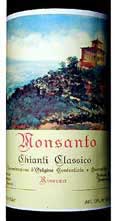
    OK, here it is: Castello di Monsanto Chianti Classico Riserva 2004 (does it make you think of chemically-enhanced spaghetti sauce, too?). A $23-25 wine, available at Costco for somewhere in the neighborhood of $15. No Aspartame, tons of antioxidants, pretty much recession-proof. This is as smooth as a rugged Italian wine dares to be, made from mostly the standard Sangiovese grapes, but also Canaiolo and Colorino. Then it’s aged in Slavonian oak casks and French barriques.

    I’m not even sure what Slavonian oak is, but the result is a wine with equal parts raspberry, chalk, and loam, as well as a sweet, mushroomy flavor that brought to mind the colorful, spotted toadstools of fairytales. (I imagine Slavonia to be a place where tiny gnomes frolic in the grass with pointed Italian hats on their hairy little heads.) The finish on the Chianti is clear and clean and oaky, like a single note drawn on the G-string of a violin.

    The only downside here is that you must go to Costco in order to get the Monsanto at an affordable price. And this is a place where very unhealthy looking people, clearly suffering the effects of a nonexistent recession, are buying enormous flats of Diet Coke. Please be kind to them, for they know not what they do. And forge on, holding fast to these truths.

  • Mao and Asher, Now Appearing at 20.21

    Faces are changing fast at the Walker Art Center‘s 20.21.

    Chef Scott Irestone tendered his resignation abruptly last week. Executive sous chef Asher Miller — now acting head chef — said he was on vacation and returned to find that his boss of three years had left the Wolfgang Puck family, where he’d been working since 1996 (in Las Vegas, for Spago, Chinois, and Postrio, before coming to Minneapolis to open 20.21 in 2005).

    "There was no indication anything was wrong before I left," Miller says. "All I know is, the parting of ways was very much Scott’s decision."

    Miller, a veteran of Fermentations in Dundas, MN, and Cafe Barbette, also has been with the Walker restaurant since it opened. And he’s refreshingly forthright about his desire to take Irestone’s place.

    "I want the job," says the slim, shaved-headed 27-year-old. "And I’m doing the job now. So it makes sense."

    No word yet from Puck HQ, however, on whether or not they’re even considering Miller or plan to bring in another seasoned Wolfgang-inspired line man from Vegas or L.A.

    No matter what happens, Miller promises the menu at 20.21 will remain consistent. There is, apparently, no room at all for a local man to experiment (which gives one a clue as to what might have ired Irestone, does it not?). The careful fusion of Asian and American tastes — quail in pineapple-black pepper sauce, fried calamari salad, Shanghai Maine lobster — is set in stone.

    "Everything in the restaurant is per Lee Hefter [Puck’s first lieutenant out of Spago – Beverly Hills] and you just don’t mess with Chef Lee," Miller explains. "Our menu is and always has been Lee’s. But the cool thing about that is while everything stays the same, your job is to make it a little more perfect every time."

    One thing at 20.21 has changed, however. The frothy and ebullient hot-pink Andy Warhol portrait of Marilyn Monroe — a fixture in the lounge since the restaurant’s inaugural dinner — has been switched out with the dour, green-hued likeness of Mao Tse-tung.

    Hey, Chef Lee. . . what’s the deal with that?

  • If You Give a Mouse a Nice Bottle of Portuguese Wine

    There’s a picture book called If You Give A Mouse A Cookie, by Laura Joffe Numeroff, that I used to read to my children. It goes like this:

    If you give a mouse a cookie, he’s going to ask for a glass of milk.
    When you give him the milk, he’ll probably ask you for a straw.
    When he’s finished, he’ll ask for a napkin.
    Then he will want to look in a mirror to make sure he doesn’t have a milk mustache.
    When he looks into the mirror, he might notice his hair needs a trim. So he will probably ask for a pair of nail scissors.

    The story goes on this way for about a dozen more pages, until the mouse gets very thirsty, requests a second glass of milk, then asks for a cookie to go with it. It’s a tale about the domino effects of life. And I recalled it this afternoon after struggling for nearly a week to write about Irreverente, an absolutely stunning Portuguese wine.

    I bought my first bottle last Thursday and started a blog entry about Irreverente back then, but I wanted to do more than describe how silky and plummy and honey-filled it is, how like Brandy or Port the finish, how it leaves the tastes of cigar leaves and currant in its wake.

    So I pulled up a map of Portugal and started studying it, and then I remembered that Jose Saramago, who won the Nobel Prize for literature in 1998, is Portuguese. I’ve read All The Names, Saramago’s most recent book, plowing through his desultory, no-punctuation style to unearth the quiet story of rectitude in anonymity beneath. But I have to admit, I started Blindness, a parable about a plague of sightlessness and the novel that was most responsible for his earning the Nobel, but never finished. It was excellent — stirring — but also just as dark and murky as the title implies.

    I considered, first, trying to read Blindness before writing about the wine (I thought I could get it done over the weekend) but decided that was overkill. So instead, I read a number of reviews and deconstructions online, most of them favorable but a few not, and realized that it probably would be impossible for me to gain a true understanding of Saramago without first reading Albert Camus.

    It’s generally accepted that Camus inspired Saramago, and that his novel The Plague directly precedes Blindness. The truth is, I read The Plague a long, long time ago but I have never, shockingly, read The Stranger, Camus’ other masterpiece, so I strongly considered going to the library to pick up both.

    By this time it was Saturday. I had a dinner party to attend on Saturday night and didn’t make it to the library. Plus, I was bringing a bottle of the Irreverente to the event, partly because it’s my new favorite wine but also because I was hoping someone would say something profound about it. . . .or about Saramago or Camus. . . .over the course of the evening.

    This, however, did not happen. What did happen is that the late night on Saturday was followed by another on Sunday and then a wicked bout of insomnia Sunday night and Monday, which I exploited to read more about Camus. But this caused me even more angst — of course, everything causes me angst when I’m sleepless — because I came to the conclusion around 3 a.m. that I would be a very poor student of Camus, and therefore Saramago, if I did not first establish a firm basis in Kierkegaard, Nietzsche, and Sartre.

    It was a huge amount of work to contemplate, especially as I was feeling guilty that I hadn’t written the wine review already. Finally, this afternoon, sleep-deprived and horrified by my own lack of knowledge regarding Portugal, existentialism, and illness-as-metaphor, I opened my last bottle of Irreverente, drank a glass, and just then received a one-line e-mail from the supplier in response to my query, telling me (in very short form) that Irreverente is a blend of four grapes: Alfochiero, Jaen, Tinta Roriz and Touriqua Nacional.

    I took my cue from this. Mind you, I still intend to read Saramago, Camus, Kierkegaard, Nietzsche, and Sartre. But, lucky for you, I have emerged from my circular mouse-and-cookie behavior and am able to say, simply: Go out right now and buy this wine. It’s available at The Wine Thief, Solo Vino, and Byerly’s wine stores.

    And, by the way, if you give it to a mouse, he will immediately become as happy as the ones pictured above. No insomnia or existential hand-wringing at all. Guaranteed.