Author: Ann Bauer

  • Another Award for W.A.

    There’s nothing new here. W.A. Frost has been winning awards for years: from Wine Spectator, Gourmet, various local publications, and Zagat. The newest honor is from Wine Enthusiast Magazine — an award of "unique distinction" for Frost’s nearly Bible-size wine list. And it’s well-deserved.

    But what strikes me about this restaurant is that. . . .well. . . .there’s nothing new here. And yet, it’s hip. Whereas other vintage eateries with cozy fireplaces and ropes of twinkly Christmas lights veer toward the quaint and precious, W.A. Frost can pull it off. Yes, this is the sort of place where I could take my 70-year-old mom (and she’d love it). But it’s also a popular date spot, and the lounge — with its tin ceiling and stately oak-and-marble bar — is a terrific place to cluster over warm hors d’oeuvres and wine.

    Prompted by this latest award, I did exactly that, stopping in one night when the snow was sifting down outside. I met a friend and we ordered two flights: a triad of Grüner Veltliners, from Austria; and a matching set of California Zins. The flights were $12 apiece for three very healthy pours.

    The gru-vees (as Frost’s wine list calls them) included:

    Nikolaihof "Hefeabzug" Wachau 2006 — a biodynamic wine with a strong water base, touched with the flavors of teak, straw, and yogurt, with a finish of orange and peach.

    Hirsch "Trinkvergnügen #5" Kamptal 2006 — a clean, dry, ever-so-slightly fizzy wine from the Kamptal area that tastes vegetal, like sweet pea, and has a hint of wet rock

    E & M Berger Kremstal 2006 — a hearty white with the salty taste of sweat (I mean this in a good way: like when you kiss a baby on the neck), plus a little celery and tree

    The Zinfandels were a more ordinary lot:

    Stephen Ross Dante Dusi Vineyard Paso Robles 2003 — a thick red with lots of cigar (leaf, tobacco, and smoke), wrapped in black cherry and spice, with a full finish

    Rosenblum Cellars, San Francisco Bay 2005 — a lighter wine with layers of soft plum, cherry, soil, and faint chocolate notes

    Alexander Valley Vineyards "Sin Zin" 2005 — a slightly yeasty and pedestrian red filled with cedar, black pepper, licorice, and fruit

    I’m usually actually fonder of a glass (or bottle) than a flight, because I like to concentrate on a single wine — and then on the conversation at hand. Had I been in a more prosaic mood that night, Frost certainly could have accommodated my every desire. Their 18-page list offers everything from a $26 Riesling to a $350 Sicilian red. And individual glasses range from $6.75 for a Blanco Protocolo to $18 for an Alexander Valley Cab.

    Sitting in the bar at Frost under soft lantern light, watching the snow fall gently on Selby Avenue, you might imagine you’re there to meet Zelda and F. Scott, only their carriage was slowed by the storm. Ignore for a moment the teenagers sitting next to you who are covered with body piercings and tattoos. They’re from another time.

  • What I Learned from Erica Kane

    I think it’s time you knew: I watch a soap opera. Not every day, not even every week, and never, ever in real time. (Not only is it a depressing thing to do at noon, I simply can’t stomach all those commercials for floor cleaning products and maxi-pads with wings.) What I do is record it on an old-fashioned VCR and watch at odd times, when I need it.

    Here’s my theory about soaps — though keep in mind, I’m basing this entirely upon the viewing of a single one: they’re modern-day morality plays. Nowhere in our culture is the battle between good and evil so clearly played out. And like allegories, these stories always resolve with a message. Valor is rewarded. There is no sin so egregious it cannot be atoned for. True love conquers all.

    It’s really quite that simple. Forget all the ill-advised love affairs and murder plots and abortions. These programs are about good, old-fashioned values. The elderly are wise. The pious, the disabled, and young children are protected. And there is nothing (this is very important, it seems to me): no act so stupid or evil or careless it cannot be undone. Throw your sister down a well in a fit of jealousy? Kill a pedestrian while driving drunk? Seduce your daughter’s husband? All this is forgivable because people are fallible but decent and God loves the lot of us, each and every one.

    It is precisely because I don’t believe these things, because I’m agnostic and a cynic at heart, that I watch this utterly unbelievable show. I pull out my clunky old videotape — it doesn’t matter which episode because I haven’t been keeping up — pour a glass of wine and sit to watch two or three hours of serialized redemption at a time.

    Don’t even bother getting haughty. You can lecture me about the cheap camera shots and melodramatic organ music; I have a degree in film theory. Do you really think I haven’t noticed? The thing is, this isn’t about media or entertainment, really. It’s about believing in something more elemental — something other people, those lucky Appalachians and preacher’s children and Republicans — get from chuch or country. There is a right way to do things, a basic code of human goodness, if you will. When the town megalomaniac softens and makes a heartfelt speech on behalf of the gay schoolteacher. . . .you get it. This is unequivocal decency. A Mafia-like rule for family unity. Watch and you, too, will learn.

    I needed this sort of help when my children were babies. We were poor and the planet we lived on seemed so scary. Who, in their right mind, would launch a small infant into such a random, wild world? Nights, I would stay up nursing them and watching, fast-forwarding through the commercials, comforting myself with the fact that there is order to be found in even the most chaotic, crisis-strewn existence.

    There have been years I skipped the soap and others when I leaned on it heavily. Lately, I’ve caught maybe four or five episodes a month — which is more than enough to keep up with the plot.

    Early last week, however, I found myself deeply in need of a bath in Pine Valley’s particular brand of logic. It was the day news broke, on Google and NPR and CNN, that doctors had discovered a "link" between fever and a potential cure for autism. It was a huge story: parents actually reported that their children’s autistic symptoms lessened or even disappeared when their fevers topped 101 degrees.

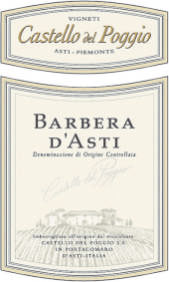
    I retreated to my basement, videotape in one hand, a bottle of Castello del Poggio Barbera D’Asti in the other. Why? Because 14 years ago, when my son was five, he ran a fever of 103 and EMERGED from autism, completely, for an entire day. I charged into his pediatrician’s office howling about this miracle cure, begging him to figure out how it could be permanent, and was told I was insane. Again, two years later, I saw the same thing happen: a nasty flu felled everyone in our household, but rather than making my older son glassy-eyed, it sharpened him and brought him out.

    This time, I was determined to be heard. I went not only to my son’s doctor but to others. I made phone calls, including to the National Autism Society, insisting we’d stumbled upon an enormous clue. I was turned away and treated like I was deranged.

    So I gave up.

    It was not, of course, the only thing I focused on in those years. There were vitamins, chiropractic treatments, and a strange, self-administered "poetry" regimen that I convinced myself would work. Yet, last week — reading about physicians nationwide heralding the so-called "fever effect" as groundbreaking news — I grew temporarily so disillusioned with the world and my paltry contributions to it, there was nothing to do but retreat.

    I drank the Barbera D’Asti with unquestioning ardor, even though it is, frankly, weird: a puckery sour cherry with undertones of raw carrot and chalk. This is not a traditional wine, but I don’t exactly live a "traditional" life.

    And I watched a few episodes of the soap that’s been feeding my desire for moral clarity for nigh on 20 years. Two people were trapped in an old bomb shelter (there’s always someone underground, it seems: symbolizing either hell or the pit of despair); several marriages were unraveling; there was a man dying of leukemia, a toddler undergoing surgery to have cochlear implants, a little girl separated from her father but living — unbeknownst to anyone — only three doors down. And through it all, no matter how bleak the circumstances, there was some measure of hope. This was especially true in the case of the show’s heroine: Erica Kane.

    This character is daytime TV’s Scarlet O’Hara. She’s faced rape, addiction, and kidnap by an evil Hungarian count. Yet, she’s plucky, that one. (Also gorgeous, a size 0, immensely wealthy, and always either naked or completely accessorized and beautifully dressed.) No matter what the problem — whether her tenth divorce, her grandson’s deafness, or her son-in-law’s sudden disappearance — she arises ready to fight. Realistic, no. But dammit, after I’ve drunk a couple glasses of wine, she can seem an inspiration.

    So what, exactly, should I take from this, I wondered? That the answer is to have sex with a series of brothers? Become addicted to painkillers and get admitted to a high-priced rehab? Ride a stallion over the grounds of nearby palace while wearing a $3,000 evening gown and high-heeled shoes?

    Probably not. The lesson I chose to take from it, after I’d hidden out for a couple hours pouting and hating every single person in the known universe, was to try again. So I corked the wine, went to bed, had a strange set of nightmares, and got up the next morning to call a doctor and find out if — after all this time — the research they’re doing might help my nearly 20-year-old son.

    The appointment is tomorrow. If the guy refuses to help us, I think I’ll dump him down a well.

  • Grotto Dining

    One of my favorite restaurants in the world is a vegetarian place called The Red Avocado in Iowa City, Iowa, that occupies the bottom half of a duplex facing Washington Ave. It’s dim and mostly windowless inside. The food is hot and very spicy. It’s definitely an acquired taste: not only do you have to go prepared for cumin, black beans, and miso, you also have to be in a cave-dwelling mood.

    The same goes for 128 Cafe, the little sub-ground restaurant on Cleveland Avenue in St. Paul that reopened in November after closing for five months and being acquired by a new owner. To be honest, when it first shut down I assumed 128 was being renovated, because the interior is pretty dated with its primary color painting and wood-paneled walls. But in fact, new proprietor Jill Wilson believes that’s part of the restaurant’s charm. And it seems the staff and neighborhood regulars — both of whom came back — thought so, too.

    Wilson, a former employee who went on to become manager of Cesare’s Wine Bar for a time, agreed to buy 128 from original owners Brock and Natalie Obee after they had a dispute with the building’s owner last year. She closed the place to get all the paperwork in order and "freshen it up" with new carpet and paint. But she left the Ice Storm-era grotto mostly intact.

    She also managed to woo back chef Ian Pierce, with a promise that he could experiment more than during the previous reign. Today’s 128 menu includes old favorites, such as BBQ ribs and roasted garlic bulbs, but Pierce has added several upscale items — pan roasted duck, grilled flank steak, and egg nog creme brulee — as well.

    A couple of my fellow faculty members from Macalester dined at 128 recently and gave it a hearty endorsement. "Of course, it has the wood-paneled decor of someone’s basement," said writer Don Lee. "But the
    service was great, and the food was tasty. I had the braised pork,
    which was moist and tender, and my friend had the duck, which hit the
    spot for her."

    My favorite part of this place, though, is the miniature 4-seat bar, where you can get a glass of the J. Vidal Fleury Cotes du Rhone or a Renwood Viognier for $7. And there’s nothing cozier on a cold winter night than warm meat, good wine, and a little cave hulled out under the snow. Even better if it reminds you of your childhood basement, circa 1974.

    Call 651-645-4128 for reservations.

  • The Seventh Sign: $30 Chianti

    This morning, around 7 a.m., a senior White House economist citing unexpected job growth last month pronounced the U.S. economy "still strong" and said he does not believe we are headed into a recession.

    If you’re like me you’re both encouraged by this news and slightly perplexed. The world as viewed by Edward Lazear, chairman of the White House Council of Economic Advisers, does not appear to be the same one I’m looking at — and living in — each day.

    Here in my little slice of the U.S., gas prices are incredibly high [about which I am, frankly, ambivalent: I’d be all in favor if it meant people drove less; but apparently, as a group, we don’t], wages are falling steadily as measured against inflation, the sale of goods and services is down, housing values have dropped off a cliff. And those are just the obvious, measurable factors.

    The others: it’s often impossible to sell a house even at a rock-bottom price; professional people in retail, financial, media and business services fields are being slashed right and left; and now, the clincher, WINE PRICES are going straight up.

    I don’t mean to be glib. Compared to the surge in homelessness and hunger, this is a non-issue. Let me repeat, a non-issue. However, it is an interesting study of what happens when world economies converge. Not only is the price of oil driving shipping costs through the roof, but the dollar is at an all-time low against the Euro.

    According to Drink and Be Merry, an article in the December 5 New York Times, European winemakers have held off jacking up prices and probably will continue to do so through the holidays. But NYT wine critic Eric Asimov predicts the hike will come in 3-5 months. And it could be a shocker.

    Whether this will prompt people to buy less wine, buy cheaper wine, or simply buy domestic wine remains to be seen. My prediction is that the coming change will buoy up even further American labels such as Beaulieu Vineyards, Bogle, and Gallo’s Red Bicyclette, while potentially crushing importers and small, independent shops that deal in mostly eccentric, garage-style European wines.

    It’s a blow not only in a business sense, but also in terms of the small, unique finds that may be lost to us: strange Spanish whites with a hint of caper in the nose and affordable Rhone reds so smooth and filled with a mountain air flavor you can drink them all night.

    Mostly, though, I wonder if this is a sign that Mr. Lazear, for all his training, is a little bit off-track. Because in my world, it costs $37 to fill the gas tank and roughly $150 a week to feed a teenage boy. My house is a little crumbly, my savings are not quite what they should be as I stare into the maw of 42, and we’re starting into the time of year when heating costs are well into the triple digits.

    This wine thing may be the final sign of our impending middle-class apocalypse. The horsemen may be coming, despite all that "wisdom" from Washington. You never know.

  • Go Whole Hog

    The December 3, 2007, issue of the New Yorker contains an article called Red, White, and Bleu, by the hale and cerebral food writer Bill Buford, which focuses on the joys of being a carnivore.

    In it, Buford "reviews" three books about meat, while weaving in his own questions, philosophies, and conclusions on the topic — and these are many, given this is a writer who’s been bloody-to-the-elbows with butchers and renderers many times before.

    What do we eat when we eat meat? Buford asks at the outset. And it’s clear he believes on some level that each and every one of us should know. We should have some image of the saw that’s used to hack through a carcass; the way entrails come out of a just-dead animal all glistening pink and linked; the various parts (like knuckles and snout and lungs) that most habitual steak eaters and foie gras fans wouldn’t even touch.

    It’s worth a read. And if you’re inspired then to sample some meat you will recognize, make a reservation at Heartland, where chef Lenny Russo informs me he’s just taken delivery on a whole hog. Then again, if you wait until tomorrow, Russo will have an entire wild boar on hand, so you might be able to get your porcine meat garnished with a horn. Also, Russo is expecting a bull calf in time for the weekend and two woolly lambs should be arriving by Fed Ex on Tuesday next week.

    This is no magical mystery tour. At Heartland, you will get meat dishes that wear their origins proudly. Russo — an adherent of the near-Biblical tenet that you do not waste any edible portion of the beast you kill — promises to find a culinary use for "all the bits and parts." And this includes, but is not limited to, livers, brains, kidneys, testicles, and tongues.

    So what kind of a carnivore are you? Are you brave enough to get to know your meat? I dare you. Go whole hog.

  • Cosmic Connections

    There are things you don’t know, truths you have yet to understand. You may think what you’re experiencing is just a series of events, but there is no such thing as coincidence. The world has a plan for each of us and it’s all in the connections. To become englightened, simply take note.

    For instance, in winter 1991, I was a recent college graduate and the mother of two baby boys living in Duluth. My husband was a small contractor, there were three feet of snow on the ground by November, and we were going broke. So I called up the News-Tribune and offered to write for them from home. I’d give them humorous columns about what it was like to be young and impoverished and scrappy: the joys of shopping consignment and milling your own baby food. That kind of thing.

    Strangely, they bit. It must have been a slow news season. In any case, January ’92, my debut column appeared. It was about how we’d sold our home without using a Realtor before moving from Iowa to the Iron Range. I was paid $35 for this master work. Then all hell broke loose.

    The Realtors, it turned out, bought about a third of all the advertising in the Duluth News-Tribune. . . .up until the day of my column. That afternoon, they pulled all of it, every cent, and went to the local shopper with their business. The newspaper fired me (very publicly), and the editor ran an apology for my work, which he claimed had slipped through the editorial process unchecked. My husband mysteriously lost the part-time job he’d picked up. We got strange, threatening phone calls at all times of the day and night.

    The Columbia Journalism Review covered it. Then-Star Tribune staffer Doug Grow interviewed me. Everyone was on my side. It didn’t matter. Eventually, we went under. And then, of course, we couldn’t sell our house. It took us six months and cost us everything we had (and then some) before we finally got out of town.

    Years later, I would sit in a theater in late December [also winter, if you’ll notice], watching the Lemony Snicket movie A Series of Unfortunate Events, and hear Meryl Streep (as Aunt Josephine) confess her deathly fear of Realtors. I tell you, I had a little shiver of empathy right there in the Willow Creek 12.

    And just last night, I found myself around nine o’clock feeling a familiar possibly-paranoid-but-potentially-founded fear: of Scientologists. My article on the local Church of Scientology, the one in which I very much implied that it is a cult based on the cunning ravings of a pulp genre writer, had come out roughly seven hours before. This time, I trusted the publication completely and knew the editors would stand by me. But other elements of my situation were eerily similar to Duluth.

    Three readers had sent me the same news story in which a reporter told about how she wrote an article critical of Scientology and then was sued into ruin. There were several hang-up calls. Now, mind you, this could have been my daughter’s fellow 13-year-olds, bored with MySpace and looking for something to do. But every time the phone rang, my son would lock eyes with me and say in a Bela Lugosi-like voice, "Oh Jesus, it’s the Scientologists." (He is known for mixing his metaphors.)

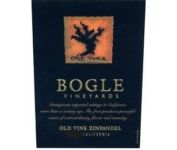
    It unnerves a woman, you know? Like Realtors. So I opened a bottle of Bogle Old Vine Zinfandel. This is my comfort wine. It’s a tiny bit sweet and juicy and peppery; it tastes the way pot roast smells, not fine so much as homey. But it’s better than pot roast — even my Mom’s, which is awfully good — because it has 14.5% alcohol. And do you suppose it was just luck that I happened to have this wine on hand? I think not.

    So around ten, after a glass or two, I called my ex-husband, the former marine and hardcore addict who served a little time for some Robin Hood-like crimes and once stole my furniture back from the Israeli mob in Providence. "You’ll watch out for the kids?" I asked.

    "I’ll kill anyone who even comes near ’em," he said, and I felt even more comforted by the fact that he was 100 percent sincere.

    But I still haven’t gotten to the really freaky part — the part that makes me have faith. So here it is: Today, after a couple hours of answering e-mail that contained various things including threats and accusations of yellow journalism and one message from a very good friend with the subject line, "You are SO not a Thetan," I received a note from someone offering me tickets. . . .completely out of the blue. . . .to the Minnesota appearance this week of Daniel Handler, a.k.a. Lemony Snicket — the author of A Series of Unfortunate Events and creator of Aunt Josephine.

    And if that doesn’t make you believe in the cosmic connectedness of the universe, I just don’t know what will.

  • Scientology: The Local Source

    Until last week, everything I knew about Scientology came from Tom Cruise on Oprah, and from an experience I had last summer.

    I wrote two articles for Salon.com, one in May 2007, the other in June. The first, about a catastrophic reaction my son had to psychiatric medication, resulted in a swell of support from Scientologists. Then I published the second piece, describing how doctors at the Mayo Clinic brought our son back from near death with electroconvulsive therapy, and was cyber-stalked by a few.

    Around the same time, representatives from the local chapter purchased the former Science Museum in downtown St. Paul and announced they planned to build one of the largest Scientology churches in the world there. Strangely, no one seemed to question this. So a couple months later, I walked into the current “church” on Nicollet Avenue determined to find out: Who are these people? What, exactly, do they believe? Why do they oppose psychiatric medications? And is their ministry more Franklin Covey, sci-fi Fundamentalism, or a combination of the two?

    I was told that if I left my card, the church’s “public affairs officer” would contact me. The following day, he did, saying he was very eager to meet and provide me with details. “Our current church looks like an office building,” he told me. “It’s not a good representation of what Scientology is about. But soon, we’ll have something that truly represents the riches people can find inside our doors."

    I’ll call him Karl. He didn’t ask me to use an alias, and with the details I’m about to provide any third-grader with an Internet connection could find him. But this man is either an excellent liar or the victim of a cult — and I’m betting he’s the latter. Should he choose to get out some day, I’d rather not link every Google search of his name to Scientology.

    We meet on a Wednesday afternoon in winter. He is exceedingly well dressed: a deep, purple shirt, gray suit coat, and designer tie. Small wire-rimmed glasses and short hair. He holds the door for me, shakes my hand with deference, and smiles often in a neat way but never — throughout our two-hour interview — actually laughs.

    Karl grew up a devout Catholic in small-town Iowa. He started college intending to become an electrical engineer but dropped out and moved to Nashville at the age of 19, because he dreamed of becoming a professional bluegrass musician. Five years went by and little happened: he was playing small, private parties and working odd jobs. Then he read Dianetics — a self-help manual written by the pulp science fiction and western author L. Ron Hubbard in 1950 that later became the basis for the Church of Scientology — and was hooked.

    “It made so much sense to me,” he says. “It explains the mind and psychosomatic illnesses, which may be 70 percent of all illnesses. I thought that was really neat. It explained so well why a person might be depressed and what to do about it. Dianetics helps you figure everything out. I read it today and it’s just as mind-blowing as it was back then.”

    Karl and his then-girlfriend (now wife) moved to Minneapolis from Tennessee in 1991 so he could pursue mission work with the church. Today, at 41, he is an ordained minister — one of several in his congregation — and public affairs liaison for the Twin Cities Church of Scientology but claims that he continues playing music because he needs the money; despite all the hours he puts in, his service to the church pays a pittance: “Somewhere between $20 and $50 a week.” For the same reason, he says, his wife has abandoned her career as an artist to become a full-time bill collector.

    We get some pay but it’s only a token,” Karl tells me. “That’s because most of the money we make goes into furthering the religion. It goes to pay the light bill and our insurance. Then there’s a percentage that goes to our management in Los Angeles. Also, we support many human rights campaigns and drug education programs.”

    Scientology, he tells me, literally means “the study of wisdom” (it derives from the Greek word “scios”). The religion did not, Karl insists, develop out of the plot of a science fiction novel Hubbard was writing, and it has nothing to do with aliens, though the press often insists that it does. What’s more, according to Karl, Hubbard himself didn’t even start the movement. It was people who read his books and started a church in California around 1954 in homage to the man — and his writings — whom they called The Source.

    Unlike other religions that don’t tell you how to live, this is an applied religious philosophy,” Karl explains. “It’s a way to look at life, and it looks at the spirit, too. But it’s also applied like a science because you use it to do things. You can actually take the tools we give you and use them to improve your relationship with your spouse or your working situation.”

    When I ask for specifics, Karl is quiet for a moment.

    “You might take a class in how to improve your marriage,” he answers after a time. “There would be drills you do with your spouse and the idea is you would go home and continue to apply what you learned and things would be better. You would learn that a marriage has to be created every day.”

    Tell me about the drills,” I press on. “Give me an example of a problem a couple might work on.”

    Instead, Karl describes the method: people pay for the classes (later in the conversation he will amend this and tell me they make voluntary “donations”), which are conducted at the church. Each class is a self-study, meaning there is no teacher — only a single supervisor who is available for questions — and members must read books written by Hubbard to find the answers they seek. They also have to buy the books.

    “You’re getting the wisdom straight from the texts,” Karl says. “This is important for a couple reasons: first, we can have a lot of people studying different things; but also, we want you to get the facts straight from a book, not someone’s interpretation.”

    In fact, Karl’s own ministerial course was self-study as well; and yes, he paid for the privilege of reading on-site and becoming ordained. Now he can perform marriage ceremonies, preside at funerals, and give sermons. These days, however, most of his service to the church involves outreach. He also helps run the local arm of their street drug prevention program, Narcanon — which owns several dozen rehabilitation centers around the world and implements Scientology’s “New Life Detoxification Program” — as well as a public awareness campaign focused on the mental health field that disseminates pamphlets such as Psychiatry: An Industry of Death.

    I do not claim to have conducted an exhaustive study of Scientology. I couldn’t, frankly, given the time and resources I have.

    Journalists who write extensively on the topic — most notably Richard Behar, a reporter for Time whose article The Thriving Cult of Greed and Power was published in 1991 — spend years conducting hundreds of interviews and reading through court cases. I have read those stories, however, as well as Dianetics (the 1992 edition) and the work of a man from Norway who has administered the anti-Scientology website Operation Clambake since 1996.

    I’ve also spent enough time in the church in downtown Minneapolis to describe it accurately: It consists of several connected rooms. The front two are lined with shelves
    containing books, audiotapes, CDs, and workbooks — all of which are sealed in plastic. You can buy a pocket-size paperback edition of Dianetics on Amazon for $7.99, but the prices on the materials here hover in the $20 range. You can also get a free personality test, typically administered with something called an “e-meter,” a device invented by Hubbard which measure very small changes in the electrical resistance of a person’s body and points to “engrams” — traumatic memories that block one’s attainment of success and happiness.

    Engrams can derive from a variety of events. In this passage from Dianetics, Hubbard described how pre-birth coitus trauma will cause a “thetan” (or immortal spiritual being — Scientology claims we are all immortal but is vague about exactly how the spirit lives on after death) to become blocked:

    "Mother and Father are engaging in intercourse which, by pressure, is painful to the unborn child and which renders him unconscious. . . Mother is saying “Oh, I can’t live without it. It’s wonderful. It’s wonderful. Oh, how nice. Oh, do it again!” and Father is saying “Come! Come! Oh, you’re so good. You’re so wonderful. Ahhhh!” Mother’s orgasm puts the finishing touch on the unconsciousness in the child. Mother says, “It’s beautiful.” Father, finished now, says, “Get up,” meaning she should take a douche (they do not know she is pregnant) and then begins to snore." (Dianetics, p. 326)

    Hubbard also wrote that there is no foolproof method for terminating a pregnancy and that a major cause of mental “aberration” is attempted abortion.

    "Attempted abortion is very common. And remarkably lacking in success. The mother, every time she injures the child in such a fiendish fashion, is actually penalizing herself. Morning sickness is entirely engramic, so far as can be discovered, since Clears [see below] have not so far experienced it during their own pregnancies. . . Actual illness generally results only when Mother has been interfering with the child either by douches or knitting needles or some such thing." (Dianetics, p. 199)

    Hubbard defined homosexuality as a sexual perversity, “far from normal and extremely dangerous to society” (Dianetics, p. 135) and claimed Scientology can “heal” a penitent of this and other forms of sexual deviance. For years, the actor John Travolta has been held forth [unofficially] as proof of this, and he was even cited in a lawsuit brought against the Church of Scientology by a man who submitted believing he, like Travolta, would be cured of being gay.

    Engrams can be dealt with only through “auditing,” which is, basically, the process of self-study Karl described. It involves years spent studying the religious works of L. Ron Hubbard — he wrote dozens of texts, tracts, and standalone pamphlets before his death in 1986 — and watching his taped lectures, then working one-on-one with a specially trained auditor from the church. The goal of all this is to attain a state called “clear” (this is used both as an adjective and a noun: those who have achieved engram-free existence are called Clears). After that, with more study, it is possible to achieve the more enlightened level of Operating Thetan (OT). Operation Clambake estimates the cost of becoming an OT to be $300,000-$500,000.

    This is where the questions about Karl arise.

    Several years ago, a former Scientologist went public with the story he was told upon reaching OT III status: Only the chosen few who had dedicated their lives to Scientology were let in on the “true” story of its genesis. It is based on the Galactic Confederacy of an alien community ruled by the tyrant Xenu, who brought them to Earth 75 million years ago and killed them, leaving their spirit essences to wander the planet and damage humans in modern times. It’s fairly well established that Scientology has a science fiction connection, but Karl may not be high enough in the ranks to have learned it yet.

    On a more pragmatic front, the money trail of the Church of Scientology is long and convoluted — and there’s reason to believe it supports more than just the mission. Behar claimed in his TIME magazine exposé that “Hubbard was skimming millions of dollars from the church, laundering the money through dummy corporations in Panama and stashing it in Swiss bank accounts.” The founder was accused of stealing around $200 million and was under investigation for tax fraud when he died in 1986. And Scientology has been characterized by many as a pyramid organization, which uses the faithful to recruit more people and rewards them, very modestly, for bringing more [paying] members into the fold.

    Finally, Scientology was the leading reason people cited for calling the Cult Awareness Network (CAN) for deprogramming of their loved ones until 1996. That was the year CAN filed bankruptcy after years of fighting “freedom of religion” lawsuits, and was bought outright by the Church of Scientology.

    Of course, Karl has access to the same various Internet sites and Wikipedia entries I do. He’s aware this information is out there but believes (or at least says he does) that this is propaganda put forth by the mainstream press, the IRS, and the psychiatric community to make his religion look greedy and “ridiculous.” Psychiatrists in particular, he tells me, are desperate to discredit Scientology.

    “We know the damage it causes when people go to psychologists and psychiatrists,” Karl says. “The drugs are very damaging. But they also tell people all sorts of garbage, “You’re depressed because your mom used to spank you,” which gives people all the wrong ideas about their lives. [Note: This is inconsistent with Dianetics, which does claim childhood “abuses” cause engrams.] And we’re against psychiatric drugs because number one, they don’t work; number two, we think they’re damaging; and number three, we have all the answers anyway in our books.”

    He denies vehemently the idea that money is at stake and refutes the apocryphal story about L. Ron Hubbard (recounted by many people, including the author Harlan Ellison) that he joked in the 1940’s that the best way to become rich would be to start a religion. Despite a 30-year battle between Scientology and the IRS, Karl cites a 1993 ruling that confirmed the church’s nonprofit status.

    "Every religion I have ever studied tried to answer questions that are beyond the physical world. They want to know what happens after we die. They all mark different rites of passage: birth, marriage, death. And they all involve a community of people who come together to practice similar beliefs.” Karl pauses then looks me straight in the eyes. “I do this work because I know we have the answers people are looking for. And all the money we take in is spent right back on what we’re doing.”

    In June 2007, Karl helped his congregation negotiate the purchase of the former Science Museum building in downtown St. Paul. It’s an 80,000 square foot space, which Karl tells me will serve five states: Minnesota, Iowa, Wisconsin, and both Dakotas. Though it will not approach the palatial “advanced” institutions in Los Angeles, Clearwater, Florida, and various locations overseas — or the Celebrity Centers built to serve only well-known actors and artists, including Cruise, Travolta, Lisa Marie Presley, Kirstie Alley, Jenna Elfman, Juliette Lewis, and Chick Corea, — St. Paul soon will be a major Scientology site. If all goes according to plan, a $7 million renovation of the building will begin in early ‘08 and finish late the same year.

    This is part of an international effort under current leader David Miscavige to upgrade Scientology facilities and prepare for a whole new wave of followers. No one knows how many peop
    le identify themselves as Scientologists today. The church’s administrative offices in California claim worldwide membership is around ten million, but independent surveys estimate this number is inflated by 20-50 percent.

    Karl reports — accurately according to all the information I can find; though it’s likely he provided the numbers for other local reporters as well — that the Twin Cities sect is growing steadily. “When I got here in ’91, we had a couple hundred people. But now, we have 700 active members, people who attend weekly services and take classes and participate in all our events. We didn’t plan to become one of the biggest churches in the country. We just got lucky. With the new St. Paul facility, we’re going to be ready to take as many new members as we can.”

    In his final correspondence with me — just prior to publication of this article —Karl directs me to several Scientology-friendly websites, expresses concern for my situation, and offers his personal assistance.

    I believe in his way, he means it.
  • The Vintner's Exfoliant

    A few years ago, all the world was agog over green tea. It was in capsules, body lotions, eye creams, and perfume. While doing an article about the health benefits, I actually talked to a doctor who recommended bathing in it: throwing a couple teabags into a tub full of hot water and steeping, full-body, for at least 20 minutes a day.

    But today, the rage is wine. First, there was Resveratrol, the compound in red wine that’s been found to have anti-aging properties and to extend the lifespans of obese mice. For the past year, researchers at Harvard Medical are studying its potential to stabilize [human] glucose levels, prevent diabetes, enhance heart and liver tissue, and protect against degenerative diseases such as Huntington’s.

    Now, a tiny start-up firm in Blenheim, New Zealand, has perfected a process to turn grape seeds ("waste" left over mostly from winemaking in the island’s Marlborough region) into antioxidant-rich cosmetics and supplements, using a low-impact water extraction method. They began offering the grape seed product in May and already are exporting more than 100 kilograms per month, selling to companies that make body lotions, makeup, skin care products and vitamins.

    At the same time, people appear to be demanding more and more purity of the wines they drink. According to an article in today’s New York Times, "Organic wines are one of the hottest trends in restaurants today." A recent comment thread on this blog focused on the use of preservatives in wine. And Salon.com just ran this piece on how to find a good-tasting organic, sulfite-free wine in their Health (rather than their Eat & Drink) section.

    Finally, winemakers at California-based Bonny Doon Vineyard announced last week they will — as of January 2008 — list all ingredients (including grapes, sulfites and other preservatives, yeast, and fining agents) on their bottles.

    As a diligent label reader who tries to avoid additives, preservatives, artificial sweeteners, and processed foods, I am, theoretically, in favor of the movement toward purer, less chemically treated wine. But I have to admit there is a part of me that doesn’t want to know. I associate wine with magic: with ancient ceremonies and Bacchus. Full moons, swooning lovers under grape arbors, Lucy and Ethel jumping into the vat to stomp the pulpy juice.

    This is one area of consumption I’ve kept entirely free of hang-ups or obsessions. And I’d really like to continue that way. If wine can be used to help prevent Huntington’s Disease — an excruciatingly slow, genetically-endowed death sentence — I’m all for it. But Resveratrol aside, I fear the trend toward commercializing wine’s healing properties will lead to little but modern-day snake oil and very expensive exfoliating scrubs.

  • Pretty Flighty

    When friends of ours — dedicated and robust red wine drinkers — dropped by last weekend, here’s what I had on hand:

    A $100 Hartwell Stags Leap District Cabernet Sauvignon (2002) that someone had given me as a gift [because believe me, this is not in my keep-it-around-the-house price range]. A Chilean Merlot from Casa La Joya (2006) which retails for around $15. And Our Daily Red, an organic, sulfite-free California table wine (2006) I picked up for $7.99.

    An odd flight, I give you that. We started with Hartwell, on the theory that it was important to drink the most expensive wine while our palates were fresh.

    "Nice legs," our friend, Mitch, said. And yes, this Cab had nearly perfect form — like an ice dancer who routinely earns a 9.9. It was as smooth a California vintage as has ever passed my lips, with rich fruit (blackberry, cherry, blueberry, and currant) and a finish that I have to say was almost TOO clean. This was much like drinking a 20-year single malt Scotch or eating a single perfect mono-flavored truffle. In other words, not quite satisying. Maybe it’s just me, but I like some drama in my food, wine, and. . . .well, other hedonistic endeavors. You know, a few ragged edges here and there.

    I brought out some cheese, crackers, a little smoked fish. Then we opened the Chilean Merlot. Call me common, call me what you will. But this was more like it: Che on his motorcycle, riding the coast against a stiff wind. This wine was juicy and brash and a little dry. And it turns out I’m not so pedestrian as all that. . . .the reserve La Joya (think of it as the older, more refined cousin of the one we drank) won "best Merlot in the world" at the 2002 international wine and spirit competition.

    We sat at the table for a couple hours. Dark fell. Teenagers (our own and others) stopped in to talk; somewhere along the line my husband put on an Annie Lennox CD. Around the time my daughter brought the leftover Thanksgiving desserts out on a tray, we uncorked Our Daily Red.

    Now I was pretty mellow by this point. Great friends, good food, children milling and laughing in the background. Perhaps this had an effect. But when I took a sip of this $8 wine, I was amazed at how decent it was. A blend of Syrah, Carignan, and Cabernet, it was simple and fruity with a little acidic kick.

    I certainly wouldn’t make a habit of drinking ODR — and after half a glass, I detected a very faintly dirty taste that I didn’t exactly love. I am, however, all in favor of the idea that everyday table wines should be affordable and approachable and good companions, if you will. Rather than requiring attention or being the star, this sort of wine will let you focus on what’s important: the people at the table, the music in the air, and the group of wonderfully raucous kids in the next room.

  • duplex: The Little Restaurant that Could

    When my friends David and Grant moved here from Manhattan during a flat, frigid stretch of January 2006, I assured them there were plenty of wonderful restaurants in the Twin Cities where they could occupy themselves during the winter. Try La Belle Vie, I said. Heartland, Restaurant Alma, Five (now closed), Cosmos, and Fugaise.

    I’ll admit, I was trying hard to convince them we aren’t rubes here in Minnesota. We don’t eat pork chops and boiled potatoes at every meal. We have great restaurants, too!

    They followed my instructions and dined around. But by February, the two men had a recommendation for me: duplex, they said, was by far their favorite local place. A small, glowing bistro on Hennepin Avenue — located in the old Pandora’s Cup coffeehouse (which was, I’m suspecting, a duplex when originally built) — it was close to their Kenwood home, cozy, warm, and consistent in serving great, mostly locally-grown, healthy-yet-tasty fare.

    Indeed, my partner Jeremy Iggers, wrote a review of duplex back when he was at the Strib that said in part:

    The world would certainly be a better place if more people asked
    themselves the question, "What can I do today to make Jeremy Iggers,
    restaurant critic for the
    Star Tribune, a happy guy?" At least, it
    would be a better place for me. I’m not claiming that the owners of
    duplex, the intimate new Uptown dining spot, actually designed their
    restaurant with me in mind, but they definitely pushed all the right
    buttons.

    If you haven’t tried duplex yet, I suggest you sign up for one of several upcoming wine dinners. The first — which is being served this week, starting tonight, November 29, and going through Saturday, the 31st — features a five-course menu from Spain:

    Ajoblanco de Málaga (garlic cream soup with almonds)

    Revueltos (eggs scrambled with mushrooms and shrimp)

    Remajon (orange and cod salad with red onions and green olives)

    Pollo al Chilindrón (chicken with tomato, peppers and Serrano ham)

    and

    Cinnamon Flan

    This meal, with wine, is priced at an unbelievable $37. Subsequent dinners will feature the cuisines of Italy, France, and the American Midwest.

    For reservations, or more information, call duplex at 612-381-0700.