This is it, apparently. With the seventh and final installment in the series (list price: $34.95), the Harry Potter gravy train finally lurches to a halt. That, of course, means this will be a bittersweet occasion for J.K. Rowling’s legion of fans—adults and whippersnappers alike—and perhaps even more so for the publishing industry, which has been stumbling along and inhaling the powerful Potter fumes for nearly ten years. The phenomenon continues to fascinate on any number of levels, even for those who’ve never cracked one of the books or quite managed to understand what the fuss is all about. Surely the magical lad is all grown up by now, so might some of us hold out hope that “the Deathly Hallows” refers to Potter’s long-overdue, drug-fueled Beat odyssey? Probably not.
Author: Brad Zellar
-
Holiday in Cambodia
When I was at home, I was in a better place.
—Shakespeare, As You Like It“I’m somewhere in a godforsaken rainforest on the north coast of West Papua, Indonesia, and I’m ready to get the hell out of here.” So begins Michael Behar’s “The Selling of the Last Savage,” which originally appeared in Outside magazine and eventually turned up in the 2006 volume of the annual Best American Travel Writing series. You’ll notice Behar’s use of the first-person point of view, the clear suggestion of a masochistic impulse, and the use of the present tense. These characteristics are all now pretty much standard features of a certain subgenre of travel narrative.
Travel writing is a curious, and increasingly risky, business. Not that long ago (2004, actually), Pico Iyer, one of its most successful and respected practitioners, observed that “American travel is about looking for the light.” It’s frankly hard to know what to make of such an odd statement, given much of what has been packaged as travel literature in the early years of the twenty-first century.
Reading through a batch of The Best American Travel Writing anthologies—six of them over a period of a couple months—was a disorienting experience, to say the least. Alongside breezy accounts of what might properly be characterized as larks or rambles (riding the bus in New York City, a road trip along Route 66, pigging out in Iceland, spending the night in Central Park) are perilous and disheartening dispatches that go well beyond the merely exotic to the truly terrifying. There was a below-deck report of a doomed boat packed with Haitian refugees; a story of slaughter in Uganda; an account of the horrific ecological disaster at Karakalpakistan (“a place of almost unimaginable misfortune”); not to mention numerous tales involving murder and child abduction and war. You can’t help but notice that the sense of discovery that was once such a staple of travel writing has given way to what Jamaica Kincaid, in her introduction to the 2005 edition, gently called a “sense of displacement.”
Paul Theroux, in his own introduction to the BATW 2001, goes to some lengths to mark the changes that have taken place in travel writing in a world that exists in a now-permanent state of limbo between post- and pre-catastrophe. The response of a new generation of intrepid travel writers has been to wade into the teeth of such catastrophes, to report on what they see in such places that have been changed (for the worse) beyond recognition.
“It is not hyperbole to say there are no Edens anymore,” Theroux writes. “We live on a violated planet. Travelers are witnesses to change and decay, and when they write we are entertained and sometimes enlightened. But the mode of expression, like the world, has changed.” To write about that changed world, Theroux contends, requires “a different sensibility and different expectations.”
He goes on to explain the myriad ways that travel writing has changed since the days when writers went abroad or rambled far afield in search of indolence, civilization, the remnants of fading cultures, or a relatively benign sort of exotic adventure—which was virtually always seen through the wide and incredulous eyes of Westerners on holiday. Travel writing today, Theroux says, “is not about vacations or holidays, not an adjunct to the public relations industry.” Nor is it, he contends, “necessarily tasteful, perhaps not even factual, and seldom about pleasure.” This relatively new breed of travel writers, and this disturbing and increasingly prevalent strain of travel narrative, is a product of a “postmodern view of travel as adversity,” and its proponents most often drag themselves to the ends of the earth in search of “hellish places” and “a rewarding misery.”
Keath Fraser, in his introduction to an anthology of travel writing called Bad Trips, spells out this new paradigm thusly: “Without fear, travel has no meaning.” Adds Jason Wilson, the series editor of BATW, “We are all tourists now, and there is no escape.”
-
That Miami Sound: Going, Going, Gone?
That one felt…I don’t know, it felt bad, I guess, like a game in late September with hope sliding away with every pitch and a cold autumn rain beating the leaves from the trees along the boulevards (cue Barber’s “Adagio for Strings”).
Maybe that’s just because it was a Friday night, and Friday nights don’t mean much when you get to be a sour old bastard who doesn’t go anywhere and depends on baseball to get him through the otherwise blank stretch of another weekend.
Those games in the eastern time zone are also a sort of panicky proposition; you know that once the game is over there is still going to be a whole lot of hobbled Friday night clock to kill.
It was a grim game all around, I suppose, or at least feels that way after the fact. The Twins actually managed to score first –an increasing rarity– but then in characteristic fashion proceeded to scuffle their way through six scoreless innings as Boof Bonser let the Marlins chip away and build a 4-1 lead. As has so often been the case with Minnesota’s starters, Bonser pitched well enough to win but also just poorly enough to lose. Most nights of late that usually means the latter proposition, and Boof was yanked after six innings despite having thrown only 66 pitches –fucking National League rules.
I’m not quite sure why Juan Rincon was in the game in the first place, but I really have no idea why he was sent out to the mound for a second inning after the Twins managed to tie the score in the eighth. From what I understand Ron Gardenhire admitted he fucked up in his post-game remarks. That’s big of him, and I understand a manager might be a tad bit preoccupied when his MVP first baseman is coughing up blood in the dugout.
Still. Juan Rincon? After his last couple outings? When the entire bullpen was rested and ready to go? Big mistake. Costly mistake.
I have no idea how severe the Morneau situation is (a bruised lung, I just heard), but when a guy is wheeled away on a stretcher with an oxygen mask over his face that can never be much of a good thing for a team’s morale or prospects. Particularly on the night Kenny Rogers returned to the Detroit rotation and pitched like he’d never missed a start, pushing the Twins six-and-a-half back in the Central.
Finally, should the Twins trade Torii Hunter? All of sudden that’s all anyone wants to talk about, and the whole thing just depresses me at this point, so I’ll just say, sure, why not? Trade the man. Let’s get it over with. I’m tired of hearing about it.
-
The Basics, More Or Less

Source materials for the project at hand, whatever it is, and whatever it might yet be: Grimm’s Fairy Tales; Hans Christian Andersen; William Graham Sumner’s Folkways; Frazer’s The Golden Bough; Mythology (Graves, Bulfinch, Hamilton, etc.); the Icelandic Sagas and Norse myths; The Odyssey and The Iliad; The Aeneid; Ovid’s Metamorphoses; The Divine Comedy; James Brown; Little Nemo in Slumberland; Goethe’s Faust; Skip James; Shakespeare; the fables of La Fontaine; Tacitus; the stories of Chekhov; George Herriman’s Krazy Kat; The Koran; The Bible; Jay Robert Nash’s Bloodletters and Badmen; Brewer’s Dictionary of Phrase and Fable; Hank Williams; Butler’s Lives of the Saints; Suetonius’ Twelve Caesars; August Sander’s People of the 20th Century; Cellarius’ Atlas of the Heavens; Jessie L. Weston, From Ritual to Romance; Dale Pendell’s Pharmako/Poeia; Louis Charbonneau-Lassay’s The Bestiary of Christ; Frans Masereel, Passionate Journey; Lempriere’s Classical Dictionary; Burton’s Anatomy of Melancholy; The Oxford Unabridged Dictionary; Aristotle; Anomalies and Curiosities of Medicine; Alan Lomax’s The Folk Songs of North America; The Book of Fabulous Beasts; Mad magazine; The Thousand and One Nights; Flann O’Brien; Extraordinary Popular Delusions and the Madness of Crowds; The Hardy Boys Detective Handbook; Walter Benjamin’s Arcades Project; Harry Smith’s Anthology of American Folk Music; Christopher Alexander’s A Pattern Language; Plutarch’s Lives; Jay’s Journal of Anomalies; Robert Frank’s The Americans; Mabille’s Mirror of the Marvelous; Kafka’s Complete Stories and Parables; Paracelsus; Paradise Lost; William Blake; Alberto Manguel’s Dict
ionary of Imaginary Places; Eudora Welty; In the Night Kitchen; Tex Avery; Goodbye Babylon; The Elements of Style; William James’ The Varieties of Religious Experience; Aesop’s Fables; Sun Ra; Borges; Hesiod’s The Works and Days; St. Clair McKelney, True Tales from the Annals of Crime and Rascality; Carl Jung; King Arthur and the Knights of the Round Table; E…T…C….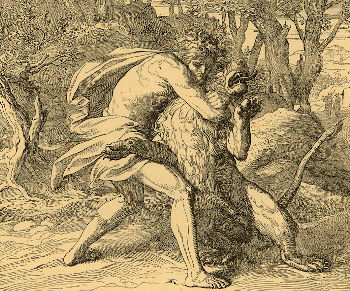
-
Game Two In NY: You Tell Me And We'll Both Know
The first two games of the Mets series were a perfect snapshot of the Twins’ see-saw season to date: An 8-1 loss and a 9-0 victory in the span of 24 hours. Five hits one night, thirteen the next. Go figure.
Actually, if the season ended today, you could put the last eleven games in a time capsule as a condensed version of the sort of maddening team the Twins have been all year. They lost two-of-three to a dreadful Washington club (and, in typical fashion, looked hopeless against a couple of stiffs in the process), swept a decent Atlanta team, lost two-of-three to Milwaukee, and then split the first two games of the New York series in absolutely schizoid fashion.
What was the difference tonight?
Beats the hell out of me. Gardenhire swapped Jeff Cirillo for Nick Punto, and Cirillo proceeded to go 3-5 with a run and an rbi. At least for one night that looked like a pretty smart move, and given that Cirillo is a career .298 hitter you kind of wonder why it took so long to give it a shot.
And the Mets, of course, committed four errors and looked anxious all night against Santana.
This much seems certain: We’re not likely to see Santana put together such a strange –if nonetheless very attractive– pitching line (complete game shutout, four hits, 92 pitches, and one strike out) any time soon.
-
Game One Of The Never-Ending Road Trip: The Soccer Hooligan In Me
I don’t have the energy to write an entire entry in Irish or Cockney slang, but that’s what I feel like doing every time this team slips into its offensive (and I do mean offensive) imitation of a World Cup soccer team, which lately seems to be several times a week.
I just took a look, and it really has been as bad as I thought I was imagining: In sixteen June games the Twins have scored three or fewer runs ten times. Guess how many of those they won.
Two.
I guess a sharp character like me could conclude from that that a team can’t win very many games in the major leagues if they don’t score more than three runs. I’m also guessing that it’s awful tough to win when you only score one run, which, after tonight’s loss in New York, the Twins have now done three times this month. They scored zero runs once as well –that one was a real soccer match of a baseball game, a 1-0 loss to Oakland and Joe Blanton.
I suppose I should be somewhat concerned about Juan Rincon, given his last couple outings, but what difference does it really make if a guy trots in from the bullpen and gets the snot knocked out of him every night if the offense isn’t going to score any runs?
Not much, I guess, not on a night like tonight.
Yesterday, that was a different story, but thank God the Good News version of the Good News-Bad New Bears was swinging the bats for the Twins in the finale against the Brewers, sparing us yet another offensive snooze-fest.
It’s maybe time to face this fact, though: neither version –the Sunday afternoon version, or the Monday night version– appears to be good enough to be good enough.
If you see what I mean.
And I’m pretty sure you do.
-
Mysteries, Surprises, and Disappointments
You can’t explain or make sense of so much of the shit that happens during the course of a baseball season, the streaks and slumps and befuddling momentum shifts, the steady supply of wholly unexpected developments of both the pleasant and the not-so-pleasant variety.
All those things –the day-to-day intangibles– are what make the sport so maddeningly difficult to predict. I still can’t imagine how anyone makes money gambling on Major League baseball.
That said, there are always things that seem predictable, even if only in hindsight. Past performance is not an indicator or guarantee of future results, as the investment people like to say. Except, of course, when it is. Nick Punto hit .290 last season, but nothing he’d previously done in his Major League career suggested that was his expected level of performance. As a result no serious fan should be surprised that he’s hitting .227 thus far in 2007.
Some players are so consistent –consistently good or consistently bad or simply consistently mediocre– that you do sort of know what to expect. Some players. If you spend a little time browsing through Total Baseball you’ll pretty quickly recognize how difficult consistency of any sort is to maintain at the highest level of the game. Consistently great players are so rare precisely because they are such great players, and consistently lousy players don’t generally get a chance to build long and undistinguished careers unless they’re specialists of some sort.
The most common sort of consistency –in baseball as in life– is mediocrity. Every team has to fill its roster somehow, and mediocrities get opportunity after opportunity to drift from club to club and make ridiculous money on their way to qualifying for a generous pension.
There remain, though, certain things you simply can’t predict or explain.
All of this is nothing more than a long-winded and roundabout way of marveling at the performance of Carlos Silva, who has demonstrated pretty conclusively that there is no more mysterious and unpredictable phenomenon in baseball than a sinker-ball pitcher (with the possible –and I guess likely– exception of a knuckleball pitcher, but those guys are rarities).
Silva was mostly terrible last year (246 hits in 180-and-a-third innings pitched, and a 5.94 ERA), but because he’d been effective in the past (he had a 3.44 ERA in 2005) he was trotted out there again and again –and managed to win 11 games in the process– with the hope that he’d eventually get around to finding his out pitch again.
When the sinker-ball goes, though, it just seems to go, and when and if it reappears it does so just as mysteriously. Silva didn’t have many proponents outside (and probably even inside) the Twins’ organization coming out of a spring training in which he was 0-3 with an 11.02 ERA and surrendered 29 hits in 16-and-a-third innings).
Yet there he was Wednesday night, finishing off the Twins’ first complete game shutout of the season.
Surprising, but, then again, not so surprising.
Friday night’s blow-out loss to the Brewers at the Dome, that was simply disappointing, and sometimes that’s really about all you can find to say about a baseball game.
They can’t all be surprising.
-
Game One: The Braves At The Dome
I say it all the time, but baseball’s a beautiful game when it’s played well, and when everything clicks it looks so easy.
Time and again this season, however, the Twins have demonstrated just how hard the game really is, and how ugly it can be.
The thing is, though, is that after Tuesday’s win they’ve crept back to .500, and to within five-and-a-half games of the Central lead. Given how brutal the team has looked at times, that seems frankly astonishing.
The opener of the Atlanta series provided a template of the kind of game the Twins need to play, and the kind of team they can be: Seven different guys scored runs; the first three guys in the batting order (Castillo, Mauer, and Cuddyer) were on base seven times; Bartlett and Punto at the bottom were a combined 4-8; Morneau and Hunter each drove in runs and also scored; Kevin Slowey was pretty much as advertised (and the Twins have won all three of his starts); and the bullpen was stalwart as usual –Guerrier, Neshek, and Nathan all have ERAs under two, and at this point those first two have to be the MVPs of the pitching staff.
Hell, Neshek might be the team’s MVP thus far. So much for the idea that this guy was going to be a novelty act, or that he was strictly a specialist against right handers. He has been phenomenal, and night after night has been thrown out there in the kind of old-school jams relievers used to have to try to wiggle out of all the time. It’s an added bonus, of course, that he’s just so damn much fun to watch.
-
Small Ball. Very Small Ball.
This here is the latest phenom to make the Twins look sick, a guy who hadn’t even made it into the fifth inning –the fifth stinking inning— in any of his previous starts.
What the hell?
Seriously, what the hell?
Where do you want to lay the blame? At this point I can say only this: it ain’t the bullpen’s fault.
-
Because, Finally, It Was Real Dark Out There And Astronomy Makes Me Nervous
Because you ask things like what the hell? and why?
Because I guess you want to know.
Because I joined up with the Amish after my dad decided it would make a man of me and it was either that or go to work at my grandfather’s automobile dealership and I knew damn well that I couldn’t sell cars if my soul depended on it, and I didn’t want to believe that it did.
Because I got kicked out of the Amish after just eight months, ostensibly for dropping one too many F-bombs and being royally pissed about the no television rule.
Because I have to admit that my beard was pretty shitty and they were some serious customers and I was in way over my head right from the start and didn’t have the slightest idea they were going to make me read the Bible all the time and work like a mule –the whack costumes, yes, I knew about those, but you don’t know how ridiculous and uncomfortable that shit is until you actually have to wear it– and let’s just say I wasn’t the happiest camper and so wasn’t inclined to be terribly cooperative.
Because when they realized how essentially worthless I was when it came to stumbling around behind horses in fields and trying to build stuff without any power tools, etc. they made me go out to sell quilts and honey by the side of the road with the women, all of whom, I’m pretty sure, were forbidden to speak to me.
Because they didn’t speak to me at any rate.
Because at that point, snubbed by a bunch of girls in widow-granny dresses and bonnets, I said, Fuck this noise, apparently a bit too forcefully, or apparently once too often.
Because getting kicked out of the Amish was the best thing that ever happened to me, although I still hold out hope that something even better than that will eventually happen to me.
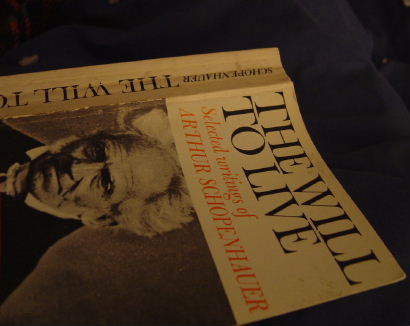
Because I’m starting to read philosophy.
And because, really, what choice do I have?
That’s why.