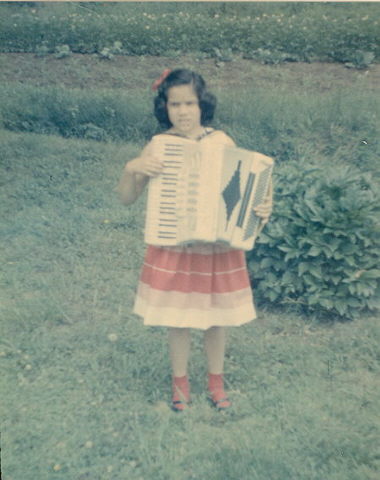
Author: Brad Zellar

  • A Kingdom of Stinks and Sighs

    Come on, give a rat’s ass, would you, you fuckers? Give it the old college try.

    Take a good look around and tell me what you see.

    Don’t lie to me.

    My kingdom is a laughingstock. I’ve let myself go, grown fat on the sautéed kidneys of disc jockeys and dickweeds whose gross ambition offended my eroding sense of decency. I’ve eaten other things I’m not proud of. So-called professionals.

    What I wouldn’t give for a second chance.

    What I wouldn’t give, you fuckers, but it’s too late for that and I have nothing left to give.

    This confusion of dialects, poverty, and heat. I can’t get any more naked, have no more grease left to sweat.

    From my window I can see the laborers dragging bodies across the dirt courtyard and stacking them on a flatbed truck. It’s not a pretty picture, but I am incapable of painting a prettier one.

    Near as I can tell the engineers have cobbled together some sort of crematorium in the laundry room of the Super 8 across the courtyard. Three tin smokestacks that weren’t there yesterday are belching out clouds of thick black soot, an additional layer of grime that is trapped beneath the over-gloom.

    Mine is now a kingdom of branded cattle swilling 3.2 beer, feral dogs in shopping malls, brain-damaged lab rats shuffling along in flip-flops and ridiculous sunglasses, and genetic monsters with perfect teeth. Dime-store dollhouses and teetering castles made of recycled plastic sand. The fine bones of dead roses. Fields of loud pastel crows, screaming for attention. Almost trees. Burned-out rocket ships that never left the launch pad. All our dreams, dreams written in invisible ink and nightmares etched in the more permanent kind.

    When night falls I draw the shades and listen to Samuel Barber’s Adagio for Strings over and over as I imagine –or cannot imagine– the next crippling blow, the next wave of sorrow, the inevitable endlessly repeated slow-motion montage of flag-waving catastrophe. You can bet, by God, that when again this world begins to fall down around me they’ll once more dust off the old reliable Barber.

    Didn’t any of you remember to bring a flashlight? Did it not occur to a single one of you that it would be dark in the belly of a whale?

    You tricked me into this covenant, but I have no one to blame but myself.

    These words –the last I have left– are the ghosts of dead snails. I give you my word: you haven’t been haunted until you’ve been haunted by the ghosts of dead snails.

    Come on, let me have it. I’m ready for my medicine. Give me my bitter pill.

    I am waiting, my little sparrows, to hear from you.

  • Sursum Corda: Give Thanks

    I’d say it’s a decent idea, Thanksgiving, even if it’s one of those old, decent ideas that means almost nothing anymore. Still, it does strike me as a worthwhile thing, the notion of taking time out of your life to give thanks for whatever the hell you have to give thanks for. And surely you have something to be thankful for –come on, pull your face away from that bong for a moment and think about it.

    I know I do. A few for instances:

    Microwave popcorn.

    Tabasco sauce.

    Canned chili.

    Willie Nelson.

    Cold beverages.

    Dune buggies.

    The Colonel’s blend of special spices.

    The grand-fetuses –if I’d known the little bastards were going to be so much fun I’d have had them first.

    The troops, which I nonetheless feel strongly should be spending the holidays with their families at home.

    Zigaboo Modeliste.

    Al Jackson, Jr.

    Air hockey.

    Paper boys, even –or perhaps especially– if they’re middle-aged men working three jobs just trying to get by.

    Grasshoppers.

    Formaldehyde.

    Mutterers.

    Television evangelists.

    A good cat mystery.

    Robert Goulet.

    Vespers.

    U-turns.

    Pre-history.

    Mason jars.

    The down-on-his-luck hippie magician.

    The spinster librarian.

    The smooth Lothario.

    This sneaking suspicion.

    This magic moment.

    That tragedy narrowly averted.

    Nose-diving birds.

    Twizzlers.

    Dumplings.

    Nancy and Sluggo.

    The great hearts gone, and those still beating.

    The ink I still, astonishingly, feel compelled to use.

    Unexpected eruptions of pleasure and recognition.

    Mercy.

    This life, what it helplessly is, and what it yet could be.

  • He's Abbott, I'm Costello: Cross-Wired Conversation With My Dog At Two A.M.

    Would you say?

    I would say, yes.

    Say what?

    That is the question.

    Yes, that’s the question.

    No, that is the question. No question mark.

    What is the question?

    Say what?

    I said, "What is the question?"

    And I said, "Say what?"

    I heard you the first time, but I still haven’t heard your answer: What is the question?

    That was the question.

    That?

    Yes, that.

    That?

    Yes, goddamit, that is the question.

    What?

    Yes.

    Yes what?

    I just said: that is the question, which is exactly what I said at the beginnning.

    That isn’t what you said at the beginning. You said you would say.

    I said I would say, yes.

    And I said, "Say what?"

    I understood you perfectly well, and if I’m not mistaken I answered you quite clearly.

    In that I’m afraid you are badly mistaken.

    Did I not respond, "That is the question"?

    You did.

    Then where is the misunderstanding?

    You said you would say, and when pressed on the matter asked, "That is the question?" At which point I said, as would any reasonable person in my position, "Yes, that is the question."

    I did not ask. I said.

    Said what?

    That is the question.

    What?

    Yes, precisely.

    But what is your answer?

    That is my answer.

    May I have a biscuit now?

  • Tears of a Clown, Redux

    I was born a clown, and in retrospect my parents were incredibly good sports about what must surely have been on a number of levels a shock and a disappointment. They’d been trying for years to have a child, and they accepted me immediately as a blessing and loved me unconditionally for what I was.

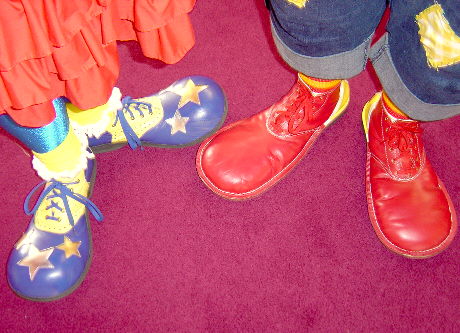
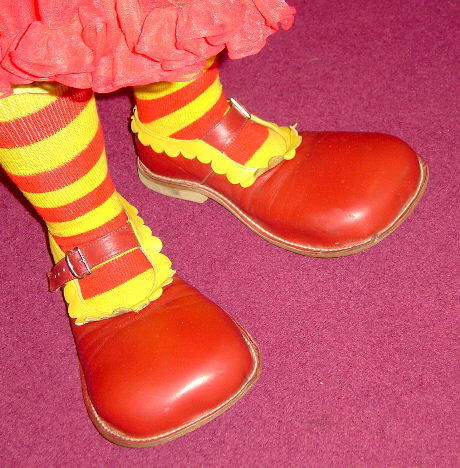
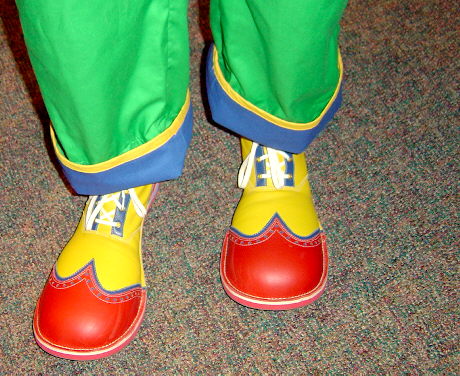
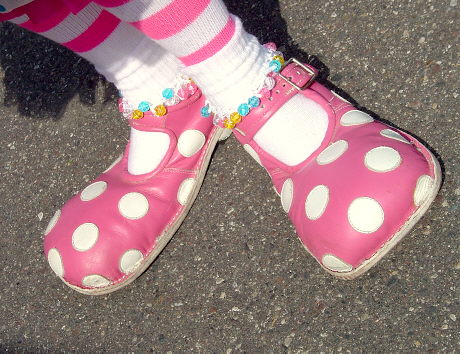
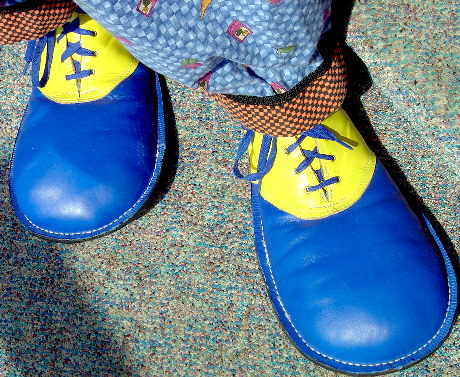
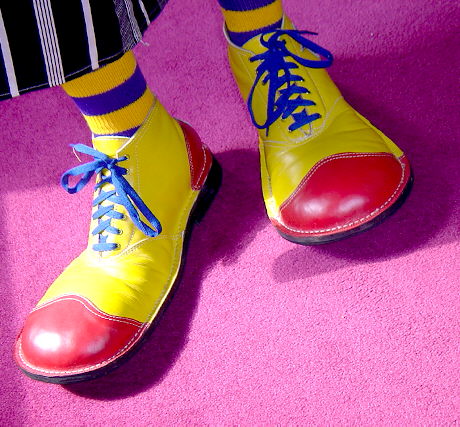
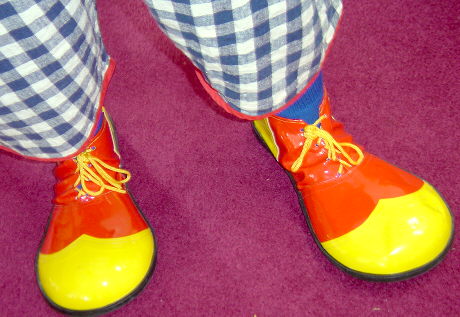
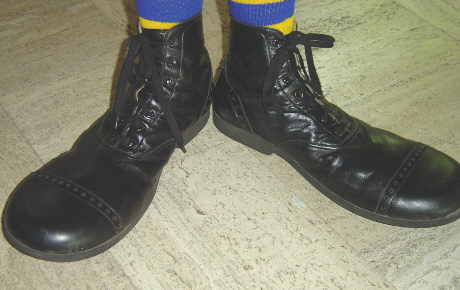
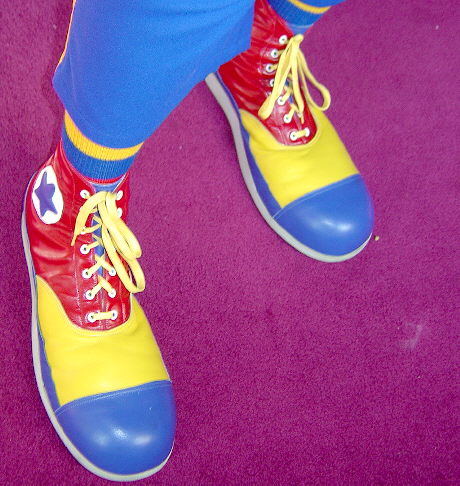
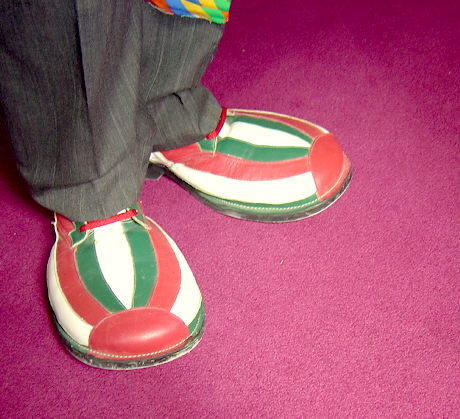
    My father likes to tell the story of how on the day I was born he went right out and bought me my first pair of big red shoes. I took my first tentative steps in those shoes.

    From the very beginning my lips were preternaturally large, and I have never required much in the way of embellishment beyond a basic application of lipstick for color and a bit of accenting around the outline. I have no memory of being outfitted with my rubber nose, but from the first time I can recall gazing at my reflection in a mirror it was a source of great pride and enduring pleasure.

    One morning in early childhood I awoke to discover that overnight my chin and jowls had acquired an application of Vaseline and coffee grounds.

    I was, I am told, an uncommonly stubborn and willful child, with a clear and unwavering self-image. I was as a result always allowed to choose my own clothing, and favored a ragged old porkpie hat, an oversized smock with red polka dots and shiny buttons, and baggy trousers covered with brightly colored patches. I was a very happy boy, and a happy clown.

    Childhood is of course an awkward and confusing time in the life of a clown. By the time I was old enough to attend school I had grown used to the charmed attention of adults. All of those I had come in contact with had seemed both amused and enchanted to find themselves in the presence of a happy little clown. I suppose in hindsight there was a good deal of condescension in this response, but I loved the attention all the same. I craved and needed attention; there was nothing I could do about it. It was hard-wired in my brain. My self-esteem was entirely dependent on entertaining people and making them laugh.

    My parents were an unfailingly compliant audience. They adored me, and I could induce heaving fits of laughter in them with little more than a wide-eyed grin or a startled spit-take at the breakfast table.To their credit they never pushed me. They didn’t have to. I was, however, an unusually sheltered child, and though I don’t believe this was ever a conscious decision on the part of my parents, I had had precious little interaction with other children by the time I started elementary school. As such I was utterly unprepared for the reactions I received from the other students. I understood neither the casual cruelty of children, nor the irrational fear that clowns seem to inspire in so many youngsters.

    There were long, unhappy stretches where I got the shit kicked out of me every day I went to school. Bullies on the playground held me down and wiped my beard of coffee grounds from my face; they stole my ragged hat, stepped on my big red shoes, and tore the shiny buttons from my polka dot shirt.

    In my teenage years I would stand alone and friendless in the darkened gymnasium at school dances. No girl would dance with me. Even balloons could not get me a date. I eventually taught myself a few simple magic tricks to try to impress my classmates, but it was too little, too late.

    In what I can now see was a desperate plea for help and attention, I fell in with a bad group of self-destructive adolescents during my junior year of high school, and was persuaded to join a heavy metal band called Lucifer’s Dong. The band was terrible, and was completely and justifiably ignored. I also realized pretty quickly that I was just a gimic the band hoped would help it to secure a certain reputation, and practices tended to be little more than a series of mean-spirited jokes at my expense.

    Even so, it was only at my parents’ insistence that I quit Lucifer’s Dong.

    I ate too much candy, gained a great deal of weight, and learned that a clown is simply not equipped to handle the brutal truth.

    By the time I dropped out of high school to join the circus my fate was sealed: I would be a sad-faced clown to the end of my days.

  • Do I Repeat Myself? Very Well, Then, I Repeat Myself

    For many months, on her way to and from school each day, Gloria had
    paused at the pet shop window to gaze with a combination of adoration
    and desire at the pretty little accordion nestled there in wood shavings and newspaper confetti.

    Each night at the dinner table she would beg her parents to let her
    have an accordion –and not just any accordion, but the one, lonely
    accordion in the pet shop window. How she longed to have that accordion
    in her arms, to have it for her very own.

    Her father, however, was insistent that they would never have an
    accordion in their home; Gloria, he said, was much too young, and an
    accordion was a serious and expensive thing. The world, he proclaimed,
    was already full of abandoned and unloved accordions.

    Perhaps, her mother said, when she was a bit older, Gloria might get
    an accordion. But her father looked sternly at his daughter across the
    table and said, Not as long as I am in charge of this house. I don’t
    have a moment of peace and quiet and can barely make ends meet as it is.

    At this, Gloria’s mother winked at her and said, Someday you will be
    older and you can work hard and save your money for an accordion of
    your own.

    Finally, one day when she had all but given up hope, Gloria came
    home from school to find the pet shop accordion wrapped in a red bow
    and resting on her bed. She took it lovingly in her arms and was
    startled to discover how much larger it had grown since the first day
    she had laid eyes on it in the store window.

    And then, as she cradled the accordion in her arms, Gloria found
    herself seized with a sort of panic that cast a quick, dark shadow over her
    joy. An accordion, she suddenly realized, was a tremendous and perhaps
    terrible responsibility.

    What, she wondered, shall be my accordion’s name? And what will I feed it?

    Gloria studied her accordion intently, and again and again she ran her fingers gently over its beautiful body and sang to it all the prettiest songs she could remember.

    And that night, as she curled up next to the accordion in her little bed, she thought, How will I ever sleep again?

  • A Christmas Tale

    Every Christmas when I was a child, much of my extended family would gather at my grandparents’ farm outside a small town in Illinois. My own family would usually arrive early in the afternoon on Christmas Eve, and many other relatives who lived nearby would come out to the farm for dinner that night.

    My grandparents had raised seven children, so there was always plenty of room for everybody at the farmhouse. My uncle Dick, who’d never married, still lived there and helped out around the farm. Dick was a bit of a drinker, and a big, jolly fellow.

    One year when I was maybe five or six years old, Uncle Dick corralled all the kids—probably close to a dozen of us—after our huge potluck dinner.

    “Everybody get bundled up,” he said. “I’ve got a big surprise to show you.”

    “Oh Jesus, Dick,” my grandfather said. “Go on and leave that thing alone.”

    It was later than most of us were accustomed to staying up, and I remember it was a cold, clear night with a good deal of snow on the ground. After we’d all pulled on our boots and zipped ourselves into our snowsuits we headed out into the farmyard with Uncle Dick. I imagine he’d had a few drinks by this point, and he had a big, hissing Coleman lantern that sent dark angles of shadow swaying before him as he walked. We followed him across the yard and along the fence that separated the feedlot from the fields, trudging through the snow and struggling in his tracks through the deep drifts.

    Uncle Dick led us way back along the fence to the edge of the property, where the corn field gave way to a wood lot and a frozen dumping pond. He paused and bent low to illuminate something in the snow. We gazed with a combination of horror and wonder at a pink, hairless thing, wincing, glazed with ice, and curled up like a grub in a cradle of snow.
    There was a sustained silence as we all crowded around for a closer look, the steam from our breath billowing in the lamplight.

    “What is it?” somebody finally asked.

    “That there is an elf fetus,” Uncle Dick said. “A dead little baby elf.”

    “What happened to it?” one of my cousins asked.

    “You know how it is with Santa on Christmas Eve,” Dick said. “He must have had an elf with him who started to have herself a baby, and when she finally squeezed that thing out they flung it over the side of the sleigh as they went flying by. That’s how much Santa Claus and his elves care about getting presents to you kids. On a night like this they’re just too damn busy to mess with a little baby elf when they’re out buzzing around the world. They had to toss it overboard and go on with their important business.”

    A couple of the kids started to cry.

    “Aw, don’t you worry about a thing,” Uncle Dick said. “Them elves are like rabbits; they have all kinds of babies. There’s more where that one came from.”

    Someone suggested we bury the elf baby.

    “Nah,” Dick said. “Santa Claus will take care of it eventually, once he’s done with his chores.” Then he reached down into the snow, grabbed the tiny creature by the head, and pitched it toward the dumping pond.

    We all followed Dick back along the fence to the house, our heads—or mine, certainly—full of disturbing questions.

    The next morning I went back out with my brother and some cousins to look for the elf fetus, but sure enough, it was gone.

    I think I believed in that dead little elf longer than I believed in Santa Claus, and it wasn’t until years later that my brother told me that what Uncle Dick had shown us that night was actually a stillborn pig.

    My brother, of course, claimed he’d known all along.

  • Bill Holm

    At this point Bill Holm probably qualifies as a literary lion. He looks the part, certainly (Garrison Keillor has described him as “the tallest radical humorist in the Midwest”), and has a pretty unconventional lifestyle by Minnesota lit standards. Holm is an outsized personality, yet he’s also something of an outstate recluse and a rambler. When he’s not hunkered down in his little hometown of Minneota, Holm’s generally … well, somewhere exotic else. He’s capable of writing about anyplace—and anything, really—in an amiable yet erudite style in which, time and again, his sui generis personality comes through loud and clear. His latest book, Windows of Brimnes: An American in Iceland, is a dispatch from his favorite summer retreat, an Icelandic fishing village, and is a sharp and often very funny study in cultural contrast.

    7 p.m., Minneapolis Central Library, 300 Nicollet Mall, Minneapolis; 612-630-6170.

  • Jim Walsh

    To celebrate the publication of his labor of love/ oral history, The Replacements: All Over But the Shouting, longtime Twin Cities music critic and columnist Jim Walsh will be undertaking his own blitzkrieg, book-tour version of the Mats’ legendary ’85 five-night stand at the Entry. In the course of one week you’ll have a bunch of chances to share the love and relive the glory and ignominy of one of the greatest bands ever to tear up local stages.

    Magers and Quinn, November 24; Barnes & Noble, Galleria, November 27; Electric Fetus/7th St. Entry (two separate events), November 28; get more information.

  • Michael Tisserand with the Southside Aces

    In the aftermath of Hurricane Katrina, displaced Big Easy journalist Tisserand, the former editor of the estimable Gambit Weekly, has produced a truly inspiring and moving testament to the power of perseverance in the face of unimaginable exile. Sugarcane Academy: How a New Orleans Teacher and His Storm-Struck Students Created a School to Remember is an account of teacher Paul Reynaud’s heroic efforts to turn an abandoned New Iberia office into a one-room schoolhouse for a group of evacuee children. Tisserand will be joined by local traditional-jazz purveyors, the Southside Aces.

    Magers and Quinn, 3038 Hennepin Ave. S., Minneapolis; 612-822-4611.

  • The (Perhaps Deservedly) Lost Recordings Of Burt Sikorski, DBA The Burt Sugar Trio

    Every town and city has its share of genuine characters and eccentrics, but I think you could say that it’s somewhat easier to get a real feel for the personalities of such characters in a smaller town, where there are so few public secrets and mysteries, and where what might be mere sidewalk spectacle in a big city is often fleshed out with well-known family histories and personal anecdotes from actual encounters and conversations.

    True oddballs also seem to appear in even starker relief when looked at against the largely homogenized backdrop of an average midwestern small town.

    In my own hometown, a place of almost abject modesty and blandness tossed up in the middle of flat farm country, there were a number of such characters –flamboyants and dandies, for the most part, colorful fellows whom I now suppose were probably homosexuals– but the one who made the biggest impression on my adolescent self was a guy by the name of Adelburt "Burt" Sikorski.

    Burt was perhaps a dozen years my senior, and by the time I was really aware of him he was a rumpled, shaggy character who always wore bright polyester pants and what I now recognize were ironic tee-shirts (featuring musical acts like Rick Wakeman or Styx, or phrases along the lines of "Up Your Nose With A Rubber Hose," "Kiss My Grits," and "Keep On Truckin’"). He was also one of those muttering guys who was constantly walking all over town, and I guess in retrospect he was sort of the local one-man counter culture.

    You’d occasionally see him downtown, standing on a corner across the street from the courthouse and waving a sign that said something like "Don’t Rush Me Out!" or "Stop It!" He was also, so far as I know, the town’s only street musician, and he’d often play his guitar outside the Sterling Drug Store. I remember one time a friend and I rode our bikes over to the store to buy some candy –we were probably 12 years old– and Burt was out front with his guitar and said to us, "Hey, little dudes, want to hear something by your main man John Denver?" Which, even then, we thought was funny. I also recall him playing a manic version of "Tie a Yellow Ribbon Round the Old Oak Tree," which was at the time in heavy rotation on the local AM radio station.

    The town’s only movie theater was a single-screen affair that mostly showed family films, and it seemed like Burt Sikorski would be there every Saturday afternoon, sitting by himself in the back row, heckling and lobbing Sno Caps at the screen. One time I was with my parents and my little sister, and we were watching some Disney comedy –"Son of Flubber," or something like that– and Burt kept shouting out stuff like, "Fred MacMurray’s an adulterer! He’s a sociopath! The man’s a stone-cold killer!" until some of the grown-ups complained to the manager and Burt was asked to leave.

    By the time I was a teenager Burt Sikorski was regularly engaging my friends and me in conversation on the sidewalks around town. We were always "the little dudes," and Burt was always after us to join his band. His old man, Adolph Sikorski, had a meat market on the east side of town, and there was an abandoned smoke house out back that was Burt’s purported "practice space." Sometimes we’d ride our bikes by there and we could hear him pounding away on drums or creating distortion on an electric guitar.

    I knew a few guys who eventually got roped into jamming with Burt, and they all said he was crazy.

    When I was a junior in high school Burt opened, for a very short time, the town’s first and only head shop, The Soviet Revolution, and once when I went in there to poke around with a couple buddies Burt gave us a cassette tape of his band (which, of course, we all knew wasn’t a real band; to the best of my knowledge they never played a single public show in that town, or anywhere else).

    "What’s the band called?" we asked.

    "It used to be called Burton Veal and the Dead Baby Cows," he told us, "but that proved too provocative for local mores, so I’ve settled on the less threatening but classy Burt Sugar Trio." We spent a lot of time driving around in the country outside town getting high and listening to the Burt Sugar Trio, and I have very fond memories of that time in my life.

    After I graduated from high school, though, I moved to the Twin Cities, and I’d been living there for almost a decade when my mother called me one night and told me in passing that Burt Sikorski was dead. He’d died, she said, from an allergic reaction.

    "To what?" I asked.

    "I have no idea," she said. "The obituary didn’t specify."

    My father, who was on the other line, said, "My best guess would be life."

    "Burt had grown very fat in recent years," my mother said, "and he always seemed so depressed. Last time I saw him he was working at his father’s market."

    My parents are preparing for a move to Arizona, and I recently went down there to help them clear out the house. As I dug through the boxes in my old bedroom I was surprised to find my original tape of the Burt Sugar Trio. I listened to it on my drive back up to Minneapolis and it sort of broke my heart.

    Listen to a sampling by clicking the audio links in the left column (go to permalink).