Author: Brad Zellar

  • The Making Of Ezro


    I slid unwelcome into this world,

    unbroken, but battered by the disappointment

    of those to whom I was delivered.

    I scrambled above their unhappiness

    and learned to believe.

    I found a place to stand,

    and kept moving.

    I had one man’s truth, and flung it

    like a stone at this world.

    I cried in the moonlight beside

    damp fields. I was a young man,

    and heard the midnight dogs of your

    towns as if they were monastery bells.

    You cannot imagine how lovely your world

    looked from the outside, how moved I was

    to hear radios playing in the dusk.

    My ignorance was immense. The weight

    of my tiny life made me a bowed spectacle.

    Your libraries were sanctuaries, a refuge

    from the puzzle. I let myself go too far

    beyond what you could make the effort to

    understand. I knew I was a reminder of

    something, shambling among you, dirty because

    clean was your world. You yanked your children

    around me on the sidewalks, invented

    your own strange versions of my journey.


    But your children never forgot me.

    My message was how far I had traveled,

    how far I would travel still,

    that a man could so believe that he could

    wander so long with the truth snaking through

    all manner of transformations in his

    dull, plodding heart, and slithering so

    slowly toward his waiting tongue.

    stone prophet.jpg

  • It's All Good

    Holy shit, I’ve been wasting a lot of time watching baseball the last few weeks, and it’s been nice to have a few days off, even if that hiatus is the result of one of the least dramatic first rounds in recent memory.

    Like my pal Britt Robson over at On the Ball I can honestly say that all four of my picks in the division series advanced, and with a whole lot more ease than I could have imagined (with the exception of Cleveland; given the one-two punch of 19-game winners Sabathia and Carmona, I figured the Yankees had no chance).

    The National League series were the most fun, and the most revelatory. I’d only seen the Rockies, Diamondbacks, and Phillies a few times all year, and I’m not even sure I saw a single Arizona game. I sure as hell wouldn’t recognize anybody on that roster (with the exception of Eric Byrnes and Brandon Webb), and pretty much everybody else I knew only as names in the daily boxscores.

    It was more or less the same case with Colorado. I was familiar with Todd Helton. And LaTroy Hawkins, of course, and Mark Redman, although I was surprised to see Hawkins playing such a prominent role out of the bullpen. Both the Rockies and Diamondbacks are fun teams to watch, and I think the same goes for the Indians and Red Sox.

    The most encouraging news of this postseason might well be the payrolls of the remaining teams: Only one (Boston, at $143 million) fits the profile of a classic big-spending club. The Red Sox have the second highest payroll in baseball, but the other three teams all spent less than the Twins this year, and all three are near the bottom of their respective leagues. Cleveland, at $61 million, ranked 23rd in the Major Leagues. Arizona spent even less (almost $59 million), while the Rockies, even with Helton’s massive salary, came in at 27th with a payroll of just under $41 million.

    Surely that’s good news, particularly when coupled with the collapse of the Yankees, Cubs, and Angels.

    It’s a shame that the NL series has to pit two teams that have already met 18 times this seaons (with the Rockies taking ten out of eighteen from the Diamondbacks).

    I’m going to disagree completely with Britt and predict a Red Sox-Rockies World Series, which I think will be a terrific match-up, with a boatload of runs scored.

  • Ezro

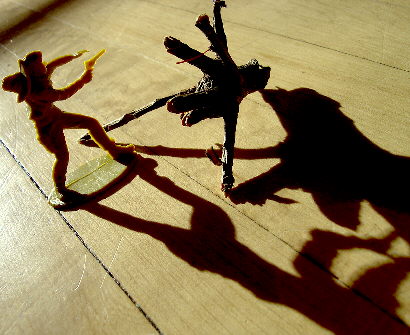
    figurine-cowboy 7.jpg

    Most nights Hurley would sit up late, drinking, and would fall asleep looking for God. He heard leaves falling and trapped, swirling, in the alley out back. And then: the rattle of piss beneath his window and someone warbling a sad song.

    Some days he saw gulls, so many gulls, with no water anywhere around, behaving in a peculiar and beautifully aloof manner, yet sometimes almost as if they had orders.

    Hurley liked to think he knew well enough when to turn away, and when to sit quietly and let the world go.

    The truth is, no, that wasn’t true.

    He remembered the ragged man who used to wander the streets of his old hometown, talking about Jesus and feeding the birds in the courthouse square. Sometimes the man carried a sign: “Ask me about Hell! I’ve been there!” Other times the man would talk to himself and laugh, his laughter sounding to Hurley like a marvelous secret that had been whispered in his ear by luminous larks in some long ago darkness.

    There were many people in that town, Hurley’s mother had once told him, people who were likely as decent and befuddled as Ulysses S. Grant, and as capable of murderous resolve when push came to shove. Hurley’s mother was a fan of the War Between the States –“fan” was the word she used. She had a large collection of books on the Civil War. Some days when Hurley came home from school his mother would be slumped at the kitchen table, and she would hiss at him between her long fingers, “Don’t fuck with me!”

    There had never been anything cognate to anchor him, or so had once claimed an advocate from the state, speaking in some official capacity on Hurley’s behalf.

    He was just a boy. His hand was unsteady. His mother had asked him to draw color across her lips.

    Am I pretty? she’d asked. Isn’t that better?

    It looked awful against the gray. He wanted to smother her, and would have, but the minister who was holding her hand had smiled and winked at Hurley across the bed.

    The last night he slept in that house, watched over by a stranger dispatched by the usual bland kindness, the Jesus man became for him a prophet of his imagination, Ezro, hobbled, a man for whom the world and its suffering and shattering light were irresistible. Time and again Ezro appeared in Hurley’s dreams.

    They took Hurley away for a time, then let him go. Accused, he guessed, of being no longer young. They thought pills would keep him among the living, a visit now and then with a glum, fat bastard with a basement full of model trains and a tiny, precisely-detailed world for them to rattle through. Cows that never moved. A mailman who was paralyzed at the exact moment he raised his hand to wave.

    Hurley did what he was asked and dug for a time, never satisfactorily, never deep enough.

    Pride, generally, damned the angels, or at least those that managed to get themselves damned. The fat man accused Hurley of being too proud to dig. Hurley didn’t think that he deserved to be damned for not digging deep enough.

    And still Ezro appeared in his dreams.

    He saw him in the moonlight, weaving along a dirt road huddled under a pine casket. And every morning Hurley would go out into the world where once Ezro had cried and rejoiced, rejoiced and cried.

    And he thought: I could do that.

    He thought: Shit, I could surely do that.

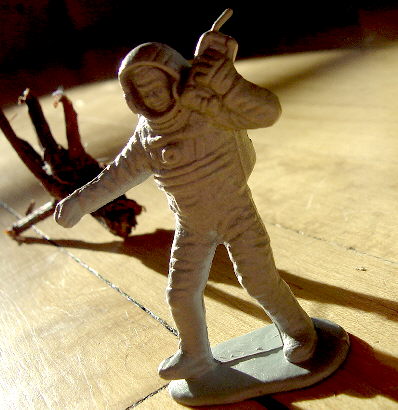
    figurine-astronaut 7.jpg

  • The Lonely Heavy Metal Publicist Tries His Hand At Poetry

    Anarchy.jpg

    No birds.

    No flowers.

    No bees.

    No moon.

    No water,

    moving or still.

    Nothing growing.

    Nothing stirring

    in the shadows.

    No history.

    No satisfying toil

    or contemplation of love.

    No memories.

    For no one.

    Dreams of leaving,

    I suppose. And the cold

    shoulder, sure.

    Or if interest,

    so fervent as to

    be suspect,

    if not frightening.

    Foul language,

    prurience, impossible

    demands, and ingratitude

    from the B-Squad louts with

    the ridiculous hair and

    the mascara and the

    leather pants, etc.

    Mostly, though,

    no thank you,

    and worse.

    Or no response,

    no answer at all.

    And all these photos

    I cannot look at,

    and these discs I

    can’t listen to.

    Every evening I

    crawl from the

    office through

    the dog door,

    a ruined man.

  • The Way Things Sometimes Play Out, Unfortunately


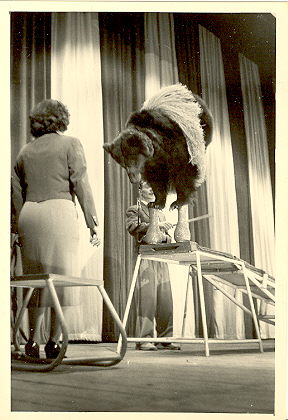
    balancing bear.jpg


    I’ll be honest with you, I don’t know what a dream is anymore. I got a lot of shit kicked out of me.

    Have you somehow made your peace with this world? I’m curious: without getting all religious or flaky on me, can you tell me how you did that?

    Once upon a time, lord, wasn’t I sweet? A more mild-mannered, easy-going guy you couldn’t find. We all know, though, that things change, and often enough we’ve no good idea why, or how. Not exactly, anyway. The goodness bleeds out of you. The world takes your trust through a series of thefts both large and small. One day you wake up and you no longer recognize your face in the mirror. The muttering voice in your head is as unfamiliar as the face.

    Dreams are tough things, cruel schoolchildren, cheap balloons, faded flowers, broke down hot rods, blind dogs, etc. Time carves them all down to dim wishes and fragments of memory.

    In my more chipper moments I like to imagine that all those old childhood dreams are still out there somewhere, drifting in the gloaming of another waning summer, waiting for their dead mothers to call them home. It’s sort of lovely to think so.

    Meanwhile, my daughter is a sad, pretty girl who is well on her way to becoming a woman every bit as miserable as her mother. At the age of fifteen she has no broader desire than to be a cheerleader –a cheerleader, period. The poor girl is so dim that she actually seems to believe that being a cheerleader is a realistic occupation for an adult in America.

    I’ve tried to explain to her that cheerleading is an extracurricular activity for a very few, mostly unfortunate, high school and college students, and that paying jobs in the field are pretty much non-existent. She counters this argument with the claim that she sees cheerleaders on television all the time, performing in a clearly professional capacity.

    At fifteen years of age she is apparently already calculating enough to recognize that professional cheerleading would offer her the best opportunity to meet, date, and eventually marry a professional athlete.

    The fact that I don’t feel this represents a very healthy or realistic goal for any young woman doesn’t seem to carry much weight with her.

    My own life, I’m willing to admit, hasn’t exactly been a blockbuster success, and I’m also quite clearly no paragon of happiness. All the same, I try to explain to the poor girl –my daughter, I have to constantly remind myself– how such dreams usually play out.

    This pathetic little town, I tell her, is full of old cheerleaders. On any given Sunday the church pews are crowded with unhappy women who had variations of the same ridiculous dream my daughter harbors. Look around, I say to her. There are no professional athletes here, so chances are good you’ll settle for a star on the high school football team, who will become in very short order –after he’s knocked you up– a miserable fuck in hog kill at the plant, or maybe an insurance salesman if he’s really ambitious. He’ll gain weight faster than you can pump out the infants, and drink like a fish, and there’ll always be some other unhappy woman who remembers that he was once a local football hero and is still willing to sleep with him while you stay home and take care of the kids and watch television.

    You’ll see, I say. Just ask your mother.


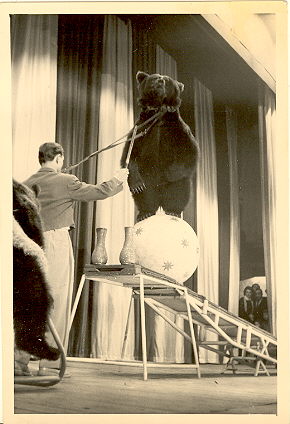
    balancing bear-2.jpg


  • What do you do?

    We are children, and then we work. If we’re fortunate, at any rate, we’re allowed to experience our childhood as children, and able, when the time comes to make our way in the world, to find work. Meaningful work, if we’re truly fortunate.

    The truth, though, is that the introductory icebreaker for youngsters—“How old are you?”—is too quickly replaced by “What do you do?”

    Work occupies a huge territory in both the conscious and unconscious minds of twenty-first-century Americans. We do it, talk about it, take it home with us, dream about it, get obsessed with TV shows about it; many of us allow it to dictate the parameters of our identities and the orbit of our social lives and what we do when we’re not working. The question of meaningful work looms larger all the time.

    Yet chances are that “meaningful work” means radically different things to people, depending on their economic circumstances, ethnic backgrounds, and ambitions. Also built into the notion are such questions as who or what we are when we’re not working. How much of an alternate identity does our work allow us?

    Our first notions of work, of course, take root in childhood, and in our childhood dreams and fantasies, which probably explains the wealth of evidence—first-hand, anecdotal, and statistical—suggesting that kids have largely unrealistic notions of work. Precious few have any real understanding of what their parents do for a living; thus the move, in the past decade or so, toward bring-your-kids-to-work programs. So it’s not particularly surprising that for generations, children, when presented with the inevitable question about what they want “to be” when they grow up, tend to choose highly visible occupations that involve art, public service, spectacle, and the archetypically heroic: ballerinas and painters, doctors and nurses, police officers and firemen, astronauts and professional athletes. In other words, they latch on to dream jobs—clear, simple concepts, really—that can be easily grasped at a time in their lives when they are more purely imaginative and idealistic.

    The real world, such as it is, usually crowds out these early dreams, whether through economic considerations (on both ends of the spectrum: a need to simply make a living or a desire for greater affluence), or the usual, practical process of gradual disillusionment that comes with growing up. For many of us, ambition and dreams inevitably take a backseat at some point, and work becomes a series of contracts and compromises with blunt reality.

    At the same time, we’re constantly bombarded with portraits of affluent achievers and annual reports featuring “executive compensation packages”; but what about all those other people who are still pursuing their dreams, or doing the sort of jobs most of us (with the possible exception of sociologists and economists) take for granted? There’s really no such thing as an “average Joe,” but what about those people who are routinely characterized as such? We went in search of random people doing random, interesting things for a living, most of whom are situated far outside the world of corporate America—a barber, a bartender, and a ballerina, for instance—and asked them not just what they do, but why and how they came to do it, and what sort of pleasures and perils their work offers. And as conscientious job interviewers have done since the beginning of time, we wondered: Where did they see themselves in five years?

    There are always a number of challenges involved in any discussion of work, many of them questions of perception and definition; for instance, how do we view the work we do, especially in relation to the work of our peers? What kind of attitudes and expectations do we bring to our jobs and careers? How does the reality of our work life measure up against those childhood dreams? And what, really, is work, beyond the purely personal nature of what each of us does to make ends meet?

    It’s huge, for one thing. The world is work. It’s everywhere, even if so much of it remains invisible, taken for granted, or situated outside the blinders many of us wear in our day-to-day lives. Work is a chain of connections and interconnections, the endless series of transactions and compacts that make the world run. Break down any fifteen-minute increment of your day and try to recognize all the points at which you are a participant in the ceaseless relay of work. You go to a restaurant, for instance; somebody seats you and takes your order; somebody mixes your drink, numerous other somebodies prepare your meal, somebody clears your table, somebody washes your dishes. Somebody else runs the whole shebang. Somebody owns the place. Another constellation of bodies supplies the restaurant with its meat, its produce, its liquor, its tableware; somebody hauls away its trash. Somebody built the restaurant, and somebody designed the layout and décor; somebody else cleans and maintains it. The signs and awnings are somebody’s livelihood. Somebody sells the proprietor insurance.

    Look at your life. Look at yourself in the mirror. Your shoes, the clothes you’re wearing and the clothing in your closets, the food in your cupboards and refrigerator, the stuff arrayed around your kitchen sink and in your medicine cabinet. All your gadgets and gizmos. Your car. The shit in your garage. Your haircut. All that stuff is the end result of somebody’s labor, and somewhere along the line it has passed through human hands. Trace any of it to its origins and you’d encounter a human being—or several, or dozens, even hundreds—just trying to earn a paycheck, support a family, and make ends meet.

    Again, how you perceive work, and how likely you are to see it all around you, probably depends largely on where and how you were raised. Certainly a kid raised on a farm, or in a family that has spent generations plying one trade or laboring in a particular industry, has a different conception of work than a kid raised in a white-collar bastion of suburbia. Such early ideas about work form the foundation for perceptions of class, and have for centuries.

    The future of work is another question that gets more complex and contentious all the time. Ever since a generation of post-war blue-collar parents sent its children off to college to learn their way out from under their upbringing, there has been an explosion of well-educated, well-trained white-collar professionals. The last few decades have been unprecedented boom times for the upwardly mobile.

    At what cost, though? Somebody still has to do the dirty work, the grunt work, the nuts-and-bolts stuff that keeps our cities (and our economy) afloat. Increasingly, of course, many of these sorts of jobs are filled by immigrant labor—another fact that raises complex and contentious questions. In this sense, it sometimes seems as if we’ve turned back the clock a century or more, to when America’s major cities were teeming with newly arrived workers from all over the globe. Those workers offered insane levels of productivity in return for paltry wages, and the often squalid conditions they worked under, once sufficiently publicized, helped to bring about government protections, as well as the formation of trade unions. They also inspired a wave of realist art and literature that both called attention to their plight and ennobled them and the work they did.

    These days blue-collar work—and work in general—has all but disappeared from popular culture. We’re not likely any time soon to see public art on the scale of Diego Rivera’s Detroit Industry frescos, commissioned in 1932 by Edsel Ford and the subject of almost immediate controversy. White-collar labor, on the other hand, particularly of the drone variety, has become a ripe target for satire, whether in the form of television’s The Office or Joshua Ferris’s alternately hilarious and grim recent novel, Then We Came to the End. There have also been best-selling books along the lines of Barbara Ehrenreich’s Nickel and Dimed: On (Not) Getting by in America, in which the white-collar writer introduced millions of Barnes and Noble customers and frequent fliers to the travails of workers at the lower end of the economic food chain. But what we mostly get today from culture is gauzy, fictionalized treatments of upper-crust lifestyles and careers, most of which are so unrecognizable as to qualify as purely escapist entertainments. Or we’re treated, generally through advertisements, to corporate America’s fantasies of working men and women: labor as soft-focus patriotic propaganda, complete with a soundtrack from Bob Seger or John Mellencamp.

    All of this comes at a time when, according to the U.S. Census Bureau’s 2006 report on income and poverty, the number of uninsured Americans rose to an all-time high of forty-seven million. And when, despite reported economic expansion, the poverty rate among children and working adults is still stalled at recession levels. Americans work longer hours than the Japanese and enjoy less vacation time than Europeans, even as average CEO pay over the past decade has increased by forty-five percent and the CEOs of the largest U.S. companies make more money in a day than the average worker makes in an entire year.

    According to recent data there are roughly 383,000 Minnesotans without insurance, nearly seventy percent of whom are employed. Fifty-six percent of those are self-employed or work for small businesses.

    Those are all just numbers, though, even to the people who are most affected by them. People still go to work, and as we discovered in our interviews, they do what they do for all sorts of reasons. Somewhat to our surprise, many of these folks are doing exactly what they want to. These are people who’ve somehow realized their dreams, or made sacrifices for the sort of freedom and flexibility made possible by what they’ve chosen to do with their lives. Some of them, certainly, have made a kind of peace with what they’re doing. These are people who have come to the crossroads, and chosen.

    All of them have presumably wrestled with the questions familiar to anyone who works for a living. How much insecurity are we willing to accommodate to square the work we do with the lives we want? How much, in a very literal sense, is our work worth? And how much are we willing to pay?

    BAIL AGENT: Janet Radloff

    BALLET DANCER: Penelope Freeh

    BARTENDER: James Flemming

    BOOKSTORE CLERK: Clarence Thrun

    BARBER: Jayson Dallmann

    DOG GROOMER: Bonnie Kane

    FARMER: David Van Eeckhout

    TAILOR: John P. Meegan

    MASSAGE THERAPIST/FLIGHT ATTENDANT: Mary Thomes

    AUTO MECHANIC: Steve Skibbe

    CONSTRUCTION/HOME REMODELING: Aria Williams and Moe Dominguez

    HOUSE CLEANER: Heather Joyner

  • Twin Cities Book Festival

    The stalwarts at Rain Taxi once again put together this full day of lit love for the seventh annual TCBF, which is now firmly entrenched as an autumn tradition and a welcome respite from the paralyzing onslaught of seasonal affective disorder. Think of the day as a sort of Renaissance Festival for bibliomaniacs. You probably can’t get a turkey drumstick or a unicorn painted on your face, but there will be the usual convergence of writers, publishers, book artists, and used-book peddlers, as well as readings, discussions, and events for kids.

    ………………………………………..

    This year’s roster of authors includes novelists Chris Abani and Diane Williams, poets Laura Moriarty and Bin Ramke, and graphic novel writer/editor Andy Helfer.

    Minneapolis Community and Technical College, 1501 Hennepin Ave. S., Minneapolis.

  • William Trevor, Cheating at Canasta: Stories

    Cheating at Canasta is a marvelous, enviable title, and William Trevor is an astonishing, and astonishingly reliable, writer. Along with Alice Munro, he is also one of the living masters of the short story. That sort of thing usually sounds like so much hogwash, but in this instance it’s nothing but the plain truth. Even as he approaches eighty, Trevor continues to produce carefully crafted marvels that often whipsaw between deviance and devotion, or dereliction and disappointment, from one story to the next. His best tales are compact and powerful moral symphonies, and are so full of startling and often catastrophic disruptions and moments of exhausted grace that they seem as utterly believable as life.

  • Jeffrey Harrison

    It’s always a good thing when poetry offers surprises (it’s rarer than you might think—if in fact you think about poetry at all). It’s also a good thing when poetry offers lucidity, music, and mystery in something like equal measure (also rarer than you might think). Jeffrey Harrison’s poetry offers all of those things with impressive regularity. The Singing Underneath was selected by James Merrill for the National Poetry Series in 1987. And since then, Harrison has had a very nice career, at least as far as careers in poetry go, with scads of prizes, fellowships, and teaching gigs, and the publication of his poems in such esteemed periodicals as The New Yorker and The Paris Review. His fourth book, The Names of Things: New and Selected Poems, was released last year, and we’re assuming that, like many poets of his stature, Harrison has a small but ardent cult of admirers. We’ll also assume that the rest of you have never heard of the fellow, which seems like a shame.
    Walter Library.

  • Grandfather

    rural route.jpg

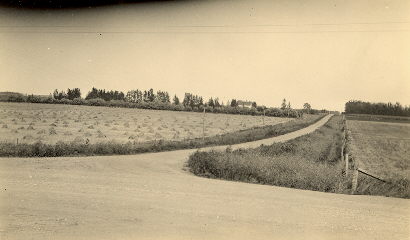
    I learned early that I’d never be the king of anything.

    I can for damn sure live with that the short time

    I have left. Nobody needs to tell me what I am, and

    I don’t have the time of day for a notion so foolish

    as who. Leave that horseshit to the pansies.

    I know only that I was born a small man and never had

    much of an appetite, but I got by, even if I didn’t do

    diddly with what I had and never amounted to a hill of beans.

    I guess you could say my old man was something of a

    prophet on that count. All the same, I have no

    use for a preacher trying to make something tidy of

    my time in this disgraceful place. I got no use for

    monkey business, period. But since you asked what I need,

    I’ll tell you: Give me five minutes of peace and quiet

    and remember whatever the hell you want. And when time

    washes its hands of me just let anybody who might be curious

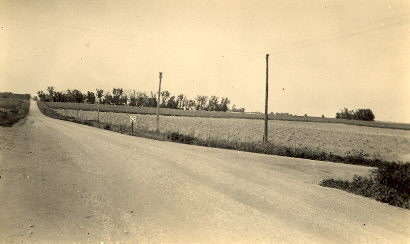
    know that I’m gone. Tell them that long ago I came to the

    crossroads and chose the wrong damn fork. Happens all

    the time. Tell them I never wanted much except to sleep

    when I was tired. And tell them I was a goddamn liar.

    Tell them I was the hungriest man who ever lived.

    rural route 2.jpg