Author: Stephanie March

  • Market Frenzy

    Like many food tourists, I’m driven to seek out local markets—public, farmers, indoor, outdoor—everywhere I travel. Invariably, I end up wandering the aisles awash with both wonder and jealousy. In Vancouver, the booths and stands crowded into the Granville Island Public Market nearly bring me to tears with their spectacular selection of fresh fish and cheeses. The San Francisco Ferry Building Marketplace is so chock-full of local food artisans and champions of the sustainable food movement that leaving that place is like breaking up with a soul mate. Pike’s Place in Seattle, La Boqueria in Barcelona, and Chatuchak in Bangkok have all left me coveting a great market here at home.

    This year my wishes have been granted. The past couple of months have already seen a flurry of activity on the Twin Cities market scene. The opening of the Midtown Global Market in June was a Twin Cities milestone: Finally we have an indoor public market—home to produce, interesting dry goods, and prepared foods, restaurants, and arts and crafts from around the world. The St. Paul Farmers Market finally began construction on Market Hall, which will provide year-round indoor accommodations right next door to its outdoor market in Lowertown. Back in Minneapolis, nestled between the Mill City Museum and the new Guthrie Theater, the Mill City Farmers Market is supplied by local organic growers and geared in part to local chefs (its driving force is Brenda Langton, the chef and owner of Café

    Brenda). Add to this the success of neighborhood markets—the Midtown Public Market (not to be confused with the Midtown Global Market), an outdoor seasonal market just off the light rail transit line on Lake Street, or the suburban Maple Grove Market that jams a community center parking lot—and it seems that markets in Minnesota are far more than a fad. Certainly this market frenzy is exciting, but I still wonder if, given the history of struggling markets here, we can make it all work.

    The Twin Cities’ first public market opened in 1853 on the corner of Seventh and Wabasha in St. Paul. In 1876, Minneapolis established a fruit and vegetable market on First and Hennepin. During those times when little produce was being shipped in from other cities, the crops of local farmers were in such high demand from city dwellers that under-the-table deals often depleted the goods before the market even officially opened.

    By 1881, St. Paul had built a massive, block-long great hall for its public market; and by 1916, Minneapolis claimed to be one of the top three fruit distribution centers in the country. In order to handle the nearly five million dollars’ worth of produce that passed through the city each season, Minneapolis built a permanent market structure in the 1930s at Glenwood and Lyndale Avenues, which is still in use. These days some 240 vendors rotate among just 170 stalls, but at its height, it boasted more than four hundred vendors.

    What happened to these centers of food and commerce? For starters, after World War II Americans fell in love with convenience. Fleets of refrigerated trucks bringing avocados from California and oranges from Florida to smartly lit supermarkets indicated the beginning of the end for many farmers markets; as the number of local market buyers dwindled, farmers found outlets with giant distribution centers and brokers who did the selling for them. Then the 60s and 70s brought more and more women into the workforce; it became easier, faster, and more necessary to buy frozen peas from the grocery store instead of strolling through a distant market to pick through a fresh bushel. The more Americans consumed processed food, the less they cared how it was grown and who grew it. As a result, in 1981, the St. Paul market moved to Lowertown and downsized from 682 stalls to 168. Just when it seemed like our country was made of Cheez Whiz, a generation of chefs, restaurateurs, and growers began banding together to re-establish the connection between food and farm. People now crowd farmers markets, waiting in line to chat with the farmer behind the cabbage stand, seeking the historical origins of their heirloom tomatoes, and supporting the use of organic and sustainable farming methods. It seems that this desire to connect with both our food and our local communities has driven the renaissance of the public market, not just here but nationwide—thanks to 111 percent growth between 1994 and 2004, there are more than 3,700 markets across the country today.

    Yet a passion for fresh food is not enough to make a market successful. The Uptown neighborhood flirted briefly with a farmers market in the Calhoun Square parking lot, but they couldn’t attract enough vendors or customers. The chefs at Auriga tried to launch an organic market, much like Brenda Langton has done with the Mill City market, but couldn’t keep it going. A good market is more than just a bright idea from a neighborhood association—it requires the right location, the right mix of vendors, smart management, and, of course, local support.

    Then, of course, there’s the question of competition. If the local market in Excelsior is successful, will fewer shoppers drive to the big-city markets? Small producers must decide on the best place to spend the lucrative Saturday morning, or whether they can stretch their business to cover more than one market. And what of the struggling Midtown Public Market just down the block from the Midtown Global Market? Will they help or hurt each other? Add to all this competition from the sophisticated grocery industry, which is among the nation’s leaders in innovation. Shoppers today need not suffer the grungy Pick-n-Saves of the world; we have a strong network of co-ops that have been championing local and organic products for decades, not to mention the more-recent efforts of Kowalski’s and Byerly’s/Lunds. Then there’s Whole Foods, and the newest game in town, Trader Joe’s.

    Given such abundance, it’s easy to see how even health nuts might put on some pounds. What will it take to make this newest generation of public markets thrive? Good old Midwestern commitment—to the farmers markets, to small producers, to local artisans—is the best way to keep the local food culture growing.

  • How's it growing?

    Tomatoes.jpg

    I’ve been to the Mill City Farmers Market over the last two weekends. I’m very happy with the blue sheep’s cheese from Shepherd’s Way Farms and the great-for-ice-cream milk from Cedar Summit Farms. I was going to give it one more weekend and blog about my planned yak’s meat purchase, but now there’s Gertrude.

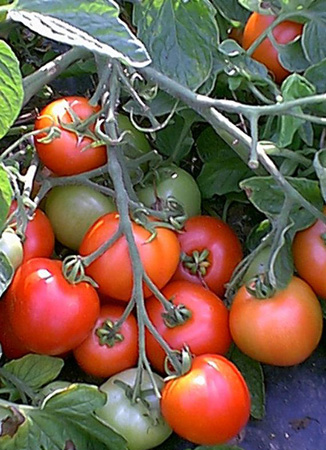
    I bought an heirloom tomato plant, and because I can’t remember what kind it was I’ve dubbed her Gertrude. I know I’m late to the planting game. I can’t seem to get my act together this year, even for the ultimate reward of fresh tomatoes. But there she sits in a giant terra cotta pot on my patio, sunning herself far away from the greedy, evil bambies and bunnies. And now I worry.

    Is she getting enough sun or too much? How many times a day should I be watering and if it rains what does that do to the watering schedule? Maybe it’s because I have this one and only plant that I’m obsessing. Maybe it’s because I feel that as a food person, I should be able to bring forth food from the earth with aplomb and grace.

    In an effort to find out Gertrude’s lineage, I began scouring the websites of the vendors for the market. Maybe I’d recognize a name, a farm logo, something to jog my caffeine addled brain.

    That’s how I found Gardens of Eagan and their farmer blogs. I’m riveted by Atina Diffley’s passionate race to save organic fields from the pipeline. But I’m nearly addicted to Laura Ferich’s telling of the second year on her Loon Organics farm. Her love of eating what she’s growing, the guarded excitement over the purchase of farm equipment, concern for bugs and all that needs to be done in a scant 18 hour day has me hooked.

    Most people don’t know about the toil that goes into farming, even now that small farms and organics are becoming chic. It’s like the chef thing: the splashy media doesn’t really want to talk about time spent cleaning squid.

    The more I read about all they do to make a life out of organic farming, the more I feel that Gertrude’s going to be just fine….

  • I Scream

    IceCreamCones.jpg

    One of my kids looked over the ice cream machine, as it was loudly cranking away, and hesitantly asked what flavor I was making. The answer didn’t please him and his reply was, “You never make normal ice cream anymore.”

    I have become a mad alchemist in search of the perfect formula.

    Chefs all over have been doing funky things with ice cream for a while, but I can’t abide lobster ice cream or cheese-steak sorbet. I’m all for savory elements, but they have to work with creamy sweetness. Emily Luchetti, pastry chef at Farallon in San Francisco, gets it. Her new book, A Passion for Ice Cream, is a beautiful beginning for the mad mad alchemist who needs to be pointed in the right direction.

    Some of my successful ice cream flavors have been basil, pistachio cardamom, orange mint, cinnamon/cayenne chocolate, fig caramel, cucumber mint, and stout (Guinness). Non-winners have included zinfandel plum, cabernet black pepper, strawberry star anise, and wasabi peanut.

    I can easily crank out a pint of vanilla or chocolate chocolate chip, which I probably should do more often for the sake of the family. But I can’t help feeling like something’s missing: garam masala, lavendar, salty caramel, something….

    Stout Ice Cream
    1 cup whole milk
    1 cup hevy whipping cream
    1 bottle stout beer (Guiness, Xingu, Oatmeal Stout)
    1 tablespoon pure vanilla extract
    6 egg yolks
    1 cup sugar

    Combine milk, cream, beer, and vanilla in a medium sauce pan, simmer over medium heat (do not let boil). In separate big bowl, mix egg yolks and sugar until you form a pale yellow paste.

    When liquid mix is hot, pour little by little into the egg mixture while stirring constantly (we don’t want to scramble the eggs.) Once both are combined, pour back into the sauce pan and return to medium heat.

    Stirring constantly, watch for the custard to thicken slightly, coating the back of your spoon. Immediately remove from heat and pour into a clean bowl. Let it cool to room temp, then process in ice cream maker according to instructions.

    Because of the alcohol, it will take longer to freeze. Plan to stick it in the freezer for a while after processing.

  • F is for Fhima

    closed_sign (2).jpg

    Louis XIII in Southdale is dead. Closed.

    The sign reads: Unfortunately, Louis XIII as a concept has failed and we’re forced to close our doors. We hope to open soon under a new concept.

    Huh.

    The “concept” has failed. We’re “forced” to close our doors. It’s really not our fault, we’re actually brilliant, it’s you people who don’t get it. Our will is to keep this smashing restaurant open, but against our will, it must close. Is that it?

    Clearly it wasn’t due to overblown ego. No chance did it have anything to do with bad business sense (I believe he JUST hired a bookkeeper). And yet people keep throwing him money because he has “passion”?

    I suggest a new note for the door: The king is dead. Sorry about the greed and about forgetting that a restaurant is a living, working world that feeds people, not just a “concept” to add to the press kit. Hopefully, if we can pull our heads out of our asses and think about food and people again, we might be able to promise AND deliver.

  • It Takes a Rat

    popcorn.jpg

    What if I take my kids to see Cars and they turn into NASCAR fans? I don’t want them to set up lawn chairs and coolers in front of the TV and start shouting “Don’t bogart the Cheese Whiz!”

    I was afraid after Babe that we’d have to forego the piggies’ gift of bacon, but the DVD seems to have been scratched and mislaid.

    The only kid-time foodies I can come up with: the French chef in Little Mermaid who sang “Le Poisson” whilst nearly chopping up Sebastian the crab, and Wallace who has my youngest waggling his fingers and proclaiming “Look, cheeeeese Grommit” every time we pass the brimming bin at Surdyk’s.

    But there is a new hero on the horizon: Ratatouille. Next summer, Pixar will release the story of a rat in Paris who simply longs for the best food in the best food city on earth. Now that’s a rodent I can get behind.

  • Food Fests

    prontop.jpg

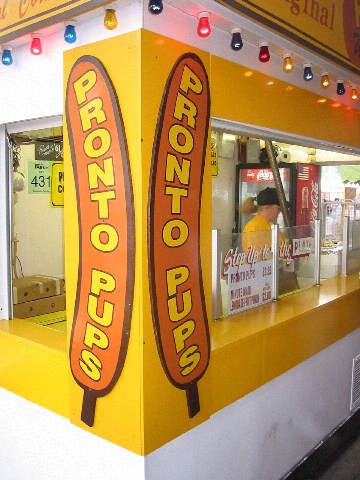
    Gather, ye friends! And look upon the pronto pups of our youth. Oh yea, it is the time of the fest.

    June 15 Viola Gopher Count
    Viola, MN. Besides the “famous grilled cheese hamburger” I’m betting there’s a lot of beer at this one.

    June 17 SPAM Museum Jam 2006
    Austin, MN. How can you beat SPAMburgers, the Smothers Brothers and the Hormel Jingle Singers all in one day? You just can’t.

    June 22-24 Judy Garland Festival
    Grand Rapids, MN. On Saturady morning, JG fans from all over the world will convene for breakfast with three of the original Munchkins from the Wizard of Oz. I wonder if there will be donuts?

    June 23-25 Sauerkraut Days
    Henderson, MN. Coming from a proud German heritage myself, I choose to reclaim the name Kraut, to own it as a symbol of spicy pride. To honor this personal act, I pledge to get my keester to Henderson where all the FREE sauerkraut will inevitably lead to an embarssing rendition of “I Will Survive” during the Wild Karaoke session. See ya there.

    July 8-9 Dragon Festival
    Phalen Park, St. Paul. If you’ve celebrated one Svenskarsdag you’ve celebrated them all. Come and check out a festival geared toward the “new heritage” of our cities. Dragon boats! Taiko drumming! Kite making! and all the yummy Asian goodies they imply.

    July 13 Hot Dog Night
    Luverne, MN. Get your dog on, for free. Starting at 6pm, over 11,000 free hot dogs will be gilled by the merchants of Luverne. Then watch the oddly hypnotic Wiener Dog races starting at 7pm.

    July 22 Aebelskiver Days
    Tyler, MN. I am a firm believer that all forms of pancakes deserve a day of their own. For the Danes, it’s all about the aebelskive, a tennis ball shaped pancake celebrated all over the Northland. Don’t forget to grab your official Ove the Nissamaend bobblehead doll!

    August 4th Braham Pie Day
    Braham, MN. The one day a year that the city of Braham doesn’t think about high school basketball is the day they celebrate the title of Homemade Pie Capital of Minnesota. I just wonder, with over 500 different kinds of homemade pies hanging around all day, does anyone make it to Mama Jennisch’s Spaghetti Supper?

    August 25-26 Barnesville Potato Days
    Barnesville, MN. If for one day you fall of your carb-hating wagon, make sure it’s one of the Barnesville Potato Days. Imagine the freedom of giving yourself total permission to enjoy potato pancakes, potato sausage, dumplings, rommegot, and potato chip cookies. Oh, and Friday is the free french fry feed. Ready, set, run!

    People, this is a mere sampling of events happening all over our state. Explore Minnesota is a veritable Smorgasbrod of tasty events.

  • Fruit Haiku

    Bing_cherries.jpg

    Rolling in my mouth,
    the cherry stones remind me
    of the girl I was.

  • Magic Stix

    Seasoned_Skewers_Assorted_TN.jpg

    I usually mistrust gimmicky food things. I don’t own an avocado slicer and I’ll never buy an adjustable hambuger press. But that doesn’t mean that, every once in a while, something super cool can’t be found.

    I know that this week everyone is eating out at spectacular restaurants to help fight hunger, but think ahead to your next grill event and think Seasoned Skewers.

    These sticks are amazing, I found them at Kitchen Window. They’re grilling sticks seasoned with flavors like citrus rosemary, garlic herb, honey bourbon and they actually work! All you do is thread your meat or veg of choice on the stick, let it sit and infuse for a few sips of your cocktail, then grill, bake or broil — your choice. I would soak the sicks in some white wine, beer or water before you grill, they’ll be less likely to burn.

    Cynically, I thought there would probably be a hint of flavor, just at the center of the meat which touched the stick, but I was wrong. Our little chicken bites were pretty flavorful through and through, the fiesta flavor actually burned my tongue.

    Easy peasy lemon squeezy.

  • Of Witches and Ice Cream

    Tower.jpg

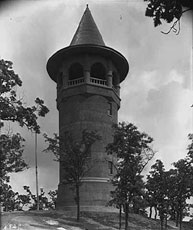
    It’s hard enough to find a good Ice Cream Social anymore, let alone an Ice Cream Social associated with a beautifully enigmatic water tower.

    The familiar icon of the Prospect Park/East River Road neighborhood is locally referred to as The Witch’s Hat and Friday is its day of days.

    One day a year the tower opens and admits the curious. We get just one chance to see the blooming cities from under the black peak. And in celebration there’s ice cream! And brats, and popcorn, and more ice cream! Don’t even get me started on the good luck of finding a Cupcake Walk among the games and festivities.

    Once you’ve climbed the tower and milled around with neighborhood residents, seek out another gem of the area, Signature Cafe, and hold down a perfect patio table while plotting your own neighborhood Ice Cream Social.

  • Tasty Reads

    read.jpg
    By the way, that’s not me, that’s my Tummy-Double.

    Yes, I read cookbooks from cover to cover, like a novel. Truly, I snuggle down into the couch with a big glass of wine and read them, skimming the recipes while conjuring events and parties that might support my new creations.

    Now that June is upon us, I can justify purchasing a large quantity of books: It’s my summer reading/entertaining stockpile. Clearly I’ll be too busy poolside with my Pimm’s Cup to make it to the bookstore before people just start showing up and demanding food. So I hunt and gather.

    It helps that the New York Times Sunday Book Review last week was their food issue. Tra la la!

    I’ve pretty much read this one already while standing in Barnes & Noble. Hungry Planet: What the World Eats is magnetic. With pictures of global families surrounded by the food they eat, it draws you in and hooks your stomach to someone else’s half-way around the world.

    I’ve also paged through The New American Cooking. I love how it shows the beautiful diversity of our culinary landscape.

    I am so excited to read The Omnivore’s Dilemma. I truly think one of the most vexing questions in the universe is “What should we have for dinner?” This looks to be an insightful and interesting discussion of what we eat and why we eat it.

    The Nasty Bits by Bourdain promises to be good. I like his writing more often than his television, but appreciate the raw attitude always.

    The Reach of a Chef: Beyond the Kitchen. Filling out his chef-trilogy (Making of a Chef, Soul of a Chef) Ruhlman always manages to nail the fish to the table.

    I Love Crab Cakes! because I love Tom Douglas!

    I met this firecracker of a Japanese woman this past winter and now I can’t wait to swim through her book, Harumi’s Japanese Cooking.

    I can’t take my eyes off it, I’m a complete rubber-necker for the world of competitive eating. So is Ryan Nerz as displayed with Eat This Book (not the Tyler “tough-chef-walking” Florence book).

    A History of the World in 6 Glasses. Because everyone needs a signature drink, dahling.

    The Brewmasters Table is on my list because sometimes there’s nothing that will cure a summer day like a Trappist Ale. But what to eat? Some may bemoan the lack of recipes, but I’m keen on taking his food/beer pairings and creating my own dishes.