Category: Blog Post

  • Dopes on Journalism

    hunter.jpg
    Image courtesy Nathan Walsh

    Now that we know that President Bush smoked dope, I guess we can finally admit that we were in the room when some of that went on at our college, too. And, also because we now know the President has finally admitted to what we all knew anyway, I don’t feel bad pointing you to High Times for this interview with Hunter S. Thompson, Mr. Gonzo himself, who is at least a bastard godfather to all journalists of my age. Thompson killed himself yesterday.

    From the passage he wrote about looking down into the trunk of his Cadillac which was stuffed full of marijuana, LSD, mushrooms, uppers, downers, and a tank of ether, and figured “with careful rationing, I could make it through the weekend,” to last week’s report of him and Bill Murray driving golf balls then shooting them like skeet, Thompson was bigger than the rest of us who merely wrote about stuff other people did. “Living large” was a phrase invented for him.

    He wrote a lot of great stuff, and a lot of crap, too. We certainly remember Fear and Loathing in Las Vegas from college…it’s maybe the only thing we remember from college. But, while that was all in good fun, what we really remember was his essay, which amounted to an endorsement, of then Georgia governor Jimmy Carter, after he heard Carter give a speech at the U of Georgia on Law Day 1974.

    Thompson was drinking Wild Turkey at the luncheon, while everyone else was sipping that overly sweet Southern ice tea. I can’t find the piece he wrote on the internet, but it’s in his book The Great Shark Hunt. That piece, as much as any, except maybe All The President’s Men, made me pick up the typewriter. I had to do a lot of typing one handed because it took me a while longer to remember to put down the Wild Turkey.

    Drug addled though he may have been, Thompson set a standard for truth telling in his journalism that is rarely matched today. (My favorite example: “There is no way to grasp what a shallow, contemptible and hopelessly dishonest old hack Hubert Humphrey is until you’ve followed him around for a while.”)

    Maybe his epic battles with the likes of Richard Nixon left him with less to fear than journalists have today. As far as I know, he didn’t face jail when he crossed some lines, unlike Judith Miller and Matthew Cooper do today. But then, Nixon was a complete amateur at dealing with the press, when compared to that old dope smoker George W. Bush. If only Nixon had thought of populating the White House press corps with gay prostitutes, maybe things would have gone easier for him.

    I wish Thompson could have held off his own demons long enough to write about hot military studs in the White House. I would have paid to read his thoughts on something so weird even he couldn’t have made it up.

  • When Music Came To The Mountain

    asphalt-alley.jpg

    All right, everybody get in line and listen up. I want you gentlemen to get some shut-eye tonight so you can get up and be ready to hump it first thing in the morning. We’ll be traveling seven miles to the east over rugged terrain. Word has it we might be in for some heavy weather as well, so pack accordingly. We’ll have six men to a piano, and each of these pianos is worth more than $50,000, so I want to make good and damn sure that everyone in this room understands the importance of taking all the care and precaution necessary to insure the safe delivery of every single piano in our possession. I don’t need to tell you fellas that nobody has ever carried a piano over this mountain, let alone nine pianos, and I’m not about to stand here and try to sugarcoat the serious dangers and risks involved in this operation. Every one of you has endured months of grueling training, and I wouldn’t send you out there if I didn’t have absolute confidence in your ability to bring this difficult mission to a successful conclusion.

    Our most recent intelligence suggests that we can expect fierce if sporadic resistance from the local guerrillas. These people resent the incursion of very expensive pianos into their territory; most of them have never seen a piano in their lives, and the value of these instruments is more than most of these folks will make in their lifetimes. We can expect them to give us everything they have, and I don’t want anybody going into this with a false sense of security just because these local characters don’t have much more than rocks and sticks and old surplus Daisy rifles to defend themselves with. When the British tried to bring a piano over this mountain back in the 1950s –and this was one piano, mind you– they were badly routed and the piano was destroyed and burned by the natives.
    I expect nothing less than 100% success from this mission, so I want you to defend these pianos with everything at your disposal; and, well, boys, you know what they say about making an omelet. What I’m saying is, be vigilant, and expect a tough battle. And let’s all keep in mind what we’re up to here: these are poor, backwards people, and they’ve been drumming on rocks since the stone ages. They can’t even yet begin to imagine the gift we’re bringing them. We’re gonna bring these miserable savages music, and we all know in our hearts that even if we have to shove it down their throats they’re for damn sure going to thank us for it one day.

    Lights out, boys. Tomorrow let’s make the folks back home proud.

  • THE TRUTH, AS ALWAYS, WAS CHRONIC

    Lion, lout, rough beast, sick dog, oracle, and oaf: Hunter S. Thompson, 67

    Myths and legends die hard in America. We love them for the extra dimension they provide, the illusion of near-infinite possibility to erase the narrow confines of most men’s reality. Weird heroes and mold-breaking champions exist as living proof to those who need it that the tyranny of “the rat race” is not yet final.

    Hunter S. Thompson, “Those Daring Young Men in Their Flying Machines…Ain’t What They Used to Be,” Pageant, September 1969

  • Why my cable bill is so high

    Every time I look at my Time Warner bill and wonder why I’m paying so much for so little I think of Groucho’s advice: “I find TV very educational. When someone turns it on, I go into the other room and read a good book.” It’s not that easy though. I’m as dumb as the next guy, and when the damn thing turns itself on (I’ve got to quit sitting on the remote) I tend to just sit there and take it in.

    It’s not really that bad. I used to like West Wing, and I do like the Sopranos and the movies on Turner Classics, but every time I really think of pitching the box out the window I begin to worry that I’m going to miss an episode of Real Time with Bill Maher.

    If you haven’t seen Real Time, or you don’t remember when Bill used to have a show on ABC before he said something Ari Fleischer didn’t approve of, here’s a sample of why it’s so good from today’s LA Times.

    The new season of Real Time starts tonight at 10 on HBO. If you call right now, I’m sure they can add HBO to your package. While you’re on the phone, ask them if it’s any cheaper if you can drop the Fox News Channel.

  • The Mess

    We are still enjoying our unique new radio station quite a lot, but we are disturbed that the signal is not nearly as powerful as we’d like. Which explains all the contraptions and random wires strung across stacked boxes around the office—watch your head. Oops, look out for the beer bottles there. We removed a long piece of lamp wire from the antenna of the TV, and wound its frayed end around a bit of wire hanger that serves as the antenna for our small transistor radio, which until now has been the radio with the best reception in the entire office, despite being tabled next to our humidor, our furry black shako, and our Apple II in this little lead-lined, roofless echo chamber we call the office.

    The TV is a small black and white job that literally receives one station, which is Fox—not the Fox News Channel, thank god—and this is hugely gratifying, since Fox now owns the contract to televise the State High School Hockey Tournament, the sole reason and justification and explanantion for the existence of this television. (We think they still own this contract. We hope they do. Otherwise, we may have to listen to the tourney on AM radio. If this proves to be impossible, our exit strategy will be set in motion—which involves buying a toga and running away to join the Polyphonic Spree.)

    So anyway, we ran the other end of that lamp wire into the keyhole on one of our filing cabinets, with the probably mistaken idea that reception is a function of how much ferric metal one can marshall to the cause. If there were any exposed plumbing in the place, we’d wire that into the bargain too, and then we’d consititute a pretty good fire hazard in case of a lightning strike. All this effort has so far resulted in the persistence of very bad reception.

    Now some of us have been reduced to streaming our new radio station on our computers, but this aggravates the Big Boss as he meters company bandwidth, and it is also a useful procedure for making the staff insane, because these streams of audio are not synchronized, and unsynchronized streams of the same music are twice as disturbing as having two entirely different stations tuned in. With five or six computers tuned to the stream, it is a little like being stuck in the creepy time-travel sequence of “Willy Wonka and the Chocolate Factory,” without the consolation of Gene WIlder’s bug eyes and the river of molten chocolate, and the Oompah Loompahs paddling doubletime, hell bent for leather.

  • A Few More Pertinent Details By Way Of An Introduction

    ann landers 2.jpg

    I live in Minneapolis, the fiftieth state in the union, known far and wide as the Moon Crater state and Green Grocer to the world. There are over 1000 lakes in Minneapolis, and herds of bearded reindeer in the north country.

    I’m sorry, Minnesota is the fiftieth state in the union, etc. Minneapolis is the capital of Minnesota. It is also the city of big shoulders and brotherly something-or-another. Some say it is a toddling town —the toddling town, allegedly, most toddling of all the toddling contenders. It is the windy city. It never sleeps, and is also famous for being the cradle of jazz and the home of the seldom-visited Pro Football Hall of Fame.

    Great battles have been fought here; our schoolchildren learn early that there was a time when “the streets ran with rivers of blood.”

    There is a giant statue of Edmund Muskie alongside his ox outside of City Hall. History has happened here, in other words. We used to have a Living History museum, in fact, until it fell over. The city was discovered by Hernando DeSoto in the 19th century when he was discovering things in the New World, and the name means “Place of Many Rats” in some other language.

    Today the city is a desolate place, constantly under siege and wracked by cholera epidemic. There are still, though, plenty of tanning spas, video stores, and places to get a burrito. There are not, however, any famous people here other than a swimsuit model who works in a shopping center.

    There was a time when famous people would occasionally visit Minneapolis to marvel at its many attractions and eat in its legendary Shakey’s pizza parlors where old men with handlebar mustaches and candy-striped plastic aprons played the banjo. A woman by the name of Ann Landers was one such person, and she was once presented with the key to the city. I now have that key in my possession, having traded a wheelbarrow for it back when there was so much rubble and wheelbarrows were in great demand.

    I am currently living in a yurt near the airport with my wife and seven children. I lost my job servicing vending machines when the airport fell to the marauders.

    We like it here. We’re proud of our city.

    To say anything more at this point, I’m afraid, wouldn’t be prudent.

  • Voting for ourselves

    The Strib did a nice job last Sunday in their Op-Ex section on immigrants.

    Some views from both sides, including some of their own pieces and the obligatory screed from the Center of the American Experiment. (Unfortunately, there doesn’t seem to be a link to the series, so you’ll have to dig the section out of the recycling pile if you want to reread it.)

    Included in the section was a very short sidebar written by two religious leaders: Evangelical pastor H. Gene Follis from Rochester and Catholic Bishop Harry Flynn from St. Paul.

    You should read it yourselves and make your own judgments about which iteration of Christianity attracts you, but I want to comment on one thing Follis said. He argues that big government, and its taxes, hinder his brand of Christians’ ability to give to the poor. The government, he says, is taking too much of the money that Christians would otherwise willingly turn over to their less fortunate brothers.

    He goes on to say, “America’s founding fathers predicted that a democracy without a strongly biblical/moral foundation will spawn a growing percentage of the people voting in favor of their own maintenance…”

    Now aside from this putting anyone who’s in favor of using tax money to help the poor firmly in the not biblical/moral camp, he now also seems to shove those who vote in favor of their own interest over there, too.

    So, keep that in mind the next time you vote. You can vote for the candidate who promises to lower your taxes, but only if you promise to give every penny of what you get back to people in need. Otherwise, I guess we’ll be seeing you in hell along with Bishop Flynn and all the other Democrats.

  • I Read It For the Pictures

    We are sure you will be relieved to learn that we have finally received our copy of the 80th anniversary New Yorker. We have not had much chance to crack it, beyond the usual elements—the table of contents and Talk of the Town, although we noticed a long memoir by Roger Angell about his stepfather, E.B. White, for which we have secretly and selfishly prayed for years now. (We’ll get to it when our own gala anniversary issue is finished, today or tomorrow—with any luck.)

    We have several initial impressions which we wish to dash off right now before we get back to the coal mine. First, has anyone ever done a study about who gets their issue of the New Yorker first among we the rustics here in subscriber country? We are convinced that the tonier neighborhoods of the Twin Cities get their copies before we do. In fact, we feel like we are among the last to hear that particular plop on the porch, just before the dog goes ballistic for the mail carrier.

    It is probably not so much a conspiracy as a broad-ranging effort to “platform” the circulation, first to the people who matter: the tastemakers, the buyers of diamonds, jaguars, and durable goods, the poet-philosophers, the small-engine repair shops, the dental hygienists, the art students, the barristas at national coffee chains, the city impound lot, the outhouses of non-winterized cabins, and finally—The Rake’s front porch.

    One other quick point—coming! We’re coming, hold your horses—we enjoy it when The New Yorker dwells self-consciously on its own history. In recent years, this has typically been expressed as a trip into the archives to dig up great old covers and to assign art essays to contemporary staff writers. When these sorts of things get published as separate stand-alones, we really get enthused; here, they’ve salted the issue with this material.

    There are not very many periodicals that can get away with publishing art covers—even the New Yorker must bow to the marketplace and wear an explanatory wrap on its newstand copies, a kind of terry cloth robe bearing like initials the most prestigious bylines in the present issue—Harold Ross would be appalled, of course. The Stranger (great) and Chronogram (so so—boy would we have loved the chance to edit this high-potential placeholder, in a parallel lifetime) are the only others that come immediately to mind—but neither of these offer pure art covers either, being slightly tainted by the irresistible urge to constantly bait readers with words, banners, and suchlike crumbs of bread leading into the wilderness of words within.

  • Tarrare Bom-De-Ay!

    gluttony.jpg

    In the unsavoury annals of polyphagy, the worst glutton of all time was the Frenchman known as Tarrare. It is not known if Tarrare was his real name or a nickname, but it has survived in such expressions as “Bom-bom tarare!” and “Tarrare bom-de-ay!” referring to powerful explosions or fanfares and, by inference Tarrare’s own prodigious flatulence….

    For years, [Tarrare] wandered the French provinces in the company of robbers and whores and as an attention-getting act for an itinerant quack, swallowing stones, whole apples and live animals before the mountebank’s spiel about his wonder-drugs.

    In 1788, he reached Paris, to earn a perilous living by means of similar performances in the streets of the French capital. During the revolutionary wars in France, Tarrare joined the army but was driven to desperation by his raging hunger. Exhausted, despite quadruple rations and habitual foraging among dustbins and gutters, he came to the attention of the military surgeons. Among their experiments, Tarrare was given a live cat, which he devoured after tearing its abdomen with his teeth and drinking its blood. He later vomited the fur and the skin. The doctors also fed him live puppies, snakes, lizards and other animals, and Tarrare refused nothing. Contrary to the imagined stereotype of a glutton, Tarrare was pale, thin and of medium height, and of apathetic temperament. His fair hair was uncommonly soft; his mouth enormously wide; and the enamel of the teeth much stained. He sweated profusely and was always surrounded by a malodorous stench which got even worse after his nauseating feasts. Professor Percy wrote that the methods utilized by “this filthy glutton” to make his rations last were too disgusting to be described in detail and “dogs and cats fled in terror at his aspect” as if they knew what fate he was preparing for them.

    –from Jan Bondeson’s “The Cat Eaters,” the Fortean Times

  • Abecedarian

    asphalt-police.jpg

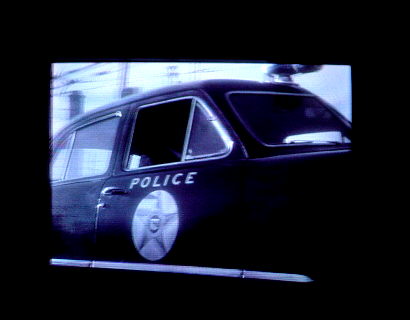
    A woman in a beret was in the kitchen making a giant sandwich following a long evening of drinking after work. By the time she finished constructing the sandwich (which she insisted on thinking of as a hoagie, which drove her husband mad) it was after midnight.

    Couldn’t you have made one for me?” her husband asked as he wandered in from the living room.

    Didn’t you see I was making a sandwich?” she said. “Everything is already put away.”

    Fine,” he said. “Goddamn if you don’t feel the need for one of those giant sandwiches every time you get a few drinks in you.”

    Hoagie,” she said, her mouth already full. “I really wish you would respect my desire to have the sandwiches I construct referred to as hoagies.”

    Jealous of his wife’s sandwich, and starving, he drove off in search of something to eat, settling on a 24-hour restaurant not far from his home. Klingon-costumed conventioneers, many clearly drunk, were occupying most of the tables and booths of the restaurant. Lest it appear he was avoiding the place because of the presence of the Star Trek geeks, he grudgingly proceeded to take a seat at a small table near the front window.

    Maybe, he thought, this wasn’t such a good idea. Now he was stuck trying to force food down his throat while he was surrounded by this irritating sideshow. Oh, fuck, he hated Star Trek. Perhaps, he hoped, a decent order of hash browns would salvage his utterly wasted night. Quests for food in the middle of the night, however, were inevitably regretable, at least in his experience.

    Ready to order?” asked a waitress who had suddenly appeared at his table. “Sorry, by the way, for the Invasion of the Body Snatchers. Tonight’s special, I suppose I should tell you, is the French Dip sandwich, but I can’t in good conscience recommend it to you after it’s been sitting back there under the heat lamps for going on fourteen hours.”

    Umm, no,” he said, momentarily distracted by an eruption of some sort at one of the Klingon tables. “Very sound advice, I’m sure.” Was it his imagination, or were these Star Trek characters starting to give him dirty looks, almost as if he had somehow trespassed on their private clubhouse? Xenophobic bastards, he thought, and made up his mind to leave at once.

    You don’t have to apologize,” the waitress said sympathetically when he attempted to explain his inability to spend another minute –let alone eat breakfast– in such disturbing and unruly company.

    Zig-zagging gracelessly amongst the tables as he made his way to the door were two drunken Klingons who were lunging at each other with some sort of plastic weapons, much to the loud amusement of their stunted comrades.