Category: Blog Post

  • Dining Adventures: From Bangkok to Buenos Aires

    Boat SoupI finally made it to Krua Thailand to try their famous Boat Soup
    – famous enough at least to have a banner outside the restaurant advertising
    it. Turns out boat soup is basically the Thai answer to pho, the Vietnamese
    beef noodle soup – but with one important difference – boat soup is made with
    beef blood. How was it? If you like pho, and aren’t squeamish, I think you’ll
    like it – the blood gives it a little extra kick. There is lots more on the menu that I would like to try, including the Kaeng Dang (red curry ($8.99-$12.99 depending on protein), and the pla rad prik, (tilapia with ginger and chili, $13.95).

    Krua Thailand, 432 W. University Av., St. Paul, 651-224-4053.

    Couple of cool dinners coming up:

    • The next Rake World Flavors dinner will be at the
      Bulldog Northeast on August 26, with a menu that goes way beyond typical bar
      burger fare: Foie gras meat ball on fried wonton with flying fish eggs,
      followed by a deconstructed shrimp cocktail, a "pyramid of Cobb" (with a
      confit of chicken thigh and, presumably, a dramatic presentation), a salmon
      fillet with fingerling potatoes, plus a Bulldog cupcake for dessert. All this,
      plus three pints of beer for $35. Click here to sign up.

    • The World Flavors Dinner is co-sponsored by Whole
      Foods, Peace Coffee and KBEM- Jazz 88 FM which has its own gastronomic event
      going on this Sunday, August 17 – A Celebration of the Ports – From New Orleans
      to Buenos Aires
      , featuring chef Rachel Rubin,
      at Alexis Bailly Vineyards in Hasting. Cost is $75 per person, and space
      is limited – for reservations or more information, click here.
    • By the way, Rachel Rubin, is leading a food tour of Peru October 12-19 – for gastronomic adventurers, it sounds like a great trip.

  • One Day, One Night, Saturday's Alright

    AMONG THE GREAT unanswerable questions that haunt our city is this one: Why is there a giant, crappy K-Mart superstore sitting in the middle of Nicollet Avenue?

    For a city that is second-to-none in making catastrophic urban planning blunders, surely the decision in the late-‘70s to plop down a strip mall in the middle of one of the city’s most-used thoroughfares ranks as one of the most nearsighted. It has essentially created two different Nicollet Avenues in south Minneapolis: the fun Nicollet Avenue north of Lake Street that is full of bubble tea, brownstones, MCAD students and Asian fusion restaurants; and the crappy Nicollet Avenue south of Lake Street, where you go to drop off U-Haul trucks and test drive your new car tires to find out how well they deal with potholes.

    It’s on the latter Nicollet Avenue that Art Of This Gallery is located. While I shouldn’t write the neighborhood off as completely charmless – the Mexican place across the street isn’t bad, and there’s a great little vintage shop next door – the stretch of Nicollet Avenue the gallery is located on at 35th Street is pretty featureless. It’s a lot of vacant lots and generic mid-century beige boxes. Of course, it’s these sorts of unremarkable neighborhoods that afford the best opportunities for imaginative use of space – before the 1970s and 1980s, the Warehouse District was a gritty, post-industrial nowhere, and before the 1990s, Northeast Minneapolis was a sleepy, vaguely ethnic enclave with some terrifying corner bars and some very charming churches. Both these areas were full of pretty cheap, open, modest spaces that gave young emerging artists and curators room to try anything they could think of. Perhaps this slice of the southside, choked off from the cosmopolitan delights of Eat Street by bad urban planning, will spur similar practices in this decade. That’s how these things work. The practice of making contemporary art is so informed by real estate that they probably ought to teach land-use regulation in art school right between color theory and Joseph Beuys appreciation seminar.

    Art Of This, a sort of odd name choice I always assumed must be a tribute to Peggy Guggenheim’s Art Of This Century, was started a few years ago near Powderhorn Park by a few local artists, and recently relocated to its present Kingfield location. Art Of This is, like the neighborhood in which it sits, modest – a storefront, a few hundred square-feet of open space, a basement with a bar and a small movie screen. But it’s hard for me to think of any gallery space in the Twin Cities that has so consistently in recent years devoted itself so wholeheartedly to recklessly passionate all-over-the-map programming. Perhaps the word "reckless" gives short shrift to the obvious planning that goes into each show, but every show I’ve seen there since the beginning of the year has been at the very least thought-provoking, and at best totally thrilling and strange and confounding in a way that makes me feel like I’m not quite living my life to it’s full potential, if that’s not, um, overstating the case too terribly.

    Even the shows that don’t completely work (I wasn’t a big fan of the Jo Jackson/Chris Johansen exhibition, for example) aren’t for lack of trying. Art Of This succeeds largely, I think, because whatever is happening in the space is always about the artist – the gallery is very neutral and unadorned, completely blank and with no architectural or design-related distractions, but it’s small enough to impose potentially-interesting logistical restrictions. Some contemporary art spaces, especially located in reclaimed buildings, can either give the artist a lot of leeway in providing interesting distractions to play off of, like odd fixtures or textures. Others are large enough in scale to impart a kind of monumental quality to work that may not totally deserve it. Art Of This provides neither of these qualities, physically. It’s the classic "clean, well-lighted place," as the art critic Dave Hickey memorably named his 1960s-era Texas gallery.

    This summer, the gallery has been using the space to positive effect to forgo standard multi-week programming in a series of what they’re calling One Nighters, a series of one-night-only openings that blend visual art, performance, video and anything else the artist brings to the table. There’s something appealingly ephemeral about this sort of undertaking, and maybe even a wry little dig at gallery-going conventions – who goes to shows after the opening night anyway? Like the Ramones used to say about their setlist, if you don’t like one song, you just have to wait around for two minutes and there’ll be a new one. You don’t like a One Nighter, there’ll be a completely new one soon enough. And regardless of whether or not you like it, you’ll certainly be moved to consider your values as they relate to art, which is something a worthwhile exhibition, large or small, will always do.

    Case in point: I wandered into Golden Energy, Heartland/Hardland‘s recent One Nighter performance-cum-thrift-shop-freakout, and after ten minutes felt half like a confounded old man (I believe my esteemed Vicious Circle colleague Michael Fallon had a similar reaction to their work recently), and half like it was time for me to strip down to caveman underwear and go running through Kingfield yelling lines from Wild in the Streets at the top of my lungs. How many recent art openings can you say that for? We can debate in the comments below whether inducing complete sensory overload is a valid aesthetic technique or not, but that night at least, I was sold.

    There’s several more planned for the rest of the summer and fall, including this upcoming Saturday night, August 16. A small group of Minneapolitans and Madisonians calling themselves the Rotarians Society, who seem to position themselves somewhere on the ideological spectrum between Mad Men and the International Order of Friendly Raccoons on The Honeymooners, will be making a presentation about a project they’ve been working on called "Tate Fabrication." It begins promptly at 7:30pm, and seating is limited.

  • Hazing The Greeks

    Yeah, I could watch this team 365 days a year.

    Take the world’s greatest athletes (anyone wanna debate that?) motivate them with patriotism and professional pride, give at least two of the most talented–"LeBronze" and the prematurely discounted Dwyane Wade–an extra nudge toward the need for retribution, and then settle in with your fingers on the pause and slo-mo buttons. Game on. Game over.

    After watching the US Olympic men’s basketball team dismantle Greece Thursday morning, the idea of this incredibly deep and star-studded team needing to veer away from their strengths and conform to conventional Olympic wisdom seems laughable. For example, perhaps the only time this squad should deploy a zone defense is if an opponent is totally on fire and you need a box-and-one or diamond scheme to deter him. Because right now, I don’t envision an international team that can pass or dribble its way through the USA’s extended and tenacious man-to-man schemes on a consistent basis.

    The best thing that could have happened Thursday was for Jason Kidd to pick up three quick fouls in the first two minutes and sit until garbage time. Because as Doug Collins pointed out, when the US team has Williams and Paul guarding the perimeter, and a vengeful Wade ballhawking to boot, your defense off the bench is your best defense, especially with Bosh showing strong on the pick and roll. That leaves Coach K with the option of LeBron or Kobe–with the carrot of bountiful transition dunks and assists–as the fifth.

    What Wade did today was put himself back in the LeBron-Kobe conversation about who is the best player in basketball today. As he was before his injuries, Wade is an intriguing third, and might embolden his followers to try and bump him up if he continues to play defense like he has in these games. I know it is sacrosanct to make comparisons with the original Dreamers, but how amazing is this USA ballclub that they can actually ambush opponents with a guy like Wade? I mean, Greece can honestly say they didn’t really see Wade coming; they were too busy preparing for LeBron and Kobe.

    The play of the game was the second quarter steal by Wade and his immediate dish–in the course of saving the ball from going out of bounds–to Kobe for the alley oop. Wade dropped another gleaming dime shortly after that. Then LeBron had a steal where he shrugged off a Greek trying to mug him before he touched the ball, grabbed the ball, and did a backwards over-the-head slam after bringing the rock below his waist. Then Chris Bosh scored twice in transition in the final minutes of the half. No disrespect to Dwight Howard, who had his best game defensively when the team needed him most, but Bosh is as good on D in the low block, better at showing on the pick and roll, and light years better at catching and finishing in transition.

    The play of Bosh and Wade in particular have made me look smart (when in fact I don’t know the international game at all) by claiming that the USA doesn’t need to load up from long-distance, just shut down the opposing treys and get hoops in transition. When the defense is as good as it has been thus far, and you’ve got guys elevating their passing, like Wade, and finishing, like Bosh, it’s go-go all the time. Wade hit 17 of his first 20 shots of the tournament.

    Now comes Spain, which has the Gasol boys and Calderon at the point (and how psyched should Raptors fans be that their two best players, Calderon and Bosh, are boosting their confidence and reputations in the heightened competition?). I think this is a game when a nonstop mucker like Boozer might be effective for 10-12 minutes on Gasol(s). I’d also put Deron Williams on Calderon–certainly not Kidd: Calderon was a whopping +64 in the two games he played (and won) against New Jersey while Kidd was still there last season. In 35 minutes of international competition this Olympics, Kidd has not attempted a shot, his A/TO rate is 4/5 (despite being fourth lowest in playing time, he is tied for the team lead in turnovers and the rest of the team is 54/35 in A/TO), and his aging reactions make him foul prone on defense. Clearly, he is in the starting lineup out of sentiment right now, an awkward situation. But if Spain really is the game of the tournament, Williams ought to get the start.

    What’s really scary–and eminently enjoyable–about this USA team is that they are romping and whomping while Kobe is clanking. Bryant is a woeful 3-20 from outside the arc. Ironically, the one he hit today was a legit NBA three, and if you’ll recall, distance doesn’t make much difference to him so long as he’s within about 26 feet. Which means, if anything, he ought to conserve his bombs for the really long shots where his dead-eye for treys is more practiced.

    But the story of the tournament for the USA thus far is Wade and Bosh, in that order. LeBron has been utterly magnificent, in a coin flip with Wade over who has been the best player. But we all expected that from LeBron. Wade, by contrast, hasn’t looked this good since the ’06 playoffs, and his defense is much better now than it was then.

    Bosh has the international game down; he’s swatting the ball when it is around the cylinder more aggressively than others, and figuring out what charges and flops most impress the Olympic refs. And he gives the raft of penetrators–Paul, Williams, Kobe, LeBron, Wade–an appealing target. I wouldn’t start Bosh against Spain because he’s such good energy off the bench and a perfect sub tandem with Wade and Paul, but I think he can beat Gasol both in transition and on the low block. And, in a bit of side soap opera, Kobe has a chance to kick Gasol’s butt after the latter’s lackluster performance against the Celts in the Finals.

    So, three games in, Wade leads the team in scoring and steals, LeBron has the most assists and blocks and minutes-played and is the second leading scorer, Melo has the team rebounding lead by one over Bosh, and is subtly sliding into the role of a 6-10 paint warrior (kudos to him). The top six in minutes–LeBron, Kobe, Chris Paul, Deron Williams, Melo and then Wade, are all wreaking havoc on defense. The backcourt performers for Greece appeared unflappable when the game began. They were simply ground down.

    The only thing that hasn’t been answered is how does this USA ballclub respond when it’s in trouble.

    We may never have to find out.

  • The Black Dog Shows Its Teeth to the RNC

    BENEFIT EVENT

    Call & Answer Silent Auction


    Do a little good and have a good time doing it this Friday at the Black Dog Coffee
    and Wine Bar
    , as they host the Support
    the March on the RNC & Stop the War Silent Auction
    which will
    feature items such as restaurant certificates, massages, private wine tastings,
    catering and vacations! All proceeds will help pay for the Coalition
    to March on the RNC
    and Stop the War’s demonstration at the Republican
    National Convention to take place on September 1st. Chat it up with like-minded
    political folks, eat yummy food and sip from the stellar wine selection the
    Cafe offers. And while you’re there, get a sneak peek at the Black Dog’s much
    talked-about screen printed poster exhibit Poster Offensive IV that will be on display
    through the Republican National Convention (the opening reception is
    technically on the 29th). Keep your eyes peeled for a number of cool events at the Black Dog through the RNC including back to back block parties of the most liberal variety!

    Friday, 7-10pm, Black Dog Coffee and Wine Bar, 308
    Prince St. (at Broadway), St. Paul, $10


    ART

    A Night with the Agency


    Were you aware that Jason Lee (you know, the movie actor and TV star?) used
    to be a professional skateboarder, and is also an awesome photographer? Well,
    it’s true – Lee has tons more street cred than your average Hollywood celeb –
    especially when flanked by talented Stereo Sound Agency cohorts Chris
    Pastras
    and Clint Peterson – both pro-skaters and up and coming
    artists themselves. Tonight’s opening at Vine Art Center will showcase the work
    of all three with photography by Lee; swirly, nostalgic paintings by Pastras
    and illustration work by Peterson. The show will also chronicle the history of
    Stereo Sound Agency – a skateboard gear and sometimes-film collaboration that
    started many moons ago between Lee and Pastras. Runs through September 13th.


    BONUS: Come kick it with the Stereo Sound Agency at Familia Skate Shop on
    Saturday at 1pm for an informal in-store autograph signing and homeboy BBQ.
    Click HERE for more info!


    Friday, 6pm-10pm, Vine Arts Center
    2637 27th Ave S, Minneapolis, Free


    BENEFIT EVENT

    Hot Art, Cool Jazz


    Come support the Minnesota Textile Center tonight with an elegant evening of hot art and cool jazz to benefit the
    Joan Mondale Gallery Endowment. This annual exhibit will showcase some of the
    most beautiful fiber and wearable art creations in the Twin Cities, set to the
    chilled-out backdrop of charismatic local jazz man Dennis
    Spears
    who has performed alongside the likes of Ella Fitzgerald, DeeDee
    Bridgewater and Sarah Vaughn. The event starts with a reception at 6:30 pm
    followed by the program at 8. Want to make a fun evening of it? After
    schmoozing at the Textile Center, switch gears with a jaunt up University Ave
    to Porky’s to enjoy some greasy (and award-winning) drive-in
    chow while mingling with the hot-rodders and classic car collectors who take
    over the Porky’s lot (and the streets surrounding) each weekend.


    Friday, 6:30pm, Minnesota Textile Center, 3000 University
    Avenue SE, Minneapolis, $50


    SPECIAL EVENT

    Gallery 122/Hang It Art Market

    This tucked away Northeast art hotspot is a well-respected
    framing company with an adjacent gallery that is known for showing super-cool
    local artists (save the date for September 19th when they open Toys in the Attic, an
    exhibit of screen-printed poster art by Squad
    19
    ). This weekend, however, scratch your flea market itch with the second annual outdoor art market in the Hang It parking lot where you can snap up
    sweet deals on creative goods such as paintings, sculptures, drawings, mixed
    media, glass art, mosaic art, jewelry, purses and even recycled art. Make an
    afternoon of it with an organically delicious lunch (and maybe a glass of wine)
    on the patio of the Red Stag Supper
    Club
    , mere blocks away.

    10am-4pm, Hang It
    Inc/Gallery 122
    parking lot, 122 8th Street SE, Minneapolis,
    Free

    FILM

    Square Lake Film + Music Festival

    Enjoy a full-throttle day of music and film this
    Saturday at Square Lake! Located in everyone’s favorite antiquing-day-trip
    hamlet, Stillwater, this outdoor
    fest will surely entertain with all-day screenings of local and national
    independent short films
    of all genres, topped off with killer performances by
    some of the Twin Cities’ best local bands. Featuring Happy Apple, Black Blondie,
    The Owls, To Kill a Petty Bourgeoise and many more; as well as a live film score
    by theatrical rock-geniuses Fort
    Wilson Riot
    . Bring a blanket and take in this fantastic end of summer
    multi-media festival, which is definitely one of the highlights of the season.
    And afterwards, if you’re in the mood to blow your fingers off, pop across the
    Minne/Wisco border where the fireworks
    floweth as freely as the cheap beer – though I take no responsibility for your
    actions when combining these elements.

    Saturday, 1pm-1am, Square Lake Park,
    13359 Partridge Rd. N, Stillwater, $20


    WINE & DINE

    Twin Cities Fresh Taste Festival

    Are you one of those people who preaches about their
    dedication to organic farmers and sustainable livin’ only to horde a stash of Ding-Dongs in your sock
    drawer? Well, restore your healthy rep (and indulge your appetite at the same time) by attending the Twin Cities Fresh Taste Festival this
    Sunday! This day-long foodie-friendly fest at the picturesque Nicollet Island
    Pavilion celebrates the best in local organic and sustainable food and wine as
    prepared by a slew of top-of-the-line local chefs and food producers. Sample
    all sorts of yummy fare and even learn from talented chefs as they prepare some
    of their best signature organic dishes. Not to mention, you’ll be invited to taste-test 100 organic wines from national and international wineries –
    who can argue with that? And don’t worry, your Ding-Dong secret is safe with me.

    Sunday, 11am-5pm, Nicollet
    Island Pavilion
    , Minneapolis, $55

  • Tourists, Travelers, Vagabonds

    Summer and travel. For those of us fortunate enough to be able to afford to get out of the Cities, to the cabin or "up north," summer and travel make an unbeatable combination. Of course, camera phones and digital cameras come along for the ride. Looking at the Museum of Russian Art‘s current show of Sergei M. Prokudin-Gorskii’s work, it seems that photography and travel, too, make a hard-to-resist combination. This essay roams from photography to ideology and traveling: from Prokudin-Gorskii, who was "photographer to the Tsar" and a pinoeer of color photography (his Harvesting Tea in Georgia is the title image above); to the U.S. Works Progress Administration’s photography program in the 1930s and 1940s; to Alec Soth’s 2004 Sleeping by the Mississippi. Take a stroll through a century of photography.

    But first, a note on traveling: Paul Bowles, in his novel The Sheltering Sky, notes that the important difference between tourists and travelers is that the former accept their own civilization without question; not so travelers, who compare it with the others, and reject those elements they find not to their liking. Tourists, in other words, are not looking to have their world changed. They want a story to tell, a quick souvenir, a snapshot. Travelers, on the other hand, want their minds blown wide open and to see in ways they have never seen before. Upon returning, the traveler will see with different eyes, will question what, before, has seemed a matter of course–and will select, reject, and embrace with a critical heart and mind. That is one of the lingering pleasures of traveling.

    Photographers–those who "hunt" their images in the world at large rather than "farm" them in their studios–have long tended toward mobility. As early as 1909, Sergei M. Prokudin-Gorskii roamed through the Russian empire to document the vastness of the Tsar’s power, and the diversity of peoples having become, peacefully or not, part of this empire. Was Prokudin-Gorskii a tourist or a traveler? Can we tell from looking at his images–displayed, ingeniously, in custom-built light boxes at the Museum of Russian Art (TMORA)?

    As a court photographer, dependent on the Tsar’s good will and financial support, Prokudin-Gorskii was in no position to question his own civilization too much. His photographs of landscapes, emerging industry, architecture, and people were conceived as photographic surveys, while also serving as entertainment at the court, and, ultimately, as a tool to aggrandize his sponsor, Nicholas II: There are coal miners from the Ural mountains, tea harvesters from the shores of the Black Sea, the Emir of Bukhara in today’s Uzbekistan; cathedrals, cloisters–some of them destroyed during the Soviet period–and mosques along with the hovel of a Siberian settler; there are images of budding cities, rivers that show the signs of early industrial development, and a traditional nomadic household, with a family gathered in a yurt (see image below). The range of subject matter, of distinct cultures under the tsarist empire, is amazing–as is the technical process Prokudin-Gorskii developed to produce these early color images.


    Sergei M. Prokudin-Gorskii, Family in Yurt. Digichromatography.


    Each image was taken three times, in quick succession, using a red, green, and blue filter (not unlike today’s RGB filters in various software applications). The images were stored on glass plates, and displayed by a special projector with three lenses. Prokudin-Gorskii’s camera was of his own design and, while TMORA’s curator clearly went to great lengths to explain the technical details, the mystery remains of how exactly the apparatus looked and worked. Equally hard to imagine is how exactly Prokudin-Gorskii managed to leave the Soviet Union after the Bolshevik Revolution in 1917 with so many glass plates in tow, since nothing of artistic value was officially allowed to leave the country (unless it directly benefited Stalin’s industrialization plans of the 1920s). Only recently, the images that are now stored at the Library of Congress have become more accessible through a process called digichromatography. But enough said already about the technicalities involved.

    Prokudin-Gorskii seems to have considered himself a scientist, as his quasi-anthropological approach to conducting photographic surveys of specific geographic regions suggests. Today, he appears as an artist–a chemist, originally–who made a living by dazzling the Tsar with his images in order to practice his art. (Although in those days, photography’s status as art was still contested.) Nicholas II not only provided him with access to restricted regions of his empire, but paid for a specially equipped railway car for Prokudin-Gorskii’s travels between 1909 and 1912, and again in 1915. The photographer’s journeys, then, were official business of the Russian empire. But, troubling as that may seem, for centuries that is precisely how artists earned a living: namely, funded by a wealthy sponsor whose politics they were expected to support in their work. But there is another layer of ideology at work here that resides in the very genre of documentary photography: Are these images true? And if so, in what sense?

    The seriousness of Prokudin-Gorskii’s subjects leaves no doubt about the fact that they knew they were being photographed. After all, they had to hold very, very still while the three different exposures were happening…and whatever or whoever was not absolutely still, now appears discolored or blobby–the smoke from a factory chimney, cows off in a field, a girl among the tea harvesters who could not keep her head still (see image above). At the very least, the act of photography interrupted whatever was going on before the photographer arrived and before he inspired the subjects to strike poses they might never have adopted had it not been for the photographer’s authority and insistence. We simply cannot know. But given the authority that comes from authenticity, this is not an irrelevant question.

    Roughly two decades after Prokudin-Gorskii’s far-reaching travels, the U.S. government hired hundreds of photographers to roam the countryside and urban areas alike to document American culture and American lives at this historic juncture. The photographers hired by the Works Progress Administration (WPA) included such (now famous) figures as Berenice Abbot, Walker Evans, Dorothea Lange, and Arthur Rothstein. The point of the program was ostensibly twofold: to provide a means of earning a living for artists suffering from the economic effects of the Great Depression and, secondly, to foster the creation of a national culture. The photographers, in other words, were driven by the need to earn a living and find a means to practice their art–not unlike Prokudin-Gorskii, whose ambitious surveys were made possible only by the Tsar’s support–and engage in what amounts to a curiously self-conscious construction of national culture. The images they set out to capture had to serve a specific, WPA-approved purpose: namely, to allow people to see themselves in them, to identify with the subjects in the photos, and to imagine a national community…hardly an ideologically innocent task.


    Dorothea Lange, Migrant Mother, Nipomo, California,1936.

    Technically, all the photographs taken for the WPA were government property, official documents, not, strictly speaking, art. Their point was to create an "accurate and faithful chronicle in photographs of America." When Dorothea Lange re-worked the now iconic image of
    the migrant mother, eliminating some intruding fingers on a tent pole, she was, as Sally Stein writes, fired from the program for tampering with government property. The program administrators’ priorities did not lie with artistic or aesthetic value; what they did care about were truth and authenticity. This line proved difficult to walk, though. As Susan Sontag observes in On Photography, photographers "would take dozens of frontal pictures of one of their sharecropper subjects until satisfied that they had gotten just the right look on film–the precise expression on the subject’s face that supported their own notions about poverty, light, dignity, texture, exploitation, and geometry." Of course, photography always involves selection and thus subjectivity–but the appeal of the documentary and hence putatively truthful quality of the medium has proven highly resilient to such insight. In the case of the WPA photographers, not only their own notions about poverty, light, dignity, texture, exploitation, geometry–and race–entered into the images, but the production of a national culture was at stake. Ideology loomed large.

    Do these roaming artists qualify as travelers in Paul Bowles’ sense? Individually, they may have tried to question their own civilization and cultural comfort zone as they encountered differences within the American experience, such as the rampant poverty resulting from the early days of capitalism. As a program, though, the WPA sponsored photographer-tourists, whose efforts to create a national consciousness through their lenses did not easily lend themselves to critical questions.

    Then what happened? Simplistically put, in Russia, the ethnic variety Prokudin-Gorskii had photographed was suppressed in favor of the proletariat. Only after the fall of the Soviet Union were people allowed to return to ethnically distinctive cultural practices. In the United States, on the other hand, the rise of the middle class led to the American Dream’s putatively classless society, where each individual is free to pursue his or her dream. No one, it seemed, wanted to identify as working class anymore in a meritocratic society, and only euphemisms of white and blue collars (along with rednecks) persisted, in a slightly off-key version of red, white, and blue. Now, in 2008, statistics tell us the U.S. American middle class is shrinking and the economy troubled. In fact, comparisons to the Great Depression creep up with disturbing regularity in news reports.

    The Minneapolis Institute of Arts chose this summer to exhibit Alec Soth’s Sleeping by the Mississippi, a body of work first shown in 2004 and comprised of 46 prints. Twenty-three of the prints were on display at the MIA, which acquired a complete set in December of 2007. (The show closed on August tenth but the images can still be seen on Soth’s website.) To access the work aurally, I highly recommend listening to Paul Robeson’s 1936 recording of "Old Man River," unconcerned with petty human worries–growing food, avoiding pain and dodging prison, dealing with daily toil and racial inequalities–the river just keeps rolling along. While the singer dreams of leaving the river and all it stands for, including his "white man boss," in favor of the River Jordan, the mighty Mississippi flows untroubled, dreamless, with an inevitable force greater than all human aspirations. It does not promise deliverance or redemption, just impassivity in the face of human yearnings, religiosity, and dreams. The themes of the song still resonate, as the river continues to serve as a powerful trope in the cultural imagination of this country, and one by one, they make their appearance in Alec Soth’s Sleeping by the Mississippi.

    In a digital era, an age of seemingly limitless reproducibility, Soth’s purposefully labor-intensive and slow process may seem like an anachronism. But the work thrives on such practical, conceptual, and visual contrasts: the frozen, white stillness of a Minnesota lake with a houseboat is offset by the bright red of laundry hung out to dry. (Evocative, even suggestive colors-yet from a practical point of view: who hangs laundry out to dry in freezing temperatures? It does not dry; it freezes.) The landscapes–riverbanks, big skies, prison farms–dwarf the people in them and collide with the unguarded intimacy of the portraits hung next to them. In Lenny, Minneapolis, Minnesota, the bulky physiques of the subject and his Rottweiler are juxtaposed with kitschy decorative plates mounted on the wall behind them. The brightly lit gas station in the foreground almost renders the dark cemetery behind it invisible in Cemetery, Fountain City, Wisconsin, 2002. The orange overalls of a prison work crew brighten the pale patriotism of the Memorial Cross at Fort Jefferson, complete with flag, grey sky, and an almost invisible river. Conceptually, the suggestions of mobility–the waterway, the railroad, the transformations of the ordinary into the quasi-iconic worked by dreams and the creative process, Soth’s own travels up and down the mighty river–collide with images of immobility and stuck-ness: in prison, in prostitution, even in the Black character fixed in wax.


    Alec Soth. Fort Jefferson Memorial Cross, Wickliffe, Kentucky, 2002.


    The river, though metaphorically big enough to contain all of these contrasts, appears only on the periphery, if at all. From its snowy beginnings, it meanders through the photographs into the muggy expanse of its delta in the deep South. The water’s grey fades imperceptibly into the sky, suggesting a vastness that visually echoes the profound indifference of old man river. The subjects of Soth’s photographs seem to have absorbed some of that indifference. They pose with a fatalist air that suggests, at times melancholic acceptance, at times weary defiance of judgmental eyes. Most of all, these mid-American dreamers look resigned to their fate. What could be more at odds with the mystique of the American Dream–which is, after all, a dream of mobility, whether social or geographical–than this melancholic fatalism?

    The only person enjoying the privilege of mobility in Sleeping by the Mississippi is the photographer himself. His role, vis-à-vis Bowles’ distinction between traveler and tourist remains unclear, mostly because of the question of ownership: How far exactly do we have to travel in order to become tourists? Where does our own civilization or culture end? When do we begin to count as strangers? In one, slightly heavy-handed print–Dallas City, Illinois, 2002–Soth shows us a novel, entitled Vaganbond Path, placed on a windowsill–the classically liminal space between the inside and outside, positively pregnant with meaning, suggesting perhaps, that he is neither traveler nor tourist but a romantic vagabond instead.


    Alec Soth. Dallas City, Illinois, 2002.


    Soth is said to be working in the tradition of documentary photography (which once again does not fail to occupy that troubling space between "the facts" of reality, the selective eye of the photographer, the poses–not spontaneous snapshots–of the subjects, and the rigorous editing of the images). Unlike the work of Prokudin-Gorskii and the WPA photographers, his work is not overtly and explicitly ideological. It is also much more focused geographically. But like his WPA predecessors, his images run the risk of becoming iconic–which is an ambivalent compliment, at best: "Whatever reality its subject first poss
    essed has been drained away and the image become an icon," laments Paula Rabinowitz in They Must Be Represented: The Politics of Documentary. But perhaps it is precisely this draining of reality that makes the images so appealing to us–and so successful in the marketplace that is contemporary art.

    It is at this juncture that ideology, travel, and photography intersect once more. Soth may pay attention to the conventionally shunned–prisoners, prostitutes, and proselytizers–but he renders them so beautifully that even the most troubling appear transformed, iconic in their own right, not so much drained of reality as represented in a different kind of reality where we can see–and imagine–them anew. A seductive proposition, no doubt. And yet, there is something troubling here, a potential for misunderstanding: This transformation of reality also seems to entail a transformation of the strictly documentary into something else–a fiction posing as a truth.

    What does his work tell us about the time and place where Soth, as an artist without a government paycheck, becomes wildly successful based on this body of work? If Sleeping by the Mississippi reveals anything it is that, at a time when the American Dream fades into grey disenchantment for a disappointed middle class, people still hunger for the kinds of images that give meaning to their experiences. But the point is no longer identification and shared misery to be overcome through collective or communal struggle. This body of work is no record of the people for the people, but a rare collection of expensive prints, to be shown in the quiet exclusivity of an art museum, where, apparently, we want our truths to look like fiction and our fictions like truth.

    Acknowledgment: ARP! (Art Preview and Review) has kindly granted me permission to use my review of Alec Soth’s Sleeping by the Mississippi, scheduled to appear in ARP’s fall issue, as material for this longer essay.

  • The Rake Gets Creative at The Guthrie

    SPECIAL EVENT
    Creative Context

    Join l’etoile magazine and The Guthrie for this special Rakish edition of Creative Context, a monthly post-show party in The Guthrie’s Target Lounge, hosted by influential women in Twin Cities arts and media.
    This month’s host just happens to be awesome chick and publisher of The Rake,
    Kristin Henning! The event will feature killer
    tunes by Jonathan Ackerman and DJ Bach, happy hour drink specials, and
    an
    opportunity for you to pick the brain of Ms. Henning, who will be
    minglin’ and chatting it up with the crowd. Sip some vino
    with your friends while
    enjoying the gorgeous view from the Target Lounge, or take a moonlight
    siesta out on the patio overlooking the Stone Arch Bridge. You do not
    need to see a play to attend the free party, but I encourage it!
    Tonight Rake readers can enjoy $20 tickets to the Guthrie’s comedy The Government Inspector at
    7:30pm – call the Guthrie’s box office at 612.377.2224 and quote price
    code "AS" to receive the discount. Creative Context happens the second
    Tuesday of each month, so mark your calendars, and click HERE to see upcoming hosts.

    10pm, The Guthrie’s Target Lounge, 818 S. 2nd Street, 4th Floor, Downtown Minneapolis, Free


    READINGS
    David Carr: The Night of the Gun

    It’s a common conception that our pasts are better than we make them
    out to be. Former Twin Cities Reader editor and New York Times
    columnist David Carr proves that the opposite is possible in his new book The Night of the Gun which recounts his past as an addict
    through journalistic investigation. As he reports his past, he realizes
    that things were much worse than he made them out to be. Memories
    change and become uncovered with time; the friend he believed once
    pulled a gun on him reveals it was Carr who pointed the gun. His belief
    that he became sober after his children were born is disproved. Carr will discuss The Night of the Gun at Magers and Quinn bookstore tonight, where you can also pick up a copy of the book and judge for yourself. – Andrew Newman

    Read a Rakish interview with David Carr by Brian Lambert HERE.

    7:30 pm. Magers and Quinn, 3038 Hennepin Avenue South, Minneapolis, Free

    BENEFIT EVENT
    PROPEL Benefit Party

    Head on down to Joe’s Garage tonight for more than just
    the Asian pork burger (with ginger, garlic, and roasted red pepper
    sauce). The Jeremiah Program
    is hosting its first PROPEL benefit party. PROPEL is geared toward
    young professionals, which is precisely what I know several of you Rake
    readers claim to be. There will be Happy Hour offerings and a drawing
    for prizes. Stay for the short program during which you’ll learn how
    Jeremiah helps young, single mothers get back on their feet and how you
    can help. Not contended with simply doling out aid, Jeremiah instead
    cultivates the desire within its participants to better their lives and
    the community around them. One such participant gratefully gushed, "I’m
    on my way to becoming an ER trauma nurse…I’m becoming an empowered and
    determined advocate for myself and my son." Dish out $10, lend an ear,
    and feel good about your potential while enjoying Joe’s oft-raved-about
    patio. -Jill Yablonski


    5:30-9 pm; Joe’s Garage, 1610 Harmon Place, Minneapolis, $10

  • Big E is Back!

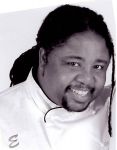
    Eric Austin, the talented chef behind the late, lamented Big
    E’s Soulfood on Eat Street, has resurfaced in South Saint Paul with a new
    upscale restaurant, the Bourbon Street Steakhouse, in the dining space formerly
    occupied by TreVina Italian Steak House. It’s a more suitable venue for fine
    dining than the little storefront on Eat Street, and Austin is now able to offer cocktails and a wine and beer
    selection to go with his cuisine.

    chef Eric AustinAustin, who trained at Commander’s Palace in New Orleans,
    offers a nice selection of Creole specialties, many of them upscale
    presentations of the classic Creole fare that he served at Big E’s. But the
    menu has a wider range, from beer can chicken with whisky baked beans ($16) to
    lamb chops with rosemary and parmesan cornbread stuffing, and a 20 ounce ribeye
    cowboy steak served with baked beans, chorizo and sauteed asparagus ($32). (The
    south Saint Paul stockyards are right across the street.)

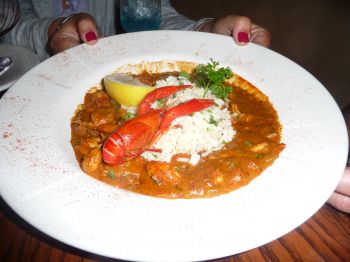
    shrimp and crawfish etouffee

    shrimp and crawfish etoufee

    I was very impressed with the Louisiana gumbo, made with a
    proper brown butter and flour roux, and brimming with shrimp, crawfish,
    andouille sausage and chicken, and the entrée of shrimp and crawfish etouffee,
    smothered in a rich brown gravy. The
    blackened catfish, a nightly special, was also first-rate – moist and flaky and
    accompanied by a roasted sweet corn succotash. My smothered pork chop wasn’t
    quite as exciting as the Creole dishes, but it was enormous and quite tasty.

    With a day’s notice, Austin also offers a special Chef’s Table menu, made up to order, for $65 per person, including two glasses of wine per person. Austin says he asks diners three questions – whether they have any food allergies, whether there are any foods they absolutely won’t eat, and whether they prefer land, sea or air – and then he invents a menu.

    Bourbon Street Steak House, 200 N. Concord Exchange, South Saint Paul, 651-209-6854. Lunch – Tuesday through Friday; Dinner – Tuesday through Saturday.

  • God and Man in Edina.

    ABOVE: This is how I prefer to see a Land Rover. Don’t believe that stuff about their ladder frames. Even the bodies break.

    NOTE: I have been receiving personal e-mails related to my recent Edina Mom post. What I find most enlightening about this gentleman’s well-crafted commentary is that God in Edina, it appears, remains in the automotive details. 

    "As both a proud Edina resident and Land Rover owner I am fuming – FUMING – at your recent blog entry. In fact, I’m cancelling my subscription to The Rake today.

    How dare you besmirch my fine city, and my fine vehicle of choice?

    And let me just be bold and speak for Signe (herself an Edina native) and ask yet another question: what better language for an immersion school than French?

    Hey, someday – someday – if Edina keeps educating its children, and if France keeps supporting wars in Africa to bolster former French colonies and wreak genocide on former British colonies in an attempt to keep more French-speakers alive, I have no doubt that more than 50,000 people worldwide will still be speaking French.

    And everyone in Edina will be able to tip his or her beret proudly and say that we were a part of making that happen.

    And, good sir, what better vehicle for an Edina church to model its camps after?

    In many ways, Land Rover is just like many Edina residents – expensive, beautiful to look at, and amazing (on the rare occasions) when they are functional.

    And when they break down? Well, who doesn’t need something else to complain about?

    Look, if you drove a Toyota*, you’d never get to sit in the posh Land Rover service waiting area on beautiful but uncomfortable square leather couches while talking on your Bluetooth headset connected to your Blackberry while watching Fox News on the hi-def flatscreen, drinking Caribou and eating fresh pastries, while looking at (but never make conversation with) your fellow Edina residents, who are also there doing the exact same thing."

    *ed: Doesn’t Toyota manufacture the Prius?