Category: Food and Drink

  • Chit-Chat 101

    fam din.JPG

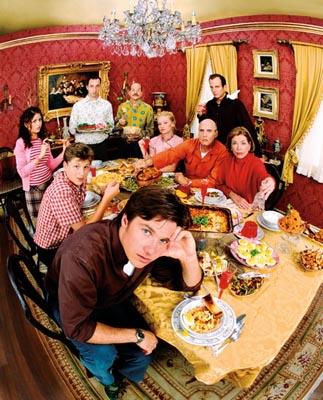
    I think they skipped a horseman, this must be a sign of the coming apocalypse.

    Have you seen the commercials for Stouffer’s new website, During Dinner, in which kicky “Mom” Anne Callaway has coffee and “Mom” Talk with friends, deals with the Callaway Kids, and manages to host a rollicking conversation-filled dinner every night!

    And wait, you can have all that Anne has, and more! There are tips for how to start conversations with your own family! You can even make a personalized placemat for each member of your brood, complete with puzzles, “story starters”, fun-facts, and jokes. It’s true!

    Think about it, you don’t have to talk to little Joey about why he’s been biting kids at school, you can just do a word-find! And why have Molly’s grades been slipping? That’s not fun dinner fodder, let’s challenge our minds with fun-facts and trivia! Forget about trying to find out what’s really going on in your kids’ lives, use this time to train them how to live off cocktail party gibberish.

    Thank you Stouffer’s, thank you for first giving us processed, frozen foods like Creamed Chipped Beef and Salisbury Steak that don’t require actual cooking. And now, thanks for giving us canned chit-chat that doesn’t require any real thought or connection with the people around us.

    Like the Corner Bistro Grilled Chicken Panini, who needs the pressure of reality? Not only can we skip the experience of going to a corner bistro, we can skip the fuss of shopping, the mess of creating, the bother of freshness, the annoyance of nutrition, the niggly matter of flavor, and any potentially embarassing emotions that might ruin our well-constructed family dinner.

  • Bivalves and Apple Ale

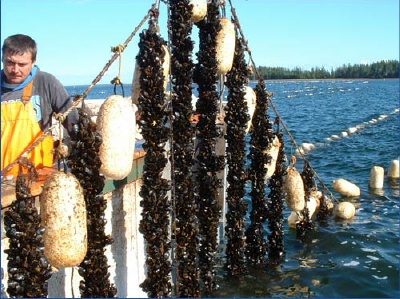
    mussels07_bg.jpg
    mussels don’t grow on trees y’know, they grow on ropes…

    Since the weather won’t cooperate, I’ll have to satisfy my vernal cravings in the kitchen.

    I know I’ve been on a seafood kick lately, mainly due to over-potroasting and maxi-meatloafing during the colder months, but I’m not done yet …

    Mussels. Glorious little Prince Edward Island mussels. Simple, light and versatile. How easy is it to steam off a couple pounds of the black beauties? Ridiculously so.

    My need for sunny Springtime flavors means that mine were steamed in a dry white wine with tarragon and butter. Shallots for good measure. Out of the pot, into the bowl with all the little darlings and their soupy sauce (certain to be soaked up by hunks of crusty sourdough bread).

    The kicker was the Ephemere ale that I found at my local liquor store. Brewed with Granny Smith apple juice, coriander and curacao, this white ale delicately balances fruity and spicy with just a twinge of sweetness. It’s a giant bottle of Springtime sunshine and it chases the buttery mussels with a perfect tartness.

    Go to Coastal Seafoods if you can, because they’re always good. But no matter what, make sure each mussel is closed tightly before you put them in the pot. An open mussel is a dead one, and who knows for how long.

    Steamed Mussels
    3 shallots, chopped
    2 T butter
    1/4 cup freshly chopped tarragon
    1 1/2 cup dry white wine
    Pinch of salt, twist of pepper
    3 lbs mussels (scrubbed, remove beards)
    Lemons

    Melt butter in large pot over med heat. Add shallots and saute until soft, about 3-5 minutes. Add tarragon, wine, s&p, and mussels and bring to a boil. Cover and cook, giving the pot a quick shake every once in a while, until mussels open … about 5 minutes. (Throw any unopened mussels away)

    Pour the lovely mess into a bowl, squeeze lemons over the bounty and dig in.

  • Free Hot Doug!

    hotdoug.jpg

    The Chicago City Council isn’t mucking around, people.

    Doug Sohn (the sausage King of Chicago?) is the first to feel their wrath. The man behind Hot Doug’s … The Sausage Superstore and Encased Meat Emporium … has been fined for selling hot dogs laced with foie gras.

    The fine for taking a stand against The Man: $250.

  • The Worm and I

    marg.JPG

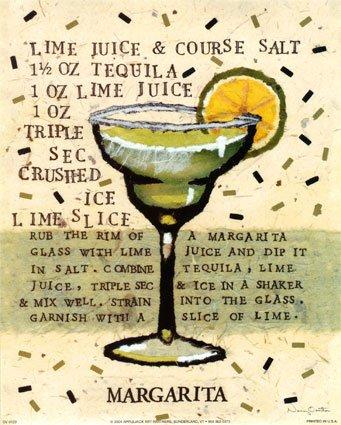
    I don’t know what’s wrong with me, but I am craving tequila lately. More specifically, I’m craving margaritas.

    I was in San Diego last week, at this thumping roof-top bar, and I swear I could have put down 10 or more without a problem.

    It’s an on-the-rocks situation, with loads of salt on the rim. It’s the bite of the salt swimming with the sour and sweet that gets me. The tequila, if it is the right tequila, adds just a hint of smokiness that binds it all together. And if there’s a basket of chips and some freshly smashed guacamole nearby? Forget about it.

    But my life is too chaotic, and I’m not a lush, so I have to manage my maragarita consumption. When? Tonight I’m off to the Restaurant Week kick-off and then TWINS! so it’s a beer story I’m telling tonight. I’ve got Easter prep and meetings all week, going out for a girls’ brunch early Saturday and hosting in a fancy dinner party late Saturday, followed by bunny merriment and mixed relatives for brunch at my house Sunday.

    Maybe that’s why I’m craving margaritas.

    None-the-less, I think I’ve found a few hours on Thursday night that I can sneak out to Bar Abilene with a buddy and drive through a part of their very seductive list. They’re nicely made, never over or under boozy, always perfectly balanced. And then there’s the guac …

  • Chocolate Cake

    choco.JPG

    I just have to talk about chocolate cake for a moment.

    I love it, I think about it, I seek it.

    Sadly, there are many unfortunate chocolate cake stories out there. Slices that look so promising on a menu can be too rich, too cloying, to flourless.

    Density, moistness, simplicity, chocolate-ocity, these are all important factors.

    I’ve tried to make fancy recipes at home, from Masters of Chocolate like Michael Recchiuti but it always seems like a lot of work for nothing special.

    I might have found a winner. In an effort to make a special cake for my friend Matt Fennacy’s birthday, on St. Patty’s Day, I found this recipe for chocolate stout cake. Come on, chocolate cake and beer? Hoooray.

    I made some changes (halved the recipe, used a little more Guinness, a little less sugar, threw in some cinnamon and cardamom)and baked it in a bundt pan. It was dense without being leaden. It was moist without being sticky. It was chocolatey without the icky sicky over-sweetness. I think it was the stout that kept the tart in balance, that allowed the dark richness of the chocolate to stand.

    No icing needed, just a wallop of fresh whipped cream (or maybe mascarpone sweetened with a bit of dark rum).

    Best part: because I used beer, the kids gave me a BLECH face and left it alone. More for me.

  • Flowers by Contrecoup

    Being brought up in a family with three doctors gives one an odd outlook on life. It was not just the anatomy textbooks, with their foggy monochrome photographs, that rubbed shoulders with the wildflower guides and J.B. Priestley novels in the family library. Nor was it only the medical advertisements that came in triplicate by each post, some embellished with color photographs of lurid lesions, others appealing to the more cultural proclivities of the medical profession. I recall a whole series of advertisements for a preparation called Cetiprin, each adorned with a frameable brass-rubbing of a medieval man-at-arms encased in chain mail and plate armor and labeled, “Pity the Plight of the Ancient Knight without Cetiprin.” Cetiprin was meant to cure incontinence.

    The most lasting impression was made by Father’s stories of medical school at Edinburgh before the First World War. There was the one about him and his dissecting partner taking a small packet of rare roast beef into the dissecting room. (“George, stop eating the corpse.”) But the most memorable was the tale of the fracture by contrecoup.

    One day the body of a sailor was fished out of the Firth of Forth, just north of Edinburgh. It was duly brought to the Royal Infirmary, but no next of kin came forward to claim it. This left the professor of anatomy feeling conflicted (or maybe it was morbid pathology, the medical specialty where no patient ever answers back). The cause of the seaman’s demise was a textbook example of a certain sort of head injury, what is called (as was explained with the sort of professional detail enjoyed by small boys) a fracture by contrecoup: The contusions are on one side of the head, but the break in the bone of the skull is on the other.

    The professor wanted this head for his teaching collection. After some weeks, he could wait no longer and had it severed and pickled, consigning the rest of the body to a respectful burial. As luck would have it, the following week the next of kin made contact—auld Jock had been lost at sea, they wondered maybe if … The professor thought fast. He would not want to deprive the bereaved of the chance to see their relative; on the other hand, he did not want to get into trouble. He had the head laid out under a sheet with a decapitated tailor’s dummy extended below it. The next of kin were led in. Gingerly, the professor drew back the sheet to show the face: “Aye, indeed, that’s auld Jock, he was a guid man … ” They turned and began to leave. The professor started a sigh of relief. They turned: “Professor, may we see the little finger of the left hand.” Well-concealed consternation. The professor drew himself up to his full height (was he not the heir of Lord Lister, pioneer of antiseptic surgery, of Sir James Young Simpson, promoter of chloroform anesthesia): “No,” he said in oracular tones and a mild court-Scots accent, “you may not see the little finger of the left hand.”

    What stuck in my mind was less the immense dignity of professors (not easy to sustain when what you profess is Latin), but the notion of contrecoup. This sense of unintended consequences became a word to live by. Sometimes, says Charles Williams, it is necessary to build the pyre in one place so that the fire from heaven may descend in another. If you teach people about the history of the Near East in the sixth and seventh centuries, they will be less likely to foul up the modern politics of that fouled-up region.

    Sancerre is a white wine that works by contrecoup. It is made from the Sauvignon Blanc grape in the Loire region of western France. Take the 2004 vintage of Justin Monmousseau (available around here for less than twenty dollars). The nose is sweet, not sugary, and yeasty like spring flowers. The taste is overpoweringly—but not unpleasantly—acidic, with acrid overtones like the smell made by Boy Scouts when they strike fire from flints. It is the acid that deals the contrecoup. It promotes salivation (sorry to be so anatomical), but what you taste is not just sourness, it is the fresh sense of flowers that you met first in the smell. This Sancerre is as much an idea as a wine. Drink it with simple things, like salad or good goat’s cheese, but perhaps not with rare roast beef.

  • Pleasure Sap

    When I was a little girl with prairie-skirted ambitions to be Laura Ingalls Wilder, I once licked a tree. The darkening, wet stain on the bark of my backyard maple was too interesting to pass up. I knew that the sap wasn’t syrup, but I expected some sort of sensory recognition, some hint of taste that would connect that tree to my morning stack of flapjacks. What I got was a dirty tongue and the slightly sweet flavor of bark.

    Undaunted, I knew I could forge maple syrup from this tree. They did it on Little House on the Prairie; how hard could it be? I imagined a sticky pot of amber syrup that I would bottle and sell to clamoring neighbors. I would be widely known as the Syrup Girl. Of course, I had no idea what toil came between tree and bottle. The Native Americans, who were using maple syrup as their primary sweetener when the colonists arrived, told a story of a time when the syrup flowed ready-to-eat from the tree. When a young spirit realized that man was becoming too lazy, spending all of his time eating the sweet sap, she poured a bucket of water into the center of the maple tree, diluting the syrup inside. From then on, man has had to labor to make syrup from watery sap.

    Maple syrup is one of those commodities that make a nice gift for European visitors: It’s uniquely North American. The best trees for maple-syrup production tend to be black and sugar maples, both indigenous to certain regions of the northern United States and Canada. And yet, it’s the weather that has the most to do with maple success. Tapping is a rite of spring. From February through April, when warming days clear the freezing mark while still-frigid nights stay below freezing, sap will flow from trees. The daily change in temperature pressurizes the tree, which pushes out the sap. One tree will produce ten to twelve gallons of the watery, slightly sweet, and lickable sap.

    Making syrup from sap involves slowly boiling away the excess water, concentrating the sugars. The early Americans refined the process by using iron pots and building “sugar shacks”—small, vented buildings that house the boiling equipment. Because it takes nearly forty gallons of sap to produce one gallon of syrup, patience became a necessity. The sugar shack evolved into a community gathering spot. Many New England towns still celebrate the spring with maple festivals centered on the local sugarhouse.

    Pure maple syrup is graded by color and flavor. Grade A light amber is very light with a mild, delicate flavor. Medium amber is a bit darker and richer, the most common table syrup, and dark amber is the darkest with a stronger maple flavor. Grade B, also known as cooking syrup, is made late in the season and has the strongest maple flavor. The cheaper, imitation “maple-flavored” syrups are usually made of corn syrup and contain less than three percent maple syrup. In Quebec, they refer to the faux syrup as sirop de poteau, as if it had been made by tapping telephone poles.

    Most maple syrup is made in New York, Vermont, and Quebec, but our local producers haven’t been overlooked. The North American Syrup Council recently awarded Jake’s Syrups, from Vergas, a first-place medal in the medium amber category and a second-place medal for its dark amber.

    To really celebrate the spring maple harvest, you’d almost need a month full of Sunday breakfasts. I’d start with the Mahnomin porridge from Hell’s Kitchen. The warm wild rice porridge with dried berries and hazelnuts is drizzled with maple syrup for the most refreshing, earthiest breakfast around. If you are in the mood for slightly fewer twigs-and-berries, a steamy bowl of oatmeal from Muffuletta hits the mark. Topped with crunchy pecans, apple-cranberry compote and maple syrup, it is a perfect tart and sweet morning balance.

    If you prefer a doughy, yeasty treat, the brioche French toast, stuffed with cinnamon-apple filling, from 20.21 sets the high bar. French Meadow griddles up hubcap-sized pancakes every day. Varieties may change (cherry pecan cakes, wild rice blueberry cakes, banana walnut cakes, oh yeah), but never the pure maple syrup. If it’s all about waffles, there’s Andrew’s killer banana waffle from the Highland Grill and all of her sisters. You’d think that gooey caramelized bananas over a malted waffle would be enough, but it takes a thin stream of syrup to make every bite a beautiful mess.

    And then there’s the happy collision of maple syrup and your breakfast meats. Who knew that crowding your plate could lead to such diversions as Fisher Farms maple sausage? Café Twenty Eight incorporates the slightly sweet sausage into a fluffy egg scramble, while The Craftsman lets it sit softly beside the sourdough French toast. But nothing, it seems, can top the Nicollet Island Inn’s “pigs in a blanket” brunch offering. Plump sausages tucked into a deep-fried pastry pocket with a spiced apple puree, stunningly doused in vanilla-bourbon maple syrup sauce. Purists be damned, this dish is taking maple to the next level.

    I didn’t have the patience to realize my Syrup Girl ambitions. I couldn’t wait for more than a capful of tree juice, and my idea of slow boiling was to scorch one of my mom’s best pans by overcooking that capful. But I still appreciate the process and am happy to live near the educational Gale Woods Farm, where I can take my kids to learn about finding their own trees to lick.

    Hell’s Kitchen, 89 S 10th St., Minneapolis;
    612-332-4700; www.hellskitcheninc.com

    Muffuletta, 2260 Como Ave., St. Paul;
    651-644-9116; www.muffuletta.com

    20.21, 1750 Hennepin Ave., Minneapolis;
    612-253-3410; www.wolfgangpuck.com

    French Meadow, 2610 Lyndale Ave. S., Minneapolis;
    612-870-4740; www.frenchmeadow.com

    Highland Grill, 771 Cleveland Ave. S., St Paul;
    651-690-1173; www.highlandgrill.com

    Café Twenty Eight, 2724 W. 43rd St., Minneapolis;
    612-926-2800; www. cafetwentyeight.com

    The Craftsman Restaurant, 4300 E. Lake St., Minneapolis;
    612-722-0175; www.craftsmanrestaurant.com

    Nicollet Island Inn, 95 Merriam St., Minneapolis;
    612-331-1800; www.nicolletislandinn.com

    Gale Woods Farm, 7210 County Rd. 110 W., Minnetrista;
    763-694-2001; www.threeriversparkdistrict.org

    SHOP TALK
    Spring is in the air, and so by the end of the month, most of the major farmer’s markets will have reopened … Find answers to the most pressing of questions—What to eat for dinner?—by attending the Minnesota Landscape Arboretum’s symposium on the Ethics and Aesthetics of Eating on April 19. Michael Pollan, author of The Omnivore’s Dilemma, will be the keynote speaker and undoubtedly will raise some interesting points regarding what to eat and why (952-443-1422; arboretum.umn.edu) … Don’t miss the Seward Co-op’s annual Community Supported Agriculture (CSA) fair on April 21. Growers will be on hand to answer questions and even sell shares of their 2007 crops. New to the fair this year will be local, certified organic beef and naturally raised chicken and pork (612-338-2465; www.nicolletislandinn.com) … Tired of the same old Easter brunch? For the first time, the Oceanaire Seafood Room will be open for the holiday. The special brunch menu includes a smoked salmon “benedict” and Star Prairie Farms smoked trout hash (www.theoceanaire.com). But if it’s all about the eggs, you eggheads, then head to the Linden Hills Spring Fling Egg Hunt on April 7 for a park-wide hunt accompanied by light brunch and entertainment (www.minneapolisparks.org).

    CUISINE SUPREME
    Betty Jean’s Chicken & Waffles
    Chicken and waffles might be the best solutions to that late-night dining conundrum: Should I order breakfast or dinner? While these old-fashioned staples are popping up on hot-spot menus everywhere, nobody does them quite like the bunch at Betty Jean’s, who honor the best old-school methods of preparation. First-timers should go for the signature Betty Jean: three crispy wings served with a crusty, hot waffle. More ravenous appetites will be sated by the Robert Earl, a half chicken with the choice of two sides. Those wishing to mix things up might consider the Uncle Milo, a pork chop served with eggs and a waffle. Everything on the menu smacks of home cooking. Whether it’s 2:00 p.m. or 2:00 a.m., this crew will cheerfully feed your cravings, both salty and sweet. 319 1st Ave. N., Minneapolis; 612-339-1968; bjschickennwaffles.com

    Good Day Café
    Getting to this restaurant, which is housed on the exact spot where the legendary Cocolezzone once sat, requires a good many twists and turns. But the food is worth the frustrating voyage. Once inside, the vibrant colors of the décor meet with an inviting staff to create a contemporary spin on comfort-food experience. The menu’s many winners include Iggy’s fried-egg sandwich with avocado and ham; banana and huckleberry brioche French toast; a nicely piled Reuben on a pretzel roll; and a beautifully balanced Cobb salad featuring flat iron steak, crispy spicy onions, and a poached egg over fresh spinach. For an added treat, try the creative café drinks and freshly juiced concoctions at the walk-up barista bar. 5410 Wayzata Blvd., Golden Valley; 763-544-0205

    Crave
    Crave is the stylish new restaurant in the Galleria space formerly occupied by Sidney’s. Warm metallics and pleasing shades of brown and gray lend this dramatic dining room a sense of coziness, despite its polished design. The glass-walled wine chamber is especially lovely and sets an elegant tone for diners and bar patrons alike. The menu is heavily Mediterranean influenced, featuring hearty pastas and pleasing flatbreads from the brick oven, but there are a few culinary surprises, such as an Asian-inspired tuna tartare dressed in a tangy sauce. Crave also sports a full sushi bar, though, to our tastes, it seemed a little disjunctive from the rest of the menu. 3520 70th St. W., Edina; 952-697-6000; cravemn.com
  • New World vs. Old World

    pasta.JPG

    Have you read the “manifesto”?

    Last December, some of the most influential men in food wrote what they called “an international agenda for great cooking”. The Fab Four were Ferran Adria of El Bulli, Heston Blumenthal of The Fat Duck, Thomas Keller of The French Laundry and Per Se, and food scientist/author Harold McGee.

    The agenda’s main point is to debunk the term “molecular gastronomy” while celebrating the new horizons of food and technique. They believe that this is an important and historic era of cookery, but they don’t want to be misunderstood by the next generation of chefs.

    They want us to know that they have heart.

    They want it understood that just because they use fancy machines and funky techniques and xanthum gum, it doesn’t mean that passion need be lost. They believe in excellence, integrity, openness, and embracing innovation and evolution. They believe in that marvelous Brillat-Savarin quote: The discovery of a new dish does more for human happiness than the discovery of a new star.

    I’m on board. I’m drinking the kool-aid foam and loving it. My brain is engaged with the New World cooking and I’m headed to Alinea in April to experience the new frontier.

    But tonight, I’m going to Broder’s Pasta Bar. I have been thinking about it for a week now, and I’m really in need of a beautifully crafted pasta dish. I’ve been thinking about the linguine with clams, because the pancetta makes it smokey and the peppers make it spicy. But I’m feeling Springy, so the spaghetti with Star Prairie Farms trout, sweet peas, lemon and basil might call to me. Sitting at the bar, watching the cooks swirl the pans with bright, fresh ingredients, adding the home-made egg pasta at the perfect moment, giving it a toss … that’s cooking to feed the soul.

  • The F Word

    sm_recipe_imga.jpg

    Have you been watching Gordon Ramsey’s show on BBC America, The F Word?

    It’s fucking great.

    Some may think right away “I hate Gordon Ramsey, he’s such an asshole.” Well yes, but if you’ve only watched Hell’s Kitchen, don’t be so quick to judge. It should be clear to anyone who has even a little kitchen savvy that the FOX cooking competition is stacked with losers specifically meant to fail and frustrate the head chef.

    He does have a rough manner, an old-school kitchen charm, a loud and spicy vocabulary. But he’s all about the food and the guest, what more can you ask for in a chef, let alone a TV chef.

    All the Rachel Rays and Tyler Florences and Paula Deens who primp and play to the camera are there for themselves and the audience. Even Bobby Flay, the “bad boy” of the Food Network is rather simpy and concerned for his best side.

    Let’s face it, Ramsey doesn’t have a best side. The show is part survival competition, part cooking lesson, part food magazine. It opens with a bunch of cocky home-cooks who think they can handle working in a professional kitchen, with Ramsey. He quickly deflates all ego with his demand for perfection. The rate of success is judged by real diners who decide whether or not they would pay for the food. REAL RESTAURANT STUFF: Not a panel of snobby judges, but people with money in their pockets, the only people that truly matter to a real chef.

    In another segment, Ramsey goes head-to-head with someone on similar dishes, last night saw different versions of Beef Wellington. If a table of diners likes the guest cook’s dish best, Rasmey has to put it on his menu. It’s great when he loses, if only for the stream of cuss the comes from his grinning face.

    He’s my new Sunday night habit, that fucking banana.

  • Halibut

    big fish.JPG
    big, flat fish

    The Alaskan halibut season opened this past weekend, and for fans of the flakey, white fish that means gold!

    I have a friend who is a pilot for NWA. A few years ago he switched out some routes so that he could fly to Alaska, just to get some halibut directly from the guys on the dock. He brought a big pack home and proceeded to batter and fry the chunks at a five-family picnic. The memory of that creamy flesh and the crispy, malty batter still haunts me. I remember burning my mouth trying to eat so much, so quickly.

    But halibut is just as memorable in finer dishes. Oceanaire will do, but I bet it will be good. Be sure to listen carefully to the servers in places like Kozy’s, Chart House, Stella’s Fish Cafe, and Jensen’s Supper Club where halibut will surely make an appearance as a chef’s special. Personally, I wouldn’t mind a month of dinners at the Dakota, waiting to see what Jack Riebel does with the beautifully flat fish.