Category: Food and Drink

  • Green is God

    I never expected to find love at a roadside market. In Florida, no less. But there, down an aisle from stacks of bright oranges and piles of juicy grapefruit, was a small, plastic tub of guacamole so smooth and delicious, so perfectly spiced, that I fell head over heels. It’s uncommon to find guacamole that truly lives up to the beauty of a fresh, buttery avocado. Most end up as blobby, over-whipped, mousse-like concoctions that carry no punch. Yet, this roadside gem was a chunky mash of silky avocado pieces and bright bursts of citrus, with a subtle undercurrent of heat. It’s unfortunate that I have forgotten the name and location of the market, because I fear that the memory of that guacamole will never go away.
    I’m not alone in my devotion to the odd, nubby fruit and its offspring dip. The avocado has been thought to be an aphrodisiac for ages. The Aztecs saw it as a fertility symbol, naming it ahuacatl, meaning “testicle,” most likely because of its shape. Some stories even relate an ancient custom of locking up the virgins during harvest time. The sexy fruit’s reputation has proven hard to shake. It wasn’t until the 1920s, when American growers spun a virtuous public-relations campaign, that good citizens felt able to purchase the fruit without fear of damaging their reputations. There’s little doubt that the avocado has hit the mainstream: more are consumed on Super Bowl Sunday than any other day, including Cinco de Mayo. On that special Sunday, it is estimated that fans will consume nearly fifty million pounds of avocado, enough to cover a football field with close to twelve feet of guacamole.
    There are two main varieties of avocado grown in this country, Fuerte and Hass. The Fuerte tree is largely credited with creating the California avocado industry, which supplies roughly ninety percent of the country’s crop. Among a group of such trees once brought up from Mexico, only one survived the great freeze of 1913. It was named Fuerte, the Spanish word for “vigorous.” All Hass avocado trees can be traced back to a single “mother tree” planted in La Habra Heights, California, by a mail carrier named Rudolph Hass, who patented his tree in 1935. The original tree, which spawned thousands more, died of root rot in 2002.
    It’s important to understand the splendor of avocados beyond guacamole. More than a few Californians have recounted memories of eating the fruit from their own backyards, simply scooping out the flesh with a spoon and maybe adding a dash of salt. In solid, un-mashed form, a slice of avocado on a piece of crusty bread lives up to its Chinese name of “butter fruit.” The beauty lies in its mild flavor and soft-yet-firm texture, which provides a welcome contrast to a salty Cobb salad or a thick turkey sandwich.
    To the world and its chefs, the avocado is a much-loved ingredient. Who doesn’t adore a sushi roll that contains a sliver of avocado? Balanced superbly with raw tuna in the Four Seasons roll from Bagu Sushi, the avocado nicely complements a swath of flying fish roe. In the restaurant’s French Kiss roll, plump with crab, asparagus, and cream cheese, it adds just the right touch of buttery lightness. Though I haven’t found a great example locally, one of the most refreshing desserts I’ve ever had was a Filipino drink made with avocados and ice cream.
    Sometimes it’s simplicity that helps the avocado shine. The linked restaurants of Zelo, Bacio, and Ciao Bella have a salad called the Brasiliana, in which cubes of ripe avocado mingle with small palm hearts, chunks of tomato, and slices of onion and celery in a tart lemon vinaigrette. In each simple-yet-elegant bite, the avocado nearly melts with the citrus and softens the slight crunch and tang of the palm heart. While not intricate, the dish celebrates the avocado’s strengths. The 112 Eatery offers a more surprising use of the fruit that is no less graceful. Their crostini, with white anchovies and avocado, pits the dusky and briny against the fresh and bright, creating an engaging bite. If you’ve fallen hard for guacamole, and all other uses for the avocado seem ridiculous, I hear you. For ease and accessibility, as well as freshness, you can’t do better than Chipotle. Squelch your hate of chain establishments: Their bright green guac is made often and made well. If the need is less urgent, and the situation calls for a more refined atmosphere, Masa’s Guacamole Picado hits the mark. Tart and chunky, you’ll want to eat it with the chips, the veggies, and even a spoon. For a good show and a little instruction on perfect mashing, check out the legendary tableside guac at Tejas, where they know how to work the mortar and pestle.
    It’s rare to find two people who like their guacamole exactly the same way. The key to having great guac may be the key to all great relationships: Keep it fresh. Possibly the best option is to bring home a bag of avocados, tuck into the kitchen, and create your own guacamole, one that will keep you coming back for more. Just don’t over-mash.

    Guacamole
    3 ripe avocados
    Juice from 1 medium lime
    1/4 cup chopped white onion
    3/4 cup freshly chopped cilantro
    1 tsp. crushed red pepper
    Salt and pepper to taste
    Set aside one pit after scooping out avocados. Throw avocado and all other ingredients together and lightly mash with a fork. Depending on your preference, you may want to add tomatoes or use jalapenos. Add the spare pit (to help keep the guac green), cover, and let sit for a bit before serving.

    SHOP TALK
    If you haven’t checked in at Solera in a while, the new seasonal/neuva tapas list—modern small plates inspired by the cuisines of Spain—are worth a fresh visit. Included are wine-braised rabbit with chocolate and citrus and deviled eggs with blue crab and cumin. Yes, please! If, like me, you’re not keen on decisions, the chef will design for you a tasting menu of eight pieces for under $30 (solera-restaurant.com) … From February 23–25, the Minneapolis Convention Center will be packed to the rafters with noshers and snackers looking for the best bite our towns have to offer—in other words, it’s time once again for the Twin Cities Food and Wine Experience. See foodwineshow.com for details … Don’t forget that the St. Paul Farmers’ Market (stpaulfarmersmarket.com) has winter hours, Saturdays from 9 a.m. to noon. The bounty of local cheeses, baked goods, meats, eggs and chocolates will help remind you that there will be a thaw. … The culinary outings at Stillwater’s Outing Lodge (outinglodge.com) are both creative and tasty. This month’s “Food for Lovers” dinner on Valentine’s Day includes oysters and chocolate, while the Mardi Gras ball on February 20 celebrates that last great meal before Lent with lobster bisque, escargot, and foie gras.

    CUISINE SUPREME
    Temple Bar and Restaurant
    A stellar Asian restaurant has been one of the major things missing from the downtown Minneapolis scene. Tom Pham, the force behind Azia, has filled the need with Temple. Sultry and opulent, Temple took over the old Tiburon space and kept the giant fish tank, now filled with huge, colorful Koi. The menu’s French/Indonesian focus is apparently inspired by Pham’s grandmother, but it also plays with other flavors. Small-plate standouts include the refreshing scallop ceviche with Asian pear salad, and the more decadent pan-roasted quail with duck liver ravioli. Tea-roasted pork tenderloin, a beautiful champagne-poached salmon, and amazingly tender Mandarin orange-braised short ribs are all great options for bigger plates, but pass on the stone-grilled Kobe, which doesn’t live up to the price. As at Azia, the saucily named drinks are just as important as the food: try the Innocent Geisha or When Anton Met Gwenevere for an interesting night. 1201 Harmon Place, Minneapolis; 612-767-3770; www.mplstemple.com

    The General Store Café
    Longtime patrons of this Minnetonka retail institution know that a perfect end to a flurry of spending is a quiet table and some freshly made fare. Hearty sandwiches on Breadsmith loaves, baked daily, are piled high with just about whatever you want. Soups and other specials change daily, although the ginger-laced chicken salad is so popular that it seems to stay year-round. For dessert, dense cakes and a legendary bread pudding are rivaled only by a well-rounded selection of Sebastian Joe’s ice cream. 14401 Highway 7, Minnetonka; 952-935-7131; www.generalstoreofminnetonka.com

    Bascali’s Brick Oven
    Sometimes the pizza is not the reason to go to a pizza joint—even when it’s brick-oven pizza. Because, while good pizza can be had everywhere, good calzones are rare. And at Bascali’s, a little hole in the wall in St. Paul, the calzones will capture your heart. Slowly baked in an imported Italian brick oven, the calzones emerge with a crispy outer crust and fresh ingredients inside that are tender and avoid the soupiness that plague lesser calzones. Especially recommended are the pungent California chicken version with pesto and garlic and the classic sausage- and pepper-filled Italiano; but the owners wisely include the option to create your own as well. 1552 Como Ave., St. Paul; 651-645-6617; www.bascalis.com www.bascalis.com

  • Puck Fuel

    dig.JPG

    Dirty Little Secret #62: I am obsessed with the hunt for the Winter Carnival medallion.

    Yeah, I know.

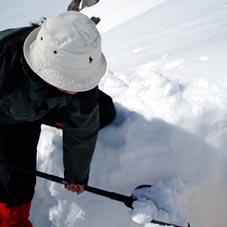
    My family doesn’t even really understand the extent. Sure, they’ve seen me on the computer noodling out the clues, looking through maps and aerial shots of Ramsey County parks, I can’t hide that. But I’ve been sneaky in other areas; they have no idea that while they toil at work/school, I’ve been out, digging.

    They’ll forgive me if I find the puck, if I come home with some shiny loot and cash, right? Not that I need to be forgiven, I am not alone in this.

    But it’s an historic year and exciting year, so why not come clean? The Infamous Jake found the original 07 med in record time, and a second hunt is already underway. Whether you love/hate the Cooler Crew, give away your clues on the discussion boards or only in person in the park, have been hunting since you were born or just joining the fray, we all have one thing in common: baby, it’s cold outside and we’re just a little nuttier for it.

    So, my fellow seekers, I’ll be at Central tonight (shunning the Como, too obvious) packing my thermos three:

    Kid Friendly Cocoa
    Swiss Miss with a hit of fresh cream mixed in.

    The Velvet Vulcan
    Schokinag Extreme Dark cocoa, cinnamon, cayenne pepper, cumin, and Amaretto.

    The Medallionator (in homage)
    Schokinag Milk Chocolate, espresso shots, vanilla vodka, Bailey’s Irish Cream.

    Come find me if you need a bump.

  • Another in the Wind

    empty wine.JPG

    So … now Auriga has announced that it will close this weekend after ten years.

    I really like the food at Auriga. I think it’s fresh, exciting and I think they believe in the perfect bite. One of my favorite meals was during a late night stop-in during a snow storm. We ordered some stuff, a couple of plates we were going to share, and the kitchen mistakenly sent out the wrong dishes. The mistake was a blessing, the plates set upon our table were the ones the chef had made himself, for his own dinner. No way were we giving them back, they were better than what we ordered, simpler yet spicier.

    So now they’re done and I have to wonder why? Isn’t that area a gold mine? Aren’t there large houses with rich, hungry people stowed inside, just waiting for someone to pamper and feed them? Isn’t there a continual influx of freshly graduated twenty-somethings hoping to expand their minds and palates?

    Did they do everything they could? Did they cultivate their local regulars? Did they create new regulars by recognizing and winning over first-time guests? Did they explore the natural allliance with the Walker? Did they advertise? Did they let people outside their neighborhood know where they were?

    Or were they just done?

  • Cold Dish

    empty_plate.jpg

    So by now you know that Five has closed its doors permanently. So has Levain. Two foodie institutions gone, but why?

    Some people might take this opportunity to wax rhapsodic on the state of the scene, and apply huge, sweeping generalizations about what society is up to, just so that they can be The Expert, the One Who Gets It.

    But that bugs me. Because there’s so much more than a quick bite going on here.

    To say that people are still eating out but “avoiding the trendy and the tres innovative” and then list a few recent closings is like licking the icing off a cupcake and then denouncing it for having no substance.

    In at least four of the five restaurants listed after the above statement, there were some SERIOUS leadership issues that largely contributed to their demise. The people running the restaurant, not the people eating in the restaurant are the ones to blame when it closes. Why can’t people get that through their head?

    There are plenty of people in these cities who look for the trendy and the innovative, but yes, you have to actually WORK at making sure they return!

    The restaurant business is a cycle, the ones who have a good sense of self (leadership) and an even better sense of the guest (service) are the ones who will survive the dips. The ones who care mostly for their reputations or their personal cash-flow have lost sight of being humble in the eyes of the eater, and thereby successful.

  • Top Chef 2

    Top_Chef_211_Scrapbook_14[1].jpg

    I’ve been watching the second season of Top Chef, but I haven’t had that much to comment about. Last year I felt I could defend Tiffani because I’d met her, but this year I don’t really care about anybody.

    Maybe that’s the problem, I don’t seem to have a favorite, no one to root for. Hunky Sam is cute and all, but kinda doofy and his food hasn’t been all that impressive. I liked Ilan in the beginning, but he turned out to be arrogant with little backing it up. Elia is just plain odd, which could be a winning quality, but she keeps throwing her hands up and quitting. Marcel is annoying, yes, but I could suffer it if his food was astounding. Mostly, he’s just really green.

    I guess, if I had to put down a sawbuck, I’d bet on Sam. The fact that he didn’t take part in the meathead shenanigans of head shaving and that he seems more serious than the others gives him the advantage. He, of the remaining four, seems to know what is truly at stake.

    The hunkiness, like a nice fondant, just makes great TV.

  • Bored

    outing lodge.jpg

    Bored bored bored? Bored of hunkering down in your house? Bored of all the movies on TBS?

    You could have been a Russian Czarina, sloshing in vodka and noshing on blini. They managed to be glamorous in Siberia, why can’t you?

    The “culinary outings” from the Outing Lodge in Stillwater are some of the most creative takes on the big dinner. This past weekend they rang in the Russian New Year with a re-enactment of the last dinner hosted by Czar Nikolas in his Winter Palace. Borscht, pheasant, caviar, vodka? Better than stale popcorn and pizza delivery.

    They’ve made a actual Babette’s Feast, hosted a traditional English Christmas dinner with roast goose, played croquet in a tribute to Monet’s luncheon on the grass and celebrated German food and engineering with a Mercedes chat and chew.

    Looking ahead they have Valentine’s and Mardi Gras events, a Tuscan spring menu and a meal and chat inspired by Paris in the 20’s and Papa Hem’s A Moveable Feast hosted by Lynne Rosetto Kaspar.

  • Simple Chicken

    chick.JPG

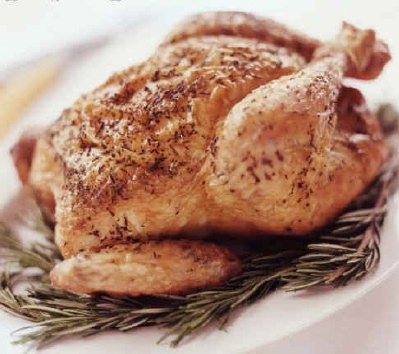
    There is so much good to be done by simply roasting a chicken.

    The pre-roasted chicken that you can pick up at the grocery store is easy, yes. But the truth is that roasting your own is not that much harder. Master this task and you will be able to satisfy anyone, anytime.

    Let me make it easier still:

    Go to Whole Foods by Lake Calhoun this Wednesday, January 10th. Buy an organic chicken and 5% of the sale will go to Open Arms of Minnesota, the good souls who deliver free food to people with debilitating diseases like HIV/AIDS, ALS, MS and breast cancer.

    Take your chicken home.

    Put your chicken in a roasting pan and pat it dry with paper towels. Rub it stem to stern with butter, do not scrimp. Throw a 2T chunk of butter in the cavity. Then apply salt and cracked pepper to your liking.

    Slice a medium lemon in half, place one piece inside the cavity. Squeeze the second half over the top of the bird and throw it in the pan. Cut an entire head of garlic in half and throw it in the pan. Sprinkle freshly chopped rosemary over the whole bird, throw a couple of sprigs in the cavity and a couple in the pan.

    In a 400 degree oven, roast the bird for about 30 minutes per pound. Check for doneness early, the skin should be golden and crispy, the juices should run clear when the breast is poked with a skewer. Take the bird out and let it sit for a few minutes while you deglaze the pan with some white wine.

    Good for the bones, good for the stomach, good for the soul.

  • Verbosity with Plum Sauce

    menu.jpg

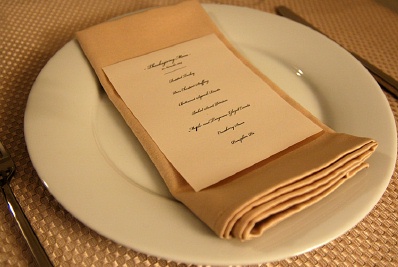
    Haven’t had enough of three hour menu presentations by effete servers describing specialties that become more and more intricate as chefs plumb the dark recesses of their creativity?

    Visit Chez Louise and refresh the page to get more more more.

    Or if you seem to be the only one lacking a good comment at your next wine soiree, go ahead and arm yourself.

  • Anjou Reviver

    Heaven knows the European Community (or whatever they are calling it this week) fails to warm the cockles of the English heart. (How would you like life in Minnesota regulated in detail by a bloated bureaucracy, living on expense accounts in a foreign land?) But one of its pleasanter side effects has been a scheme of international town-twinning—“Partnerstädte in Europa,” the bumper stickers call it. Sometimes the partnerships between cities in different countries are rather elegant. Oxford, for instance, is twinned with Leiden, seat of the oldest university in the Netherlands.
    Indeed, sometimes these seem to be matches made in heaven rather than in Brussels. The committees responsible have been rather kind in twinning the small town I come from in southwest England, Tiverton in Devon, with Chinon, an even smaller town on a tributary of the Loire River in western France. I am not sure what we did to deserve this good fortune. Although Tiverton is more than twice its size, Chinon has by far the more distinguished history. It was a stomping ground of Joan of Arc, Rabelais, Cardinal Richelieu, and King Henry II of England. Tiverton was a place where the medieval Earls of Devon stayed to hunt stags; it then grew into an industrial center that did very nicely thank you in the early modern cloth trade—solid and lovely—but not the scene of great romantic deeds.
    In fact, the only thing I can think of that the two places have in common is that each has a twelfth-century castle that towers high over a river. Tiverton Castle, though, preserves little from the Middle Ages. The Parliamentary armies captured it during the English Civil War (a lucky cannon ball broke the chain holding up the drawbridge) and they did not leave a lot standing.
    The remains of Chinon Castle, on the other hand, are massive. And its origins were royal—it was built by Henry II of England (who was also Count of Anjou). Connoisseurs of cinema will know it as the setting for The Lion in Winter, where Peter O’Toole, impersonating Henry II in robes remarkably ragged for a monarch, trades swift Stoppard-like repartee with Katherine Hepburn posing as a rather unregal Eleanor of Aquitaine, “that fertile and fateful female,” as my old tutor used to call her. The only hint that the characters in this film are anything more than spoiled celebrities is a long shot near the beginning showing the castle massive and mysterious from across the water. Shakespeare did royalty better than this. (So did Helen Mirren in The Queen.)
    The wines made around the two towns are not really comparable, either. Tiverton lies on the same latitude as the Moselle River. So there is every reason it should produce good wine, but I have never seen our local Yearlstone vintages for sale in the United States. The Loire Valley, on the other hand, produces more different sorts of wine than anywhere in France. They range in flavor from the Granny Smith bite of Muscadet to the dark mysteries of red Saumur. After a hot summer, Rosé d’Anjou comes somewhere in between—light, fruity, and refreshing.
    Try a delightful rosé made just upstream from Henry II’s crenellated residence. Charles Joguet’s Chinon Rosé 2005 (just over sixteen dollars hereabouts) is made wholly from Cabernet Franc grapes, the same variety used to make red Saumur, but for the rosé the juice is taken from the must (the crushed grapes) before the skins have had time to color it much. The result looks just like the pink juice of mountain-ash berries as one boils them down to make rowan jelly, the perfect foil for roast lamb or venison. The wine also has the same sequence of tastes that you find in rowan berry juice—fruit followed by delicious, long, waxy bitterness. Think pink grapefruit without the acid, but with a little tingle in the taste. This wine drunk with a venison paste would have revived a royal palate jaded by a difficult day inventing the Assize of Novel Disseisin; with appropriate charcuterie, it might refresh a Brussels apparatchik after hours in committee-making regulations about straight bananas. And for us, in the dark time of the year, it could fuel an entire dinner party, from smoked salmon through rack of lamb to a baveuse wheel of Brie. Vive les Angevins.

  • A Truly Worldly Bird

    There are a few unwritten rules of food snobbery that come into play, especially when dining in a new hot spot or restaurant run by a big-name chef. One is for the dining party to order as many courses as possible, making sure to hit all areas where the kitchen’s repertoire is considered notable. Another prohibits the same dish from being ordered by more than one person, thus permitting a wider circle of tasting as everyone passes plates and forkfuls loaded with the perfect bite. Superceding those rules, however, is one that, when broken, has been known to create uncomfortable moments of silence among even very good friends. That rule is: Never order the chicken.
    Food snobs believe that restaurants offer chicken simply to provide something for your Aunt Sally from Iowa who just happened to invite herself along to dinner. It’s on the menu as a concession, or a bribe to be offered up by more adventurous gastronomes to the lesser inclined: “Well, I’m sure they’ll have some chicken you can order.” The self-proclaimed elite eaters pass over the chicken entrée because they wonder why anyone would choose a common rock when faced with a choice of precious stones. This is why, when I think my friends might be heading down the slippery slope of snobbery, I love to watch their faces when I choose chicken.
    In truth, chicken is king. Seriously, can you imagine a world without it? I challenge omnivores to find a week when they didn’t consume chicken in one form or another. Besides being the universal yardstick for the flavor of all things (“tastes like chicken”), the bird plays the role of prime protein in countless cuisines all over the planet. Instead of thinking of chicken as pedestrian, we should be celebrating its versatility—it can be satisfying as both a vehicle for a star chef’s signature sauce and as a bucket of crispy fried goodness.
    The domestic chicken we know today is believed to have descended from the jungle fowl of India and Southeast Asia. Like so many things, chickens date back at least to the ancient Egyptians, who perfected a method of mass incubation, hatching thousands of eggs at once. Trade routes and travelers helped deliver domestic poultry to the growing world. Because they are so easy to raise, adaptable to all types of climates, and prolific progenitors, it’s not hard to see how chickens came to feed the world.
    For many cultures, the chicken is more than just a food source. During Hindu cremation ceremonies, a chicken tethered by a leg acts as a channel for any evil spirits that might be in attendance. Ancient Greeks considered roosters to be god-like in their valor, and the Romans used hens as oracles by feeding them a special grain cake. If the birds reacted noisily, the omen was bad, if they ate the cake greedily, it was good.
    If ever there were a question concerning the culinary merits of chicken, consider this: Why would France, one of the most food-centric countries in the world, use the Gallic rooster as its national emblem? On these shores, our most familiar chicken emblem may be that of Harland Sanders’ bucket of Original Recipe, but as anyone responsible for six or seven family meals a week well knows, chicken is a home cook’s best friend.
    The IQF (individually quick frozen) breast may be one of the most popular ways to buy chicken. Bags of easily thawed, tender white meat have probably done more for the average American cook than any other product. Those who venture into more intensive cooking can always take on a whole bird. The capon, for instance, is a castrated rooster that has more white meat and a higher fat content than other types of chickens; this makes its meat extremely tender and flavorful (it is also among the largest birds, weighing from six to nine pounds). Roasters are young hens, about four months old, ranging from three to five pounds. Two- to five-pound broiler/fryers are the most commonly sold whole chicken.
    Of course, the industrialization of meat processing is one of the reasons why chicken has become so cheap and easy to get anywhere, at any time. Some disgusting common practices used by large chicken factories, like haphazard electrocution or bacteria-rich water baths, have come to light in recent years, causing unease among people who love to eat chicken. As a result, the market for fresh, naturally raised and processed chicken has been gaining momentum to the point at which even massive companies like Gold n’ Plump now attempt to trade on their wholesome qualities. More important, small producers like Lori Callister and her Farm in the City at the Midtown Global Market have found an audience for flavorful, naturally grown chickens. After choosing your bird, you can curry it and cook it in a tagine; throw it in a stir-fry in the manner of General Tso; or grill it on a skewer with a tangy Thai marinade. Maybe you are what you eat, or maybe you are what kind of chicken you make for the night. It’s often said that even a professional cook’s skills are best judged by sampling his hard-cooked eggs and roasted chicken. Creating simple, flavorful elegance from something so common seems the antithesis of pedestrian—surely this achievement should be heralded by people, even food snobs, the world over?