Category: Food and Drink

  • Snack-a-licious

    nuts.jpg

    Am I the last one to discover these?

    Apparently, they’re at Target so I’m hoping that you’ve all snagged a bag on your way to the dryer-sheet aisle.

    If not, do so.

    Because now that I’ve found them, these Sahale Snacks, these little bags of flavorful nut blends, I am not letting go. In fact, I have three of the five versions in my purse right now.

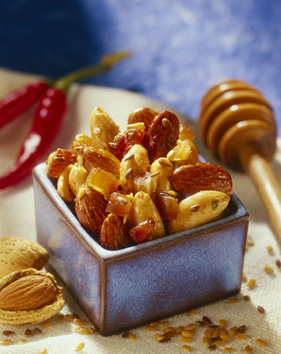
    Sing Buri is a Thai inspired blend of cashews, peanuts and dried pineapple with lemongrass, Chinese chili, and sesame seeds. They’re little sticky clusters of sweet-salty-spicy.

    Soledad Blend has Mediterranean flair with almonds, dates, and flax seeds dressed in balsamic vinegar and a touch of cayenne. You need more dates and flax in your life.

    Ksar Blend combines pistachios, pepitas and sesame seeds with sweet figs and peppery Moroccan harissa.

    If you’re not into the spicy kick, the Valdosta Blend pairs pecans and cranberries with a little orange zest and a touch of black pepper. It’s like a sweet southern pie.

    I didn’t get to try the Socorro Blend with macadamia, hazelnuts, mango, and papaya kissed with chipotle, cumin and cilantro. The hub ate the whole bag before I could get a nibble.

    Oh and also, these are made by the good guys. All natural, healthy, made with mostly organic ingredients by two guys from Seattle.

  • Cool

    heatstroke.jpg

    Enough about the heat.

    But first.

    It’s hard to write about food when you have no appetite. Heat, humidity and the lot drive away my desires to eat. A perfect hell. I had a salad for dinner last night, and even the dressing seemed too thick and heavy. Maybe it’s all the water I’m guzzling, sloshing around in my stomach, leaving no room for food.

    Years back, in my first apartment, we had a heat wave like this one. Four roomies, no AC, no money for big fans. I went to a lot of movies and slept in the living room where the stuffy air was at least moving around. I used to survive on the fried rice at Kinhdo, but even that seemed too much in the heat.

    For some reason, I thought I was being brave and adult with my refusals to run back to the suburban, air-conditioned home of my Mother. But she understood, and instead came into the city and took me to El Meson. It was a gift of a meal, it was gazpacho. Cool and fresh, light and spicy, rejuvenation of the soul. A bowl of the chilled, tomatoey soup seems to extinguish any hint of heat-induced crankiness and self-importance.

    As always, the key is uber-fresh ingredients and the foresight that in 6 months you’ll be praying for warmth as you bitch about the cold.

  • Red-Blooded Australian

    It is a drear thought that if you can remember the Pudding Shop on the north side of Divan Yolu in Istanbul you must be well into middle age. “Those were the days, my friend,” the Seekers sang, “We thought they’d never end, we would be young for ever and a day.” As the Roman poet Horace said, eheu fugaces, alas, the fleeting years.

    Divan Yolu had been one of the grand-processional avenues of Byzantine and Ottoman Constantinople. Between its marble colonnades, purple-robed emperors and their retinues passed ceremoniously from the circular Forum of Constantine to the great Church of the Holy Wisdom.

    By the 1970s, it was distinctly dingy. A small Ottoman mosque still broadcast the call to prayer over a crackly public address system, just about audible above the geriatric gearboxes of nose-to-tail Turkish taxicabs. Across the road there were inexpensive kebab shops, the sort of places where you might spot the management replenishing the mineral water bottles from the tap. The upper stories of these eateries were crumbling hotels whose small-bore plumbing pipes had not been designed with western lavatory paper in mind—the blockages and bursts caused by inconsiderate guests smelt awful. So much for the Romantic East.

    The Pudding Shop stood in the center of this heterogeneous parade. The puddings were puddings in the American sense, little bowls of dairy glup, with or without rice. The clientele was long-haired youth from all over the western world—what the Turks called hipi (Turkish spelling is relentlessly rational). On one wall there was a notice board on which people advertised for traveling companions to go with them eastward: Persia-Afghanistan-India-Kathmandu.

    The Hipi Route to the Mystic East (farther east than the Romantic East) would be impassable today. It finally died at Christmas 1978 with the Russian invasion of Afghanistan. But thirty years ago, it was a long, thin line stretching across Asia, drawn by folk inspired by a lust to know what cannot be known. You saw them, always in groups, hanging around the bus stations at Erzurum and Tabriz, wild-eyed, thin from inanition, sometimes begging, often clutching paperback selections from the Buddhist Scriptures.

    For all their preoccupation with spiritual traditions, the hipi seemed quite uninterested in the Christian and Islamic heritage of Turkey and Persia as they passed through. The poet Peter Levi, who recounted his own adventures in Afghanistan in The Light Garden of the Angel King, found them remarkably unenterprising people. You seldom saw the hipi anywhere except in the places where they all congregated—the Pudding Shop in Istanbul, Nasr-i Khosrow in Teheran.

    It is odd too that a movement of free spirits with lofty spiritual aims has left so little in the way of literature. I can think of no bahnbrechend, or groundbreaking, spiritual odyssey recording the hipi Drang nach Osten. That is not to say that their travels had no consequences. Many decent people in the Near East had never seen westerners in the flesh before the hipi passed through. Heaven knows what effect they had on the lands they traversed.

    True, they were not guilty of building vulgar concrete tourist hotels, but their practices and appearance were scarcely such as to commend the West to those who in the next decade were to animate the Muslim moral re-armament of Persia and Afghanistan.

    There were other folk who frequented the Pudding Shop. They were going in the opposite direction. These were not etiolated seekers after truth; they were beefy blond Australians, big men for whom the shish kebabs of Divan Yolu, one felt, were slim pickings. The destination to which they were working westward was the area of London around the Earls Court tube station, then known as Kangaroo Gulch. Their idea was to see the world before they went home to settle down. They were no better informed than the hipi (“Who were these Byzantine guys?”), but their bluffness was refreshing.

    You might find similar genial refreshment in a bottle of Lindemann’s Reserve Merlot, a warm-hearted red wine from the southeast of Australia, available around here for less than twelve dollars a go. This is a rich round wine, compounded of equal parts of Merlot and sunshine, with spicy touches derived from the oak barrels it matured in and fine plummy flavors that will, if you are not careful, have you uttering the broad, relaxed vowels of the Antipodes. It would go well with kebabs. And you do not need to traverse all Asia to get it.

  • The Hulk in the Kitchen

    Right beneath our noses, an underground clutch of vintage appliance enthusiasts is quietly buying up all of the redeemable old stoves and classic refrigerators. To the uninitiated, it looks like a hobby, not unlike repairing and collecting classic cars. But some of the new converts to the vintage appliance game aren’t buying them because they want to resuscitate an era, or because they want to embark on a tricky renovation project; most lack the kind of accompanying home décor that marks the “vintage enthusiast,” a designation they casually shrug off. Lots of people have been outfitting their kitchens with vintage pieces because, for the money, they are some of the best buys out there. With a quick tune-up and a polish, many of these octogenarian appliances continue to work with faithful precision. Of course, the retro curves and colorful porcelain surfaces don’t hurt, either.

    Every vintage appliance buff has a story about how a love affair with an old range caused their conversion, and to this I am no exception. Chambers, Wedgewood, O’Keefe & Merritt … there are websites devoted to fans of each that forsake the others. Mine’s a Roper, a brawny, sure-footed hulk of a stove, manufactured a few years before World War II.

    Some nights after dinner I take care to detail my stove, from the top of the clock all the way down to the footed legs. I deep-clean the burner plate weekly. This uncharacteristic fastidiousness is a testimony to my love for this old thing. If to scrub it is to know it, I’ve learned that mine is a more solid and more beautiful machine than any stove made today. The fine features are legion: the generous coat of white porcelain enamel, pouring over the corners thick and creamy like milk off the farm; the design dimples and ripples in the chrome; the pretty little clock; the flourish of the Roper brand name dashed across its front. Every small detail reveals that its makers had high hopes for this stove. While it would devote its life to a relentless cycle of work, it was meant to be a thing of beauty, too.

    The latest in a lineage that began with fireplaces and then wood-fired cook-stoves, mid-century gas and electric ranges assumed the place and prominence of a hearth in the center of the kitchen—but with a sleek, modern look. Examining the smooth, clean lines of the shiny chrome and glowing Bakelite features, you’re struck with the sense of bold optimism inherent in these appliances. Their makers were obviously smitten with modernism and had great hopes for the possibilities of the future. This was the era when new devices in home technology were so darn exciting that it seemed as if they had dropped into the home from outer space—and they looked like it, too.

    Flash forward to today, when weekend gourmets with expensive stoves cook a little and fantasize a lot about being professional chefs. Meanwhile, when the professionals cook on the home front, they want to feel comfortable, like they’re cooking at home. I say this as one of them. Having spent the last eight years cooking on professional suites—and the last thirty minutes of every twelve-hour day scrubbing the shine back into the range top—the last thing I want to see when I get home is a hunk of industrial stainless steel. I have nightmares about the dark crevices where stainless steel corners meet, about what kinds of desiccated (or horrors, living!) creatures hide in the greasy grime. So for me, perhaps the strongest attraction to my old stove lies in its lovely porcelain façade: It looks nothing at all like work.

    Visual appeal has in large part driven the demand for retro stoves. According to Floyd Harvala (that’s “the Wild Finlander” to me and you) of Harvala Appliances in Park Rapids, my hometown, vintage pieces, especially those manufactured from the 1930s to the late 1950s, have increased in desirability over the years. “You usually get two or three people in a summer asking about them,” he said. “Mostly people in their forties, or younger.” Note that in a town of three thousand, two or three fairly constitutes a trend. Burt, the son-in-law who recently took over the store (thenceforth assuming the moniker “the Mild Finlander”), stocks and sells a great many contemporary appliances, but shares Floyd’s understanding of the older pieces’ appeal, noting that they “have a lot more character, more little features, neat-looking legs, and stuff like that.” Both Finlanders admire the thicker gauge of the porcelain and the steel foundations on these stoves, as well as the durability of the old cast iron burners. New burners are constructed of aluminum and even Floyd admitted that in comparison, they are “not very good.”

    Detractors might say that the older appliances lack technological advances that have since become commonplace. In reference to refrigeration, I must concede that these claims have validity. Fridges like my 1930s Royal, a compact model by General Electric, look glamorous in the kitchen, but they are not without problems. Food placed in the back tends to freeze, and after a few weeks of operation, opening the little inset box freezer is like looking at a diorama of the Ice Age: Squinting, you can barely make out a box of peas in butter sauce back there, frozen in time. With advances in compressors and insulation, these fridges just can’t compete with new ones. It takes more energy (and money) to run them, as most of the cold air just leaks out the door. Burt surmises: “Old fridges take a dollar a day to run. For new ones, it’s ten cents a day.” Hard truths like these have turned many a vintage fridge into a vanity piece: They look cool, but are not, in fact, actually cool. They’re commonly found in garages, demoted to holding the summer stock of fish bait and soda pop.

    Vintage stoves, on the other hand, possess the cooking power to compete with today’s top-of-the-line models. Is it possible for my Roper to pump out more Btu’s (British thermal units, the measure of heat output) than the average contemporary range? “Well, it depends,” said Jack Santoro, founder of the Old Appliance Club and publisher of the Old Road Home, a quarterly for vintage appliance buffs and hack restorers. He has been restoring vintage American stoves for thirty-seven years, with enthusiasm to spare. “In these old stoves, the valves which control the size of the orifice are adjustable.” The Btu level depends on the amount of pressure, natural gas or propane, squeezed through the orifice. Now that he mentioned it, I remembered the propane service guy asking me if I wanted it hot. I must have said something like, “Hell yeah, hot as she goes!” which would explain the power I now enjoy. Water for pasta boils in about eight minutes. Flames shoot up the sides of a wok, giving stir-fried greens the authentic Chinese lick of fire. By this estimation, my four Roper burners sport Btu’s in the ten thousand to twelve thousand range—hotter than a new budget stove (averaging nine thousand Btu’s) and comparable to those strapping, faux-commercial ranges (whose burners range from two thousand for the simmer plate to eighteen for the power burner on the priciest model).

    But beyond Btu’s, it’s the physical scale of my range top that makes it conducive to the bouts of intensive cooking, pickling, and jam-making in which I sometimes indulge. Like most of the stoves from this era, mine was built to handle some serious production. Its burners were widely spaced to accommodate huge canning kettles and stockpots of simmering broth, hog’s heads slowly melting into head cheese, pots of spurting apple butter, and, of course, the ever-warm pot of coffee.

    Currently, the market for these stoves is at that middle point: They are popular enough to sell for six thousand dollars on the Internet (totally refurbished and gleaming clean), but you could just as easily find one lolling amongst the old sinks at the local dump. That is, not everybody knows they’re desirable—not yet. The use of the Internet by rural junk dealers has gone a long way toward ruining, perhaps forever, the prospect of the insanely good deal. Now little dusty storefronts on deserted main streets that once promised the bargain of a lifetime are run by clerks who sell most of their stuff on eBay. They know what a Chambers stove is and how much it’s worth.

    Luckily for me, my husband got our Roper from a relative, and we bought the fridge from Burt for thirty dollars and a case of beer. But that was last year.

  • New Pleasure from Old Recipes

    I had a German grandmother who could cook, but she lived in Michigan. During our summer and holiday visits, this silly American girl didn’t know how to appreciate her cooking. I thought meat wrapped in pancake was weird and wondered why the potato salad was pink. When I finally realized what I could have learned, it was too late. I have a copy of the Baltisches Kochbuch from which many of her recipes came, but it isn’t her original copy, the one with her scrawlings in the margins. My grandfather didn’t think anyone was interested, so he gave it away.

    Not long after my grandmother’s death, I began to search antique stores and musty old bookshops for copies of the book. Part of me thinks I will find her copy someday. In the meantime, I have found a diversion: collecting vintage cookbooks.

    My first was The Modern Priscilla Cook Book: One Thousand Home Tested Recipes, published in 1928. The crackled cover and yellowing pages caught my eye. Inside were recipes for dishes I could barely imagine: Wild Rose Mousse, Shrimp Wiggle, Chicken Timbales, Grand-mother’s Piccalilli. I was hooked immediately. Although many recipes, such as Pork Cake, Hot Lettuce Sandwiches, and Fried Calves’ Brains will never come out of my kitchen, Ada’s Famous Gingerbread, Eggs Baked in Whole Tomatoes, Tosca Sauce, and Zephyr Potato Squares have inspired me to work through the terse, sometimes vague directions to bring forth an arcane taste of the past.

    I am not alone in this odd hobby. In 1999, the Wall Street Journal called the antique cookbook sector the hottest in the rare book field. Collectors range from food historians and book lovers to beginning cooks and professional chefs. Probably the most rare collectible would be American Cookery by Amelia Simmons, which was published in 1796, and is known to be the first American cookbook. Collectible cookbooks are hard to find in good condition. A first edition of The Sun Also Rises might have been read once and then stacked on a shelf for years, but you can bet The Modern Priscilla was consulted daily, splattered with buttermilk, and used as a coaster. For rare book dealers and hardcore collectors, this detracts from the value of the book. For me, it only adds to it.

    There was something else, besides the recipes, that enchanted me about my Modern Priscilla. It was Miss Myrtle Finden McIntosh, presumabley the original owner of the book. On the inside cover she inscribed her name, followed by “Should this book take a notion to wander, box its ears and send it home.” Her graceful handwriting can be found throughout the book, reminding herself to add one cup of sour milk to the sugar cookies, checking off and rating the good dishes (“yes sir!”), and re-naming the oatmeal cookies “rocks.” Once-blank pages are covered with hand-written recipes for versions of Overland Banana Pie, Scalloped Oysters, Honey Pumpkin Pie, even a “Hands-Off” recipe for soap. And then there’s the phone number for Dr. Chowning, the addresses of friends, and the small, seemingly quick notation that Marie died on the 6th of February in 1935. Miss Myrtle Finden McIntosh not only used this book, she loved this book. And now, so do I.

    I began hunting down the tattered and worn old cookbooks. I wanted only books that had lived in a kitchen. I came across a Text-Book of Cooking by Carlotta Greer, published in 1915, which instructs the reader not only in the preparation of food, but in its scientific composition. A discussion of starches and carbohydrates is followed by a number of practical experiments and a recipe for Cream of Wheat. Mary Tretter dutifully penciled notes throughout, checking off the questions she’d been assigned, working through a chart of one-hundred-calorie portions of food, and doodling a caricature of, I assume, her instructor. On October 25, 1921, she mastered French Toast.

    My copy of The Household Searchlight Recipe Book, published in 1935, has only one or two handwritten notations, including a name I can barely read as Mrs. A.J. Slemin. The recipes are interesting, but it was the four four-leaf clovers pressed in separate parts of the book that really attracted me. Did she think it was a safe hold for her good luck? Was it the singular site she could call entirely her own, where no one else would look?

    I started out searching for a grandmotherly figure in old cookbooks, the kind of figure many famous cooks claim as their inspiration. But I never found her. Instead I found a collection of women who were closer to my own age, doing what I am doing, cooking and learning. Without glossy photos or guidance from celebrity chefs, they invented, adapted, and grew confident. Their cookbooks were as significant to them as any diary, marking their successes and failures, giving them a place to record daily life. I feel tied to these women when I cook something that fails, and then turn to Priscilla for an easy molasses cookie recipe that I know will work and bolster my bruised ego. Most of my recipes are stored on my computer and I am guilty of countless glossy cookbook purchases, but, if I ever find a four-leaf clover, I’ll press it between the pages of Priscilla, right next to my favorite Miss Myrtle notation: “Abra-ca-dab-ra, one two three, magic magic, come to me.”

    Eggs Baked in Whole Tomatoes

    adapted from The Modern Priscilla

    3 medium-large tomatoes

    3 eggs

    salt and pepper

    3 T toasted bread crumbs

    1 t chopped rosemary

    1/2 t garlic salt

    3 slices prosciutto, diced

    Preheat oven to 350 degrees. Slice off top of tomatoes and carefully scoop out centers. Break one egg into each tomato, sprinkle with salt and pepper. Set in shallow baking dish. In separate bowl, mix bread crumbs with rosemary and garlic salt. Cover each tomato with some of the bread crumb mixture and top with pieces of prosciutto. Bake for 30 minutes. If prosciutto isn’t crisp enough, place under hot broiler for less than a minute.

  • Apple Dreams

    Picture1.gif

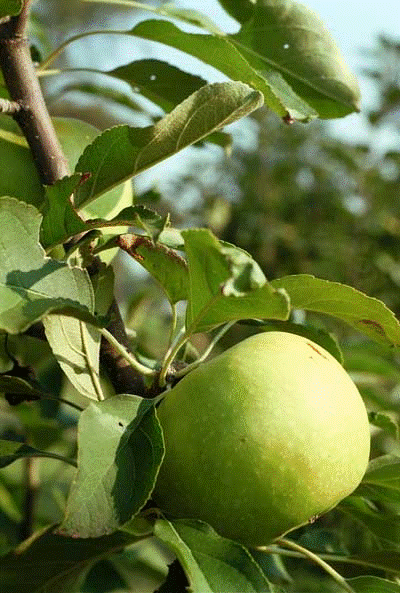
    I have an apple tree in my yard.

    This astonishing discovery came only a short while ago. We’ve lived here for six years.

    This tree sits in the back corner of the yard and has never been pretty or fragrant or useful in any way. Too low for a good climb, too spindly for a rope swing, too close to the swamp for a good sit.

    Last fall, I spied a round greenish bauble hanging on a low branch. At first it didn’t even register that it was an apple. Close inspection revealed a pink glow beginning of the back side. Glee. I quickly searched the whole tree and found only one other apple, near the top branches. That was it. Two apples.

    Despite their rough appearance, a brown spot here and a worm hole there, the bites I took were tart, sweet and crisp, not at all mealy or bitter.

    And I thought that was it. The tree was old and having one more fling with two apples. It always seemed weak and frail anyway.

    As luck would have it, we built a shed last year. Because the dimensions of the shed grew beyond what we originally planned, we had to cut off one of the limbs of the apple tree. I had already plucked my two apples, I thought it wouldn’t kill the whole tree.

    To the contrary. As of this week, my tree is draped with promising green orbs. Branch after branch, little apples peek out from under leaves. I’m not an idiot, I understand the principles of pruning, I just thought there was no hope after years and years of nothing.

    Now, in this heat that makes stove cooking unbearable, I’m dreaming of apple pie and apple muffins. I can almost smell the crisp autumn air dappled with cinnamon. Brats with apple-onion relish, pork roast with mashed apple sauce, baked apples with cream, all the things I couldn’t bear to eat in this heat are living in the back of my mind, patiently.

    But I see even further, to the harvest after this one. Because now that she’s given me the sign, I can figure out how to best prune her and protect her from worms. Feverishly, I’m online trying to find the best organic means of helping her thrive. And I don’t even know her name.

    We bought this house from the original owners, the people who built it over 30 years ago. How long was she neglected? How long did her apples go unpicked? Years of nothing, waiting.

    Waiting for me.

  • My Name is Tomato

    tomato.jpg

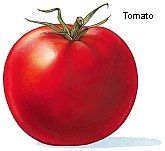
    Heirloom Tomato Names That I Fancy

    Green Zebra

    Hillbilly

    Mortgage Lifter

    Mr. Stripey

    Cosmonaut Volkov

    Isis Candy

    Jaune Flamme

    Ivory Egg

    Stump of the World

    Tappy’s Finest

    Wapsipinicon Peach

    Blondkopchen

    Bloody Butcher

    Dingwall Scotty

    Hank

    Purple Calabash

  • Fresh

    summer_of_squash.jpg

    The problem with blazing through life with eyes strictly forward, is that often I forget to reconnect to people with whom I’ve shared good days. Life takes work, and sometimes there doesn’t seem to be enough time or energy to reboil old friendships. And then there’s the fear that the connection leads only to a past-life that doesn’t really jibe with the person in my new apron.

    And yet.

    This weekend we had a dinner party with some friends, one of whom was an old chum from high school that I had run into at Target. She was the one person I knew back then who was as cynical about our suburban surroundings as I was. Odd that we should both find ourselves in the same area again.

    We started out the night with a fresh sake-cucumber cocktail, seemingly innocent and light, a quencher with a kick for a hot day. We snacked on tuna tataki while we chatted, the room splitting itself into male and female groups. Dinner was pan-seared halibut, bamboo rice, and market vegetables. I’d picked up purple beans at the market, thinking they would add a fun splash of color to the plate. They turned green when we cooked them. Huh.

    Peeking out from under the halibut on each plate, was one sauteed squash blossom. The halibut was lovely anyway, but when a bite carried a soft, slightly sweet piece of the blossom, it was a new dish entirely. That there was only one blossom on your plate made it that much richer, grasping the flavor of each tiny bite more important.

    As always, there was much wine and more laughter. The evening ended with a smart port and espresso crepes with ice cream (brought by the new guests.) My favorite thing about the evening was that there was no need to play out the shared memories of the past. The conversations flowed like the wine and the people we are became more important than the people we were.

    Sake Cucumber Punch
    1 large seedless cucumber
    1/4 c sugar
    2 c water
    2 T freshly peeled and grated ginger
    2 lemons
    2 bottles (750 ml) of dry sake

    Cut cucumber in half, crosswise. Peel and chop one half, puree in blender. Slice other half into thin rounds, set aside. Add sugar, water, ginger to blender. Squeeze the juice from both lemons into blender, puree until smooth. Pour mix through sieve into pitcher, add one and a half bottles of sake. Stir and add sliced cucumbers. Cover and chill for at least an hour.

  • Slice of LIfe

    piebird.jpg
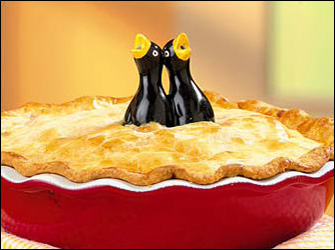
    four and twenty blackbirds …

    Pie.

    Apple pie, lemon pie, pumpkin pie, shoofly pie, humble pie, pot pie, mincemeat pie, sugar pie. Pies have been around since the ancient Egyptians. In older times, the crust was not eaten. Referred to as the “coffyn”, the crust was merely a means of holding the warm filling together. The meat pies in England often made use of a protruding leg as a handle. How very smart.

    Warm or cold, sweet or savory, political projectile or genital symbol, everybody loves pie.

    This Sunday, the Minneapolis chapter of the Slow Food organization is celebrating pie at an “It’s All About Pie” event at The Neighborhood House in St. Paul (179 Robie Street East).

    Four expert pie makers will share their life of pie:
    Anne Dimock, author of Humble Pie: Musing on What Lies Beneath the Crust.
    John Michael Lerma, author of Garden Party.
    Rose McGee, brilliant playwright, story teller, maker of incredible sweet potato pie and owner of Deep Roots Gourmet Desserts.
    Valorie Arrowsmith, a pie maker from Braham, MN where they know a thing or two about pie.

    Stories, samples, demonstrations, and life lessons can be experience from 1-4pm. Contact chefron73@hotmail.com or call 612-362-9210 for more info.

  • Mission

    waiter.bmp

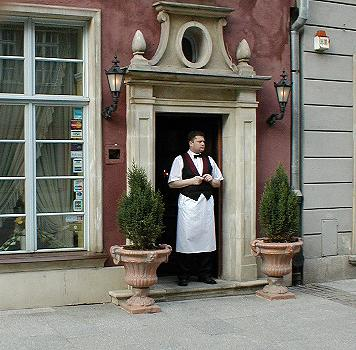
    Last night I ate at Mission American Kitchen with a bunch of friends/business people. We were an odd lot. One end of the table was heavy with work conversation and Blackberry buzzing, the other end, my end, was thick with laughter, The Macallan, and housemade potato chips.

    Our server handled it perfectly.

    He worked his way around the table pouring wine and answering questions, throwing in a saucy comment on one side and deftly describing a salad on the other. He was fun and figured us out pretty quickly. When one of our bunch got a phone call and left the table, they whisked his untouched plate away to keep warm in the kitchen. When he didn’t return for quite awhile, they said they’d get him a new one when he came back. That seems so obvious, but it happens so rarely.

    For all the crappy service that I have to cringe and put up with, it was such a relief to be taken care of with such aplomb.