Category: Food and Drink

  • Pre-Season

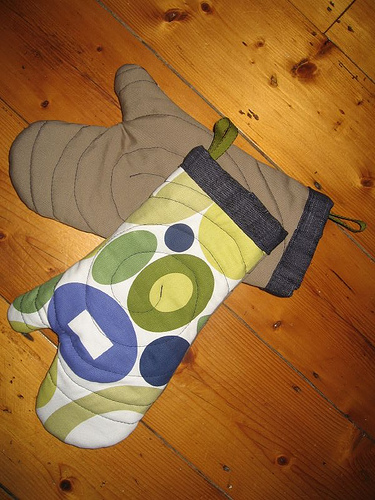
    mitts.jpg

    October is the kick-off for eating season. As the weather gets chillier and damper, our bodies crave that extra layer or warmth … and that means baking.

    One of my favorite October things is when all my windows are open and the house is freezing, except for the kitchen which is ablaze with baked goods.

    My poor family never seems to know what has hit them. During summer I am all about simple fruit desserts or ice cream, then WHAM October arrives and the once dusty cookie jar is jammed with treats.

    Firstly, I am obsessed with quick-breads: a dense and spiced pumpkin bread, an earthy banana bread, even Nigella’s chocolate loaf laced with something new … like sage or cayenne.

    Cakes can not be traditional (we have enough of those for all the summer birthdays in my house) so they have to be different or made with a new technique.

    Cookies of course reign supreme. It is the warm up to the Holiday Cookie onslaught. But October cookies can be darker and less joyful, they have permission to be edgy or sly without all the pretty pretty of holiday bites.

  • Malarkey at Rest

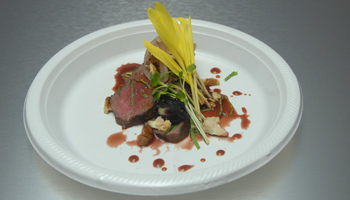
    dale's elk.jpg
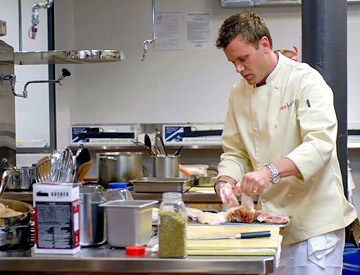
    Dale’s Huge Save

    Well, well, well. Brian was eliminated from the final four in tonight’s Top Chef. On one hand I am sad that he didn’t get to advance and showcase some of his other skills, but on the other hand I am glad to know that his restaurant gets to keep him for a little while longer.

    As for the others … let’s review the top three.

    Wow, guess who stepped up? Dale looked like he was headed for the bin when he dumped his tart, but then turned it around with some simple cauliflower and potatoes. Doesn’t Ripert look like he’d be an asshole if you crossed him? Well, he loved Dale’s dish and that’s saying a lot: Le Bernardin sets the bar high. I still think Dale is the dark horse in the final … we’ll see if he can pull it out.

    There was no way Hung wasn’t going to make it to the finals, right? He’s the front-runner, the master of technique, the favorite and the bad-guy at the same time. I hate the way the judges didn’t take him to task more for admitting he was cooking for them first and foremost, and the eaters second. I have no doubt that his dishes will be perfect in the final, but like Marcel before him, will they lack heart?

    Casey is all heart and simple flavors. If she can make her food sing, create a dish that can WOW the biggees on board next week, she might carry it.

    My least favorite part of tonight’s show was the softee-huggy-feely portion when the finalists monologued on why they should be allowed to stay. Dale nearly wept, God love him. Casey showed us her youthful exuberance, and talked a lot with her hands. Hung oddly mentioned how much soul he puts into his food (just moments after being told he’s not present in his food). And Brian just said how much he’d like to keep cooking for his friends. Throughout the whole thing they kept panning to Colicchio and his sappy awww-shucks expression, except for his stone-face when Brian was talking. Shocking surprise.

  • When the rich get bored … then hungry.

    pig.JPG
    pork your pork and eat it too….

    Yuck.

    And that’s all I really have to say about that.

  • Something for the Weekend

    A prophet is not without honor, save in her own country and among her own people. One of life’s perennial puzzles is why people in the United States do not seem to read the wonderful novels of Alison Lurie, the sharp-eyed rhapsode of Ithaca, New York.

    Every good paperback emporium in England stocks Alison Lurie; you will find her even among the horrid throng and press of Gatwick Aerodrome. But in Minnesota I find her slim volumes elusive. We are divided, as is so often the case, by a common language. Perhaps Americans find Alison Lurie too cruel to be entertaining.

    Or maybe it is simply a matter of size. English readers are content to fill up for the weekend with the concentrated spirit of a Penelope Lively or the Welsh wit of Alice Thomas Ellis, whereas the American has greater staying power and prefers to imbibe great Proustian draughts, like a Detroit dragon at a petrol pump. Whenever I hear the word blockbuster, it is of the engine blocks of such mighty motors that I think.

    Let me, en tout cas, commend to you Professor Lurie’s Imaginary Friends, a tale of a millenarian cult in upstate New York the denouement of which (it would be deeply unkind to reveal in advance) does little for the reputation of the social science known as religious studies (as distinct from theology, Queen of the Sciences, with its lofty truths and profound heffalump traps).

    Or my own particular favorite, Foreign Affairs, a novel about an American spinster professor who spends her summers reading in the British Library and has a positively Janeite capacity for observing the rest of the human race. She needs all her powers of penetration. The American characters are straightforward enough; they have one personality each. But the English all have at least two: The posh lady turns out to have a second life as a cleaning woman; even the dogs have multiple personalities. Nothing is what it seems to be. Honest folk who tell the truth are at a disadvantage.

    Art reflects life. There are, after all, precious few straight lines in nature. The Monarch butterfly takes a distinctly wobbly course through life but manages to migrate successfully over many thousands of miles. To be sure, the Romans, straightforward folk, laid out their cities as tidy-minded oblongs, making their outlines instantly recognizable from the air, even when (jam seges est ubi Troia fuit) they lie now under farmers’ fields. But the Greeks knew how to marry the apparent irregularity of nature to the elegance of mathematics. Bicycle down Bryant Avenue South between Franklin and Lake and enjoy the Ionic columns that support the porches of many of the older houses. The spiral volutes at the top of each column are an ancient Greek design derived originally from rams’ horns and deliberately patterned in the pleasing ratio of 1:1.618, what they call the “golden section.” There is more in nature than meets the eye.

    Which is why it is a substantial pleasure to recommend a straightforward wine that tells the truth. St. Francis “Old Vines” zinfandel from Sonoma County provides (for around twenty dollars a bottle) considerable delight but no surprises. The color is a good dark red, the nose strong and as fruity as black currants. The flavor carries through precisely the promise of the smell; an initial sweetness recalls the clarets of Pomerol. There is a good gravelly center to the taste and afterward there lingers a strong redolence of alcohol (15.8% by volume, according to the label). As the wine sits, the sweetness gives way to simple strength, but it still pleases; it does not bully. It would make pleasant company equally for roast beef or an omelet, even for Welsh Dragon Sausages (recently withdrawn from sale on the orders of the Common Market on the grounds that they contain no dragon meat. Yes, really).

    Of course, there are complexities here if you want to look for them. St. Francis was not the pantheistic bunny-hugger of common supposition. Nor is the Sonoma Valley a flat Jeffersonian chessboard. More interesting, the zinfandel old vines have a history. The variety came to California from New England in the slipstream of the Gold Rush, and, in the past few years, DNA analysis has shown that it is actually the Primitivo, a grape that grows prolifically on the coastal plain running up the stocking seam of the leg of Italy; its ultimate origin seems to be a Croatian variety called crljenak kastelanski. Yes, I have spelled it right. But why worry? Pour yourself a glass and settle into a soft chair with Alison Lurie. Together they should see you through a long weekend.

  • Consider the Egg


    Click here for Consider the Egg, Stephanie March’s FOOD blog.

  • Beyond the Bakery

    It has long been held that aroma is one of the most powerful triggers of memory. This fact seems especially salient in October, recalled every time I catch a whiff of cinnamon. Sharp blue skies, sweaters unearthed from storage, the return of thick soups and roasts and quick breads on cool, oven-friendly afternoons make this my favorite month. Cinnamon invokes the memory of a breezy apple orchard scattered with brilliant fallen leaves in the fading autumn light, a golden afternoon forever linked to the golden spice.

    Cinnamon has been prized since antiquity. Pliny the Elder recorded in the first century AD that cinnamon was worth fifteen times the value of silver by weight. The Eastern traders who first brought cinnamon to the West closely guarded its true origin. By shrouding it in mystery and myth, they ensured their monopoly on the spice, as well as its mystique. Herodotus told of the fiery phoenix that made her nest from cinnamon sticks. Harvesters tried to offer the bird large gifts which they hoped, when brought back to the nest, would cause the nest to collapse, thus permitting them to gather the golden sticks.

    In truth, cinnamon isn’t really a stick—it’s bark. The first cinnamon, or “true cinnamon,” came from the inner skin of an evergreen tree native to Sri Lanka (once known as Ceylon). Now referred to as Ceylon cinnamon, it is still highly prized throughout the world. More common in the U.S. is cassia cinnamon, native to Southeast Asia. Whereas Ceylon tends to be a complex, less sweet cinnamon with notes of citrus, cassia carries the smooth and spicy-sweet flavors Americans are used to. A tree cannot be harvested for cinnamon until it’s around thirty years old. From the topmost branches, harvesters carefully cut the inner bark, which naturally curls into quills, or sticks. The bark destined to be ground into powder is cut in larger pieces from the lower, older parts of the tree, where the flavor is stronger.

    For many, the aroma of cinnamon is inexorably tied to sweets and treats: from cinnamon rolls and sticky buns to an apple brown Betty. One of my earliest memories is of waking up to a heaping mound of monkey bread, the pull-apart castle of dough balls drenched in a cinnamon glaze. From apple pancakes to pumpkin cupcakes to chocolate-chip cookies, there’s almost nothing I’ll bake this month that won’t contain some measure of cinnamon.

    But as the rest of the world knows, the golden spice has a life outside the bakery case as a key ingredient in savory dishes. Middle Eastern and North African cooks use it to flavor tagines, even lamb-filled pastries, and pilafs. It is featured in Indian spice blends such as curry and garam masala. The woody, earthy flavor of the spice makes it a natural for long, slow-cooked meats, like short-ribs braised in cinnamon and Guinness. When I slip it into chili, people are surprised, and sometimes maybe even a bit proud when they identify—and enjoy—that additional depth.

    Pork Tenderloin with Cinnamon and Apples

    Serves 4

    2 lb. pork tenderloin
    4 Tbsp. soy sauce
    2 Tbsp. cinnamon
    2 Tbsp. brown sugar
    1/2 tsp. salt
    2 Tbsp. mirin rice wine
    1 tsp. powdered ginger
    2 tsp. Dijon mustard
    2 tsp. lemon juice

    4 Tbsp. butter
    4 peeled , chopped green apples
    1 tsp. cinnamon
    1/2 tsp. cayenne
    1 tsp. powdered ginger

    Preheat oven to 325 degrees. Place pork in baking dish. In a bowl, add soy sauce, cinnamon, sugar, salt, mirin, ginger, mustard, and lemon and mix well. Pour over pork and chill for at least one hour, turning once to recoat. Bake until pork’s inner temperature reaches 155 degrees. Take out and let rest for five minutes.

    For apples: Melt butter in medium sauté pan over medium-high heat, add apples and spices. Toss to coat and sauté until apples are just beginning to soften. Remove from heat and serve over the pork.
  • Apple Trippin'

    applefriends.jpg

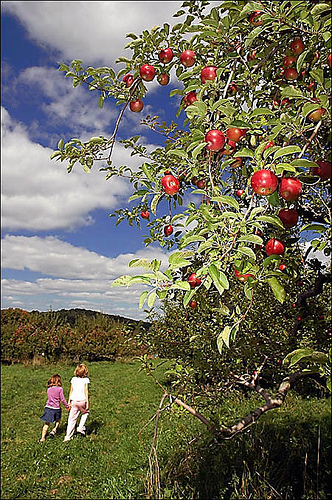
    This is the perfect weekend for an orchard run. Damn the bees, deal with the crowds and get out to support a local farm. Some of my favorites:

    Deardorff Orchards
    Out Waconia way, dontcha know. It’s a big farm with 5000 trees and a cool old barn built in 1900. I remember a cold weekend with a giant bonfire at this orchard a few years ago.

    Emma Krumbees
    It’s the Las Vegas of apple orchards. You’ll really have to fight crowds if you go on a nice weekend, but they have a ton of family crap to do. You’ll have to pay admission to get into the Great Scarecrow Festival, but it’s cool.

    Fall Harvest Orchard
    This real working farm is my family’s favorite. We feed the cows with big ears of corn, we play with baby pigs and pet chickens and goats. The wagon ride is one of the best, they actually talk to kids about flax and amaranth.

    Afton Apple
    Drive down to gorgeous Hastings for the corn maze and fall harvest raspberries before the frost!

    Sponsel’s Minnesota Harvest
    On a brisk day you can snack on your apples while taking in the Fall colors on the hiking trails. Better yet, sign up for the one-hour guided horseback ride through the bluff-top trails.

    Deer Lake Orchard
    Always hopping with live music/entertainment on weekends. Save this one for October 13th so you can check out the bluegrass Whistle Pigs.

    Pine Tree Apple Orchards
    I haven’t been to this one, but I have WBLaker friends who go every weekend. They swear it is WAY better than beating back the throngs at Aamodts.

    Minnetonka Orchards
    There were too many tchotchkes last year and not enough food, but just for the brats with cider onion relish alone….

  • Malarkey Rising

    malarkey.jpg

    And so we’re down to the Top Chef Final Four: Hung, Casey, Brian and Dale.

    Here’s my basic take on the whole banana … Dale is there by luck, he seems the most susceptibe to pressure and in the final countdown, he might crack. Hung is being set up as the front-runner, but he’s being cast as the Tin Man: the robot without a heart. Will his ego and desire for technical mastery overpower the necessary quest for flavor and appeal (remember the cereal wonderland)? Casey has an amazing palate, which they keep telling us. She keeps calm, seems directed, but does she have enough spark and zip to produce some WOW food? She could be the contender to beat. And then there’s Brian, who I think has the skill and the personality to slip in and split the difference.

    I spent the last three days hanging out with Brian and I have to say, I think he’s got all the tickets. Granted, I haven’t had the chance to run around Universal Studios with the other contenders, so my comparison may be weak, but whatever. Don’t let the stupid hat fool you, Brian is a smart cookie: he listens to what the judges say. He has great technique and a beautiful sense of flavor, but he also possesses the understanding that he can always improve. Plus he knows how to use his huge personality to motivate and inspire his team. A true top chef needs to be able to manage a whole kitchen staff, not just one dish.

    The Malarkey Machine is hitting town this week. While he’s here to preside over a relative’s wedding (yes, the ordained chef is also known as Prophet Brian Malarkey … ahhh, the internet) he’ll be making the rounds on Andrew Zimmern’s show and KARE 11. Of course he’ll be dining at our own Oceanaire with a cadre of local chef buddies (Steven Brown among them), but you might catch him prowling around the hot spots like Brasa or one of his old favorites like Azia.

    Next stop … Aspen.

  • Do Bees Even Have Knees?

    swarm.JPG

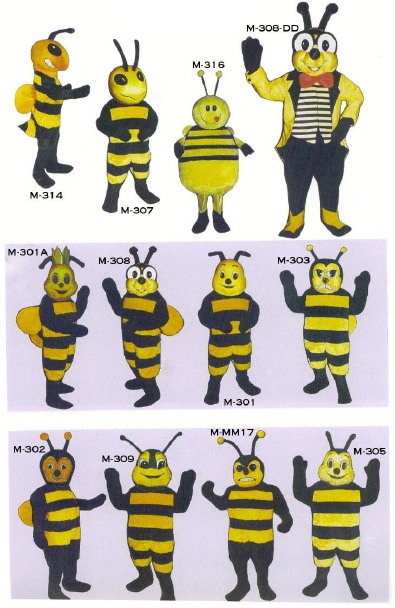
    Yeah, they bug me too … like when I’m sitting on a sticky hay bale trying to shove a cider-brined brat with apple-onion relish into my face at my favorite orchard, and there’s nothing but the buzzing and the swatting.

    But.

    Have you heard about the bee paradox? It’s a full-blown mystery worthy of some reading.

    Read this.
    And then this.
    And finally this.

    And if you go into Figlio and catch Chef Rex, well he’ll just about talk your ear off on the subject.

    But I think yellow-jackets are still fair game.

  • All I'm saying is …

    MosbaconBarPop.jpg

    YES
    YES
    YES

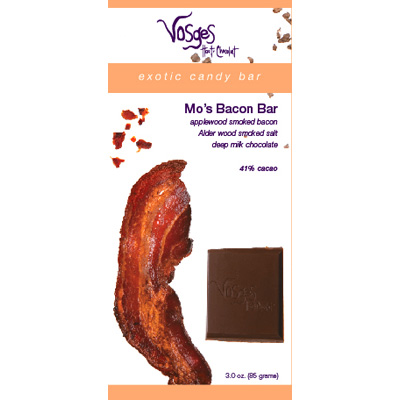
    But only one square every five minutes.