Category: Yo Ivanhoe

  • Limbo, Limbo, Limbo

    Question: How low can you go?

    Additional question: When was the last time a Major League baseball team played so many games that so closely resembled World Cup soccer matches?

    Another question: Who wants to weigh in on this team’s chances of finishing above .500?

    One final question: What the hell?

    And, further food for thought: Has anyone else noticed how oddly taboo David Ortiz’s name has become in any analysis of the strengths and failures of this organization? I mean, I know people have whined plenty about missing him, but that goes without saying. What really needs to be explored is how the hell this team let one of the most dangerous hitters in baseball –exactly the kind of hitter the Twins so desperately need– simply walk away just when he was entering the prime years of his career (and money, of course, had absolutely nothing to do with it)? How could they not have recognized his potential?

    Just who the hell was the Twins’ hitting coach when David Ortiz was here in Minnesota? Help me out here, because I’m having a hard time remembering the guy’s name.

  • Scenes From A Marriage

    donkey-shadow.jpg

    I apologize for the mess, Reverend, but I wasn’t expecting company. Things have gone to hell around here since Delmar moved into that old pop-up camper out back –says he got tired of captivity, as if that filthy camper he bought on eBay is anything but an even smaller cage.

    That’s the thing about Delmar, of course; he never gets tired of captivity. The man can’t get enough of it. If you threw him out in the middle of the wilderness he’d curl up in a ball and starve to death before he even needed a shave.

    I remember one time when we were still dating we went driving in the country just outside of town –I’ll never forget this, Reverend, not for as long as I live. There wasn’t nothing out there but gravel roads and fields and silos, and Delmar turns and says to me, “I get the creeps if I can see too far.”

    Seeing too far was never gonna be a problem for poor Delmar, of course.

    I always did know there was something just slightly off about that man, but I guess I took some small comfort in that ‘just slightly’ part. By now, though, it’s pretty clear there’s not a damn thing just slightly about it.

    Everything’s gotta be whole hog with Delmar. He couldn’t just live with the crazy notion that he’s a woman trapped in a man’s body; no, sir, he’s bound and determined he’s going to go right ahead and become a woman.

    Yet even that’s apparently not enough to make Delmar happy; you’d think it would be, but no, of course it’s not. Now Delmar is insisting he’s got to be a woman with big tits.

    Good heavens
    . In a town like this? I can only imagine what people must be saying, and I don’t think I even need to tell you, Reverend, that the man sitting out there in that camper in one of my old house dresses is not the man I thought I was marrying.

    tavern palms.jpg

  • The Detonation Of A Mediocre Man

    sun-eyes-field.jpg

    I’ll tell you exactly what I saw: they had the mediocre man trussed in a wheelbarrow and they rolled him out into the middle of the street and blew him up. He was round, agitated, and full of guts, and he babbled nervously right up until the moment when they set off the detonator.

    I suppose to be fair I should point out that there were feeble bursts of indignation in the midst of the nervous babbling. I’m sure the mediocre man had some points he wanted to make, but by that time it was too late. Nobody had any interest in hearing what he had to say; we were all just there to see the explosion.

    One of the –I’m not sure, really, what they called themselves. Rebels? Insurgents? I know there was some kind of acronym involved. At any rate, one of the leaders of this group read a prepared statement, but it was difficult to understand him, speaking as he was through a ski mask and without a microphone. I’m pretty sure I heard him say something about the ideals on which this great nation was founded, and I’ve no doubt he railed a bit about the corruption and abuse of power and the only justice unchecked power understands.

    That, at any rate, was the sort of thing these characters were always carrying on about.

    There was a decent crowd on hand (and it was growing by the minute), and the few government soldiers who were present merely observed from a safe distance. The guy who was doing the talking finally got around to pronouncing a formal sentence on the mediocre man. I didn’t catch all the wording, because the crowd was getting pretty riled up at this point –some people were throwing things– and there was a television news helicopter hovering directly overhead. What I did make out, though, seemed to follow standard bureaucratic boilerplate –“We hereby declare…,” that sort of thing. The usual nonsense, I suppose, but it struck me as kind of odd, given that these characters fancied themselves rebels.

    I also thought it was odd that in pronouncing the sentence the guy actually spoke the mediocre man’s full name –Karl Christian Rove. The speaker, I think, clearly did a little improvisation at this juncture, declaring that the prisoner’s middle name alone represented a grave enough blasphemy as to provide all the necessary justification for the detonation.

    It was quite an explosion, I can tell you that. I can also tell you that the mediocre man made a spectacular mess.

  • Say What?

    baseball toes 2.jpg

    Not to want to say, not to know what you want to say, and never to stop saying, or hardly ever, that is the thing to keep in mind…

    –Samuel Beckett

    Since I have almost nothing else to tell you right now, I’ll tell you who I both feel sorry for and envy at the moment: The beat writers for the Twins. Can you even imagine the lives of those poor wretches? That pack of glum bastards has to sit there in the press box every night and try to find fresh words to describe the fresh hell they are forced to witness.

    For that, of course, I feel sorry for them. These are the same people, after all, who were so full of hope and blithely optimistic prognostications six months ago (as we all were, as were we all), and they have had to gut this thing out with a gun to their heads every night. Lord knows, that can’t be easy. And whatever they’re being paid, it almost certainly isn’t enough.

    I’ve been in their uncomfortable seats far too many times at this point in seasons just like this one –in seasons far worse than this one, in fact, at least strictly in terms of won-loss records. There have been years where I sat there in the Dome in September when there was so little cause for optimism in the present or future prospects of the team that it wasn’t even really possible to call the Twins a disappointment.

    Let us not forget those almost entirely hopeless years.

    That there was so much hope this season is precisely what makes what has transpired such a keen disappointment, and I suppose if you have to pick your poison you’d take this one, however reluctantly.

    That doesn’t make the routine kicks to your heart smart any less, certainly, but at least we had expectations, and can still find reason to harbor some expectation and hope for the future; which is more, I know, than fans can say in many Major League cities.

    As I said, though, as much pity as I might feel for the beleaguered beat writers, I also envy them. At its worst, it’s still a decent job, a dream gig for all sorts of people who have absolutely no idea what a grind it can be day in and day out. I don’t think people can begin to understand the long hours these characters put in, or the relentless travel schedule and impossible demands –physical, psychological, and logistical– of the job. Look up there in the press box some night when a big lead has evaporated and a game is headed to extra innings with deadlines looming. What you’ll see is a collective nervous breakdown in progress, as the beat writers –with early deadlines looming– curse, wheedle, and scrap nearly completed game stories to start over wholly from scratch.

    I also envy these people the enforced discipline of the job. Every day, come what may, these writers have to find something to say, something to write. They have to try to make sense of what has happened and what is happening, and put it in some larger context of expectations, disappointments, and pennant races. Some days, of course, they just need to find the quickest possible way to get from A to Z (or, if they’re really in a hurry, from A to B), to describe the game they have just watched, however brutal it might have been, in the clearest, cleanest possible manner. It’s certainly not easy, but it’s also nice to have vigilant witnesses for those times when even the most diehard fan’s natural inclination is to simply punch out.

    I depend on the beat writers more than ever at times like this, those stretches when I find myself drifting away from the television or radio in the middle of the game, or tuning in late. I need them to keep me connected to the game and the dwindling season, however tenuously.

    As Shakespeare, I think it was, once wrote, “Some must watch, while others sleep.”

    I’m grateful for that, grateful for the watchers, still thankful that I know I’m going to get up every morning to game stories and box scores in the newspaper, even as I increasingly find myself thinking, “Better them than me.”

  • An Appalling Group Hug, A Poem, And Two Love Letters To My Dogs


    fair-group hug 2.jpg


    I have seen the sun break through


    to illuminate a small field

    for a while, and gone my way

    and forgotten it. But that was the pearl

    of great price, the one field that had

    treasure in it. I realize now

    that I must give all that I have

    to possess it. Life is not hurrying

    on to a receeding future, nor hankering after

    an imagined past. It is the turning

    aside like Moses to the miracle

    of the lit bush, to a brightness

    that seemed as transitory as your youth

    once, but is the eternity that awaits you.


    –R.S. Thomas, "The Bright Field"


    willis left ear.jpgwillis right ear.jpg willis left eye.jpgwillis right eye.jpg

    Nose Blast

    Nose blast, both

    holes, first

    thing in the morning.

    Acid old fellow

    on my ground.

    I know the one:

    slow, moves through

    here every morning,

    signing my trees.


    Bright day, cold

    feet. Getting colder.

    The grouchy one there

    with my line, the one whose

    smell I love best,

    the one with such soft magic

    in his hands, good cupboard

    things, a voice that tells me

    the only truth I need

    or know, that one, mine,

    he has me in his grip,

    he will never let me go.


    willis nose.jpg


    For Chula

    Evolutionary distance meant

    nothing when I looked into

    your eyes and saw no distance,

    no distance at all.

    I found all sorts of things

    there, but absolutely nothing

    in the way of distance.

    There is something so repellently

    human in that concept, something that

    stinks of privileged conceit.

    Is it so strange that a dog

    could teach a man almost wrecked by

    disgust for humankind to love again?

    No, not strange, but marvelous all the same.

    Domestic animals?

    Just what the fuck are we?

  • Come Sunday

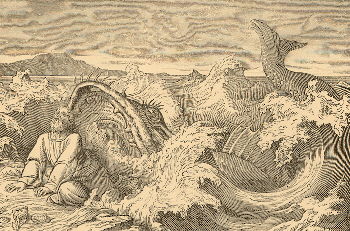
    jonah.jpg

    One Sunday near the end of his days the old preacher stood up before his dwindled congregation, and as had been the case so often in recent years he circled and paced in his mind for the familiar words that were still permanently lodged there from long repetition and which were now accessible to him as something almost like muscle memory.

    He had been tracking back through his old words for many years now, repeating himself, and repeating the words of the legion of others who had come before him and had found themselves standing in similiar places on Sunday mornings stretching back for centuries.

    The few parishioners who still filed into the tiny sanctuary each Sunday were drawn there by numb custom and ancient habit as surely as the preacher was, and had heard his stories repeated so many times by this point that they knew them by heart.

    The preacher lived alone in a deteriorating house that sat at the edge of the overgrown cemetery out back of the church, and he had mostly kept to himself since the death of his wife more than a decade earlier. The marriage had been childless, and the preacher’s wife had been killed while crawling across the state highway at the end of the long driveway. She had been headed, the preacher felt certain, toward the river, where she had intended to drown herself.

    There had also been a succession of dogs that were rumored to be buried among the graves in the old cemetery. The last dog had been blind and, like the preacher’s wife, had wandered onto the highway and been struck by a passing car.

    After the old preacher had rambled for a time that Sunday morning near the end of his days he had paused for breath and searched the high ceiling of the church.

    “I do not believe in Judgment,” he told his congregation. “That is finally something I’m afraid I simply cannot believe in. After a long life I have discovered that I can find no place for such a concept in my image of the Creator in my mind’s eye, which is where, truly, the Creator resides in each of us.

    “There is no place for Judgment, no room for it, in the solace He has provided me these many years, so that I am forced to conclude that Judgment is wholly the creation of man, and as such is one of the most pernicious behavioral management tools ever dreamt up by human cunning.

    “And Judgment, I think you will agree, goes hand in hand with shame, another concept in which I am now unable to believe. I will go to my grave with no shame, and no fear of judgment, despite the fact that I have committed sins too numerous to mention, sins which, I fully understand, God is under absolutely no obligation to forgive.

    “All of our lives we strive to fill our lies with enough light that they become truth, or at least come to resemble truth to ourselves and to each other. In dark moments –and there have been many dark moments of late– I realize that I have failed miserably at this project, and, in doing so, have failed you as well, for which I beg your forgiveness.

    “I would ask you to consider these things as you return to your homes today: Mercy. Grace. Compassion. Forgiveness. Redemption. Peace. Solitude. Generosity of Spirit. Justice –real justice, a justice of equality and basic human decency rather than a justice of revenge and retribution. Tolerance. Faith. Miracles. Faith in miracles. Wonder. Vulnerability and despair. The human community. Light piercing the darkness. The transformative powers of longing and desire.

    “All of these things –these ideas, ideals, and values– are in the Bible in great plenty, and in all of the other Holy Books of the world that I have ever read. So I would ask you: Why is it that so many purportedly religious people, so many of those we now associate as standard bearers for faith and mouthpieces for God, speak so little of these things, which are so consistently –even relentlessly– present in the primary religious texts?

    “Why do they choose ‘an eye for an eye’ over ‘do unto others’? Intolerance over tolerance? Violence, retribution, and bloody revenge over peace and mercy and justice? One heavily edited and selective version of the same essential, ageless story over another? The conversion of the other over self-transformation? Reaction over reflection? Hatred over love? Why do they traffic in damnation over salvation, and offer curses rather than blessings?

    “Is it because all these old words and values are so basic as to seem somehow soft in our hard world? That they are such pure and simple concepts that they can no longer be grasped in our age of so much complexity? Or is it, perhaps, that they are so utterly fantastic that they can no longer be recognized –if they are recognized at all– as anything but the tidy dreams of fiction?

    “I ask you these questions today because they have been very much on my mind in recent days, and I would ask that you give them what thought you can spare in your busy lives.”

    And with that the old preacher cleared his throat, stepped out from behind the altar, and shuffled off through the side door at the front of the church.

    The words of the preacher left the remaining members of his congregation feeling disturbed and, in many cases, profoundly sad. For many of them, the preacher’s performance that Sunday was the last, conclusive proof that the poor man had finally lost his mind.

    flood.jpg

  • The Program You Are Watching Has Been Prerecorded

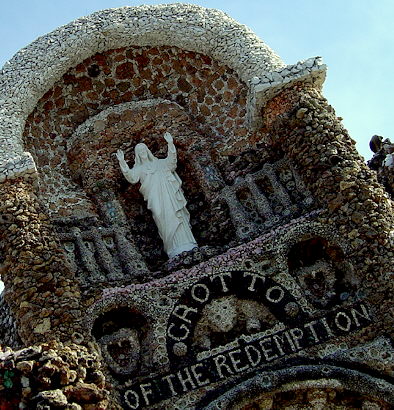
    grotto redemption.jpg

    I don’t read philosophy for answers to the meaning of life or any of the other ridiculous questions that have caused lunatics to bang their heads against the wall for as long as humans have been able to babble. What attracts me again and again to books of philosophy is the marginalia, the odd biographical details and digressions and just plain absurd minutiae that these old fools cough up on such a regular basis. The best biographies –hands down– are of the philosophers. The unhappy little hunchbacks who waddled around the streets of their towns and endured the taunts of rock-throwing children (Kierkegaard). The closet gnomes, martyrs, and maniacs. Empedocles wrote, “Wretches! Utter wretches! Keep your hands from beans!” Three of Ludwig Wittgenstein’s eight siblings committed suicide. Kant wrote a treatise on rainbows. And the great master of gloom Schopenhauer took issue with Spinoza’s Ethics over what he perceived to be their disregard for the virtue and dignity of dogs.

    I was reading Schopenhauer’s History of Philosophy last night when I discovered the old crank railing against Spinoza for “his as unworthy as false deliverances about animals.” From assertions in the Ethics Schopenhauer concludes, “Dogs [Spinoza] seems not to have known at all. To the monstrous proposition with which the 26th appendix [of the Ethics] opens…the best answer is given by a Spanish literateur of our day (Larra, pseudonym Figaro), ‘He who has never kept a dog does not know what it is to love and be loved.’”

    I went and dug around in my basement for a copy of Spinoza’s Ethics to locate the passage that so offended Schopenhauer. Here it is: “Besides men, we know of no particular thing in nature in whose mind we may rejoice, and whom we can associate with ourselves in friendship or any sort of fellowship; therefore, whatsoever there be in nature besides man, a regard for our advantage does not call on us to preserve, but to preserve or destroy according to its various capabilities, and to adapt to our use as best we can.”

    I’m officially on the side of Schopenhauer on this important argument, by the way, and was pleased to later run across this additional tribute to dogs (in his own Ethics): “Hence comes the four-legged friendships of so many of the better kind of men, for on what indeed should one refresh oneself from the endless deceit, falseness, and cunning of men if it were not for the dogs into whose faithful countenance one may look without distrust?”

    grotto redemption 6.jpg

    All cows go to heaven

    Harmful things of the youth

    Odd books

    Galley of jazz and blues figurines

    Thump Queen: Meryl Truett

    New Hampshire Political Primary Trading Cards

    J Bradley Johnson

    Children’s Books in 1920s Japan

    The Karl Fund

    Belly Dancers and Harem Girls

    grotto redemption 9.jpg

  • There Must Be Something You Can Do

    angel sword.jpg

    This country has long been appalling and astonishing in equal measure, but these days the opportunities to be appalled are mounting by the day, and the sort of astonishment America most commonly traffics in is more and more often the stuff of incredulity and shock rather than genuine and appreciative wonder.

    Perhaps this has something to do with the fact that we are governed by a legion of nitwits and bland, blindly ambitious louts, an almost incomprehensibly undistinguished group of career politicians presided over by an imbecile who is rapidly approaching vulnerable adult status. An imbecile who favors gargantuan belt buckles of the sort most often associated with characters who make a living being tossed from bulls. A stwaggering (half staggering, half swaggering) imbecile who gives new meaning to the term “invalid,” and is possessed of a tragic and cocksure set of delusions of adequacy.

    How else to explain how it is that we have found ourselves living in a country where the horizon always seems to blurred with the bruise of some recent horror or pending tragedy?

    We could blame ourselves, of course. I’m all for that. And we could certainly blame each other, whatever and whomever we might include under that leaky umbrella of “each other.” The above-mentioned imbecile, after all, has twice had his position of power conferred upon him by people I could not now with a straight face or a clean conscience refer to as “my fellow Americans.”

    Every day –and many times throughout every day– I am blindsided by despair at the thought that I am out of token opportunities to officially reject the imbecile who is the President of the United States, and also by the recognition that the ultimate refutation of everything he stands for will now be the responsibility of history, which has a pretty poor track record of responsibility in such matters.

    My own refutation, of course, is strictly unofficial, and more irrational (and complete) by the day.

    The other thing we could all do at the moment, in response to the horrors and embarrassments of this country and this administration, would be to simply look away. Many people, of course, will and do choose this option, and though it’s tempting, I don’t recommend it.

    Instead I’d recommend you take a good long look at what’s happening and where we are. And hold out hope: hold onto it, and also extend it (a seeming contradiction whose real possibility is a testament to the versatility of hope), offer as much of it as you can spare to someone who needs it more than you do. There are always plenty –too many– of those people out there.

    Make of your refutation an action and an embrace, however small and ultimately unsatisfying.

    Here are some ways that you can hold out your hope, all of them good ways:

    Mercy Corps

    Acorn

    Feed the Children

    HurricaneHousing.Org

    The Humane Society’s Disaster Relief Fund

    Glenn Reynolds has an excellent round-up of flood/hurricane relief efforts at Instapundit

    And finally, as usual, there’s a great collection of links at Peter Scholtes’ always virtuous (and exhaustive) Complicated Fun. Peter’s on my short list of local candidates for the Nobel Peace Prize.

  • The Sunshine Bores The Daylights Out Of Me

    fair-motel color tv.jpg

    I’d ask you to wipe that smirk off your face. This is a serious matter.

    This world is plunging further into darkness.

    Okay, so maybe I’m being overly dramatic, but I can barely hold my head up. It’s damned hard to hold your head up when you’re living in a crawl space.

    Ordinarily in a situation like this I would warn you: Here comes another stream of incoherence, but at the moment there’s something you can perhaps explain to me.

    The other night, when I was out walking with the visiting black angel, I kept seeing these neighborhood watch signs that read, “If I Don’t Call the Police, My Neighbor Will.”

    What the hell is that supposed to mean? Does that not sound like a complete cop-out to you? Doesn’t that sound like passing the fucking buck? It’s so American, yet I’ve no doubt it’s supposed to be seen as some kind of deterrent to criminals. Why would it be, though?

    Because, look, that sign is logically fucked. It’s a shrug of indifference, or at least a smug acknowledgment that, hey, don’t sweat it; somebody else will take care of it.

    Let’s suppose, for instance, that each of us assumes the position of the ‘I’ on that sign, that each of us takes that attitude. Do you see what I’m trying to say? If up and down the block each neighbor automatically assumes that his neighbor will call the police, then of course nobody calls the police.

    Maybe, come to think of it, that would be for the best after all. No sense in getting messed up in something that’s none of our business in the first place.

    In the end, what it comes down to is appetite–

    the enforced idleness, the solitude:

    nothing, hectares of nothing, litanies of nothing on microfiche.

    August Kleinzahler, from “Epistle XIV”

    fair-short and socks 2.jpg

  • You Call This A Beach?

    sidewalk entryway.jpg

    The future is stupid.

    Jenny Holzer

    I have always been clueless, but I am discovering that my cluelessness is constantly extending itself into entirely new continents of ignorance, and even moving resolutely like a glacier over existing continents in my skull that were once green-swept and shot through with sunlight.

    I guess I could choose to see this development as a sort of personal growth, as long as I am willing to extend the concept of growth to include such things as mold and bacteria.

    fair-dumbo 2.jpg

    Stories never really end. They can go on and on and on. It’s just that sometimes, at a certain point, you just stop telling them.

    –Mary Norton, The Borrowers

    fair-slide small.jpg