Category: Yo Ivanhoe

  • A Prayer For Michael Vick

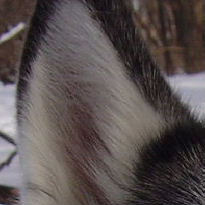
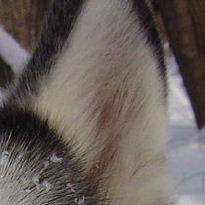
    willis left ear.jpgwillis right ear.jpg
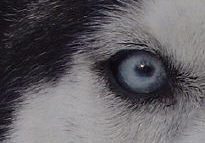
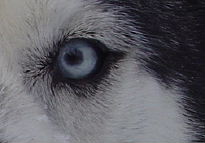
    willis left eye.jpgwillis right eye.jpg

    May you be forgiven.

    May you be given a second chance:

    May you come back as a dog.

    May you be lost.

    May you be found.

    May you be loved.

    May the whole world smell wonderful.

    And may you know the touch

    of gentle hands and the soft

    voice of someone who sees

    and knows and needs you,

    to the end of your days.

    willis nose.jpg

    Hence comes the four-legged friendships of so many of the better kind of men, for on what indeed should one refresh oneself from the endless deceit, falseness, and cunning of men if it were not for the dogs into whose faithful countenance one may look without distrust?

    Schopenhauer, Ethics


    I have seen the sun break through

    to illuminate a small field

    for a while, and gone my way

    and forgotten it. But that was the pearl

    of great price, the one field that had

    treasure in it. I realize now

    that I must give all that I have

    to possess it. Life is not hurrying


    on to a receeding future, nor hankering after

    an imagined past. It is the turning

    aside like Moses to the miracle


    of the lit bush, to a brightness

    that seemed as transitory as your youth

    once, but is the eternity that awaits you.


    R.S. Thomas, "The Bright Field"

  • Sweet Dreams, Always, Dog Of My Soul


    You were born thirteen years and seven months ago, in the middle of a January night so cold the defroster in my old pickup truck wouldn’t work on the drive to the emergency clinic. You were the last pup born, the runt of the litter, and I watched in exhausted wonder as you were delivered and held aloft like one more beautiful wish that had been granted, a dream made flesh, at a time when so many beautiful wishes were being granted and dreams being made flesh that I thought my life was charmed beyond measure.

    It was. And in a way that no one who has not shared their life with a dog can ever understand you were inextricably tangled up with every one of my dreams and blessings. You spent your first days in a box in my little attic apartment on Pleasant Avenue. You were the first of the litter to figure out how to scale the sides of the box and make your way to my bed, and that was when I knew you were mine.

    Throughout our life together, you went everywhere I went. You traveled, swam, ran, hiked, and rambled with me all over the country and up into Canada. You were always nothing but at home, whether in the backseat of a car or at a five-star hotel.

    You spent a lot of time in the backseat of cars.

    When you weren’t in the backseat of a car, you were right by my side, or moving with your calm curiosity somewhere in front of me, connected either by the tether of your leash or simply by your unflagging connection to me, and to us.

    You were our guide dog. You took us places we otherwise would never have gone, compelled us to pull aside in out-of-the-way towns to investigate and allow you to nose around. You forced us to seek lodging in places interesting enough to welcome you as a guest. You were our ambassador, our introduction to all manner of oddballs and genuinely wonderful people.

    At home you would settle into your green chair while I sat on the floor beneath you, rummaging through books and listening to music and trying to tell stories. We kept that vigil together, night after night, too often into the early hours of the morning, and eventually you, too, learned to live on Hong Kong time. You learned to sit patiently through some of the thorniest, most bracing music ever committed to tape, and in time I honestly believe you grew to enjoy Roscoe Mitchell and Albert Ayler and Sun Ra and Cecil Taylor. They, and countless others like them, were the soundtrack to our long nights together in that room crowded with records and books.

    You had a lot of names: Willis. The Cheetah. Cheetah Boy. Buddy Klunk. Buddha. The Boy. Good Boy.


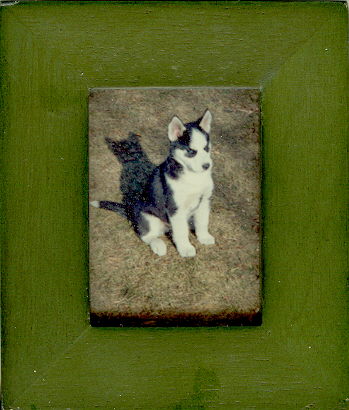
    cheetah baby.jpg


    You had seven original Sweet Dreamers who slept by your side: Hairy Man, Snowman, Bumble, Pork Chop, Monkey, Alf, and Creature. Dozens more piled up next to your bed over the years, and each one was assigned a name. You remembered each of those names and could keep them straight, which was one of your many peculiar gifts.

    You had many peculiar gifts. You had many gifts, period.

    You could run like no dog I’d ever seen, and had an extra gear which could be exhausting. But you knew when gentle was called for, and would instinctively attach yourself to the most vulnerable person in a room.

    Time after time you demonstrated conclusively that you were a dog who was most at home in the country, where you could ramble freely, but you never raised a fuss. You never strayed. You couldn’t stand a mess, and couldn’t bring yourself to destroy even things that were made for dogs to destroy. Or eat. You would carry a rawhide pretzel around, but you would never get around to untangling it.

    You were patient. You were calm. You laughed and sang. You would sprawl with your head in my lap for hours at a time, and the smell behind your ears became one of my favorite smells in the world. You gave me birthday cards and Christmas presents, and every day during the month of December you would go and sit beneath the advent calendar in the kitchen to see what wonders waited behind that day’s window.

    Honest to God, you did. I wouldn’t have believed it if I didn’t see it every year.

    We had a secret place –Dog World: like all the best places not quite imaginary, not quite real– that we explored together.

    I routinely wrote things on my hand that I wanted to tell you, places that I wanted to take you. One such note is written there now.

    I often told you that I was together as long as you breathed.

    I often told you that evolution could mean nothing to me when I looked into your blue eyes.

    There were times –many, many, many times– when you were my only lamp in the darkness. At the bottom of every day we prayed together to the God of the Seven Sweet Dreamers, and every time at the conclusion of our prayer you gave me two kisses. Always two kisses. Even tonight, as I held you in my arms in the wet grass and you prepared, with your characteristic patience and dignity, to die.

    Even tonight, when I had finished with my prayer to the God of the Seven Sweet Dreamers, you raised your head one last time and gave me my two kisses.

    And then you left another hole in my world.

    I know how weak and hungry you were at the end, so I put food and water out for you when I got home tonight, just in case.

    And now I’m not sure I know how to go about the world without a dog at the end of my arm.

    I wish you peace, my boy. I wish you nothing but sweet dreams. I desperately want to believe that you will live forever.

    I don’t much care if there’s an afterlife for humans, but this morning, just as every other morning, I will throw my head back, show my teeth to the God of All Sweet Dreamers, and pray that there’s a heaven for dogs, and that you are running there now, and remembering us.


    DF9.jpg


  • A Confounding, Improbable Team Once Again Achieves The Confounding And The Improbable

    zero king.jpg

    That logo’s just fine if you’re talking about Johan Santana. You’ll need to insert your own mental s, however, if you’re referring to the Twins’ offense.

    Down at the Dome this weekend they celebrated the 20th anniversary of the 1987 World Series championship season. Somehow, despite scoring three runs over three games, the Twins managed to win two-of-three from the Rangers. A weird sort of tribute, really, but by now I guess we just have to accept that this team is what it is: the reincarnation of a 1968 also-ran.

    It’s been an astonishing season, and Santana’s brilliant –that word, of course, sounds trite in this instance, but it’s late and my brain is paste– performance managed to be both thrilling as well as perhaps the saddest example yet of the sort of pressure Minnesota’s starting pitchers have been laboring under the last couple months. The guy –like the guys who have been following him in the rotation all year– has absolutely no margin for error. The fact that he shattered the team’s strikeout record and allowed just two hits while pitching with a one-run lead the whole way just shows what a wonder Santana is, and how devastating it would be for the Twins to lose him.

    The team the Twins were celebrating this weekend provided a marked –hell, an extreme– contrast to this current bunch. The ’87 Twins hit 196 home runs; three guys (Hrbek, Gaetti, and Brunansky) hit over 30, and Puckett finished with 28. They scored 786 runs, despite which they were outscored by opponents 806-786. The World Champions had just two pitchers (Viola and Blyeven) with double-digit wins, and of the three guys who tied for third with eight victories, two (Juan Berenguer and Jeff Reardon) were relievers. The staff gave up more hits than innings pitched and walked 564 batters. The team ERA was 4.63.

    This year’s club has hit 92 homers, and scored just 547 runs. They’d have to average more than six runs a game and average almost three homers over their final 38 contests to equal the totals of the ’87 club.

    On the surface, and even when you really look at the numbers, the pitching on the ’07 team is vastly superior to the ’87 squad’s. It isn’t going to show up in the won-loss columns, however. At present only Santana and Silva are on track for double-digit victories, even though the team’s overall numbers are more than solid enough to have won, at minimum, a dozen more games. They’ve got almost a 3-1 strikeout-to-walk ratio, and at this point have walked 241 fewer batters than their counterparts on the championship team. Their earned run average is more than half a run better.

    The bottom line is that this team will likely –or, actually, if they’re lucky– finish with a won-loss record very similar to that of the ’87 team: 85-77.

    And in 2007 that record –assuming the Twins can approach it– isn’t going to be enough to even get the team into the post-season.

    Here’s a sort of unrelated (but wholly relevant) question: has Joe Mauer, even dating back to little league, ever had a stretch where he’s looked this clueless at the plate? Maybe whatever’s wrong with the Twins’ offense really is contagious.

  • Dog Days

    It’s been a mighty strange season, and I’m frankly exhausted. It obviously doesn’t take a whole lot of psychic energy to follow a genuinely good team. That’s probably not true, though, at least strictly speaking; to really follow any baseball team, day in and day out, takes a tremendous amount of psychic energy. It’s a huge investment of time, attention, and emotion.

    I guess what I’m trying to say, however, is that a good team more consistently rewards you for that time and attention, and the emotional reserves get replenished on a regular basis, allowing you to hang tough through the inevitable disappointments and occasional small heartbreaks.

    I’ve also always felt that a truly lousy team can be oddly satisfying in its own way. Expectations are diminished, futility is almost masochistically entertaining when it’s sustained, and you can sort of sit back, absorb the regular blows, and focus on the peripheral pleasures of baseball: the atmosphere, the development of young players, the incredible athleticism of even marginal stars, and the inning-by-inning, pitch-by-pitch dramas and decisions that make up every game. I’ve always contended that the teams with the most knowledgeable and loyal fans are the teams that have endured stretches of true futility.

    A team like this year’s version of the Twins, though? A decent team with a core group of excellent players, a promising batch of young pitchers, and absolutely no depth? A team that is distinguished by nothing so much as it’s maddeningly consistent inconsistency? This is the sort of team that kills you.

    I mean, you can bitch until you’re blue in the face about a shitty team and the sorts of complete organizational overhaul that would be necessary to make it competitive again, but real hope is so unrealistic and the malaise tends to be so general in such cases that it’s pointless to even have discussions of the sort we’ve been having all spring and summer this year. Back in the mid-90s nobody would have wasted any breath pining for the acquisition of somebody like Ty Wigginton, or crossing their fingers that the return of Rondell White could make any sort of a difference.

    I suppose you could argue that those discussions and hopes were just as pointless this year, but that’s part of the frustration of a team like the 2007 Twins; all we can do is strap ourselves into the slow-motion roller coaster and bitch and suffer as we lurch up and down and yet somehow still manage to go nowhere. It’s a rare and queasy experience that can make you feel like you’re riding a roller coaster and treading water at the same time.

    Since the All Star break the Twins have been one solid, sustained stretch away from surging right back into contention in the Central, but they haven’t had one solid, consistent surge in them. And as the Tigers and Indians have done everything in their power to make the division a three-team race, the Twins have been utterly unable to hold up their end of the deal.

    And that’s been nothing but frustrating.

  • The Knife Of God

    butcherknife-velvet.jpg

    Yes, boy, I could sure go for some beef stew and a chicken bone. That’s it.

    –Last words of Christopher Newton, whose execution by lethal injection in Lucasville, Ohio took nearly two hours (May 24, 2007)

    I summon you now

    Not to think of

    The ceaseless battle

    With pain and ill health,

    The frailty and the anguish.

    No, today I remember

    The creator,

    The Lion-hearted.

    –May Sarton, from “For My Mother”

    You’ve been gone for five years this morning, but if you were still here I know you’d be driving through the night, headed in my direction even as I type these words, and at some point in the next couple hours I’d expect to hear your knock at my door.

    Five years ago this morning I walked out into a world without you in it for the first time, and I know how much it would pain you to know that that world has been wobbling under me ever since.

    I’m not blaming you. You gave me plenty more than I needed. I watched you long enough that I should for damn sure know how to go through life with a smile on my face and enough grace, good humor, and compassion to get me through any day. And anybody who spent enough time with you and logged long hours in the hospitals where you left so many years of your life and got so many of them back should have gained enough perspective to spend every one of their remaining days counting their blessings.

    It’s been really hard, though. I’m tired, and I’ve failed.

    Your last words to me were, “I love you. I’ll see you soon,” and those words have haunted me. I wish you could stand here before me and take at least some of them back.

    I wish there had been more, of course –of you and from you and for you. And for me. And for all of us.

    Tough shit, though, which I fully realize is not a sentiment you’d ever endorse.

    I remember reading something long ago by Thomas Carlyle, an essay, I think, about heroes. A hero, Carlyle said, had to be first and foremost sincere. Not merely honest or earnest, but fiercely sincere. He had to have true conviction in what he said and did and believed. And a hero had to have heart; he had to be stout-hearted, yes, and brave, but also and especially tender-hearted, pure-hearted, compassionate, and capable of real love.

    I might be making this all up, or confusing my writers, or even just imagining things, although the sad truth is that I’m not having much luck making things up or imagining things anymore.

    I do know, though, that using that definition, or those definitions, and virtually any other definition I can come up with, you were a hero.

    My hero.

    Ours.

    I couldn’t afford to lose you then, and I can’t afford to lose you now, even as I seem to be losing things right and left. Including, I sometimes fear, you.

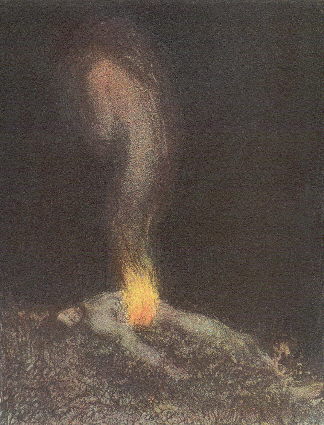
    abelpann-burning.jpg


    Abel Pann

    By the time he was my age he had four children and a literally broken heart.

    He did what he could.

    He taught wonder.

    I used to sense him coiled like a discus hurler behind every one of my best intentions.

    His blood was the blood that called me back to this world each time I crawled away disgusted.

    His were the words of forgiveness I was always surprised to find crouched at the back of my tongue. The tenderness, unexpected, that seized me when I was in the presence of suffering or helplessness, that also was him feeling through me.

    My biggest dreams were his.

    He pointed out the stars, and taught me to appreciate the gorgeous example of upholstery that is a baseball mitt. The short trigger, the hatred of condescension, the intolerance of cruelty, his compassion and affection for the little guy and the underdog, all those things he gave me.

    He could not, unfortunately, give me his unbridled optimism, his undying faith in human goodness, his stiff upper lip, or his genuine willingness to just let the world be the world.

    But his capacity for love, his sense of loyalty, his appreciation for a good road trip, and his eagerness to play the fool –What can I say? I was his boy.

    He showed me again and again how to live.

    Some nights lately I’ve sat up in the middle of the night, half expecting him to knock on my door.

    I’ve forgotten so much already. I’d give anything if he could come back for just one day, for just one hour, for just one cup of coffee, to help me remember.

    He’s not coming back, though.

    He’s waiting for me to come to him.

  • The Grindstone And The Garden

    mendon- fishing.jpg

    …if people who expect nothing come away empty-handed, then there really is no hope.

    William Maxwell, Time Will Darken It

    The dead flicker like candles around you. They are burning their memories for warmth.

    Kelly Link, “Flying Lessons”

    This world is full of war criminals, many of whom have never fired a weapon in their lives. Most of them don’t commence their truly devastating assaults until the enemy has laid down its arms.

    What good are fighting words in a world where there are no longer any fair fights?

    At any rate, let me start by thanking you for a few moments of your time. I’m genuinely grateful. I always try to be genuinely grateful.

    My fingers have all been broken and my tongue was nearly cut from my face.

    Listen: hear that? Yes, that’s right, almost silence. I’ve let the clock go. It was the sound of another time, other nights, a soundtrack of sorts for the strange, confusing, often magical nights behind me.

    I’ve moved on.

    The pygmy with the long shadow –a sort of giant pygmy, if such a thing is possible, and I’m here to tell you that I believe it is– has gone off to swing its wrecking ball at other targets.

    Protege of a Shar-peian witch who had a prodigious and legendary libido and kept a stunted oaf captive in her cellar, the pygmy was a dog killer and a ferocious biter, a sociopathic narcissist trapped in the amber of its own damage, prisoner of its obsessive routines, haunted childhood, and self-created myths; a spectacular creature, really, but one must ultimately be willing to pronounce a monster a monster and leave it at that.

    Oh, make no mistake, the pygmy was remarkably gifted so far as monsters and myth-makers go; alas, as an imitation of a human being (which it seemingly aspired to be) considerably less so. Still, yes, no getting around it, a marvel, a chimera, an absolutely indestructible (and destructive) beast who was able to go about the world in a carefully contrived costume of vulnerability.

    It’s amazing how many people are charmed out of their shoes –sometimes literally– by the appearance of vulnerability.

    I tip my hat, really I do, even as I am somehow both relieved and saddened to be rid of the monster once and for all.

  • Put That In Your Pipe And Smoke It

    The Twins have scored ten runs in their last six games, and 34 in their last fourteen, dating back to July 23 in Toronto –I’ll do the math for you: that’s an average of 2.4 runs a game.

    This nonsense, this incomprehensible futility, after scoring 34 runs in two games versus Chicago on July 6.

    Tommy Watkins to the rescue!

    It’s interesting to note that in Watkins’ ten-year minor league career he actually made two relief pitching appearances (for Fort Myers in 2002 and 2003), and didn’t give up any hits, walks, or runs in either of them.

  • Hogwash: Divert Yourself With This Business, Why Don't You?

    This’ll be everywhere in the morning, but in the meantime I can only say that after returning from the Dome tonight I had the odd sensation that I had had an experience similar to this pathetic fellow’s.

    Or at the very least that I’m going to need some similar procedure very soon.

    Read the story, and then please take a moment to pity that poor daughter.

    And that wife.

  • Summer Rerun, with an Update: Was There, in Fact, an Alcoholics Anonymous Chapter in Rockford, Illinois with a Mascot Parrot tha

    banana footleft.jpg

    I broke my brain. I’m not shitting you. It was joggled around in some giant, anonymous pair of hands and tossed end-over-end, without hope or desperation, down a scarred velvet table in a dark and nearly empty casino.

    Have you ever felt like a moth that has been pinned to a post and is being swarmed by thousands of vague and terrifying lights? Has it ever seemed like you’ve been locked inside an old bank safe that has a rusty and long forgotten combination and has been flung into the Mississippi River on a moonless night?

    For many days now I have had a lost thought rolling around like a marble greased with gore in the back of my skull.

    You realize, of course, that I’m not kidding. I’m one of those guys who doesn’t tell the jokes unless I mean them.

    It’s not sleep that I occasionally, and increasingly rarely, find in the long hours after midnight, but something more…I don’t know, really, sleepish, is I guess the best I can do in describing it. Utter sleeplessness that lapses from time to time into weird, yet oddly merciful little spells of sleepishness.

    This is what I am.

    And I have decided that I want to take the idea of talking birds much further than anyone has ever taken it before, to explore the language of birds in the history of literature, music, and art, to get to the bottom of this queer and preoccupying business once and for all.

    I realize that I have, from time to time, gotten carried away with similar such quixotic pursuits. There was the time, for instance, when I was determined to make this…blog a portal for all manner of exhaustive scholarship regarding Calvin Coolidge, the thirtieth President of the United States. I honestly thought that I could –that I would– become the world’s preeminent Coolidge scholar.

    Little did I realize at the time, however, that Coolidge was such a thoroughly boring character.

    I have some reason to feel optimistic that my parrot project will be much more fruitful. No particular reason, really, but some reason, and that, at this point, is something.

    I have spent the last week or so assembling some preliminary notes on my exhaustive cultural study of parrotology, and will in all likelihood continue to work away at this long and ongoing project in this space. At the moment, at least, I am taking as my models for this compendium Walter Benjamin’s Arcades Project, Robert Burton’s Anatomy of Melancholy, and Isaac Disraeli’s Curiosities of Literature.

    For now I would ask your patience and beg your pardon for the disorderly nature of these notes and ruminations. What you have here is a both a crude document and a portrait of one man alone in the wee hours, fumbling his way into a vast and, in all likelihood, inexhaustible project. I would welcome any assistance or suggestions that might point me in potentially fruitful new directions.

    We need another and a wiser and perhaps a more mystical concept of animals. Remote from universal nature, and living by complicated artifice, man in civilization surveys the creature through the glass of his knowledge and sees thereby a feather magnified and the whole image in distortion. We patronize them for their incompleteness, for their tragic fate of having taken form so far below ourselves. And therein we err, and err greatly. For the animal shall not be measured by man. In a world older and more complicated than ours they move finished and complete, gifted with extensions of the senses we have lost or never attained, living by voices we shall never hear. They are not brethren, they are not underlings; they are other nations, caught with ourselves in the net of life and time, fellow prisoners of the splendor and travail of the earth.

    Henry Beston, The Outermost House. 1928

    Psittalinguistics: the science of context speaking parrots.

    A parrot, it has been alleged, was responsible for planting many of the more heinous perversions in the head of one of the most depraved of the Caesars, Tiberius, this after the bird had had read aloud to him (by a sociopathic dwarf tutor in the Caesar’s employ) from an early and particularly pernicious primer in lechery. (See: A. Towson Dandridge, The Psychology of the Tyrants of Antiquity, Stanhope and Adelman, Manchester. 1949.)

    We also learn, in Dr. Renata Steenblom’s Unnatural Nature (University of Winnipeg, 1963), of a parrot which was allegedly capable of divining –and divulging at inopportune moments– the innermost secrets of its mistress, including sexual fantasies of a shockingly explicit nature. The bird was notorious for regaling unsuspecting visitors with a tortuous impression of the poor woman’s whinnying orgasm.

    According to Fr. Xavier Empson’s Curiosities of Catholicism and Marvels of Mariolotry (Eternal Image Press, Skokie, Illinois. 1957), there was, once upon a time, a parrot belonging to a tavern owner in a small village in Italy, and this bird was renowned for its ability to recite the Rosary (in Latin) in its entirety. One day, Empson recounts, the bird solemnly proclaimed, “It is the will of God, and I am but His humble servant,” and promptly fell over dead.

    From the pages of the children’s magazine, Highlights, we learn of an unassuming insurance adjustor and confirmed bachelor in Dallas, Texas who purchased a blue-fronted parrot which, upon being installed in the man’s home, was discovered to have committed a number of Johnny Cash songs to memory. The bird was capable of singing these songs in their entirety, and in a passable impersonation of the country legend’s voice.

    The annals of parrotology are full of similar wonders, from the ancient world to the modern. In a little known short story by the Russian writer, Gogol, a bird is called upon to testify in a court of law as a material witness to its master’s infidelity.

    There is an obscure novel, Lucifer’s Bird, by a Depression-era Georgia writer by the name of Ernest Winter, which featured a talking parrot that was believed to be possessed by Satan. The bird’s sinister commands and insinuations lead a God-fearing local deacon to engage in acts of depravity that shake a small southern town to its core. William Faulkner reportedly attempted a screenplay of this novel for Charles Laughton, but there is apparently no surviving evidence of this aborted project.

    In the days before teleprompters one often heard stories of Catskill comedians in their dottage who resorted to being fed their lines by parrots, which were perched on stage in full view of the audience. One such bird was said to be such a quick-witted master of improvisation that in time it became an actual and valued partner to the comedian. Before it eventually passed away from advanced years (the bird survived the old comedian by more than a decade), the parrot had established itself as a successful solo act –if something of a novelty– in its own right.

    The legendary blues musician Skip James is another performer who was alleged to have used a parrot as a prompt, often, some accounts allege, after James had become so inebriated that he could no longer remember the words to his songs.

    There was a minor dust-up in academia in the 1950s when a man named J. Richard Stevens published portions of his doctoral dissertation in a then reputable scholarly journal. Stevens’ thesis, which was immediately and loudly discredited, was that a number of Emily Dickinson’s poems had been almost literal transcriptions of the utterances of her beloved parrot, Desdemona.

    In the early days of television, talking birds were often used to provide voiceover narration for advertisements, largely in an attempt to cut costs and circumvent union restrictions. The practice apparently continues –albeit somewhat clandestinely– to this day, most prominently in the dubbing of low-budget films from Asia.

    The debate over animal cognition: Dr. Irene Pepperberg’s famous gray parrot, Alex. Dr Pepperberg’s pioneering studies with Alex proved conclusively that the prevailing and disparaging notion of a “bird brain,” is grounded in ignorance. Many birds –parrots most particularly– have very large brains indeed, and possess a cognitive sophistication that is as wondrous as it is little understood. Dr. Pepperberg’s work with Alex is almost as important and influential as the better known work on animal communication and referential speech that has been conducted on the great apes.

    The Yellow Naped parrot, the most virtuosic and versatile of the Amazonian talking parrots, can often master an impressive vocabulary of upwards of eight hundred words, and is also capable of singing, dancing, whistling, and doing uncanny impersonations of animals and household appliances.

    Double Yellow Head parrots have long been recognized as accomplished opera singers, with extraordinary range. They are among the more excitable and motor-mouthed of talking birds. (See: Robert T. Nicolai, Caruso in a Cage: The Incredible True Story of Sergei, the World’s Most Famous Singing Parrot, Bristol House, 1983.)

    Budgerigars have been known to have vocabularies in excess of one thousand words. One such parrot, Victor, purportedly demonstrated that birds are capable of engaging in actual conversation, and was alleged to be an influential teacher and mentor to many other birds. Victor, according to its owner, presided over a de facto academy for talking birds, and a lexicon of the parrot’s impressive vocabulary, along with an archive of its recordings, can be found here.

    N’Kisi, a New York parrot with an almost 600-word vocabulary and psychic abilities, is purportedly capable of reading the thoughts of visitors.

    See also: Bruce Thomas Boehner’s Parrot Culture: Our 2500 Year Fascination With The World’s Most Talkative Bird.

    More audio recordings of talking birds.

    There have been innumerable documented cases of talking parrots thwarting robberies.

    Other literary examples:

    Eudora Welty’s The Shoe Bird

    Flaubert’s “Un Coeur Simple.” (See also: Julian Barnes, Flaubert’s Parrot)

    Somewhere in the works of Balzac (and I have thus far been unable to find the source of this story, although I maintain a clear memory of it nonetheless) there is a parrot that recites “The Lord’s Prayer.”

    There is also, of course, the foul-mouthed parrot in Errol Stanley Garner’s, The Case of the Perjured Parrot.

    More recently: Joe Coomer’s The Loop, which features a home invasion by an elderly parrot given to cryptic utterances.

    In the seventh century, Shui Shi Tu Jing published the Book of Hydraulic Elegancies. Indeed, one continually finds descriptions of such technological wonders as mechanical flying doves, dancing apes, and talking parrots in the literatures of Islamic nations, India, China, and Greece. In fourteenth century Florence, it was none other than Filippo Brunelleschi who designed a mechanical stage to bring Paradise to life.

    –Oliver Grau, “History of Telepresence: Automata, Illusion, and Rejecting the Body.”

    This defect or imperfection that stands in the way of man’s communicating with animals, why isn’t it as much our fault as theirs? For we don’t understand them any more than they understand us.

    Montaigne, “Apology for Raymond Sebond”

    Yet the animals are not incapable of being taught also in our way. Blackbirds, ravens, magpies, and parrots we teach to speak; and that facility with which we see them rendering their voice and breath so supple and manageable for us, to form and constrain it to a certain number of letters and syllables, testifies that they have an inward power of reason which makes them so teachable and determined to learn.

    Montaigne, “Apology for Raymond Sebond”

    This story of the magpie, for which we have Plutarch himself as sponsor, is strange. She was in a barber’s shop in Rome, and did wonders in imitating with her voice all that she heard. One day it happened that certain trumpeters stopped and blew a long time in front of this shop. After that and all the next day here was this magpie pensive, mute, and melancholy, at which everyone marveled, and thought that the sound of the trumpets had stunned and deafened her, and that her voice had been snuffed out together with her hearing. But they found in the end that it was a profound study and a withdrawal within herself, while her mind was practicing and preparing her voice to represent the sound of these trumpets; so that the first voice she used was that one, expressing perfectly their runs, pitches, and variations; and for this new acquirement she abandoned and scorned all she had learned to say before.

    Montaigne, “Apology for Raymond Sebond”

    An old Danish shipowner sat and thought of his young days and of how he had, when he was sixteen years old, spent a night in a brothel in Singapore. He had come in there with the sailors of his father’s ship, and he had sat and talked with an old Chinese woman. When she heard that he was a native of a distant country she brought out an old parrot, that belonged to her. Long, long ago, she told him, the parrot had been given to her by a high-born English lover of her youth. The boy thought that the bird must then be a hundred years old. It could say various sentences in the languages of the world, picked up in the cosmopolitan atmosphere of the house. But one phrase the old China-woman’s lover had taught it before he sent it to her, and that she did not understand, neither had any visitor ever been able to tell her what it meant. So now for many years she had given up asking. But if the boy came from far away perhaps it was his language, and he could interpret the phrase to her.

    The boy had been deeply, strangely moved at the suggestion. When he looked at the parrot, and thought that he might hear Danish from that terrible beak, he very nearly ran out of the house. He stayed on only to do the old Chinese woman a service. But when she made the parrot speak its sentence, it turned out to be classic Greek. The bird spoke its words very slowly, and the boy knew enough Greek to recognize it; it was a verse from Sappho:

    The moon has sunk and the Pleiads,

    And midnight is gone,

    And the hours are passing, passing,

    And I lie alone.

    The old woman, when he translated the lines to her, smacked her lips and rolled her small slanting eyes. She asked him to say it again, and nodded her head.

    Isak Dinesen, Out of Africa

    Parrot Science.

    AND THIS NEW
    addition, courtesy of reader J. Nathan Matias: John Kinsella, “Parrotology: On the Necessity of Parrots in Poetry.”