Blog

  • The New Dada

    Part the first — History Is the Past


    History is something that happens to other people. -Anonymous


    WELCOME STUDENTS. I’d like to begin today’s seminar with a pop quiz. (No groaning, people!) Please take out your Bluebooks and answer the following two-part question:

    1. Identify the following historical era: In the early years of a century, at the end of a long era of prosperity, there occurred a contentious generational baton-pass between an older, tradition-minded generation (often called the "Civic Generation," but also sometimes the "Greatest Generation"), to a younger generation noted for being insecure, disillusioned, and "lost." That new century’s dreams for continued prosperity and peace had been ended by a brutal war that, while at first very popular, was later deemed the deceitful, wool-pulling act of a reactionary leadership bent on preserving a dying world order. The resulting atmosphere of destruction, death, disappointment, and demoralization defined the history of an entire generation.

    2. Identify the movement that was birthed of this era, and describe its location and surrounding circumstances: Out of the era’s despair and dismay, a group of young artists and writers gathered in a place of refuge and began venting their anger at the times in the best way they knew how: through art. Making use of new communications technologies (which often became a subject of the work), the loosely linked group took to questioning the meaning, and subverting the value, of what had been held sacred by the generations previous. The resulting art was often obtuse and insensible, but it also captured the underground anger of an age and shocked an otherwise apathetic public.

    Everyone got your answers? Good, let’s check em.

    Question 1: This era occurred circa 1916-1923, and is sometimes dubbed the years of the "Lost Generation." The war was World War I — a.k.a., the Great War — and the reactionary leaders were the last, blind rulers of the old Empires of the 19th century.

    Question 2: The place of artistic refuge was Zurich, Switzerland; the recent communications breakthrough was the rapid expansion of cheap printing methods on newsprint, and the art movement came to be called dada.
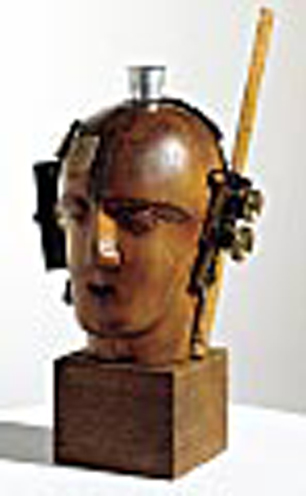
     

    (A little bit of dada from back in the doo-dah…)


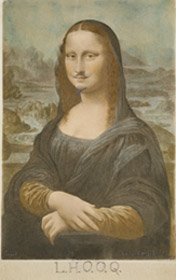
    Dada, the 20th century’s greatest and perhaps earliest art movement primarily intended to shock the established order, was birthed of war and its aftermath. Dadaist artists and poets, who comprised a wide range of styles and approaches — such that it’s difficult to identify any single dada style — were connected via a sense of protest and discontent and by their use of mild obscenities, scatological humor, obscure visual puns, nonsensical language experiments and imagery, and blasé gestures. (Think Marcel Duchamp’s Mona Lisa moustache, called properly "L.H.O.O.Q." (1919), or his flat-footedly presented urinal called "Fountain"). (Note: The title "L.H.O.O.Q." is a wry and baudy pun in French, because read aloud it makes a sentence, "Elle a chaud au cul," which, translated, means, "She has heat in the arse." )
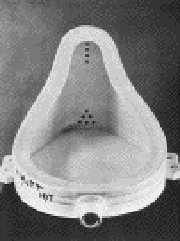
                    

    The group’s primary goal, then, embraced by young artists around the world and across the ages, was to outrage and repel the public (read: the established elders of the time). Today, history suggests the dada movement is key to understanding the sense of meaninglessness of the post-War era.


    Part the second — History Is the Present


    History is the present. That’s why every generation writes it anew. But what most people think of as history is its end product, myth. -E.L. Doctorow


    OF COURSE, AS WITH ALL GOOD HISTORY LESSONS, I suggest there’s also a second, alternate, partial-credit answer possible to today’s pop-quiz.

    That is, the advanced students among you might have noticed that another era also fits the historical description above. Just substitute, for instance, in your answer to question 1: the Iraq War for World War I; the Bushies for the great old oligarchs; the malaise of now and the current generation for that of the early 20th century’s "lost generation" — et viola, what’s old is new again! (The only question that remains is with the impending death of older, newsprint-based information systems where can one find a movement of artists seeking a place of refuge from all the turmoil today and a method to express their discontent?)

    But you don’t have to take my word alone on this connection between then and now. Other commenters have suggested that the current conditions are similar to what created dada. Tyler Green, for example, reviewed a retrospective of dada at the National Gallery in 2006, and wrote: "[Dada] is a celebration of the power artists have to portray horrors, as well as a celebration of the voice they have in condemning the circumstances that produced those horrors. On view in Washington at a time when our nation is questioning the Bush administration’s conduct before and during war in Iraq, it is a rare — very rare — instance of an exhibition at our National Gallery of Art bumping up against the news of the day."

    Certainly, there has been lively activity among political-minded artists in recent years. The 2006 Whitney Biennial was filled with young artists venting a variety of grievances through artistic gesture. (It’s a personal hypothesis of mine that this show’s curators — Philippe Vergne and Chrissy Iles — had hoped to evoke the energy and subversive qualities of dada in their curatorial choices; as to whether they succeeded in any way, well, I’ll discuss that in a moment…) Even well-established artists — such as Mel Chin (in recent sculptural objects suggest makeshift humvee armor, for instance), Jenny Holzer (in recent paintings based on declassified government documents related to the Iraq War), and Siah Armajani (in a recent public monument that conflated Fallujah with Guernica) — have gotten the political bug of late.

    As Enrique Chagoya said in a recent issue of Art in America dedicated to political art, "I have noticed many more artists dealing with political content since 9/11. The world changed after that ominous day, and the topics are more urgent and global than ever. Just look at how many issues are making us anxious in our country and in the world: political and economic corruption, global warming and our dependency on fossil fuels, the rise of xenophobia, ethic cleansing wars, discrimination toward women and minorities, etc. — the list could be really long."
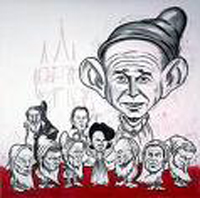
     

    (Recent image of the Bush administration by Enique Chagoya)


    Still, the current generation’s political art up till now has been greatly lacking in something, some je ne sais quoi, or magic if you will, to capture a wider audience. Mostly it’s been dull and dry and deadpan and rote, lacking spark and inspiration — or the power to spark imagination in others (and thus win them to a cause). In my view, it’s
    a great disappointment that in this day and age of so much to protest and rail against, there appears to be no movement among artists that has any of the depth and quality to upset, confuse, question, and subvert like the dada movement of old.

    So where, I ask you students of history, is the New Dada?


    Part the third — Nothing Is More Delightful Than to Confuse and Upset People


    Nothing is more delightful than to confuse and upset people. People one doesn’t like. What’s the use of giving them explanations that are merely food for curiosity? The truth is that people love nothing but themselves and their little possessions, their income, their dog. -Tristan Tzara

    SO, THUS BEMUSED AND DISTRACTED by my own ideas and preoccupations about the current times and its art, a few weeks ago I received a cryptic, and unsolicited, email from a sender I did not know — a guy named Alex, who apparently is a regular a reader of some of my more obscure web-based arts writing. The email included only a weblink, and no other explanation; no text, no greeting, nothing at all of an explicatory nature. Of course, being an incurably curious sort — especially when it comes to online offers and links of uncertain provenance — despite my better judgment I clicked through the message to the other side. And what I found was an inscrutably low-tech-looking, clunkily typographed webpage with, again, no explanation beyond another link, this time to a pdf file of a document written by one Alexander Lane — thus solving one mystery (who this "Alex" was), but leading to another (what did this guy want?).

    The essay, which, frankly, could have been written by a failing high school sophomore English student (who had never learned how not to use passive voice), was a rundown of a recent panel discussion at the New Museum in New York, "Net Aesthetics 2.0," which examined the phenomenon of something called "Internet art."

    Now, I consider myself a fairly open-minded guy, and somewhat youthful and accepting despite my advancing years. But like any busy contributor to the national economy, between you and me, I was getting peeved by all of Alex’s obfuscation and crypticism. Still, against my better nature, I dug in and tried to make sense of this essay, painfully as it was written (and painfully as it was presented), and as a result I learned the following nugget of gold: Apparently, a lot of artists are using the Internet to make art these days.

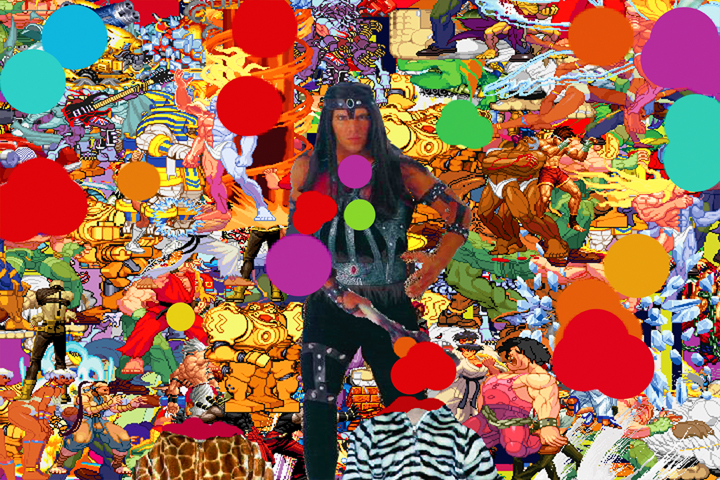
    Also, I learned, many of these artists often participate in something called "surfing clubs." I had never heard of such, but, according to another essay I dug up (via a couple of testy email exchanges with Cryptic Alex), a surfing club, as defined by Marcin Ramocki, is, apparently, a communal blog, usually run by artists, that may have several characteristics. These characteristics include: an internal dialectical and syntactical logic and narrative flow; a disregard for audience expectations in favor of its own infrastructure; a tendency toward semiotic and conceptual "games"; a connection to the act of "surfing" the Internet to find random materials and referents; a self-awareness of certain cultural codes inherent to the internet (among the most common being "Minimalism," "slacker art," "rock music," "youth culture," "programming language," "cute, extremely ugly eighties colors," "beauty for beauty’s sake," "porn,"and "video games"); and a tendency to evolve and change quickly (as per the culture of the Internet).

    The art done on these blogs is, I learned, at first glance rather off-putting and inaccessible, perhaps much in the same way Dadaist art and poetry must have been for the older generation of the time. It is raw, blatantly youthful, full of noisy, and seemingly random, disjointed imagery and gestures. The work denies any clear interpretation, and it is often repulsive and off-putting, confusing, upsetting, and resistant to clear explanation — just as Tristan Tzara may have preferred.

    In fact, it seems, the extra-credit answer to question 2 could be that the Internet is both the place of artistic refuge and the recent communications breakthrough for artists seeking to vent their frustrated modern spleen. And, it seems possible, that in this Internet Art movement we may well have the perfect analogue to the greatest protest art movement of the last century. That is, this cadre of young, disparate, unaffiliated, and angry online artists, who have found on the Internet a place to voice their underground discontent, may be the earliest wave of the New Dada.
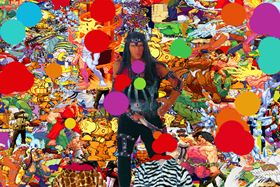
    (Sample of art from a "surfing club" weblog based in Minnesota)


    The part in which I AM conclusory (or, at best, partially conclusive) — CHoosing Instead to Provide Links (with explanation) to Samples of This Internet Art Phenomenon (both local and national), So You Can Judge for Yourself

    WITHOUT FURTHER FUSS, below I present some practitioners of the obscure art of the Internet — from "surfing clubs" both national and local — for you to make your own call (as to whether these measure up to dada, or else seem something altogether different).


    National Surfing Clubs/Internet Art Groups

    (Art by Tom Moody, from Nasty Nets)


    Nasty Nets — Apparently this group began posting in 2006, and is credited with being first to coalesce a growing movement of artists interested in online blog art. The community is relatively small, comprised of artists, curators, and activists/bloggers pushing boundaries (in the manner of Dadaists of old), and in fact questioning whether what they’re doing is art at all.

    Loshadka — has existed since May 2007. The first post on the site, extant during that first month, says everything about the site’s aesthetic and m. o.:


    PWN

    everything

    billy you’re gay right?
    admin;

    2 Comments »

    1.
    yesyesyesyesyes
    Comment by billy — June 22, 2007 @ 7:41 am

    2.
    gives me a pwnr thinkin about it
    Comment by prawnstar — June 28, 2007 @ 5:08 am


    Spirit Surfers — A much more clean, graphic-designy, and less frenetic site than some of its competitors, Spirit Surfers is no less obscure and obtuse – nor biting and incisive — for all the cleanliness. One of my favorite posts on this site is Tim Skirvin’s documentation of the building and destruction of a scale lego model of a Star Destroyer (from Star Wars). It’s particularly poignant that the Star Destroyer was destroyed by a cat named Tulip.

    Double Happiness — Click on this site, and you get a frenetic soundtrack mixture of sounds from 1980s uber-soundtrack of Top Gun, hip hop music, and a 1-800 infomercial. Plus, chocolate chip cookies with bacon
    , Google maps to pizza places in Poughkeepsie, and an image of the Hulk having standing sex with Wonder Woman.

     

    (Another sample of Internet Art)

    Heck, with Internet Art, you just never know what sort of visions you’ll see — nor how obscure and obtuse they will be.


    Minnesota-based Surfing Clubs/Internet Art Groups

    Here are some locally-based attempts at Internet Art, though (*please note) it is often difficult to know precisely where such "surfing clubs" are located. This is because the artists often eschew their very identity, including their names, locus, origins, and so on, when they get involved with such sites.

    The Shitizens — A mishmash of local artists hip to national Internet Art trends, this site also seems to be one of several efforts by a local artist/blogger named Hollingsworth J. McTubbins. Check out the silly whip fetishism in this fun post.

    Hardland/Heartland — A group of artists who seem to do a bit of everything (including old analogue art exhibitions, online stuff, zines, happenings, poetry, manifesta — and everything in between); you probably shouldn’t miss whatever they’ve got hidden up their proverbials.

    Hooliganship — These guys really seem to love, for whatever reason, the whole "cute, extremely ugly eighties colors" thing. The organization of the site is a bit tighter, and less fluid, than some of the others of their ilk, but still the artists involved seem just as dedicated to the eccentrically obtuse aesthetic as any of them.

    Lords of Apathy — These guys seem particularly sex-deprived, but then what do I know about modern art anyway?

    And, well, you get the picture. I’d love to hear if you come across any more of these artistic endeavors — both national and local — or if you have any opinions about this art. Submit any thoughts, comments, suggestions (as long as they’re not cryptic) to the comment section at the end of this post.
  • The Guthrie: After Hours with the Art Crowd

    SPECIAL EVENT

    Creative Context


    Help kick off this new monthly party in style! l’etoile magazine (one of my side projects) and The Guthrie team up to bring you Creative Context, a post-show party in the Guthrie’s Target Lounge,
    hosted by some of the most influential local women in arts and
    media. Every 2nd Thursday of the month enjoy happy hour drink specials,
    killer tunes by Jonathan Ackerman and DJ Bach, and an opportunity to
    pick the brains of some pretty amazing ladies – or just sip vino
    with your pals while enjoying the view. This month’s host is Emma Berg,
    Director of mplsart.com and head curator for the Gallery at Fox Tax.

    You do not need to see a play to attend the party, but I’d highly encourage it – you can see The Government Inspector for a mere $20 at 7:30pm tonight by calling the Guthrie’s box office at 612.377.2224 and quoting the price code "AH".


    10pm-Midnight, The Guthrie’s Target Lounge (2nd Floor), 818 2nd Ave. S, Minneapolis, Free


    ART

    Ars Insurgo & Three Way


    Rosalux Gallery does us one better with this evening’s double-header art opening! Debuting in the main galleries, Rosalux members Eddie Hamilton and Dan Young present Ars Insurgo.
    A journey of humor and nostalgia for the viewer, Hamilton and Young
    investigate everything from debate to youthful memories with their
    whimsical paintings and multimedia constructions. Don’t forget to pop
    in to Rosalux’s new "Pocket Gallery" which is opening Three Way, an
    eclectic array of work by up and coming artists (and exiting interns)
    Mike Carney, Lauren Chezik, and Sarah Reuter. Want to make it a date?
    I’d definitely recommend checking out Spill the Wine a cute and classy little wine
    joint and restaurant about half a block from the Gallery.


    7-11pm, Rosalux Gallery, 1011 Washington Avenue, Downtown Minneapolis, Free


    FILM

    4 Sheets to the Wind & Sikumi (On the Ice)


    Lucky Minneapolis! Not only do we have one of the top art museums in the country, but they let everyone in for free on Thursdays ! Stop into the Bazinet Lobby before 7:30 to snap up your free tix to an evening screening of Four Sheets to the Wind and Sikumi (On the Ice).
    What makes these films special you ask? Both films have been heralded
    for their artistry with prestigious awards from the Sundance Film
    Festival and both films are written and directed by Native American filmmakers. The feature length Four Sheets to the Wind,
    directed by Sterlin Harjo, weaves the tale of a young man in search of
    his identity on the reservation and beyond, with subtly humorous undertones
    and thoughtful cinematography. Sikumi (On the Ice), a short film directed by Andrew Okpeaha MacLean. The first film ever to be made in the Iñupiaq language, Sikumi tells the story of an Inuit hunter who inadvertently witnesses a murder.


    7:30pm, Walker Art Center Cinema, 1750 Hennepin Avenue, Minneapolis, Free


  • Gonzo

    To be honest, I didn’t know who Hunter S. Thompson was until after he killed himself. It was a miserable year in college. Bush had slithered his way into the White House for the second time and winter at Carleton seemed even more bitter than usual. Our anger had given way to numb depression as we shuffled about our lives. Not that I was alive then, but I couldn’t shake the feeling that we had lost something over the past 40 years. In the ’60s and ’70s, Hunter S. Thompson embodied the kind of restless anger the country needed during the Bush years. What happened? Along with our parents, somehow we became the generation of complacency. You can understand my surprise when my very same criticism was leveled at the audience not by Thompson, but by Pat Buchanan. Wait a second! Pat Buchanan is in a documentary about Hunter S. Thompson? Gonzo, a documentary by Alex Gibney, is full of surprises. If you are a fan, or even if you’re not, this one is not to be missed.

    Far from the star-struck mythology that often follows other famous suicides (see: Kurt Cobain), I was pleased you actually get a sense of who Thompson was, and it wasn’t always flattering. The truth is, Thompson was kind of a douche. Through a mixture of interviews, stock footage, film clips, and reenactments, the film is a surprisingly earnest and deeply fascinating celebration of his life. In roughly chronological order the film proceeds through the events that shaped America, and Thompson along with it. It can be hard to lose yourself in a documentary the same way as a good film, but the seamless mash-up of material and tight pacing makes it easy.

    Like Buchanan, the film features a number of high profile interviews ranging from Jimmy Carter to George McGovern to the co-founder and publisher of Rolling Stone. I was struck by not only the extraordinary effort on the part of the filmmaker, but also the exceptional influence he must have had to bring together such an unusual cross-section of American culture 30-40 years after landmarks such as Fear and Loathing on the Campaign Trail.


    Even though the film sort of putters out towards the end, and could have trimmed some things down here and there, it is well worth your time. I think its greatest contribution is, without question, its immediacy. In the stock footage of RFK, you can hear Obama’s voice. In Nixon, you can feel the repugnant sleaze of the Bush years. In Thompson, however, was a voice we now need more than ever.

    Want a good example of modern gonzo? Check out the Rolling Stone coverage of the Michael Jackson trial. It was angry, subjective, judgmental, and struck me as one of the most honest things I had ever read.

    See also Max Ross’ The world is full of downers…which is maybe why Gonzo took so many uppers.

  • Lolita Barbies!

    For all this talk about the decline of literary reading in America, there’s really been very little offered in the way of solution. As per usual, I’m probably unqualified to be writing this (caveats seem to have worked for Britt; maybe they will for me too), but I think I have an idea that might possibly save the book world: Better advertising. At the very least, it’s worth a shot.

    I think it’s time that publishing houses Penguin, Random House, Harcourt, et al take seriously the notion that the American entertainment economy is saturated and competitive (duh…) and therefore that books shouldn’t be competing against other books; rather books as a medium should be competing against movies as a medium, or music, or porn, or anything else that might take time away from reading.

    If this is already their mindset many of them are incorporated, after all then they need to pull their heads out of their asses and be more effective. Where do I see advertisements for books? In the New Yorker, in the New York Times Book Review, in Harper’s, in literary journals – places readers already are. And while there’s something to be said for targeting your audience, in order to thrive, I would think you need to attract some new customers.

    According to tradition, a potential convert to Judaism is supposed to be turned away by a rabbi three times. If that person persists in his effort to convert after the third rejection, he is considered serious enough about the faith, finally, to be allowed in. The publishing world seems to make their barriers similarly ridiculously high; advertising, like religion, is a means to access mass amounts of people, but literary advertising seems to confine itself only to people already of the faith, so to speak. In Judaism, we bitch about intermarriage diluting and possibly annihilating the religion. Likewise, the publishing world bitches about the reallocation of words from the well-regarded print periodicals to poorly edited blogs (hi!).


    But neither Judaism nor literature, it seems, proactively recruit fresh constituents. Is it elitism? Is reading something so holy that it shouldn’t need to be marketed? Something so inherently valuable that people should flock to it of their own accord, and any need for a commercial here and there is preposterous? Yes. But then there’s reality to deal with.

    Right now the most vibrant literary events in Minneapolis are the Books and Bars series, Talking Volumes, Talk of the Stacks, and the existence of The Loft. (Doubtless there’s some great stuff I’m leaving out, like the reading series at Spoon River … feel free to PR and big-up yourself in the comments section below, and I’ll throw in a hyperlink if you don’t. I’m making a different point, though … right … about … now:) As far as I know, these goings-on are funded by independent bookstores, bars, the library system, and MPR not by Random House, Penguin, and so on.

    Meanwhile, the most effective advertising for books is done, I think, by Amazon, which tells me what books I might like, based on what books I’ve previously bought. Again, the publishing houses aren’t behind this, I don’t think rather it’s simply Amazon’s self-interest in promoting sales.

    Furthermore, it seems publishers are incompetent with the money they actually have for marketing. Last night, best-selling author/sometimes-musician Darin Strauss was in town to promote his new novel, More Than It Hurts You. About fifteen people showed up at the Galleria Barnes & Noble to hear him speak. Maybe five of them, he estimated, bought his book – totaling roughly $125 for penguin, minus B&N’s take, minus cost of printing, etc. This, Strauss said, was a fairly typical turn-out for his current tour. He explained that the real intent of an author tour is to generate publicity, via interviews and reviews on local radio stations and in local newspapers.

    But, aside from this amazing piece of writing, Strauss had nothing lined up in the Twin Cities. Neither the Strib nor the Pioneer Press has yet run a review of the book, nor did he get on the radio. I think City Pages mentioned he was coming in a blurb on their A-List.

    And yet he was here, which means Penguin (his publisher) shelled out for his flight, his hotel, and a hired car to take him to his reading. That’s got to be getting close to $600, if not more. There are about twenty stops on his tour. This is money that could be spent buying print or radio or television or (gasp) movie preview slots to advertise, which one hopes could generate more than five book sales.

    So and feel free to amend a few thoughts on what publishing companies can do to help save books in the modern world, without resorting to E-Books, God willing:

    – Take a big chunk of the money allotted for author tours (except in cities guaranteed to get a big audience draw) and spend it on advertising.

    – In the short term, forget specific authors and books, and do a good campaign promoting books in general, with a heavy, heavy emphasis on literary novels by current authors.

    – Advertise in ways that will draw new readers. (Oprah’s great for having her book club, but it’s a little scary that she’s the pre-eminent bookseller of our times.) This may take some thought. Product placement? We’re all suckers for it, anyway. So why not?

    – Merchandising! On The Road – the Toilet Paper Scroll. Are you telling me you couldn’t have a Holden Caulfield action figure, which actually broods? A Lolita doll? Or less perverse toys thereof?

    – A rough idea: Fuck hardcovers! I’m not sure what their function is anymore, except to make people not buy books. Fairly frequently I hear someone browsing the new releases section at Magers and Quinn and hear, "Oh, I’ll just wait until it’s in paperback." Yeah, buddy I bet you will. I’m not sure this testing-of-the-market to see if it justifies a paperback run is useful anymore. With the advances of
    immediate and on-demand publishing, why not just spend an extra nickel on a more-endurable paperback to begin with (Penguin Classics-type quality), and use the extra cash on, I don’t know, more advertising.

    – Community involvement. If Target can sponsor free museum days, Random House can sponsor outreach programs, too. According to me, at least.
    Check this: Even B&N and Borders are struggling now in the giant commercial suction cup that is the Internet. The dominant bookstores soon might be those that people feel personal connections to. So maybe instead of paying to put shitty cardboard displays with books We’ve All Been Meaning To Read up front, publishers should finance Independent Bookstore Community Involvement Stuff. What about a tutoring program inside a bookstore? Kids could get help with their English homework for free and get comfy with the environment of must and dust. Booksellers and publishers would be seen as giving back to their communities (more than they already do simply by peddling great books). If the program were two days a week for two hours, you could pay one employee (if volunteers are unavailable) probably less than $10,000 a year. Would other infrastructure be needed? I’m sure English teachers would promote it to parents. Just a thought.

    One last cheap tie-in to religion: Without playing the advertising game, reading looks to be going the way of Reform Judaism something its practitioners respect, and probably hope to pass on to their children, but which is really only observed once or twice a year.

  • Face The Nation

    The affect of the changing world on typography will be on display when
    the Minnesota Center for Book Arts presents *Face the Nation*, a new
    exhibit that begins July 12 in the Star Tribune Foundation Gallery.

    The changes in typography between 1900 and 1960 – a period that
    encompassed two World Wars – will show how the desire to reinforce,
    redefine or transcend national identities shaped their design thanks in
    part to changes in technology. Two coordinating exhibitions will
    feature the work of two designers who explore typography in
    contemporary graphic design. There will also be several presentations,
    workshops, discussions and screenings included throughout.

    *Face the Nation*, presented by MCBA and the University of St. Thomas
    and curated by Dr. Craig Eliason, runs July 12 – September 21 in the
    Star Tribune Foundation Gallery in the Open Book Building in downtown
    Minneapolis. A free opening reception will be held Saturday, July 12
    from 6 – 9 p.m. Visit www.stthomas.edu/facethenation or www.mnbookarts.org for a complete schedule and other information.

  • Get StARTed

    *Get stARTed*, an exhibit featuring the works of 10 Minneapolis College
    of Art and Design MFA students, will give local audiences a taste of
    new and emerging artists beginning July 10 at the Burnet Art Gallery in
    Chambers Hotel.

    The
    exhibit will showcase new works available for purchase. The event is
    part of the hotel’s stART program that supports new local artists. The
    exhibit runs July 10 – August 17, with an opening night reception on
    July 10 from 6 – 9 p.m. Gallery hours are 11 a.m. to 9 p.m. daily. The
    Burnet Art Gallery is located in the Chambers Hotel at 901 Hennepin
    Avenue in downtown Minneapolis.

  • Bastille Day Block Party

    Get out your berets and celebrate French independence with Barbette on
    Sunday, July 13 when they host a Bastille Day Block Party. Featuring a
    flea market and organic food and beverages, the free event will also
    showcase several bands and entertainers.

    The fun begins at 4 p.m. and goes until 10 p.m. Barbette is located at
    1600 West Lake Street in Uptown Minneapolis. For more information,
    visit www.barbette.com.

  • Twin Cities Zine Fest

    Join Stevens Square Center for the Arts on July 12 and 13 for their
    annual Twin Cities Zinefest, a celebration of zinesters and indie music
    fans that showcases the Midwest’s homegrown talent. The event will also
    feature an art show, craft demonstrations, guest speakers and panel
    discussions.

    Attendance is free. The event runs July 12 from 11 – 5 p.m. and July 13
    from 11 – 4 p.m. Stevens Square Center for the Arts is located at 1905
    3rd Ave S. in Minneapolis. For more information, visit www.stevensarts.org.

  • The Hold Steady

    After their last local gig in a venue that actually had rows of seats bolted to the floor, they’re back at First Ave. where they’ll always belong, riding the crest of Stay Positive, yet another startling, snarling confessional of clean and dirty secrets set to anthemic guitar riffs, all girded by their thoroughly charming, drunken geek modesty. The new one, out 7/14, harkens and hews closer to the Springsteen ethos than ever (and for all you faux anarchists, that’s a good thing), without losing the idiosyncrasies. Craig Finn’s tales of Brooklyn and Bloomington have always been every bit as righteous and riotous as the chronicles of Asbury Park, but as the E Street simulacrum "Sequestered In Memphis" shows, an impeccably tight band twirling stately piano, horn fanfares and monster guitar riffs can take the most riveting narrative another notch higher. And besides the new stuff, we still have the prospect of watching Finn gesticulating wildly as he talk-sings the blues of "Charlemagne in Sweatpants" or leads the ode to "Southtown Girls." Sold out. Scalp if you have to.

  • Anthony Cox, Phil Hey & Chris Lomheim

    Here’s a gig that lets you strain the brandy or fine single malt over your tongue while you swell with pride for living in a place with such a vibrant local jazz scene. Cox is an internationally renowned bassist who had Billy Higgins and Dewey Redman on his first record and happens to call the Twin Cities home. Hey is a protégé of Ed Blackwell and has been arguably the top drummer in town for two decades. They’ve formed trios with pianist Billy Carrothers and guitarist Dean Magraw, among others, but when Cox called Lomheim as well as Hey to fill some corporate dates, things took a quieter, albeit very satisfying, turn. Lomheim favors the melancholy of Bill Evans and is also a composer of some note. Cox, who always admired Evans’ bassist Scott Lafaro, was amenable to that approach. The first time they played the AQ a few months back was reportedly a luminous affair. Despite their Ornettish associations, Cox and Hey are enjoying the hushed, relaxed groove of calling out standards-be it Monk or Jerome Kern, with Lomheim always bringing at least one original for variety-and spooling out the interplay.