Month: November 2006

  • This Morning

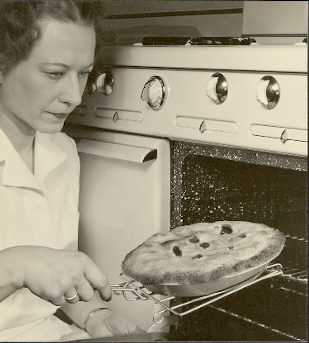
    pie001.jpg

    I wish man had never gone to the moon.

    This world has tenderized me. I am a vulnerable adult. We all are. We are up to our ears in fairy dust and horse shit and monkeyshine and moonbeams.

    So let me tell you what I’m looking for. Let me tell you what I want: I want to be stunned. I want experiences that leave me howling with pleasure and wonder at the abracadabrant possibilities of this world. I want to feel my heart swelling in my throat until I’m choking with happiness and gratitude, until I’m reduced to hoarse, hysterical stuttering and laughter.

    I want magic. I want to see things that make me doubt my eyes. I want to hear voices. I want the life that is left to me to be pure astonishment, to return me to the epistemological ground zero of the confused and awe-struck child.

    I want animals to speak, and I want them to tell the truth.

    I want an mp3 of the laughter of everyone I have ever loved.

    I want to come home late one night to find my parents slow dancing in my living room to a Jo Stafford record.

    I want that hawk that’s been watching me for almost a year to lay its cards on the table.

    I want to get my knees dirty, to claw at the earth with my fingers, to feel the sun on my teeth.

    I want to give it away, all of it.

    I want it all to be a dream, a good one. I want to recognize that that’s exactly what it is.

    I want what I really want, what I’ve always wanted, and I want it bad. I want it more than I’ve ever wanted it.

    I want to give thanks.

    I want to say thank you.

    pigasso.jpg

    My heart of silk

    is filled with lights,

    with lost bells,

    with lilies and bees.

    I will go far,

    farther than those hills,

    farther than the seas,

    close to the stars,

    to beg Christ the Lord

    to give me back the soul I had

    of old, when I was a child,

    ripened with legends,

    with a feathered cap

    and a wooden sword.


    –Federico Garcia Lorca, from “Ballad of the Little Square”

  • My Favorite Holiday

    If only we could ditch the Turkey.

    Thanksgiving easily trumps all other Holidays at this point in my life. As a kid, the two week Christmas vacation with presents and the week long Easter vacation with a fun egg hunt overshadowed the four day weekend and “kids’ table”.

    With the advent of adult cynism the luster of Christmas has been slowly wearing off since at least my sophomore year of college. The unbridled materialism that hits you at every waking minute coupled with the demands of seeing every single relative of yours as well as your significant other (with divorced parents for both, this is compounded) always makes me both tired in just about every way.

    On the other hand Thanksgiving now brings only the bit of stress of cooking with family members as well as four glorious days off with little commitment to other events or get togethers.

    Maybe it will change when I have kids. In the meantime, bring on the Turkey.

  • Post Feast: the dessert

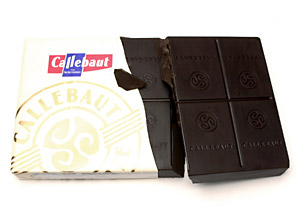
    choco-love.jpg

    I have a pre-feast ritual. It involves staying in pajamas, drinking hot cocoa, snacking on peanut butter toast and the Macy’s parade. It’s like my own inner pre-shift, my personal calm before the storm.

    Just as important, and maybe a touch underplayed, is the post-feast.

    First of all, dessert shouldn’t be served directly after the meal. You have to let the stuffing and potato flavors linger and the memory of the meal set. I love that moment when you feel relaxed and happy, you smell the coffee brewing and you know you have just enough room for something sweet.

    Pumpkin pie is lovely, but why not jack it up as pumpkin pie brulee? And don’t shy away from making a signature Thanksgiving ice cream.

    If you’re looking for a new pie, there’s only about a million options. I like Derby Pie because it has two of my favorite post meal ingredients: chocolate and bourbon.

    One of my favorite, and easiest, post-feast options is to buy a huge block of dark chocolate and set it on a board with a sharp knife and some accessories: slices of grilled bread, salted almonds, apricots, sugared ginger, pistachios, Nilla Wafers, peanut butter, whatever you like.

  • Biggest days of the year

    It is, of course, a big night for the bars. It’s the busiest bar night of the year, if my memory for statistics serves… Bowing to that, here are a couple bar show picks: Martin Devaney Band and Friends will be at the Turf, The Ike Reilly Assassination at First Ave. I still haven’t found the Tina and The B-Sides/Lola and The Red Hots show.

    Since I’ll be signed off until Monday, I thought I’d toss off some great theater happenings, too. I used to work in the theater biz, you know… And while there are no figures to back this claim, I recall the day AFTER Thanksgiving being a big, big day for the stage. So, in honor of that, here goes: Still haven’t seen it, but Worldwide Church of the Handicapped seems promising (I’m taking mom on Friday), A Christmas Carole Petersen was short ‘n funny when I saw it two years ago, and then there’s the ever-recommended Ligustrum Vulgare at Bryant Lake Bowl. Happy Thanksgiving!

  • Fashion and War

    So, the foragers have finally swept the local grocery stores… How many people are you hosting for Thanksgiving dinner? The only comfort (for some of us) is that we’ve got the next several days off, so I thought I’d mention a couple free art exhibits, should you care to avert your attention, if only for a moment, from the kitchens and shopping malls: The Fashion of Architecture, whereat chothiers, architects, and collaborations show their creations (see what Julie Caniglia wrote about it); and Afterwar, an excellent exhibition that examines the everyday lives of retired soldiers throughout the world.

  • Blunt Instrument

    bond1.gif

    Casino Royale
    , 2006. Directed by Martin Campbell, written by Neal Purvis, Robert Wade and the ubiquitous Paul Haggis. Starring Daniel Craig, Eva Green, Mads Mikkelsen, Judi Dench, Giancaro Giannini, Jeffrey Wright, Isaach De Bankole, and Sir Richard Charles Nicholas Branson, who seems obliged to poke his ugly mug into all the big-budget movies.

    There’s a moment in the opening of Casino Royale, when our hero, James Bond, is shown dispatching his very first victim in the sink of a public lavatory. Shot in black and white, the blacks as rich as India ink and the whites as glaring as a flash bulb, the scene is notable for its wretchedness, and an early signal that this isn’t Pierce Brosnan’s world anymore. Apparently, a double-0 agent must waste two enemies before reaching such exalted status. The aforementioned kill is shown in flashback, and now our hero, played by Daniel Craig, sits patiently in the office of his next victim, who assures him that the second kill is easier. Actually, he tries to assure Bond, but is blown through his chair by a single bullet before he can finish that sentence.

    Of course, if Martin Campbell had any wit about him, this opening scene wouldn’t have been in monochrome, but in the sun-drenched technicolor of the 60s, taking us back to the real beginning. But no one has ever accused a Bond film of excessive imagination.

    Casino Royale is supposedly a return to the old-style Bond, the “literate” Bond from Ian Fleming’s potboilers. As it stands, it is not a stretch to say it’s the best Bond in ages, though context is everything: there has literally not been a decent bond since Sean Connery flexed his golden torso in Thunderball, which itself was nothing but fluff. But the comparisons should end there, for Connery’s Bond was at least a product of its time, its politics somewhat reassuring to the zeitgeist of the 60s. The new Bond seems content to give us creaky imperialism, the usual idiotic women, gadgets that, in this world, now seem like nothing any third world country with a few bucks doesn’t own. Worse, Casino Royale has an overlong plot, ham-handed direction, and makes the especially tragic mistake of being, quite simply, in its second half, the most dull big-budget film of the year.

    After the hideous credit sequence has run its course, we open with the usual gangbusters: Bond is sweating away his afternoon in some tropical locale, this time Uganda, watching a mongoose and a cobra fight to the death while a fire-scarred villain waits for his opportunity to make some shady deal. Soon, their cover is blown, and Bond races after the bad guy in a spectacular chase through a construction area… killing scores of innocent Ugandans, whose lives, considering their lack of close up, seem to be less worthwhile than the mongoose or snake. The bad guy is an amazing creature, possessed of the dexterity of a flying squirrel and Jackie Chan, leaping and pirouetting off girders, elevators, cranes, you name it. Finally, Bond chases him down, waltzes into an Embassy (from who knows where), shoots the villain down and razes the building.

    What justifies such wanton behavior on the part of the British government? Apparently, this Scarface was a terrorist, which is enough for us. The new Bond tosses the ‘t’ word around with more aplomb than the Republicans before election day. Who the hell is this Ugandan guy? Instead of the story of a man who undoubtedly grew up living in abject poverty, who turned into a terrorist and somehow managed to morph into this gravity-defying creature, we get… James Bond. And how he learned to love martinis and lose his soul.

    The story is the usual silliness: an uber-villain named Le Chiffre, who weeps blood, makes tons of money by arming the world’s terrorists. Somehow, it is suggested, he made a figurative killing off 9/11, apparently by unloading boxcutters at a low rate. Anyway, Le Chiffre’s latest plot was thwarted by Bond, in a chase scene whose best moments were stolen from The Road Warrior. Having lost his shirt, Le Chiffre must win back his money in a high-stakes Texas Hold ‘Em tournament in Montenegro. Bond is the best card player, so naturally he’s called upon to prevail. Along the way he meets the supposedly intelligent though regally daft Vesper Lynd, played by a beautiful woman named Eva Green, who is slathered under some of the worst makeup since Whatever Happened To Baby Jane? Worse, Green is an actress with the range of a sock puppet, draining what little life there is from this film in every scene. Eventually, Bond beats Le Chiffre, is abducted and has his testicles whacked (literally), and finds a traitor in his midst.

    The film is being called ‘dark’, in that Craig’s Bond can be seen brooding, is testy, then falls in love with Ms. Lynd, and has a supposedly grim ending that references Titanic, of all films. Of course, a decent filmmaker can use lighting and camera angles, set design and editing to suggest despair, so it’s difficult to feel the angst in a film so harshly lit and pedantically shot. The film takes its sweet time going anywhere, and then just when you begin to get bored, screenwriter Paul Haggis steps in to pour syrup on the audience. Bond falls in love, Bond loses girl, Bond becomes jaded. Two and a half hours later the film comes to a close, and you wander out stunned, wondering just when you’ll stop being fooled by the hype and watch something original for a change.

    Earnestness is the raison d’etre of Casino Royale, which is a real shame, because there’s so much you could do to tweak this ridiculous scenario–from Britain’s always failed attempts at outdoing its American counterparts on the foreign policy front, to the fact that nowadays your average teenage hacker has better gadgets than Bond and Company. Not to mention the fact that maybe they could give Bond a woman who is a real foil. Perhaps a lesbian. Or perhaps Bond could be black.

    God forbid this franchise should acknowledge the 21st century.

    The old Bonds reassured us and gave us some needed confidence during a cold war that had everyone on the edge. We often forget that the first three Bonds were testaments to ingenuity–they were big moneymakers made on virtually no budget whatsoever. From Russia With Love could be considered the most literate, and even it had a sense of camp that was evident in its day. We can look now at the dopey blondes and brunettes that hung on Connery’s every smirk, but what do these silly women and their swinging bustline do for us today? Vesper Lynd isn’t fun or funny, and her barbs lack bite (and she certainly isn’t brainy). Above all, why should we give a rat’s ass about James Bond, about his development as a killer and a man, his learning not to trust people, or even about his dispatching villains, most of whom are from third-world countries? If Uganda’s the worst you can throw at us, you might as well resurrect S.P.E.C.T.R.E.

    Judging from its box-office take last weekend, this series will be around for a long time, the machine pumping out these witless packages every two years. But if it’s nostalgia you want, rent the originals. If it’s action you want… I guess you could still rent the originals. See Casino Royale if you’re a Bond addict, if your DVD player is broken, or you’re stuck in a small town and it’s a choice between this and, say, Happy Feet. Or read the book. Your own imagination can certainly do no worse.

    bond2.gif

  • T-Day Countdown

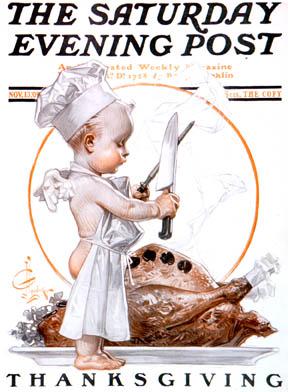
    tday.JPG

    Thanksgiving is my favorite holiday for the following reasons:
    1. No gifts. I love giving gifts, I just hate pretending to like the teal suede and faux fur vests of my life.

    2. It’s not religious. It’ll never be turned into something more palatable and washed out so that everyone feels fuzzy and unoffended.

    3. It’s all about food. The whole point of the day is to eat well and be happy and thankful that you can. It’s the only celebration of the year where the feast is real show.

    As for the family angst, that’s just gravy.

    The only thing more certain than long lines at the grocery store, is the abundance of cooking advice offered by every media outlet on the planet. So I’ll play along….

    Go Turducken! because it’s more than a meal, it’s a David Blaine moment.

    Watch Home for the Holidays with Holly Hunter or Pieces of April with Katie Holmes-Cruise before cooking, it will help remind you that there are bigger disasters than what you will likely produce. Confidence, dahling!

    Cocktail.

    If anyone asks “What can I bring” tell them $20. Or bread. Or wine, that may or may not be consumed with the meal.

    Forget the fancy name-place cards, I’ve got two words for you: hand turkey.

  • B-Ball Me

    Happy short week, eh? There aren’t a lot of notable arts and entertainment happenings going on tonight. But there is that sneak preview party for the Minnesota History Center’s Baseball As America exhibition–although a ticket will set you back a little ways ($25-$50). Won’t it be worth it, though, to hang out with Baseball Hall of Famers like Harmon Killebrew, Ryne Sandberg and Paul Molitor?

  • Dear Miss Yennish…

    you.jpg

    “There simply aren’t enough letters in the alphabet,” Mr. Lyle Baumgartner announced to his freshmen English class one afternoon. “As presently constructed the language is wholly inadequate to express the depth of my feelings.”

    He stared out at the blank or incredulous faces of his students. He then leaned on his desk with his left arm while dramatically and delicately touching his chest near his heart with his right hand. With this visibly trembling hand he made a patting motion and fluttered his fingers.

    There was a long moment of silence while Baumgartner surveyed the class and appeared to be rummaging in his skull for additional words with which to furnish his address. A lumpy, rumpled character with a head of greasy and thinning black hair, Mr. Baumgartner was legendary for his dandruff, his indescribable cologne, and for having worn the same pair of scuffed and clunky brown shoes every day for more than a decade. He was also notorious for once having had a hysterical breakdown while reading aloud from A Day No Pigs Would Die.

    “I know,” he said, “that many of you are familiar with Miss Yennish, the distinguished business education instructor at this high school. What you may not know, however, is that that comely woman has laid claim to my soul, even as she remains blithely indifferent and even, one might say, blind to not only my affection, but also to my very existence. My every effort to woo the object of my desire having proved entirely ineffectual, I find myself driven to a level of distraction and despair that verges on the maniacal. Given this unhappy set of circumstances I am going to ask that, in lieu of your regular assignment, each of you compose a letter to Miss Yennish on my behalf. This assignment will be graded, and those missives I find to be most heartfelt, ardent, and artfully constructed will receive extra credit. They will also be delivered to Endora Yennish’s home, along with a dozen red roses and a poem of my own composition.”

    you don't know.jpg

  • Giving and Getting

    The Gorilla Under the Tree

    Give
    Offense: The Gift That Keeps on Giving

    Passing the Buck

    Rules of the Game


    The Gorilla Under the Tree
    by Mary Lucia

    We’ve all heard the harried holiday shopper ask, “What do you give the person who has everything?” Come on. Is there someone on your gift-giving list who really has everything? Does this person have my black 1940s horsehide jacket that was ripped off from the 7th Street Entry dressing room in December of 1999? Because, dude, I’d really like that back.

    The more important question to me is, what gift do you give someone you’ve been at horrible odds with for the good part of a year? More specifically, what if this someone is a member of your immediate family?

    If you were brought up Catholic, you no doubt have between five and seventeen siblings (give or take a few), and you are therefore familiar with the name-drawing arrangement for gift-giving. Last year, I drew the name of a sibling with whom the last words I had exchanged were via voicemail—something to the effect of, “You’re a black hole. Lose my number.”

    Being Catholic as well as female, I felt wicked guilty for saying those pointed things, no matter how necessary it was for me to unleash. I still could’ve phrased them with kindness: “You are a talented and sensitive black hole. When you get a minute, please lose my number.”

    I wracked my brain to come up with the right peace offering. What gift says “I’m sorry I said the things I said, though I meant every word”? I was nearly drifting off to sleep when the answer came to me like a vision. I would give the gift of absurdity.

    The next day, I went online and Googled “full-body adult gorilla costume.” As I typed in my credit-card number, I wondered what kind of interesting spam lists this purchase would put me on. I felt giddy receiving the big package and thought surely it would magically heal the rift.

    Christmas Eve came, and it happened that our mom was feeling quite ill and frail. With a laundry list of vague symptoms, she bowed out of the evening’s festivities.

    We are a Christmas-morning gift-opening kind of family, so I thought my gorilla suit would now have to possess the power not only to mend my broken-kin fence but also to heal the sick. I needed a Christmas miracle.

    Early the next morning, I awoke to a voicemail from one of my sisters. She was with our mom, who had collapsed and been taken to the hospital by ambulance, barely registering a pulse.

    For reasons I still can’t explain, we allowed that one sister to deal with the ER drama alone. The rest of us, for the sake of my young nephews, decided to proceed with the gift opening that morning and deal with the 40/18 blood pressure of our hospitalized mother afterward.

    The festively wrapped gorilla suit sat under the tree, but no one was feeling merry. We jumped every time the phone rang, awaiting some news. When it was finally time for its recipient to open the gorilla-suit gift, I grew nervous. The spirit in which I had bought it was now heavily overshadowed by the morning’s turn of events.

    First to be pulled out of the box was the costume’s hairy black head. Huge reaction. Big laughs and much needed levity were had by all. A series of “Try it on!” chants followed.

    A look of grave seriousness crossed the recipient’s face, and a sincere explanation was made: “Normally I would, but I have the strongest feeling that the second I get it on, we’ll receive the call from the hospital informing us our mother is dead, and I’ll forever have to remember that I received this news dressed as a gorilla. I don’t think I can live with that.”

    God bless us every one.

    P.S. My mom is fine, and I love my family.

    Mary Lucia is a music host for Minnesota Public Radio’s the Current.


    Give
    by Stephen Burt

    A gift in general is a grim thing, an obligation, a social tie; the best gifts make us forget they are gifts even as we, years later, remember the giver—they are at worst what we always wanted, at best what we never knew we could love. Do not give live animals. Gifts imply wants. Gift in German is poison. Gang of Four sang “Return the Gift” and meant to make bodies sway angularly in self-hatred, guilty for each privilege they receive. Scrawl sang “What Did We Give Away?” They gave us their songs for ten years; in a room full of air, near the end, I was one of few takers. Everyone give it up for the opening act: They gave it everything they had.

    Turn away from friends’ or lovers’ faces as they open any gift from you, lest you believe they chose to show false joy. A baby will give everything new meaning, even or especially phonemes to which the language gives no meaning at all. Give me your tiny hand, unable to answer or call each gesture and hour a gift. Children, surrendering, declare “I give.” Gifted and Talented.

    Give each question at least five minutes before you give the next one your time instead. The not-so-rich can give until it hurts; the rich instead give graciously, yielding gratitude, losing nothing important—or else do not give at all. By the time you read this sentence, bad guys will have given up control over one part of our government, unless—given to cynicism, glib fatigue, habit, or fear—too many voters gave up or gave in. Information, memory, and affection you can give out and yet keep; secrets, however, once shared, are given to shrivel and fade. A gift economy is an economy still: see potlach on Vancouver Island, then see Hanukkah in Bethesda, Christmas in White Plains, the day after Thanksgiving for the caterers’ daughters and sons.

    Desiring this man’s gift and that man’s scope, I’m not the kind of girl who gives up just like that; did you think that I was going to give it up for you, this time? Give this and time extended resonance, an open book, an open question, wide-open blue eyes, an open adoption, a commitment to open source, and yet beware of geeks baring gifts. What gives, who hesitates, why keeps its counsel, giving only how away. It is a gift to be complicated, so much so that your friends try to figure you out. For years I folded and saved the wrapping paper on every birthday and Hanukkah present, accumulating paisley, shiny, striped, and printed rectangles in drawers, as if to remember the fact of their gift.

    Stephen Burt’s new book of poems is Parallel Play (Graywolf); his new chapbook is Shot Clocks: Poems for the WNBA.He teaches at Macalester College.


    Offense: The Gift That Keeps on Giving
    by Alan Berks

    Ten years ago, my girlfriend’s brother came to stay with us for the holidays. He was younger than we were and aloof and melancholy. A few months earlier he had spent three days in jail for dealing pot at his high school. He was as cool as I imagined I wasn’t. For some reason I felt hopelessly square around this guy, and I worried that my girlfriend would dump me as soon as he told her this truth about me.

    Then one day, while we were sitting around the living room smoking some of his pot, he decided to let me know that he—unlike his parents—didn’t have any problem with his sister living with a Jew. He liked Jews, he said. He just didn’t think he could be one because it was such a cynical religion.

    “Cynical?” I asked. “How so?” Until that moment, I hadn’t considered that my cynicism was a genetic by-product of my Semitism.

    “Well,” he said, as though it were obvious, “refusing to accept Jesus as Christ, and all.”

    Oh . . . ooooh. I assured him that I wasn’t cynical at all about Jesus. I simply didn’t think about him. Jesus wasn’t really a part of my universe. Like Australian football. Or menstrual cramps. I neither denied him nor accepted him. Being Jewish, I honestly didn’t give him a second thought.

    I think I offended the poor kid.

    A few days later, his parents showed up at our doorstep with shopping bags full of Christmas gifts. They even brought a big, beautifully wrapped present for me. “For your Hanukkah,” they said. Such a lovely menorah they gave me.

    “Apparently, you think that the only appropriate gift for a Jew is a Jew gift?” I did say that, out loud. I couldn’t help myself.

    We offend when we assume that everyone is like us, shares our values and sense of humor—or, at least, we feel that they should. We take offense for the same reason. We give and take offense when we don’t see the individuals in front of us and acknowledge their right to be different from us. I don’t care whether you actually love Jews because they’re so smart and funny. Or if you think that writers make good, sensitive husbands. I’m offended when you see me as a category instead of as a person.

    The perfect gift, on the other hand, is the one that affirms individuality. The perfect gift shows how specifically the giver cares for you as a distinct individual. Two years ago, my wife gave me a pocket watch with an inscription from a Pablo Neruda poem; you probably wouldn’t want it but it’s priceless to me.

    Offense is much easier to give than the perfect gift, however, and I believe the results can be the same. My girlfriend’s parents may not have seen me as an individual when they arrived, but they certainly did by the time they left. Plus, I understood that they gave me a gift at all because they meant as well as circumstances allowed. A boy they did not know was living with their girl, out of wedlock. I had offended them first, the moment I signed the lease with her.

    As a result of that holiday ten years ago, I’ve developed a certain appreciation for giving and taking offense. In fact, if you don’t know how to give someone the perfect gift, consider giving offense. If you’re lucky, they’ll take it. Then you’ll really have something to talk about around the Christmas tree—I mean holiday tree—I mean Kwanzaa bush—I mean, what the fuck are you calling it these days? Have a happy December.

    Alan Berks is a playwright, actor, teacher. Cocreator of Thirst Theater, he can be found drinking and enjoying daring, inexpensive, professional theater every Mon-day night at Jitters Café and Martini Bar in Minneapolis. His solo show Goats was recently nominated for a New York Innovative Theater Award.

    Passing the Buck
    by Nathan Dungan

    Who knows how countertrends begin? My hunch is that they start as conversations among a few people who share a certain uneasiness with the status quo, and then take root.

    I recall one such conversation back in the fall of 1995, in a town just outside Philadelphia. My friend Bill and I were engaged in one of our routine philosophical debates on the state of the culture. On this occasion, we had taken up the topic of the holidays.

    I remember Bill—an Ivy League grad, Lutheran pastor, and father of three—lamenting the unrelenting pressure that families and individuals are under at the holidays to “deliver the goods,” literally and figuratively. God help us if we didn’t buy everything on the spreadsheet that we used to refer to as a wish list; hurt feelings, misdirected anger, and moping were sure to follow.

    Bill and I agreed that regardless of where you fall on the socioeconomic continuum, the culture of consumption doesn’t discriminate, especially during the holidays. In short, it’s a 360-degree marketing assault promising that gifts equal love and happiness.

    For me, each year as the holidays approach, it feels like I’m standing at the base of a huge mountain. I realize I have to scale it, but there are a couple of problems: I’m not in shape for the climb, and I don’t have the proper gear. However, lacking better alternatives, I begin the ascent.

    Bill and I didn’t start a countertrend back in 1995. That was already well under way, thanks to the creators of Buy Nothing Day, the annual anticonsumerism event celebrated worldwide at the end of November. Rather, thanks to Bill and our periodic philosophical discussions, I learned how to do the holiday thing a bit differently, devising an approach somewhere between hiding under a blanket the day after Thanksgiving and going into a manic frenzy while ascending Macy’s preholiday mountain.

    During our conversations, Bill had shared how his wife’s parents had become disillusioned with the relentless emphasis on holiday spending—especially as it was influencing their grandchildren. After consulting with their adult children and in-laws, this couple decided to start a new tradition. In addition to giving gifts to each grandchild, they also gave each a “share check.”

    The process was simple. The share check was nothing more than a bank check from Bill’s in-laws with everything filled in except “pay to the order of.” That line was left blank because it was the responsibility of the grandchildren to give the money away to causes or organizations they were passionate about. The grandparents’ goal: Introduce a counter-rhythm of gratitude amid the cacophony of “it’s all about me.”

    Since 1995, I have told this story to thousands of people who are searching for an alternative to holiday hype. I, too, am a believer, having used the share check for years with family and friends. And the best part? It really works. We have received thank-you notes from junior high school band directors, church groups, a homeless shelter, the Humane Society, and YouthCARE (an urban youth organization)—each grateful for being a recipient of someone’s share check.

    Imagine if this were the norm rather than the exception. The impact, on individuals and organizations alike, would be profound. It’s almost too simple: Buy a little less and help change the world.

    Nathan Dungan is the president and founder of Share Save Spend, an organization that helps youth and adults develop and maintain healthy financial habits.

    Rules of the Game
    by Penny Winton

    Giving and Getting. The best game in town—anywhere, anytime. (We are talking about eleemosynary gestures, of course, not self-indulgences.) It’s about creating one thing, expanding another, lightening up a life, leveling the playing field a bit, and trying to get others to join your team. (Oh, block that metaphor!) It’s about preserving something or even reversing something. The game of Giving and Getting can be about handing someone the proverbial bootstrap, putting food on a table, easing the amount of adversity that someone has to overcome. It can be about opening doors and opening eyes to things that enrich and refresh, and to people who need to endow them; in other words, it’s not just about giving your own money, but also about getting others to do so.

    Since, as the saying goes, “We can never get enough of what we didn’t want in the first place”—the big, the pricey, the transient, the excess—let’s play at giving to and getting for. Following are a few rules of the game.

    Giving. Do not “give until it hurts.” Whoever thought that one up? Pain and martyrdom will move you back ten squares. Give until it feels as good as it can get.

    If you are rich, never, ever voice that hackneyed protest that you are benevolent only because you must give back to the community that has been so good to you. (As opposed to the hapless souls “the community” has not been good to?) Queen for a Day is another game entirely.

    Give with conviction. You could even try a little outrage. Think about a three-year-old who learns to remove the phone from its cradle and take it to a special hiding place when daddy goes nuts. How about all the subtle and not-so-subtle forms of institutionalized racism and homophobia? It hurts. How about library closings? Books are a basic right! Even a little outrage will move your piece along on the board.

    Getting. Giving comes first. You can’t go out and try to get without giving.

    Have a good story, pleeeease—a positive, promising story about your fund-raising cause so that everyone is happy to be asked and happy to contribute.

    Wringing your hands and whining about how the “Cause for All Seasons” will collapse if someone doesn’t pony up practically disqualifies you from ever playing again. The world turns without the CFAS. If yours is in such crisis, maybe it deserves to fold.

    It’s all right to have fun. Actually, you have to have fun. If you don’t, you must default. The world doesn’t need more people on pity pots. Go buy yourself a Lamborghini or designer jeans, but do not contaminate the lively, visionary, gratifying, satisfying, energizing game of Giving and Getting.

    The next thing you know, you’ll be passing Go and collecting two hundred dollars. Ah, ah, ah. Remember: You can never get enough of what you didn’t want in the first place.

    Just think, it’s a total freebie to wake up in the morning knowing you’ve made the world a little more comfortable, a bit more civil, or a lot more just for someone, and you had a good time doing it. Even if you don’t notice that, your children will.

    Penny Winton lives in the NORC (Naturally Occurring Retirement Community) on the Mississippi River in downtown Minneapolis. She thinks she knows all there is to know about philanthropic stuff, but her husband, Mike, may know more. She loves every award she has ever won, including one for swimming in a relay across Lake Minnetonka when she was sixty-six.