Year: 2007

  • Inmates Run the Asylum

    Or, an alternate title, we can call this the Ultimate Open Thread. Because my promised Kevin Garnett appreciation was simply too weighty a task to try and squeeze in among 75 other deadlines as I scramble to get out of town on a car trip across Canada to the Maine coast.

    Maybe I’ll get it together once ensconced in the woods, but as all vacationers know, that’s not likely. Look for it after August 18. In the meantime, I will try and check in to approve comments and ask folks at The Rake to do the same, but it probably won’t happen as rapidly as usual. I’d still love to get your takes on all things sports, and will chime in myself once I get settled in a couple of days. In the meantime, enjoy this cool weather and keep the topics hot.

    Thanks.

  • I-35W: Blame-Placing IS Part of the Solution

    Unlike a psychopath shooting up a campus, or even a drunk killing six or ten people in a fiery crash, the reasons for the collapse of a major freeway bridge are almost certainly knowable. That means there is significant value in a full, public assessment of those reasons. This tragedy was preventable, and understanding how the critical problem was left unresolved could help prevent another disaster.

    With that in mind, here’s a reminder: It is an essential responsibility of journalism to demand answers to events like the collapse of I-35W, particularly when there is an extraordinarily high probability that all-too-ordinary human error, most likely a series of human errors, contributed to this calamity. If that means placing blame on policies directly related to the proper inspection of that bridge, then so be it. That doesn’t make it “advocacy journalism.” Demanding answers — i.e. discerning the full truth to a relevant story — is so basic a tenet of journalism it shouldn’t even qualify as “courageous.”

    But in a moment when so much journalistic energy is being put into reiterating how much … the reporting journalists … care about families of the deceased and survivors, and how much they admire “heroes” like the first responders, it takes a certain amount of courage to play off the nurturing beat and repeatedly draw public attention to the series of dots connecting policies of naked self-interest and tragedy.

    Good journalism, as practiced collectively by reporters, photographers, editors, and executives at newspapers and TV stations, requires a full range of coverage of an event like we’ve experienced this week. No one can dispute the all-hands-on-deck response by every such entity in town, and there has been plenty to admire. (KSTP-TV is still getting the bulk of the critical acclaim for its work, particularly its non-stop coverage the day and night of the collapse, not that the ratings have matched their effort. But it goes to show that sometimes there is an enormous advantage in NOT having to get permission from absentee ownership in New York or DC to blow out your schedule and provide full community service … as required by your license.)

    While Reporting 101 dictates steady coverage of search operations — the recovery of survivors, stories of good Samaritans, and official speculation on the structural issues in the collapse — it is also entirely appropriate — make that, “vitally necessary” — to be peeling back the complex systemic reasons most likely behind the collapse, and to be doing it NOW, when public attention is focused on seeking explanations and solutions and emotions are high enough to demand the kind of action that might prevent another infrastructure disaster.

    Unfortunately, at this moment in a situation like this, when a specific type of utterly routine political ideology appears so ripe a suspect for goring, the general media attitude is still to play back on blame-placing, as though harsh, indignant tones are “disrespectful” to the deceased or something. (To repeat, unlike Columbine or Virginia Tech, where debates on solutions spiral off into theories of psychology, sociology, etc., the solution here appears to be as basic as adequately maintaining — or replacing — steel and concrete.)

    The standard media strategy in an assailant-free tragedy like this is to apportion roughly 50% of coverage to search and recovery logistics, 30% to feature-ish stories of valor and survival, 18% to straight stenography of political posturing, and 2% or less to what I’ll call informed indignation. This situation needs more of the latter.

    Which more or less gets me back to Nick Coleman. Nick, who I consider a friend, continues to draw heat from his usual adversaries as well as this tragedy’s “This is No Time for Finger-Pointing” crowd, namely the various “No New Taxes!!!!” interest groups and the politicians who were cowed by them. (This same group will very soon morph into the, “Let’s Move On” crowd. That is their well-practiced scenario for distracting the public enough to skitter past the role their influence played in a disaster and make a seamless return to business as usual, ASAP.)

    I mentioned Coleman’s Thursday column, which was kicked over to me by another friend, (but which never made the Strib’s dead tree edition, a decision in which Coleman says he had a choice). Today’s column continues along the same theme, as does his appearance on MSNBC yesterday. (Link provided — ironically enough — by Michael Brodkorb’s Minnesota Democrats Exposed. Thanks, Michael. And all of you reading here, by all means do scroll on down through the 10-watt thinking of MDE’s “No Time for Finger-Pointing” commenters.)

    This is the appropriate time for indignation and demanding accountability from those whose job it is to prevent things as catastrophic and fully-preventable as this from happening.

    Coleman, as we all know, takes regular rippings for being “just an angry guy.” That is so obviously short-sighted it isn’t worth a response. Unlike other metro columnists who settle into a cozy rhythm croaking about silly do-gooders or spooling out numbing, predictable pablum about injustice, Coleman sees the value in laying a two by four across a glossy head from time to time.

    Personally, I admire his willingness to get in anybody’s face — Republicans, fat-ass Democrats, and even his bosses. There are a few strands of pugnacious Irish DNA in the boy. But it isn’t like he’s writing to stay on secret handshake terms with the big boys at the country club. That sort of thing doesn’t take any balls at all.

    OK, so maybe he spikes his blood pressure over things you, and even I, think beneath our concern, like downtown condo towers and baseball stadiums. But his argument against public funding of the Twins’ stadium (which I admit I eventually caved on) was always within the context of misplaced priorities, and the line you can draw between misplaced priorities and that heap of concrete and steel laying in the Mississippi is direct and bold.

    So say it out loud: “Coleman, the bastard, was right.”

    Just like he is right now to continue hammering in to his readers’ brains the notion that some otherwise popular politicians — people who should have known better but were cowed by “taxpayer advocates” into asserting the preposterous and childish notion that you can run a 21st century government for five million people “on the cheap” — have earned a fair share of the blame for this disaster. That is an entirely valid and highly relevant point.

    What’s more, I would find it refreshing to hear other high-profile local journalists, preferably a few of the “Please, please love us” TV persuasion, demand the same kind of accountability.

    Don Shelby is the first to come to mind because his stature as a journalist, as opposed to mere anchor personality, is leagues beyond anyone else’s in town. But if Mike Pomeranz or Julie Nelson or Leah McLean or Jeff Passolt or Robyne Robinson want to take this opportunity to spend a little of their “celebrity” capital, go right ahead.

    On a side note, a couple commenters here at The Slaughter, have misunderstood, intentionally or otherwise, my point on taxation. While , as I said, I feel a wave of nausea every time some liberal/progressive politician weasels away from talking about tax increases — primarily and largely on the 1% reaping the vast share of the benefits of the so-called “low tax” ethos — the greater weight of the blame has to fall on people like Tim Pawlenty who so flagrantly capitulated to The Taxpayers’ League “No New Taxes” pledge in order to guarantee himself both their support as well as freedom from attack by their noise machine of fellow travelers.

    I can’t imagine Pawlenty ever imagined a consequence of “small government” as nightmarish as this, but now that it has happened he has taken less than 72 hours to reverse field (i.e. concede a grave mistake) and declare himself in favor of the long-overdue hike in the gas tax he politicked away so successfully last spring. (A gas tax increase will obviously impact every economic strata while having only negligible impact on Minnesota’s 1%-ers. That’s why re-writing the state income tax is a fairer, more far-reaching solution. But a few more cents a gallon — like 20 to 25 (7.5 does nothing) — at least allows for forward progress on basic maintenance.)

    Blame-placing in the early hours of a tragedy becomes a virtue when the tragedy was avoidable and the processes that caused it are still in effect.

  • They speak for the bees

    images.jpeg

    The title character of “The Lorax,” a 1971 parable by Dr. Seuss, is a tufty, little bearded creature who’s determined to fight big business and save the endangered Truffula trees. He is perpetually jumping atop stumps outside the Thneed factory run by Mr. Once-ler and declaring in a siren-like voice, “I am the Lorax, I speak for the trees.” Then he begs, pleads, demands and argues in an attempt to get the environmental devastation to stop.

    Kyle Peterson, co-owner of Winehaven Winery & Vineyard in Chisago City, Minnesota, is clean-shaven and about seven times taller than than the mythical Lorax, but he and his family are engaged in a similar battle: trying to preserve the area’s bees.

    No one knows exactly why, but the world’s bee population began to plummet a couple years ago, threatening crops ranging from almonds to oranges to avocados, and sending a clear signal that our ecosystem is wildly out of whack. Some experts suspect digital cell phone frequencies, which is bad news for bees, because we’re certainly not, as a nation, going to give up our iPhones. No, the only way bees are going to survive is if beekeepers put in a lot of extra time and effort.

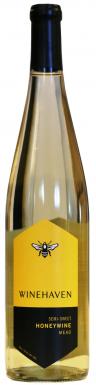
    And that’s what’s happening at Winehaven. They’ve even put a bee on the label of all their wines, to remind us of the insects who are responsible for, basically, fertilizing everything that lies at the base of our food chain.

    0_18748_lglogo.gif

    Back in the 1960’s, when Peterson Honey Company by Kyle’s father Kevin, it was simply an apiary. They specialized in basswood honey — a mild variety that comes from bees who drink nectar from the blooming linden trees lining the St. Croix. There’s a ten-day window around July 4 when pollination occurs. And it’s such a frenzied period, the Petersons say they know it’s happening because the trees along the river begin to “vibrate” with activity.

    It wasn’t until the mid-90’s that the Petersons got into commercial winemaking. They did this for a number of reasons. First, they discovered that the 50 acres they own in the Chisago Lakes Area is on approximately the same latitude as the Bordeaux region of France. Second, they’d dabbled in homemade fruit wines for years and found they were becoming pretty good at the process. But perhaps most important, two of the family’s members developed life-threatening bee allergies.

    Lucky for us, though — both wine-wise and in a global survival-of-the-species way — the Petersons stayed close to the spirit of Kevin’s original business plan. They moved their honeybees off-site, renting space on neighboring farms to house them, and turned 15 acres of their land over to the growing of grapevines. But they also launched Minnesota’s only official meadery, becoming one of about a dozen wineries in the nation to specialize in honeywine or mead.

    0_18578_7_OurWines2.jpg

    If you’re a fan of Beowulf or Renaissance plays with lots of jewel-encrusted goblets, you have to try this. It’s got history going back to the time of Pliny the Elder. Would I drink it every day? No, it’s a bit sweet — plus, it’s reputed to enhance fertility (which, so far as I’m concerned, ought to be on a warning label somewhere, even if it’s only lore). But this is one of those products I’m just glad to know exists.

    Winehaven’s Semi-Sweet Honeywine is thinner than I expected — I’d imagined those Norsemen quaffing wine the quality of molasses — but exceedingly pleasant, with the aroma of wildflowers and a flavor that’s both sweet and buttery with just a tiny (9%) zing of alcohol.

    It’s worth mentioning that Winehaven also makes fruit wines (cranberry, raspberry, and rhubarb), as well as traditional grape wines: an interesting Riesling with notes of green apple and peach, a boring but competent Frontenac, and a too-sweet but tasty Marechal Foch. I’m dubious, frankly, about the practice of growing grapes in Minnesota and have yet to try a local wine that comes anywhere near West Coast standards. But if any of the local players is going to leap the barrier between Midwestern grape juice and real wine, I’ll put at least a little money on Winehaven’s being the one to do it.

  • The Millenial Mind

    usa_2005_scion_xb_spe_4_x_exdrvrsd_x.jpg

    The first generation Scion XB, a rebel yell from Toyota (of all places)

    A few weeks ago I attended a conference in Las Vegas. Among other things, this put me in direct spiritual contact with The King. While I have never actually been a fan of Elvis Presley, my re-acquaintance with this icon got me thinking about several things. First and foremost, it made me think about what it means to rebel.

    I’ll spare you another diatribe peppered with strategies for fighting commonism. Rebellion, however, is something that is key to understanding a lot of things in the world right now: it can help you understand people; it can help you understand politics (which I rebelliously assert is a discussion that should only take place with a politician); and it can very much help you understand cars.

    Particularly those at the top of the millenial mind. (Not exactly my point but a useful link still.)

    I am talking about a segment of our population right now that is highly influential in setting trends. I discovered at my Las Vegas conference that the term for this generation is “millenials.” The term loosely applies to people in their 20s, who, historically speaking, have always been ones to rebel. In the 1950s, that meant Elvis. In the 1960s, it meant more. In the 1970s, 80s, and 90s, it meant less. And in the present, it means MySpace, YouTube, and cars like the Honda Element (sorta) and the Scion XB (for sure).

    Let’s talk first about the Honda. On the surface this seems like the poster car for millenials. It’s cool; it washes out with a hose; and it looks weird to anyone over 40. Almost — except for that last part. The Honda is purchased mainly by people between 35 and 50. Yep, middle-aged people dig this car a lot more than the millenials, and I think I know why.

    The Honda is cool, but not exactly rebellious. The design hangs together in a way that offers no real edge. It works for folks who may have the will, but don’t really desire a way to rebel.

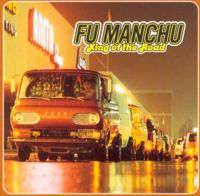
    The Scion XB is a different story. It purposely juts right into your face. It is boxy to the extreme. Its current ad campaign invites you to hate it. And I believe, although I cannot prove just yet, that it will retain its crown as The King of The Road for millenials.

    200px-Fukingoftheroad01.jpg
    Smart title from a stupid stoner band.

    It is a car that even Elvis would drive, or Lil’Kim (with some dubs and kit), Radiohead, or anyone else of the true millenial mind.

    You may have noticed from my list of artists here — all over 30 and now out of jail — that the classification has far less to do with a specific age and more to do with two special beliefs:

    1. That the uncommon is superior, always, to the common.

    2. And that sometimes you have to fight to make it so.

  • Written in the Wind

    by Cristina Córdova

    written_on_the_wind_2.jpg

    This Douglas Sirk movie, playing in Loring Park on Monday evening, is easily the original Lifetime movie; yet it manages not to make my life feel insignificant simply by my watching it. It’s the original. How can that be bad? This is old school, baby. It’s the love triangle, the deep dark side of alcohol, neglect and abuse, unrequited love, best friends in love with the same woman, the evil hand of jealousy, the damsel in distress — and none other than Lauren Bacall, of course. No wonder they’re both in love with her. You’d have to be crazy not to be in love with her. And yet her charms aren’t nearly exploited or explored in this film. I’ll take her with Bogie any day. Rock Hudson just doesn’t seem to make her shine. Actually, it’s the bad guys in this movie that actually make it worthwhile — which is actually pretty amusing considering they’re not the big names on the marquee. Robert Stack’s drunken Kyle and Dorothy Malone’s portrayal of the spurned vixen are enough to keep me entertained. (Of course, I’m a sucker for the classics.)

  • Inappropriate observations

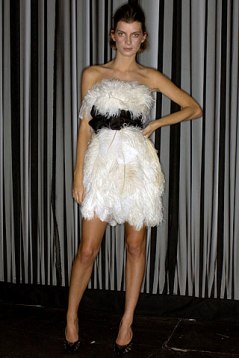
    This is perhaps not an appropriate time to talk fashion, but here goes: First off, I noticed the fall “trend report” was recently posted at Style.com. And get this: “winged migration”–as in feathers, friends–gets an honorable mention. Doubtful that this trend will make its way to Minnesota. Heh.

    Also, thanks to Jezebel and Valley Wag for making fun of blue shirts, the new standard issue of male office workers everywhere. Earlier this week, I found myself in an elevator with two men–both wearing blue button-ups and khakis. Next time you’re staring into the chasm that is your closets, fellas, do us all a favor and pass by the blues and the vertically-stripped button-ups. In any case, the mockery brightened my Friday. And this Friday is a dark, dark place.

  • Top Truffle

    rocco.JPG
    ssssssssssssssassy

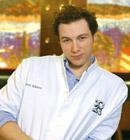
    First of all, does it seem that Rocco has had some work done? Or was that just a really creepy makeup job?

    This last week, the Top Chef kids had to compete in a food test for the quick-fire challenge. What was with the gimme ingredients? Oatmeal? Bow-tie pasta? Come on, Casey should have had to name it correctly as farfalle at least. But wasn’t it soooo awesome when Hung’s ego was his downfall, passing on a taste test that would have given him the correct ID? Do you think he watched that episode at home and cringed? It should be noted that Brian was in the top two.

    On to the elmination challenge … which was all about figuring out how to freeze a pasta dish. Yada yada yada to individually freeze or not yada yada yada.

    The best part of the show was the Truffle Smackdown between Rocco and Colicchio. Tommy thought the flavors of Tre/CJ’s dish were a little beyond the Mediterranean scope of the assignment. Rocco smirkingly disagreed, he’s had truffles from all over the Med and no way is he going to pass up a chance to giggle at Mr. Smugly Accomplished over there.

    The saddest part is that, even though I heart Colicchio, he was wrong. Seriously, Umbria is well-known for their truffles, which makes the ingredient fair game. What’s worse, he tried AGAIN to prove his wrong point by asking the chefs if they thought it was a good choice to add truffles to a Mediterranean dish. Rocco had to be tapping his toes with evil glee under the table.

    I must say, as much as I am a Brian fan, I have to root for CJ as well. He is hi-larious and I would love to hear his commentary for a few more weeks. And Joey … I guess the bigger they are, the harder they sob.

  • Art, Fairs, and Fringe

    ART
    I’m sure you all ready know about the Uptown Art Fair this weekend. It’ll be the same usual chaos with endless booths of art — paintings, sculptures, mobiles, textiles, pottery, glasswork, wirework, jewelry, photographs, wood carvings, toys, you name it — and food, plenty of food. You’ll find everything from wild rice and bison sausage to smoothies with wheat grass — or at least corn on the cob, cheese curds, and mini donuts; you can always count on those.

    If you’re looking for a slightly smaller venue, with just as much clout, make your way to the Loring Park Art Festival. Hell, make a full day out of it and go to both!

    But if neither of these options are quiet enough for you — you’re hoping for something with a bit less energy and a bit more air conditioning, here are a few other options:

    Segrelicious

    SLTsegrelicious.jpgDescribed as a “multi-media, poly-racial-gender exquisite corpse of poetry, performance, and artistic experimentation,” Segrelicious has quite a tall order to fill, which might even be possible, given Shoebox proprietor Sean Smuda’s polymorphous involvement with dance, poetry, photography, iron sculpture, and even improvisational music. Each artist was directed to make work in response to a piece from another artist. On August 4 from 6-9 p.m., in both the Obsidian Arts and Shoebox Gallery spaces, the visual-arts part of the show opens. For the Soul Food gathering on August 25, bring a dish, a drink, and a story or talent to share that afternoon; a physical and intellectual potluck will unroll throughout the Roberts Shoes building at Lake and Chicago. Segrelicious performances begin at 8 p.m. Call it a bohemian rhapsody … — by Ann Klefstad

    August 4 – October 25, Shoebox Gallery and Obsidian Arts, Roberts Shoes Building, 2948 Chicago Ave. S., Suite 220, Minneapolis; 612-825-3833.

    New Photography: McKnight Fellows

    grocery_pub.jpgOrin Rutchick, Kristine Heykants, Angela Strassheim, and Mickey Smith now show the fruits of the past year’s labors as winners of the McKnight Foundation’s annual photography fellowships. These are fairly approachable artists, standing in relation to average folks’ uses of the medium: Orin Rutchick’s project is all about tourist snapshots; Kristine Heykants’s theatrical studio work rides atop her commercial work shooting models and brides. Angela Strassheim worked in forensic photography before moving on to document life in the suburbs (arguably more of the same), but her work has always borne some resemblance to both family snaps and famous paintings. Recent fame has encouraged Strassheim to push her candy-colored malign line further; these photos are interesting but you probably shouldn’t have dessert before you go see them. The one photographer here who shows nothing really new is Mickey Smith — someone get that girl out of the library! — by Ann Klefstad

    August 4 – October 7, Minnesota Center for Photography, 165 13th Ave. N.E., Minneapolis; 612-824-5500

    Plant Worship

    Cynde Randall has been in touch with just about every artist in the five-state area, thanks to her work as a longtime associate with the Minnesota Artists Exhibition Program at the Minneapolis Institute of Arts, and as the founder of the annual Bird x Bird exhibition, a benefit for avian well-being. Now, fittingly, she has her own eco-gallery on the shores of Lake Pepin, in the heart of the Mississippi flyway. It opened in June, and its new show, Plant Worship, includes new works by Pat Callahan, Dennis Conrad, Andrew Neher, and Luke and Valerie Snobeck. Randall says the satiric but heartfelt work from this crew illustrates “the problematical relationship between human behavior (and industry) and nature.” As Neher notes regarding the issues his work explores: “What we are facing today isn’t the end of life but the end of a lifestyle.” — by Ann Klefstad

    August 4 – September 9, Swan Song Contemporary Arts, 3557 W. Main St., Maiden Rock, Wisconsin; 612-250-9222.

    THEATER & PERFORMANCE
    Just like the Uptown Art Fair, probably even more so, you’ve heard plenty about the Minnesota Fringe Festival. Man, this town is cool. No, really; I mean it. We have a whole theater festival devoted to the fringe. So cool. I hear a lot of people — mostly theater folks and aficionados — complaining each year when big fringe festival sellers (the “popular” shows that get all the hype) don’t make it into the following year’s lineup. They all argue that at minimum a small percentage of spots should be reserved for those with previous successes. Hmmmm… Doesn’t that defeat the purpose of the fringe festival? How popular must one get before one is no longer fringe? Anyhow, everyone has just as much of a chance as everyone else, and that’s a lovely randomness. The beauty of the fringe fest, despite how much it often pains us, is it’s unpredictability. You win some; you lose some. That’s how it goes. And frankly, I would be terribly disappointed if on any given year I were not at least once terribly disappointed. Nonetheless, each year, so many of us scour the media, and our friends, for some small sign, a hint of direction, for which plays to see, for what to avoid. And of course, The Rake will do its small part.

    Here’s a little info on a few selections we’ve deemed important. (This, of course, says nothing about the many more we’ve missed. If you have something to add, please do so in the comments.)

    Take a Left at the Giant Cow: A Beginner’s Guide to North Dakota

    687.jpgIf the three-minute preview we saw in late June (as part of the Fringe For All sneak peek) was a representative sample, this will be a show that typifies fringey humor — you know, jocular and yet acerbic, delivered with wit and plenty of pop-culture references. Last year, the North Dakota show’s originators, Curt Lund and Laura Bidgood, had a Fringe hit on their hands with the hilarious comedy, Two Queers and a Chubby. This time around, the NoDak natives take aim at a different, but no less susceptible target: their unglamorous home state. They’ve cooked up a script woven with childhood memories and droll observations, making light of everything from North Dakota’s plummeting population to its lack of celebrity exports. — by Christy DeSmith

    Pillsbury House Theater, 3501 Chicago Ave. S., Minneapolis; 612-825-0459.

    Around the World in Eighty Days in Under Sixty Minutes

    677.jpgIf the prospect of staging Jules Verne’s adventure novel seems at all daunting, consider, then, the restraints of the Fringe: All shows must wrap within sixty minutes. Yet if anyone can accomplish this feat, it’s Hardcover Theater, a Minneapolis-based company that routinely transforms novels, short stories, and even poetry into entertaining nights of theater. In adapting Verne’s whirlwind account of a trans-global voyage by boat and train (set in 1873, mind you), Hardcover has turned the expedition into sport. With the cast literally racing to beat the clock — stopping in Egypt, India, Hong Kong, and the American Wild West — this is a serious contender for fastest-paced show at the Fringe. — by Christy DeSmith

    Mixed Blood Theater, 1501 South Fourth St., Minneapolis; 612-338-0937.

    Deep Boy

    658.jpgOne of our favorite local freelance directors, Jon Ferguson, directs a company of six teenage performers and theater-makers (from Stages Theatre Company) in the creation and performance of this original play. So far, Ferguson’s Fringe Fest track-record is unblemished; his past hits include the 2005’s Please Don’t Blow Up Mr. Boban and 2006’s Kill The Robot. In the case of Deep Boy, the scenario, roughly, involves a high school-sponsored summer camping trip attended by a mix of over- and decidedly under-achievers. The kicker is this: The kids’ return to nature is led by a bully of a teacher, one whose favored tactics include intimidation and belittlement. This is fertile territory for the imagination, and Ferguson is well suited to coax every last drop of poetry from his teenage charges. — by Christy DeSmith

    Theatre de la Jeune Lune, 105 North First St., Minneapolis; 612-333-6200.

    Bards

    730.jpgStill finding the Fringe calendar a bit overwhelming? Feel like supporting the local theater scene, but don’t want to risk boredom or disappointement? For the last two years, with its productions of Inspector Rex and Deviled Eggs, the Four Humors Theater Company has provided (comic) relief to the wary Fringe playgoer. The troupe’s latest creation, Bards, sets Christopher Marlowe as a lead spy for the Queen in Victorian England. And who does he enlist for a dangerous mission? None other than William Shakespeare. Hilarity is sure to ensue. — by Max Ross

    Southern Theater, 1420 Washington Ave. S., Minneapolis; 612-340-1725.

    Other shows of note: Promiscuous Obedience, at Interact; Shakespeare’s Hystery of Queene Margaret, at Bedlam; and Circumference of a Squirrel, at Bryant Lake Bowl. I’ll be at The Book of Pops on Saturday afternoon.

    The Minnesota Fringe Festival, August 2-12, 651-209-6799; $3 button + $12 (seniors/students/MPR memebers $10; children $5), or $45 for a five-show punch card.

    BOOKS & AUTHORS
    And just in case you need one other fabulous option:

    The Man with the Golden Pen

    colin_photo.jpgThis weekend, Jamaican author Colin Channer makes his Twin Cities debut with readings at the Loft Literary Center (free) and then at the Jamaican Independence Gala Dinner (40$), to promote his new novella Girl with the Golden Shoes. The story is about Estrella, an inhabitant of the fictional island San Carlos who is exiled from her village because of her passion for reading and writing. Channer’s style is evocative of the reggae rhythms of his native Kingston, lending his narrative an upbeat, dreamlike quality, while remaining incredibly visceral. Already lauded by several publications and reputed authors (including The New York Times, The Washington Post, Russell Banks, and Edwidge Danticat), Channing is a rising star of the international literary scene whose every fable has the power to become a classic. — by Max Ross

    Friday at 7 p.m., The Loft Literary Center, Open Book, 1011 Washington Ave. S., Minneapolis; free. Saturday at 8 p.m., Jamaica Minnesota Organization Independence Gala, Marriott SpringHill Suites, 5901 Wayzata Blvd., St. Louis Park; $40. 651-639-7687.


  • You're Gonna Have To Serve Somebody

    Tonight I have a cold.

    While this may be true, it is equally true that far too many blogs begin with precisely such banalities. Fortunately, while I do have a cold, I also spent half the evening talking to people who subscribe, yes subscribe, to The Rake.

    So while I still have a cold (just coughed all over my Cinema Monitor here, my mucus forming like glittering stars over the screen), these good people warmed my heart.

    And why?

    Because they could talk about stuff that was uncommon.

    The only time the conversation got a little off track was when one woman asked me why she had not been able to locate the Maserati at Sears that I blogged about last month. She also asked me if I worked for the dealership. While I can’t answer for the cars tonight, I can speak quite clearly, cold and all, about whose service I am in. I told her, with pride, that I am in the service of no one but the King.

    I am not sure what I meant, but it sounded uncommonly cool.

  • Some Questions for our Fearless Leaders Precipitated by the Precipitation of the 35W Bridge

    More interesting than the news of the bridge collapse itself is the immediate attacks going on in the blogosphere by liberals and conservatives blaming each other for blaming each other.

    Here’s how it’s going so far, in case you have other things on your minds: liberals suggest that we should have raised taxes by now in order to pay for the well documented need to improve the country’s infrastructure of roads and bridges; conservatives think it’s too bad the bridge didn’t fall on the liberals for suggesting that “no new taxes” is anything short of unimpeachable dogma.

    Still, questions should be asked, in a non-partisan fashion. Here’s a few I’m wondering about today.

    Timmy P has ordered all bridges in the state to be inspected. What’s the point if he won’t go along with a five cent gas tax that would pay to fix them? Could we afford a one cent gas tax that would be enough to pay for signs that we could post at the entrance to ones like the 35W bridge (which got a 50 percent passing grade when inspected two years ago) that say, “There’s a good chance that this bridge could fall down before we get around to fixing it. Cross at your own risk.”?

    What should we be willing to pay taxes for? Stadiums? (Yes) Keeping city libraries open? (No) Ethanol subsidies for agribusiness? (Yes) Roads on which to drive our subsidized gas guzzlers? (No) War in Iraq? (Yes) Health care for veterans? (No)