Author: Ann Bauer

  • Cheap thrills

    gigsinside.jpg

    Looking for a late afternoon glass of wine that costs less your morning latté? Try Gigi’s Cafe. Be forewarned: this is not a place to visit when you’re in a businesslike mood. It doesn’t have air conditioning, wireless Internet, or table service. And the staff tend to shuffle in circles, stirring up homemade salads, brewing iced tea, and arranging enormous muffins on a plate, totally oblivious to the waiting crowd. Then someone with dreadlocks anchored by a knit cap will glance in your direction and ask — utterly without irony — “Are you being helped?” If you say no, odds are good he’ll put down his spoon and amble over.

    But if you can get past all this, putting your type-A personality defects aside, you’ll find the food is amazing — wholesome and inexpensive. Gigi’s bakery produces giant cupcakes, fresh-baked fruit tarts, and bread pudding as warm and comforting as your favorite blanket. Plus, every weekday afternoon from 3-6 p.m., house wines are Happy Hour-priced at just $3 a glass. Yesterday’s pick, an unusually light, organic Malbec, was easily worth twice that. For all of these reasons, Gigi’s happens to be the hangout where Jeremy Iggers and I meet to confer about restaurant reviews and blog posts on old-fashioned seltzer makers (check this out: it’s “vintage” Iggers). Critics: we’re all about long slow afternoons and cheap wine.

  • Red Knife, Green Knife

    Nearly every morning but for Shabbos (Saturday, the Sabbath) and religious holidays, Rabbi Avrum Kaufmann walks from his home in St. Louis Park to the Byerly’s store half a mile away, where he serves as mashgiach: supervisor of the kosher deli’s adherence to kashrut laws.

    The deli cannot open until Kaufmann or one of his delegates arrives, and it must close for business if he leaves for even a moment. According to Jewish law, no deliveries, food preparation, or sales may be conducted without a mashgiach on hand to ensure that everything is handled correctly. Kaufmann also oversees Byerly’s kosher bakery, and what is likely the only certified kosher sushi bar in the Upper Midwest.

    “Many people are under the misconception that kosher means a food was blessed by a rabbi,” Kaufmann says. “But that’s not true. We do say a blessing when we slaughter an animal because it’s part of Jewish law, but that isn’t what makes the meat kosher. Kosher is a matter of fact; something either is kosher or it isn’t.”

    Fact, yes. But as with many of the laws that appear in the Torah—the first five books of the Bible, which Orthodox Jews hold to be the unmediated word of God—determining these facts is a complicated matter. Kosher law includes the following tenets:

    • Meat must come from animals that ruminate (chew a cud) and have cloven hooves.

    • Fish must have fins and scales; all shellfish is considered trafe, or unfit.

    • Meat and dairy may never be eaten at the same time, as the Talmud prohibits “boiling a calf in his mother’s milk.”

    • Utensils and dishes that come into contact with meat must never come into contact with dairy, and vice versa.

    • Insects, birds of prey, and the hindquarters of animals may not be eaten.

    Rabbi Kaufmann, who has worked as an elementary school teacher, an electronics retailer, and a pulpit rabbi, interprets these laws for Byerly’s. He also checks the heckscher (or kosher seal) of prepared foods coming into the store; answers customers’ questions; and makes decisions when situations call for a mashgiach’s judgment.

    For example, how to treat pareve (“neutral”) utensils—that is, utensils that have touched neither milk nor meat: “What would happen if, by accident, we were making a spaghetti dish and instead of stirring it with the pareve spoon, we stir with a meat spoon? Would that invalidate the dish? Would it invalidate the spoon?” he asks. “This varies by factors: Was there meat present and how long did the spoon sit in the dish? We might rinse and sanitize the spoon, boil it, or blowtorch it. These are the sorts of decisions I have to make.”

    Like all mashgiach, Kaufmann obeys the laws of kashrut and does mitzvoth, meaning he keeps all 613 commandments that appear in the Torah. But he works alongside Steve Deutsch, the deli and kosher meat manager at Byerly’s who is a goy (non-Jew) from Ellsworth.

    Deutsch grew up in the business, starting as a laborer at his hometown meat locker at the age of fourteen. After attending Mankato State, he moved to the Twin Cities and began working for Byerly’s in Edina. Nearly three years ago, the company asked Deutsch if he would head up an unprecedented project: developing an all-kosher deli in St. Louis Park.

    “I thought this would be an exciting opportunity to test my mettle,” he says. “The first thing I did was go out and for a week, I kept kosher. I wanted to see what I was up against.” He laughs, looking like a grown-up Opie Taylor. “What I found out is that I eat a lot of cheeseburgers.”

    Deutsch read up on kosher law and spent ten months designing a kitchen that would meet its standards. Ultimately he decided to offer no dairy whatsoever; the deli offers meat, fish, and pareve items. And he came up with a color-coding system for all kitchen utensils and surfaces: red for meat, white for pareve, and green for fish.

    “Color coding bridges language barriers, and it becomes automatic,” he explains. “So much so that I’ll be at home, going to cut one of my kid’s sandwiches and I’ll look in the drawer for a red-handled knife.”

    Though he does not observe kashrut himself, Deutsch is firm about the deli’s obligation to its clientele, whom he calls the most gracious he’s ever known: “We never compromise when it comes to the standards. We always err on the highest side.”

    This month marks the two-year anniversary of the kosher deli at Byerly’s, which serves approximately three thousand customers a week from places as far away as Kansas City, Detroit, and Fargo. Locally, the majority are Orthodox Jews, but the deli also serves Muslim customers who follow halal guidelines (“permissible foods,” according to the Koran, which overlap with many kosher foods) and a growing number of shoppers more concerned with avoiding dairy than with following religious laws.

    “This place is important to a lot of people,” Deutsch says. “I had a mother come in with her six-month-old baby who was severely lactose intolerant and just moving from soy formula to solid food. When I showed her the sign that means pareve and told her that’s all she had to look for, she cried, she was so relieved.”

    It is, perhaps, this mix of customers and needs that helps bring together the two men—butcher and rabbi—and encourages them to pool their knowledge.

    “When we opened, Steve and I made a deal,” Kaufmann says. “In nine months I would be a butcher and he would know how to speak Yiddish.” He butts Deutsch’s arm and grins, looking, despite his wiry hair-netted beard, like a naughty little boy. “OK, so that didn’t happen. Eventually, we’ll get there.”
  • Illegal Parking & Public Ministry

    Maybe this has happened to you. But it was my first time.

    It was a Monday afternoon, and I’d made a date to meet C., a former colleague, for a drink. I was a little late getting to the restaurant, my head fuzzy from a summer cold. So I pulled into the first parking place I saw, glanced at the sign that said something like "One hour parking until 4 p.m.," checked my watch to confirm it was, in fact, a few minutes after five, and hurried inside.

    Forty-five minutes later I emerged onto the brilliant, 90-degree street. I said goodbye to C. — thinking only of my air conditioned family room, comfy oversize boxer shorts, and an old episode of Medium — and took three steps toward the empty place where my car was supposed to be.

    I went back into the restaurant, followed by C., and told the bartender, who simply shrugged. "You must have been in a no parking zone. Happens all the time."

    "That’s right," a patron volunteered. "I heard the city is making money this way. Towing cars like crazy."

    I called information on my cell phone and asked to be connected to the Minneapolis Impound Lot. A woman answered the phone promptly; she listened to about three sentences of my story, then read a license plate to me. "That one yours?" she asked. And when I said yes: "You can come down and pick it up any time. That’ll be $138 for the tow, plus $34 for the parking ticket."

    "Goddammit," I snorted through thick sinuses. Though the truth is that I probably would have paid three times that if they’d just brought my car back to me and let me go home.

    I would have liked to claim terrible luck or injustice. But there were these facts standing in my way: first, the sign — clearly posted above — promised one-hour parking until 4 o’clock and NO PARKING from 5-7 p.m. And it was bright red. Also, despite my sniffling and increasingly foul mood, C. stuck with me, putting her own evening plans on hold and driving me eight miles to the impound lot, a bleak wasteland off Colfax Avenue North, just blocks from the Minneapolis Farmers Market.

    Inside, it was all cinderblock and vending machines, a huge TV overhead playing The Jerry Springer Show. In other words, Hell.

    And the greatest insult of all? I had to wait in line for the privilege of paying $172 to reclaim my own car. And there were nine or ten people already waiting for the two workers who stood behind glass, calling us forward one by one. C. tried to make conversation; she was a really good sport. I only muttered.

    The line seemed to stretch on forever. An older man who’d finally made his way to the window was paying in worn ten- and twenty-dollar bills, which he counted out with shaking hands. In front of me, there was a mother clutching the hands of three babies, two men speaking quickly in Spanish, a very tired-looking young guy in a torn t-shirt. Plus two girls in sequined bebe shirts and Britney sunglasses who looked totally out of place.

    Finally, it was my turn. A regal-looking, black woman called me to her window. I gave her my name and license plate number, then wrote out a check and slipped it under the glass barrier between us. "Why did they give me a parking ticket and tow my car?" I whined. "Why not just ticket it?"

    The woman glanced down at the paper in front of her. "Hold on just a moment; let me check for you." She looked at something I couldn’t quite see — a map or a table of some sort. "It seems you were parked in a rush hour lane," she said in a low voice. "The police couldn’t get traffic through."

    "Oh, I guess that sounds reasonable." I was feeling pretty stupid at this point. "Outside to your right, there’s a van that will take you to your car. Just show this to the driver." She passed a piece of paper through the slot. "Is there anything else I can do to help you?"

    "No." I backed away. "But thank you."

    "My pleasure," she said. And then she smiled like she meant it.


  • FORECAST:

    The outlook is rosé

    Ch Grande Cassagne Rose.jpg

    My father is a Harvard-educated economist and a Jew of the highest moral order, who believes it is what a man leaves behind him on this earth — from offspring to good works — that determines his worth.

    He’s also wont to say things such as: “I believe that, in his heart, George W. Bush just wants to do what’s best for our country.” and “I don’t care if gay people want some sort of civil union, but they shouldn’t call it marriage.” and “No scientist has proved to my satisfaction that global warming even exists.”

    I love, admire, and respect my Dad. But on most issues, we’re simply going to have to disagree. Violently.

    And so it is with Bill Summerville, partner and wine expert at La Belle Vie. (Well, except for the love part. Sorry, Bill, I just don’t feel we’ve gotten that close.) Summerville is one of those ridiculously young culinary savants [he wouldn’t disclose his age, but when I guessed he was in his 30’s, the bartender guffawed] who got into the business via D’Amico and has shot straight up through the ranks. At Solera — Tim McKee and Josh Thoma’s other restaurant — Summerville was staff: a front of the house man who put together a wine list made up mostly of Spanish wines. When the partners moved LBV from Stillwater to Minneapolis in late 2005, they promoted Summerville. A good move.

    He’s confident and well-dressed — like one of those guys who runs the dining room in a Gregory Peck film — and he knows his stuff. But Summerville is wont to say things like: “Robert Parker favors these wines with gobs of hedonistic fruit so his descriptions don’t mean anything.” and “As you become more sophisticated, you go from appreciating big wines such as Zinfandel to liking lighter, more ‘feminine’ wines like Burgundy.” and “In the summertime a red is too heavy; real wine lovers drink rosé.”

    I’m not saying Summerville is 100 percent wrong, but I happen to disagree on all counts. I concur with Parker eight times out of ten. Anyone who’s been reading this blog knows that I adore a big, sexy Zin. And if it’s 95, I’ll just move inside to drink it. I like a lot of whites, too. But rosés? Frankly, most of them take me back to junior high and strawberry lip smackers. They have that eau de Bonne Bell.

    Yet, I’m always willing to rethink my opinions. Not about gay rights or global warming, but about wine.

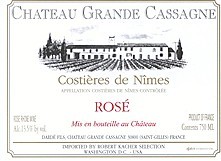
    So I sat down with Summerville to taste several pinkish varieties. And one of them — I have to admit — was interesting. I could drink this with a spicy paella or a really meaty fish. The Chateau Grande Cassagne Costieres de Nimes; I would give you a link but I’m damned if I can find the winery’s site. It’s a Rhone blend with a rubier color than most, a fruity scent, and the oddly admirable taste of wet shale on the flat of the tongue. This wine has character: a long, sort of starchy finish and a mystical, herbal echo in the mouth.

    Remember, too, that Summerville has a bunch of other rosés he’d love to have you try. In fact, he’ll pour you a flight of four for $10. And given the sumptuous Man in the Gray Flannel Suit quality of the La Belle Vie bar, that’s quite a deal.

  • Wisdom from the Wedge

    gse_multipart12636.jpg

    On that theory that a rising tide floats all boats (to which I subscribe), I’d like to point you to a new food blog, Eat Local Challenge, which is sponsored by the Wedge Natural Foods Co-op. The point of this new site is to encourage people to get at least 80% of their food from local/regional producers, growers, and farmers. Eat Local defines “regional” as Minnesota, Iowa, Wisconsin and the Dakotas, and it includes content from Twin Cities luminaries such as Lenny Russo, chef/owner of Heartland, a restaurant dedicated to sustainable gourmet cooking; Elizabeth Archerd, education director at the Wedge; and Beth Dooley, co-author of Lucia Watson’s Savoring the Seasons of the Northern Heartland.

    Now, as a dedicated wine and coffee drinker who’s wild about Alaskan salmon and a deep-sea fish called John Dory, I sympathize with those who might have difficulty making the pledge. But eating mostly locally is — like calling a moratorium on all those plastic bottles of French spring water — the right thing to do, for the economy and for the earth. Even sometimes, even halfway, even just as much as you can. And if you’re not into grilling pork or making blueberry cobbler, Eat Local provides a handy list of restaurants like Cafe Brenda and Restaurant Alma that can help you out with exquisite, local fare. Check it out.

  • Hairspray: A Strange Little Ray of Hope

    by Ann Bauer

    HairsprayLaundry.jpg

    There are hundreds of movies that have informed, moved, touched, piqued, or entertained me, but only a handful that have filled me with unmitigated joy: Bringing Up Baby, an off-the-wall 1938 Katharine Hepburn/Cary Grant comedy; Bagdad Cafe, a film from 1988 that got mixed reviews but has one of the most haunting soundtracks I’ve ever heard; and strangely, last year’s biopic about Leonard Cohen, I’m Your Man, which caused me to leave the theater weeping and grateful for reasons I couldn’t even name.

    Add to these the current release of Hairspray.

    I’ll admit, I haven’t seen the original John Waters version. (I know, I know, this is an egregious omission in my own personal film education.) But I’ve been told that it’s “campy.” Come to think of it, that’s the only adjective I’ve heard applied to it. And the truth is that I’m not a big fan of camp. In my experience, life is odd and dissonant and colorful and wonderfully inconsistent all on its own; you don’t need to heighten these elements in order to make a point.

    The 2007 release of Hairspray, still in theaters today, is not particularly campy. It’s remarkably sweet — so sweet, in fact, that I was leery at first. When the film opened with a robust, stiff-haired teenager bounding out of bed and dashing into the streets of Kennedy-era Baltimore to sing, I steeled myself for treacle. Somehow, though, despite scads of bouffy-haired young people crooning ballads, the film managed to avoid this. And halfway through, I realized it had become a tract on everything that is wholesome, righteous, moral, and good, while raising real issues about human dignity and cultural standards of beauty.

    I’m not saying Hairspray is realistic — it isn’t. But that’s what’s so great about it. Sit down to watch this movie and you get to enter a world where black and white DO become equal, where the fat girl dances to wild applause, and where family means everything.

    Also, there’s Queen Latifah, without a doubt that most fabulous female icon since Mae West, walking with golden hair and a flickering candle, singing in that scorching voice. And the tenderest, most romantic scene of the last decade played out between Christopher Walken and John Travolta — proving, at least to this mostly jaded viewer, that a great movie can open up and show you something new and unexpected. What a joy that is.

  • Pastry princess joins La Belle Vie

    image001.jpg

    Michelle Gayer-Nicholson made a big splash when she came to town from Chicago — and a stint at world-famous Charlie Trotter’s, where she also co-authored “Charlie Trotter’s Desserts” — to become head chef at Franklin Street Bakery in 2004. It was an odd move which she explained by saying both that she wanted to raise her children here and that she wanted to have the freedom to experiment, pastry-wise. Experiment she did. During Nicholson-Gayer’s reign, the hybrid corner bakeshop and social action site (the original business plan included support from the American Indian Neighborhood Development Corporation) at Franklin and 10th Avenue sported pastries made with green tea, candied pansies, and rosemary polenta. Shortly after seeing Franklin Street through a major expansion in 2005, Gayer-Nicholson left, putatively to teach at Le Cordon Bleu. But today, she’s back, in our local version of Charlie Trotter-style: teaming up with chef Tim McKee at La Belle Vie and sister restaurant Solera. Talk about a power couple.

  • Phantom sighting

    11141.jpg

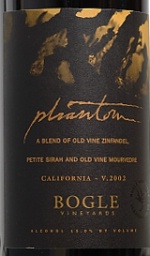
    Like Harry Potter — OK, not quite like Harry Potter — but in the same vein: the release of Bogle Vineyards Phantom is an event which hordes of fans await. We’ve even been known to line up outside stores, credit cards at the ready, and rush in to buy cases of the thick, red, potent brew. While it doesn’t have the household cachet of Gallo or Beringer (a good thing, in my opinion) Bogle is one of the top 20 wine companies in the country — a family of vintners specializing in ruby fruits and vivid wines. Phantom is a proprietary blend of Old Vine Zinfandel, Petite Sirah, and Old Vine Mourvedre, that the Sacramento Delta winemakers release only once per year — a limited case run that usually sells out in three to four weeks. This year’s vintage, Phantom 2004, is rich and sweet — almost dessert-like in its mouth feel — with a lot of blackberry on the sides of the tongue, hints of vanilla and clove, and a hauntingly peppery finish that lingers like. . . well. . . the ghost of a long-dead friend. As well it should, with an alcohol content of 14.8%. Local stores, including Haskell’s, just received their shipments of Phantom. So I suggest you put down your copy of the Deathly Hallows this minute so you can run out and buy your share.

  • A MacGuffin in Minneapolis

    th-5982-0004.jpg

    Howard Hawks’ magnificent film noir classic, The Big Sleep, opens with a stark, moonlit scene of a car being dragged out of the Malibu Bay with a dead chauffeur inside. Never in the course of the film — which has Humphrey Bogart as private eye Philip Marlowe investigating a blackmailing scheme and falling in love with his client’s elder daughter — is this adequately explained. The chauffeur’s murder is not only left unsolved, it’s very rarely referred to as the mystery/love story unfolds.

    This is what’s known in the movie business as a “MacGuffin,” a device with little relationship to the overall plot that serves mostly as a provocative tidbit to drive viewer attention. And so it is with Harry’s poutine.

    When Harry’s Food & Cocktails opened in early July, much was made of the fact that chef Steven Brown would be offering poutine: a lethal Canadian delicacy comprised of French fries, cheese curds, and gravy. Potential diners easily could have been left with the impression that this was a restaurant good only for the sort of ill-advised thrill-seeking you might get from parachuting into a wind farm. I know I was.

    Imagine my surprise when, after a lovely afternoon movie date and a walk down Washington Avenue, John and I stopped in and found — yes — burgers and fries, but also “breakfast” radishes with butter and sea salt, sautéed arugula, striped bass with truffle caviar, and an assortment of wholesome salads.

    Now, this is the Steven Brown I recall from Levain: a man with a healthy respect for fish, grains, and vegetables. Goateed and silver-haired, he was standing in front of the line at Harry’s, inspecting dishes as they went out, holding a towel (NOT a ladle full of gravy) to wipe off their already pristine rims.

    We had the Sunflower Salad, a truly inspired combination of butter lettuce, golden beets, smoked salmon, and sunflower sprouts that tasted sunny and smoky and fresh. We also had a really nice 2004 Washington Cab, prosaically named Pine and Post — which was young and fruity, as cold-hardy Washington grapes tend to be — for a mere $6.50 a glass.

    In fact, for a place that bills itself as a “cocktail” bar (which can be code for $15 martinis), the wine list is incredibly reasonable. There are a number of six to eight dollar by-the-glass options, including a Toad Hollow Rosé and a Hogue Fumé Blanc. If you’re willing to spring for a bottle, you can get everything from a $24 Willamette Valley Pinot Grigio to a $30 Argentinian Malbec.

    But best of all is the music at Harry’s. General Manager Steven Kleitz is a Kansas City native with a weakness for the blues, who plays mixes featuring Robert Cray and Stevie Ray Vaughan. This was, hands down, the most pleasant dining room I’ve spent time in lately.

    And all the talk about poutine? I think, perhaps, that was more publicity stunt than menu planning: the MacGuffin Brown and Kleitz used to get our attention.

  • Wicked fun

    Full diclosure: Mitch Omer and Cynthia Gerdes (pictured below) are two of my best friends in the world.

    100_0801.JPG
    (photo by Elena Bauer)

    They’re also the owners — along with Steve Meyer and Mark “Pappy” Anderson — of Hell’s Kitchen, with locations in downtown Minneapolis and Duluth.

    Now, I’m not the only one who loves Hell’s Kitchen. It’s gotten great reviews from nearly every local critic and several national ones — most notably Roadfood’s Jane and Michael Stern. But the truth is, these people probably could serve me warm seawater in one of Mitch’s old size-14 boots, and I’d rave.

    So I’m going to cut out the usual “taster’s notes” here and just give you the facts. I spent the weekend up north, listening from afar to the blues and tasting wines at HK in Canal Park. My favorite set is a weekend series of special Zins from Alexander Valley Vineyards in Healdsburg, California.

    On Friday nights they serve Temptation Zin 2005 — a big, fruity, juicy, sexy blend of 92 percent Zinfandel grapes and 8 percent Sangiovese, with splashes of blackberry and spice.

    04TempZinNW.jpg

    Saturday nights, it’s Sin Zin 2005 — a zestier wine with layers of cedar, raspberry, and black pepper that’s 100 percent Zin. A gold medal winner in the Los Angeles International Wine Competition.

    05SinZinNW.jpg

    And on Sundays, of course, there’s Redemption Zin 2005 — a smoother, “tamer” wine than the other two; also 100 percent Zinfandel grapes, but more blueberry, cherry, and oaken in tone.

    Redzin05.jpg

    Beware, these are all rich, “hot” wines, with alcohol contents in the 14.5% range. So it’s probably best not to taste them as I did, all in a row from Temptation to Redemption and then back again. But they were bold and fun and perfect with Hell’s Kitchen’s heavenly heuvos rancheros — also just different enough from one another to keep me snitching sips, trying to figure out which was which.

    Of course, my husband was drinking abstemiously and holding the keys, ready at any moment to drive us back to our hotel and take advantage of the effects wrought by those wicked wines.