Author: Stephanie March

  • Disappearing Cookbook

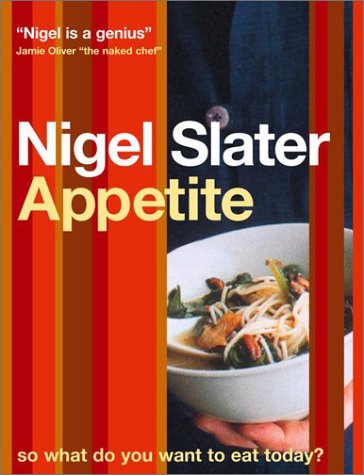
    big appetite.jpg

    I have owned more than a few copies of this book. I can’t quite seem to to keep it on my shelf. Shortly after discovering it, a friend confided that she was terrified to cook, that she didn’t know where to start. She had been a Microwave Monkey for most of her life. I knew I had to surrender the book. It would have been no use to simply tell her to buy one, she wouldn’t have done it. It had to be sitting there on her table, so that she could casually leaf through it some morning and discover the big secret: cooking isn’t as hard as we all try to make it seem.

    This book sits with you and chats with you about cooking, about eating what you’re in the mood for, about trusting your gut. The food isn’t fancy, but it’s not gimmicky Comfort Food either. It’s honest and simple.

    Many people believe that their first cookbook should be Joy of Cooking or something from the Cooking for Dummies collection. They worry endlessly about how much basil is in a bunch, or exactly how much salt they should be putting in water for pasta. How do you correctly hold a knife? Which is the right pattern for kneading dough: pull then push or push then pull? These are the worries that lead to fear of failure, which will suck the confidence from any sane person wielding a knife.

    But Nigel has a voice of reason. He says, wouldn’t it be nice on a cold day, to slice some potatoes, throw them in a baking dish, push in a little garlic and thyme here and there, and drench them in cream. Wait until they get all bubbly and a little golden on top, then take them out and eat them. For dinner if you must.

    One of my favorites is the “recipe” for a simple loaf of white bread. If you’ve ever desired to make bread from scratch and have researched recipes for the endeavor, you know how daunting the task can suddenly seem. There are weekends that I will devote to crafting a fine plank of ciabatta, but most of the time I’m looking for a simple crusty something to go with soup. It’s flour, water, yeast, and salt all squished together by hands and fingers, left to rise a few times and that’s it. We call it Ugly Bread around my house, and it doesn’t stick around long.

    If you learn just a bit about how real food works together, and you explore the versatility of the flavors and foods you love, you will be a cook. If you learn to trust yourself and your tastes, and you understand failure is a necessary meal, you could be a great cook.

  • Corona, si vous plait.

    at-food.jpg

    Many people wrongly believe that Cinco de Mayo is the Mexican Independence Day. It’s actually a day celebrated in memory of the Battle of Puebla in 1862. On this day, the struggling Mexican army rose up and defeated the stronger (and probably very well dressed) invading French army.

    What if they hadn’t had the moxie to dispel the French? What would the effect have been, culinarily? Think about the influences of the French occupation on Vietnamese cuisine: bahn mi is a popular Asian sandwich on a baguette. Pa tes chauds are little meat filled pastries sold from street carts all over Saigon.

    What would have become of my favorite breakfast item? Chilaquiles are tortilla chips fried with salsa, topped with onions, cheese, chicken and a beautiful fried egg. Would it have ended up as a croissant topped with shallots, chicken paillards, a hunk of brie and a poached egg drenched in a lemony buerre blanc? Actually, they both sound good right now.

    Would burritos have been wrapped in puff pastry? Would foie gras have replaced frijoles refritos? Would the queso fresco on freshly grilled corn cobs (elote) have been supplanted by camembert? And what of the chiles? Would they have been eschewed by the French, banned as unpleasant perspiration-inducing berries from hell? Invariably, everything would have been muted by cream and butter.

    French food is glorious, there’s no doubt, and it has always been recognized as a Great Cuisine. The food of Mexico has lacked such global recognition, yet I would argue with anyone that it, too, is one of our Great Cuisines. Today should be a celebration of the tenacity of the Mexican spirit, the vivacity of Mexican food, and its sweet freedom from overbearing cream sauces.

    Viva Mexico!
    pork-dg.jpg

  • The Good, The Bad, The Yummy

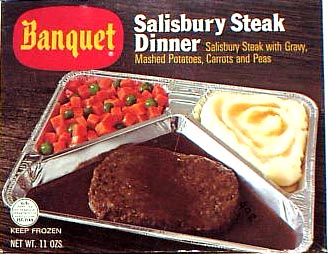
    salisbury.jpg
    a square meal?

    Who can keep all the pyramidal permutations straight these days. There are good carbs and bad carbs, good fats and doughnuts. Being a foodiphile I’ve never been one to cut anything out of my life, but I have become a bit of a processed-food nazi. Even that doesn’t mean that I don’t snarf a hot dog/bag of chips here and there.

    One of the biggest things I’ve learned on my edible journey is: food makes me happy. When I’m sad, ice cream does wonders. When I’m angry, I might need to take a drive toward a red carton of salty fries. General malaise can be cured with anything slathered in pesto. Some people would chastise me for using food as an emotional fix, giving it a dangerous importance to my mental well-being. As if a bad week would see me permanently fixed to a table at Izzy’s.

    I’m not belittling eating disorders, Lord knows I’ve battled with enough women friends over their food issues. Maybe if the actual food was as important to them as its affect on their too-tight jeans, then they’d understand how to heal themselves.

    Moderation, of course, gives you roots and wings.

    All of the Time
    Avocados: a necessary good fat and integral part of any quality turkey sandwich.

    Nuts: peanut-butter is a building block of life.

    Olive oil: so versatile, sometimes I think I could drink it straight from the bottle.

    Bread: Fresh, springy or dense, seedy or not, locally baked a must.

    Meat: My last meal on earth will be beef.

    Veg: The more colorful the better. Tomatoes every day, asparagus all spring, pot-roast carrots when it’s cold.

    Fish/Chicken: Train the children early to eat fish that doesn’t come in sticks. Tell them it’s chicken if you have to.

    Dairy: Cheese is a gift from the animals to us, an entire meal can be saved with cheese.

    Chocolate: Hooked on 62% or higher.

    Some of the Time

    Pasta: Nothing holds a gorgonzola cream sauce like a dense, toothsome gnocchi.

    Butter: Margarine is the devil.

    Ice Cream: Should be classified by the FDA as a pharmaceutical.

    Potatoes: Who among us can completely deny fries? Or a hot, crispy hashbrown?

    Pizza: My pie = pesto, goat cheese, prosciutto, roasted red peppers, capers, Neapolitan crust.

    Burgers: My last meal on earth will be a cheeseburger.

    Indulgences

    Hot Dogs: Preferably from a hot cart.

    Coke: Ice cold, from the fountain, with a straw.

    Milk Duds: I can not watch a movie in a theater without them.

    Fried Chicken: Recovery food. Pure hangover bliss.

    Cream Cheese Wontons: It’s my Minnesota right.

    Doughnuts: Sometimes we all need a little kick-start.

  • Gracias

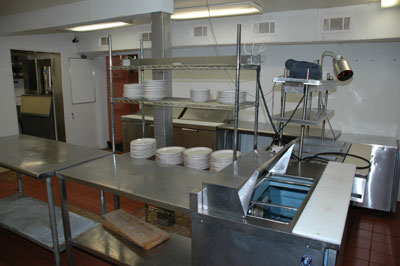
    kitchen3.jpg

    um … hello?

    If you have dinner plans at a restaurant tonight, expect the unexpected.

    Latinos are the backbone of the kitchen industry: dishwashers, prep cooks, line cooks, bussers. They happily and successfully do the work that many native-born Americans refuse to do. Will they be there tonight to support your meal?

    It’s important to understand that the vast majority of restaurants know how valuable their Latino workers are. None of the well-run restaurants are taking today lightly, most of them have been talking about May 1 for months.

    It’s a tough spot. You want to respect your workers and their beliefs, but you also have a business to run. Most of the places I’ve talked to have a plan. They’ve given the day off to as many Latinos as they can, and they’ve asked the rest of the staff to step up and help. That’s not to say that you won’t still see some Latinos at work, I personally know a few who don’t agree with the protests and feel that they’d rather support the business they’ve helped make successful.

    But if you are one of those people who feels cheated when you know the chef isn’t actually cooking your food, check the line, tonight may be your night.

  • Pound of Flesh

    ouch.jpg

    I committed the cardinal sin of the kitchen last night. I let my attention stray while chopping garlic.

    Slice.

    My zucchini was a-sizzlin’ in the pan, someone had The Simpsons on way too loud, and I was thinking about my window of opportunity to get some potatoes in with the roasting chicken. I was slicing faster than I should have been and I didn’t have the requisite finger curl working for me.

    When you hold something you’re cutting, your fingers should be curled under so the blade of the knife can slide against the flat middle section of your fingers. It’s Knife Handling 101 in a professional kitchen.

    But garlic is so small and wiley, it doesn’t like to be pinned clumsily under fat, curled fingers. It prefers to skit around the chopping block. I tend to use my finger nails to hold it.

    First clove down and pushed aside, I was in the middle of the second clove when I looked up at the clock to calculate my timing.

    Slice.

    My favorite knife took a slight chunk of my left index finger, including a sweet section of fingernail. Any time I thought I was saving by rushing was squandered by trying to find a clean towel and cursing myself under my breath.

    Worse yet, I had to toss the already chopped garlic and start fresh, with a throbbing, thickly wrapped finger. With a little help, I managed to get the whole dinner to table in good time, nothing scorched except my ego. I’m supposed to be smarter than the knife.

    I’ve seen all sorts of line cooks chop sections of their hands or burn swaths of skin, most of them pissed they have to leave the line. It is rather surprising when some of the gnarlier ones get the woozy sway going at the sight of their own blood.

    Typing this entry with my cartoon-sized gauzed finger hasn’t been the most fun. I don’t mind kitchen scars, they don’t handicap me, but they do humble me. Tonight dinner may be late.

  • Simplicity

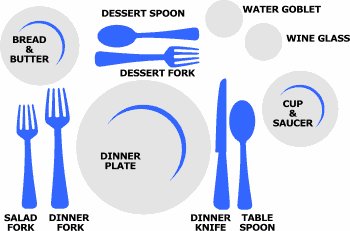
    place_setting.jpg

    After a hectic weekend of entertaining, Monday can be daunting. Friday night we hosted a cooking class at our house for seven people. We did a kind of Spring Thing with sauteed leeks and asparagus over polenta and halibut with freshly made pesto. I made basil ice cream with lemon-rosemary pound cake for dessert, because I do love the savory sweets.

    Saturday was debut night for one of the Girls’ new beau. He did very well considering he was thrown into a dinner party with ten people who can finish each other’s jokes. We threw a Boy/Girl menu on the table: steak/lobster, classic hashbrowns/quinoa with hearts of palm, and the oddly symbolic asparagus and leeks for everyone! For dessert I tried to make a seductive terrine of layered ice creams, chocolate and port wine. It was sort of a sloppy mess, but so were we, a little.

    Sunday we recovered and ate fried chicken from the Minnetonka Drive-In.

    So, Monday. I feel that I should make a dinner for the family tonight, to start the week off right. But I’m still a little sick of doing dishes and I don’t want to see another asparagus or leek for at least a week. The weather also plays a huge factor in the meal, and since it’s not really warm and it’s not really cold, my mind is a wee bit fuzzy.

    I think I’ve decided to roast a chicken. Even though our meals weren’t extremely intricate this weekend, they were big productions. A roasted chicken is an easy and satisfying dish that reconnects you with the elemental basics. Butter, garlic, lemon, rosemary, that’s enough.

    Before I caught my stride with roasted chicken, I would pour through books and websites to compare recipes and try to figure out the best, best, best way to do it perfectly. I’d come out with raw interiors and blackened skin or over-salty and under-flavored. It wasn’t until I really let go that I mastered the chicken. I stopped looking for a recipe, I trusted my gut.

    I put a whole chicken (SmartChicken is a nice grocery store option) in a roasting pan and rub it stem to stern with butter, nearly every lovin’ inch. Then salt and pepper to the same degree. Slice a smallish lemon in half, put one half inside the chicken with a chunk of butter, squeeze the other half over the top of the bird and throw it in the pan. Cut an entire head of garlic in half, place both halves in the pan. Pluck most of the leaves off some rosemary stems, sprinkle the leaves on the bird and toss the stems in the pan. In a 400 degree oven, time it so you are roasting for thirty minutes per pound. I’m not a baster, I think it’s a silly and wasted effort, my chickens are juicy without it. Check for doneness early, the skin should be golden and crisp, the juices clear when the breast is poked with a skewer. Take the bird out, let it sit on a platter for a few minutes while you deglaze the roasting pan with some white wine.

    There will probably be potatoes of some sort, maybe some rice. Now that I’m thinking about it, there could be some asparagus if the clouds break and the sun comes out. But definitely no leeks.

  • Cake Master at Rest

    Cakes_21.jpg

    The Food Network is hosting their competition show, Food Network Challenge, at the Mall of America this week. The other day, various food professionals from across the country competed to create a Candy Castle. The sweet victory went to local cake-legend Susan O’Boyle Jacobson, garnering her $10,000 and some nice national coverage.

    In a sad turn of events, Susan passed away last night from a heart attack.

    Having met her a few times through our little food industry professionals networking group, Women Who Really Cook, I can say that we’ve truly lost a great one. She was an amazing cake decorator who, at one point in her life, could put out 35 wedding cakes in a busy weekend, by herself. A past President of the International Cake Exploration Societe, Susan was known all over the world.

    But her most important contributions are still yet to be seen. Last year she traveled to Russia and volunteered in a large production bakery. She spent nearly three weeks mentoring and giving guidance to the young bakers, teaching them new skills and more efficient techniques. Locally, she taught at The Art Institutes International Minnesota, helping young pastry students to four gold and four silver medals at last February’s Minnesota Baker’s Convention.

    Anyone who makes something beautiful and edible knows, the greatest joy is in sharing it with others. The next time one of her young students wins a competition with a towering stunner of a cake, it will surely be Susan’s sweetest reward. There will be a scholarship at AII in her memory.

  • Ham Is In The Air

    I have a vision of a place in northern Italy, a landscape of rolling, golden hills dotted with oak trees. As my mind’s eye zooms in on this scene, it becomes clear that something is hanging from the branches of the oaks. A sea breeze brushes past, and I realize that the boughs are laden with ham—not deli slices draped over branches, mind you, but beautiful, trussed-up, whole legs of ham. They are swinging in the salty air, curing, actually, into what will eventually be prosciutto, one of the most delicious of all meats.

    In this age of refrigeration, Cryovac preservation, and aseptic packaging, not to mention the chemically extended lives of most any food you’d pick off the shelf, it seems a little ridiculous to imagine ham in the wind. Some might even blow past “ridiculous” and say, “Dangerous! Unsanitary!” And then I see my picturesque grove of prosciutto-bearing trees overrun by men with lab coats and clipboards, throwing up yellow “caution” tape as far as the eye can see. Foreign meats come under strict investigation by the FDA if they are to be sold in the U.S., which means a lot of the old traditions don’t pass muster. Sadly, it’s been largely forgotten that the curing of meats is a cornerstone of our collective food history; we humans would not have survived without it. Along with other types of preservation (smoking, pickling, drying), curing was once a means of survival—a way to extend the stock of the larder during colder months and harder times. Now these once-essential techniques themselves only survive as boutique industries or hobbies.

    A wide range of meat and fish can be cured (gravlax is cured salmon, bresaola is cured beef), but I’m most riveted by the tastes and traditions of salt-cured ham, the making of which is regarded by many as an art form. Maybe that’s because my early ham experiences were limited to pre-packaged slices and the annual Easter feast, during which I was compelled to make someone cut the “bark” off my ham. Once I discovered prosciutto, as well as Spain’s jamon Serrano and Iberico, deli slices become virtually extinct in my diet. The beautiful terra-cotta colors and rich, dusky flavors of cured ham make more mundane meats seem like cardboard.

    As old as the salt that drives it, the curing process is thought to have been perfected by the ancient Egyptians. And while the techniques have been perfected through the generations, the basic elements have remained unchanged. Wet curing, also known as immersion curing, involves covering the meat in a seasoned brine that must be changed every seven days for weeks or months, depending on the size of the ham and the depth of cure. Dry curing, the method used to make prosciutto, involves rubbing the meat with salt and letting it age in dry, cool air.

    In Italy, the northern province of

    Parma is the land of prosciutto as much as it is the land of cheese. In fact, the making of Parmigiano-Reggiano helps fuel the ham industry by providing whey to feed the pigs. Only the cured ham from this region, which must abide by strict rules and regulations set by the local prosciutto consortium, can be called “Prosciutto di Parma.” Centered in the small village of Langhirano just south of Parma, the Pio Tosini Prosciuttifici (production house) uses age-old techniques. The hind legs of pigs are trimmed, cleaned, and then coated with sea salt and rubbed by hand. The salt applications are repeated once a week for one to two months, during which time moisture is drawn out of the meat. The hams are then washed several times, scrubbed, and hung to dry.

    With its winds from both the sea and the mountains, Parma has an ideal climate for air-drying and aging—a crucial part of the process, and one that creates Prosciutto di Parma’s distinctively delicate taste. Prosciutto from San Daniele, in the Friuli region, has a different, salty-sweet flavor and smoother texture than Prosciutto di Parma, because of the higher altitude and drier air. Similarly, Spain’s Serrano (“from the mountains”) hams are cured in drying sheds located in relatively high-altitude, cool climates. During different stages of the drying period, which can last up to two years, the hams rotate to different rooms within the shed. Italian prosciutto is tested for readiness by an inspector who inserts a horse-bone needle and judges the issuing aroma.

    If you can’t get to Italy to see the swaying hams, certainly you can make it to Iowa, where Herb and Kathy Eckhouse have brought the secrets of great prosciutto. After living in Parma for three years, Herb believed he could re-create great cured ham right in his own home, in the small town of Norwalk. The couple’s young company, La Quercia (meaning “the oak,” www.laquercia.us), recently released “Prosciutto Americano,” its first domestically cured ham, made with organic U.S. pork. Because he’s not obligated to follow the constraints imposed by Italian consortiums, Eckhouse has been free to experiment with trim size, handling techniques, and the curing process overall. The resulting product is garnering national attention for its creamy texture and depth of flavor.

    Prosciutto can be found in most grocery stores, and more and more places carry Spanish jamon. La Tienda, a family-owned gourmet Spanish food importer and Internet retailer (www

    .tienda.com), has begun taking advance orders for the elite jamon Iberico, which is aged between two and four years and won’t be available in the U.S. until next year. In the meantime, La Quercia’s Prosciutto Americano can be ordered at Surdyk’s by the slice, but if you’re willing to spend the cash, it really is a treat to purchase a whole leg online. That way, you can discover the varying richness in different sections of the leg, the area around the bone being the most flavorful. For those who opt for a few ounces here and there, try one of my favorite distractions: Slather a spear of cucumber with goat cheese and wrap it with prosciutto. Find a sunny patio and dream of ham in the wind.
  • Top Grrrrl

    Last December, the Girls and I decided to embark on a Self-Esteem Workshop in Las Vegas. While our goal was to master all four steps toward better self-esteem (drinking, dancing, eating, and spas), I was certainly most interested in the LV food scene.

    Our first dinner was scheduled in the very new and very chic Wynn Hotel at Okada, rumored to be the best sushi place in town. It was a complete disaster.

    Most of the sushi was nothing special (I’ve had comparable if not better at Fujiya and Origami), but more importantly our service was abominable. Not only did our server “team” not communicate well with each other, they didn’t communicate well with us. When I asked for a single glass of Otokayama Sake to go with a special appetizer I wanted, our server tried to push a carafe on me, over and over again. When I explained it was just for me, just for this dish, she literally told me how ridiculous she thought I was. She also told one of the Girls, “You really don’t want a Lychee martini, I think they taste horrible.” I can take a little bit of pushiness and self-importance, some of the young ones haven’t been properly trained in the art of service and I can forgive that indiscretion. But after our initial order we were summarily ignored. Our buzz had worn off, our glasses and plates sat empty and any attempt to catch someone’s eye was brushed off.

    Needless to say, I was worried about the rest of the weekend. We had reservations at top-notch restaurants, but if they were all going to be like Okada, I would rather hit a buffet.

    The next night we headed to the Vegas outpost of Tao, the hip New York Asian restaurant. We sat down among the beautiful people, Derek Jeter over here, Magic Johnson over there, and waited for our potentially crappy server.

    To the contrary. Our server was a kick-ass fireball who understood we were there to cocktail and eat food that we’d have no idea how to make at home. She asked us what kinds of food we liked, and made recommendations for the first small course. Based on those stellar offerings, we let her choose the main course for us. Light, spicy, tangy, healthy, rich, she took four women, sized us up and hit the mark dead-on with dishes that we all loved in part or completely.

    We were pals at this point, she told us nasty celebrity gossip and we related our Okada experience. She wasn’t surprised, she’d actually worked in one of the opening kitchens at the Wynn. In fact, cooking was her true passion. Wait a minute, this girl is a kitchen girl? It’s hard to find those gems that can work the back of the house and the front of the house with ease and aplomb.

    We verily gushed our appreciation for a fabulous night, she had saved Vegas for me. Before we were about to leave, laughing about what a fun bunch we’d been, she confided in us something she hadn’t even told any of her fellow workers. She was going to be on a reality cooking show airing sometime in March. She said she couldn’t tell us who won or anything, but that we should watch for her on the Bravo network.

    The red-haired Tiffani Faison, the kick-ass kitchen chick, is our girl on Bravo’s Top Chef. And I have to tell you, I think she’s going to take it all. She is smart, intuitive, and driven. She sees things black & white, like all the great kitchen leaders do. She creates great dishes because she can read the task and figure out how to deliver. On Wednesday, you can catch nearly all the episodes leading up to the new one at 9pm. Root for Tiffani.

    pic_gal_tiffani_3.jpg

  • Easter Index

    bunny2.jpg

    Number of received chocolate bunnies: 6
    Number that still have auditory abilities: 0
    Chances that a colored egg was undercooked and inedible (if not dangerous): 36 in 90
    Ratio of eggs hidden to eggs found: 44:39
    Percentage of alleged guests that allegedly had to work and could not attend, which allegedly had nothing to do with the Twins: 10% (allegedly)
    Portion of jelly beans which will be picked over and sit out uneaten until Memorial Day: 1/3
    Minutes the three-year-old’s new shirt was not smeared with chocolate: 2.5
    Ratio of family scandals discussed to number of sausages eaten: 5:17
    Minimum size of lusty German beer that can be called a “soother”: 1Litre
    Chances that a surly teenager would even look at sauerkraut: 2 in 7
    Estimated amount of time that will pass before the next big family feast: 210 days