Category: Food and Drink

  • Table for One

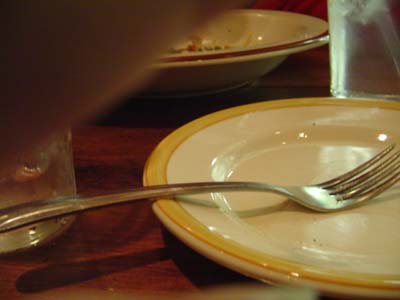
    empty plate.jpg

    This weekend has been the winter of summer. Whether it’s 60 below or 100 above, it’s all about coping. Because the majority of people in my house are under the age of 16, coping comes only with my help: I’m bored, it’s too hot to go out, there’s nothing on tv, I’m too sticky to read, he’s touching me, she’s breathing on me. Ultimately, the bottom line is that I need a break from my family. I’m not ashamed to say it, I still love them, but I need to get away from them.

    Obviously, if I’m going to escape, I’d prefer that there be good food involved. And since someone (read: the husband) has to stay home and help people cope, it means that I am off on my own, blissfully alone.

    I have no problem eating alone. Some people are self-conscious about the deficiency of a companion; I care not. If the servers feel pity or other eaters glance my way, I really don’t notice. With the lack of chatter and the absense of questions comes a soft void where I can focus on my food. And bonus: no sharing or compromise. I get to pick strictly West Coast oysters and slurp them all, without a single thought as to the etiquette of reaching for the last one.

    Tonight, I think I’ve found the prefect cure. On Sunday and Monday nights during the summer, Solera’s rooftop deck becomes a beautiful escape with screenings of movies and drink specials. I can’t imagine a better night than one that begins with my personal selection of favorite tapas and ends with a cold beer and viewing of In Cold Blood under the stars. Perfectly, wonderfully at a table for one.

  • Mr. Ruhlman's Rant

    michael.jpg

    I heart Michael Ruhlman.

    He’s written some really nice books, including The Making of a Chef, The Soul of a Chef and most recently The Reach of a Chef.

    He’s also a guest blogger on megnut, food writer Meg Hourihan’s food site.

    I’ve just spent the last hour reading his posting: It’s a Wonderful Life and all the resulting comments (including a brutally funny one from Mr. Bourdain). Definitely food for thought on a Thursday afternoon …

  • Love's Hangover

    magicchef.jpg

    I have a good buddy who we’ll call “Roy”. He’s a total foodiphile and routinely calls me from the market on weekend mornings to give the good report on what he’s finding. Before he owned his own business, he was a pro server at some of the best fine dining establishments in town. Roy is going through a rough divorce.

    His soon-to-be ex, who we’ll call “The Grinch”, has removed nearly everything from his house, down to the last can of Who-Hash. This is a man who cooks, and cooks well. But no man can cook when he’s left with only a turkey baster and a foosball table.

    I’m thinking of throwing him a Divorce Shower/Sake Binge once the thing finally goes through. If I had to restock from scratch, these would be my firsts and favorites:

    Bowls, of the stainless steel variety. Clean up in a flash and they’ll never break.

    Tongs, even if you have managed to culture asbestos fingers. Get the most basic, too much frippery only hampers the tool.

    Forget the regular oven mit, they don’t call this one The Dragon for nothin’, baby. With the 100% Kevlar protection up to 1000 degrees, feel free to reach in the oven and just manhandle that turkey!

    Rubber Spatulas need to be heat proof, yes. But more importantly, they shouldn’t break off into your batter.

    Half-Sheet Pan, sometimes known as Jelly Roll Pan. Use it as a tray to set up prep items, throw down some parchment paper to bake cookies, roast a chicken, whatever.

    Speaking of which, check out this deal on parchment paper. Set for life!

    Pans, you have to go All-Clad. Except for one favorite.

    Maybe one more gift to help embrace bachelorhood (that is, if The Grinch didn’t make off with the frigidaire).

    Help me out: What are the kitchen things you couldn’t live without?

  • Lovin' Summer

    untitled.bmp

    This is the first real weekend of summer.

    No holidays to plan for, kids are tied up with “other plans” that don’t include family or summer sporting events, friends have had enough of me over the Fourth and it’s going to be hot.

    FRIDAY
    I’m simply craving sushi, maybe to help cleanse my body of all the hot dogs I ate this week. Dinner at Yumi’s in Excelsior, a great summer town. Maybe we’ll catch a movie at the Dock then go to Biella for late night dessert at a patio table.

    SATURDAY
    Hit the Mill City Farmers Market with the three year old. Then we’re going New School with lunch at Level Five in the new Guthrie, followed by Old School with Oreo’s on top of the Foshay Tower. Hit the beach, read my book, take a nap. If I remember to stop at Coastal, we might just have mussels with crusty bread for dinner.

    SUNDAY
    Maybe we’ll check out dim sum at Jun Bo in Richfield, maybe we’ll make chocolate chip pancakes, who knows. There will definitely be World Cup action, whether I’m drinking French beer or Italian beer, I haven’t decided yet. There’s one thing of which I am sure: since it’s been at least a full week since I’ve had a decent cheeseburger, LT for dinner.

  • Don't Call Me Shrimp

    pepe.bmp
    I am a King Prawn, okay?

    I will not eat them Mr. Pimp
    I will not eat those pinky shrimp.

    I will not eat them set ablaze.
    I will not eat them in souffles.

    I will not eat them with a dip.
    I will not eat them on a chip.

    I will not eat them in a sauce.
    I will not eat them with your boss.

    I will not eat them as a puff.
    I will not eat that icky stuff.

    I will not eat those wretched shrimp,
    I will not eat them Chimpy Chimp.

    Oh, fine. I’ll try some. You never know
    which place your mind will let you go.
    I like them! I like them!
    I do, I do!
    Now I can be just like one of you.

    It’s taken me 10 years to like shrimp. I still can’t eat them like everyone else, drowning them in deathly red cocktail sauce and slurping them up. And I can’t abide those tiny tiny pink curls hiding in a salad or a box of fried rice. But I have learned to love them blackened or classically broiled in scampi fashion. I enjoy them in paella and find them pleasing in ceviche.

    I am growing, I am evolving.

    I bring this up for two reasons. Firstly, Bubba Gump Shrimp Co. has just announced the winner of their “Shrimp Happens” recipe contest. Kathy Saatzer of Maple Grove has created a Margarita Shrimp Salad that will appear on their menu starting July 1st. Each time the salad is ordered in July, Bubba Gump will donate $1 to Second Harvest Heartland. A worthy reason to brave the Mall of America.

    Secondly, I helped judge the Diamond Crystal Kosher Salt recipe contest a few months ago, and am pleased to see that the Salt Roasted Shrimp dish from Shoshana Baars-Stanton won the appetizer category. It was truly lovely, not icky in the least.

    Salt Roasted Shrimp
    1 T olive oil
    1 T chopped cilantro
    1 large clove garlic, thinly sliced
    6 medium/large shrimp, deveined, shells on
    1.5 to 2 cups Diamond Crystal Kosher Salt
    1/2 cup Chardonnay wine
    1/8 tsp. crushed saffron threads
    4 whole black peppercorns
    1/4 tsp. honey
    3 T unsalted butter, cut into cubes
    1/4 tsp. Diamond Crystal Kosher Salt

    1. Heat oven to 400. In medium bowl, blend olive oil, cilantro, and garlic. Add shrimp, toss to coat. Cover and refrigerate.

    2. Spread salt in even layer on baking sheet at least 1/2 inch thick. Place sheet in oven for 30 minutes to heat salt.

    3. Remove sheet from oven and place shrimp on the hot salt in a single layer. Return to oven, baking for 2 minutes. Turn shrimp over and bake for additional 2 minutes. Remove from oven. Brush all salt from shrimp (a pastry brush works well) and remove shells. Set shrimp aside.

    4. Combine chardonnay, saffron and peppercorns in medium sauce pan. Over medium heat, allow mixture to boil and reduce to 2 tablespoons. Discard peppercorns and stir in honey. Remove from heat, whisk in butter one cube at a time until blended. Arrange shrimp on plate and drizzle sauce over shrimp. Serves 2.

  • Chowhound ALIVE!

    spork.bmp
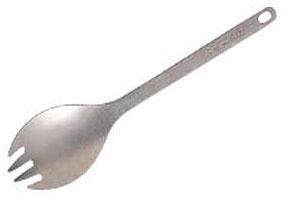
    the spork carries no shame

    No disrespect to the fabulous AZ, but he isn’t the original Chowhound.

    For those of us with a driving desire to scour the cities of the world in search of the best grimy taco stand, Jim Leff is our Top Dog. He’s the food writer who created Chowhound, a community website for the food-obsessed.

    Posting from all over the world on message boards, chowhounds exchange opinions on topics ranging from the best gelato in Phoenix to the debate on butter chicken vs. chicken tikka.

    This international cirle of eaters has NEVER steered me wrong. They sent me to Cal Pep in Barcelona (a nearly holy lunch), Les Delaat in Bangkok and Juanita’s Taco Shop north of San Diego. If I want to know where to get the best cuban sandwich in Miami I skip the concierge and the glossy food mags. For the most reliable info I go to Chowhound first and a bodega clerk second.

    After partnering up with CNET, the formerly shabby Chowhound site has just relaunched with new software and a clean look. But don’t let the scrubbing fool you, it still has the soul of a renegade.

    From their manifesto: Chowhounds blaze trails. They comb through neighborhoods for culinary treasure. They despise hype. And while they appreciate ambience and service, they can’t be fooled by flash….If you, too, fret endlessly about making every bite count; if you’d grow weak from hunger rather than willingly eat something less than delicious, this place is for you!

    If you crave gustatory gestalt, you’re a chowhound, and you’ve found a home.

  • A Chocolate Fig

    storelg.jpg

    I sometimes miss my chance to support the local-food-movement, mainly because many Saturday mornings come at the expense of Friday night revelry and not even the promise of a breakfast brat could lure me to the market.

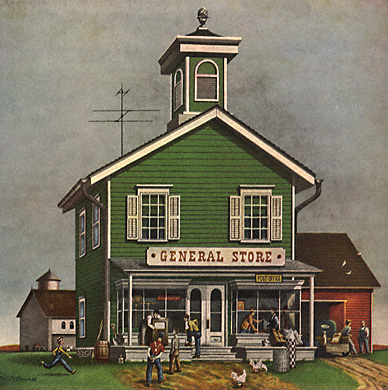
    With the opening of Golden Fig & River Chocolate Company Fine Foods on Grand Ave. in St. Paul, I can feel good about hitting the snooze on the weekends and supporting the community on Tuesdays. The shop is the brainchild of two giants in the local food producers movement: Laurie Crowell of Golden Fig and Dierdre Davis of River Chocolate.

    The idea is to feature fine foods and gifts made by small producers from the Midwest. Beyond their own lines, you’ll find goodies like Daddy Sam’s BBQ Sauce, Laura’s Candy hand-crafted marshmallows (hello double dark chocolate!)and Native Harvest maple butter.

    But even better than the goods are the stories behind them, and Laurie and Dierdre know them all. They’ve worked hard to find the items they’re selling and have really learned about the people behind them: there’s the spice lady in a small Minnesota town who has traveled the world in search of spices or the people behind Native Harvest who are sharing Native American traditions to fund the White Earth Recovery Project.

    Inspired by the sell-out of their Rustica Bakery orders, they’re waiting on a delivery for a deli cooler. The pair promises to stock it with the best local cheeses and meats, as well as a special sandwich of the day.

    Of course you can still visit Laurie and Dierdre at their market booths on the weekends, but take the time to stop in the store during the week and make them tell you a story.

    Golden Fig & River Chocolate Company Fine Foods
    790 Grand Ave.
    St. Paul, MN 55105
    651.602.0144

  • Magic Potion

    No one ever added more acreage to the Roman Empire than Julius Caesar (the Roman geezer). Until his time, Roman territory in what is now France was the relatively narrow sliver along the Mediterranean coast that is still called Provence, precisely because it was the original Roman province. In ten years Caesar took over all Gaul, and had even paid a couple of visits to the closest of the islands in Ocean, where he found a lot of hairy warriors wearing nothing but woad (blue dye made from a plant like the indigo): “Woad’s the stuff to show men / Woad to scare your foemen / Boil it to a brilliant hue/ Then rub it on your back and your abdomen.”

    Of course there was one village in Brittany which even Caesar could not subdue, the one inhabited by the tough little cartoon warrior Astérix and his oversized friend Obélix, who can eat a whole wild boar at a sitting and makes his living (when he is not beating up Romans) delivering the massive stone obelisks used in Gallic religion. The secret weapon of mass destruction the villagers use against the Roman invader is a magic potion brewed by the local druid Panoramix (yes, they all have silly names). Drinking it makes Astérix mightier than Popeye; Obélix was dropped in a vat of it when he was a baby. Apparently there is to be an Astérix film in time for the next Olympics, in which nos héros will compete against a legionary called Gluteus Maximus (very humerus) and there will be a lot of earnest stuff about the morality of magic potions. Odd how morality can spoil a joke.

    Perhaps one can forgive Caesar for not referring to this determined center of resistance in the rather po-faced narrative he composed concerning his conquests. What is harder to credit is the account he provides of Gallic wildlife. There are, he says, three sorts of deer in Gaul. One sounds like the unicorn, except that its horn has a branchy tip, like an antler (all right, maybe he had seen a stag in summer after only one of its antlers had fallen off). One is the auroch, a mighty ox which the Gauls were accustomed to catch by the same unsporting method Winnie ille Pu used to capture heffalumps—the auroch is extinct but is known from archaeology. But it is the elks which make one wonder. Elks, according to Caesar, have no knees, so they sleep standing up and leaning against trees, and when they fall over they land on their backs with their little legs wiggling in the air. If you want to catch one, you find a tree that an elk is likely to lean against and you cut halfway through it; you then lie in wait ’til an elk sidles up and goes to sleep, at which point Pif, Paf, Boom (as Astérix says when he biffs a Roman legionary). If you believe this, I have a magic potion that might interest you.

    Well, actually I have. It is white and comes from the broad land south of Bordeaux called Entre-deux-Mers. The name is Verdillac—all those French names ending in -ac (Cognac, Cadillac, Carnac) are pre-Roman—and the 2004 vintage, made by the old established firm of Armand Roux, may be had locally for around ten dollars.

    A skillful blend of (mostly) Semillon with Sauvignon Blanc, this is very easy to drink. Semillon is the grape variety used to make the great golden dessert wines of Sauternes (I think of dreamy glasses of Chateau Rieussec 1976 sipped in my misspent youth). What the Semillon imparts here is not sweetness, but a pleasing douceur, an almost oily mildness which kicks in just before the aftertaste; some people would call this the taste of melon, but it is more interesting than that. The Sauvignon gives the wine its central grit—the taste you get from the red frilly bits next to a peach stone—and there is an aftertaste which recalls the scent of elderflowers in high summer.

    Chilling this wine too much would kill some of the cleverly constructed taste. Roast elk or braised auroch would overpower it. But drinking it with grilled chicken should make you grateful that the Romans brought to Gaul the cultivation of the grape. Astérix and his friends did not know what they were missing; “Ô vive lui, chaque fois / Que chante son coq gaulois.”

  • Market Frenzy

    Like many food tourists, I’m driven to seek out local markets—public, farmers, indoor, outdoor—everywhere I travel. Invariably, I end up wandering the aisles awash with both wonder and jealousy. In Vancouver, the booths and stands crowded into the Granville Island Public Market nearly bring me to tears with their spectacular selection of fresh fish and cheeses. The San Francisco Ferry Building Marketplace is so chock-full of local food artisans and champions of the sustainable food movement that leaving that place is like breaking up with a soul mate. Pike’s Place in Seattle, La Boqueria in Barcelona, and Chatuchak in Bangkok have all left me coveting a great market here at home.

    This year my wishes have been granted. The past couple of months have already seen a flurry of activity on the Twin Cities market scene. The opening of the Midtown Global Market in June was a Twin Cities milestone: Finally we have an indoor public market—home to produce, interesting dry goods, and prepared foods, restaurants, and arts and crafts from around the world. The St. Paul Farmers Market finally began construction on Market Hall, which will provide year-round indoor accommodations right next door to its outdoor market in Lowertown. Back in Minneapolis, nestled between the Mill City Museum and the new Guthrie Theater, the Mill City Farmers Market is supplied by local organic growers and geared in part to local chefs (its driving force is Brenda Langton, the chef and owner of Café

    Brenda). Add to this the success of neighborhood markets—the Midtown Public Market (not to be confused with the Midtown Global Market), an outdoor seasonal market just off the light rail transit line on Lake Street, or the suburban Maple Grove Market that jams a community center parking lot—and it seems that markets in Minnesota are far more than a fad. Certainly this market frenzy is exciting, but I still wonder if, given the history of struggling markets here, we can make it all work.

    The Twin Cities’ first public market opened in 1853 on the corner of Seventh and Wabasha in St. Paul. In 1876, Minneapolis established a fruit and vegetable market on First and Hennepin. During those times when little produce was being shipped in from other cities, the crops of local farmers were in such high demand from city dwellers that under-the-table deals often depleted the goods before the market even officially opened.

    By 1881, St. Paul had built a massive, block-long great hall for its public market; and by 1916, Minneapolis claimed to be one of the top three fruit distribution centers in the country. In order to handle the nearly five million dollars’ worth of produce that passed through the city each season, Minneapolis built a permanent market structure in the 1930s at Glenwood and Lyndale Avenues, which is still in use. These days some 240 vendors rotate among just 170 stalls, but at its height, it boasted more than four hundred vendors.

    What happened to these centers of food and commerce? For starters, after World War II Americans fell in love with convenience. Fleets of refrigerated trucks bringing avocados from California and oranges from Florida to smartly lit supermarkets indicated the beginning of the end for many farmers markets; as the number of local market buyers dwindled, farmers found outlets with giant distribution centers and brokers who did the selling for them. Then the 60s and 70s brought more and more women into the workforce; it became easier, faster, and more necessary to buy frozen peas from the grocery store instead of strolling through a distant market to pick through a fresh bushel. The more Americans consumed processed food, the less they cared how it was grown and who grew it. As a result, in 1981, the St. Paul market moved to Lowertown and downsized from 682 stalls to 168. Just when it seemed like our country was made of Cheez Whiz, a generation of chefs, restaurateurs, and growers began banding together to re-establish the connection between food and farm. People now crowd farmers markets, waiting in line to chat with the farmer behind the cabbage stand, seeking the historical origins of their heirloom tomatoes, and supporting the use of organic and sustainable farming methods. It seems that this desire to connect with both our food and our local communities has driven the renaissance of the public market, not just here but nationwide—thanks to 111 percent growth between 1994 and 2004, there are more than 3,700 markets across the country today.

    Yet a passion for fresh food is not enough to make a market successful. The Uptown neighborhood flirted briefly with a farmers market in the Calhoun Square parking lot, but they couldn’t attract enough vendors or customers. The chefs at Auriga tried to launch an organic market, much like Brenda Langton has done with the Mill City market, but couldn’t keep it going. A good market is more than just a bright idea from a neighborhood association—it requires the right location, the right mix of vendors, smart management, and, of course, local support.

    Then, of course, there’s the question of competition. If the local market in Excelsior is successful, will fewer shoppers drive to the big-city markets? Small producers must decide on the best place to spend the lucrative Saturday morning, or whether they can stretch their business to cover more than one market. And what of the struggling Midtown Public Market just down the block from the Midtown Global Market? Will they help or hurt each other? Add to all this competition from the sophisticated grocery industry, which is among the nation’s leaders in innovation. Shoppers today need not suffer the grungy Pick-n-Saves of the world; we have a strong network of co-ops that have been championing local and organic products for decades, not to mention the more-recent efforts of Kowalski’s and Byerly’s/Lunds. Then there’s Whole Foods, and the newest game in town, Trader Joe’s.

    Given such abundance, it’s easy to see how even health nuts might put on some pounds. What will it take to make this newest generation of public markets thrive? Good old Midwestern commitment—to the farmers markets, to small producers, to local artisans—is the best way to keep the local food culture growing.
  • How's it growing?

    Tomatoes.jpg

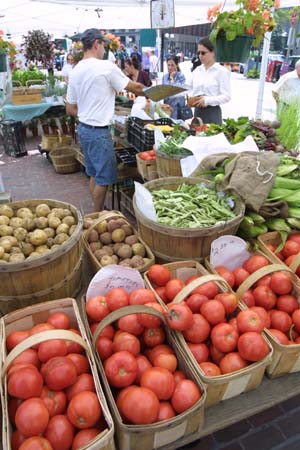
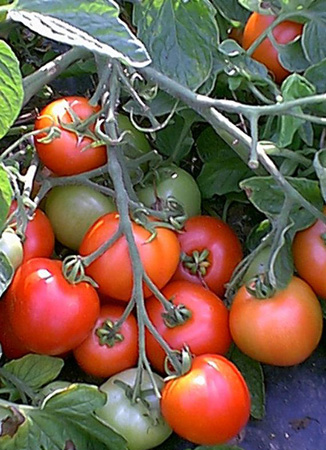
    I’ve been to the Mill City Farmers Market over the last two weekends. I’m very happy with the blue sheep’s cheese from Shepherd’s Way Farms and the great-for-ice-cream milk from Cedar Summit Farms. I was going to give it one more weekend and blog about my planned yak’s meat purchase, but now there’s Gertrude.

    I bought an heirloom tomato plant, and because I can’t remember what kind it was I’ve dubbed her Gertrude. I know I’m late to the planting game. I can’t seem to get my act together this year, even for the ultimate reward of fresh tomatoes. But there she sits in a giant terra cotta pot on my patio, sunning herself far away from the greedy, evil bambies and bunnies. And now I worry.

    Is she getting enough sun or too much? How many times a day should I be watering and if it rains what does that do to the watering schedule? Maybe it’s because I have this one and only plant that I’m obsessing. Maybe it’s because I feel that as a food person, I should be able to bring forth food from the earth with aplomb and grace.

    In an effort to find out Gertrude’s lineage, I began scouring the websites of the vendors for the market. Maybe I’d recognize a name, a farm logo, something to jog my caffeine addled brain.

    That’s how I found Gardens of Eagan and their farmer blogs. I’m riveted by Atina Diffley’s passionate race to save organic fields from the pipeline. But I’m nearly addicted to Laura Ferich’s telling of the second year on her Loon Organics farm. Her love of eating what she’s growing, the guarded excitement over the purchase of farm equipment, concern for bugs and all that needs to be done in a scant 18 hour day has me hooked.

    Most people don’t know about the toil that goes into farming, even now that small farms and organics are becoming chic. It’s like the chef thing: the splashy media doesn’t really want to talk about time spent cleaning squid.

    The more I read about all they do to make a life out of organic farming, the more I feel that Gertrude’s going to be just fine….