Even misanthropic political bloggers need vacations. So while the battle for the title of King and Queen of MN politics rages, I’ll be taking the Soul Plane to Europe for two weeks to enjoy Mediterranean breezes and purchase the bones of a saint and other religious artifacts. We’ll resume our regular cynical ramblings with antisocial undertones on Wednesday, July 23!
Blog
-
A Minor, But Smart, Move By The Wolves
Calvin Booth (center) – StewMac/flickr.com
In a deal that is almost certain to become official when the NBA trade moratorium is lifted tomorrow, the Wolves will take on center Calvin Booth and swingman Rodney Carney from the Philadelphia 76ers, plus receive a first-round pick that is likely the one the Sixers got from Utah in the Kyle Korver trade. As of now, no one is reporting what Minnesota is likely to yield in return–and it really doesn’t matter. This is a salary cap deal, and–unless the compensation turns out to be Rashad McCants or something–a shrewd one for Minnesota. [Update: Various sources are reporting that the compensation will simply be one of our bushel of second-round picks and the trade exception that was part of the Blount/Davis deal, a trade that apparently keeps on giving.]
The Sixers are trying to clear up as much cap space in the immediate future to go after this year’s crop of free agents (reportedly targeting power forwards Elton Brand or Josh Smith) with everything they have. Carney and Booth make about $2.8 million combined. I’ve been told by a good authority within the Wolves organization that Philadelphia is likely paying Glen Taylor all but $500,000 of that. Since both players can come off the books the year after this one (Carney has a team option; Booth’s deal will expire), the Wolves bought Utah’s first round pick next year for a half million bucks (and whatever the teams agree on for Minnesota’s end of the bargain).
Will Booth still be around when the season starts, or is this another Beno Udrih deal, a pass-through? (And without going too far off on a tangent, wouldn’t Udrih look good in a Wolves uni right now?) Booth is probably toast. Carney, from what I can remember, is most dangerous to Kirk Snyder’s chances of being resigned (which were already dealt a blow when the Wolves acquired Mike Miller on draft night).
Anyway, the usual cavaets apply here: Nothing official has been announced, and this could all be speculation run amok, although when specific players and picks and motivations are all posted at nba.com, you get the impression it is pretty legit. Finally, we don’t know what the compensation will be and when it will have to be delivered. [Update: If it is indeed the $2.8 trade exemption, then there is nothing left to deliver.] Perhaps some capologists or other insiders can enlighten us on those accounts.
-
Remembering Jeff Hettwer
ART
Jeff Hettwer
With the untimely passing of Jeff Hettwer, the world instantly became a little less beautiful. A vibrant and talented artist, Jeff was tragically killed
in a car accident just over three weeks ago, and even as someone who
knew him only slightly, I can say without hesitation that his bright
shine will be missed by friends, family, and the art community as a
whole. Jeff Hettwer was a passionate artist who was always happy to show and talk about his work with friends and strangers alike, and his studio in the Northrup King Building
was constantly bursting with color and personality. It’s really no
wonder that a memorial art show, at the Walker Art Center no less, has
been organized in his honor tonight. Come take in the amazing work of
this prolific local artist who left us way too soon.
6pm-11pm, Walker Art Center Skyline Room, 1750 Hennepin Avenue, Minneapolis
FILM
Bicycle Film Festival
The eighth annual event celebrating all things pedal-powered promises
to be more than just your average film festival. The 2008 Minneapolis Bicycle Film Festival, running July 9 – 12, features music, films and,
yes, maybe even a little biking. The festival, just one of many being held around the world this summer,
kicks off July 9 at 8 p.m. with a Bikes Rock party at the 7th Street Entry. The screenings begin on July 10 with a showing of the beloved
1979 sports classic *Breaking Away*. Screenings will be held at the
Riverview Theater, Macphail Center for Music, the Theatre de la Jeune
Lune and other venues. Valet bicycle parking will be provided! – Andrew Newman
July 9th-12th, Various times and locations click HERE for full schedule
MUSIC
Reloaded Wednesdays
This
new weekly music night at the Turf Club pays homage to the good old
days, namely the long-dead and sorely missed Groove Garden series Freeloaded Wednesdays, which ruled The Front back in the late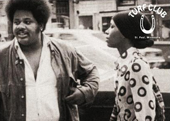 nineties. Reloaded Wednesdays, aptly lead by long time scene staple Sean ‘Twinkie Jiggles’ McPherson of Heiruspecs,
focuses on hip-hop, r&b, and jazz, with a promise of "no fucking
rock music", according to their Myspace page. Tonight’s edition will
feature the cool, cool tunes of Burning City Skyline, Aaron Rice,
Tarlton, and resident record-spinner DJ Anton. Want to make an evening
of it? Hit up greasy but tasty neighborhood spots such as The Best
Steakhouse or Checkerboard Pizza – all within a block of the Turf.
9pm, Turf Club, 1601 University Avenue, St.Paul, $4 -
The 2008 Most Beautiful People at the Capitol Awards
Photos by Denis Jeong
Nearly two months ago, we embarked on a quest unprecedented in the history of Minnesota politics. Our pursuit — nay — our calling from a higher being, was to seek out the most beautiful, spectacular, and otherwise hot people who labor at the Capitol — in obscurity or otherwise. The response was overwhelming, with hundreds of comments and e-mails singling out the stunning men and women who turn the wheels of legislation.
Of course, there were roadblocks, not least of which was the MN House of Representatives, according to several reports, "suggesting" that House members not participate in the contest in any way and a persistent error message popping up when House members tried to access the site. But through the ingenuity, perseverance, and profoundly inappropriate suggestions of outfits for winners to wear to their photo shoots by The Rake‘s editorial staff, we found a way to bring you, our readers the unbelievably sexy hotdish that is the 2008 Most Beautiful People at the Capitol awards.
And because our readers made this possible, it’s up to you to pick the King and Queen of Minnesota politics. Take a moment to decide which one man and one woman in the photos below gives you that odd tingly feeling — whose smoldering stare leaps forth from the electronic page to make you shift uncomfortably in your seat. Once you’ve wiped the sweat from your brow, post a comment below to tell us your choices. We’ll be throwing a coronation party later this summer to announce the Alpha and Omega of Minnesotan political beauty and allowing you to marvel at their glory and majesty. A memory to treasure for a lifetime, to be sure.
The Five Most Beautiful Women at the Capitol
(Click images for full size.)
 Laura Blubaugh
Age: 26Hometown: Elmhurst, IL
Party Affiliation: DFL
One of the most stunning administrators in the history of the Senate Health, Housing, and Family Security Committee, Blubaugh arrived for her photo shoot intent on posing with a handwritten sign calling for universal healthcare. After some discussion, however, it was decided that the focus should be on her fabulously toned legs, rather than a controversial policy platform.
Lest ye think she’s a simple policy wonk blessed from on high by a happy genetic accident, Blubaugh attacks her pastimes with the same zealotry she does equal access to healthcare for all. After work hours, she’s more often than not risking the aforementioned spectacular limbs boating through local white water in a kayak. And after emerging from the river like an adrenaline-fueled Aphrodite fresh from the foam, she finds time to take in plenty of live music, going out two or three times a week to take in anything from Greg Brown to Sigur Ros.
 Rachel Hicks
Age: 23
Hometown: Brooklyn Park, MN
Party Affiliation: DFL
Rachel Hicks, legislative assistant for Sen. Patricia Torres Ray, looks nothing like a former rugby player. She does, however, have the drive to advocate for immigration rights and feels an intense responsibility to help do something positive for the immigrant community. In the meantime, she does the rest of the metro area a favor by moonlighting as a beer tub girl on salsa nights at the Loring Pasta Bar.
When not ministering to her adoringly thirsty congregation at the Loring, Hicks is an avid traveler — already making her mark on every continent save Antarctica and living in Argentina for a time. Through it all, she has stayed close to her family, especially, in a Skywalker-esque twist, her twin sister — whom she keeps close to her heart with a tattoo of a double helix DNA strand on her lower back. In fact, in high school at the ISEF-International Science and Engineering Fair, the twins took second place in the heated competition with an entry titled "Twins Two, It Takes Two: Phase Two".
 Melissa Reed
Age: 29
Hometown: Minneapolis
Party Affiliation: Impressively non-partisan
Leave it to the City of Minneapolis to employ a stunning, scooter-riding, world-traveling brunette with spectacular taste in liquor as a lobbyist.
Melissa Reed, the stunning, scooter-riding, world-traveling brunette with spectacular taste in liquor in question, is uniquely qualified to argue for her hometown. She grew up on Lake Harriet and went gallivanting across the globe — from Italy to Morocco. She even lived in New Orleans as a civics, law and world history teacher for Teach for America only to return home as one of Minneapolis’ biggest boosters. And along the way she’s picked up that special something that turns heads in every room, despite being directed to dress like a proverbial nun for her photo shoot.
Outside of her efforts at the Capitol to get the funding, programs and respect Minneapolis so richly deserves despite its reputation for hedonism and occasional depravity, Reed develops women’s health curriculum for religious organizations through a non-profit group and raises money to bring disadvantaged New Orleans kids to Minneapolis for seminars on political activism every year. That she accomplishes all this while engaged in a Sisyphean quest for the ultimate bacon cheeseburger and keeping her household well-stocked with high-end Scotch makes her all the more impressive.
 Regina Garza
Age: 26
Hometown: Roanoke, VA
Political Affiliation: DFL
Handpicked by former Sen. Jane Ranum to join her staff while working in D.C. as an advocate for labor and immigrant rights, the petite lady in red was brought here by the seductive, yet deceptive, song of Minnesota summers — learning too late that the rumors she heard about the state’s other seasons are all too true. She keeps herself warm by serving as Sen. Mee Moua’s Judiciary committee administrator, keeping a watchful eye on public safety and the courts while working unofficially on immigration policy initiatives for the senator.
A self-described public policy wonk and political animal by nature, Garza still finds time to get away from the grasping tendrils of the legislative arena. Having met her fiancé, a competitive ballroom dancer, while salsa dancing, she continues to learn in the hopes of one day joining him in competition. She is also living proof of the Capitol’s effects on the mental state of all who work there – her tenuous grip on sanity causing her to run the Boston Marathon and planning to follow it up with the Twin Cities Marathon as well. But her drive and passion, combined with that little bit of crazy, makes for a striking package.
 Mary Lahammer
Age: 34
Hometown: St. Louis Park
Political Affiliation: "None whatsoever"
TPT’s politics reporter, program host and documentarian extraordinaire is generally known for her impartiality and political acumen, but there’s an extremely vocal subset of her audience watching for the disarming combination of her nigh-angelic good looks and choice of footwear that brings most mortal men to their knees. And despite being one of the most recognizable political journalists in the state, her career in public television has taken her far afield of the Capitol as well — from a pastoral week for a documentary on Isle Royal to a 17-course meal with Fidel Castro and Jesse Ventura.
From her honeyed-blonde hair to her white leather high-heeled boots, Lahammer isn’t one to do things by halves — living an intense life away from Saint Paul’s hallowed legislative grounds as well. A recent foray into cliff-jumping in the Boundary Waters is only the latest example of her fervent desire to live what most would call an exhausting lifestyle. Training for the Olympic marathon trials and hauling 1,000 rolls of sod for an extreme landscaping project with her husband, who shared a 12 mile run with Lahammer on their first date, is seen as the norm in Minnesota’s first family of political journalism.
And to make sure the next generation is prepared to take up arms for the cause, Lahammer’s daughter’s first words were, "More Capitol news mommy, please."
The Five Most Beautiful Men at the Capitol
(Click images for full size.)
 Judd Schetnan
Age: 35Hometown: Fergus Falls, MN
Party Affiliation: "I work for the governor"
Arguments about transit within the hallowed halls of the Capitol often get ugly, but the Met Council’s transit czar, Judd Schetnan, looks damn good after helping deliver a solid session for transit, despite threatened funding cuts for the Central Corridor — not to mention an angry GOP core out for blood after an overridden gubernatorial veto. And it’s obvious the Met Council’s transit lobbyist understands the heavy responsibility that comes with his runner’s physique, deep tan and somewhat roguish charm — looking to help lawmakers find ways to fit public transportation into an already strapped budget to help the entire state live up to its potential.
Of course, now that the hard fought session is over, Schetnan is enjoying a well-deserved break. He spends as much time as possible lately with his wife and two sons, not to mention trips to his cabin just south of his hometown, as well as his boat on the St. Croix to work on deepening his tan – all the better to woo lawmakers in ’09 when the budget forecast is even more dismal than it was this year.
 Nick Busse
Age: 26
Hometown: Jordan, MN
Party Affiliation: decidedly non-partisanBusse, despite his obvious charm and good looks, was less than thrilled upon being the first nominee for this singular honor. However, after realizing the damage was already done, he decided to indulge his co-workers and allow himself to be enshrined as one of the hottest men to ever write for the Session Daily and Weekly.
And despite this break to recognize his contributions to beautifying Saint Paul, this University of Minnesota graduate’s veins pulse in tune with the ebb and flow of legislation — even proposing to his wife at the Capitol. But let it not be said that Busse’s beauty is one-dimensional — when not furiously reporting on House activities, he runs Saintpaulitan.com, a blog devoted to showcasing the finer side of Saint Paul, and the occasional squirrel, to all those who fear to tread where legislators dwell.
 Peter Brickwedde
Age: 24Hometown: Minneapolis
Party Affiliation: DFLAs one of the men who keeps the State and Local Government Operations and Oversight committee functioning smoothly, one might imagine Sen. Ann Rest’s legislative assistant would be drunk on the heady nectar that is political power. However, this undeniably dreamy veteran of the Minnesota Senate is well-grounded, saying he’s working in one of the greatest environments he could ask for and demonstrating his modesty by downplaying the hordes of salivating colleagues who demanded his rightful place on the list of the state’s finest.
When not wandering the halls of the Capitol, Brickwedde is a sports fanatic, contributing his journeyman labors to the Senate softball team and honing his already impressive Hebrew physique by playing tennis regularly. And when "The Brick" isn’t in action, he’s often enjoying some well-earned down time watching the Vikings, Twins, Wild, or sumo wrestling on "The Ocho."
 Ron Latz
Age: 44
Hometown: Golden Valley, MN
Political Affiliation: DFL
The lone legislator in this roundup, Sen. Latz cuts a striking figure posing in the retail and housing complex he helped build at Excelsior and Grand as a St. Louis Park city councilmember. His work in the legislature is no less striking — having played a pivotal role this session in the 35W bridge collapse victim compensation bill. The majority whip from Senate District 44 has served in the MN Senate since 2006 and for four years before that in the MN House.
The senator also maintains a thriving criminal and employment law practice and spends as much time as possible with his family, traveling from soccer game to soccer game watching his kids and waking up before dawn to maintain the what are, according to one anonymous commenter, the "impressive shoulders and steely jaw that draw jealous stares from his GOP colleagues."
But Sen. Latz isn’t simply a masculine figure for St. Louis Park, Hopkins and Golden Valley housewives to gaze upon with barely disguised desire. He also indulges his artistic side by indulging his inner Von Trapp with his family — singing and playing piano with his wife and kids.

Dave GilletteAge: 30
Hometown: Minnetrista, MN
Political Affiliation: Card carrying member of the press
The avant-garde creator of a whole new form of video-based illustrated political commentary, Gillette uses his massive drawing muscles for incisive critique while wooing his public with boyish charm and well-developed forearms that would make Olive Oyl swoon in lustful abandon. An avid spectator of politics, Dave combined his passion for illustration with a college-born near-obsession with video documentation that was further fueled by a comedy show he helped create for Channel 45.
When not offering views sketched out in ink, Gillette is an avid outdoorsman, having just returned from a week in the Boundary Waters. He also just bought a home, allowing hopeful viewers a stable location to maintain their watchful vigil on the artistically tousled commentator.
-
WHO Runs the Family Circus?!
It’s been one week and we have already discovered who runs the circus–I mean house. Is it Louie, the English Bulldog? My husband has always loved English Bulldogs, so when our son turned 10 he convinced the whole family that we should have one for the son’s sake.
We ended up with the "stud" of the litter, Louie, because his brother Eddie apparently had issues…When the breeder called and asked us to have Louie come back home and procreate more English Bulldogs, we declined. Louie was not a source of income for the family…He was family….NO hot English Bulldogs for him–
He is a very confident dog despite his lack of …!
Moving on—Next came Ernie. The backstory: Howard was trying to wind down from work by golfing with his buddies at Oak Ridge Country Club–yeah, I know, never name drop. But at this point in my life—WHO CARES?! So I took the kids to lunch at Figlio
in Uptown. One crispy calamari, two homemade chicken soups, one order of grilled chicken wings, a huge plate of tortellini, and one of their great house white wines later…..
The kids and I ventured down the street and saw this adorable so-called "rare" white mutt in the window of what used to be the Uptown Pet Store—-
With both arms twisted…the expressions from my kids’ faces…..the wagging of his white tail—This little white $$$$$$$ dog was coming home.
When we went to the golf course to show Howie …. let’s just say after a few "very funny, take that rodent back" looks….Ernie was now another addition to the …….. family.Smokey the rabbit, Bubba the guinea pig, and Freddy Fish (the 1st, 2nd and 3rd) were all now members of what I like to call the "JG Family Circus!"
In between all of this madness, we had a loving wheaten terrier, Elmer, who my sweet sister-in-law Marcia was kind enough to give a great home to. That is, until a year ago when he, too, went to the big animal sky filled with pets of all kind that have brought so much joy to so many people!
Bruno may be a teeny tiny little pupster, but make no mistake—–
If you even think about adding to this circus here…Let me stop you by saying we are officially closed until Bruno can get over his issues of being A SMALL BUT FEROCIOUS YOUNG DOG…

We are closed for business until everyone gets some sleep here at the JG Circus of Madness! Time for a nap or maybe a glass of wine from Figlio.
-
BLINGO: Not Your Grandma's Bingo
SPECIAL EVENT
331 Club Blingo
No, not Bingo, BLINGO! The always sassy 331 club puts their spin on your Grandma’s favorite sport
with this weekly hipster-friendly bingo party. Come on down to one of
my fave neighborhood bars (and not just because it’s within stumbling
distance of my place) and prepare yourself for a rowdy night of bingin’ and blingin’.
Hostess with the mostest Ellie Blades will call balls as you try your luck at winning glitzy prizes. Enjoy the
331’s tasty Tuesday $2.50 drink special and fill up on tacos
from Raliegh’s Texas Tacos, which will be in abundance tonight. Never played
bingo to rap music? Well, here’s your chance! After you win that Mr. T
medallion, stick around for some electro-sauve tunes from the likes of
Chemical Hawk, The Economy Team, and the amazing Venus DeMars.
Blingo 7-9pm, Music 9pm-2am, 331 Club, 331 13th Avenue NE, Northeast Minneapolis, FreeLECTURES
Lets Talk About It: Modern Marvels
Every other Tuesday through August the Highland Park Library hosts "Modern Marvels",
a series that will appeal to both comic book afficiandos and the
culturally curious. Focusing on graphic novels by Jewish artists,
tonight’s edition will spotlight "The Complete Maus: A Survivor’s Tale", a famous graphic novel by Art Spiegelman.
A moving and beautifully illustrated historic recount of the experiences of
the artists’ parents Vladek and Anna, who came of age in Europe on the
verge of Nazism, and their sad tale of survival in the concentration
camps. A serious story with a twinge of irony in it’s characters, Maus
depicts Jews as mice, Nazis as cats, Polish as pigs, and Frenchmen as
frogs. Tonight’s discussion will be moderated by Professor Judith Katz.
7pm, Highland Park Library, 1974 Ford Parkway, St. Paul, Free
MUSIC
9 Nights of Music
The Minnesota History Center
is retro-central tonight with an extended evening of solid gold rock n’
roll along with a 50s fashion show. If you missed May’s Retrorama, this might be just the ticket! The evening also serves as a tribute to the Society’s Minnesota’s Greatest Generation project
which encourages the public to share their stories of family members
who lived during the Depression, and in honor of this iconic time
period, the History Center challenges you to dress the part! Show up in
50s threads and strut your stuff in the fashion show, or simply twist
and shout to fun retro cover band The Rockin’ Hollywoods. This is an
outdoor party, so bring a blanket to sit on, and protect that vintage
frock from modern grass stains!
6:30pm, Minnesota History Center (Outdoors), 345 W. Kellogg Blvd, St. Paul, Free -
The world is full of downers…which is maybe why Gonzo took so many uppers
This is one of those rare mornings where The New York Times‘ homepage isn’t dominated by a picture of Obama or McCain. So I figured I might as well bring the election back into forefront…of this blog about books…oy. The real reason I’m posting this can be found after the poem.
The following is lifted from Fear and Loathing: On the Campaign Trail ’72, which is Hunter S. Thompson’s take on the 1972 presidential election, written for Rolling Stone.
What’s striking to me is how many parallels there seem to be between the 1972 cycle and this year’s. The first chapters of Fear and Loathing focus intently on the youth vote, the minority vote, the need for change, and the need for hope. Spooooooooky…
Just an additional quote fro the book that I liked:
"The nut of the problem," Thompson wrote, "is that covering this presidential campaign is so fucking dull that it’s just barely tolerable…and the only thing worse than going out on the campaign trail and getting hauled around in a booze-frenzy from one speech to another is having to come back to Washington and write about it."Anyway, here’s the semi-poem.
"28 newspapers"
This world is full of downers, but where is the word to describe
the feeling you get when you come back tired and crazy from a week on the road
to find twenty-eight fat newspapers on the desk:
seven Washington Posts, seven Washington Stars,
seven New York Times, six Wall Street Journals,
and one Suck…
to be read, marked, clipped, filed, correlated…
and then chopped, burned, mashed, and finally hurled out in the street
to freak the neighbors.After two or three weeks of this madness,
you begin to feel As One
with the man who said, "No news is good news."
In twenty-eight papers, only the rarest kind of luck
will turn up more than two or three articles of any interests…
but even then the interest items are usually buried deep
around paragraph 16 on the jump (or "Cont. on…") page….The Post will have a story about Muskie making a speech in Iowa.
The Star will say the same thing,
and the Journal will say nothing at all.
But the Times might have enough room on the jump page to include a line or so that says something like:
"When he finished his speech, Muskie burst into tears and seized his campaing manager by the side of the neck. They grappled briefly, but the struggle was kicked apart by and oriental woman who seemed to be in control."Now that’s good journalism.
Totally objective; very active and straight to the point.
But we need to know more.
Who was that woman?
Why did they fight?
Where was Muskie Taken?
What was he saying when the microphone broke?If Colin Covert is allowed to write a 700+-word ‘review’ about Gonzo:The Life and Work of Dr. Hunter S. Thompson, the documentary now showing at the Lagoon, which has less than fifty words of criticism in it (and therefore about 650 words of obvious biography and navel-gazing), then I figured I’m allowed to take a minute and post one of Thompson’s poems.
And yes, I take most of my journalistic cues from Strib movie reviewer Colin Covert.
Covert writes: "Thompson burst onto the national scene at 26 with "Hell’s Angels," [sic] his account of a year spent on the road with the outlaw motorcycle gang. It was vivid traditional reporting and became a bestseller, winning the young author a spot on ‘What’s My Line?’ But it was his invention of ‘gonzo journalism,’ mixing solid factual research and epic flights of fantasy, that won him a place in pop culture history. His writing was daring and adventurous; it took big chances and made important arguments in relentlessly funny ways."
But he never tells us whether the film is effective in depicting this or not. We’re told that it’s a ‘celebratory documentary,’ and that because of his ‘comfort in the spotlight, [Thompson] made great pictures.’ But that’s all.
It’s really more like an essay that’s occasioned by the film, except the essay has nothing to say about Thompson that even casual readers can’t figure out by reading one sentence from the guy.
For those interested, here’s a more comprehensive point-by-point review of the flick.
-
Monsters, Maps, and Marginalia
How is your balance these days? I’m asking only because I’m about to take you out on a limb–and who knows how many of us have learned to walk on a tightrope unafraid, arms spread wide; how to fall without getting hurt; and how to lift off and take flight? (Impossible, you say? But there is flight and flight, lines inevitably running together in a perspective unsuited for parallels and the blind leaps of the imagination, based on nothing but a hunch. I like following those inexplicable urges.) This particular limb is a story: a story that tries to make connections where maybe there are none to begin with. But, you see, I have this hunch. So let me see if I can spin this right and weave the strands together into what may, momentarily, resemble a whole.
The current McKnight show, on view at MCAD’s gallery, brings together four artists. At first glance, all that connects these artists is the fact that they received a grant that allowed them to pursue the pieces on display. But, as Kristin Makholm puts it in the catalog, these artists also share an interest in "allegory, narrative, symbolism, and story." How appropriate, then, to create a story of my own–not a linear story, but one that proceeds in a seemingly counterintuitive way: from the margin to the center, from the periphery to that elusive pivotal point of convergence.
As many advocates of such a shift in perspective have argued, what may result from such daring turn-abouts ranges from acute vertigo to a more general unease, anger even, unleashed by the sense of uncertainty and of a profound estrangement from what we thought was ordinary–too ordinary and plainly "normal" to pay much attention to. But looking from the margins toward the center re-arranges what we can see. What’s more, it can lastingly impact how we see, and make us aware of where it is that we see from–speaking socially, culturally, and, also, personally. This realization may jolt us into performing a double take. A triple take. Quadruple–? (Humor me, this once.)
Four artists, each of them accomplished: Andrea Carlson (whose The Tempest is the header image included above), Megan Vossler, Amy DiGennaro, and Stacey Davidson. Four women. In this election season, with the electorate newly attuned to the lingering legacies of racial and gender trouble, is this a remarkable fact? From what can be gleaned by looking over the list of past grant recipients, it seems this is indeed a first. Does that make four female recipients remarkable, though? I don’t know. What is remarkable, without question, is the work on display.
 Andrea Carlson, Portage, 2008 (mixed media on paper) and The Tempest, 2008 (mixed media on paper), both 92 x 122 inches
On opening night, Andrea Carlson, whose large scale mixed-media pieces entitled The Tempest (2008) and Portage (2008) occupy the gallery wall furthest from the entrance, mentioned in conversation (and I have her permission to repeat this exchange here) that her friends, upon seeing her new work, asked, "But where are the monsters?" Given Carlson’s previous interest in the mythical monster of Anishinaabe lore, the Windigo, this question is not as odd as it may initially seem. In her Windigo Cycle, inspired, as the artist notes, by her Anishinaabe and European ancestry, Carlson focuses on this "winter cannibal monster" as a character that indiscriminately consumes those unfortunate enough to cross its path. On American Folklore, Schlosser describes the Windigo as "tall as a tree, with a lipless mouth and jagged teeth. Its breath was a strange hiss, its footprints full of blood, and it ate any man, woman or child who ventured into its territory. And those were the lucky ones. Sometimes, the Windigo chose to possess a person instead, and then the luckless individual became a Windigo himself, hunting down those he had once loved and feasting upon their flesh." Carlson relies on the idea of indiscriminate, insatiable consumption, paired with the twin threats of being consumed spiritually–possessed– by the monster and, as a result, of turning to cannibalism, as a powerful metaphor in her exploration of cross-cultural exchanges, including assimilation and acculturation.
Lauren O’Neill-Butler, analyzing Carlson’s work in her catalog essay, ascribes a "sharp post-colonial critique" to the artist’s work. And, yes, the elements of a post-colonial critique are here: for instance, the very title–The Tempest–alludes to that staple of post-colonial literary analysis, Shakespeare’s comedy set on a wind-swept island, complete with monstrous and enslaved natives. And yet, applying the term "post-colonial" to Native American and U.S. American cultural relations is not uncontested: writers such as Jack D. Forbes (in Columbus and Other Cannibals) and Thomas King (in "Godzilla Vs. Post-Colonial") have argued, with admittedly controversial results, that, strictly speaking, there is no "post" to the colonization of Native land in North America.
The Tempest is aptly titled, then, to allude to these stormy cross-cultural interactions. Yet the literal storm does not rage at the center of the painting, where white clouds drift serenely over placid water. It is at the periphery, on the margins, where there is unrest, tumult even. Striking black and white geometric patterns, inspired by Anishinaabe blanket patterns, abandon the cozy appeal of the textile and morph into a threatening vortex, complete with rows of jagged teeth. The overlaid patterns evoke a disturbing sensation of motion, as if we are allowed only a brief glimpse of the peaceful vision of a fantastic landscape before the rotating, serrated edges will close on us.
The act of looking itself, it seems, becomes a dangerous, complicated endeavor here. Where exactly do we stand in relation to this work? Visually, we have to pass through the swirling, vertigo-inducing threshold in order to reach–what? The lure of an idyllic landscape? A promise of authenticity? Neither is ultimately allowed: the paintings themselves are divided into panels that rip the representational space apart and thus deny any illusion of reaching the sanctuary of the land beyond. There is no illusionary wholeness here. All we can see is our own fantasy, framed by the toothy geometry of indigenous imagination.
So, to return to the initial question raised vis-à-vis Carlson’s work: Where, then, are the monsters here? Who consumes whom in this collision of cultures? Who is at risk of involuntarily turning into the monster and suffering this drastic adjustment of vision through possession by the evil spirit? Given that Carlson’s two paintings are shown next to each other, the experience of looking at their geometrically framed landscapes assumes the uncanny air of peering through two giant eyeholes: There is a storm raging inside the skull we thus come to inhabit, and we, the onlookers, have little control over what we see, since our vision is at the mercy of swirling of peripheral patterns. We, the spectators, turn into the mythical monster. We are the cannibals, indiscriminately consuming whatever comes our way–art, nature, culture (whether our own or somebody else’s), resources. We consume it all, the high-brow along with the low-brow, no-brow. With a storm raging at the periphery of our vision, can we disting
uish omnivore from cannibal? Clearly, this work articulates a poignant cultural critique–whether it qualifies as post-colonial or not is another question, though.Cultural critique, too, acts as a driving force in Megan Vossler‘s work. In her drawings, nameless people scavenge or migrate through rudimentary landscapes that coalesce out of the white paper expanses surrounding these furtive scenes. Vossler withholds any clues to the specific circumstances that may have caused the experience of her characters. These are not the people whose fate makes headlines. These are the survivors, occupying the margins of international media attention, left to fend for themselves. Their experiences move to the center of Vossler’s drawings but nonetheless remain curiously distant, fading in and out of the white space as if not quite in focus, as if caught in the midst of intense fog that only has lifted momentarily.
 Megan Vossler, All of our moments are stolen, 2008 (Graphite on paper), 60 x 73 inches
Eventually, the whiteness itself emerges as the most suggestive element of Vossler’s work. Whiteness is not just negative space here but seems to bear political meaning. This whiteness engulfs the scenes it surrounds. Like a temporarily suspended blind spot–a blind area, actually–it grants uneasy immunity to perceptive probing. It shields, it erases, it hides the particularities that may help amend the vertiginous vagueness of the scenes depicted. Thus, while Vossler’s work is clearly concerned with re-positioning marginalized and ignored experience at center stage, the seeping, creeping whiteness muffles the margins of the drawings with subtle menace.
The whiteness materializes in the plaster casts of duffel bags, backpacks, and plastic bags in If you find me, hide me, I don’t know where I’ve been, displayed centrally on the gallery floor. While ostensibly concerned with security regulations, as O’Neill-Butler notes in the catalog, I am, once again, intrigued by the sheer whiteness on display: Is this Peggy McIntosh’s famous invisible knapsack of white privilege literally becoming visible and even tangible at last? Do the privileges most white people have taken for granted for so long finally become recognizable as such at, ironically, the very point in time when they come under increasing attack? And who is uttering the title of the piece–that lost, paranoid, amnesiac phrase?
 Megan Vossler, If you find me, hide me, I don’t know where I’ve been, 2008 (plaster, variable dimensions)
While Vossler leaves us guessing as to who the people in her drawings are, Amy DiGennaro‘s heavily personal imagery leaves little doubt about the artist’s familiarity with her subjects. Yet this focus on the personal never falls prey to the tired indulgence of self-absorbed work that thrives on narcissism and the audience’s voyeurism; the personal, here, serves a purpose.
Inspired by the marginalia of medieval books, DiGennaro’s drawings offer clearly structured compositions with an amazing amount of detail. In all of her drawings, center and margins interact and negotiate meanings in multi-layered, recurring motifs. The marginalia illuminate the central figure’s deeds, adding depth, complexity, commentary, and explanation. Simply put, the center only holds because of the margin.
 Amy DiGennaro, Christine the Intrepid, Hours of Bona Sforza, 2008 (graphite on paper, 41 1/2 x 29 1/2 inches)
It seems entirely possible to get lost in these at times mystifying maps of experience. But while the work validates personal experience, it also transforms the ordinary into something of allegorical significance. This transformation is particularly profound in the case of Christine the Intrepid, Hours of Bona Sforza (2008), a drawing which centers on DiGennaro’s partner weaving nests for their two sons, while at the margins scenes of changing seasons and recurring cycles insist on the naturalness of this non-traditional family. Trees abound in the margins, their roots not only providing shelter for the sleeping figure, surrounded by friends who watch over her, but literally referencing the root, Latin radix, the stem of radicality. (The artist’s likeness, clad in a bird costume, is shown drawing tree branches in the top left corner.) In Marilyn the Sedulous, Hours of Bona Sforza (2008) the tree motif re-surfaces: a woman’s body merges into the heft of a tree trunk. There is rootedness here, and belonging, and the stitching together of homes that do not conform to the narrow traditionalism of the heterosexual family unit. In DiGennaro’s work, the still marginalized, still contested experience of living in Rainbow families is rendered in all its allegorical splendor in a radical reversal of whose experiences should count as potentially universal.
A similar emphasis on experience that, though ordinary, does not usually take center stage, occurs in Stacey Davidson‘s work–with one crucial difference: her protagonists are dolls, which the artist first fashions three-dimensionally, before portraying them in gouache. Carefully crafted, the dolls effortlessly resist playful platitudes along with the stilted lifelessness of collectors’ treasures. Their irresistible individuality sets them apart from dolls as mass-produced plastic projections of cultural fantasies, but they do share an uncanny affinity with the purposeful dolls used for mastering the unspeakable through playful, diminutive repetition in therapeutic settings.
When O’Neill-Butler invokes Sigmund Freud’s famous essay, "The Uncanny," in her discussion of Davidson’s work in the catalog, she is clearly on to something: the repressed returns, oddly familiar and strange at the same time, inspiring the proverbial double take and a plunge into intellectual uncertainty. What exactly is it that we are looking at here? A doll? A person? Some sort of fantastic doppelganger or hybrid? More to the point, what is it that returns to haunt us here?
 Stacey Davidson, Salt on pavement, two days after a light snow, 2008 (gouache on paper), 29 x 21 inches
Ironically, Davidson’s dolls seem to truly come to life once they are rendered in two dimensions: wistful and wise, smeared with lipstick and soot-stained, these dolls have a past that they come to inhabit fully in their portraits. In Fuck what’s hip, Lydia steps out to make a living (2007), we encounter a middle-aged woman in a bathrobe, slightly irked by the necessity of having to step out and take the initiative to tackle her economic plight. In Salt on pavement, two days after a light snow (2008), a girl in a swishy skirt sports a T-shirt that reads "I had an abortion." She calmly meets our gaze, her youth at odds with the patient weariness of her expression. A strange tension persists between the monochromatic gouache backgrounds and the eerie eloquence of the dolls’ faces and poses. As viewers, we are of course compelled to fill in the blanks, to create the story surrounding these snapshots of sorts. The question becomes what exactly we draw on in order to project our own narratives,
whether strictly personal or cultural, onto these doll portraits.What returns to us, then, in the guise of Davidson’s dolls, are culturally coded moments, isolated from their usual context and from the familiar scripts we rely on to make meaning. Despite the visual isolation and emphatic lack of context, we recognize them. What the portraits offer us is a chance not only to fill in the blanks but to pay attention to, and possibly re-assess, just how exactly we go about doing that. Yet this offer is no abstract intellectual inquiry into perception, as the dolls remind us: stubbornly playful, eerie and humorous, they riff on the familiar and make it strange, inviting us to look, and look again. If what we thought we knew becomes a little less certain in the process, so much the better.
Thus this tale of monsters, maps, and marginalia comes to an end. What the work on view shares, beyond narratives, allegories, and symbolism, is the pronounced effort to disrupt the ordinariness of looking. We may retreat from the unexpected wisdom in the gaze of Davidson’s girl doll, and manage to find a way out of the dazzling mazes of experience DiGennaro maps in her drawings; we may emerge unscathed from the numbingly white surfaces of Vossler’s work, and surface from the depth of vision in Carlson’s paintings; yet, the most central question that arises from this particular story about these four artists insists on being answered: Where do we stand when we look at this work–personally, socially, culturally? At the margin? At the center? Out on a limb?


