The best wedding bands don’t even know the chicken dance, or anything by the Village People. In conjunction with the Minnesota History Center’s “Happily Ever After” exhibit, this year’s outdoor Nine Nights of Music series showcases dream wedding bands playing music from around the world. August’s lineup opens with Piper’s Crow (above), a local Celtic group that reels off tunes from Irish, Scottish, and Cape Breton traditions. As August unfolds, we’ll hear how other cultures accompany their nuptials. Tarang, a Bhangra band, plays traditional Hindi celebration songs (August 9), Cafe Accordion Orchestra offers heady European airs (August 16), and the Bulgarian Orkestar Bez Ime closes the series with the moody romance numbers of the Balkans (August 30). 345 W. Kellogg Blvd., St. Paul; 651-296-6126; www.mnhs.org
Year: 2005
-
Where's Donald Segretti when we need him?
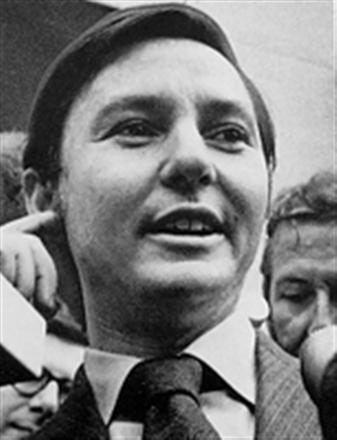
All I did was order a few pizzas. Really!Last week I was in a place with no TV news or newspapers, so it was a blissful time free of worry about bombings in London or the rattish morality of Karl Rove. I got back on Saturday, though, just in time to read about the bombings of candy grabbing school children and market place gas tankers in Iraq. Two loud bangs and there were more dead Iraqis in two days than Londoners or Madrilenos in the past two years.
Who do we blame for this? It might be a good idea to look at what’s behind all this Rove/Cooper/Wilson stuff to find an answer.
In case you haven’t been paying attention, (and the fact that calls for a certain President’s impeachment haven’t yet reached the level engendered by a stained blue dress indicates you haven’t,) the whole mess was ultimately precipitated by Joseph Wilson writing an op-ed piece for the NY Times saying that the administration’s claims that Iraq was on the verge of making nuclear (or nucular, if you’re the village idiot of Crawford, Texas) weapons was unsubstantiated.
Now, those idiots don’t much like being called idiots, so they got right after Wilson by outing his wife as a CIA agent. Now whether you believe that revelation broke the letter of the law or not, you still gotta admit that’s pretty low, at best. And if there’s one thing that’s certain about Rove, it’s that there is nothing too low for him. (As one person said, the only reason he can’t get any further into the mud is that his shirt buttons are in the way.)
But what is important to keep in mind is not that Rove actually set out to get Wilson and his wife, but rather the mindset that Bush’s people can do anything they damn well please, up to and including lying to the country to start a war. That, and that anyone who tries to stop them will, at best, be dismissed as ineffectual, and at worst, end up with ruined lives or ruined political careers. If you have a short memory, look up what was done to John McCain in South Carolina in the 2000 primary or Ann Richards in the Texas governor’s race in 1994. (OK, you don’t remember, but McCain’s wife is nuts and had a mixed race child, and Richards was a lesbian, according to their opposition.) That’s just for starters, though. Read Bush’s Brain if you want real nightmares.
So here’s how I read the whole Rove thing: it’s just part of the most insidious government we’ve had in this country in my lifetime. Nixon’s boys were complete amateurs when it came to dirty tricks. Donald Segretti went to jail for much less than what Rove does daily as a matter of course.
And that’s why children and shopkeepers get incinerated in Iraq.
-
Webbed Feet
One of the problems with reading the news online is that it’s more difficult to effectively browse a newspaper’s content. Aside from the odd phenomena of online editors screwing with headlines and decks to make them shorter or hipper or whatever it is they’re trying to do, a web page just doesn’t offer the same facilities for easy browsing. We haven’t looked deeply into it, but the general paradigm seems to be this: The architecture of information online tends to be suited to search and recovery. Generally, that means the best web pages are designed to facilitate you finding something you know or suspect is already there. (Corollary: general interest, web-only “magazines” died slow, uninteresting deaths when the tech-bubble burst five years ago. Slate and Salon are the exceptions that prove the rule.)
The impression we take away from having cancelled our home subscription two years ago to the Newspaper of the Twin Cities, is a troubling one. If you only take your news from the web, you begin to have an indistinct sense of scale on news stories, a random congeries of anecdotal stories driven by momentary impulses and obsessions, a sort of roadmap of links that trace the circuits of your own prejudices, preconceived notions, and moral politics (link, incidentally, a result of browsing our way through the real-world Sunday Times, one paper that still decorates our doorstep. Still, reducing the input by one daily newspaper has saved our back considerably. Recycling is a bitch; we save the Times to start the grill.) The more or less organic structure of content, dictated mostly by chronology, creates the impression that all stories are created equal.
Like we say, online editors probably should bear some of the blame for thinking too literally about information equations. (Everything is just a link away! A shallow, instantly “drillable” website is also a flat website, with no peaks or valleys.) But there is something about the newspaper itself that encourages a general sense of purpose and direction, a heirarchy of information, a page-to-page path through the garden. Websites are not–maybe cannot be–nearly as inviting or as favorable to browsing. As a result, even a crappy paper is better than a great website. When we have more time and feel less fragmented, maybe we’ll consider this more closely. Maybe not. Maybe we’ll just keep paddling blindly around in the little backwater that results fom our own particular trickle valve.
-
Muddling Through
We have all been expelled from the Garden, but the ones who suffer most in exile are those who are still permitted to dream of perfection.
–Stanley Kunitz, “Reflections”

[assez]
[assez dit]
[pas assez bon]
[pas suffisant]
[de trop]
[arrete!]
[shhhhhhh…]
-
Even A Giant Can't Turn No Little Village Into A Big City
It’s pretty apparent by this time that there isn’t a single trade in the world that’s going to make any kind of significant difference in the Twins’ fortunes. And, sure, I remember the Shannon Stewart trade, but that was then and this is now. At the moment there isn’t one guy who could reinvigorate this line-up, or make up for the feeble offensive production of the rest of the team.
This has all been particularly disappointing, of course, because on paper this year’s team –even with the question marks on the left side of the infield– sure as hell looked like it was going to be much improved offensively. What’s happened this year is a systemic failure. You can’t point to any one player or any one game or at-bat and say, see, there’s the problem, right there’s where the train came off the tracks. It’s pervasive. There’s absolutely no consistency –and this applies across the board, up and down the roster– from one game or at-bat to the next.
The Twins have just been maddeningly hapless at the plate, and you almost have no choice but to question the basic, fundamental approach. Or maybe it’s the scouting reports. There must be some explanation, though, for the steady regression, because this team simply shouldn’t be this feeble offensively. They seem utterly incapable most nights of generating the kind of contagious offensive momentum that leads to big innings and rallies.
So I’ll ask you, as KRS-ONE once asked, relative to much more pressing and cosmically troubling questions: “Why is that?”
It beats the hell out of me. It does. It is. Beating. The. Living. Hell. Out. Of. Me.
And I wonder this: what do you suppose the ERA of the Twins pitching staff would be if they had to face the Twins line-up every night?
I’m guessing under 2.00.
Shit, Rick Reed, fresh off his most serious shower mishap or airplane-sleeping injury, would eat this team alive right now.
-
The Fire That Never Says, 'Enough'

…what is it we are all doing, what is it we are about, pray tell? And why are we gathered here?
—Raymond Carver, “All My Relations”
I’m on my way
with dust in my shoes,
free of mythology:
Send books back to their shelves,
I’m going down into the streets.
I learned about life
from life itself,
love I learned in a single kiss
and could teach no one anything
except that I have lived
with something in common among men….
–Pablo Neruda, “Ode to the Book“
I frittered away a ridiculous amount of time over the last week or so trying to finish an essay that was supposed to address the decline of reading in America, and, specifically, the question of what this decline means, and whether stories matter.
Your eyes, I’m sure, immediately rolled back in your head when you read that paragraph, so I’m going to presume you’ll understand what I was up against. Too many words have already been wasted on this subject, which essentially boils down to this: Are too many words being wasted on this and other subjects? Are words wasted? Are there too many words? Or: What the hell is wrong with words that they don’t seem capable of stirring the American imagination as they purportedly once did? Have words suddenly –or slowly– lost their ability to make sense of what we are going through, both individually and collectively? Are we, in fact, going through anything collectively anymore, or at least anything that words might make sense of? And if we are not, then might not that be one primary reason why books fail to speak to so many of us?
Or: What the hell is wrong with Americans that so many of them are now apparently incapable of (or entirely indifferent to) being stirred by a language that is still capable of giving voice to all manner of incredibly stirring and dazzling stories?
Or: What?
Never mind, of course, that this is all hogwash. If there’s one thing I’ve proved in my long and distinguished career, it’s my ability and unhappy willingness to wallow in all manner of hogwash in exchange for the most paltry of compensation. Time and again I’ve proved (right here, in fact) that I’ll wallow in all manner of hogwash for free.
And never mind that these people who wring their hands over the alleged decline of words and stories obviously haven’t been listening to much music –hip hop, specifically– or spent much time lately hanging out in decent barber shops. Just for starters.
I made the mistake of engaging my doppelganger in this discussion, which only confused matters. The doppelganger fiercely and mercilessly blocked every one of my entry points into this exercise in futility, challenging each of my arguments with withering rebuttals that increasingly felt like taunting, and, eventually, mockery. It was plenty clear that the doppelganger had no patience, no patience at all, for this foolishness, and was merely humoring me. At one point I somehow found myself defending even my hairline –which needs no defending– and the orthodontic irregularities of my smile.
By this time words truly did not matter. They had ceased to matter.
The problem was, though, that I had a looming deadline. And I had already managed to waste almost two thousand words on this subject, words that, if published, would expose me as merely one more cloistered blowhard braying from the tower into the thick clouds of smoke billowing from the funeral pyres far below. I have already published far too many words that have exposed me in a similarly humiliating fashion.
I scrolled down to the tail end of those nearly two thousand words and hit the backspace key. Eventually I was left with only the most modest and forlorn little neighborhood of words, huddled together at the top of an otherwise empty screen, all that remained after the rest of the towering city of my indignation had been burned to the ground by the furious onslaught of my doppelganger. Eventually I was left with just these two sentences that I couldn’t bear to part with, and I suppose they’ll have to do:
At precisely the moment that man began to try to write down the story of God, at precisely that moment God turned His back in disgust. He knew what was coming: Lies.

-
Indeed, Yes, That Does Smart A Bit
Indubitably that wasn’t precisely the performance any of us were pining to see from the local nine coming out of the All Star getaway. And, agreed, Bret Boone wasn’t quite the shot in the bum we all so desperately hoped he might be. And yes, yes, I did see that the Chicago lumbermen were victorious again this evening. A wee bit discouraging, I’ll grant you, but it all adds up to so much stuff and nonsense in the long run.
Let’s try to be patient with the local lads, shall we? It’s early yet. They were bound to be a tad fagged after the holiday, and, good heavens, poor Bret Boone has barely had time to sort through his luggage and find his way to the ball yard. He probably hasn’t even managed to locate his neighborhood pub or Cracker Barrel. I don’t suppose, in fact, that he even has a proper neighborhood yet. So let’s give the fine fellow a chance to settle in and unpack his tea set, shall we, before we start passing judgment on his acquisition. This is, after all, a true gentleman who is also by all accounts a cracking good ballplayer, or at least was once upon a time, before he lost his way and wandered into a paper bag and discovered he couldn’t hit his way back out of it.
This sort of thing happens to even the worthiest of wandsmen from time to time, and I’m sure Boonie –that’s what the other fellows around the circuit like to call the new lad sporting the Minnesota togs– will be just fine. I’m certain of it, in fact. He is what the baseball insiders like to call “a gamer.” That means…I’m not certain, actually, what exactly that means, but I do believe it means more or less the sort of chap you’d like to have in the foxhole with you when the Huns come charging with their muskets, the kind with sharp objects attached to the end. Very dangerous piece of weaponry, that, if I’m not mistaken. A gamer, I should think, would come in right handy at just that moment.
As for tonight’s admitted disappointment, let’s try to look on the bright side. The fellows struck for two runs against a most crafty southpaw, which is more than they very easily could have struck for. They could have struck for zero runs, which would have been, no doubt about it, absolute rubbish. But, no, two runs! Much better than zero! Jolly good! Etc.
The Lohse youngster “pitched his tail off,” as the salty skipper of the Minnesota club is fond of saying. Indeed he did “pitch his tail off.” Not half bad, I say, not half bad at all. In fact, a bit better than not half bad, if I don’t say so. The others, the hurlers who were summoned from the bullpen (a charming and colorful bit of the parlance, that), acquitted themselves most handsomely as well.
The other fellows across the way were just that much better tonight, and there’s not a thing in the world for that other than to hoist a cup and salute the victors for a valiant effort. Well done, worthy adversary, well done!
And to our local batsmen I can only say, as I have said so often in this long campaign, ‘Chin up, my lads, be of stout heart and stern resolve, for tomorrow’s another day, and even a blind dog’s likely to turn up the odd bone now and again.’
-
Silence Is Golden
Despite appearances, we’re not particularly bothered about all this chatter regarding the Rove-Plame affair, partly because we’re supposed to be finishing the new issue, you know, putting all the frosting and chopped nuts and confetti on the long-johns here at the doughnut shop. But we noticed an interesting thread over at Romenesko, relative to Mike Miner’s thumb-twiddling at the Chicago Reader. Miner asks why reporters have not done the job of Special Prosecutor Patrick Fitzgerald–that is, why haven’t reporters themselves discovered and publicized the name of the person who leaked Valerie Plame’s name.
The answer to that is pretty simple, aside from the obvious legal tools that Fitzgerald has to compell witnesses or, say, throw them in jail. (Summarized nicely here, by Aaron Clemens.) Considering that whoever leaked her name knew or should have known that he was committing a federal crime, not a lot of people have the spine or the stomach to go on the record (or even off the record) with such an allegation without dramatic and unimpeachable evidence. That same trepidation affects reporters, and it should. Unless you can prove that Karl Rove is the man you think he is, you run a pretty serious risk of libel. The stakes don’t get a lot higher, though blog-nation loves to play fast and loose with the facts, and frequently turns innuendo into accepted, wife-beating truism. (We’ve stopped holding our breath waiting for the first high-profile libel case to emerge from something someone wrote on a blog… Here in the U.S., it’s relatively hard to win a libel or slander case when it involves public or political figures, which is as it should be, even if it explains Rush Limbaugh’s savings account. We guess it has to do with the fact that so few blogs seem to warrant being taken seriously, present company included, naturally.)
The other element of all this that we find compelling, that no one seems to be writing about, is its meta-media quality–on some level, if you want to get your tinfoil hat out and talk about media conspiracies, it is possible to discuss it under the rubric of political bias, and it might take you in some interesting directions. Time magazine, by caving into the judicial system and Mr. Fitzgerald, might actually be playing to its liberal bias, because it has facilitated the publication of what appears to be Leaker Number One’s name–Karl Rove, who also happens to be Blue America’s Most Wanted. (We dislike him as much as anyone, probably more. But last time we checked, libel law does not stop applying when your intentions are pure and your politics are noble.) Journalists have got themselves into quite a lather over Time’s decision–are they protesting a little too loudly?
No, we think generally they are sincere, even if the New York Times appears to be working overtime (like our managerial friends over there at the Strib) to convince the world of its political neutrality by erring on the side of the right (maybe even going so far as to take pains to use Republican accounting methods in its circulation department). While we like to play both sides of the issue for our own entertainment and edification, we basically agree with our friend Chris Lehmann: No matter what you may think of Judy Miller’s work, she is chilling in the cooler for simply trying to get on with it. She can’t very well repair her tarnished reportorial credentials in an orange jumpsuit and bunny slippers, can she.
But we wonder whether this whole thing really will deflate the courage of other potential anonymous sources the way people are saying it will. Maybe so. How often are these sources breaking the law–or at least bending the rules–to speak to reporters? Probably more than you might think. Cripes, coffee-jerks at Starbucks have to sign confidentiality agreements these days, and unless you are explicitly authorized to shill for your company, there’s a pretty good chance you’re violating some contract somewhere.
-
Men in Black
Last night, we enjoyed Dan Cohen’s little chat at Raking Through Books about anonymous sources, and we found some closure. Cohen suggested that the real beacon of hope in press-source-public affairs has been and will continue to be the U.S. Supreme Court.
A little background: Cohen sued the Star Tribune and the Pioneer Press for violating their confidentiality agreements with him, after he attempted to pass along damning information about a political rival. And the case rose all the way to the USSC. The Men (and Woman) in black ended up siding with Cohen, and said that the press is not above the law when it comes to verbal contracts, no matter what they may say about First Amendment protections.
Now, where we found some closure–at least so far as how Cohen’s case is related to present difficulties, or how he sees it to be, anyway–is that the First Amendment does not necessarily apply when it is being used to shield illegal activity, civil or criminal. (The comparison to yelling “fire” in a theater is inexact, but informative.) Naturally, Cohen sides with the decision of Time editor in chief Norman Pearlstine, who in all modesy and righteousness asserted that Time could not hold itself above the law to protect an anonymous source who had apparently broken the law in opening his mouth. (By contrast, Cohen had NOT broken the law–he had merely made public documents available to the local papers.)
So it is Cohen’s belief that the Supreme Court in both cases recognized that a law had been broken, and that that violation needed redress, and the First Amendment could not be used to impede that redress.
Cohen does not hold the press in very high regard, especially the local press. In fact, he gets real exercised thinking about the arrogance of the local daily papers. This is undoubtedly a function of having spent ten years of his life trying to extract justice from them for breaking their agreements and more or less ruining his public life. We’re not sure we agree with Cohen when he describes the press as self-styled “Gods who walk the Earth entirely above the law.” That applies to almost all corporations of a certain size and profit margin. But Cohen’s slightly odd blind spot, developed, we think, as a result of his own redemption from bitter, dirty political hardball, is what could have been a more pointed attack on the liberal bias of the local papers, particularly the Star Tribune. He mentioned it, but he could have made considerably more hay.
It may be more or less obvious that, through various machinations, the Strib is trying to shed the albatross of lefty bias that has for so long defined the community it patronizes. But back when Cohen was a GOP operative, it is almost unthinkable that his effort to cultivate a cheap smear against a respected governor (actually respected governor’s running mate) would not have generated its own backlash at the papers conservatives love to hate. We cannot, for the life of us, understand why he didn’t mail his public documents anonymously, and patiently wait to see if either paper picked up on the story. Cohen expresses astonishment that the local papers turned HIM into the story. “That would be like Ben Bradlee telling Woodward and Bernstein, ‘The real story here is Deep Throat. Let’s publish his name!”
Well, not exactly, no. But here’s where the allusion is interesting: Imagine what the Washington Press, or the Weekly Standard, or The National Review would have done with the snitching of Mark Felt. Maybe you begin to get the idea what the pre-McClatchy Star Tribune would have done with some public documents cheaply smearing a beloved Democratic politician. You might also speculate why those idolatrous right-wing institutions are presently as quiet as a Convent on Good Friday, with regard to Mr. Rove.
-
This Is The Time Of Year It Hits Me That He's Gone

He would have been seventy-two years old this week.
By the time he was my age he had four children and a literally broken heart.
He did what he could.
He taught wonder.
I still sense him coiled like a discus hurler behind every one of my best intentions.
His blood is the blood that calls me back to this world each time I crawl away disgusted.
His are the words of forgiveness I am always surprised to find crouched at the back of my tongue. The tenderness, unexpected, that seizes me when I am in the presence of suffering or helplessness, that also is him feeling through me.
My biggest dreams are his.
He pointed out the stars, and taught me to appreciate the gorgeous example of upholstery that is a baseball mitt. The short trigger, the hatred of condescension, the intolerance of cruelty, his compassion and affection for the little guy and the underdog, all these things he gave me.
He could not, unfortunately, give me his unbridled optimism, his undying faith in human goodness, his stiff upper lip, or his genuine willingness to just let the world be the world.
But his capacity for love, his sense of loyalty, his appreciation for a good road trip, and his eagerness to play the fool –What can I say? I am his boy.
Even when he was ultimately defeated by life, he showed me again and again how to live.
I’ve forgotten so much already. I’d give anything if he could come back for just one day, for just one hour, for just one cup of coffee, to help me remember.