Year: 2005

  • The Tears Of A Clown

    clowns.jpg

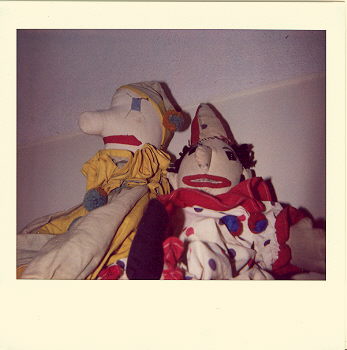
    I was born a clown, and in retrospect my parents were incredibly good sports about what must surely have been on a number of levels a shock and a disappointment. They’d been trying for years to have a child, and they accepted me immediately as a blessing and loved me unconditionally for what I was.

    My father likes to tell the story of how on the day I was born he went right out and bought me my first pair of big red shoes. I took my first tentative steps in those shoes.

    From the very beginning my lips were preternaturally large, and I have never required much in the way of embellishment beyond a basic application of lipstick for color and a bit of accenting around the outline. I have no memory of being outfitted with my rubber nose, but from the first time I can recall gazing at my reflection in a mirror it was a source of great pride and enduring pleasure.

    One morning in early childhood I awoke to discover that overnight my chin and jowls had acquired an application of Vaseline and coffee grounds.

    I was, I am told, an uncommonly stubborn and willful child, with a clear and unwavering self-image. I was as a result always allowed to choose my own clothing, and favored a ragged old porkpie hat, an oversized smock with red polka dots and shiny buttons, and baggy trousers covered with brightly colored patches. I was a very happy boy, and a happy clown.

    Childhood is of course an awkward and confusing time in the life of a clown. By the time I was old enough to attend school I had grown used to the charmed attention of adults. All of those I had come in contact with had seemed both amused and enchanted to find themselves in the presence of a happy little clown. I suppose in hindsight there was a good deal of condescension in this response, but I loved the attention all the same. I craved and needed attention; there was nothing I could do about it. It was hard-wired in my brain. My self-esteem was entirely dependent on entertaining people and making them laugh.

    My parents were an unfailingly compliant audience. They adored me, and I could induce heaving fits of laughter in them with little more than a wide-eyed grin or a startled spit-take at the breakfast table. To their credit they never pushed me. They didn’t have to. I was, however, an unusually sheltered child, and though I don’t believe this was ever a conscious decision on the part of my parents, I had had precious little interaction with other children by the time I started elementary school. As such I was utterly unprepared for the reactions I received from the other students. I understood neither the casual cruelty of children, nor the irrational fear that clowns seem to inspire in so many youngsters.

    There were long, unhappy stretches where I got the shit kicked out of me every day I went to school. Bullies on the playground held me down and wiped my beard of coffee grounds from my face; they stole my ragged hat, stepped on my big red shoes, and tore the shiny buttons from my polka dot shirt.

    In my teenage years I would stand alone and friendless in the darkened gymnasium at school dances. No girl would dance with me. Even balloons could not get me a date. I eventually taught myself a few simple magic tricks to try to impress my classmates, but it was too little, too late.

    I ate too much candy and gained a great deal of weight.

    I learned this difficult lesson: a clown is simply not equipped to handle the brutal truth.

    By the time I dropped out of high school to join the circus my fate was sealed. I would be a sad-faced clown to the end of my days.
    tomandroses.jpg

  • My Memories Of Tchaikovsky

    willis snoot 15.jpg

    It’s no secret that people of great achievement are often abject curiosities and spectacular failures as human beings, and this was certainly true of Tchaikovsky, who lived in my hometown when I was growing up.

    I can’t truly claim that it was my privilege to know the man, or even that to know him would have been, in fact, any kind of privilege at all. (My understanding is that this was decidedly not the case.) But I certainly remember the old man, and recall seeing his stooped and wretched specter stumbling along the sidewalks of my neighborhood.

    People around town knew Tchaikovsky, of course, or certainly were aware of his strange presence. Few, however, apparently realized he was writing music. Most folks remember him as a stunningly bad amateur painter whose crude oils of birds –robins, almost exclusively– were entered in the art show at the county fair each summer.

    Somewhere I have a snapshot of the garish tattoo of a clown bleeding from his eyes that Tchaikovsky had etched into one of his forearms. I can’t recall how I came by this photograph, to be honest with you, but it remains among my most prized possessions, and countless scholars have tried to buy it from me over the years.

    There was always a great deal of speculation that Tchaikovsky was consumptive, or infected with venereal disease. There did, certainly, appear to be something wrong with him. There were clearly health issues of one sort or another, most obviously a painful-looking skin condition. He also had dodgy hygiene, and always seemed to be in need of a new pair of shoes.

    Late in his life Tchaikovsky wore a beat-to-shit pair of purple moon boots, no matter the season. This was after moon boots had long since gone out of fashion, and I suppose he picked them up on one of his regular visits to the St. Vincent de Paul thrift store, where he was also said (this was in the newspaper after his death) to be an indiscriminate hoarder of “potboilers and paperback westerns.”

    I can also tell you that he rolled his own cigarettes, and spent a great deal of time drinking coffee and banging away at the Cannonball Run pinball machine at a local pizza parlor.

    Whenever we’d see him out and about, my mother would always say, “That poor man doesn’t know whether he’s coming or going.”

    “I could help him out with that,” my father would say. “He’s going.”

    Tchaikovsky had one sister still in town, but she was said to find him repellent, and more than once sought a restraining order against him on the grounds that he “creeped her out.”

    He occasionally played chess at the public library with the conductor of the high school orchestra, and somehow managed to talk this man into performing some of his compositions at the annual spring orchestra concert. Nothing much was made of his music at the time, however, and when Tchaikovsky died he was largely friendless and wholly uncelebrated.

    Even to this day there are people in my old hometown who will insist that the music now attributed to Tchaikovsky was, in fact, composed by some other person, or persons. Repeated attempts to raise money to erect a statue in his honor outside the library have been unsuccessful.

    willis snoot 23.jpg

  • What The Hell Happened To That Baseball Team I Used To Love?

    Can we just start the All Star break now? Seriously, let’s go ahead and forfeit tomorrow’s game and give the boys an extra day’s rest. Go on and send Joe Nathan to Detroit, but keep Johan home. He needs some quiet time, maybe one of those spirit retreats the New Age hippies used to talk about. Maybe they still talk about them, the goofy bastards. Nothing good can come of letting Johan go to Detroit, though. It would be tantamount, in fact, to handing a suicidally depressed man a straight razor.

    For God’s sake, people, have you been to Detroit lately?

    I doubt that you have, but if the answer is ‘yes,’ would you care to explain yourself?

    Tonight’s performance was disgraceful. The sixth inning was as wretched as any single inning in the last ten years. I can’t think of a more miserable game in recent memory. This is, after all, the Kansas City Royals, and the Twins are being administered a stinging high colonic with barbecue sauce. Let’s all hope like hell it has some sort of long-term therapeutic effect, although I certainly don’t know why it would. I can assure you that it’s never worked for me.

    Everything about that game sucked, other than the fact that poor Luis Rivas had his first extra base hit of the season. And his second. And his third. Luis put the Twins on his back and carried them…he carried them…he, uh, oh, shit, that’s right, he didn’t carry them anywhere, because right now this team is just too damn heavy for anyone to carry, let alone Luis Rivas. Or Mike Redmond.

    Need I remind anyone that it’s Saturday night, by the way? What the hell was I doing sitting home on a Saturday night watching a demolition derby on television? I could have cleaned my garage. Or torn it down. Or given myself a tattoo. Or even gone over to Uptown to gawk at the aliens.

    There’s not a damn thing, really, that any of us can say about that game, but I will tell you what I’d be happy to live without. I’d be happy to live without Dick and Bert constantly singing the praises of Shannon Stewart’s virtues as a sparkplug at the top of the order.

    Because right now Stewart has an on base percentage of .338. That’s two points higher than Michael Cuddyer’s OBP, and there are nine guys on the roster who have higher on base percentages, including such famously patient hitters as Torii Hunter and Jacque Jones. Stewart has drawn 22 walks. Five guys have more walks. He has five stolen bases. He is, in short, not a leadoff hitter anymore. I’m sorry about that, but it’s time to face the facts, particularly since one of the problems for this team all year has been that all sorts of guys have been playing (and pitching) out of position.

    I hope the game’s not on TV tomorrow, even though I like to think I have the good sense to avoid it entirely if it is. I don’t want to see it. I don’t want to hear it. I don’t want to even think about it. I want to go down to the Dome next Thursday with a brand new scorebook and pretend that tonight –and all the other nights too much like tonight– never happened.

    Come Thursday I intend to start the season all over with a clean slate. And I expect that the Twins are going to do the same.

  • The Muslim Solution?

    crusader (Custom).jpg

    Tom Friedman, much revered St. Louis Park multiple Pulitzer winner has a pretty provocative column today in the NY Times entitled “If It’s a Muslim Problem, It Needs a Muslim Solution.”

    He states, “The Muslim village has been derelict in condemning the madness of jihadist attacks. When Salman Rushdie wrote a controversial novel involving the prophet Muhammad, he was sentenced to death by the leader of Iran. To this day – to this day – no major Muslim cleric or religious body has ever issued a fatwa condemning Osama bin Laden.”

    So, I wonder, does this suggest that Muslim hierarchy is supportive of terrorism? One could easily infer that it does. And, then, could one also infer that any Muslim devotees of this hierarchy are our enemies?

    Think about it. And think, too, of all the horror that religious fundamentalism of all sorts has wrought upon this world since history began. It should not be lost on us Christians that the communique from the presumed London bombers called the British government “crusaders.” Long memory they have. Longer than Bush, certainly. And certainly more cognizant of the meaning of the word. Crusade, literally, means to “mark with a cross.”

  • We love London and Madrid, but not enough to actually do anything about it

    london (Custom).jpg

    The War on Terror came home to roost again this morning, and reminded us that there is a price to be paid–and that the ones paying it are innocent civilians and volunteer soldiers from the countries Bush dragged with us into Iraq.

    But, it would be stupid to say this is Bush’s and Blair’s fault. It isn’t and anyone who says it is is full of shit. That said, though, it might be time to ask when we’re going to stop messing around in Iraq and concentrate on getting these bastards where they live–wherever that may be.

    That means stopping financing our own opposition by driving SUVs all over hell. It means we ought to raise the gas tax significantly and use it to discourage the consumption that funds our enemies, and to fund the war machine to kill them. It means concentrating on killing the SOBs in Afghanistan, where they started, and leave Iraq to sort itself out. It means, let’s stop worrying about gay marriage. And it means no more income tax cuts during war time.

    Aside from the few thousand killed on 9/11, the innocent commuters last year in Madrid and today in London, and our volunteer soldiers and their families, we haven’t paid a damn penny for this war. Hell, a lot of us even got tax refunds while we’re charging the price we will pay–mere money–to our children. Maybe they’ll realize what Mommy and Daddy were really like when we’re dead and gone and China presents them the bill for the oil they’re buying out from under us.

    We’re a rotten, selfish country to let others pay our bills. While we sigh, “Isn’t that terrible,” when London and Madrid are bombed, we can’t fill our recruiting quotas because we’re bogged down in the wrong war. The British and Spanish, to their cost, stood by us after 9/11. We should at least do the same for them by keeping our eye on the ball.

    When the Roman historian Livy wrote the preface to his history of Rome, he knew the beginning of the end of Rome when he saw it. Greed was everywhere, and the sense of duty and discipline which had made Rome great was failing. Here’s how he put it: “…we slide more and more, until we begin to fall over the cliff to that time when we finally see we can no longer bear the vices which afflict us nor their remedy.”

    Unless we’re really willing to take some of that remedy, and soon, Livy’s cliff is just going to keep getting bigger in the windshield of our SUVs.

    And my friends in my former home cities of Madrid and London will continue to pay for the gas that’s getting us there.

  • Weasels Ripped Our Flesh

    Sometimes things get so crazy around here on a day-to-day basis–y’ know, circulation scandals, declining stock prices, lapdog journalists going to jail for their petty, power-crazed sources–that we forget we’ve seen it all before. (Just for the record: Even lapdog journalists protecting God-complex sources shouldn’t have to forfeit their shoe laces–especially for articles they never actually wrote. Some things really are sacred; pride goeth before the fall, but hopefully it doesn’t take the Constitution with it.)

    A timely heads-up: This Tuesday, Dan Cohen will be reading at our happy hour book club, Raking Through Books. We hear that Dan’s phone has been ringing off the hook for the past week or so. This would be why: Cohen’s new book, Anonymous Source, details his little scrap with the Newspaper of the Twin Cities. Cohen was one of those nasty anonymous sources who used his position and his anonymity to besmirch the good name of a political rival in the finger-soiling pages of the Star Tribune; then the Strib turned on him, pretending it had never promised to cover his butt.

    It’s a strangely reminiscent episode in which no one looks very good, and the noble light of the First Amendment hardly redeems the press, its sources, or its targets. You can read a sort of round-up here, but you probably don’t want to miss the opportunity to jump right into the crucible. There are some interesting points to be made from the other side of the table–the anonymous source’s side, and it is interesting to consider that the only thing that has kept the real culprits out of the stockade so far in the Plame affair is the non-legally-binding pledge of confidentiality and its officious, if selective waiver.

    Nothing could ever make that slack-shouldered blowfish Bob Novak look good, but it’s just possible that he’ll emerge from all of this looking, well, less bad than almost everybody else. And that would be the biggest miscarriage of justice of all.

  • See That? That There's My Back: Rock's Greatest Kiss-Offs, Part One

    BZ-long hair 2.jpg

    I’m opening the phone lines for suggestions, but I’ll start off with a sample from one of rock’s most literate songwriters, and a perennial candidate for any list of great underrated musicians. This one always comes in handy for any unhappy relationship or untenable work situation:

    I’m giving you my notice,

    and it works this way:

    In two weeks time, you will

    notice I’ve been gone

    for fourteen days.

    Nick Lowe, “Fourteen Days,” from The Impossible Bird

    kiss me.jpg

  • Uncle Jumbo's Playground

    uncle jumbo-7.jpg

    –Illustration by James Dankert

    I’ve decided I’m not going to have squat to say about the Twins until they a) start scoring some stinking runs on a consistent basis; b) get some wins from somebody besides Joe Mays and Kyle Lohse; and c) get close enough to the White Sox that Shannon Stewart could hit them in the numbers with a throw from left field.

    Okay, I’d take either a) or b) right now, and I’m sure, actually, that I’ll have something to say about the Twins before any or all of those things happen. Right now, though, I don’t actually have anything to say and I’m getting tired of being ragged for not saying anything, so I’ll say something nonetheless.

    This is the time of the year when I almost always need a little rehab stint to heal my aching hammies, my sore feet, my bad back, and my general lousy attitude. Between Memorial Day and the Fourth of July is the toughest stretch in the season for me. There’s so much other stuff going on, at least compared to the rest of the year when there’s absolutely nothing else going on. (And I’m talking about my life here, of course, so when I say “so much other stuff going on” I mean, umm…oh, the occasional high school graduation, wedding, or funeral, and…lots of potato salad. My potato salad consumption during that stretch of the summer would kill a normal man.)

    Anyway, since I don’t really have anything to say about the Twins, and since I’m supposed to say something anyway because Zellar is off having a goiter removed or his tubes tied or something, I’ll tell you about my holiday weekend, in detail:

    I blew up a Ron Karkovice bobblehead doll.

    I ate a boatload of potato salad.

    I sweated so much that my nephews could see my man breasts through my threadbare tee-shirt, which delighted them no end. My sister-in-law begged me to put on a darker shirt, and I refused.

    I don’t have any kids of my own, thank God, but there’s little –perhaps nothing– I enjoy more than serving as a bad example to my nephews. I’m absolutely certain my brother and his wife would tell you that so far I’ve done a bang-job at this ongoing project.

    “Don’t go putting big ideas in their heads,” my brother will say to me all the time.

    Now it all depends, of course, on what you mean by the phrase “big ideas,” but I don’t suppose my brother has much to worry about on that count. Bad ideas, however, well, that’s another story.

    I consider putting bad ideas in my nephews’ heads to be my one true purpose in life.

    Also, I should say, this weekend I noticed this: Matthew LeCroy was leading the Twins in OPS (on base plus slugging) at .861. Go figure.

    Let’s all give it up for the fat guys of the world.

  • The Importance of Being Well Rested

    We take our holidays pretty seriously these days, and that means we don’t look at the newspaper if we can help it. But we’re grateful for certain industrious parties who obsess on the dirty work. So we heard from Rex that Garrison Keillor’s first newspaper column appeared this weekend, and we shuffled across the digital alley to read it.

    We got a bit further than Rex did, but it wasn’t particularly edifying. We’ve been saying for years that, no matter what you think of Keillor, you have to be awestruck by how prolific the man has been in the last ten years. Salon, Time, the Nation–is there a magazine he hasn’t written for on a semi-weekly basis, in addition to writing the entire PHC show, along with a couple of novels, the Writers Almanac, and a barnstorming audio CD? But his hectic schedule may be telling on him, judging by the new column; it’s pretty thin grits. (Said with the longstanding disclosure and caveat: We briefly worked for Keillor, and the experience ended badly. We still think he’s the nation’s greatest living humorist–and in no way diminished by the critical shortage of humorists today. But we also think we’ve noticed a few cracks appearing in his most beloved, flawless brand.)

    Anyway, the column. Two things are obvious: Garrison Keillor is tired. And Garrison Keillor is grumpy about editors. In the first place, anyone who has ever attempted humor knows how hard it is. You have to do giggly little jumping jacks every day to keep your funny-bone limber. Writing one funny joke–much less a truly humorous sketch or a monologue–can be a full day’s work, and none of it all that interesting or mirthful. When Garrison Keillor writes 800 words without managing to make us laugh once, then we figure he’s too tired to get that chin up to the bar this time.

    In the second place, Keillor clearly has a “no edit” clause. We count at least three serious prepositional danglers–often an artifact of someone who “writes to the ear” (that is, writes for out-loud recital). Keillor, of course, writes for print all the time, but we suppose it’s possible that his editors have always done him the service of making all those subtle little line edits that make a story behave on the page.

    We did like this little bit, though:

    “On the Fourth, honoring one tidal change that did happen, the adoption of Mr. Jefferson’s little peroration against the King, you sit in the shade and think of America at its best, a generous and redemptive land, an amiable people. A nation of optimistic sentimental humorists. Europeans can be shocked at how instantly friendly we can be with people we don’t know. We meet strangers over a cup of coffee and suddenly we’re telling about the crazy uncle who ran off with the church secretary. We rally to help people we never met. Amiability is the basis of civil politics: You don’t cheat people you like, you don’t abuse people who might become your friends.”

    We like that not so much because of its empty self-flattery, but because it reminds us of a wonderful article in the current issue of Harvard magazine. It’s about the profound importance of sleep (much of it cribbed from the prescient work of Austrian philosopher and educator Rudolf Steiner, by the way), and in the context, writer Craig Lambert mentions that coffee has now become the world’s second biggest cash commodity–second only to oil. In an aside, Lambert also mentions that one small Starbuck’s coffee has 1,000 miligrams of caffeine (the normal cup of Folger’s is around 100 mg). Zoiks!

    So, Mr. Keillor, our unsolicited advice to you is this: Drink a little less coffee, stay away from Starbucks at the airport, don;t skimp on the jumping jacks, try to get a little sleep, and please accept the assistance of your modest copyeditor, who after all is only trying to make you look better.

  • Breeding lapdogs

    bushdir.jpg
    I’ve got a strategist named Rove and a press corps I call Rover

    Judith Miller of the NY Times reports today to a judge for sentencing for her refusal to reveal her source in the Plame matter. There are some who think she should be going to jail for her complete bullshit reporting on the Iraqi weapons of mass destruction. (I love Jack Shafer.)

    But, I still can’t get behind the government essentially using reporters to do their investigative work for them. After all, prosecutors have the subpoena and the threat of jail they can use on suspects. And, as we saw in the Martha Stewart case, they can even put people in prison who didn’t actually commit a crime, but only lied to investigators.

    So, why jail reporters? A lot of us think it’s because it’s a hell of a lot easier than jailing the guys at the White House who actually did the leaking…and don’t think the prosecutor doesn’t know who it was. He has information from the slimy Robert Novak–otherwise he’d be in jail, too, right?–and he now has Matt Cooper’s notes from the spineless Norman Pearlstine at Time. (BTW, “Pearlstine” will henceforth be the default answer to the question, “Why should we not entrust the First Amendment to publicly held corporations?”)

    But, the real answer is that reporters, when they’re doing it right–and Miller (in this case) and Cooper were doing it right–are a danger to government run amok. Let’s look at some of the stories in my lifetime that relied on reporters being able to protect their sources: Watergate, the Pentagon Papers, My Lai, the Downing Street Memo–and those are just some of the big ones.

    Yup, a government who can’t control the press, either through subterfuge, payments, or intimidation can’t survive for long.

    Woof.