Year: 2005

  • My Heart's Antietam, Or: I Believe That Bloody Pomegranate You're Holding In Your Fist, Madam, Belongs To Me

    ballroomboy2001.jpg

    ballroomboy3.jpg

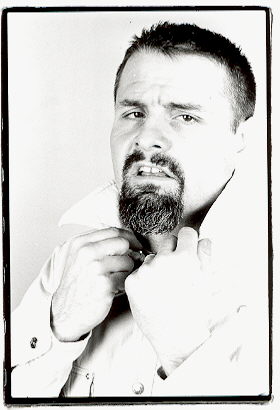
    Daniel Corrigan, Eddie Potomac. Publicity photos for Warriors: The Musical. 1984.

    I don’t know if there’s a way to measure how high you are, but I was super high. I was baked to the point where my brain was running two or three steps behind my tongue. Or maybe it was the other way around. No question about it, though, I was fucking flying, like…like an eagle, I guess.

    There was no way I could play Frisbee, and Hacky Sack was likewise out of the question. I was way too high. I could still listen to Bob Marley, though. I could still hear Bob Marley, and it was exactly like I knew what he was singing about, even though I really didn’t. I mean, on some level I like to think I did. Peace and all that, which I agree with.

    There was this humongous bonfire –a bunch of guys had thrown some car seats and gasoline on there– and I liked looking at that and thinking about the world, about how fucked up the world was. Or at least rushing out. I was kind of bummed to discover that I’d gotten mud all over my new suede Pumas.

    I wished I could get in the backseat of a car with one of the girls –they were all drunk enough that it was maybe even possible– but I was way too baked and hypnotized by the bonfire. I tried to sing along with Bob Marley, but I really didn’t remember the words. I don’t think, actually, that I ever did know the words. It wasn’t even my tape. I knew how the songs went, though, most of them, anyway, but I guess that’s not the same as knowing the words.

    At some point I must have gone in the river, because when I woke up in the tent all my clothes were super wet.

    Oh, yeah, we also blew up a bunch of shit.

    The whole weekend totally kicked ass.

    rabbit portrait.jpg

  • Here's one for those who think I'm liberal

    I-Want-You.jpg
    I want your property

    I happened to spend part of my Fourth of July with the former mayor of one of our most affluent suburbs…as if I needed reminding of why I don’t live out there. First I heard of all his suburb’s problems–high taxes, hard to park on main street, white kids into beer (or was it martinis?) and driving too fast, and the local scandal at the country club over who was banging who else’s wife. So far no murders, though.

    From this perspective, he began to tell me what was wrong with liberals like me. The answer, basically, is we like oral sex and don’t care who knows it. Yup, Clinton and the gays. That’s why the religious right has taken over. “It’s your fault I have to explain what a blow job is to my 10-year-old daughter.”

    That logic kind of got past me. I asked, “Could you please explain that to me?”

    “It was all over the TV for a damn year. How you gonna keep them away from that?” he sputtered.

    “Turn off the TV news,” I suggested. “It works for me.”

    He didn’t like that idea, so I followed up with, “Don’t give a special prosecutor an unlimited budget and an unlimited portfolio to attack a sitting president and his wife unless you have a reasonable cause to believe he’s done something wrong. You started in on Whitewater, found absolutely nothing except that the Clintons lost money on the deal, then ended up impeaching him because he lied about having sex with an intern. How would you answer if I asked you in front of your wife if your intern had been under your desk?”

    Of course, there’s not much sense in arguing with someone who doesn’t see any connection about lying about sex and lying about weapons of mass destruction in Iraq. Because one stained blue dress is certainly more of an indictment of our disrespect for truth, justice and the American Way than having started a war that’s killed 1700 American soldiers, maimed thousands of others, and killed untold thousands of Iraquis. Even when I tied it up neatly with the question “Why do we impeach Clinton for screwing an intern and let Bush get away with screwing the whole country?”

    Of course, we know the answer to that one: the government is completely for sale. Every level of it. The only difference between the federal, state, city or dogcatcher levels is how much it costs.

    And, don’t kid yourself, both sides are for sale. If you didn’t believe that before, be sure to think again about last week’s Supreme Court decision in Kelo vs. City of New London. The court’s liberal wing got together to sanctify the right of governmental bodies the right to take private property in order to give it to other private concerns so they can build something that will qualify for big tax breaks. (If you don’t think that can happen here, remember the Walser car stores that used to be where the Best Buy headquarters is now.)

    I never thought I’d find myself on the same side of an important issue as Antonin Scalia, and I really hadn’t given much thought to how much we’re going to miss Sandra O’Connor until I read her dissent. But damn if I didn’t think what a bunch of idiots Souter, Ginsberg, Breyer, Stevens and Kennedy are, to give more power to local governments, who are well known to sell out cheap, to take your property and sell it to big campaign donors.

    Yup, that’s in the best tradition of exactly what Bush has been doing since he was elected President by the Supreme Court in 2000. Take from the poor and give to the rich. Dems can do it too, and they will get to like it more and more…especially when they can use the power of eminent domain to help themselves get re-elected, too. Why didn’t we think of that sooner? Let’s us liberals ally ourselves with big business and let the Republicans have the religious right wing.

  • Reach for the Stars

    Last week, we had the opportunity to tour the new Guthrie down our way, and we were impressed. The shell is more or less complete, and now the finishing work begins–a Herculean task that makes shoveling the stalls of Augeas look like a July picnic. Anyway, we were finally convinced of the genius of “the endless bridge”–which we had shamefully been calling the “skyway to nowhere.” The bridge is actually a spectacular, free-flying, glass stairwell, in this case a low-angle ramp connecting the third and fourth levels of the building, with a detour to the other side of River Road. Now we get it! Awesome!

    We’ve heard a few other somewhat more phallic euphemisms, but this is a family blog.

    We also noticed this quiet little game of brinksmanship amongst the world-class architects currently romping through our modest little cabbage patch: Who can build the most impressive cantilever? Nouvel’s bridge at the Guthrie wins going away, of course. (There are two other cantilevers in the new Guthrie.) But it’s interesting to consider the ramifications of Pelli’s wing above the new public library, and Herzog and De Meuron’s blocky overhang–not so much a cantilever as an exposed bottom.

    With the worsening flap about what should be done with Ground Zero, we think the answer is pretty obvious. Cantilevers are the new skyscrapers. Skyscrapers were a brilliant marriage of form and function–you know, minimize the footprint of actual real estate, and make use of all the headspace, while celebrating the, ah, thrusting ambitions of 20th century capitalism. But their vulnerabilities are unbearable today. (Have the terrorists won if we don’t build another towering phallus of commerce in lower Manhattan?) And if you think about it, nothing would be more fittingly decadent in a self-righteous, post-industrial, xenophobic, me-first nation than a two- or three-story skyscraper, turned on its side and suspended just a few feet above the ground. Why not go entirely yonic and historic-revisionist, and make it a levitated Pentagon?

  • Wishing in One Hand

    There is nothing easier than complaining about TV news, except maybe complaining about the weather or commercial radio. Some like to blame the “broadcast journalists,” but we stopped calling them that years ago. Honestly, why continue to expect wisdom from the mouths of babes? Besides, it is not the newsreaders’ fault, and it is not even their editors’ fault, nor the news director’s, nor the general manager’s. It is the public itself that wants what it gets, and in a competitive markeplace, pandering is an indispensible tool. Some people really ought to know this better than others.

    The gold standard for this war of the higher and lower selves was the death of Diana years ago—remember the self-loathing press that, on the one hand, camped at the doors of the morgue, while at the same time publishing reems of complaint and apology for doing it? When we blamed the paparazzi for killing Lady Di, we were actually blaming ourselves. When we retched at the tabloid coverage, we wretched into the newspaper we had just bought. The press wanted a look because the public wanted a look, and all the moralizing was simply folded right into the overnight coverage. Likewise, if half the people who loudly complain about pornography actually stopped using it privately, the business would slow to a trickle.

    From a media consumer’s point of view, the real problem with “over studied,” focus-grouped, service-oriented magazines, newspapers, TV, and radio programming, is the slow leeching away of surpise and revelation. It’s not that big a deal, but if you give the people what they want one hundered percent of the time, they’ll never get anything fresh, offbeat, informative, inspiring, delightful. It’s rather like a political leader who does nothing until he has consulted the latest poll; that’s not leading, it’s following. (Which is one of the reasons we get so incensed about the relentless polling of Americans regarding their feelings about gay marriage. How many ante-bellum Southerners supported abolition? Real progress often requires leaders to lead without the affirmation of overwhelming public support. Real regression, by the way, can happen WITH a slight popular consensus.)

    Some media companies want to make boatloads of money; other media companies want to do good and substantive and memorable work. Let’s not be silly about confusing the two.

  • Going Back, Going Down

    livingston-yellowstone.jpg

    to be a discoverer you hold close whatever

    you find, and after a while you decide

    what it is. Then, secure in where you have been,

    you turn to the open sea and let go.

    –William Stafford, from “Security”

    Is the path to the waterfall an ascent or a descent?

    Descents have a bad reputation that is mostly unjust. The metaphoric and melodramatic abuse of the whole idea obscures the fact that a descent can be an exhilarating, breathtaking thing, and far less arduous and fraught with competition and peril than the ascent.

    On the way down, just so long as you’re not falling, you have a chance to catch your breath and take a good look around, to access whether all that climbing was worth it, and to see what you were climbing towards and from.

    You have to turn your back to see what’s behind you, and it’s always a good idea to take the occasional long, hard look at what’s behind you. How else are you ever going to learn how far you’ve strayed, if in fact you’ve strayed.

    I’m sure you’ve strayed. You must have.

    But the human instinct is to keep going, and to associate this notion exclusively with forward motion. Implicit in this assumption are the ideas of both survival and progress, which strikes me as severely wrong-headed at the moment.

    When you’re returning from some journey in the mountains aren’t you still moving? Isn’t retreat sometimes necessary for survival? And when you retrace your steps to retrieve something you’ve lost or left behind, aren’t you making the most important progress of all?

    Easy world, you gave it once–

    please quietly welcome it back,

    that hand.

    –William Stafford, from “Going On”

    montana-ruins.jpg

  • KKK

    We’ve been holding our tongue on the whole Katherine Kersten Kolumnist thing, but after her tawdry little appearance here, we can no longer keep ourselves from mumbling out loud on several points.

    First, she definitely should have held pat with the original column photo. Every picture we’ve seen of this woman makes it clear to us that time has made her ever more pinched and shrewish. It is also a warning to the kids: Your hateful, me-first attitude will eventually write itself on your outward person. Sure, relief from taxes and the homosexual-lifestyle agenda sound good of a day’s selfish hate-mongering, but your face may actually stay that way. (Ad hominem, yeah, whatever.)

    Second, we’re pretty tired of the neo-conservative-Christian-Republican-movement-as-the-real-victims-here meme. If the so-called liberal media were as all-powerful as people like Kersten want you to beleive, then why have a very slight majority of victimized, disenfranchised rural nut-jobs managed to put a conservative christian monopoly into almost every legislature in the land? More to the point, why would she waste her time lending her considerable, erm, reporting skills (which we understand to be the equivalent, in her case, of a bloated Rolodex) to the advancement of the “Red Star”–a business enterprise everyone seems to agree is outdated, irrelevant, and quite possibly bypassing readers on the way to the landfill?

    Third, what does this even mean?

    Several reputable parties have already commented on this, without explaining First Principles…. i.e., what the hell is she talking about? Is she seriously complaining about happy children? And what does that have to do with homosexuality? Is she saying that homosexual parents can’t possibly raise children that are capable of happiness, without the help of Photoshop? Do children of homosexual parents have some sort of congenital condition that prevents them from understanding the phrase, “Say cheese”?

    We guess we’re just missing something here.

  • Yes, That's My Handwriting On The Paper Plate, Officer, But There Must Be Some Mistake

    dancers.jpg

    Gogi? I remember saying. Is that your real name?

    She said something to me, something impertinent I’m sure, that was lost in the whirring of the blender.

    Grasshopper? she said a moment later, offering me a thick green drink in a jelly jar.

    I swear, I said, I could drink these all night.

    I do, she said.

    Later, she put a record on her turntable and said, My mother used to sleep with this guy who’s playing tenor. She used to follow Shelly Manne around, and I’m sure she slept with pretty much everybody in his band. She spent half of her life chasing after musicians, until she got too old and worn out. Then she started tending bar in this law-and-order dive, and all she ever dated were old cops. The last twenty years of her life she dated one cop after another. The same guys who used to make life so miserable for her old musician friends. They treated her like shit, the fat bastards. Funny, isn’t it?

    She went back to the kitchen and fired up the blender again, and when she returned she settled back in on the couch and said, My mother had this big, fat scrapbook full of signed photos and I.O.U.s from jazz musicians, most of them written on cocktail napkins or scraps of placemats. It was like a who’s who of jazz musicians, seriously. Those sponges fucked her and drank up all her money and then dumped what was left of her for the old cops to pick over. I wish I still had that scrapbook. I wonder what happened to it? I’ll bet something like that would be worth a lot of money.

    She got up and put another record on the stereo. I’m sure my mother screwed this guy too, she said. I remember him coming around and crashing on our couch in his underwear. He was an A-number-one creep. Creep central. Bad complexion, bad teeth, nothing really to recommend him other than a decent wardrobe and the fact that he could play music. I guess that was enough for my mother. Me, I’ve always hated musicians. Every one I’ve ever met was a bum who never even pretended to be a decent human being unless he was on a stage somewhere, and that was just so they could get some woman like my mother to sleep with them and buy them drinks. Don’t get the wrong idea, I love music; I just hate musicians, and don’t even try to tell me that’s not possible or I’ll claw your eyes out.

    I’m sure it’s possible, I said. I don’t have a doubt in the world it’s possible.

    Oh, Jesus, she said. Don’t kiss my ass like that. It’s so unbecoming.

    I had some fine times with Gogi. We laughed a lot. She really did drink grasshoppers every night, and she had one hell of a record collection. She also had a lot of nice clothes. She hated crowds, I also remember that. I lost track of her when I moved in the early eighties, which wasn’t unexpected; I should warn you, she’d told me when I stopped by her place to say goodbye, I don’t keep in touch, so this really is adieu.

    I found her obituary online a few weeks back, in a Phoenix newspaper. She died in 2002, at the age of 52, which meant that she was older than I thought, but still not nearly old enough. The obituary didn’t say how she died, or, rather, of what. She wasn’t survived by a husband or any children, which didn’t surprise me, of course. Just a brother in Boston, I think. No flowers, please, the obit said, and suggested memorials to the Humane Society. I keep telling myself that one of these days I’ll get around to sending a check.
    drummajor2.jpg

  • Ain't Nobody Watchin'…

    Hard to believe, but reports say that Minneapolis’s new camera cops have snapped photos of nearly 2,000 runners of red lights. This fact reminds us that our favorite tune Paul Westerberg ever screamed is “Run It,” but it also reminds us that maybe we’re not quite the “nation of laws” we thought we were… or punk rock has gone way too mainstream.

    We were just saying yesterday that we noticed one of these new cameras installed somewheres between the old Honeywell campus and the Swedish Institute, probably on 26th round about Park Avenue, and the first idea that popped into our head was what a great target that would make for a paintball gun.

    It also reminds us of one of the Ethicist’s more memorable pronuncements in recent months—that there is something deeply depressing about the thought of a man in his car at an abandoned intersection deep in the quiet hours, waiting for the affirmation of a single lightbulb.

    Has anyone else noticed an upswing in the public nuisance of revenue-generating tickets as the fiscal year apparently draws to an end for the MPD?

  • A Couple Small Steps In The Right Direction

    It’s always nice when you’re scuffling to get some wins from the back end of your rotation. It would be even nicer at this point to see the Twins start putting together some big innings and throwing some crooked numbers on the board to give the pitching staff a little breather, but I’m not about to complain.

    Already people are starting to trot out the usual discouraging math that purportedly demonstrates how seemingly impossible it is for the Twins to catch the White Sox. You know what I’m talking about; you see this sort of thing every year about this time, particularly when one team is maintaining a blistering pace. It always involves daunting long-range projections –if the White Sox fall off to a .500 pace the rest of the way, for instance, the Twins would have to play at some unreal clip to catch them.

    We’ve been on both ends of this sort of speculation in recent years, and should know by now that baseball is more than anything else a game of one- and two-week stretches. Even in late June a big lead can evaporate in a hurry. How long, for instance, did it take for the White Sox to stretch their lead from three-and-a-half games to nine games? Not very long. And why was that? Because while the Twins were going 2-8 during that period, the Sox were going 8-2.

    I’m certainly not overly optimistic, but I do think Chicago is long overdue for a couple bad stretches, and if the Twins are going to capitalize they’re going to have to put together some 8-2 runs of their own. Wins from Kyle Lohse and Joe Mays are a good way to get one of those going, as are ten games against the Royals and the Devil Rays between now and the All Star break.

    I think the stretch leading up to the break is crucial. The Twins are going to have to whittle Chicago’s lead in half –at least– because the rest of July after the All Star game looks pretty brutal, at least on paper. Minnesota will close out July with series against Anaheim, Baltimore, Detroit, New York, and Boston, and the last eleven of those games are on the road. Chicago, meanwhile, will have four games with Cleveland, three with Detroit, and three with Kansas City.

    Perhaps this is nothing but a coincidence, but does anyone else find it strange that seven of Torii Hunter’s team-leading fourteen homers have come in seventeen games against National League teams, while it’s taken him 55 games against AL opponents to hit his other seven? You’d certainly think the NL teams would have the same scouting reports, but I sure as hell can’t remember seeing very many AL pitchers throw Hunter so many fastballs right down the middle of the plate. Does this say something about some difference in pitching philosophy between the two leagues? I have absolutely no idea, of course. Maybe Torii’s just hitting his stride and it’s all been a fluke matter of timing.

    It looks like the problem with the comments, by the way, has been ironed out. Apologies for the snafu.

  • What Would Hank Hill Do?

    In yesterday’s New York Times magazine, Matt Bai proposes that “South Park Conservatives” have nothing on “King of the Hill Democrats.” Bai maintains that Hank Hill is the living, breathing animation of the nation’s much-desired Nascar dad, and that Democrats like North Carolina governor Mike Easley are wise to poll their constituencies based on whether they watch “King of the Hill” or not. The idea seems to be that if Democrats seriously wish to regain relevancy to average Americans, they need to think like Hank Hill.

    Like a great David Brooks column, it all sounds pretty good until you begin to pick at the rhetorical lint and the whole garment kind of unravels at your fingertips. Bai assumes that most of Hank Hills fans are a lot like Hank Hill, and to support this merengue of speculation, he offers some Nielsen demographics. These numbers say that “the largest group” of the show’s viewers are “men between the ages of 18 and 49” (that, of course, leaves out men ages 0-17, and 50-100) and that “almost a quarter of those men own pickup trucks.” Leaving aside that that is a particulary egregious sort of Brooksian leap (more women than men drive pickup trucks today, for example; there is no established precedent for rural/urban, democrat/republican ownership of pickup trucks; pickup trucks are the single best-selling model of autombile in the country–but, yeah, we all know the stereotypes, thanks very much), we hate this sort of overstatement. One quarter of the show’s male, 18-49 viewers own pickup trucks? Uh, we’re terrible at math, but the way we pencil it here on this Panera napkin, just between the soup stain and the booger of asiago, that’s… oh, roughly THE VAST MAJORITY don’t drive pickup trucks.

    But OK. So let’s not get stuck on silly details. The more serious problem here is that Bai assumes people only like to watch television shows that reflect their world, their personality, their interests, and politics. Let’s just say we’re glad that huge, looming Soprano’s demographic doesn’t feel particulary disenfranchised at the moment. As a sort of innoculation against this narcissistic assumption, Bai claims that this is precisely the point–that many Americans, like Hank Hill, simply do not define their world according to the lockstep politics of Democrats or Republicans.

    Bai: “Like a lot of the basically conservative voters you meet in rural America — and here’s where Democrats should pay close attention — Hank never professes an explicit party loyalty.” Uh, right. That’s sometimes referred to as the vast, uncommitted, middle-of-the-road electorate. Last time we checked, that would cover almost every sit-com charcter that ever sprang to life in the dummy box other than Alex P. Keaton.

    Bai: “If Hank votes Republican, it’s because, as a voter who cares about religious and rural values, he probably doesn’t see much choice.” We don’t know what that means, other than the fact that it’s a good bet Hank eats pork.

    As Bai himself admits, Fox actually seems to be phasing out “King of the Hill,” possibly ending the series after its tenth season next year. This hardly strikes us as the thing to do with such a massive, lucrative, and politically attractive demographic. TV networks, particularly cable TV networks, and even cable TV networks owned by Rupert Murdoch don’t normally discontinue popular primetime shows for frivolous reasons. If Bai really wants to keep the lost demographic in his crosshairs, why not stick with the original gold standard–Nascar (or its many automotive stand-ins)? We happened to hear this weekend that Target Corporation pays close to $30 million just to have its sticker on the hood of its Indy 500 car, and that they’re very happy with the return on this investment. That says at least as much as a season of “King of the Hill,” and the entire Nascar schedule is now covered in primetime by network TV.