Year: 2007

  • Running Against Type

    The idea of a footrace in North Minneapolis seems to inspire two reactions from residents of other neighborhoods: incredulity and concern. “Do you want to get mugged?” “Are you wearing a flak jacket?” And, of course, the simplest question: “Why?”  

    It is no secret that North Minneapolis has a reputation as one of the most dangerous places in the metropolitan area. Which is precisely what several local nonprofit organizations had in mind when they conceived the first annual Go! Northside 5K run, held a few weeks ago. A press announcement advertised that the course would be set in “one of the most blighted neighborhoods in Minneapolis, an area with high levels of crime and home foreclosures.” Not exactly typical terrain for a recreational road race. “A majority of our supporters are from the suburbs, and a lot of 5Ks are run out in the suburbs,” said Ryan Petersen, development director for Urban Homeworks, an affordable-housing organization that co-sponsored the race. “But then we figured we might as well do it in the neighborhood where we do most of our work.”

    The neighborhood surrounding North Commons Park, where the race’s starting and finish lines were located, did not appear particularly blighted—to the contrary, it seemed quaint on the sleepy and quiet Saturday morning of race day. Then a local drum corps shattered the morning silence. Some runners bobbed to the beat. Others were less than enthusiastic. “Ugh,” said a fifty-ish man, checking his watch and adjusting his singlet. “Grandma’s [Marathon] has thousands of runners and even they manage to start on time. We’re gonna be ten minutes late here!”

    The Go! Northside 5K drew more than two hundred participants—a modest but respectable draw for an inaugural race (though many wore T-shirts that identified them as members of teams from Urban Homeworks or the PEACE Foundation, two of the race’s sponsoring organizations). There was a 5K somewhere in the Twin Cities area every weekend this summer; why did runners choose this particular race? Certainly the cause of community-building in a beleaguered neighborhood was a worthy one, but also attached to it, as Petersen’s comment suggested, was the opportunity to see a place considered by many to be dangerous from the safety of a group of people, in a supervised setting.

    Whatever drew the runners, spectators were scarce. Some might think that a largely white pack of runners passing through a predominantly non-white neighborhood, one whose streets probably never have been blocked off for a road race, would draw onlookers; however, the majority of them were actually race marshals: officials in blaze-orange vests who mark the route and assist injured runners. With one at each intersection, this made for a strangely deserted course.

    The few other spectators were accidental—people out on their daily business as the runners trickled by. An elderly man stopped his lawnmower, pulling it back from the street so as to not spray the athletes with clippings. A man carrying groceries stopped and stared, greeting the runners’ waves and hellos with silence. A woman came outside in her robe and surveyed her car-free street as a handful of widely spaced runners passed. “There some sort of race today or something?” she called. “Yeah!” yelled a runner. “Wooo!” responded another.

    At the finish line, the mood was more celebratory than competitive. Recreational runners congratulated each other on finishing, and race geeks joked about setting course records (an easy feat in a brand-new event). “Were you fast?” inquired a sinewy running veteran. “I was fast by thirty seconds. Must be a short racecourse.” Two women at the end of the chute were keeping track of the order of finishers, and trying to get a chattering mass of teenage runners, all wearing blue PEACE Foundation T-shirts, to move along. The kids paid no attention, hollering and adjusting their iPods. In many ways, the finish-line celebration had more of the feel of a company picnic. The Urban Homeworks team held its own awards ceremony, and members of all teams stayed on for an afternoon softball tournament.

    Meanwhile, most of the runners packed up and left within an hour or two of the race’s end. Many returned to the suburbs (home to one-third of the morning’s runners, according to finish time listings) and still more to ritzier parts of the Cities (though the race did attract runners from such exotic locales as Texas, California, and North Dakota). The Go! Northside run doesn’t seem likely to spark a trend for road races on the North Side. But at least a few people got to see a hitherto unfamiliar part of town. “You know,” said a south Minneapolitan, taking in his new surroundings, “I suppose I had never really been up here before.”

  • He Wanted To Be “Really Evil.”

    Ed Morrissey is terse, never letting a sentence extend beyond fourteen words. A typical example: “Shithead. You swing on me again, I’ll kill your sorry ass.” Ed Morrissey is garrulous—as political director at Blogtalk radio, he interviews some of the most prominent members of the conservative movement, his voice a slightly less nasal version of Wallace Shawn’s. A typical example, from the conclusion of a recent broadcast: “Steven, thank you for being here … if you’re going to be in the Twin Cities, you have to let me buy you a beer, buy you dinner … Let’s do Manny’s, that would be great!” Ed Morrissey has a remarkable thatch of dark curly hair. Ed Morrissey is bald. An investigator remarked, “Maybe in the end he’s the kind of guy nobody cares much about alive or dead.” He has a wife, a son, and a granddaughter.

    In spite of these data, Morrissey seems to have neither the type of existential crisis nor the type of psychological condition that one might expect. He is a fictional character. He is a real person.

    About two years ago, Morrissey (the real person) was the winning bidder at a benefit auction. What he’d bid on was the opportunity to have his name attached to a character in a mystery novel by William Kent Krueger, a local author who’s garnered a national fan base with his series featuring Cork O’Connor, an ex-Chicago cop turned P.I. who lives in the north woods of Minnesota. (All that was said was that Morrissey paid a “pretty penny.”) Shortly after the event, Krueger asked whether Morrissey wanted to be a good guy or a bad guy in his next novel. “Oh,” Morrissey answered. “Really evil.”

    Thunder Bay came out a few weeks ago. In it, Morrissey plays a dutiful pawn, and the plot quickly leaves him behind. Still, there is a certain enduring quality about his presence in the book; the effects of a punch he lands on the protagonist—“a blow like a cannonball”—are brought up so frequently they become a theme. He is a character so mean-spirited, so loyal to his personal iniquity, that he leaves a visceral impression on the reader. One almost wishes he actually existed. Eventually, the fictional Morrissey is shot through the right eye.

    Aside from the fact that both Morrisseys populate unreal realms—one, the dramatized version of Thunder Bay, Canada; the other, the blogosphere—there is really no similarity at all between them. The real one, whom Krueger describes as “a teddy bear of a guy,” bid mostly for the charitable benefits, and had no input or influence on his character’s development. “I just hoped [he] would be better looking than me,” Morrissey said. He says he has not been affected by his role in the book, nor does he feel any guilt or responsibility for his counterpart’s violent tendencies.

    Krueger has put character names in his books up for auction on a number of occasions. “Most mystery conventions have a charitable component,” he said; in Morrissey’s case, the organization that received the auction proceeds is called Twin Cities Marriage Encounter, whose mission is to “nurture and support the marriage of a man and woman and their family life by offering an opportunity to experience a deep and loving communication with each other and with God.” “That was simply another good cause I thought might benefit in this way,” said Krueger. (Full disclosure: Morrissey is president of the Marriage Encounter organization.)

    The broader literary world, always in need of ways to connect with its public, has picked up on this idea. Stephen King, Michael Chabon, Dave Eggers, Daniel Handler (a.k.a. Lemony Snicket), Neil Gaiman, and several other writers of note have all put forthcoming names of various characters and entities in their books up for auction, with the proceeds to be donated to charities. (You can bid for them on eBay.) Morrissey paid for the opportunity to be someone evil; in the case of Stephen King, one lucky bidder will pay to be a murder victim.

    This purchasing of character names raises a question, though. Aside from benevolent motivations, why pay good money for this privilege if one’s fictional namesake is only that—if this character is devoid of any of one’s personal characteristics? Is it possible that, even within the most magnanimous among us (a category that would seem to include Ed Morrissey, who exudes sincerity in a form rarely experienced these days, and who refers to his wife as his First Mate), there is still that (very small, probably subconscious) desire to be part of something larger (and possibly more glamorous) than oneself? Regardless of how remote—or nonexistent—the resemblance between the fictional and the real? It’s not such a selfish urge—rather, it’s an instinct not much different from what makes one pick up a book in the first place: that hope for minor, personal transcendence.

    “It’s an honor to be cast as a villain,” Morrissey said. Next time, he said, he might make a bid on behalf of his First Mate.

  • Harvest Boon

    I love this time of year. I love having both the sun and the chill in the air, the musky scent of dead leaves and blessed, blessed school. I like having the kids out of the house for a prescribed amount of time each day. I like being alone in my house listening to loud music that the kids wouldn’t imagine I listen to. I like having the kids back at the end of the day, and though I am saddened by the fact that their homework no longer consists of coloring and word finds, I am glad that they realize they have a better chance at decent grades if they do the work themselves.

    It’s the routine I am thankful for—an orderliness to the days that helps me actually get more done. I like that it gets darker earlier, and I like cooking autumn dinners. I love baking giant dead animals in my oven. It makes me feel feminine, and also somewhat accomplished. I love it when the windows of the house fog up from cooking. I am thankful when all of the side dishes time out perfectly with the main course, and everything arrives hot to the table. It makes me feel like Houdini.

    I love mashing potatoes by hand, imagining that I am crushing the bones of my earthly enemies.

    I am thankful for my coffeepot all year long, but particularly when the mornings are dark. I love its robotic timer function. The smell of the beans beginning to brew invades my sleep. The next thing I hear is the clunking, sucking sound of the water drawing up through the reservoir. By the time the cycle is complete, I am shuffling through the dark kitchen with my big mug outstretched, softly walk-kicking the cat out of my way.

    She tries to kill me every morning by darting into my path, hoping I will stumble while trying to avoid stepping on her, and maybe fall and crack my skull on the corner of the concrete countertops. If I am ever found dead in my kitchen, this is what has happened.

    I love wearing clothes that cover my stomach. I love that the threat of being invited to something that might require a bathing suit is past. I like incorporating more cheese and less salad into my diet. I love watching television while eating cheese while wearing something that covers my stomach.

    At this time of year I love soup. It is hot, salty, soothing liquid love. That sounds dirty but it’s not, so get your damn mind out of the gutter; I’m talking chunky chicken noodle here.

    I love turtleneck sweaters, the smell of Vicks VapoRub, and having a sore throat so I don’t have to talk. I love catching cold, because I love soup and I love it when people feel sorry for me and I love complaining about my lot in life while people I love make me soup.

    I love church at the holidays. I love the swishing of fat old-lady thighs encased in thick nylon stockings. You get a hundred of them in the chapel, and it’s like crickets. I love ladies who wear sequins to morning services. Jesus would approve, because Jesus loves color, and he is happy when you wear your favorite things to his house. He wants you to feel at home.

    This time of year I love that my husband doesn’t give a rat’s ass about football. Neither do I, and I love that I don’t have to pretend to care. This leaves us free to use our prodigious powers of pretending for other, more satisfying areas of our lives. We can pretend we care about the subprime mortgage crisis instead, because that makes us seem like responsible, compassionate people, and being mistaken for responsible, compassionate people makes us feel good about ourselves. Win-win.

    I like bedtime, and heavy blankets that pin me to the mattress. I like throwing my leg up on that man of mine and pinning him down, too. I don’t even mind stuffing my ears with earplugs to tone down his snoring. I lay my head on his chest and I can still hear him sawing away, revving his engine, poppin’ wheelies to dreamland.

    This time of year I like the increasing frequency of house parties, because I like snooping in people’s medicine cabinets. I like knowing what sorts of drugs they are on, and what funguses they are currently battling, and their laxative regimens. It explains a lot of things, and helps me to feel greater empathy for them as fellow human beings. When I have parties at my house, I like to fill my medicine cabinet with ping-pong balls before guests arrive. If you think I am kidding, go ahead and try me, Snoopy.

  • Midwestern Beats Italian in 6th Round TKO

    boxers.jpeg

    Italian cuisine is scheduled for a six-round culinary bout against Midwestern newcomer Canyon Grille October 4 in Eden Prairie, in what is billed as an Italian Wine Dinner, and we are predicting a knockout. After the Champagne reception and passed tapas (Round 1), and a salad course of haricots verts and tomato tartare (Round 2), the Italian culinary tradition will face a heavy pounding in Round 3, when the Canyon Grille will dish up a course of pork tenderloin stuffed with sweet basil, smoked ham, aged Swiss cheese and asparagus, wrapped in apple-smoked bacon and served with pancetta pasta.

    I don’t think Italian cucina has ever met an opponent like this before – back in Italy, fine dining usually proceeds in small courses from antipasti to pasta, with perhaps a small fish course and a small meat course, salad and dolci – dessert.

    Next comes cheese tortellini tossed with pork osso bucco. The little Italian guy won’t even know what hit him – in Italy, osso bucco is a veal shank, prized for its marrow. Pork instead? Okay, but if they toss tortellini with a pork shank, somebody could get hurt.
    If the scrappy Italian answers the bell for Round 5, he’ll be facing a Tuscan fennel crusted ribeye steak, served with “mascarpone mashed” (potatoes?) and eggplant Parmesan. If that isn’t enough to drop him to the canvas, you can expect the Berry-misu dessert to deliver the coup de grace. Or maybe that will arrive with the bill – $85 per person, plus tax and 17 percent tip – adding up to over $100. That does include wine with every course – and there should be enough leftovers to fill a good-sized doggy bag.

    For reservations, call 952-767-4000.

  • Wine for Thought

    I’m not a traditional Jew.

    My parents were mixed (one Jewish, one Catholic) and my upbringing was secular — more intellectual than religious. I do not observe the eight days of Passover or go to Shul. But I believe in Yom Kippur, which began at sundown last night and extends until this evening.

    This is the day of atonement. And while I neither fast nor abstain from the other prohibited activities (bathing, wearing leather shoes, anointing one’s body with perfume, and engaging in marital relations), I do think about guilt, responsibility, and repentance. I try to let go of old grudges and right whatever wrongs I have committed. The list is long. . . .

    On it are several things I’d like to forget: a particularly divisive conversation with my sister; an old friend ill, frustrated, and mired in anger; a mentor whom I no longer trust. It’s thorny, this business of trying to figure out where the truth lies — which grievances to forgive and which to hold onto because they make one aware.

    And while thinking about all this last night, I drank a Minervois — the Abbaye de Tholomies 2004 — by the light of our sabbath candles. This is a wine I tried by chance and grew to love in a wary way. Every bottle is different: some fruity, some leathery, some astringent and dry. This last was full of saddle and plum. Cigar box, chalky soil, and ancient trees. It tasted to me the way musty oaken library stacks smell. An excellent wine for thinking by.

    26456.jpg

    The label shows three men, intellectuals by appearance, deep in discussion over glasses of their own. And the wine’s history goes deep as well. Abbayes de Tholomies was a monastery founded in 990 A.D. The monks grew wine grapes until the Inquisition, when their home — a refuge for heretics — was destroyed. In 1981, a dental surgeon named Lucien Roge bought the property and resumed winemaking there. Roge adheres to Ben Franklin-like philosophies: growing is coordinated with “biodynamic” law, such as the phases of the moon and stars. And he uses no chemicals on his crops.

    This is not a wine for light occasions, afternoon barbecues or quick drinks with colleagues or casual friends. It is, however, perfect for those solemn moments when you are deep in thought. I like to imagine wisdom coming from that soil, from those monks, from the ruins of an abbey lying in pieces under the ground.

  • The Soprano Of SUVs

    2008-Porsche-Cayenne.jpg

    Yo.

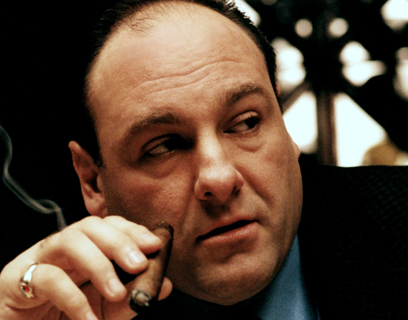
    I was just asked why anyone would drive an “obscene” SUV like the Porsche Cayenne. To me, this is obvious. It allows anyone to drive like a Soprano while sending other SUVs to sleep with the fishes. (and more on that topic here)

    If that does not convince you then let me make the business case. Porsche needed this SUV to up its cash flow and stay in business.
    In other words, they did it for the money to eventually finance new racing programs and the sports cars we all love. At least we car guys (and gals) who don’t ask stoopid questions like this at parties.

    And while it pains me to admit it, I agree with Porsche’s logic. While the Cayenne may indeed be a criminal example of excess for people with no taste (unlike those with an appetite for true sports cars with engines that are vented al’ fresco) the worst fate to befall Porsche would be for it to be acquired by GM and lose its independence.

    tony.jpg
    You saying I have no taste? You like the taste of burnt rubber?

    Fortunately, thanks to the Cayenne, Porsche will not burn the fires of financial hell for quite some time. For me this is worth its dance with the devil called the SUV.

    (p.s. I am hoping I don’t get whacked by telling you that the Jeep Cherokee SRT-8 can pummel the Cayennes’ chili pepper pistons any day. The W-10 VW Touareg can too–if you can find one in the U.S.)

  • Apple Trippin'

    applefriends.jpg

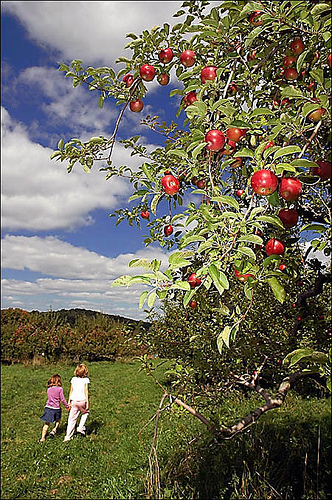
    This is the perfect weekend for an orchard run. Damn the bees, deal with the crowds and get out to support a local farm. Some of my favorites:

    Deardorff Orchards
    Out Waconia way, dontcha know. It’s a big farm with 5000 trees and a cool old barn built in 1900. I remember a cold weekend with a giant bonfire at this orchard a few years ago.

    Emma Krumbees
    It’s the Las Vegas of apple orchards. You’ll really have to fight crowds if you go on a nice weekend, but they have a ton of family crap to do. You’ll have to pay admission to get into the Great Scarecrow Festival, but it’s cool.

    Fall Harvest Orchard
    This real working farm is my family’s favorite. We feed the cows with big ears of corn, we play with baby pigs and pet chickens and goats. The wagon ride is one of the best, they actually talk to kids about flax and amaranth.

    Afton Apple
    Drive down to gorgeous Hastings for the corn maze and fall harvest raspberries before the frost!

    Sponsel’s Minnesota Harvest
    On a brisk day you can snack on your apples while taking in the Fall colors on the hiking trails. Better yet, sign up for the one-hour guided horseback ride through the bluff-top trails.

    Deer Lake Orchard
    Always hopping with live music/entertainment on weekends. Save this one for October 13th so you can check out the bluegrass Whistle Pigs.

    Pine Tree Apple Orchards
    I haven’t been to this one, but I have WBLaker friends who go every weekend. They swear it is WAY better than beating back the throngs at Aamodts.

    Minnetonka Orchards
    There were too many tchotchkes last year and not enough food, but just for the brats with cider onion relish alone….

  • Hit the Theaters in Style

    STYLE & ART
    Loves Labourers: Art as Fashion, Fashion as Art 2

    907loveslab.jpgMplsart presents an interesting event this evening, as part of MNfashion Weekend. Three visual artists (Adam Garcia, Eric Inkala, and Jennifer Davis) and three clothing designers (Annie Larson, Ra’mon Lawrence, and Crystal Quinn) are teaming up to paint, smear, and de- and re-construct a selection of wearable art. The canvases — which, in this case, are a bunch of cotton hoodies — have been available for pre-purchase at fifty dollars a pop; and buyers have no idea what their piece will look like in the end. (Will it even fit?) It’s likely too late to get your own hoodie, but interested parties might inquire by email. The event should provide for some fascinating visuals, in any case. And there’ll be DJs spinning to boot.

    Friday at 8 p.m., Beast House, 600 Washington Ave. N., Suite 104, Minneapolis; $50.

    THEATER & PERFORMANCE
    Jane Eyre at the Guthrie

    907JaneEyre.jpgI hear the patrons on opening night were handed long-stemmed roses as they exited the theater. I attended the second showing, and while I didn’t get a rose (and that’s okay), it would certainly have been an apt crowning of an evening wherein love and beauty sprang from a bed of thorns. I read the book many years ago, and although I recognize that my memory of the plot is a bit lacking (since I thought the play was over at intermission), I nevertheless have my own version of images spawned by the novel. The spacious, sparsely-set, thrust stage reflects the continual bleakness of Jane’s environments: the horrid aunt and abusive childhood, the austere institutional upbringing, the lonely post as governess at grand, cold Thornfield, and later, destitution even. The play familiarizes Jane’s experience and a seemingly distant era in a way the book fails to achieve: here are Jane and Mr. Rochester (superbly acted by Stacia Rice and Sean Haberle) in flesh and blood, expressive and tangible. I might add that Mr. Rochester was far more dashing than I’d imagined him, and Jane certainly wasn’t plain. Here and there, I nearly grumbled “romance, shromance,” but I may have been the only one fatigued by the reappearance of the “I’m-not-pretty-but-I’m-smart-and-interesting” theme, whereby a plain woman intrigues and attracts the man by virtue of not being the archetypal prissy, fussy female. And yes, Jane’s rival for Mr. Rochester’s hand was shallow and bubbly with the requisite frilly pink dress. This is no flaw of the play, mind you, as the production quite strictly followed the source material. Just my own little hang-up, and a minor and passing one at that, considering director John Miller-Stephany’s remarks that “Jane Eyre can be compared to a mirror that reflects back onto each viewer what he/she wishes to see.” –Eeva-Liisa Waaraniemi

    Friday at 7:30 p.m., Saturday at 1 and 7:30 p.m., Sunday at 7 p.m., Guthrie Theater, 818 S. 2nd St., Minneapolis; 612-377-2224; $34-$54.

    The Darkest of Dark Comedies

    907Pillowman.jpgOpening tonight is Frank Theater’s production of The Pillowman, in which a writer’s warped fairytales about torturing and killing children seem to be coming true. Crucifixion, severed fingers, and other unthinkable forms of child abuse figure into Martin McDonagh’s Olivier-Award-winning play; the result is the darkest of dark comedies, with provocative questions of artistic responsibility and censorship woven throughout. Perhaps surprisingly, it’s a consistently funny (if disturbing) play… the big question is if director Wendy Knox can maintain a light, comedic touch, without sacrificing Pillowman’s more tender and thoughtful moments. I saw the gleefully dark opening run at London’s National Theatre in 2004, which deftly walked the line between cartoonish and eerie. Both the London and New York runs were quite successful, featuring famous actors (Jim Broadbent in London; Jeff Goldblum and Billy Crudup in New York) and drawing packed houses. Will Frank Theater’s production live up to its predecessors? Will it do justice to McDonagh’s script? I will have a review on Monday. –Danielle Kurtzleben

    Friday and Saturday at 7:30 p.m., Sunday at 1 p.m., Dowling Studio, Guthrie Theater, 818 S. 2nd St., Minneapolis; 612-377-2224; $18-$34.

    FILM
    Manda Bala

    907MandaSm.jpgLet’s call this a hybrid of the fictional Brazilian exposé City of God and Errol Morris’s police procedure doc The Thin Blue Line — both tremendous entertainment. Manda Bala (send a bullet) is a bizarre documentary detailing the rise of corruption in Brazilian culture as well as the country’s kidnapping epidemic. “Men will steal with a gun or a pen,” says one talking head. The film boasts garish cinematography, a dynamite score, and perhaps best of all, a fearless director who can get even the worst, most hardened criminals to open up. Stories include money laundering through a frog farm, images of the booming plastic surgery trade (all the ears cut from kidnap victims need replacing), and kidnappers philosophizing about the meaning of life. –Peter Schilling, Jr.

    Opens today at Landmark Theatres, 612-825-6006.

    Fearless Kids in the Biz

    907FearlessSm.jpgFlaunting its fabulous new facelift, the Parkway Theater opens its doors on Sunday to this month’s Fearless Filmmakers event. Don’t be confused if you see a lot of youngsters lurking about. It’s not the venue; it’s the event. Acknowledging our overwhelming focus on adults in the art world, Fearless Filmmakers has taken a stand to correct the oversight by focusing on “Kids in the Biz.” The evening will begin with music by Now, Now Every Children — a lovely, languid sound. And Joe Minjares, owner of the Parkway and Pepitos Restaurant, will even provide appetizers and drinks. The screenings will begin at 6 p.m., and will include 15 films made by kids between 7 and 17 years old. Following the screening, there will be a Q & A session with the filmmakers, and an after party with a Guitar Hero competition.

    Sunday at 5 p.m., The Parkway Theater, 4814 Chicago Avenue, Minneapolis; 612-822-3030; $9, students $7, children $5.

    ART
    Ramble through Red Wing

    907StudioRamble.jpgRed Wing claims to be a city for lovers, poets, and dreamers; so it stands to reason they’d have a notable arts community — and no, they don’t all paint the Mississippi, trees, and birds (not that there’s anything wrong with that). It promises to be a lovely weekend, perhaps a great weekend for a drive and a wander through Red Wing’s many art studios. This weekend marks the 6th annual Studio Ramble Fall Art Tour, with 11 open studios, featuring 27 area artists. Experience a variety of media — pottery, painting, print making, photography, sculpture, textiles, jewelry, computer imaging, Glicée prints, and musical instruments — meet the artists, and purchase original works.

    Saturday and Sunday from 10 a.m. to 5 p.m., Red Wing, Minnesota.

    MUSIC
    Neglected Legends

    907AnaPop.jpgYou have two great shows to choose from this weekend, both of which are being utterly under-promoted. The first is tonight, at Famous Dave’s BBQ & Blues. I have to start paying closer attention to their shows, because I was shocked when I looked for information on Ana Popovic’s show tonight, only to find that the warm-up show was just as stellar. For a mere $5 cover, you can catch Paul Metsa & Sonny Earl at 6 p.m., followed by Popovic at 9 p.m. What a show! Two blues legends, followed by the guitar-shredding pride of Belgrade, “a high-energy blues force who crosses the wires of Hendrix bravado with Bonnie Raitt soul.” Whew!

    Friday at 6 p.m., Famous Dave’s BBQ & Blues, 3001 Hennepin Ave. S., Minneapolis; 612-822-9900; $5.

    The other show worthy of note is the Fat Maw Rooney show this Sunday (9 p.m.) at Trocaderos.

  • Dead Enders

    Pamela Brumbley shares her On the Job portraits.