Month: June 2008

  • Shock Me, Baby, One More Time

    SPECIAL EVENT
    A Toast to Tesla


    No, not the hair band
    from the late ’80s, although I do happen to know a few people who would
    probably be into that. Tonight’s event at the Bakken is dedicated to
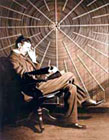
    one of America’s greatest electrical engineers, Nikola Tesla,
    inventor of the radio. Sample complimentary appetizers and wines from
    Artisian Vineyards while strolling the Bakken’s beautiful outdoor
    gardens, take in a live performance of an old-timey radio show, and
    watch man-made lightning demonstrations with the Tesla coil. The Bakken
    will be hosting these "Electrifying Fun for Grownups"
    events monthly through the summer. So instead of sticking a fork in a
    light socket like you usually do every second Tuesday of the month,
    head to the Bakken for a safe and "shockingly" good time.


    5pm-8pm, The Bakken Museum, 3537 Zenith Ave. S, Minneapolis, $7

    MUSIC

    The Schubert Fest


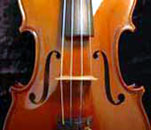
    Get some lunchtime culture this week with the Schubert Club’s yearly St. Paul Summer Song Fest,
    a concert series that runs daily through the end of the week with free,
    noon-time performances featuring classical musicians. This year’s
    festival focuses on the work of influential English composer Vaughan Williams,
    who created epic symphonies, chamber music, opera, and film scores.
    Today’s performance features sweet soprano Maria Jette alongside Young
    Nam Kim on violin. A perfect noon reprieve from the
    Downtown office-worker blues, if you ask me.


    Noon (daily through Friday), Landmark Center, Room 317, 75 W. 5th Street, Downtown St.Paul, Free


    PERFORMANCE
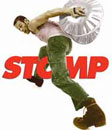
    Stomp


    Provocative UK performance troupe Stomp invades the Ordway for a week-long run.
    Expect wild percussion, unusual props and instruments, and unbelievable
    movement from this eight-piece ensemble. For years, the group has impressed
    the world with their originality and presence, taking creativity in
    performance to a whole new level with innovative dance
    techniques and sound and rhythm created with non-traditional
    items such as matchboxes, garbage cans, and hubcaps. Runs through the
    15th.


    8pm, The Ordway, 345 Washington Street, St. Paul, $20-$50


    BOOKS

    Raking through Books with Greta Gaard

    The Rake’s monthly happy hour book club, at Kieran’s Irish Pub, offers readers the chance
    to discuss literature with writers and each other in a super-casual
    setting. This month, meet Greta Gaard, author of Ecological Politics: Ecofeminists and the Greens and The Nature of Home: Taking Root in a Place, and editor of Ecofeminism: Women, Animals, Nature.
    A well-published environmental literature critic, she currently teaches
    at the University of Wisconsin, River Falls, and serves on the Board of
    Directors for the Environmental Association for Great Lakes Education.

    5:30-7pm, Kieran’s Irish Pub, 330 2nd Ave. S, Downtown Minneapolis, Free


  • The Three Pointer: The Lakers Lay an Egg

    (AFP/Nicholas Kamm)

    Game #2, NBA Finals: Los Angeles 102, Boston 108

    Series to Date: Boston up 2-0

    1. No D in Los Angeles Lakers

    After watching the last 2 and a half quarters live and then the entire game on tape, I’ve got to say that for all my babble about the superiority of the Western Conference this season, the Celts lose last night’s game if the opponent was the Cavs, and probably the Pistons too. What a dreadful, dreadful lack of defensive commitment shown by LA, beginning at the top with Kobe Bryant–has an all defensive first-teamer ever mailed it in so thoroughly at that end of the floor in a big game?–and extending down to poor Trevor Ariza, who needed GPS to figure out where Paul Pierce was on the court during his mercifully brief 7:19.

    These were supposed to be the old, veteran Celtics, the team whose Big 3 have double-digit years in the league and who bring dinosaurs like PJ and Sam I Am off the pine. These were supposed to be the neo-Showtime Lakers, young and fleet, especially lanky big men Pau Gasol and Lamar Odom and the go-go backup backcourt of Sasha Vujacic and Jordan Farmar. So why did the Celts have more fast break points, 14-10? Why was Doc Rivers correctly telling his team at halftime that every time they forced a miss they could get layups and open treys if they pushed in transition? Yeah, the Lakers were embarrassed on the boards in Game One and determined not to let it happen again, so they hit their offensive glass hard and likewise posted up frequently in the first half. But how many times did we see whatever Lakers bothered to hustle back in transition necessarily play out of position to staunch that early flow, creating all sorts of chaos and mismatches if indeed the Celts had to wait for a second wave of offense on the controlled break–that is if they didn’t score immediately?

    Things didn’t get much better when the tempo slowed and the Celts operated their half-court sets. The Lakers’ pick-and-roll recognition and response was pathetic–if Kevin Garnett had hit half of the wide open midrange jumpers he usually knocks down, Boston would have been up 20 instead of 12 at the break. (And BTW, KG very rarely got those looks against Cleveland or Detroit or even on the road against Atlanta.) Of course Boston often didn’t bother with the pick and roll because Vlad Rad and Ariza were totally stumped by the fact that Paul Pierce could put the ball on the floor–that newfangled dribble move! They must have been reading all the breathless hype about how banged up and incapacitated Pierce was from his 96 second absence in Game One. That’s about as far from "the Truth" as if he’d had to tap out from a figure-4 leg lock from Ric Flair in wrestling. In any case, imagine how badly Radmanovic would have looked if Pierce had two good knees.

    Kobe? It was hard to tell who he was guarding half the time, although twice running out to slap palms with Ray Allen on the latter’s uncontested treys provided some clues. A couple of times Kobe was matched up on Leon Powe, and we know how that worked out–well, better than when hapless Luke Walton was forced to try and guard somebody.

    You really could go right down the Lakers’ roster. Odom totally allowed the wily vet PJ Brown to get in his head at both ends of the floor. Derek Fisher hasn’t gotten the memo that you see if Rajon Rondo is hitting his jumper before you allow him to become a playmaker, especially if you are much slower than Rondo (who had just 4 shots versus 16 assists). RonyTuriaf was too slow for Powe–and for PJ Brown.

    Put bluntly, the Lakers played shockingly bad defense, and that, to me, was the ballgame. Consider that the Celts shot 46% in the Atlanta series, 42.5% versus the Cavs, 45.8% against the Pistons, and even 42.1% in Game One against the Lakers. Last night they were 52.9%, including 9-14, or 64.3%, from beyond the arc, and that’s with KG having an off night at 7-19 FG. Boston’s bench shot 11-16 FG–69%.

    If Jackson and his crew are smart, they will change their priorities for the next game. Put Kobe on Pierce and tell him to shut Pierce down. Kobe is capable of it and it would get his mind off trying to do too much at the other end. Pierce will try and get him in foul trouble but the refs will have heat on them for the free throw disparity in Game Two and won’t call the borderline contact. Put Vujacic on Ray Allen and tell him that he is only allowed to shoot as often as he makes Allen miss. On offense, Kobe will be taxed from actually playing some defense, so Los Angles should play more inside-out with ball movement, posting up Gasol and running Odom off screens and forcing KG to decide which one he is guarding. Because if a dinged up Perkins or an ancient PJ Brown can stop Gasol in the low block, the series is pretty much over anyway.

    2. Overrated: Referee Bias and Laker 4th Q Comeback

    Anyone who cares about pro hoops intimately knows the feeling of believing your team is getting screwed by the refs. The violence you wish to do is totally out of proportion (hopefully) with the way you normally view setbacks and petty grievances and injustices in your non-fan existence. I’ve found myself rooting for the Lakers against the Nuggets and the Jazz, and rooting against them versus the Spurs. I favor the Celtics in this series due to my longstanding observation of KG during his time in Minnesota, and my growing respect throughout these playoffs for their team-wide commitment to defense. But I have affection for the Lakers too, and have found that you really detest the refs when you are not only pulling for someone to win, but equally pulling for the other team to lose, and the whistles therefore double down on your passion.

    This long preface is meant to stake my claim as a slight, but certainly not blind, Celtic partisan here. To Laker fans screaming bloody murder about the free throw discrepancy, I understand–but don’t feel–your pain. Remember, I’m the guy who claimed the Lakers’ Game Four win against the Spurs was "tainted" due to the referees. Believe me when I say that the anger will subside and perspective will set in. And the perspective that is required here–as was true in the LA-SA Game Four–is that the refs weren’t the difference here.

    Let’s get specific. Early foul trouble on Kobe Bryant was to my eyes (and I played back the tape a lot on my second viewing of the game) comprised of both legitimate and questionable calls. The first foul, when Pierce tried to rub him off on a screen and he reached around to keep contact with Allen, was an understandable call and a legit foul. It also could have been a no-call. The second foul–the arm-shove to Allen before he got the ball–was deemed by Van Gundy and Jackson as a cheap foul, but it looked pretty blatant to me and was in any case unnecessary. Whether or not it was called, it was a stupid move by Kobe and a tribute to Ray Allen, whose defense on Bryant has been something of a revelation this series. The third foul on Bryant was an obvious flop by Paul Pierce–that’s not the way players fall, if they fall at all, when someone runs into them. It was a borderline flop if Kobe had the ball and was going to the hoop: that it was whistled as Kobe was trying to move through a pick (and Pierce is a master at slightly moving to the side on his picks) was a bad call, especially so because it was #3 and sent him to the bench. Ditto the technical on Kobe after the layup seemed like a rabbit-eared move. I’m all for ringing up technicals on blatant protests by players, but it is being enforced so haphazardly–hey, Kendrick Perkins could get a technical every single time he commits a foul, and ditto Gasol–that to whistle Kobe, especially when it looked like a Celtic reached in and raked him during his drive, was bad judgment by the official. Also, there was more than once when Kobe got hammered driving the lane–once
    Pierce knocked him so obviously that Kobe changed his hand and scored lefty–and no whistle was called. So, yes, I believe there was a pro-Boston bias on balance to the calls. I think even more than Kobe, Gasol got screwed, but some of this is Gasol’s fault–he’s just not very aggressive by nature down in the paint, and that matters to the refs. Nevertheless, I saw Gasol get fouled as often as I saw Leon Powe get fouled and Powe had 13 free throws to Gasol’s one.

    So why don’t I think it swung the outcome of the game in which LA only lost by six points? Because the large lead caused the Celts to lose their focus, as happened at least twice before in the Pistons series. These lapses are a weakness, but thus far not a fatal weakness, with Boston. The smaller the lead, the tighter their focus, and while that was indeed an impressive scramble-back by the Lakers, it was that combination of one team’s desperation and another’s nonchalance that makes for second-rate, sort of novelty basketball. I don’t believe that improbable comeback is any more successful if the refs call a totally balanced game.

    The ending of that comeback, by the way, was to my eyes poetic justice. On the Celtic end, Boston put the ball in the hands of the person who is their crunchtime assassin, Paul Pierce. (A reader/commenter briefly convinced me that Kevin Garnett has an equal right to that claim for the Celts, but after reviewing some old crunchtimes for Boston in these playoffs, I reverted back to thinking that when it comes to the team needing a basket, Pierce is going to be their preference about 8 out of 10 times.) Pierce drew the foul and hit the crucial free throws. At the other end of the floor, the Lakers’ and arguably the NBA’s premiere crunchtime assassin never touched the ball because Sasha Vujacic mistakenly continues to believe he’s the second coming of Manu Ginobili and got his ill-advised shot blocked by Pierce. Replays showed Kobe getting open on the weak side just before Vujacic launched. A fitting ending to a horrible game if you are a Lakers fan.

    3. Worst Assist Ever Called

    Hey, I grew up worshipping the Celtics, who won their first ring with Russell when I was five years old, growing up approximately 7 miles from the old Garden, and even I think all this "Celtic tradition" stuff is getting out of hand. Don’t believe the hype.

    And speaking of hype, does everyone recall the play that typified LA’s brain dead, foot cobwebbed, approach to defense last night, when Leon Powe dribbled the length of the court and sank a layup while Gasol, Vlad Rad and others had garlands strewn in his path to the hoop? Perhaps you’ll recall that Powe received the ball beneath the foul line in his own end, and thus had to dribble about 85 of the 94 feet. Well, the player who gave him the ball–it could have been an out-of-bounds pass, or perhaps just a "why don’t you bring it up, Leon?" gesture–was Rajon Rondo. And the official scorer in Boston gave him an assist on the play. Sort of puts those 16 assists Rondo tallied, and the 31 allotted to the Celtics team, in a new, less favorable light.
  • Are All Critics Obsolete?

    Steadily as the American dollar, the value of informed opinions is decreasing. As information becomes ever more accessible and democratized, thanks to the likes of Google and Wikipedia and Things White People Like, the necessity for critics — previously our cultural gatekeepers — seems to be vanishing. Whether it’s food, music, or movies, the corresponding critics are getting laid of left and right from their respective publications. Much of the problem, as Jeremy Iggers and others note, stems from the declining budgets of print newspapers. But (as Iggers also explains), this trend may be equally due to the ubiquitous opining of the blogosphere.

    The same thing, of course, is happening in the literary world. The following is a missive from the National Books Critics Circle:

    At the Los Angeles Times, The Chicago Tribune, Newsday, The Minneapolis Star Tribune, The Memphis Commercial Appeal, The Cleveland Plain Dealer, The Dallas Morning News, The Sun Sentinel, The New Mexican, The Village Voice, The Atlanta Journal Constitution, and dozens upon dozens of other papers, book coverage has been cut back or slashed all together, moved, winnowed, filled with more wire copy, or generally been treated as expendable.

    There seems to be a definite difference, though, between the demise of the literary critic and critics of other media. Namely, book reviewers see their fate as being tied more closely to their subject. While the sorry state of print newspapers isn’t helping their cause, nor the sexy snarky opining of clever online commentators, the real problem might stem from within the practice itself.

    "Even if you think critics are parasites," said Louis Bayard in an article for Salon a couple weeks ago, "you have to acknowledge they can only survive when their host organisms thrive… If we want to bring the critic back to life, we first have to resuscitate the novelist."

    The corresponding argument for restaurant reviewers would be preposterous: Food critics are dying off because food isn’t relevant anymore. Meanwhile, though Clay Aiken rules the radio and ‘Meet the Zohan’ is on the big screens, the independent communities in film and music still seem to be thriving. If anything, the emergence of the Internet has only made the musical climate more diverse and interesting, providing heaps of content for reviewers. Whereas the alternatives to Stephen King (as Bayard would have it) are becoming ever scarcer.

    I take issue with the idea that the novel is irrelevant. Ignored, sure. But there are still some incredibly moving books and stories published each year. The question that’s raised, though, is what is the aim of criticism? And are their bloggers that do actually achieve this aim, thus rendering the prose pros (boo…) obsolete?

    For me, the most satisfying reviews are the ones that throw light on a novel’s context, and show me how it’s supposed to be read. I trust critics to be smarter than me, and to have the ability to place a given book in its correct context, which I might otherwise miss.

    In their essay "The Hype Cycle," the editors of N + 1 avow that there is not necessarily a set medium for criticism, but a set of rules. "Real criticism can take the form of a monograph, or a long review, or just a few words mumbled to a friend," they say. "In any case, it judges art with reference to the work’s internal logic and generic and historical situation." They go on (in other articles) to say that though strong examples may be found in blogs and on Amazon reviews, for the most part the emergence of these media have cheapened criticism.

    Certainly there are some professional critics who satisfy the common criteria for reviews. Robert Pinsky’s write-up of Kathryn Harrison’s While They Slept, which appeared in this week’s NYTBR, gives us a precise idea of how to understand the book we’re about to read:

    The violations that destroy human lives, or maim them, seem to demand telling…Possibly we seek such stories as ways to understand our smaller, more ordinary losses and griefs. Mythology and literature (and their descendant, the Freudian talking cure) manifest a profound hunger for narrating what is called, paradoxically, the unspeakable. Raped, her tongue torn out, Philomela becomes the nightingale, singing the perpetrator’s guilt. When Oedipus appears with bleeding eye-sockets, the tragic chorus simultaneously narrates and says it cannot speak; it looks while saying it must look away.

    Having read the review, there is no way to consider the actual book without keeping this in mind.

    But mostly there seem to be sloppy reviews that substitute analysis for opinion. The following is another review from last Sunday’s NYTBR, this one by Lucy Ellman, concerning Chuck Palahniuk’s Snuff.

    What the hell is going on? The country that produced Melville, Twain and James now venerates King, Crichton, Grisham, Sebold and Palahniuk. Their subjects? Porn, crime, pop culture and an endless parade of out-of-body experiences. Their methods? Cliché, caricature and proto-Christian morality. Props? Corn chips, corpses, crucifixes. The agenda? Deceit: a dishonest throwing of the reader to the wolves. And the result? Readymade Hollywood scripts.

    So not only has America tried to ruin the rest of the world with its wars, its financial meltdown and its stupid stupid food, it has allowed its own literary culture to implode.

    Though I’m inclined to agree with her on all points, I’m not sure a book review is the platform. Throughout, she has as many problems with what ‘Snuff’ stands for as with the book itself.

    Others substitute analysis for plot description, like Rachel Blount’s review of Charles Leerhsen’s Crazy Good in this Sunday’s Star Tribune. The most illuminating aspect of her critique is when she tells us that this book follows the Seabiscuit model. Otherwise, it’s 98 percent synopsis.

    Ellen Emry Heltzel’s review of The Garden of Last Days, also in the Strib, fares little better. At first there is promise, as Heltzel tells us it’s "Dubus’ empathy for his characters" that make the book so titillating. Maybe she’ll explain his technique, why it’s so. Instead we just get a description of what happens.

    I do agree that literary criticism is ailing, and not necessarily at the hands of bloggers or dying print dailies. To say that irrelevant models breed irrelevant reviews is one thing, but to me there seems also to be a lack of discipline on the critic’s end.

    Maybe Norman Mailer put it best. "Critics were my judgmental peers," he said in an interview that appeared in The Paris Review last summer. "It was more exciting to meet [critics] than to meet most movie stars…you wanted their respect, and feared their disapproval. At the same time, as you grew and developed, you didn’t feel inferior to them…That was a nice moment. We don’
    t have it anymore. Those critics have all passed away. There’s no one to replace them that I can see."

  • The Well-Lubricated Fall of the Middle Class

    All praise be to the cyclopean gods of old for finally
    bringing the nigh interminable local and national Democratic nomination process
    to a close. For while sentences involving Andy
    Rooney, sodomy and bestiality
    , not to mention flag
    lapel pins
    and innuendo involving sniper fire,
    roll comfortably off the tongue of B-grade actors on late-night Cinemax, they
    do not serve as a substitute for effective political discourse.

    As a result, now that the maddening cacophony of berserk
    liberals has gone silent, however briefly, we must rush to place weightier
    issues on the table of public discourse. for not even the ancient eldritch
    power of the elder beings from out of time and space, combined with the cosmic
    might of Allah and Yahweh, will be able to hush the yowling
    dissonance
    that will ensue once the battle for the nation’s
    soul
    between Republican and Democrat begins in earnest.

    Donkey shows
    aside, the upcoming elections come at a time when a veritable shit-strewn minefield
    of problems is facing America’s
    middle class. To be clear, these problems do not include:

    • Middle
      Eastern terrorists come to spread plague, rape our women and blow up
      landmarks while screaming the Xena battle cry to
      the heavens.
    • Godless
      foreigners come to spread plague, rape our women and steal our jobs whilst
      inflicting gastrointestinal discomfort on us all by introducing new foods
      to the American palate.
    • Compact
      fluorescent light bulbs
      come to spread plague, rape our women, and
      poison our children with trace amounts of mercury.
    • Homosexuals
      seeking same sex marriages come to spread plague, rape our men and trigger
      the long-feared rash of man/horse romantic entanglements.

    What these problems do include is rising food costs,
    skyrocketing energy prices, tightening credit markets, miniscule raises, and
    falling home values, all adding up to an increasingly brutal struggle to stay afloat. In
    fact, between the first quarter of 2000 and the first quarter of 2008, after
    adjusting for inflation, wages for the middle class have essentially stagnated — increasing only .6 percent. And since the start of this year, wages have
    actually fallen behind inflation. Of course, that should come as no surprise –
    drivers throughout the country have found themselves spread-eagled at the pump,
    caught in the caustic grip of high-octane fossil fuels and whispering "I wish I
    could quit you" whilst sadly caressing the pump handle.

    So has this to do with the upcoming election? Everything, of
    course. America’s
    strong middle class is constantly cited as the primary reason for our country’s
    profoundly powerful and stable economy. They are the yellow sun to the United States’
    Superman. The Astro Glide to the country’s Jenna Jameson. The Blackwater to its
    Iraq
    security policy. Unfortunately for the middle class, most members of that
    demographic lack super strength, do not get to aid in the profligate banging of
    porn stars, and don’t possess the fully automatic weapons necessary to enforce
    real change. And with the illusory gains of the last few years almost
    completely wiped away, America’s
    middle class is under threat of extinction.

    On the campaign trail, our candidates for the Senate, the
    Oval Office, and every other elected office in the land put forth ideas for
    healthcare reform, bringing the troops home and winning the War on Terror.
    However, in their desperate hunt for sound bites and applause lines they’re
    missing the true scope of the problem. The economy has grown dramatically for the
    last six years, but that growth has largely left everyone but the wealthy
    behind. As a result, the middle class is becoming an even more narrow slice of
    the population, a trend that has accelerated and become ever more visible since
    the housing bubble burst. And as that slice shrinks, the country loses ground
    to its global competition.

    This lost ground means fewer students can afford college,
    thereby limiting the qualified workforce in the country. Our buying power
    suffers, forcing other countries to replace us with more valuable trading
    partners. Crime rates rise and neighborhoods become blighted toothless
    creatures, with boarded-up gaping wounds where families once dwelled and
    half-staved children roving through Longfellow, Kenwood and Linden Hills like a
    biblical swarm of feral locusts devouring all in sight and ruling their new Lord of
    the Flies kingdom
    with brutal efficiency.

    So while Democrats cheer on a message of change and Republicans
    bask in McCain’s Zen-like balance of maverick reputation and stay-the-course
    policy, neither side offers a full-blown strategy for heading off the impending
    class wars. And if this problem isn’t addressed, the rise of micro-nations
    within once peaceful neighborhoods will only be the beginning. The Chinese, no
    longer content with their near-monopoly on American lunch buffets, will buy up
    real estate at fire sale prices, satisfying the Communist nation’s long-held
    fascination with robot superweapons by collaborating with the Japanese to use
    the newly acquired land as a testing ground for an army of giant robot
    pandas
    . If this horrific future comes to pass, not only will America become
    a former superpower, but no one’s lucky bamboo will be safe from the
    predations of these nuclear-powered Socialist creatures
    of mass destruction
    .

  • Here’s One for the Open Road

    Jason Shannon likes to think
    of his band as a car.

    "A car Steve McQueen drove,"
    he says. "An old ’60s or ’70s hot rod. Not a badass car. Just a car
    with good integrity. Something that’s built to last, but not showing
    itself off. A Classic.

    "Something like that,"
    he laughs.

    The car metaphor is appropriate.
    Shannon’s song "Maybe Mexico" begs for an old jalopy and a stiff
    breeze. Ever the storyteller, his prose often seems stuck in that fork
    in the road between Lover’s Lane and Heartbreak Hotel.

    Shannon and his band are playing
    in Dinkytown’s Kitty Cat Klub, a surprisingly romantic and chic diversion
    in a college town that is aching for the latest drink special. The band,
    complete with a keyboardist and a horn section, is spilling off the
    tiny stage huddled in between the venue’s swaths of exposed brick
    and collection of antique mirrors. It’s the perfect setting for Shannon’s
    love songs and tales of hope and hopelessness. Outside, the sky is gray
    with a brewing storm. Inside, it is equally as electric. The atmosphere
    sets nerves tingling with that introspective feeling everyone gets when
    looking at the world through a rain-streaked window, seeing only your
    reflection.

    The band plays a mix of blues,
    rock, and folk with a bit of twang. And though he may have mixed feelings
    about applying the term "soul" to his sound, Shannon’s crooning
    is full of emotion. A lot of these influences, he says, he gathered
    growing up.

    "I grew up in Texas and Louisiana,"
    he says. "So I think I was always around country music and blues music.
    But no one ever said, ‘This is what we’re listening to and this
    is what this is.’ I think it’s sort of a genealogy thing, where
    I had it in me somewhere, but I never consciously tried to have it in
    me."

    His love of music he gained
    through childhood osmosis.

    "My dad managed a cable company.
    We had MTV right when it came out," he says. "I grew up playing
    sports, but I loved MTV and I loved the videos and I loved the songs.
    I would watch it all the time. Robert Palmer. Duran Duran. Tom Petty.
    INXS. I would just watch it all day. My mom would say, ‘What is your
    problem.’"

    Shannon isn’t new to the
    music scene. He spent time in a hard rock band and, as a solo artist,
    he considered a future in indie rock.

    "I was kind of hoping I would
    adopt some of the values," he says of the genre, "but I can’t.
    I gave up trying to do it. I guess it’s not even values, but it’s
    sort of like… you hope to fit in. I’m an adult, but it’s an acceptance
    thing. I gave up trying to do it. And giving up has been really good
    for me creatively."

    In a city that can feel clogged
    with bands latching onto musical trends of the moment, Shannon’s classic
    Americana sounds fresh. His quality storytelling is even more refreshing.
    It’s his words, Shannon says, that move him onstage.

    "If I’m connecting with
    a particular lyric, I will feel the lyric," he says. "I try to pay
    attention to what I’m singing all the time. I’m paying attention
    to my voice. I never have to think about my guitar playing. So I’m
    listening to the band and I’m listening to what I’m singing. If
    the lyric has a certain emotion, I’ll feel it and when I do feel it,
    it’s inspiring."

    Tonight Shannon shakes like
    his head is filled with phantoms, former romances and memories of escape.
    Missing is his near-trademark top hat, but its absence allows onlookers
    to more clearly see his face twist as he is connecting to that emotion.
    The sound bellows and his voice is thundering. Just like the clouds
    above.


    Photos by Denis Jeong.
    View full slideshow

  • More June Book Releases

  • Are Restaurant Critics Obsolete?

    The 2008 James Beard Awards for best
    restaurant, best chef, best cookbook, etc. were announced yesterday, and
    Minnesota got skunked. We had three chefs in the running for Best Chef Midwest
    – Isaac Becker of the 112 Eatery, Tim McKee of La Belle Vie and Solera, and Alex Roberts
    of Restaurant Alma and Brasa, which pretty much guaranteed that none of them would get
    the award. Wisconsin only had one candidate in the race, Adam Siegel of
    Bartolotta’s Lake Park Bistro in Milwaukee, so the cheesehead voting block had
    their way. Needless to say, Rubaiyat in Decorah, IA never had a chance.

    (Speaking of Solera, please join me at the Rake’s monthly World Flavors dinner party, tonight (Monday, June 9) from 6-8 p.m. on the second floor patio at Solera, 900 Hennepin Ave. in downtown Minneapolis. Cost is $40 per person, including an interesting assortment of tapas and three accompanying wines. To see the menu and buy tickets, click here.)

    It’s a pretty safe bet that most of the people who voted for
    Bartolotto’s have never been to the 112 Eatery, and vice versa, but the Awards
    are a tremendous publicity machine for the restaurants involved, and like they
    say, people who enjoy sausages or the law, or restaurant awards, should never
    see any of them being made.

    I used to get these James Beard Award ballots every year,
    and dutifully fill them out, flipping through page after page of restaurants I
    had never been to, and many I had never even heard of. Is
    Canlis in Seattle more deserving of the Outstanding Service award than Vetris
    of Philadelphia? How many people are there on the planet who have actually
    dined at both of these restaurants more than once? Don’t get me started.

    But it did remind me of a topic I have been thinking about,
    which is whether the internet is making professional restaurant critics obsolete.
    Here’s what I am thinking:

    1)
    Professional restaurant critics are very expensive. Back when
    I was at the Star Tribune, my dining expenses often ran to over $1000 a month,
    as I recall, and I would guess my colleague Rick Nelson’s tab was similar. We
    were the envy of our colleagues. We were supposed to visit each restaurant we
    reviewed at least twice, with dining companions, and sample a total of eight
    dinners. Most restaurant critics work for newspapers, and as newspapers enter
    their death spiral and cut staff and budget and newshole, somebody in
    management must be looking at that budget line, and wondering. I predict that
    five years from now, there will be a lot fewer paid critics around.

    2)
    Restaurant critics are an artifact of the gastronomic
    revolution that started around 40 years ago, when most Americans had never
    heard the word pasta. They needed experts, or thought they did, and so people
    like me, (who really weren’t experts, except in relative terms) got jobs as
    critics, which instantly elevated us to the status of experts. But nowadays,
    the public is much more knowledgeable about food, and much more skeptical about
    what they read in the newspaper.

    3)
    We know more than you do, but collectively, you know more than
    we do. As predictors of whether the public will enjoy a particular restaurant,
    experienced professionals like Rick or Dara or myself are much more reliable
    than the average local food blogger. And we know a lot more than the typical
    amateur – we can give you background and detail and insights that will enhance
    your dining experience.

    But now, thanks to the internet
    and the digital revolution, it is possible to aggregate the collective wisdom
    and dining experience of thousands of diners. And as New Yorker magazine writer
    James Surowiecki argues in The Wisdom of Crowds: Why the Many Are Smarter
    Than the Few and How Collective Wisdom Shapes Business, Economies, Societies
    and Nations
    (which I haven’t actually read), when you put together a
    lot of individual opinions, the crowd often does get it right. A lot of the
    individual comments in the Zagat restaurant guides may be inane, or just plain
    wrong, or based on one atypical experience, but on balance, their thousands of
    reader/reviewers get it right. (By the way, you can help contribute to the
    collective wisdom of the Twin Cities dining community by signing up as a Rake
    Restaurant Rater
    .)

    (Confidential to Anonymous: thanks for the spelling correction.)  

  • Downbeat’s Rising Stars

    Let’s not get too hung up on labels like "Rising Stars."
    At age 48, with 17 discs of wildly varying merit to his credit (I’m one of the
    precious few who loved his ’80s meld of jazz and hip hop), saxophonist Greg Osby
    is less a rising star that an established albeit iconoclastic member of the jazz
    firmament. Ditto trombonist Wycliffe Gordon, who joined Wynton Marsalis’s band
    back in 1989, and 51-year old guitarist Dave Stryker.

    Instead if trying to pigeonhole the ages and career
    stations of the nine musicians tabbed to participate in this highly enticing
    concert, let’s just stipulate that all of them are top-notch technicians
    interested in both pushing the envelope and enhancing the tradition of jazz
    through their compositions and arrangements. And as opposed to the Young Lions
    marketing hype of the 1980s, even the twentysomethings in the group have
    impressive pedigrees. Trumpeter (and the curator for this project) Sean Jones
    and pianist Dan Nimmer both have been reared in Marsalis’s Lincoln Center Jazz
    Orchestra; saxophonist Marcus Strickland was first caught locally blowing away
    Artists Quarter patrons on the bandstand with drummer Roy Haynes. And 32-year
    old trumpeter Jeremy Pelt got his start with the Mingus Big Band.

    Everyone I just mentioned in an agile, probing stylist,
    and thoroughly grounded in jazz scholarship. In a repertory set-up somewhat similar to the SF Jazz
    Collective, each member of the group has written new arrangements to jazz
    standards and will perform them with various permutations of the ensemble. This
    is musically specifically commissioned for this concert, bringing together some
    musicians who rarely if ever have played together. It’s a great way to honor and
    further enrich jazz, the music famously dubbed "the sound of
    surprise."

  • The Plague of Nerds

    In
    the last couple of years, the Twin Cities has gained a reputation as a
    hipster Mecca; the chic architecture (new Guthrie, Walker, and Central
    Library) has garnished international praise, the rocking music scene is
    hotter than ever with both indie and mainstream bands (Atmosphere on Conan! The
    Hold Steady opens for The Rolling Stones!), and a powerhouse literary
    scene has now become a screenwriting oil well thanks to Diablo Cody and
    the Cohen Bros and their shiny new Oscars. For crying out loud, Esquire Magazine even named Nye’s Bar the Best Bar in America. The
    kudos are great and all, but underneath this sparkly new façade lurks a
    part of the city that is rarely mentioned in the national media: nerds. A
    spastic biblical plague has besieged us and now the Twin Cities is so
    infested with dweebs and smarty pants douche bags that all of Prince’s
    paisley purple funk can’t cover up our dorkiness. Minneapolis-once a city so proud of its seismic punk rock and giant cherry spoon-has now become Nerdapolis.

    Everywhere I go in the Twin Cities, I’m accosted by some freak that brings the coolness down several notches. Just
    yesterday, a cashier at the super hip Calhoun Whole Foods scolded me
    for not knowing the meaning of the different colored light sabers used
    in the Star Wars movies. My four year old son had
    brought his toy light saber to the store and when we got to the
    checkout, the cashier looked down and seriously inspected his stupid
    plastic toy. The dude then gave me an exaggerated expression of relief.

    "Thanks god that light saber is green," grocery clerk Dave scoffed.

    "Excuse me?" I replied, walking straight into the nerd trap. Then
    Dave preceded to give me an in depth analysis about how in the
    legendary Sci-Fi series the evil Darth Sidious’s saber was red and Jedi
    Obi-Wan Kenobi’s was blue and that if my son’s light saber would’ve
    been a color other than green that meant he could’ve been in an alliance with some god damn thing called the "Siths". I
    don’t think grocery Dave understood that I recently bought the toy at
    Walgreens because my kid just successfully went a week without shitting
    his pants and not for some galactic rebellion.

    After
    we loaded our four bags of groceries into the car, we naturally decided
    that there was nothing to eat and went out to eat at Punch Pizza. As
    we stood in the long line waiting to order, two ladies in business
    suits stood at the cashier, where they unmercifully grilled the pizza
    cook.

    "Were the tomatoes in your sauce vine ripened? This buffalo cheese you have on the menu…how long was it aged?"

    Then several other asshole foodies joined in on the tomato inquisition. As
    they held up the entire line (at dinnertime nonetheless), a full blown
    debate broke out on the merits of Roma tomatoes versus sun dried
    tomatoes. I tried my best not to stab these culinary wonks in the eye with my son’s GREEN light saber. I mean come on… food nerds? Aren’t we the city that birthed the Replacements?

    A
    few days later at the local garden center where I work, I meet the
    grand marshal of the nerd parade that is barreling through our fair
    city. This woman came in to the store with an exotic blue parrot perched on her shoulder. She eagerly drew attention from every human within five miles and enthusiastically fielded questions about the pet. Then she approached me and asked if we carried a plant named, "Antirrhinum". Now a normal person (or non-dumbass) would come in and ask if we had any Snapdragons. Oh, but not this super smart plant nerd. She only referred to plants by their proper botanical name. When
    I showed her the table filled with flowering Snapdragons she smiled and
    asked me, "Did you see my parrot?" just in case I missed the giant blue
    jungle bird squawking two feet from my face.

    Just when I was starting to get bitter about the death of cool in Minneapolis, the city turned me on my ear. I recently went to the Southdale Movie Theater to catch a film with my wife and witnessed a massive nerd spawning in the lobby. Since
    the theater was filled with nothing but blockbusters, the nerds had
    ascended in full force to catch the latest comic book turned into film. As
    I paid for the tickets, we witnessed a gaggle of men in various shades
    of trench coats and skinny jeans gawking at all the movie posters and
    mammoth action hero advertisements in the lobby. The nerd
    herd was so stimulated by the new Batman, Speed Racer, Indiana Jones,
    Kung Fu Panda, and Iron Man advertisements that the lobby was basically
    a super hero porn shop. And when they saw the ten foot tall statue of The Hulk by the concession stand it was boner city. I
    walked by them with my wife and got a good chuckle out of these grown
    ass men bowing down before an angry green cartoon monster.

    But they were watching me as well. As Sarah and I turned the corner to go in the theater that was showing Sex and the City
    I heard them loudly snicker at me. Their disdain echoed in my head
    because I had just been called out for being the lame guy going to see
    a total chick flick. And they were completely right on. As our "date movie" began, I couldn’t help but think: If dudes who know the name of the sand pit monster in Return of the Jedi think that I’m a major loser then that makes me the biggest nerd in the whole city.

    Ouch.

  • Bikram Blues

    It’s 105 degrees in here, and I can’t place the smell. Somewhere between hot feet and freshly popped kettle corn. Not distractingly smelly, but enough to remind me that I’m not at the Y, and I didn’t fall asleep in the sauna. This is Bikram Yoga.

    I am currently performing my favorite pose, called Savasana. Also called the "corpse" pose, Savasana is my favorite because it only requires me to lie on my back in full relaxation on my yoga mat and towel and imagine how awesome it’s going to be when I can actually make it all the way through class without a) feeling like I am going to die, or b) wishing death would release me from this yogic torture chamber.

    I started coming here two months ago, at the behest of my close friend, Kellie, who said I’d like it. I guess she thought that because she knows me to be a self-loathing ex-catholic with a penchant for punishing myself in new and varying ways. That’s my best guess, anyway.
    Today, because there are only a few of us in class, our instructor has elected to "practice" with us and put on an instructional CD of Bikram Choudhury himself. Bikram Choudhury is the world renowned guru of yoga, and is known as much for his eccentricities as he is for his patented style of "hot yoga."

    (Normally, our instructor gives us live commands and guides us verbally through the 26 poses, but does not perform them with us. If you’ve ever experienced Bikram Yoga, you will know why no human being could talk and pose simultaneously. This ain’t no step aerobics.)

    We start out with breathing exercises. Bikram says, with a sweet Indian accent, "Welcome to Bikram Yoga, 90 minutes of hell. Somebody get me a Coca Cola."

    All I do is breathe deeply, and already I am sweating. In fact, just standing up from Savasana has caused several beads to form on various plains and crevices. Somebody in the room is breathing like Darth Vader, which would normally make me giggle, except I’m trying to be a good, focused little yogi and not a flibberty-gibbit. The atmosphere inside the Bikram Yoga studio, outside of stiflingly humid, is one of quiet concentration.

    Next we are asked to perform a sideways bend followed by a back bend. In and of itself, the sideways bend is not a big deal. In 105-degree heat, and held for 60 seconds with locked elbows and knees, with hands clasped above the head, and wrists rod straight, the sideways bend is a form of torture utilized by war-torn third-world countries.

    From the sideways bend, we go into to the backward bend, which we hold for about 20 seconds, or until I start to hear the voice of the exorcist from Poltergiest: Caroline! Don’t go into the light!

    As we bend, Bikram says, auctioneer-style: Bend back, way back, go back, far back, back, back, back, back, back, back, back, don’t stop, no fear, way back, far back … and release.

    In Bikram, the words "release" and "change" are used to let us know we are finished with a given pose, for the moment anyway. (We perform each twice.) Release and change have shot to the top of my favorite words list with a bullet, bumping bakery, Belize, and HGTV, down to three, four, and five, respectively.

    One might ask just what I’m doing here, and indeed, anyone I’ve talked to about "hot yoga" who hasn’t experienced it, does ask that. What is the attraction?

    Some say they’ve lost weight. It makes sense. You lose about three pounds of sweat just walking into the place. Some say it gives them energy, and I can testify to that. After 90 minutes of Bikram, (after the initial 10 minutes wanting to vomit) I feel like I could run a marathon. Or at least tackle Cub Foods on a Saturday afternoon without wanting to ram anyone with my cart.

    The biggest benefit you hear about is from the chiropractic crowd, who’ve finally found some relief after suffering from computer-induced aches and pains most of their professional lives. Bikram bends and twists the hurt out of you. Bikram says it best: You endure 90 minutes of torture to avoid 90 years of torture. I don’t plan on living another 90 years, but you get the point.

    Over the next hour and a half, I proceed to stretch and move my body parts in ways I wouldn’t dare to do in 68 degrees. The philosophy is that my muscles and bones are like a Blacksmith’s metal, much more bendable when heated.

    At last, we are done. I exit the studio, and 68 degrees actually feels like 30 until my body re-adjusts to room temp. In the locker room, my fellow yogis and I smile at each other knowingly, as though we are buddies from back in The Nam.

    We’re an interesting bunch, standing around kibitzing over our three-dollar coconut waters. Generally, it’s an even mix of men and women, who appear to be middle or upper class folks. At an average of $12-18 per class, Bikram is an expensive addiction. And it is a bit of an addiction. It feels bad, but then it feels so good.

    We will go from here in good health, knowing we have done something many couldn’t, and ready to take on whatever the world throws at us.

    That is, after we’ve had a good long shower.


    Caroline Burau is the author of Answering 911, Life in the Hot Seat. Read her blog here.